
Get more content that can help you
Content
In modern electrical systems, a connection cable is more than a simple conductor covered by insulation. It is a safety component, a performance element, and a long-term reliability factor that directly affects equipment uptime, installation efficiency, certification compliance, and maintenance cost. The UL 1015 / H05V-K / MTW / TEW PVC insulated connection cable is designed to meet these demands by combining international standard compatibility, stable electrical insulation, flame-retardant performance, flexible installation characteristics, and strong cost efficiency.
This cable series is intended for internal wiring, control cabinet wiring, machine tool wiring, equipment power connections, instrument wiring, lighting circuits, and fixed installation environments where dependable certified wiring is required. It supports multiple international standard systems, including UL 1015, H05V-K, MTW, and TEW, enabling engineers, equipment manufacturers, panel builders, and project contractors to simplify cable selection for global applications.
Compared with ordinary single-standard hook-up wires or low-grade PVC cables, this multi-standard PVC insulated connection cable offers broader certification adaptability, better flame-retardant safety, stable dielectric strength, practical temperature resistance, and more flexible wiring performance. It is especially valuable for manufacturers exporting machinery, electrical cabinets, automated equipment, or industrial devices to markets with different regulatory requirements.
Anhui Zhishang Cable Technology Co., Ltd. supports this product with integrated research, production, quality control, and customization capabilities. With automated production lines, experienced cable engineers, quality inspection processes, OEM and ODM support, and an emphasis on stable pure copper specifications, the company provides not only cable products but also practical wiring solutions for industrial automation, weak-current engineering, intelligent manufacturing, appliance equipment, power engineering, and specialized electrical projects.
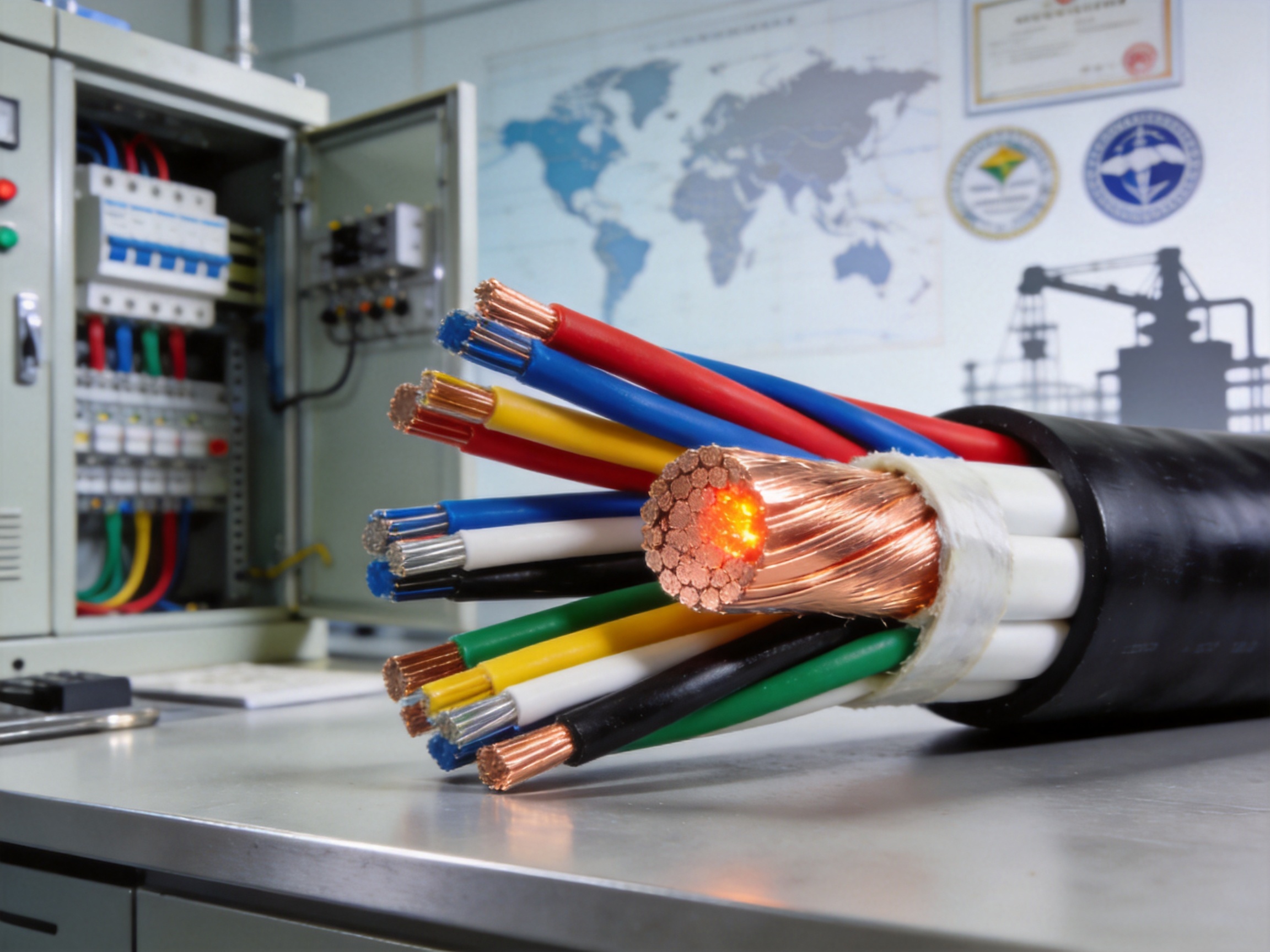
The UL 1015 / H05V-K / MTW / TEW PVC insulated connection cable is a flexible single-core or multi-strand conductor cable designed for electrical connection and internal wiring applications. Its insulation is made from PVC material, selected for good electrical insulation, flame retardancy, mechanical protection, processability, and cost effectiveness. The cable is manufactured to satisfy multiple international wiring standards, helping users reduce the complexity of procurement and certification review.
UL 1015 is widely recognized in the United States for appliance wiring material and internal wiring applications. H05V-K is commonly used in Europe as a harmonized flexible PVC insulated conductor for protected installation. MTW refers to machine tool wire, commonly applied in machine tool and industrial control wiring. TEW refers to thermoplastic equipment wire, often used in equipment wiring applications. By combining these reference standards in one cable family, the product becomes suitable for many equipment designs that require export-friendly wiring solutions.
The cable is suitable for rated voltage applications such as Uo/U 300/500 V for H05V-K and Uo/U 450/750 V for related higher voltage configurations, while UL and CSA references can support 600 V depending on the specific construction and certification scope. Test voltage performance may reach values such as 2000 V for H05V-K in accordance with relevant DIN VDE and harmonized standards. The minimum bending radius is typically 4 times the cable diameter, helping installers route wires efficiently inside cabinets and equipment.
In temperature performance, the cable can support fixed installation environments from approximately −40°C to +70°C under DIN VDE references, with higher temperature ratings available under UL-AWM and CSA MTW structures, such as up to +105°C or +90°C depending on the applicable standard. For flexible or moving installation conditions, typical operating ranges may begin from +5°C and extend up to +70°C or higher according to standard-specific ratings. This makes the cable suitable for most industrial electrical environments where wiring remains protected and properly installed.
Its flame-retardant and self-extinguishing characteristics are an important safety advantage. The cable may comply with flame-retardant tests such as IEC 60332-1-2, EN 60332-1-2, UL VW-1, and CSA FT1. These standards are important for reducing flame propagation risks in equipment, cabinets, and wiring assemblies.
Item |
Typical Specification or Feature |
Practical Value |
Product Type |
PVC insulated connection cable |
Suitable for internal wiring, electrical connections, control cabinets, machinery, instruments, and equipment wiring |
Applicable Standards |
UL 1015, H05V-K, MTW, TEW, related UL, CSA, CE, DIN VDE, and harmonized references |
Supports international equipment export and multi-market compliance |
Rated Voltage |
Typical references include 300/500 V, 450/750 V, and UL/CSA 600 V depending on construction |
Provides flexibility for equipment designers and panel builders |
Insulation Material |
PVC compound |
Offers dielectric strength, flame retardancy, mechanical protection, and cost efficiency |
Temperature Range |
Fixed installation from approximately −40°C to +70°C under DIN VDE references; higher ratings up to +105°C may apply under UL-AWM structures |
Works in most industrial and commercial electrical environments |
Minimum Bending Radius |
Approximately 4×D |
Allows convenient routing in compact cabinets and machines |
Flame Retardancy |
IEC 60332-1-2, EN 60332-1-2, UL VW-1, CSA FT1 references |
Improves safety and helps reduce fire propagation risk |
Installation Type |
Fixed installation and protected internal wiring; selected constructions may support flexible applications |
Useful for control panels, devices, machine wiring, and electrical assemblies |
Conductor Options |
Single-core or multi-strand structures depending on model |
Balances flexibility, conductivity, and installation convenience |
Customization |
OEM and ODM support based on drawings, samples, or project requirements |
Enables project-specific cable design and rapid engineering response |
Many equipment manufacturers face a common challenge: one product may be sold into several markets, each with different electrical safety expectations. A control cabinet manufactured for domestic use may later be exported to North America, Europe, Japan, Australia, or another region. If the internal wiring is selected only according to one local standard, redesign, recertification, or replacement may be required when the equipment enters another market.
The multi-standard nature of the UL 1015 / H05V-K / MTW / TEW PVC insulated connection cable helps solve this problem. Instead of maintaining separate inventories for American-style appliance wiring, European harmonized conductors, machine tool wiring, and equipment wire, manufacturers can choose a cable series designed for broad compatibility. This reduces procurement complexity, lowers inventory pressure, and simplifies documentation for global projects.
For panel builders and automation integrators, this advantage is highly practical. Electrical cabinets often contain hundreds or thousands of internal wiring connections. Selecting a cable with recognized standard references can help streamline inspection, labeling, engineering review, and customer acceptance. It can also reduce the possibility of rejected shipments or installation delays caused by inappropriate wire selection.
Compared with lower-cost non-certified cables, a multi-standard cable provides stronger confidence in safety and consistency. It demonstrates that the cable has been designed around recognized electrical, thermal, and flame-retardant requirements. For professional industrial projects, this difference is significant because cable failure can lead to equipment downtime, short circuits, insulation breakdown, overheating, or safety hazards.
The electrical performance of a connection cable depends on conductor quality, insulation stability, production control, and testing. PVC insulation is widely used in industrial and equipment wiring because it provides a strong balance of dielectric strength, mechanical durability, flame retardancy, and processing efficiency. In this cable series, PVC insulation is formulated and processed to provide stable insulation resistance and safe power transmission under normal operating conditions.
High dielectric strength is especially important in control cabinets and equipment wiring. Internal wires may be routed close to metal frames, terminals, relays, contactors, circuit breakers, sensors, and other conductors. If insulation quality is unstable, the risk of leakage current, short circuit, or electrical breakdown increases. A properly manufactured PVC insulated connection cable helps maintain safe separation between conductive parts.
The cable’s test voltage reference, such as H05V-K 2000 V in compliance with DIN VDE 0281 and HD 21.1-related requirements, reflects a design focus on insulation robustness. Test voltage is not the same as operating voltage; rather, it demonstrates the cable’s ability to withstand controlled high-voltage testing during qualification or inspection. This provides additional confidence that the insulation can perform reliably within the intended rated voltage range.
Stable insulation resistance is also valuable for long-term equipment reliability. In humid, dusty, or thermally changing environments, poor insulation can deteriorate more quickly. High-quality PVC insulation, proper extrusion, accurate wall thickness, and controlled cooling contribute to more consistent cable performance.
Compared with generic wire products, this cable series is positioned for professional electrical connection applications where predictable insulation performance matters. The combination of pure copper conductor options, controlled insulation extrusion, flame-retardant PVC material, and multi-standard design creates a dependable wiring solution for manufacturers who cannot afford inconsistent cable quality.
Industrial electrical environments often involve heat sources such as motors, transformers, power supplies, contactors, lighting systems, machine enclosures, and dense control cabinets. Although internal wiring is usually protected, ambient temperatures can rise during continuous operation. The cable must maintain insulation integrity and electrical safety across the expected temperature range.
The UL 1015 / H05V-K / MTW / TEW PVC insulated connection cable supports temperature ratings suitable for most industrial applications. Under DIN VDE references, fixed installation temperatures may range from approximately −40°C to +70°C. Under UL-AWM references, selected constructions may support up to +105°C, and under CSA MTW references, up to +90°C may apply. For flexible or moving installation conditions, temperature ratings should be selected according to the exact construction and certification requirement.
This temperature adaptability is an advantage over low-grade PVC wires that may become brittle in cold conditions or soften excessively in warmer environments. When insulation becomes brittle, cracking can occur during bending or vibration. When insulation softens, deformation and mechanical damage may increase. A properly designed cable balances flexibility, heat resistance, and mechanical stability.
Temperature performance also affects service life. Even if a cable initially works after installation, long-term exposure to heat can accelerate insulation aging. Selecting a cable with an appropriate rating reduces the risk of premature hardening, discoloration, cracking, or insulation breakdown. This is particularly important in machinery, where wiring may be difficult to replace after assembly.
For exporters, the combination of temperature ratings across different standard systems provides another benefit. Machines intended for different climates and industrial settings can be equipped with wiring that meets broad operating requirements. This helps simplify engineering decisions and supports consistent product quality across international projects.
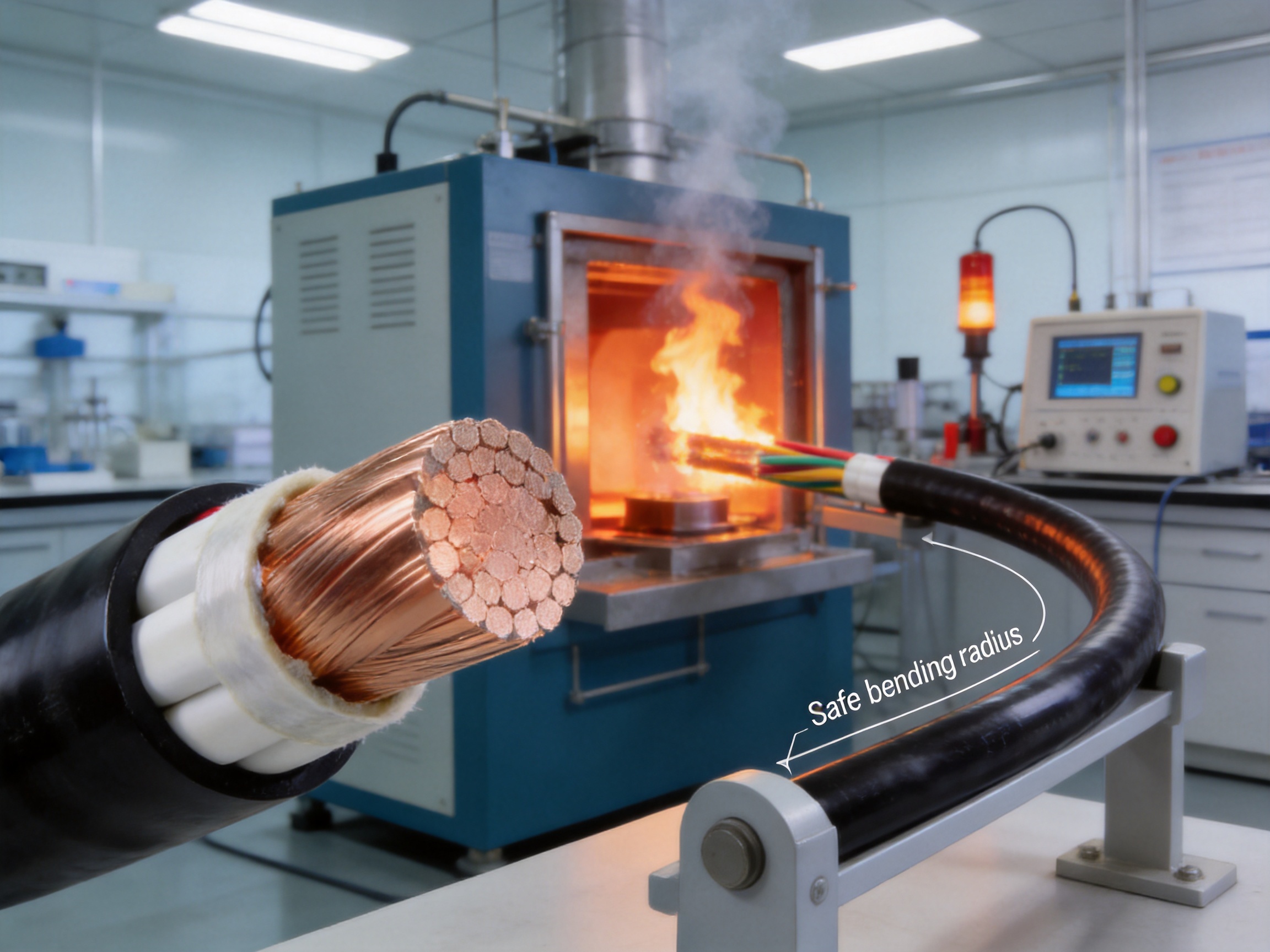
Flame retardancy is one of the most important differences between professional wiring cable and ordinary cable. Electrical systems always carry some degree of fire risk due to overload, short circuit, poor terminal connection, external heat, or component failure. A flame-retardant cable cannot eliminate all fire hazards, but it can help reduce flame propagation and support safer equipment design.
This PVC insulated connection cable is designed to be flame-retardant and self-extinguishing according to recognized test references such as IEC 60332-1-2, EN 60332-1-2, UL VW-1, and CSA FT1. These tests evaluate how a cable behaves when exposed to flame under specified conditions. Compliance with such tests indicates that the cable can resist continued burning and reduce flame spread in controlled scenarios.
In a control cabinet, many conductors are bundled together. If one wire catches fire and the insulation burns easily, flames can spread rapidly to adjacent wires, terminal blocks, plastic ducts, and electronic components. Flame-retardant insulation helps limit this danger. For industrial equipment, lighting circuits, commercial machinery, and electrical panels, this safety characteristic is not optional; it is a fundamental requirement.
Compared with non-flame-retardant cables, this product provides a safer and more professional wiring solution. For equipment manufacturers, it can help meet customer safety expectations and project specifications. For installers, it provides greater confidence when routing wires through enclosed spaces. For end users, it contributes to improved operational safety and reduced risk.
Flame retardancy must be considered together with proper installation. Correct wire sizing, protective devices, terminal tightening, separation from excessive heat, and compliance with electrical codes remain essential. However, choosing a flame-retardant cable is a strong first step toward a safer wiring system.
Installation efficiency is a major concern in electrical cabinet assembly, machine wiring, equipment manufacturing, and field maintenance. A cable that is too stiff can slow installation, increase worker fatigue, cause routing difficulties, and create stress at terminals. A cable that is too soft but mechanically weak may suffer damage during pulling or bending. The ideal connection cable should offer controlled flexibility with stable insulation and conductor integrity.
The UL 1015 / H05V-K / MTW / TEW PVC insulated connection cable is available with flexible conductor structures, including single-core or multi-strand options depending on the application. Multi-strand conductors improve bendability and are particularly useful in wiring ducts, compact cabinets, terminal connections, and equipment interiors. The typical minimum bending radius of 4×D allows efficient routing while helping prevent excessive stress on the conductor and insulation.
In electrical cabinets, installers often route wires through narrow channels, around mounting rails, and into terminal blocks. Flexible wiring can shorten assembly time and improve the neatness of wiring layouts. Clean wiring is not only visually professional; it also improves airflow, inspection convenience, troubleshooting speed, and maintenance safety.
Compared with rigid or poorly processed wires, this cable offers a better balance between flexibility and durability. The PVC insulation provides surface smoothness for easier pulling through wiring ducts, while the conductor structure supports bending during installation. This reduces the chance of insulation cracking, conductor breakage, or terminal stress caused by forced routing.
For high-volume equipment manufacturers, installation efficiency directly affects production cost. If each cabinet or machine requires many wiring operations, even small improvements in cable handling can produce significant time savings. A flexible, standardized, reliable connection cable can therefore contribute to both quality and productivity.
The product is well suited for internal wiring of electrical control cabinets. Control cabinets contain numerous low-voltage circuits, including power distribution, relay control, PLC input and output wiring, indicator wiring, signal circuits, and auxiliary power lines. A cable with multi-standard certification, flame retardancy, and stable insulation is an ideal choice for these environments.
It is also suitable for equipment power connections. Many machines and devices require internal wiring between power supplies, motors, terminal blocks, switches, safety devices, and control components. The cable’s voltage rating, temperature resistance, and flexible structure help meet these needs.
Instrument and gauge wiring is another important application. Instruments require stable electrical connections to maintain accurate operation. Poor insulation or unreliable conductors can cause signal instability, leakage, or intermittent faults. A consistent PVC insulated connection cable supports reliable wiring for gauges, meters, control modules, and auxiliary circuits.
Lighting circuits in commercial and industrial equipment may also benefit from this cable. Lighting systems often operate for long periods and may be installed in panels, machines, display units, or equipment housings. Flame-retardant insulation and reliable conductor performance are important for long-term safety.
The cable can be used in internal wiring of commercial and industrial machinery. Machine builders require wiring that is easy to install, standard-compliant, and reliable under typical operating conditions. The MTW and TEW references are especially relevant for machinery and equipment wiring.
Fixed installation occasions requiring standard certifications are another strong fit. When wiring is protected and not subject to continuous mechanical motion, this cable provides a dependable solution for many low-voltage power and control applications. Selection should always consider voltage, current, temperature, installation environment, regulatory requirements, and mechanical stress.
The first major advantage is broad certification compatibility. Many competitor cables are designed for one standard system only. A wire may meet a local requirement but create uncertainty when used in exported equipment. This product’s UL 1015, H05V-K, MTW, and TEW positioning gives manufacturers more flexibility and reduces the need for multiple wire types.
The second advantage is balanced temperature performance. Some low-cost PVC cables may only be suitable for limited temperature ranges. This cable series supports practical industrial temperature conditions and may offer higher ratings depending on standard and construction. This helps improve long-term reliability in equipment that generates heat during operation.
The third advantage is flame-retardant safety. Cables that do not satisfy recognized flame tests may be cheaper initially, but they create greater safety risk and may fail project inspection. Compliance with references such as VW-1, FT1, IEC 60332-1-2, and EN 60332-1-2 gives this cable stronger safety credibility.
The fourth advantage is installation convenience. A flexible conductor design and practical bending radius make it easier to wire cabinets and equipment neatly. Stiffer competitor cables may increase assembly time and create mechanical stress, while lower-quality flexible cables may lack insulation consistency. This product is designed to provide a useful middle ground: easy handling without sacrificing electrical reliability.
The fifth advantage is cost effectiveness. High-performance specialty cables can be expensive, especially when advanced materials are used unnecessarily. For many internal wiring and fixed installation applications, PVC insulation provides an excellent balance of price and performance. This product offers professional features without excessive cost, making it suitable for large-volume electrical connection needs.
The sixth advantage is manufacturing support and customization. Many suppliers only sell standard products. Anhui Zhishang Cable Technology Co., Ltd. supports OEM and ODM development based on customer drawings or samples. This capability is important for customers who require specific conductor sizes, colors, packaging, markings, lengths, or project-based designs.
The seventh advantage is production stability. With automated production lines, experienced quality engineers, and production capacity reaching up to millions of meters per month, the company is positioned to support both standard orders and customized batches. Stable supply is especially important for equipment manufacturers that must maintain continuous production schedules.
A cable’s performance is determined not only by its design but also by the quality of the manufacturing process. Anhui Zhishang Cable Technology Co., Ltd. operates a modern production base of approximately 5,000 square meters in Xuanzhou District, Xuancheng City, Anhui Province, China. The company integrates research and development, production, and sales, providing a complete industrial chain for wire and cable solutions.
The company has more than 50 employees, including quality engineers and R&D technicians with more than 10 years of industry experience. This technical background is important because cable manufacturing involves material selection, conductor processing, insulation extrusion, dimensional control, testing, packaging, and compliance understanding. Experience helps prevent common problems such as uneven insulation thickness, poor concentricity, conductor oxidation, unstable resistance, surface defects, and inconsistent flexibility.
The production facility is equipped with 10 automated production lines, supporting monthly output of up to 10 million meters. Automation improves consistency and efficiency by reducing manual variation during production. It also enables faster response to large-volume orders, which is essential for industrial customers with fixed delivery schedules.
The company emphasizes full-core, full-length, pure copper specifications for standard cable models. Pure copper conductors are preferred in many professional applications because they offer excellent conductivity, stable resistance, good ductility, and reliable termination performance. Inferior materials such as copper-clad aluminum may reduce cost but can create higher resistance, poorer mechanical strength, and increased heating risk. By focusing on reliable conductor specifications, the company strengthens the foundation of cable performance.
Quality assurance includes product test reports and warranty support for standard cable models. Standard products are stocked for fast shipment, while customized products typically require 7 to 20 days of lead time depending on complexity and order conditions. This combination of inventory and customization capability supports both urgent procurement and project-specific development.
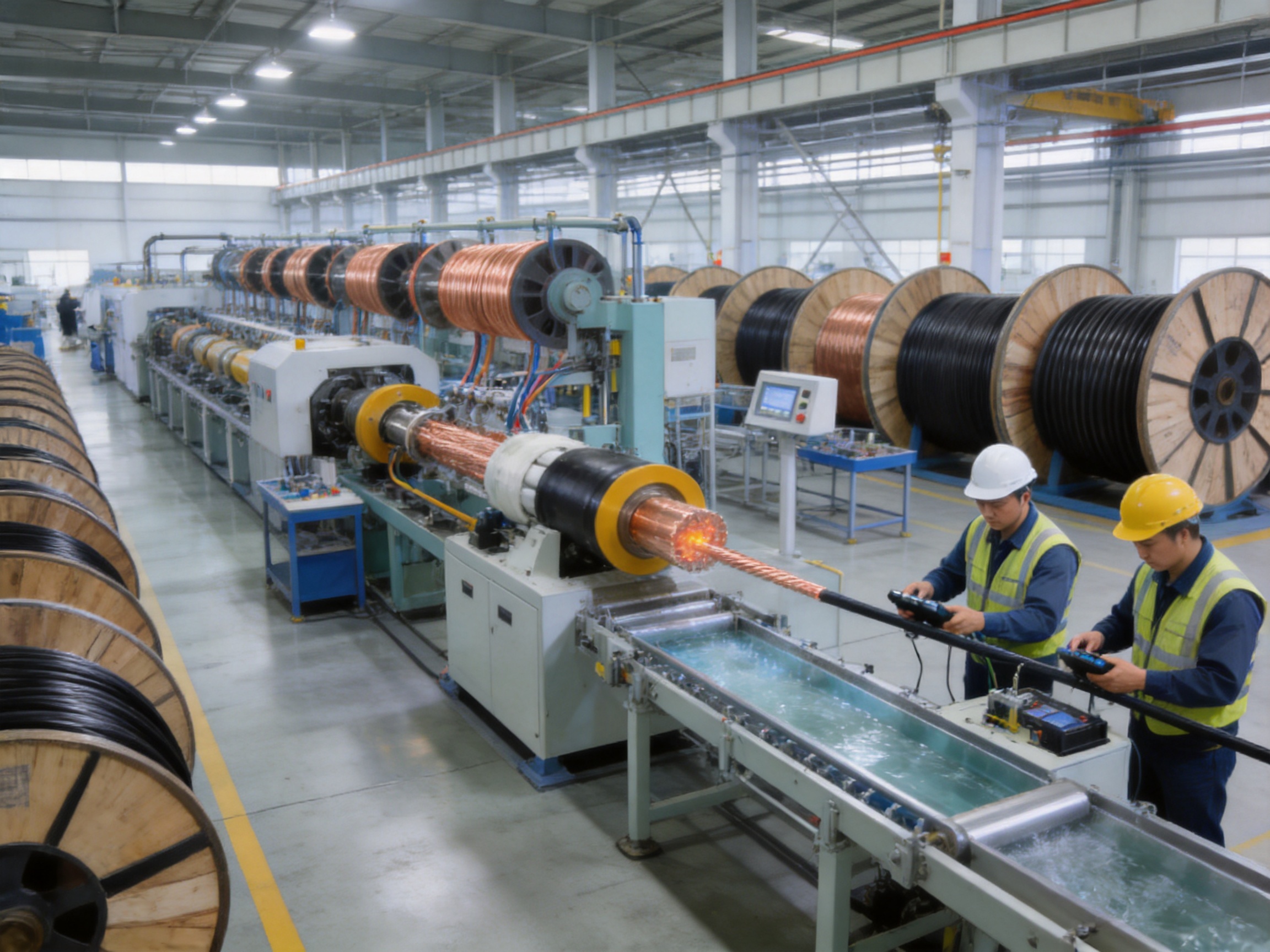
The production of a high-quality PVC insulated connection cable generally begins with conductor preparation. Copper material is selected according to electrical and mechanical requirements. The conductor may be drawn, stranded, annealed, and processed to achieve the desired diameter, flexibility, and conductivity. Accurate conductor size is essential because it affects current-carrying capacity, resistance, terminal compatibility, and mechanical performance.
After conductor preparation, insulation extrusion is performed. PVC compound is heated, plasticized, and extruded around the conductor through precision tooling. The extrusion process must control insulation wall thickness, outer diameter, surface smoothness, concentricity, and adhesion. If the insulation is too thin, safety and durability may be compromised. If it is too thick or uneven, installation dimensions and flexibility may be affected.
Cooling and dimensional stabilization follow the extrusion step. Proper cooling prevents deformation and helps maintain a smooth surface. Continuous measurement and inspection can identify deviations in outer diameter or insulation quality. Modern production lines are designed to keep cable dimensions stable over long production runs.
Marking and identification may be applied according to customer requirements and standard references. Clear cable marking helps installers and inspectors identify wire type, rating, size, certification, and manufacturer information. In multi-standard applications, accurate marking is especially important for compliance documentation.
The cable may then undergo electrical testing. Conductor resistance testing helps confirm that the copper conductor meets expected conductivity requirements. Voltage withstand testing helps verify insulation integrity. Insulation resistance testing may be used to assess electrical separation quality. Visual and dimensional inspection ensures that the cable surface, diameter, color, and printing meet order specifications.
Packaging is another important process. Cables may be supplied in coils, reels, cartons, or customized packaging depending on customer needs. Good packaging protects the cable from deformation, moisture, contamination, and mechanical damage during storage and transportation. For high-volume industrial users, packaging format can also improve handling efficiency on production lines.
The company’s manufacturing philosophy emphasizes stable quality rather than short-term cost reduction. This is important in the cable industry because small material savings can create large safety risks. By focusing on craftsmanship, quality, and responsibility, the company aims to provide cables that perform reliably in real equipment environments.
Quality control in cable manufacturing must be systematic. It cannot rely only on final inspection because defects can originate from raw materials, conductor processing, extrusion conditions, cooling, marking, winding, or packaging. A strong quality system checks important parameters throughout production.
Raw material control is the first stage. Copper quality affects resistance and flexibility. PVC compound quality affects insulation strength, flame retardancy, temperature resistance, and surface finish. Consistent raw materials make stable production possible.
Process control is the second stage. During conductor processing, diameter, strand structure, and annealing must be monitored. During extrusion, temperature, pressure, line speed, tooling, and cooling conditions must be controlled. Even a good PVC compound can perform poorly if extrusion is unstable.
Dimensional inspection is critical. Insulation thickness must be sufficient and consistent. Outer diameter must match design and customer requirements. Concentricity affects both appearance and electrical safety. When the conductor is not centered in the insulation, one side may have insufficient protection.
Electrical testing confirms functional performance. Conductor resistance testing verifies that the conductor provides the expected conductivity. Voltage withstand testing helps detect pinholes, thin insulation, or insulation defects. Insulation resistance testing provides additional information about material and processing stability.
Flame-retardant performance is addressed through material selection and standard-based design. For cables intended to meet VW-1, FT1, IEC 60332-1-2, or EN 60332-1-2 references, the insulation compound and structure must be appropriate for flame test requirements.
Final inspection includes appearance, length, marking, packaging, and documentation. Customers may require test reports or other quality records. For international projects, documentation can be as important as the physical product because inspectors and end users need evidence that the cable meets specified requirements.
One of the strengths of Anhui Zhishang Cable Technology Co., Ltd. is its ability to support customized cable development. Industrial projects often require more than standard catalog products. Customers may need specific conductor cross-sections, insulation colors, printing content, packaging lengths, voltage ratings, flexibility levels, or compliance documentation.
The company’s R&D and technical engineering team can provide product selection guidance based on project conditions. This support is valuable because cable selection involves many variables, including current, voltage, temperature, bending requirements, installation type, flame-retardant needs, certification requirements, and environmental exposure.
OEM and ODM development can be based on customer drawings or samples. For equipment manufacturers, this makes it easier to maintain consistent cable specifications across production batches. For project contractors, it supports tailored solutions when standard products do not fully match installation conditions.
Customization can also help optimize cost. Over-specifying cable may increase unnecessary expense, while under-specifying cable may create safety and reliability risk. Technical guidance helps customers select the right balance of performance and budget.
For customers with export requirements, multi-standard cable design is particularly useful. The engineering team can help align cable selection with target market expectations, equipment type, and documentation needs. This reduces the chance of delays during inspection, acceptance, or certification review.
In industrial procurement, product quality and delivery reliability are equally important. A cable that performs well but cannot be delivered on time may disrupt manufacturing schedules. A supplier that can deliver quickly but lacks stable quality creates long-term risk. The ideal partner provides both consistency and responsiveness.
Anhui Zhishang Cable Technology Co., Ltd. operates 10 automated production lines and has a monthly output capacity of up to 10 million meters. This capacity supports large orders, repeat purchases, and project-based delivery schedules. Standard products are stocked for fast shipment, helping customers respond to urgent needs.
Customized products typically require 7 to 20 days of lead time, depending on order details. This is a practical timeframe for many industrial cable projects, especially when the supplier provides engineering communication before production. Clear specifications, drawings, samples, or technical requirements can help shorten confirmation time and improve production accuracy.
Delivery reliability is supported by organized production planning, material preparation, inspection procedures, and packaging control. For customers in the United States, Canada, Australia, Japan, and parts of Eurasia, stable export experience helps improve communication and shipment coordination.
The company’s location in Xuancheng City, Anhui Province, a key node city in the Yangtze River Delta region, provides geographic advantages for manufacturing and logistics. The Yangtze River Delta is one of China’s most active industrial and supply chain regions, supporting access to materials, equipment, transportation, and skilled industrial resources.
Automation systems require reliable wiring because every sensor, actuator, relay, power supply, controller, and safety device depends on stable electrical connection. In a control cabinet, wiring failures can stop production, damage components, or create safety hazards. The UL 1015 / H05V-K / MTW / TEW PVC insulated connection cable is well suited to these environments because it combines electrical reliability, flame retardancy, flexibility, and certification adaptability.
Panel builders benefit from standardized wire selection. Using one multi-standard cable family across different cabinet designs can simplify training, inventory, documentation, and quality control. Technicians become familiar with the cable’s bending behavior, stripping performance, terminal compatibility, and routing characteristics. This familiarity can improve assembly consistency.
Automation equipment manufacturers also benefit from stable supply. Machines often use repeat wiring harnesses or cabinet layouts. Once a cable specification is validated, consistent supply helps maintain identical production quality. If a supplier frequently changes materials or dimensions, terminal crimping, bending, marking, or cable duct fill may be affected. Stable manufacturing reduces these risks.
In intelligent manufacturing, downtime is costly. A small wiring fault may stop an entire production line. Selecting a professional connection cable is a preventive reliability measure. The cost difference between a quality cable and a low-grade alternative is usually small compared with the cost of equipment failure or field service.
Commercial and industrial machinery often operates for long hours under vibration, heat, dust, and electrical load. Internal wiring must remain stable throughout the machine’s service life. The cable’s MTW and TEW relevance makes it suitable for equipment wiring applications where machine builders require safe, practical, and standard-oriented conductors.
Machines may contain motors, control panels, switches, emergency stops, lighting, instrumentation, and auxiliary circuits. Each of these systems requires wires that can be routed neatly and terminated securely. Flexible PVC insulated conductors are commonly used because they can be installed efficiently while maintaining insulation protection.
Compared with cables lacking machine wiring references, this product provides better suitability for professional equipment manufacturing. It helps machine builders present a more compliant and reliable product to end users. For exported machinery, the UL and CSA-related voltage and flame-retardant references can be particularly important.
Industrial customers increasingly evaluate not only the main components of machinery but also the quality of internal wiring. Clean wiring, marked cables, flame-retardant materials, and recognized standards reflect the manufacturer’s attention to detail. A high-quality connection cable contributes to the overall perceived and actual quality of the machine.
Responsible manufacturing is becoming increasingly important in the cable industry. Customers expect suppliers to provide not only functional products but also stable processes, material accountability, and long-term sustainability awareness. Anhui Zhishang Cable Technology Co., Ltd. emphasizes green manufacturing and responsible production practices as part of its development strategy.
In cable manufacturing, responsible production begins with efficient material use. Stable extrusion processes reduce scrap. Accurate production planning reduces unnecessary inventory waste. Good quality control reduces defective products and rework. Automated production can improve energy and material efficiency when properly managed.
Durable cables also support sustainability indirectly. A cable that lasts longer reduces replacement frequency, maintenance waste, and equipment downtime. Reliable wiring contributes to more efficient operation of industrial systems and reduces the need for emergency repairs.
PVC remains widely used because of its performance-to-cost ratio, insulation properties, and flame-retardant potential. Responsible use of PVC requires controlled material selection, proper processing, and compliance with relevant standards. For many internal wiring applications, PVC is a practical and efficient material choice when manufactured under appropriate quality systems.
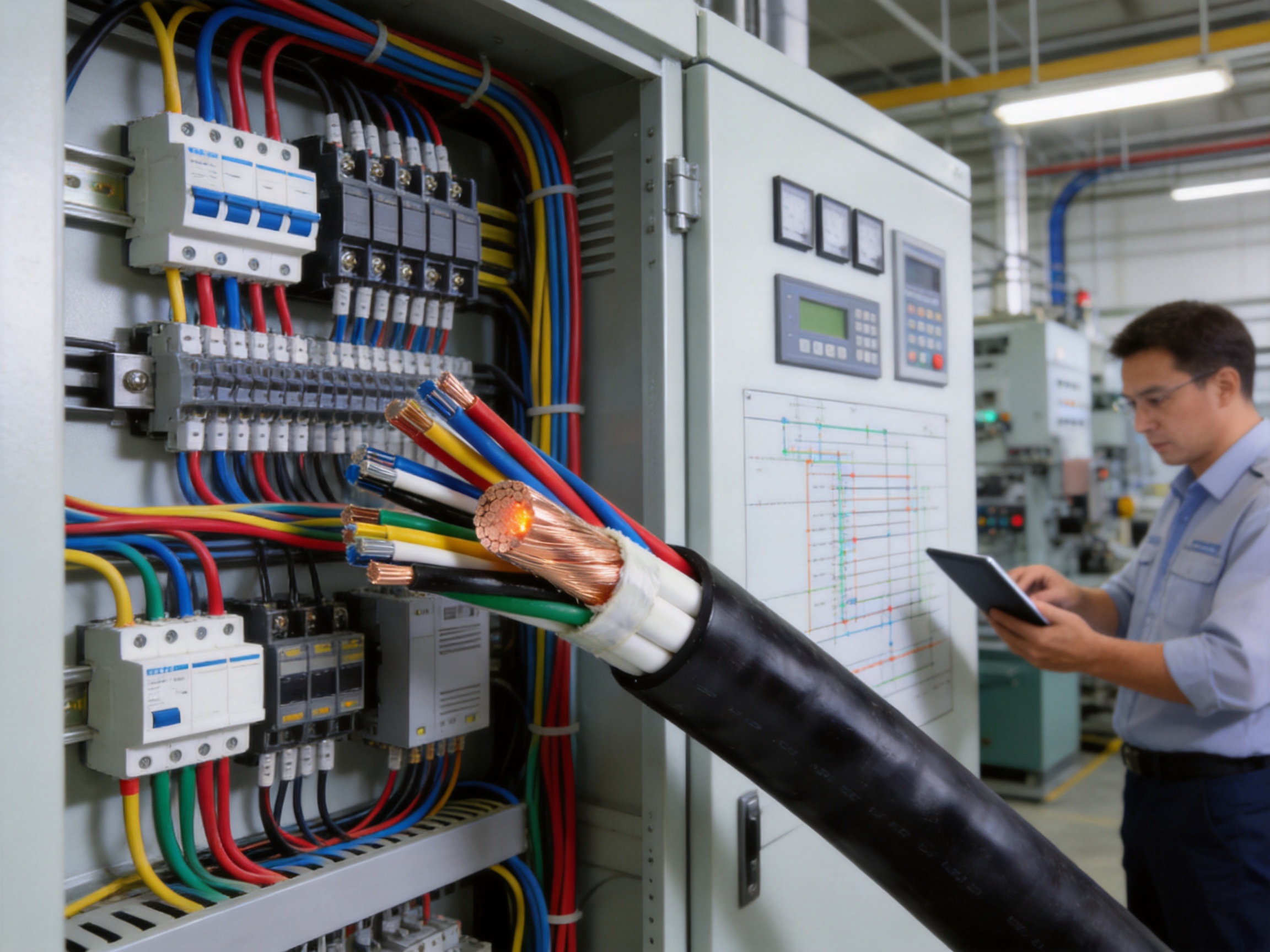
When selecting this cable, engineers should first confirm the required voltage rating. Different applications may require 300/500 V, 450/750 V, 600 V, or other standard-related ratings. The cable construction should match the electrical system and applicable certification requirements.
Second, the conductor cross-section or gauge should be selected according to current load, voltage drop, installation method, ambient temperature, and safety margin. Undersized wires can overheat, while oversized wires may increase cost and reduce installation convenience.
Third, temperature requirements should be reviewed. If the cable will be installed in a cabinet with high internal temperature or near heat-generating components, the relevant temperature rating should be selected carefully. Fixed installation and flexible installation ratings may differ.
Fourth, flame-retardant requirements should be confirmed. Projects may specify IEC, EN, UL, CSA, VW-1, FT1, or other flame references. The cable should be matched to the required test and documentation.
Fifth, installation conditions should be considered. If the cable will be routed in tight ducts, flexible multi-strand construction may be preferred. If the cable is subject to repeated motion, additional review is needed because not all internal wiring cables are intended for continuous dynamic movement.
Sixth, color and marking requirements should be defined. Electrical cabinets often use color coding for safety and identification. Clear printing can help maintenance teams identify cable ratings and specifications.
Seventh, procurement teams should consider supplier capability. A cable supplier should provide consistent production, quality documentation, customization support, and delivery reliability. These factors are especially important for manufacturers with repeated production schedules.
For equipment manufacturers, this cable reduces the need to manage multiple wiring standards. It supports export-oriented equipment design and helps maintain consistent internal wiring quality. The availability of customization also allows manufacturers to align the cable with their brand and engineering specifications.
For control cabinet builders, the cable offers easy routing, flame-retardant performance, and practical voltage ratings. It helps create neat, safe, and inspection-friendly panels. Multi-standard recognition also supports projects delivered to different end users or regions.
For automation integrators, the cable provides reliable internal connections for industrial systems. Its flexibility supports efficient installation in complex assemblies. Stable insulation and conductor performance help reduce troubleshooting and maintenance issues.
For electrical contractors, the cable offers a dependable option for fixed installation and protected wiring applications requiring standard compliance. It can simplify procurement when projects involve imported equipment, international specifications, or customer-specific requirements.
For distributors, the product’s broad application range makes it a practical inventory item. Because it can serve multiple industries and standards, distributors can reduce stock complexity while satisfying diverse customer needs.
Anhui Zhishang Cable Technology Co., Ltd. is not only a cable seller but an integrated manufacturer with R&D, production, and sales capabilities. This integration provides several benefits. Technical feedback can move quickly from customers to engineers and production teams. Customization can be developed more efficiently. Quality issues, if any, can be traced and addressed within the manufacturing system.
The company’s philosophy of quality orientation, integrity foundation, and stability priority aligns well with the needs of industrial cable users. In electrical projects, unstable quality can be extremely costly. A reliable supplier must maintain consistent standards across every batch, not only during sample approval.
The company’s team includes quality engineers and R&D technicians with more than a decade of industry experience. This experience supports product development, process improvement, material selection, and customer problem solving. It also helps the company understand practical application requirements rather than only theoretical specifications.
The modern production base of approximately 5,000 square meters and 10 automated production lines provides a strong manufacturing foundation. Monthly capacity of up to 10 million meters enables the company to support both domestic and international orders. Standard stock availability and customized lead times of approximately 7 to 20 days provide useful flexibility for buyers.
International market experience is another advantage. Products have been sold to the United States, Canada, Australia, Japan, and parts of Eurasia. Export experience helps the company understand documentation, packaging, communication, and performance expectations in different markets.
The purchase price of cable is only one part of total cost. A low-cost cable may appear attractive at first, but if it causes installation delays, inspection failures, overheating, insulation cracking, or maintenance problems, the real cost becomes much higher. Professional buyers evaluate cable based on performance, compliance, reliability, supplier stability, and lifecycle value.
This PVC insulated connection cable offers strong total value because it combines broad standard compatibility, electrical insulation stability, flame retardancy, temperature performance, installation flexibility, and cost efficiency. It is not an unnecessarily expensive high-end cable for extreme environments, but it is also not a low-grade wire with uncertain quality. It is positioned as a dependable industrial and equipment wiring solution for large-volume practical use.
For manufacturers, total cost savings may come from reduced inventory complexity, fewer rejected inspections, faster wiring assembly, fewer field failures, and easier export compliance. For installers, savings may come from easier routing and reliable termination. For end users, savings may come from improved equipment uptime and lower maintenance risk.
Because cable is often installed deep inside equipment, replacement can be labor-intensive. Choosing the right cable at the beginning is usually much less expensive than correcting wiring problems after shipment or installation. This is why professional internal wiring deserves careful attention even though it may represent a small portion of the total equipment cost.
It is mainly used for internal wiring, electrical connections, control cabinet wiring, machine tool wiring, equipment power connections, instrument wiring, lighting circuits, and fixed installation applications requiring recognized cable standards.
The cable series is designed around multiple international references, including UL 1015, H05V-K, MTW, and TEW. Depending on specific construction and certification scope, it may also correspond to UL, CSA, CE, DIN VDE, and harmonized European requirements.
Multi-standard compatibility helps manufacturers and panel builders use one cable family for equipment sold into different markets. It simplifies procurement, reduces inventory types, supports export projects, and makes compliance documentation easier.
The cable uses PVC insulation. PVC provides good dielectric strength, flame retardancy, mechanical protection, flexibility, and cost effectiveness for many internal wiring and equipment wiring applications.
Yes. The cable is designed with flame-retardant and self-extinguishing characteristics. It may comply with flame-retardant references such as IEC 60332-1-2, EN 60332-1-2, UL VW-1, and CSA FT1 depending on the specific product construction.
Typical fixed installation temperature references include approximately −40°C to +70°C under DIN VDE-related requirements. Selected UL-AWM structures may support up to +105°C, and CSA MTW-related structures may support up to +90°C. The exact temperature rating should be confirmed according to the selected specification.
The cable can support flexible installation within its rated conditions, but continuous dynamic motion requires careful review. For high-frequency drag chain or robotic movement, a dedicated dynamic cable may be more appropriate. The application should be confirmed with the supplier.
The minimum bending radius is typically about 4 times the cable diameter. This supports convenient routing in compact cabinets and equipment while helping protect conductor and insulation integrity.
Compared with ordinary PVC wire, this product offers broader standard compatibility, stronger flame-retardant references, stable insulation performance, practical temperature resistance, flexible installation characteristics, and manufacturing support from an experienced cable producer.
Yes. Anhui Zhishang Cable Technology Co., Ltd. supports OEM and ODM customization based on customer drawings, samples, technical requirements, conductor sizes, colors, markings, packaging formats, and project needs.
The company provides modern production facilities, automated production lines, experienced quality engineers and R&D technicians, pure copper specification support, product test reports, warranty support for standard models, and stable production capacity.
Customized products typically require approximately 7 to 20 days, depending on product complexity, material availability, specification confirmation, and order quantity. Standard products may be available for faster shipment from stock.
The UL 1015 / H05V-K / MTW / TEW PVC insulated connection cable is a practical and dependable solution for modern electrical and industrial wiring needs. It combines multi-standard compatibility, stable PVC insulation, flame-retardant safety, useful temperature resistance, flexible installation performance, and cost effectiveness. These characteristics make it well suited for control cabinets, machinery, equipment wiring, instruments, lighting circuits, and fixed installation applications requiring recognized standards.
Its greatest value lies in balance. It offers broader compliance and better safety performance than ordinary low-cost wires, while remaining more economical than specialty cables intended for extreme environments. For equipment manufacturers, panel builders, automation integrators, electrical contractors, and distributors, this balance supports efficient procurement, reliable installation, and long-term equipment performance.
Anhui Zhishang Cable Technology Co., Ltd. strengthens the product with advanced manufacturing capabilities, automated production lines, experienced technical personnel, OEM and ODM support, quality assurance, rapid delivery options, and export market experience. The company’s commitment to quality, integrity, and stability makes it a strong partner for customers seeking reliable cable solutions for industrial automation, weak-current engineering, intelligent manufacturing, appliance equipment, power engineering, and international projects.
In an electrical system, every connection matters. Selecting a professional multi-standard PVC insulated connection cable helps ensure that those connections are safe, compliant, efficient, and durable. For manufacturers and project teams that require reliable wiring with global adaptability, this cable series provides a strong and practical choice.
International Electrotechnical Commission. IEC 60332-1-2: Tests on Electric and Optical Fibre Cables Under Fire Conditions.
European Committee for Electrotechnical Standardization. EN 60332-1-2: Tests on Electric and Optical Fibre Cables Under Fire Conditions.
DIN VDE. VDE 0281 and Harmonized PVC Insulated Cable Standards.
Underwriters Laboratories. UL 1015 Appliance Wiring Material Requirements.
Canadian Standards Association. CSA FT1 Flame Test and Equipment Wire References.
National Fire Protection Association. NFPA 79: Electrical Standard for Industrial Machinery.
International Electrotechnical Commission. IEC 60228: Conductors of Insulated Cables.
Industry Practice Guide for Machine Tool Wire, Equipment Wire, and Internal Wiring Applications.
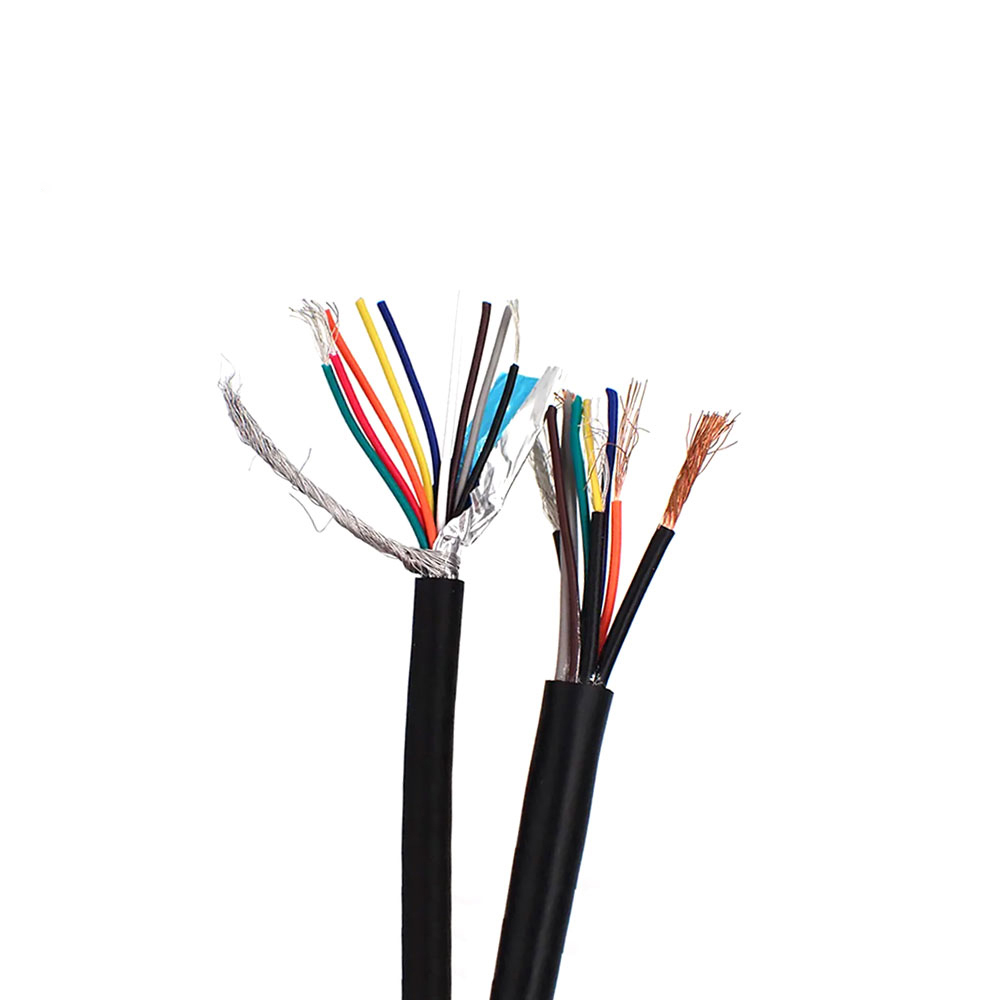
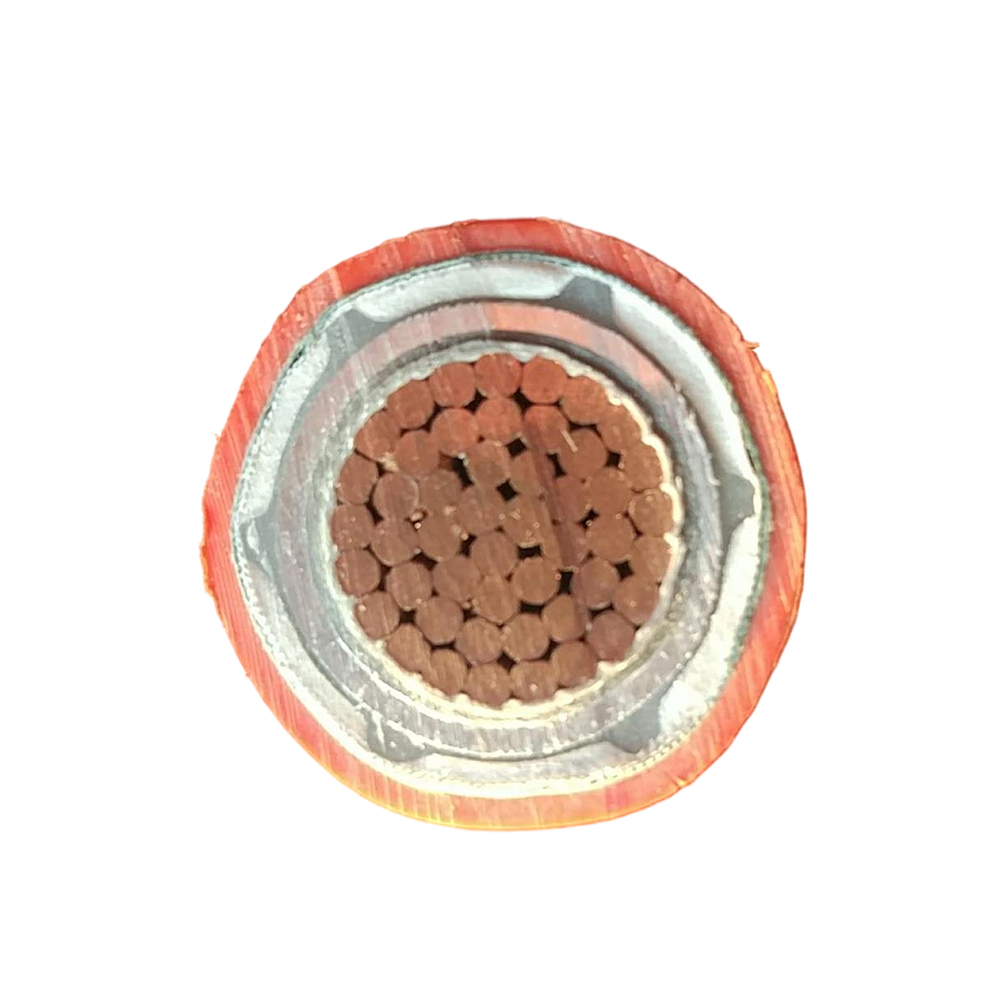
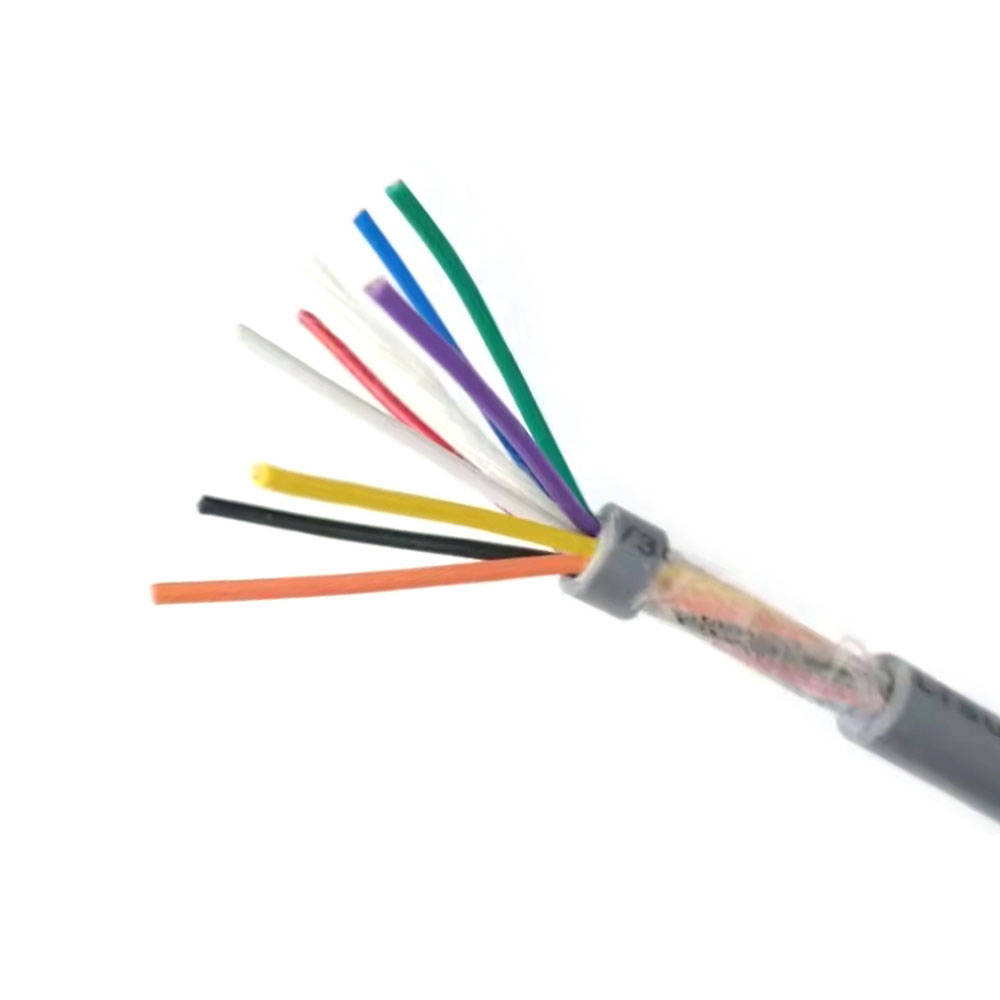
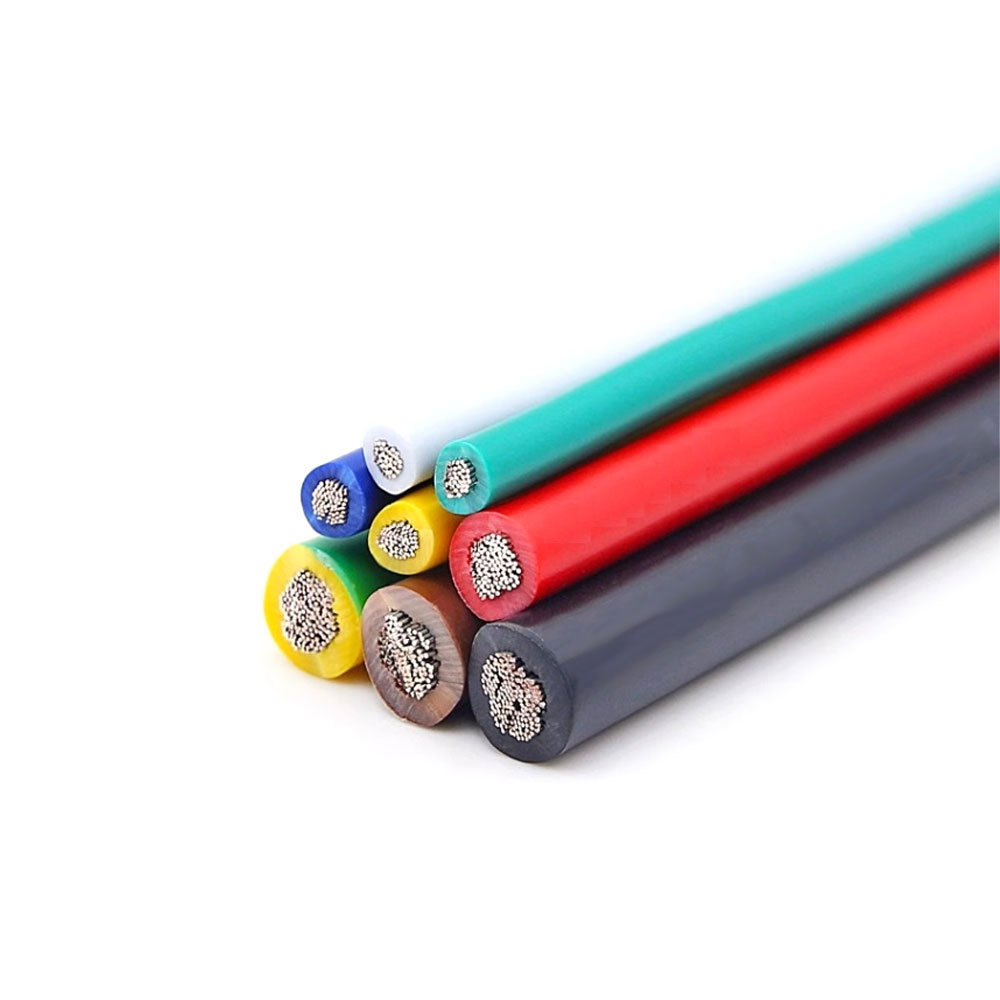

We firmly believe that good cables are not only a competition of materials, but also a reflection of craftsmanship, quality, and responsibility.

Links
Product
Send Inquiry
No. 29 Sankeshu Road, Xuanzhou District, Xuancheng City, Anhui Province, China
+86-18621104555/+86-563-2622999
 Electrical Cable Manufacturer
OEM/ODM Wire and Cable Solutions
Electrical Cable Manufacturer
OEM/ODM Wire and Cable Solutions
 English
 Español
 عربى
عربى
 русский