
Get more content that can help you
Content
Modern electrical infrastructure requires more than dependable power transmission. In buildings, transportation facilities, industrial plants, public venues, underground spaces, and other high-occupancy environments, cable selection also directly affects fire safety, evacuation conditions, rescue operations, and the continuity of essential services. A cable must therefore be evaluated not only according to its electrical capacity, but also according to its behavior when exposed to fire.
WDZB1-YJY XLPE insulated and sheathed power cable is designed for applications where comprehensive combustion performance is a critical requirement. It combines copper conductors, cross-linked polyethylene insulation, and a halogen-free, low-smoke polyolefin sheath with a B1-grade combustion performance target. Its design is intended to limit flame spread, reduce heat release, minimize smoke generation, and help control the toxicity of combustion products.
Compared with conventional flame-retardant power cables that primarily emphasize resistance to flame propagation, this cable addresses a broader group of fire-related hazards. Its performance concept is based on the understanding that a cable fire can endanger people through several mechanisms at the same time: flame spread, heat release, dense smoke, toxic gases, and reduced visibility. A cable with comprehensive fire performance can help create more favorable conditions for evacuation and firefighting.
Manufactured by Anhui Zhishang Cable Technology Co., Ltd., the WDZB1-YJY series is supported by integrated research, production, quality control, and technical service capabilities. The company operates modern manufacturing facilities, automated production lines, experienced engineering teams, and customized OEM and ODM development services. These resources allow the product to serve both standard procurement programs and projects with specialized technical requirements.
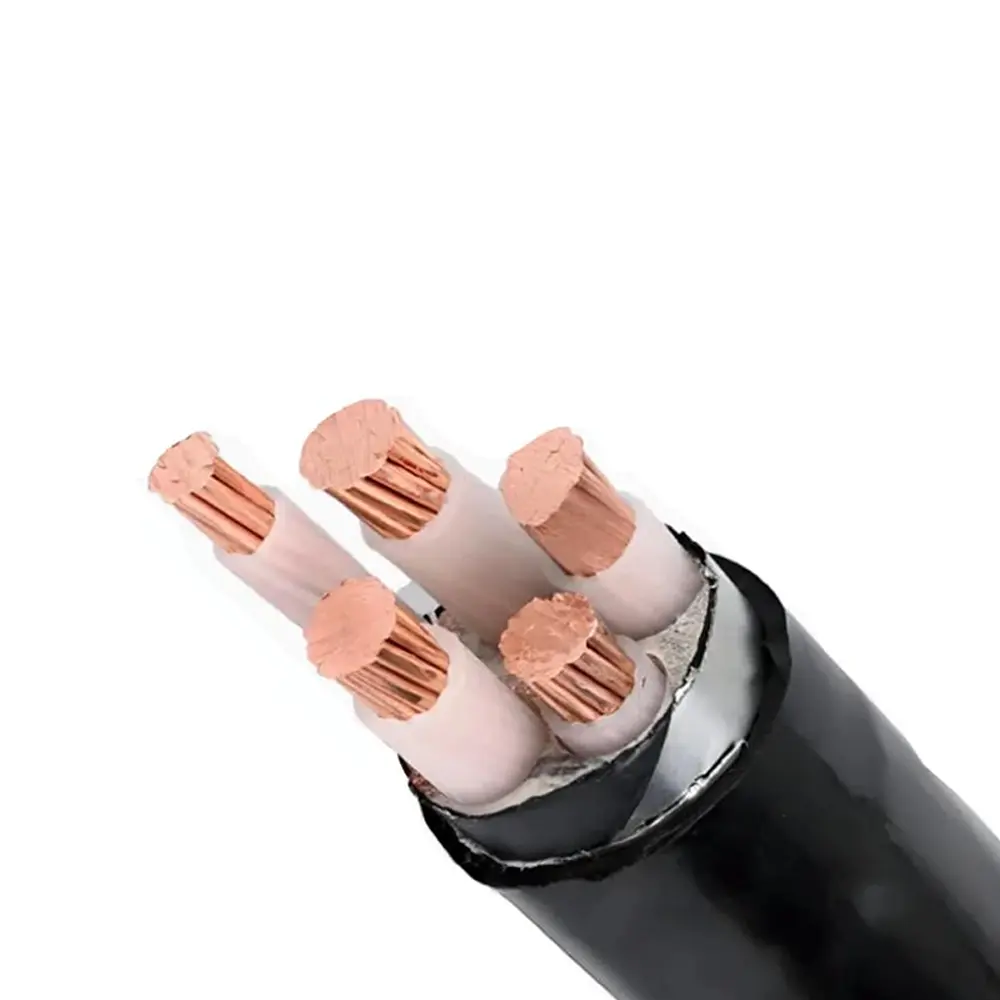
WDZB1-YJY Good flame retardancy XLPE Insulated and Sheathed Power Cable
WDZB1-YJY is a low-voltage power cable using XLPE as the primary insulation material and a halogen-free, low-smoke polyolefin compound as the outer sheath. The standard product configuration uses copper conductors and is commonly rated at 0.6/1 kV. Depending on the required current-carrying capacity and project design, conductor cross-sectional areas can range from 1.5 mm² to 1000 mm².
The cable structure is based on the following functional layers:
Component |
Material or specification |
Primary function |
Conductor |
Copper |
Transmits electrical current with high conductivity and reliable mechanical performance. |
Insulation |
Cross-linked polyethylene |
Provides electrical insulation and supports continuous operation at up to 90°C conductor temperature. |
Sheath |
Halogen-free, low-smoke polyolefin material |
Protects the cable from the external environment while supporting reduced smoke and halogen-free performance. |
The copper conductor provides a stable electrical path and is suitable for power distribution, equipment supply, industrial systems, and building services. Copper also offers good flexibility compared with many alternative conductive materials, allowing the cable to be installed in a wide variety of routing configurations when the correct cable construction is selected.
The XLPE insulation is a key part of the cable’s electrical and thermal performance. Cross-linking changes the polymer structure and improves its ability to withstand elevated operating temperatures. Under specified conditions, the maximum continuous conductor temperature is 90°C. During a short circuit lasting up to five seconds, the maximum conductor temperature may reach approximately 250°C, subject to the applicable design conditions and protection system.
The outer sheath is produced from a polyolefin material formulated to meet halogen-free and low-smoke requirements. When exposed to fire, halogen-free materials avoid the release of hydrogen chloride and other halogen-containing gases associated with conventional halogenated compounds. This is particularly important in enclosed areas, where corrosive and irritating gases can create additional risks for people, equipment, and rescue personnel.
Traditional cable fire classifications often focus strongly on whether flames spread along the cable. Flame retardancy remains important, but it does not describe every danger created by a cable fire. A cable can show limited flame propagation and still produce significant quantities of heat or smoke. In an enclosed building, poor visibility and toxic combustion products may become life-threatening before flames reach a distant location.
WDZB1-YJY is intended to address several fire performance dimensions together. These dimensions include flame spread, heat release, smoke density, smoke toxicity, combustion calorific value, and total heat release. The B1 performance concept is therefore broader than a simple statement that a cable is “flame retardant.” It represents a more comprehensive assessment of how the cable behaves during combustion.
Limiting flame spread can slow the progression of a fire along cable routes. This is especially valuable in vertical shafts, cable trays, tunnels, plant rooms, suspended ceilings, and other locations where numerous cables are installed together. Reduced flame propagation can help prevent an isolated ignition event from rapidly involving a larger cable network.
Heat released by burning cables can accelerate the growth of a fire and raise the temperature of nearby materials. A cable designed for comprehensive combustion performance is evaluated for heat release rate and total heat release. Lower heat release can help reduce the thermal intensity of a fire and may provide additional time for detection, evacuation, isolation of circuits, and firefighting.
Smoke can obscure exit signs, stairways, equipment labels, and emergency routes. It can also make it difficult for firefighters to identify the source of a fire or reach affected areas. The low-smoke design of WDZB1-YJY is intended to support improved visibility compared with conventional high-smoke cable materials. The stated performance target includes light transmittance typically above 60% under the applicable evaluation conditions.
Fire conditions can produce toxic gases from the decomposition of cable insulation and sheathing materials. Halogen-free construction and the use of low-smoke polyolefin compounds help reduce the formation of highly corrosive halogen acid gases. The product’s smoke performance is also evaluated as part of the broader B1-grade requirements, including smoke toxicity and smoke density indicators.
Halogen-free materials are commonly assessed through pH value and conductivity measurements of combustion products. The stated performance indicators for this product include a pH value of at least 4.3 and conductivity no greater than 10 μS/mm, in accordance with the relevant requirements. These characteristics are important for protecting people and reducing corrosion damage to metal equipment, electronic systems, control panels, and communication infrastructure.
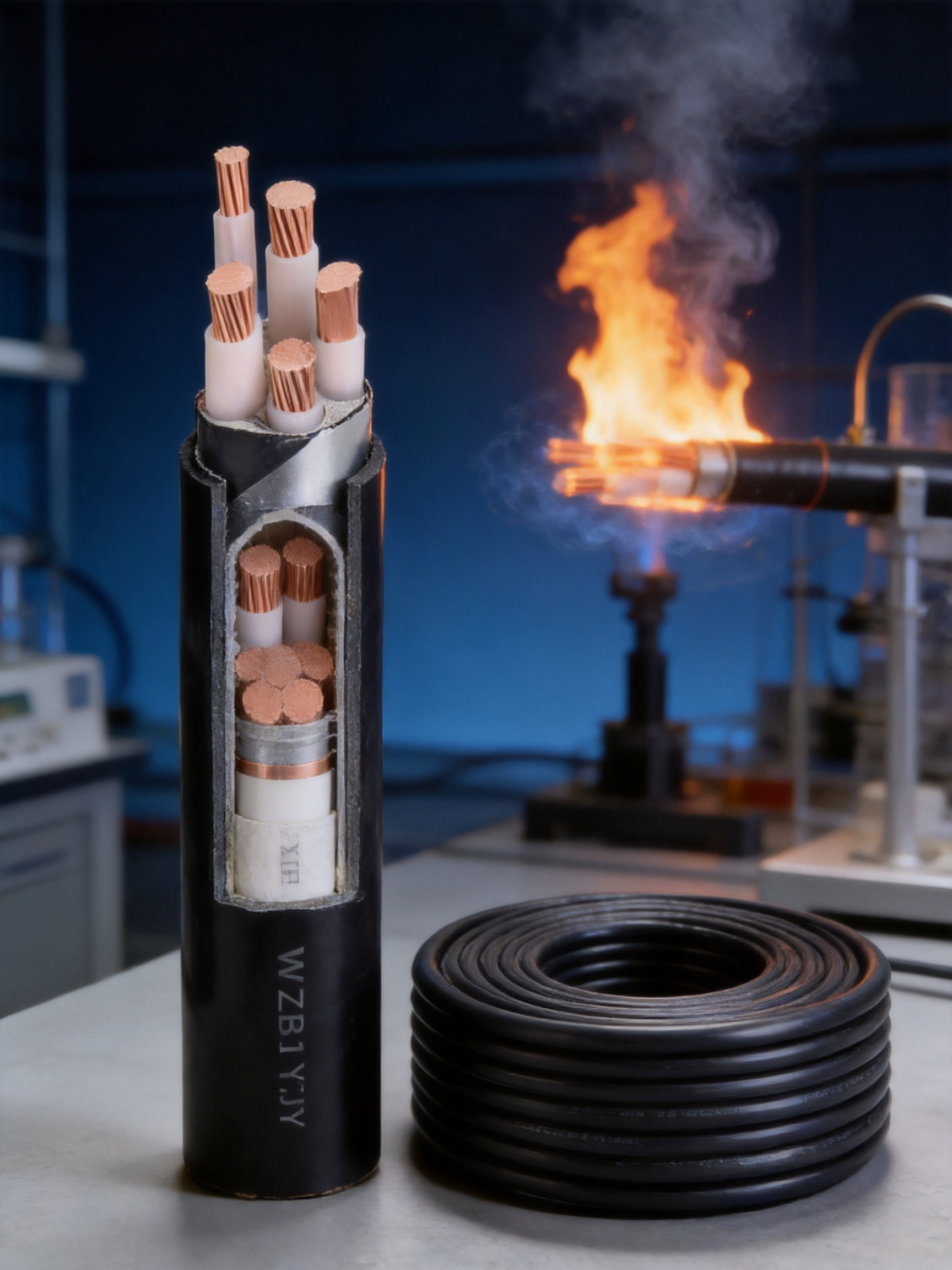
The following specifications summarize the standard performance range and installation guidance for WDZB1-YJY cable. Final construction, conductor arrangement, number of cores, outer diameter, current rating, and test requirements should be confirmed for each project.
Parameter |
Standard specification or performance |
Product type |
XLPE insulated and sheathed power cable |
Conductor |
Copper |
Conductor cross-sectional range |
1.5 mm² to 1000 mm² |
Typical rated voltage |
0.6/1 kV |
Insulation material |
Cross-linked polyethylene |
Maximum continuous conductor temperature |
90°C |
Maximum short-circuit conductor temperature |
250°C for up to five seconds |
Sheath material |
Halogen-free, low-smoke polyolefin |
Minimum installation temperature |
Not below 0°C |
Minimum bending radius |
Single-core: at least 20D; multi-core: at least 15D |
Combustion performance target |
B1 grade in accordance with applicable GB 31247 requirements |
Halogen-free indicators |
pH value at least 4.3; conductivity no greater than 10 μS/mm |
Low-smoke indicator |
Light transmittance typically above 60%, subject to test conditions |
The 0.6/1 kV rating makes the cable suitable for many low-voltage distribution systems. However, voltage selection should always be based on the actual electrical network, insulation coordination, installation method, fault conditions, and applicable local regulations. The cable should not be selected only by conductor size. Voltage rating, ambient temperature, grouping, thermal dissipation, voltage drop, short-circuit protection, and fire safety requirements must all be considered.
The stated cross-sectional range from 1.5 mm² to 1000 mm² allows the product family to address both relatively small power circuits and high-capacity feeder applications. Smaller sizes may be used for equipment connections and branch circuits, while larger sizes may be selected for main distribution feeders, industrial power systems, substations, and infrastructure projects.
One of the most important advantages of WDZB1-YJY is the difference between comprehensive combustion performance and basic flame-retardant performance. Conventional cables may be classified according to flame propagation behavior, but they may not provide the same level of evaluation for smoke, heat, toxicity, and total fire energy.
The B1-grade approach considers the overall hazard profile of the cable during fire. This gives engineers and project owners a more complete basis for selecting cables in buildings and facilities where evacuation is difficult or where the consequences of smoke and heat are particularly severe.
Compared with ordinary WDZC-YJY cable, the WDZB1-YJY product is intended for projects with significantly higher fire performance requirements. It also represents an upgrade over many products described only as flame-retardant A grade, because the evaluation scope is broader than flame spread alone. The product is not positioned as the lowest-cost option. Instead, it is designed for situations where safety performance takes priority over initial material cost.
The cable also offers advantages over conventional PVC-insulated or PVC-sheathed products in environments where smoke, corrosive gases, and visibility are major concerns. PVC materials can release dense smoke and acidic gases when involved in a fire. A halogen-free, low-smoke construction can help reduce these risks and limit secondary damage to electrical and electronic equipment.
Compared with lower-grade low-smoke cables, the key differentiator is the stated B1-grade target and the need to evaluate multiple combustion characteristics together. This provides a higher level of performance assurance when the cable is specified for critical public or industrial environments.
Comparison factor |
Conventional general-purpose cable |
Ordinary flame-retardant cable |
WDZB1-YJY |
Primary fire focus |
Basic electrical operation |
Flame propagation control |
Comprehensive combustion performance |
Halogen-free construction |
Not necessarily |
Depends on product design |
Yes, using a halogen-free polyolefin sheath |
Smoke performance |
May be high during combustion |
Varies by material |
Low-smoke performance is a core design objective |
Heat release evaluation |
May be limited |
May focus mainly on flame spread |
Includes heat release rate and total heat release considerations |
Typical application priority |
Cost and basic transmission |
General fire-retardant requirements |
High-occupancy, critical, or difficult-to-evacuate areas |
WDZB1-YJY is intended for use in locations where the consequences of cable combustion may be especially serious. These locations include extremely crowded public buildings, enclosed spaces, underground facilities, transportation infrastructure, and buildings with complex evacuation routes.
Hospitals, schools, shopping centers, exhibition halls, stadiums, theaters, hotels, and large office complexes often contain large numbers of people who may not be familiar with the building layout. In such facilities, low smoke density and reduced smoke toxicity can be particularly valuable. A cable with comprehensive fire performance can support the wider fire protection strategy of the building.
Airports, railway stations, subway systems, tunnels, and passenger terminals frequently include enclosed or underground areas. These facilities may have long cable routes, restricted ventilation, and high occupant density. Cable fire performance is therefore an important consideration in power distribution, emergency systems, ventilation equipment, signaling systems, and auxiliary infrastructure.
Manufacturing facilities may contain high-value equipment, automated production lines, control cabinets, motors, drives, and process systems. A cable fire can interrupt production and damage sensitive equipment even when the original ignition source is small. Halogen-free materials may also help reduce corrosive contamination of control and electronic systems.
Data centers, server rooms, telecommunication facilities, and control centers require stable power and carefully managed fire risks. Smoke and corrosive gases can damage electronic equipment beyond the area directly affected by flames. Using low-smoke, halogen-free power cables as part of a coordinated electrical and fire protection design may help reduce the potential for secondary damage.
Basements, utility corridors, cable tunnels, service shafts, and enclosed plant rooms can be difficult to access during an emergency. Smoke may accumulate rapidly, while evacuation routes may be limited. The product’s comprehensive combustion performance is particularly relevant in these conditions.
Power feeders, emergency distribution systems, fire pump supplies, ventilation equipment, and other essential circuits may require cables with enhanced fire safety characteristics. The exact fire-resistance requirement depends on the system design. WDZB1-YJY provides comprehensive combustion performance, but it should not automatically be considered a fire-resistive cable unless the specific construction has separately passed the required fire-resistance tests.
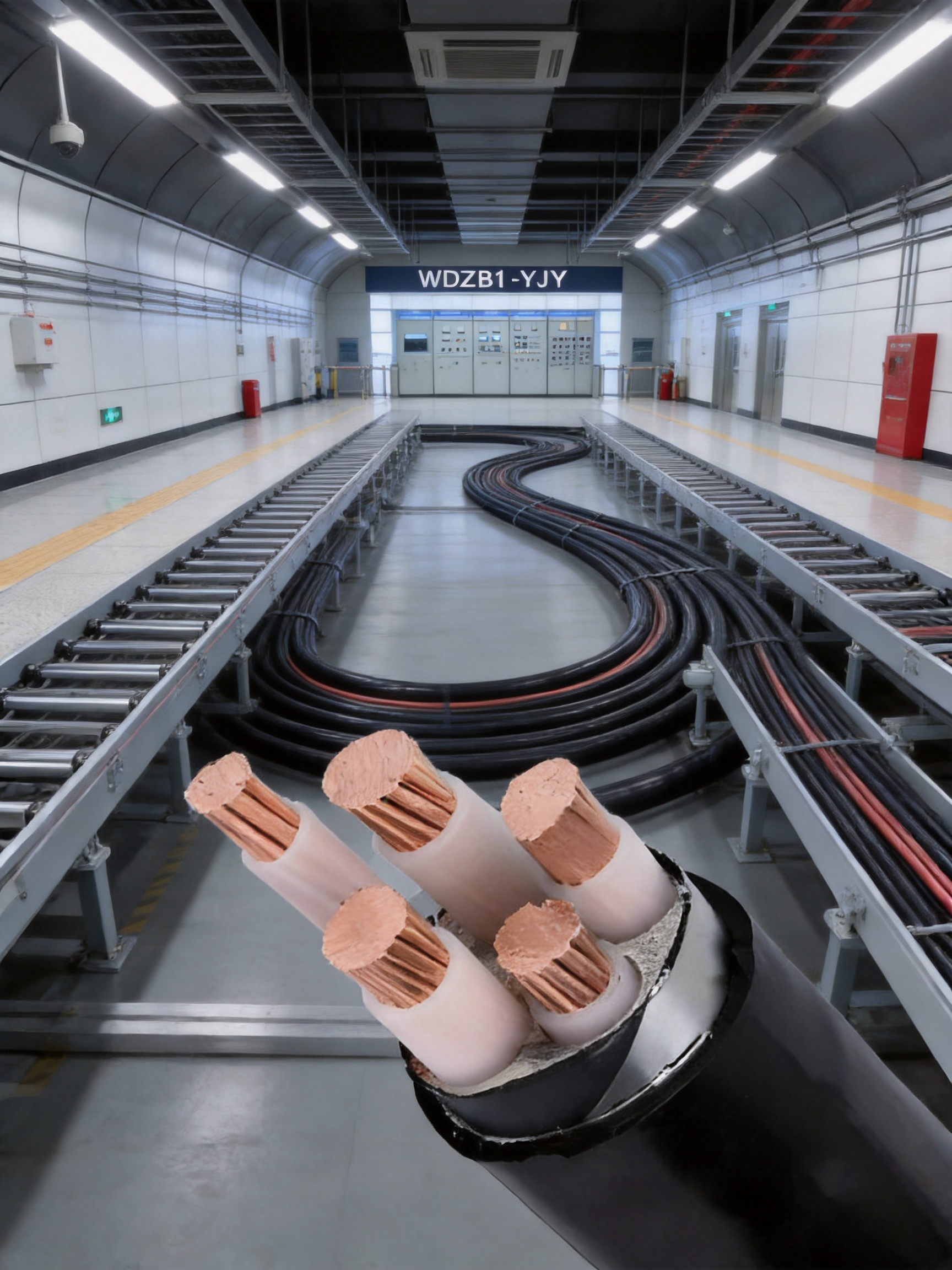
The performance of a high-grade cable depends on more than the material names printed in a specification sheet. Conductor quality, insulation uniformity, extrusion control, sheath formulation, dimensional accuracy, curing conditions, electrical testing, and final inspection all influence product reliability.
Anhui Zhishang Cable Technology Co., Ltd. integrates research and development, manufacturing, sales, and technical service. Its production base covers approximately 5,000 square meters and includes 10 automated production lines. The company reports a monthly output capacity of up to 10 million meters, enabling it to support both standard product orders and larger project requirements.
WDZB1-YJY requires carefully selected raw materials because its electrical and combustion performance depend heavily on compound formulation. Copper must meet the required conductivity and dimensional standards. XLPE insulation must be processed consistently to provide reliable dielectric strength, mechanical integrity, and thermal endurance. The halogen-free polyolefin sheath must achieve a balance between flexibility, mechanical protection, environmental resistance, and combustion performance.
Material control is especially important for B1-grade cable because fire performance cannot be achieved through a single component alone. The conductor, insulation, sheath, fillers, binding materials, and overall cable construction may all influence combustion behavior. Consistent batching and traceability can therefore help reduce performance variation between production lots.
Automated production lines can improve process repeatability and help maintain consistent dimensions. During conductor processing, automated equipment supports stable stranding, controlled tension, and uniform geometry. During insulation and sheath extrusion, process parameters such as temperature, line speed, pressure, and material feeding must be controlled carefully.
Uniform insulation thickness helps reduce electrical weak points. Stable sheath dimensions support reliable mechanical protection and accurate installation planning. Automation also helps reduce variation caused by manual handling and supports higher production efficiency for long-length cable orders.
The company has quality engineers and research and development technicians with more than 10 years of industry experience. This experience supports product selection, construction adjustment, specification review, and customized cable development. Customers can provide drawings, samples, performance requirements, or installation conditions for technical evaluation.
For projects with unusual routing conditions, specialized conductor arrangements, particular marking requirements, or defined environmental needs, engineering support can be as important as the manufacturing process itself. Cable selection must be matched to the actual load, installation method, bending conditions, ambient environment, and applicable standards.
Quality assurance includes full-core and full-length pure copper specifications for standard cable models, product test reports, and warranty support. Documentation can help project owners, electrical designers, contractors, and inspectors confirm that the delivered product corresponds to the approved technical requirements.
For B1-grade applications, buyers should request the relevant test reports and conformity documentation for the exact cable construction being supplied. It is important to distinguish between a general product family statement and a test report covering the precise conductor size, number of cores, insulation system, sheath formulation, and construction configuration.
Correct installation is necessary to preserve the cable’s designed electrical and mechanical performance. Even a high-performance cable can be damaged by excessive pulling tension, improper bending, impact, compression, unsuitable termination, or installation at an excessively low temperature.
The recommended minimum installation temperature is not below 0°C. If installation takes place in cold conditions, the cable may become less flexible and more vulnerable to sheath cracking or insulation damage during bending. Project teams should confirm appropriate handling procedures before installation in low-temperature environments.
The minimum bending radius is specified as at least 20 times the cable diameter for single-core cable and at least 15 times the cable diameter for multi-core cable. The letter D refers to the outside diameter of the cable. These values should be treated as minimum limits rather than normal working targets. Where space permits, using a larger bending radius can reduce mechanical stress.
Bends should be planned in advance, especially in cable trenches, vertical risers, switchgear rooms, and equipment connection areas. Abrupt changes in direction can create local stress and make termination more difficult. Rollers, guides, and suitable pulling equipment should be used for long or heavy cable runs.
During installation, the pulling force should remain within the allowable limit for the specific cable construction. The cable should not be dragged over sharp edges, rough concrete, contaminated surfaces, or objects that may cut the sheath. When cables are placed in trays or ducts, the support system should prevent excessive sagging, crushing, and concentrated pressure.
For parallel circuits, designers should consider spacing, grouping, magnetic effects for single-core cables, heat dissipation, and accessibility for inspection. Cable cleats and supports must be selected to withstand normal operating forces as well as short-circuit forces where applicable.
Terminations should be completed using accessories compatible with XLPE insulation, the conductor material, the rated voltage, and the cable dimensions. The conductor should be prepared without damaging adjacent insulation. Correct lug selection, crimping pressure, torque, sealing, and phase identification are essential for a reliable connection.
For halogen-free and low-smoke systems, accessories and ancillary materials should also be reviewed. The fire performance of a complete installation may be affected by jointing compounds, gland materials, cable supports, firestopping systems, and penetrations through walls or floors.
Electrical designers should select WDZB1-YJY according to the complete operating environment rather than conductor size alone. The following factors should be evaluated:
First, the design current must be determined based on the connected load, demand factor, diversity, power factor, and expected operating pattern. The selected conductor size must then satisfy the allowable current-carrying capacity under the actual installation conditions.
Second, voltage drop should be checked for both normal operation and starting conditions where motors, transformers, compressors, or other high-inrush loads are involved. A conductor may have adequate thermal capacity but still produce excessive voltage drop over a long distance.
Third, short-circuit withstand must be coordinated with the protective device clearing time. The stated short-circuit conductor temperature of up to 250°C for five seconds is a design reference, but the actual fault duration and system protection must be considered.
Fourth, the installation environment should be evaluated. Ambient temperature, soil thermal resistivity, water exposure, ultraviolet exposure, chemical contact, mechanical impact, cable grouping, and ventilation can all affect performance.
Fifth, the fire protection requirements of the project should be reviewed. B1-grade cable may be appropriate where national regulations, building codes, design specifications, or risk assessments require high comprehensive combustion performance. The cable should be used as part of a complete fire safety system that also includes detection, compartmentation, emergency lighting, smoke control, firestopping, and evacuation planning.
The principal limitation of WDZB1-YJY is its higher cost compared with ordinary WDZC-YJY and many standard WDZA-YJY or general-purpose cable products. The additional cost is associated with more demanding material selection, compound formulation, process control, testing, and quality assurance requirements.
For projects where only basic electrical transmission is required and fire risk is low, a less advanced cable may be economically suitable. However, in high-occupancy or difficult-to-evacuate spaces, the initial cable price represents only one part of the total project cost. Potential consequences of cable fire may include injury, equipment damage, business interruption, emergency reconstruction, regulatory penalties, and loss of public confidence.
The value of WDZB1-YJY should therefore be assessed through a risk-based approach. A project team can compare the cost of upgraded cable construction with the expected reduction in fire-related hazards and the importance of maintaining safe evacuation conditions. In critical facilities, enhanced fire performance may justify the premium even when the cable is more expensive than conventional alternatives.
Procurement teams should also ensure that comparable quotations refer to equivalent technical requirements. A cable described simply as “low-smoke” may not have the same B1-grade performance target. The number of cores, conductor size, sheath compound, test standard, packaging, delivery length, and documentation package should all be included in the comparison.
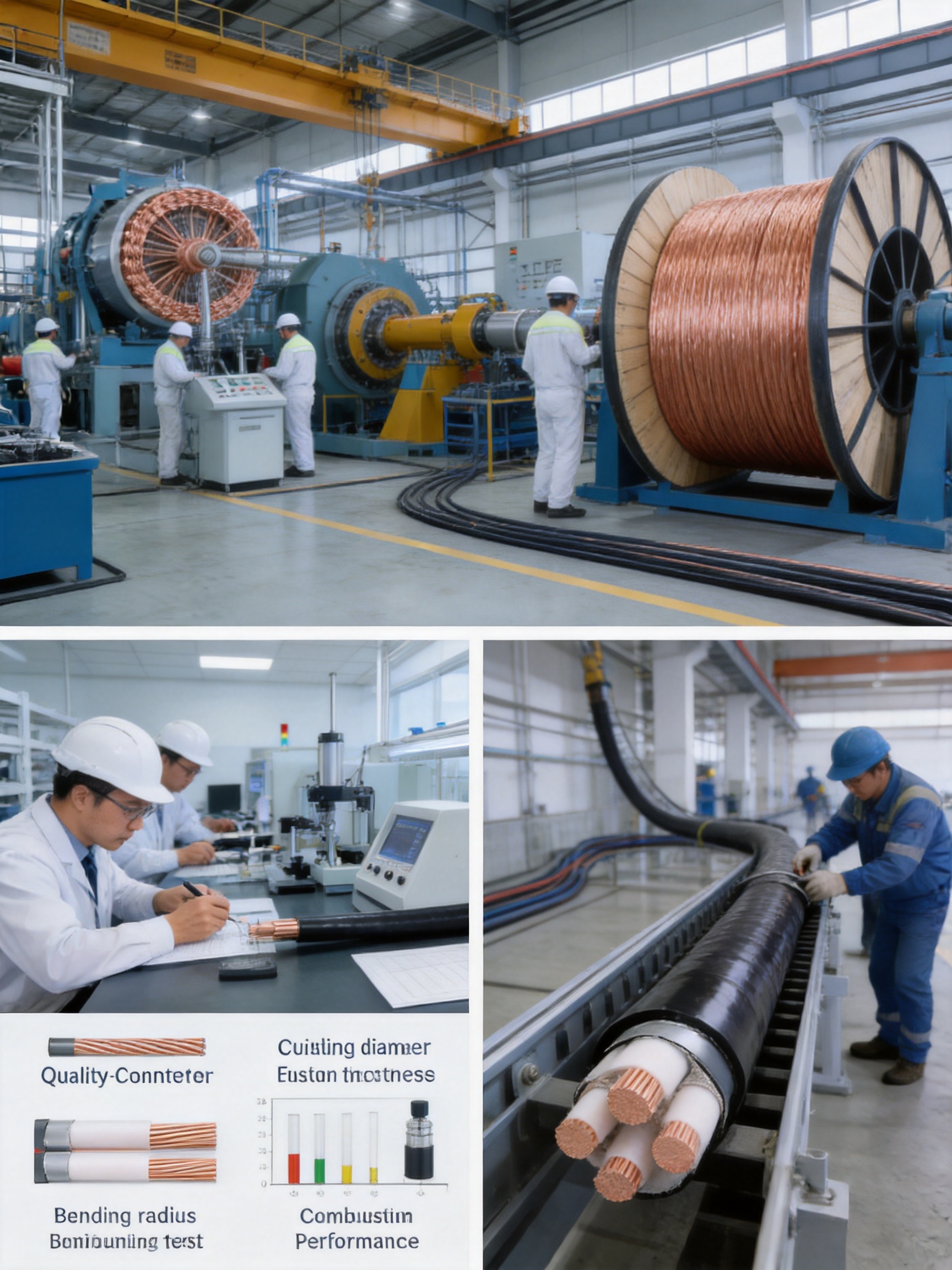
Different electrical projects may require different cable configurations. Although the standard WDZB1-YJY product is based on copper conductors, XLPE insulation, and a halogen-free low-smoke sheath, project-specific requirements may affect conductor size, core arrangement, color identification, marking, packaging, delivery length, and testing documentation.
Anhui Zhishang Cable Technology Co., Ltd. supports OEM and ODM development based on customer drawings or samples. Its technical engineers can assist with cable selection and tailor-made design solutions according to the intended application. This service is useful for equipment manufacturers, system integrators, engineering contractors, distributors, and infrastructure developers that require repeatable cable specifications across multiple projects.
Customization can also help align the cable with installation constraints. For example, a project may require a particular outside diameter for an existing tray, a defined bending performance for a compact route, or special length markings for field installation. Before approving a customized construction, the project owner should define the electrical, mechanical, environmental, fire performance, and documentation requirements clearly.
OEM and ODM cooperation should include an approval process. Technical drawings, material specifications, test plans, sample verification, production release, inspection records, and change-control procedures help ensure that the delivered cable remains consistent with the approved design.
Large electrical projects often require reliable delivery schedules in addition to technical compliance. Delayed cable delivery can affect civil works, equipment installation, commissioning, and project handover. The company’s reported production capacity of up to 10 million meters per month provides a foundation for supporting standard and project-based demand.
Standard cable models may be stocked for faster shipment, while customized products typically require a lead time of approximately 7 to 20 days, depending on the construction, quantity, testing, and production schedule. Customers should confirm availability and lead time before issuing a purchase order, especially for large cross-sectional sizes or special B1-grade configurations.
Appropriate packaging is also important. Cable drums should protect the product from impact, moisture, contamination, and uncontrolled rolling. Long-length cables should be stored on stable surfaces, with drum direction and handling instructions observed during transportation. Before installation, the receiving team should inspect the drum, cable ends, markings, sheath condition, and accompanying documentation.
Halogen-free cable construction supports environmental and safety objectives by reducing the use of halogen-containing materials in the insulation and sheath system. During combustion, the reduction of acidic and corrosive gases can help protect both people and equipment. This is particularly important in facilities containing sensitive electronics and valuable control systems.
The company also emphasizes green manufacturing and responsible production practices. Continuous improvement in material utilization, process efficiency, product reliability, and quality control can contribute to lower waste and longer service life. A durable cable that performs reliably over its expected operating period can reduce replacement work, material consumption, and maintenance disruption.
Sustainability should be evaluated across the complete product lifecycle. In addition to material composition, project teams should consider energy efficiency, service life, packaging, transportation, installation waste, maintenance requirements, and end-of-life handling. The cable’s environmental benefits should be considered together with the required fire and electrical performance rather than viewed as an isolated feature.
A clear project specification helps prevent substitution with a lower-performance product. The specification should identify the product type, conductor material, rated voltage, conductor cross-sectional area, number of cores, insulation material, sheath material, combustion performance grade, applicable standards, test documentation, delivery length, and marking requirements.
A typical procurement description may state that the cable shall be a copper-conductor, XLPE-insulated, halogen-free, low-smoke, polyolefin-sheathed power cable with a rated voltage of 0.6/1 kV and B1-grade comprehensive combustion performance in accordance with the applicable requirements of GB 31247.
The specification should also state whether the cable is required to provide fire resistance, circuit integrity, water resistance, oil resistance, ultraviolet resistance, rodent protection, armor, or other special properties. These characteristics are not automatically provided by the basic WDZB1-YJY construction and must be confirmed separately.
Inspection requirements may include conductor resistance, insulation resistance, voltage test, dimensional verification, sheath integrity, marking inspection, and relevant combustion performance tests. For major projects, factory inspection, third-party testing, sample approval, and batch traceability may be included in the quality plan.
Before ordering WDZB1-YJY, buyers should confirm the following points:
The system voltage and required cable rating should be verified against the electrical design.
The conductor cross-sectional area should be selected based on current capacity, voltage drop, short-circuit conditions, and installation environment.
The number of cores and conductor arrangement should match the circuit configuration.
The required B1-grade combustion documentation should be confirmed for the exact cable construction.
The cable diameter should be checked against tray, duct, conduit, gland, and termination dimensions.
The minimum bending radius should be included in the installation method statement.
The minimum installation temperature and transportation conditions should be reviewed.
Halogen-free and low-smoke requirements should be coordinated with the cable accessories and firestopping materials.
Required test reports, certificates, warranty terms, and inspection documents should be identified before production.
Delivery length, drum size, labeling, packaging, and project scheduling should be confirmed with the manufacturer.
WDZB1-YJY refers to a low-smoke, halogen-free power cable using XLPE insulation and a polyolefin sheath, with B1-grade comprehensive combustion performance as the primary fire safety target. The standard construction uses copper conductors and is commonly rated at 0.6/1 kV.
Ordinary flame-retardant cable classifications may focus mainly on flame propagation. WDZB1-YJY is intended to meet a broader B1-grade performance concept that includes flame spread, heat release, smoke density, smoke toxicity, combustion calorific value, and total heat release.
Not automatically. WDZB1-YJY is designed for comprehensive combustion performance, but fire resistance and circuit integrity are separate requirements. If a project requires a circuit to continue operating during a defined fire exposure, a cable construction with the appropriate fire-resistance test results must be specified.
The maximum long-term allowable conductor temperature is 90°C under the specified operating conditions. The actual allowable current depends on ambient temperature, installation method, grouping, ventilation, and other design factors.
The maximum short-circuit conductor temperature is approximately 250°C for a short-circuit duration of up to five seconds, subject to the applicable design assumptions and protection system.
The minimum bending radius is at least 20 times the cable diameter for single-core cable and at least 15 times the cable diameter for multi-core cable. A larger radius is preferable whenever the installation space allows.
It is intended for especially important, high-occupancy, enclosed, or difficult-to-evacuate locations where comprehensive cable combustion performance is required. The final selection must comply with the building design, applicable fire regulations, and project engineering requirements.
The stated conductor cross-sectional range is 1.5 mm² to 1000 mm². Availability of a specific size, number of cores, and construction should be confirmed before ordering.
Yes. OEM and ODM development can be supported based on customer drawings, samples, or defined technical requirements. Customization may involve conductor size, core arrangement, marking, packaging, dimensions, test documentation, or other agreed design details.
The request should include voltage rating, conductor material, cross-sectional area, number of cores, cable length, installation environment, required fire performance, applicable standards, delivery location, testing requirements, and any special mechanical or environmental requirements.
The higher price results from more demanding material formulations, manufacturing controls, combustion performance requirements, testing, and quality assurance. It is intended for projects where enhanced fire safety has greater value than the lowest initial purchase price.
No. Halogen-free construction can reduce acidic and corrosive gases, while low-smoke and B1-grade characteristics address additional combustion hazards. However, complete fire safety also depends on installation design, circuit protection, fire detection, compartmentation, emergency systems, and correct construction practices.
High-performance cable procurement requires more than a catalog description. The manufacturer must be able to maintain material consistency, control production parameters, provide appropriate testing, support technical clarification, and respond to project-specific requirements.
Anhui Zhishang Cable Technology Co., Ltd. combines product development, automated manufacturing, quality engineering, technical support, and international sales capabilities. Its modern production base, 10 automated production lines, experienced technical personnel, and reported monthly output capacity provide a practical foundation for supplying both standard and customized cable solutions.
The company serves applications including industrial automation, weak current engineering, intelligent manufacturing, appliance equipment, power engineering, and other electrical fields. Its OEM and ODM capabilities allow customers to develop cable products based on drawings or samples rather than relying only on off-the-shelf configurations.
The company’s quality philosophy emphasizes product stability, pure copper construction for standard models, full-core and full-length specifications, test reports, warranty support, and technical assistance. These strengths can help reduce procurement uncertainty and support more consistent project execution.
WDZB1-YJY XLPE insulated and sheathed power cable is designed for electrical systems where fire safety must be evaluated comprehensively. Its copper conductor provides dependable power transmission, XLPE insulation supports a 90°C continuous conductor temperature, and the halogen-free low-smoke polyolefin sheath helps address smoke, corrosive gases, and environmental safety concerns.
The product’s central advantage is its B1-grade comprehensive combustion performance target. Rather than focusing only on flame propagation, the design considers flame spread, heat release, smoke density, smoke toxicity, combustion calorific value, and total heat release. This makes it suitable for especially important buildings, crowded public areas, enclosed locations, underground facilities, transportation infrastructure, and other spaces where evacuation may be difficult.
The cable carries a higher cost than ordinary alternatives, but that cost reflects more demanding materials, production processes, testing, and quality requirements. When the consequences of smoke, heat, toxic gases, and fire spread are significant, comprehensive cable fire performance can provide meaningful value as part of a complete safety strategy.
Supported by automated production, experienced engineers, OEM and ODM services, product testing, flexible supply capacity, and international project experience, Anhui Zhishang Cable Technology Co., Ltd. is positioned to provide both standard WDZB1-YJY products and customized cable solutions. For project owners, designers, contractors, and distributors seeking a cable that combines electrical reliability with advanced combustion performance, WDZB1-YJY is a strong option for high-demand low-voltage power applications.
GB 31247, Classification and Test Requirements for Combustion Performance of Cables and Optical Cables Used in Buildings and Structures.
Relevant national and industry requirements for halogen-free, low-smoke electrical cables.
Electrical cable installation practices for low-voltage power distribution systems.
Technical guidance for XLPE insulated and polyolefin sheathed power cables.
Fire safety design principles for high-occupancy, enclosed, underground, and public buildings.
Manufacturer technical information for WDZB1-YJY XLPE insulated and sheathed power cable.
Manufacturer quality and production information for Anhui Zhishang Cable Technology Co., Ltd.

We firmly believe that good cables are not only a competition of materials, but also a reflection of craftsmanship, quality, and responsibility.

Links
Product
Send Inquiry
No. 29 Sankeshu Road, Xuanzhou District, Xuancheng City, Anhui Province, China
+86-18621104555/+86-563-2622999
 Electrical Cable Manufacturer
OEM/ODM Wire and Cable Solutions
 English
 Español
 عربى
 русский