
Get more content that can help you
Content
KGGP2 High-Temperature Resistant Control Cable is engineered for control, monitoring, and power-signal transmission in environments where ordinary control cables quickly lose stability, flexibility, insulation strength, or electromagnetic compatibility. Designed with a glass fiber and silicone rubber composite structure, stranded plated copper conductors, and a double-layer shielding system, this cable is positioned for demanding applications such as metallurgical equipment, high-temperature chemical systems, aerospace engine testing, nuclear power auxiliary areas, steel rolling lines, and other harsh industrial installations that require stable control performance under heat, vibration, electromagnetic interference, oil mist, ozone, ultraviolet exposure, and chemical corrosion.
The defining value of KGGP2 lies in its combination of high-temperature endurance, flexible installation performance, double shielding, and long-term environmental reliability. Many industrial control cables are built for general indoor use, standard machine wiring, or moderate thermal conditions. In contrast, KGGP2 is intended for installations where temperature, electrical noise, and mechanical fatigue appear simultaneously. This makes it a strong option for manufacturers, engineering contractors, automation integrators, and maintenance teams that must reduce downtime and preserve accurate control communication under severe operating conditions.
In modern industry, a control cable is no longer a passive accessory. It is part of the reliability chain of the entire system. If a cable hardens, cracks, absorbs oil, loses insulation resistance, or fails to suppress interference, a production line can experience unstable signals, false alarms, actuator errors, control cabinet faults, or shutdowns. KGGP2 addresses these risks through material selection, conductor construction, shielding design, manufacturing discipline, and quality control. It is not only a cable for carrying electrical energy or control signals; it is a protective transmission platform for critical industrial processes.
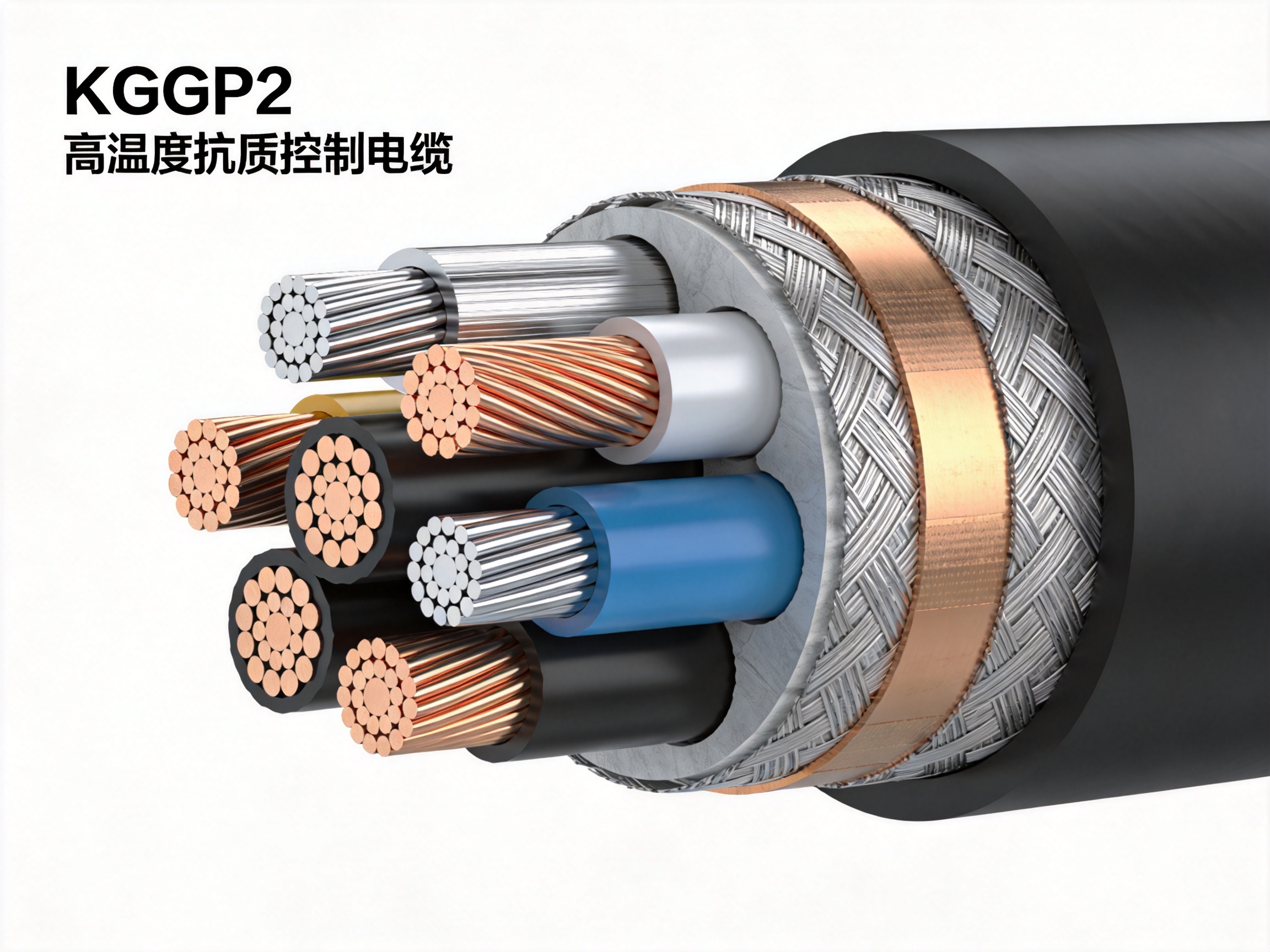
KGGP2 belongs to the high-temperature resistant control cable category and is also relevant to flexible cable, specialty cable, power-control cable, and industrial automation cable applications. Its rated voltage of 450/750V supports common control and power-control circuits, while its multi-core configuration range of 2 to 37 cores allows it to be used in complex control networks, instrumentation loops, equipment interlocks, monitoring systems, and multi-signal machine connections.
The cable is especially useful when engineers need one product family that can handle heat, electromagnetic interference, and installation movement. In a steel plant, for example, control cables may run near rolling equipment, heating zones, motors, and inverters. In a chemical plant, they may face corrosive vapors, oil mist, high-temperature reaction areas, and frequent maintenance movement. In an aerospace test facility, they may need to withstand radiant heat, vibration, and sensitive signal requirements. In all of these cases, the limiting factor is often not simply electrical conductivity but the combined durability of insulation, sheath, shielding, and conductor flexibility.
KGGP2 answers this need with a composite construction. The conductor uses stranded silver-plated or nickel-plated copper, providing conductivity and improved thermal oxidation resistance compared with ordinary bare copper in high-temperature service. The insulation uses a glass fiber braid and silicone rubber composite, combining thermal protection and flexibility. The sheath uses a similar glass fiber and silicone rubber composite to improve external heat resistance and environmental durability. The shielding system combines tinned copper braid shielding and tinned copper tape shielding, forming a double-layer barrier against electromagnetic interference.
This combination gives the cable a strong competitive position against standard PVC control cables, ordinary rubber control cables, single-shielded instrumentation cables, and conventional silicone cables that lack reinforced shielding or composite protection. While standard cables may be acceptable in mild environments, KGGP2 is designed for applications where electrical performance and physical durability must remain stable under heat and interference.
High-temperature environments create a chain of stress on cable systems. Insulation materials can soften, embrittle, shrink, or carbonize. Sheaths can crack or lose elasticity. Conductors can oxidize more rapidly. Shielding layers can loosen or degrade. In multi-core control cables, insulation failure between cores can lead to signal leakage, short circuits, incorrect switching, and control system faults. If the cable is installed in a dynamic zone, repeated bending accelerates fatigue and can expose weak points in the material.
Temperature also influences electrical parameters. Insulation resistance may decline, capacitance and leakage behavior may shift, and signal stability can suffer. In high-interference environments, heat is often accompanied by powerful motors, variable frequency drives, welding systems, transformers, heating equipment, and control cabinets. This means that the cable must not only survive heat but also defend transmitted signals against electromagnetic noise.
Ordinary control cable designs often treat high temperature, flexibility, corrosion resistance, and shielding as separate product choices. KGGP2 integrates these requirements into one cable structure. Its operating temperature specification is designed for extremely demanding service, with a fixed installation range of -60℃ to +500℃ and a flexible installation range of -60℃ to +180℃ according to the supplied product parameters. This distinction is important because dynamic bending places different stress on the cable than fixed installation. In practice, project engineers should select cable routing, bending radius, termination method, and protection measures according to whether the cable will remain fixed or move repeatedly.
The cable is also described as capable of long-term service at 180℃ and short-term exposure up to 250℃ in flexible or typical high-temperature conditions, with high-temperature fixed installation capability defined by the product specification. This wide thermal design range gives users flexibility for multiple levels of industrial severity. For applications involving continuous ultra-high radiant heat, engineering verification, installation shielding, and environmental confirmation are recommended to ensure the chosen structure matches the real thermal profile.
The structure of KGGP2 is built around four key design principles: reliable conduction, thermal insulation integrity, electromagnetic protection, and environmental endurance. These principles are realized through plated copper conductors, composite insulation, double shielding, and reinforced composite sheathing.
The conductor is a stranded silver-plated or nickel-plated copper conductor. Stranding improves bending resistance and flexibility compared with a solid conductor. Plating helps protect copper surfaces in high-temperature or chemically active environments. Silver plating can improve conductivity and surface stability, while nickel plating is recognized for high-temperature oxidation resistance. The selection can be adapted according to project conditions and customer requirements.
The insulation is a glass fiber braid and silicone rubber composite. Silicone rubber provides flexibility, low-temperature performance, and high-temperature elasticity. Glass fiber braid contributes heat resistance, dimensional stability, and mechanical reinforcement. The combination helps reduce the limitations of using a single insulation material in extreme conditions.
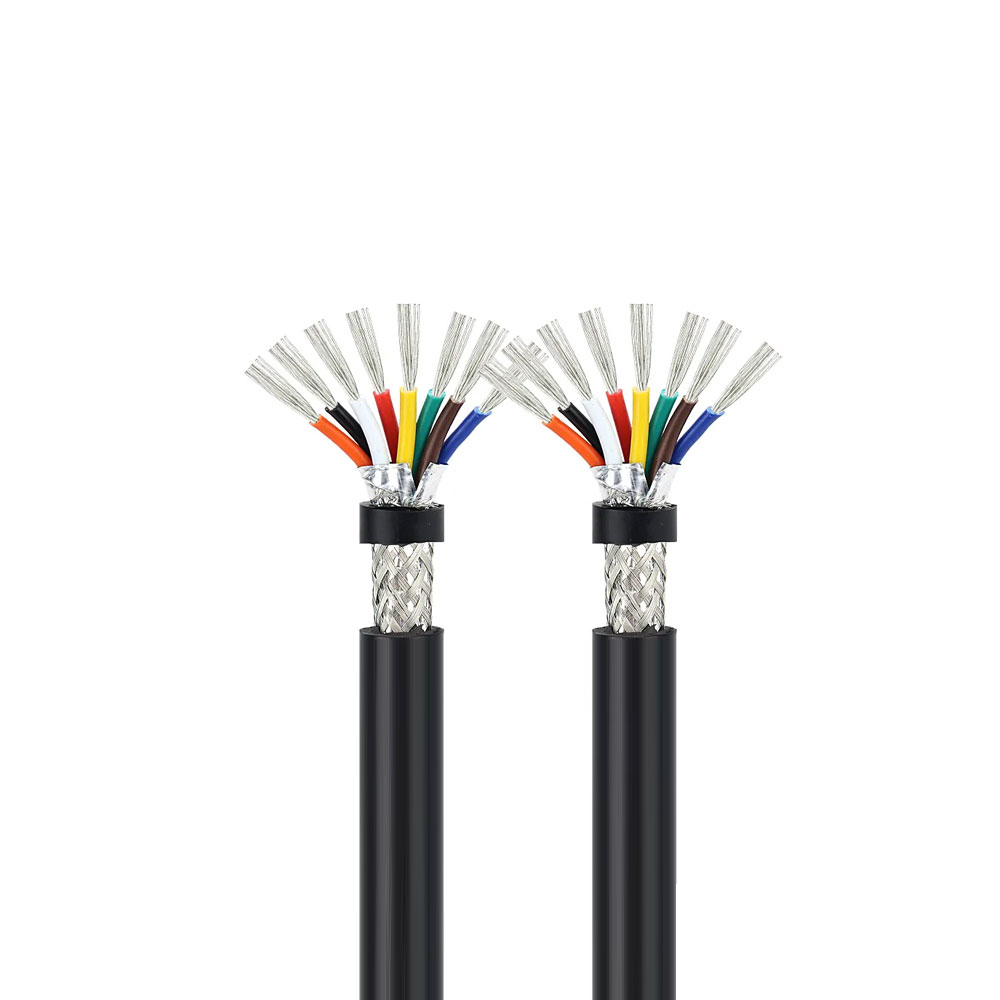
The shielding structure is a tinned copper braid shield plus a tinned copper tape shield. The braided shield provides flexibility and continuous coverage around the cable core assembly. The tape shield improves overall shielding continuity and helps reduce electromagnetic coupling. Together, the two layers provide stronger anti-interference performance than many single-shielded cable constructions.
The sheath is also made from a glass fiber braid and silicone rubber composite. This external protection improves resistance to heat, oil, ozone, ultraviolet exposure, and industrial corrosion. For additional mechanical protection, stainless steel wire braid armor can be selected as an optional structure, especially where cables may experience abrasion, impact, dragging, or harsh routing conditions.
Item |
KGGP2 Specification |
Practical Meaning |
Conductor |
Stranded silver-plated or nickel-plated copper conductor |
Supports conductivity, flexibility, and high-temperature surface stability |
Cross-Section Range |
0.75 mm² to 10.0 mm² |
Suitable for control, instrumentation, and power-control circuits |
Number of Cores |
2 cores to 37 cores |
Supports simple circuits and complex multi-signal control systems |
Rated Voltage |
450/750V |
Matches common industrial control cable voltage requirements |
Test Voltage |
3.0kV AC for 1 minute |
Provides verification of insulation withstand capability |
Insulation Material |
Glass fiber braid plus silicone rubber composite insulation |
Combines heat resistance, mechanical reinforcement, and flexibility |
Shielding Structure |
Tinned copper braid shield plus tinned copper tape shield |
Improves electromagnetic compatibility in high-interference zones |
Sheath Material |
Glass fiber braid plus silicone rubber composite sheath |
Improves resistance to heat, oil, ozone, UV, and industrial corrosion |
Temperature Range |
-60℃ to +500℃ fixed installation; -60℃ to +180℃ flexible installation |
Supports both severe fixed routing and flexible dynamic applications |
Minimum Bending Radius |
Fixed installation at least 12 times cable outer diameter; flexible installation at least 18 times cable outer diameter |
Helps preserve cable life and prevent mechanical stress damage |
Insulation Resistance |
At least 1000 MΩ·km |
Supports stable signal transmission and insulation reliability |
Flame Performance |
Complies with GB/T 19666 Class A flame-retardant requirements |
Improves safety in industrial fire-risk environments |
Corrosion Resistance |
Resistant to strong acids, strong alkalis, organic solvents, and high-temperature oil mist |
Suitable for chemical, metallurgical, and heavy industrial sites |
Shielding Effectiveness |
Shielding attenuation factor not greater than 0.4 at 1MHz |
Supports stable control and signal transmission near interference sources |
Capacitance |
Not greater than 130 nF/km |
Helps maintain predictable electrical behavior over cable length |
Armor Protection |
Optional stainless steel wire braid armor |
Adds mechanical protection for severe installation conditions |
The most direct advantage of KGGP2 is its high-temperature resistance. Standard PVC insulated control cables are often unsuitable for high-heat environments because PVC can deform, harden, or release smoke and gases under severe thermal stress. Ordinary rubber cables may offer better flexibility than PVC but can still age quickly under sustained heat, oil mist, and ultraviolet exposure. Some silicone rubber cables perform well in heat but may lack reinforced composite protection or double shielding.
KGGP2 is designed to serve beyond the limits of many standard cable types. Its glass fiber and silicone rubber composite insulation and sheath help maintain physical and electrical stability in environments where thermal cycling is common. The supplied specification differentiates between fixed and flexible installation temperature ranges, allowing engineers to select the correct installation mode rather than relying on a single simplified temperature claim. This makes the cable particularly valuable in high-temperature control cabinets, furnace-adjacent routes, hot process equipment, and areas near metallurgical machinery.
Electromagnetic interference is one of the most common causes of unstable industrial control signals. Motors, inverters, welding equipment, induction heaters, transformers, and high-current conductors can generate interference that couples into nearby signal cables. A cable that performs well electrically in a laboratory may still cause field problems if shielding is insufficient.
KGGP2 uses tinned copper braid shielding combined with tinned copper tape shielding. This double-layer structure improves shielding continuity and coverage compared with many single-layer designs. The braid contributes flexibility and mechanical stability, while the tape layer enhances the overall shielding barrier. The specified shielding attenuation factor of not greater than 0.4 at 1MHz supports improved electromagnetic compatibility in demanding environments.
This is a major advantage when compared with unshielded control cables or cables using only a simple braided shield. In high-temperature industrial zones, electromagnetic noise and thermal stress often occur together. KGGP2 addresses both challenges in one structure, reducing the need for users to choose between thermal protection and signal protection.
Industrial cables are frequently routed through cable trays, equipment frames, junction boxes, moving machine sections, testing rigs, and maintenance zones. Even when a cable is not continuously moving, it may be bent during installation, inspection, equipment adjustment, or component replacement. Poor flexibility can cause insulation cracks, conductor fatigue, shield breakage, and premature failure.
The silicone rubber component of KGGP2 provides strong flexibility and bending resistance, while stranded conductors reduce conductor stress during movement. The minimum bending radius requirements of at least 12 times the cable outer diameter for fixed installation and at least 18 times the cable outer diameter for flexible installation provide practical guidance for preserving service life. Compared with stiffer high-temperature cable designs, KGGP2 offers a better balance between thermal resistance and installation manageability.
Harsh industrial environments rarely contain only heat. They may include lubricating oil, cutting fluid, hydraulic oil, high-temperature oil mist, chemical vapor, strong acids, alkalis, organic solvents, ozone, ultraviolet exposure, and dust. Cable sheath degradation caused by these factors can lead to cracking, swelling, hardening, or loss of insulation protection.
KGGP2 is designed with environmental corrosion resistance in mind. Its composite sheath resists oil, ozone, and ultraviolet exposure and is specified to resist strong acids, strong alkalis, organic solvents, and high-temperature oil mist. This creates a clear advantage over general-purpose control cables used in chemical, metallurgical, and outdoor-exposed industrial environments.
Safety is a major concern in high-temperature cable selection. Cable materials should reduce the risk of flame spread and limit harmful smoke or gas release when exposed to fire conditions. KGGP2 is described as having a halogen-free, low-smoke, flame-retardant design and compliance with GB/T 19666 Class A flame-retardant requirements. This makes it suitable for facilities that require improved safety performance and responsible material selection.
In high-value industrial settings, safety is not limited to fire behavior. Stable insulation resistance, voltage endurance, and shielding performance also contribute to operational safety. A cable that prevents nuisance faults, avoids signal misoperation, and maintains insulation strength under severe conditions protects personnel, equipment, and production continuity.
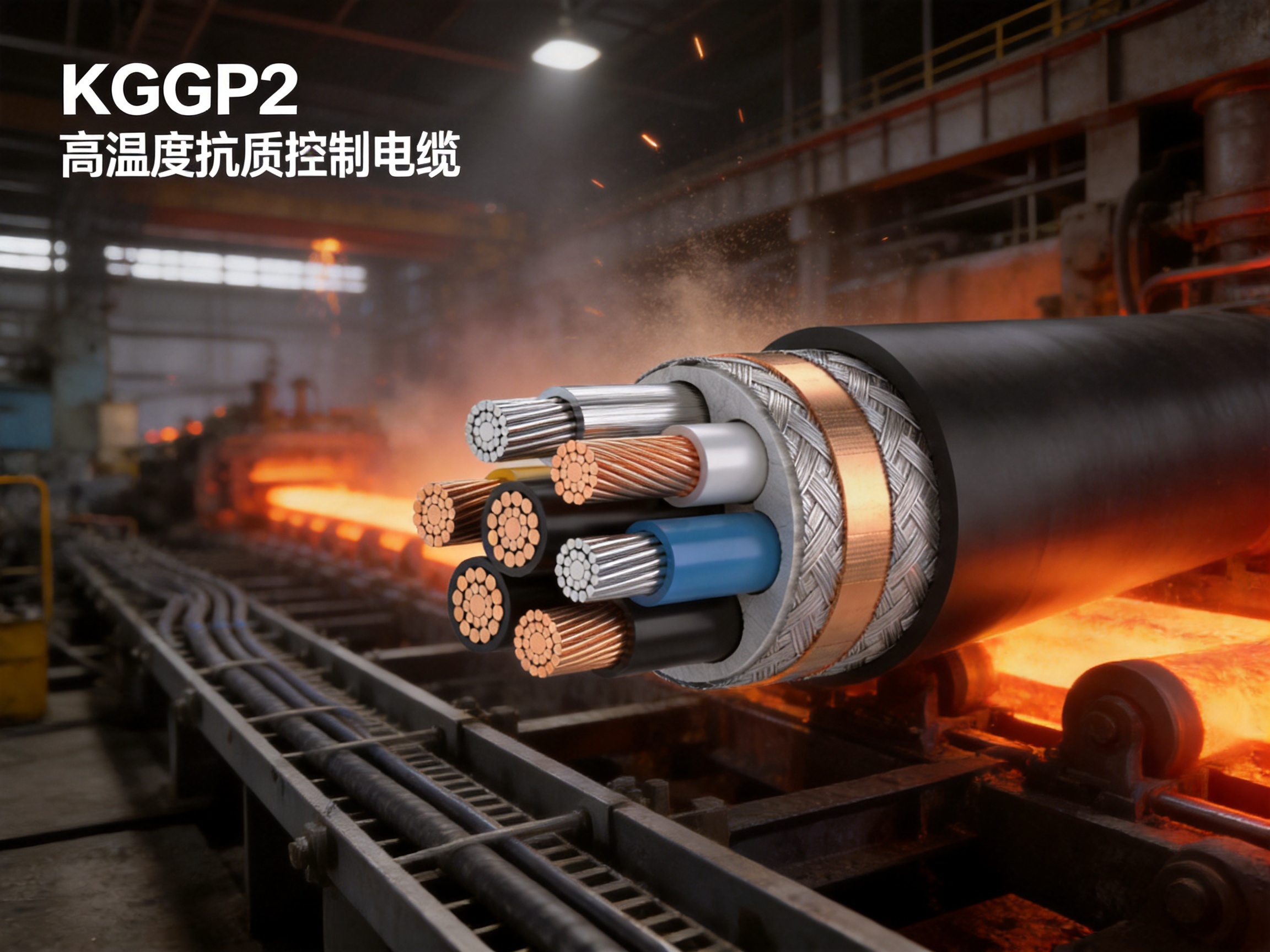
Steel plants and metallurgical production lines create some of the harshest conditions for control cables. Cables may be exposed to radiant heat, scale dust, lubricants, vibration, high-current motor drives, and repeated maintenance activities. In rolling mills, control cables must transmit signals accurately while withstanding heat from process equipment and interference from large motors and power electronics.
KGGP2 is well suited for these conditions because it combines heat resistance, double shielding, mechanical flexibility, and corrosion resistance. Its optional stainless steel wire braid armor can further protect cable routes where abrasion or mechanical impact may occur. For steel rolling equipment, the cable can support sensors, actuators, control panels, limit switches, monitoring circuits, and high-temperature control connections.
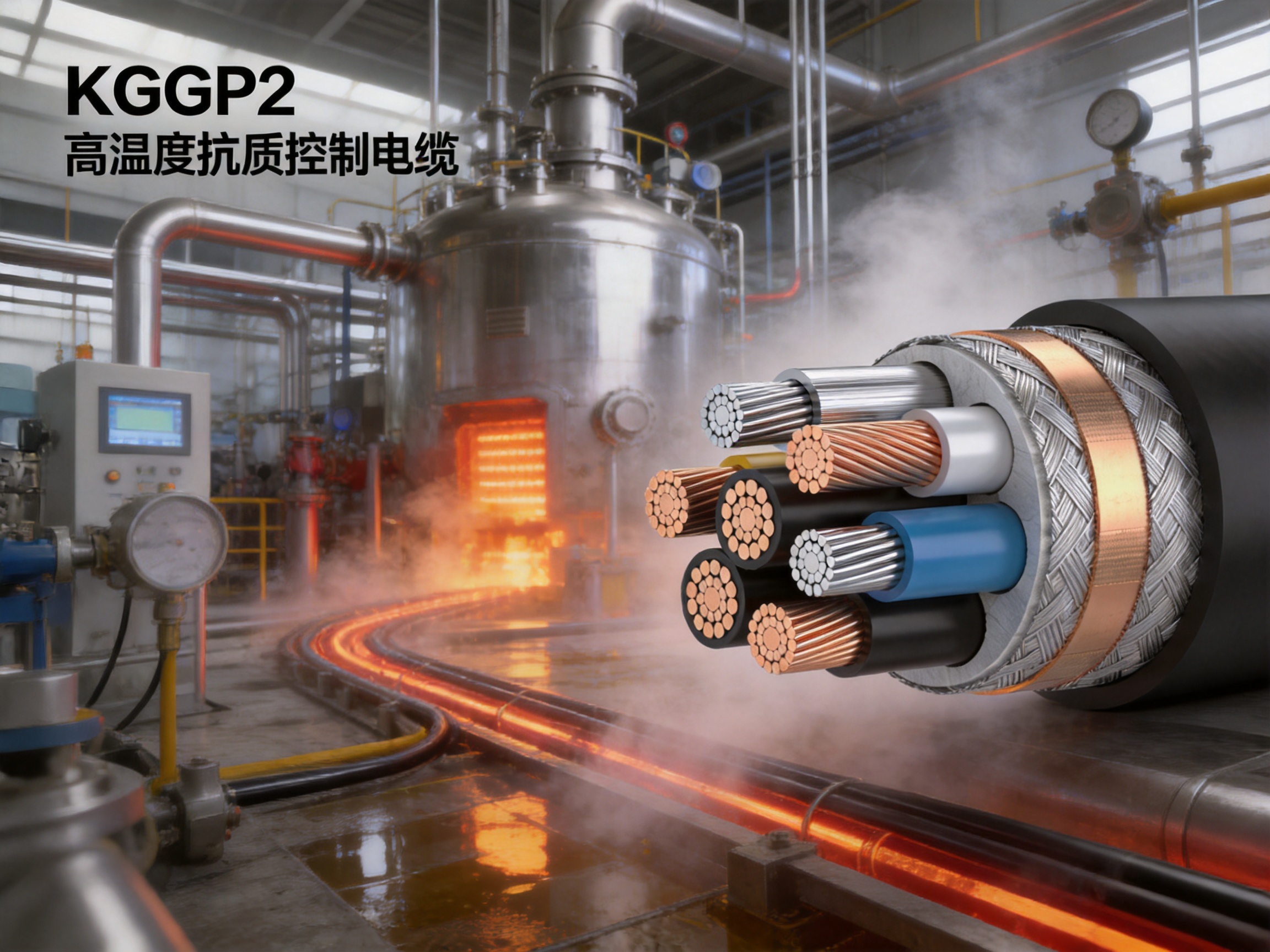
Chemical plants require cable materials that can tolerate not only heat but also aggressive chemical exposure. Reaction systems, processing vessels, heating jackets, distillation equipment, and chemical transfer systems can create environments containing acids, alkalis, organic solvents, and hot vapors. A cable that absorbs chemicals or loses sheath integrity can become a failure point.
KGGP2 provides a strong option for special chemical high-temperature reaction devices because it is specified for resistance to strong acids, strong alkalis, organic solvents, and high-temperature oil mist. Its halogen-free and low-smoke flame-retardant characteristics also support safer cable routing in industrial spaces where fire risk management is important.
Engine test facilities impose complex requirements on cable systems. High temperature, vibration, sensitive measurement signals, dynamic equipment movement, and electromagnetic noise can all appear in the same area. Instrumentation and control wiring must preserve signal quality while resisting thermal and mechanical stress.
KGGP2 can be used in aerospace engine testing environments where high-temperature control and anti-interference properties are needed. Its plated copper conductors, double shielding, and composite insulation help maintain stable performance in demanding test conditions. The wide core range also allows customized multi-core configurations for test rigs, monitoring points, and control systems.
Nuclear power facilities require cable reliability, safety, and traceability. In auxiliary high-temperature areas, cables may need to support monitoring, control, and signal functions while maintaining performance over long service periods. Flame retardancy, low-smoke behavior, insulation stability, and environmental resistance are important selection factors.
KGGP2 is suitable for high-temperature areas of nuclear power plants where project specifications match its design parameters. Its high insulation resistance, flame-retardant performance, double shielding, and long-term reliability make it relevant for control circuits requiring robust electrical and environmental characteristics.
Modern automation systems depend on stable signal transmission. Variable frequency drives, servo systems, high-power motors, induction equipment, switching power supplies, and densely packed control cabinets can generate electromagnetic interference. If cable shielding is poor, control signals may become unstable, causing false triggers or inaccurate feedback.
The double-layer shielding of KGGP2 provides a practical answer. By combining tinned copper braid and tinned copper tape, the cable helps suppress electromagnetic interference and supports reliable signal and power transmission. This is particularly valuable for automated production lines where downtime is costly and fault diagnosis is difficult.
A high-performance cable depends not only on design specifications but also on manufacturing execution. Anhui Zhishang Cable Technology Co., Ltd. integrates research and development, production, and sales of wires and cables. Located in Xuanzhou District, Xuancheng City, Anhui Province, China, the company operates in a key node city of the Yangtze River Delta region, supporting industrial supply chains and logistics access.
The company has a modern production base of approximately 5,000 square meters and a team of more than 50 employees. Its staff includes quality engineers and research and development technicians with more than 10 years of industry experience. This experience is important for specialty cables such as KGGP2, where material selection, conductor processing, shielding consistency, extrusion quality, braiding quality, and testing discipline directly affect final cable reliability.
The company follows the business philosophy of quality orientation, integrity foundation, and stability priority. This philosophy is reflected in the development of cable products that emphasize stable performance rather than only low cost. For industrial buyers, this is an important difference. A cable used in high-temperature and high-interference environments cannot be judged only by purchase price; its real cost includes installation labor, equipment downtime, safety risk, replacement frequency, and process reliability.
Anhui Zhishang Cable Technology Co., Ltd. operates 10 automated production lines and has a monthly output capacity of up to 10 million meters. Automated production capability supports dimensional consistency, conductor uniformity, insulation stability, and sheath quality. For high-temperature control cable manufacturing, process stability is essential because even small variations in insulation thickness, braid coverage, or sheath integrity can influence service life.
KGGP2 requires careful coordination of multiple production stages. Conductor stranding must produce a flexible yet stable conductor structure. Plated conductor surfaces must remain clean and suitable for insulation application. Composite insulation must be applied with proper thickness and concentricity. The glass fiber braid must be controlled to ensure reinforcement without damaging flexibility. Shielding layers must maintain sufficient coverage and continuity. The final sheath must protect the cable core while preserving the bending characteristics required for installation.
The company’s manufacturing approach supports both standard production and customization. Standard products are stocked for fast shipment, while customized products typically require 7 to 20 days of lead time depending on specifications. This balance is important for industrial customers who may need urgent replacement cables as well as project-specific engineered cable solutions.
Quality assurance is central to KGGP2 because the cable is intended for high-risk environments where failure can interrupt production or compromise control accuracy. Anhui Zhishang Cable Technology Co., Ltd. provides quality assurance through full-core, full-length, pure copper specifications, product test reports, and warranty support for standard cable models. These practices help buyers confirm that the delivered cable matches the required construction and performance standard.
The cable specification includes a 3.0kV AC test voltage for 1 minute, insulation resistance of at least 1000 MΩ·km, flame-retardant compliance with GB/T 19666 Class A requirements, and shielding performance data. These indicators are meaningful because they validate different aspects of cable reliability. Voltage testing checks insulation withstand capability. Insulation resistance supports leakage control and signal stability. Flame performance supports safety. Shielding effectiveness supports electromagnetic compatibility.
For specialty cable production, consistency from reel to reel is as important as passing a single test. Full-length assurance helps reduce hidden defects. Core identification, conductor cross-section control, insulation thickness verification, sheath thickness control, and shielding layer inspection all contribute to predictable field performance. Customers using KGGP2 in project environments can request customization based on drawings or samples, enabling the product to match equipment layouts and engineering standards.
Industrial cable projects often require more than a catalog item. Core count, conductor cross-section, insulation thickness, sheath thickness, shielding coverage, armor requirement, color identification, marking, bending radius, installation route, and environmental exposure must be considered together. Anhui Zhishang Cable Technology Co., Ltd. supports OEM and ODM development based on customer drawings or samples. Its technical engineers provide product selection guidance and tailor-made cable design solutions according to project needs.
This is a significant advantage for customers using KGGP2 in complex environments. A chemical plant may need special corrosion resistance and flame safety. A metallurgical facility may prioritize heat endurance and armor. An aerospace test platform may require signal stability and flexible routing. A nuclear auxiliary area may need documentation, traceability, and conservative safety margins. Instead of forcing one standard structure onto every project, the manufacturer can adjust the cable solution to match defined requirements for quality, technology, and service.
Engineering support also helps prevent misapplication. For example, a cable that is excellent in fixed high-temperature installation may not be suitable for continuous flexing at the same maximum temperature. The specified bending radius must be respected. Termination materials must match the thermal environment. Shield grounding strategy must be planned correctly to gain the full benefit of double shielding. Through technical guidance, customers can avoid common installation errors that reduce cable life.
Copper remains the preferred conductor material for many industrial cables because of its high conductivity and mechanical workability. However, high-temperature environments can accelerate oxidation, especially at exposed surfaces or termination points. By using silver-plated or nickel-plated copper conductors, KGGP2 improves conductor surface stability for elevated-temperature service.
Stranding adds another advantage. A stranded conductor bends more easily than a solid conductor of the same cross-section, distributing mechanical stress among multiple wires. This helps KGGP2 maintain flexibility and fatigue resistance, especially in installations where bending occurs during routing or operation.
Silicone rubber is valued for its elasticity, high-temperature performance, low-temperature flexibility, and resistance to environmental aging. Glass fiber is valued for heat resistance and reinforcement. The combination creates a composite insulation system that is more robust than relying on a single conventional polymer in extreme conditions.
This composite insulation supports stable dielectric performance and physical protection in high-temperature environments. The specified insulation thickness range of 0.8 mm to 1.5 mm gives the manufacturer flexibility to match cable size, voltage rating, and mechanical requirements. In multi-core control cable construction, consistent insulation is essential because core-to-core reliability directly affects signal integrity.
The sheath is the first line of defense against the environment. In KGGP2, the glass fiber and silicone rubber composite sheath provides heat resistance, flexibility, and resistance to oil, ozone, UV radiation, and corrosion. The specified sheath thickness range of 1.2 mm to 2.0 mm supports durability without making the cable unnecessarily rigid.
Compared with ordinary sheathed control cables, KGGP2 offers stronger resistance to harsh industrial environments. This reduces the risk of outer sheath cracking, chemical attack, and heat-related aging, helping the cable maintain long service life in demanding applications.
Electromagnetic compatibility is often discussed as a technical term, but in real production environments it has practical consequences. A control cable without adequate shielding can pick up noise from nearby high-current cables, variable frequency drives, switching equipment, and motors. The result may be intermittent faults that are difficult to reproduce. Operators may see unexplained alarms, unstable sensor values, or random communication errors.
KGGP2 helps reduce these risks with its double-layer shielding structure. The tinned copper braid provides a flexible conductive path around the cable core. The tinned copper tape adds an additional shield layer that improves coverage. Tinning helps resist oxidation and supports long-term shield reliability. When properly grounded according to engineering practice, this shielding system can significantly improve anti-interference capability.
Compared with low-cost control cables using only minimal shielding or no shielding, KGGP2 provides a more professional solution for signal-critical environments. The cable is especially valuable where control wiring must share routes with power wiring or pass near interference sources that cannot be relocated.
Correct installation is essential to realizing the full performance of KGGP2. The cable should be routed according to its specified bending radius. For fixed installation, the minimum bending radius should be at least 12 times the cable outer diameter. For flexible installation, it should be at least 18 times the cable outer diameter. Sharp bending can damage insulation, stress shielding layers, and shorten conductor life.
Engineers should also separate control cables from high-current power cables where possible. Although KGGP2 has strong shielding, good cable tray planning and grounding practices further improve signal integrity. Shield termination should be designed according to the control system’s electromagnetic compatibility requirements. In many cases, shield grounding at one or both ends depends on the frequency of interference, system grounding strategy, and equipment manufacturer recommendations.
In high-temperature environments, cable routing should avoid direct contact with surfaces exceeding the cable’s intended operating condition unless additional protection is provided. When the cable is used near furnaces, reactors, or radiant heat sources, thermal barriers, metal conduits, ceramic supports, or stainless steel armor may be considered. Termination accessories should have compatible temperature ratings; otherwise, the termination point can become the weakest part of the installation.
For moving applications, repeated bending should be evaluated carefully. KGGP2 offers high flexibility and bending resistance, but every cable has limits. Travel length, bending frequency, torsion, temperature, and mechanical tension must be considered. If the installation includes cable chains or robotic movement, project-specific consultation is recommended.
The purchase price of a cable is only one part of its total cost. In demanding industrial environments, a cheaper cable may fail earlier, require repeated maintenance, cause downtime, or create hidden signal instability. The cost of replacing a cable routed through a hot production line can be many times higher than the cost difference between cable grades. For this reason, KGGP2 should be evaluated through the lens of total cost of ownership.
Its long-term reliability comes from resistance to thermal aging, mechanical fatigue, oil, ozone, ultraviolet exposure, corrosion, and electromagnetic interference. In high-temperature dynamic environments, these properties reduce the likelihood of premature failure. In high-interference environments, stable shielding reduces the possibility of false signals and intermittent faults. In corrosive industrial areas, sheath durability extends service life.
For customers operating steel mills, chemical plants, test facilities, and automation systems, reliability means fewer emergency shutdowns and more predictable maintenance. KGGP2 supports this goal by combining material performance with manufacturing consistency and technical support.
Anhui Zhishang Cable Technology Co., Ltd. has expanded into international markets, with products sold in the United States, Canada, Australia, Japan, and parts of Eurasia. This international presence demonstrates the company’s ability to serve customers with different technical expectations, project requirements, and delivery schedules.
The company emphasizes green manufacturing and responsible production practices. In cable manufacturing, responsible production includes material control, waste reduction, quality consistency, and product designs that support safer operation. KGGP2’s halogen-free, low-smoke, flame-retardant characteristics align with the broader movement toward safer and more environmentally responsible industrial materials.
The company’s modern facility, experienced engineering team, automated lines, monthly output capability, and customization service create a strong supply foundation for industrial buyers. For projects requiring repeat orders, technical modifications, or stable production capacity, these strengths matter as much as the cable specification itself.
PVC control cable is cost-effective and widely used in ordinary environments, but it is not ideal for severe high-temperature applications. PVC may harden, soften, or degrade when exposed to excessive heat. It may also be less suitable for low-smoke or halogen-free safety requirements unless specially formulated. KGGP2 offers far stronger high-temperature resistance, better flexibility over a wide temperature range, and superior environmental durability.
Rubber cables can provide flexibility, but ordinary rubber materials may not maintain long-term performance in high heat, ozone, oil mist, or corrosive industrial environments. KGGP2 uses silicone rubber composite materials and glass fiber reinforcement, giving it better heat resistance and environmental stability. Its double shielding also gives it a signal reliability advantage over many general rubber control cables.
Single-shielded cables can reduce interference, but in severe electromagnetic environments they may not provide enough suppression. KGGP2’s tinned copper braid plus tinned copper tape creates a more complete shielding system. This is valuable near drives, motors, transformers, welding systems, and high-current conductors.
Some high-temperature cables are designed mainly for thermal resistance but may lack mechanical protection. KGGP2 offers optional stainless steel wire braid armor for users who need added mechanical strength. This option makes it more adaptable for industrial routing where abrasion, impact, or external stress may occur.
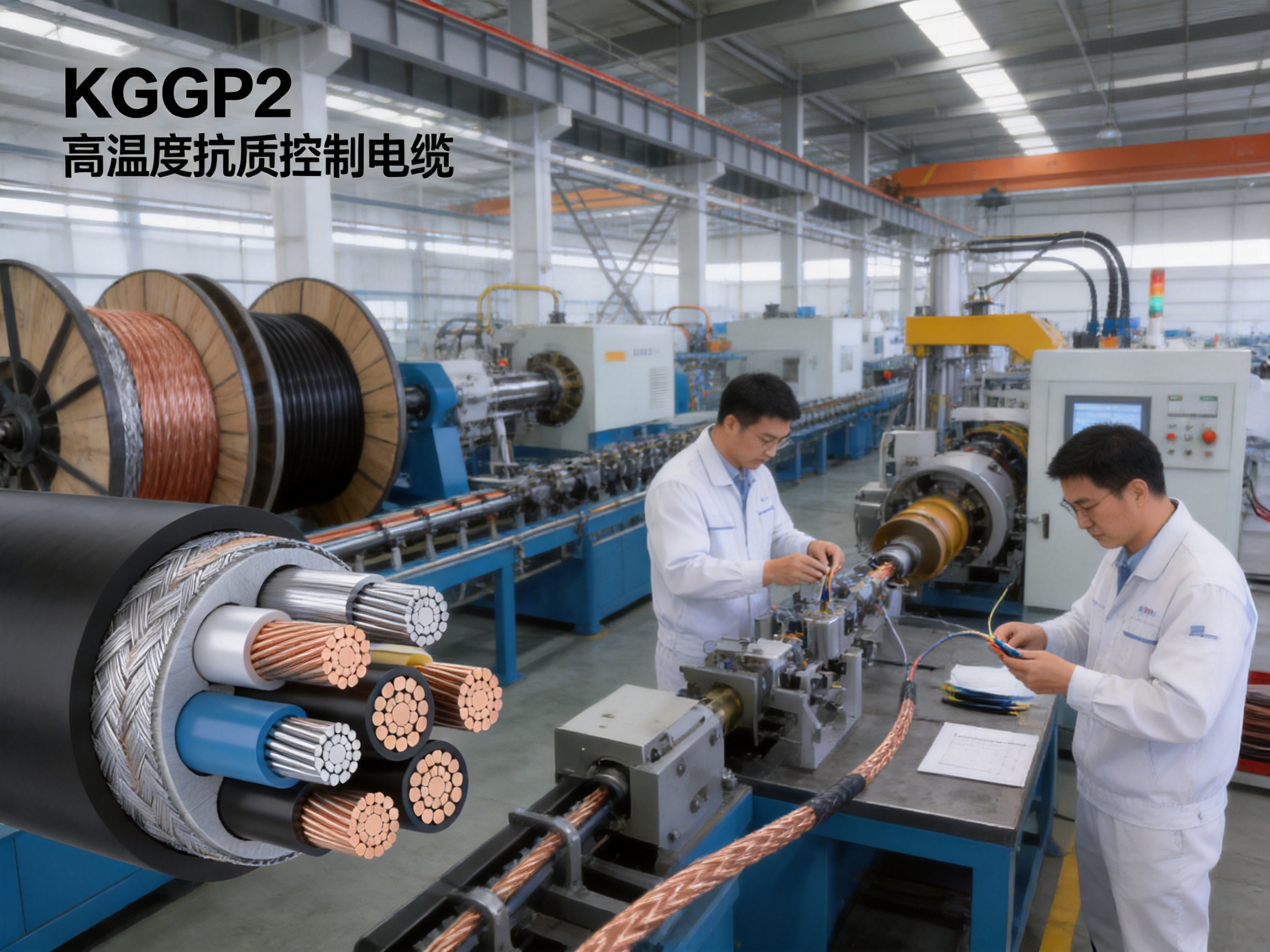
KGGP2 is mainly used for control, signal, and power-control transmission in high-temperature, high-interference, and harsh industrial environments. Typical applications include metallurgical steel rolling equipment, chemical high-temperature reaction devices, aerospace engine testing systems, nuclear power plant high-temperature areas, and industrial automation zones with strong electromagnetic interference.
The key differences are its glass fiber and silicone rubber composite insulation and sheath, plated stranded copper conductor, double-layer shielding structure, high-temperature resistance, environmental corrosion resistance, and optional stainless steel wire braid armor. Ordinary control cables usually cannot provide the same combination of heat resistance, flexibility, shielding performance, and chemical durability.
KGGP2 uses tinned copper braid shielding plus tinned copper tape shielding to improve electromagnetic compatibility. The braid provides flexibility and conductive shielding coverage, while the tape enhances overall barrier performance. This structure helps suppress electromagnetic interference and supports stable control and signal transmission in industrial environments with motors, drives, transformers, and switching equipment.
According to the supplied specification, KGGP2 is designed for -60℃ to +500℃ in fixed installation and -60℃ to +180℃ in flexible installation. The cable is also described as suitable for long-term high-temperature service around 180℃ and short-term exposure up to 250℃ in relevant operating conditions. For extreme fixed installations, project engineers should confirm the actual thermal environment, routing, terminations, and protective measures.
Yes, KGGP2 has high flexibility and bending resistance due to its silicone rubber material and stranded conductor design. However, flexible installation must follow the recommended bending radius of at least 18 times the cable outer diameter. For continuous motion, cable chain use, torsion, or robotic applications, engineering evaluation is recommended.
Yes. KGGP2 is specified to resist strong acids, strong alkalis, organic solvents, and high-temperature oil mist. Its sheath also resists oil, ozone, and ultraviolet radiation, making it suitable for many chemical and process industry environments. The exact chemical concentration, exposure time, and temperature should be reviewed for critical applications.
KGGP2 uses stranded silver-plated or nickel-plated copper conductors. These conductor options support conductivity, flexibility, and improved surface stability in high-temperature environments. The choice can be matched to project requirements.
The rated voltage is 450/750V, and the test voltage is 3.0kV AC for 1 minute. This makes the cable suitable for many industrial control and power-control circuits within the specified voltage range.
Yes. Anhui Zhishang Cable Technology Co., Ltd. supports OEM and ODM development based on customer drawings or samples. Customization can include conductor size, core count, shielding, armor, sheath requirements, and other engineering details according to project needs.
The manufacturer provides full-core, full-length, pure copper specifications, product test reports, and warranty support for standard cable models. The company also follows national standards, relevant international standards, and industry benchmarks to develop products that meet defined requirements for quality, technology, and service.
When selecting KGGP2, buyers should begin by confirming the electrical requirements: rated voltage, conductor cross-section, current load, number of cores, signal type, and cable length. Next, the environmental requirements should be reviewed, including maximum continuous temperature, short-term peak temperature, chemical exposure, oil exposure, ultraviolet exposure, flame-retardant requirements, and mechanical risks.
Installation mode is another important factor. Fixed installation allows different thermal and bending assumptions than flexible installation. If the cable will be routed near moving machinery, the bending radius, movement frequency, and cable support method must be confirmed. If the cable will be installed near strong interference sources, grounding and shielding strategy should be discussed before installation.
For severe mechanical environments, optional stainless steel wire braid armor may be selected. For highly sensitive signal systems, double shielding should be properly grounded and terminated. For high-temperature zones, accessories such as glands, terminals, conduits, and junction boxes must also be rated for the environment. A high-performance cable cannot deliver full value if connected to low-temperature accessories that fail earlier.
Customers should also request documentation and test reports where required. For project procurement, it is useful to specify conductor material, insulation material, sheath material, core count, cross-section, rated voltage, temperature range, shielding structure, flame performance, and any special armor or marking requirements. Clear specifications reduce procurement errors and ensure that delivered cables match engineering expectations.
KGGP2 High-Temperature Resistant Control Cable is a specialty cable solution for industrial environments where heat, electromagnetic interference, corrosion, oil mist, ozone, ultraviolet exposure, and mechanical fatigue can threaten ordinary cables. Its glass fiber and silicone rubber composite insulation and sheath, plated stranded copper conductors, double-layer tinned copper shielding, high insulation resistance, flame-retardant performance, and optional stainless steel wire braid armor make it a strong choice for demanding control and signal transmission systems.
Compared with conventional PVC control cables, ordinary rubber cables, and single-shielded cable designs, KGGP2 offers a more comprehensive performance profile. It is not designed merely to function under ideal conditions; it is built for harsh environments where stability and long service life matter. Its suitability for metallurgical equipment, chemical reaction devices, aerospace testing, nuclear power high-temperature areas, and high-interference automation systems demonstrates its broad industrial value.
The product is further strengthened by the manufacturing capability of Anhui Zhishang Cable Technology Co., Ltd. With a modern production base, automated production lines, experienced technical personnel, OEM and ODM support, quality assurance systems, fast shipment for standard products, and customized lead times typically within 7 to 20 days, the company provides both product performance and supply reliability. For engineers and procurement teams seeking a high-temperature control cable that balances electrical stability, thermal endurance, flexibility, shielding, and environmental resistance, KGGP2 is a practical and competitive solution.
1. GB/T 19666, General Rules for Flame Retardant and Fire Resistant Wires and Cables.
2. IEC 60228, Conductors of Insulated Cables.
3. IEC 60502, Power Cables With Extruded Insulation and Their Accessories for Rated Voltages From 1 kV to 30 kV.
4. IEC 60332, Tests on Electric and Optical Fibre Cables Under Fire Conditions.
5. IEC 61000 Series, Electromagnetic Compatibility Standards.
6. Industrial Cable Engineering Handbook, High-Temperature Cable Materials and Applications.
7. Wire and Cable Manufacturing Technology Guide, Conductor Stranding, Insulation, Shielding, and Sheathing Processes.

We firmly believe that good cables are not only a competition of materials, but also a reflection of craftsmanship, quality, and responsibility.

Links
Product
Send Inquiry
No. 29 Sankeshu Road, Xuanzhou District, Xuancheng City, Anhui Province, China
+86-18621104555/+86-563-2622999
 Electrical Cable Manufacturer
OEM/ODM Wire and Cable Solutions
Electrical Cable Manufacturer
OEM/ODM Wire and Cable Solutions
 English
 Español
 عربى
عربى
 русский