Get more content that can help you
Content
Modern buildings require electrical cables that do more than carry current. A dependable building wire must provide stable electrical performance, resist heat and aging, reduce the danger of fire propagation, and support safe evacuation when an emergency occurs. It must also be practical to install, suitable for demanding architectural environments, and manufactured with consistent quality from one production batch to the next.
The WDZ(A/B/C/D)-RYJY and WDZ(A/B/C/D)N-RYJY building wire families are designed to address these requirements. They combine halogen-free, low-smoke, flame-retardant construction with irradiated cross-linked polyethylene insulation and sheathing. Depending on the selected grade, the cable can provide different levels of flame-retardant performance, while the N-designated version adds fire-resistance capability for circuits that must continue operating during a fire.
These cables are intended for low-voltage power distribution, building services, industrial facilities, public infrastructure, and other locations where electrical reliability and fire safety are closely connected. Their construction emphasizes environmental protection, mechanical durability, temperature stability, flexible installation, and compliance with relevant Chinese cable standards.
Anhui Zhishang Cable Technology Co., Ltd. manufactures and supplies these cable solutions from its production base in Xuancheng, Anhui Province. The company integrates research and development, manufacturing, testing, and sales, enabling it to provide both standard cable products and customized OEM or ODM solutions.
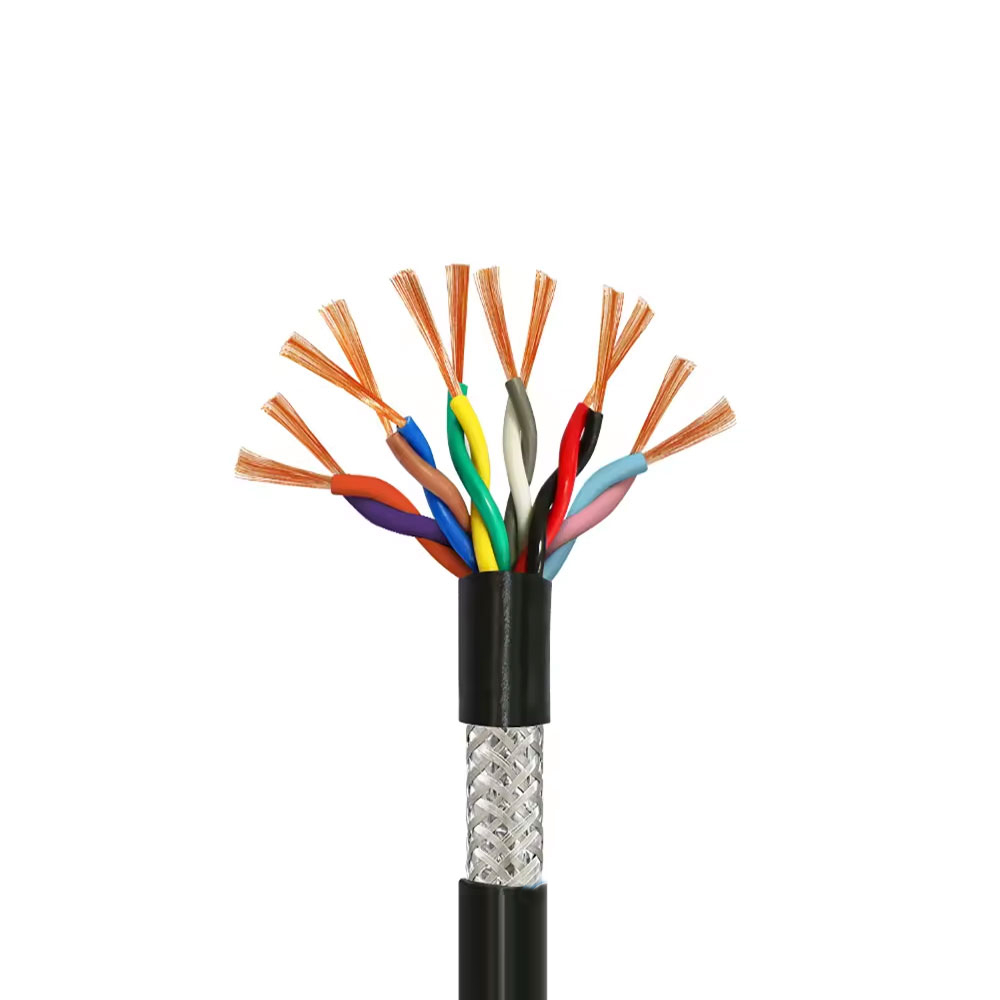
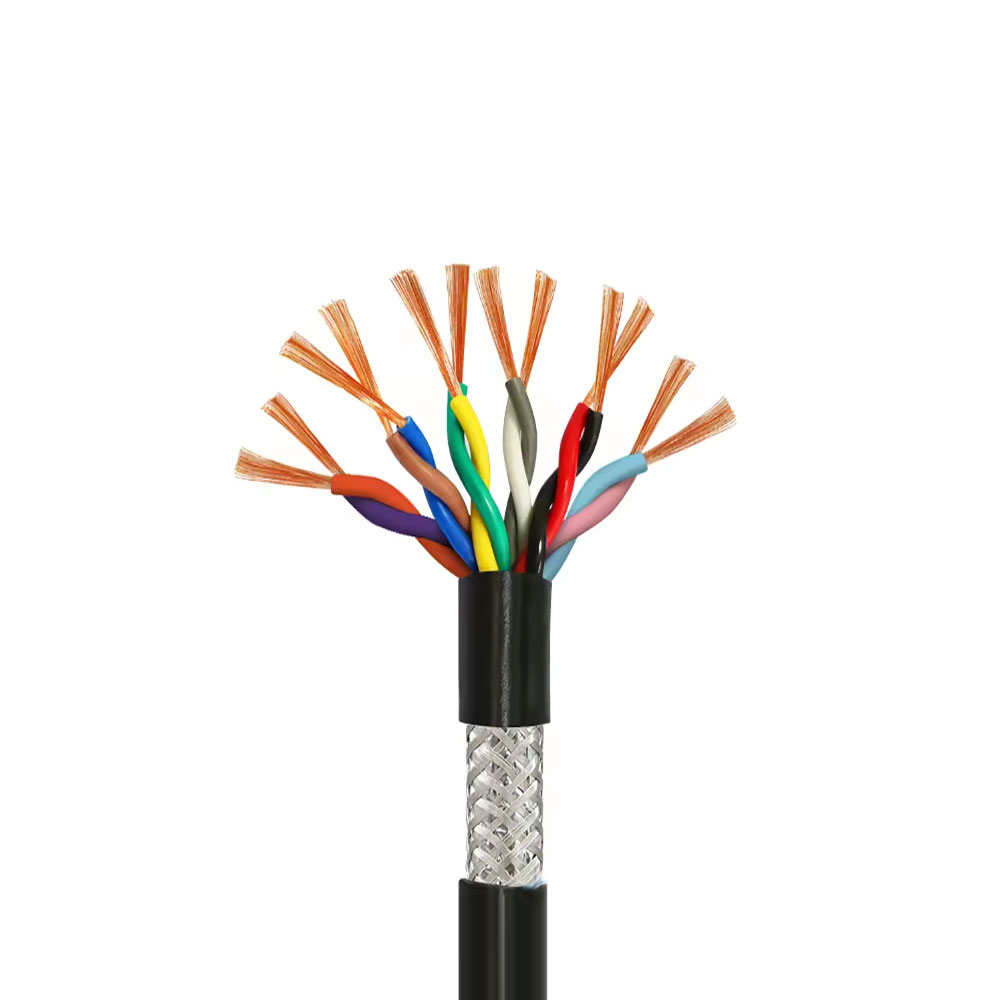
WDZ(A/B/C/D)-RYJY/ WDZ(A/B/C/D)N-RYJY Building Wire
Electrical wiring is often installed inside walls, ceilings, cable trays, shafts, floors, equipment rooms, and other areas that may be difficult to inspect after construction. Once a cable system is completed, replacing defective wiring can be expensive and disruptive. For this reason, selecting the correct cable at the design stage is one of the most important decisions in a building electrical project.
A building wire must maintain insulation integrity during normal operation. It must also tolerate short-term overloads, installation stress, temperature changes, moisture, ultraviolet exposure, and mechanical movement. In public buildings, the cable should additionally limit the spread of flame and produce as little harmful smoke as possible during combustion.
Traditional halogen-containing cable materials can release corrosive and opaque gases when exposed to fire. These gases may damage electronic equipment, reduce visibility, and make evacuation more difficult. Halogen-free, low-smoke materials are therefore increasingly selected for transportation facilities, hospitals, schools, commercial centers, data-related facilities, industrial plants, and high-occupancy buildings.
The WDZ(A/B/C/D)-RYJY and WDZ(A/B/C/D)N-RYJY families respond to this need through a combination of cable design features:
• Halogen-free insulation and sheathing formulations.
• Low-smoke performance designed to improve visibility during a fire.
• Flame-retardant grades from A through D.
• An N-type fire-resistant option for circuits requiring continued operation.
• Irradiated cross-linked polyethylene insulation and sheath technology.
• A 90°C long-term conductor operating temperature.
• Flexible construction for easier routing and installation.
• Compliance-oriented manufacturing based on national and industry standards.
These characteristics make the cable more than a basic current-carrying product. It functions as part of a broader electrical and life-safety system.
The model name contains information about the cable’s safety and construction characteristics.
WDZ identifies a halogen-free, low-smoke, flame-retardant cable design. The letters A, B, C, or D identify the applicable flame-retardant grade. Grade A represents the highest flame-retardant level in the stated classification, while Grade D represents the basic level.
RYJY identifies irradiated cross-linked polyethylene insulation and sheathing. The use of irradiated cross-linking improves thermal stability, aging resistance, and dimensional stability compared with many conventional thermoplastic constructions.
The letter N identifies the fire-resistant version. WDZ(A/B/C/D)N-RYJY is intended for applications where the cable must retain circuit continuity for a specified period under fire conditions. The supplied product information identifies performance against a 750°C and 90-minute fire-resistance test in accordance with GB/T 19666 requirements.
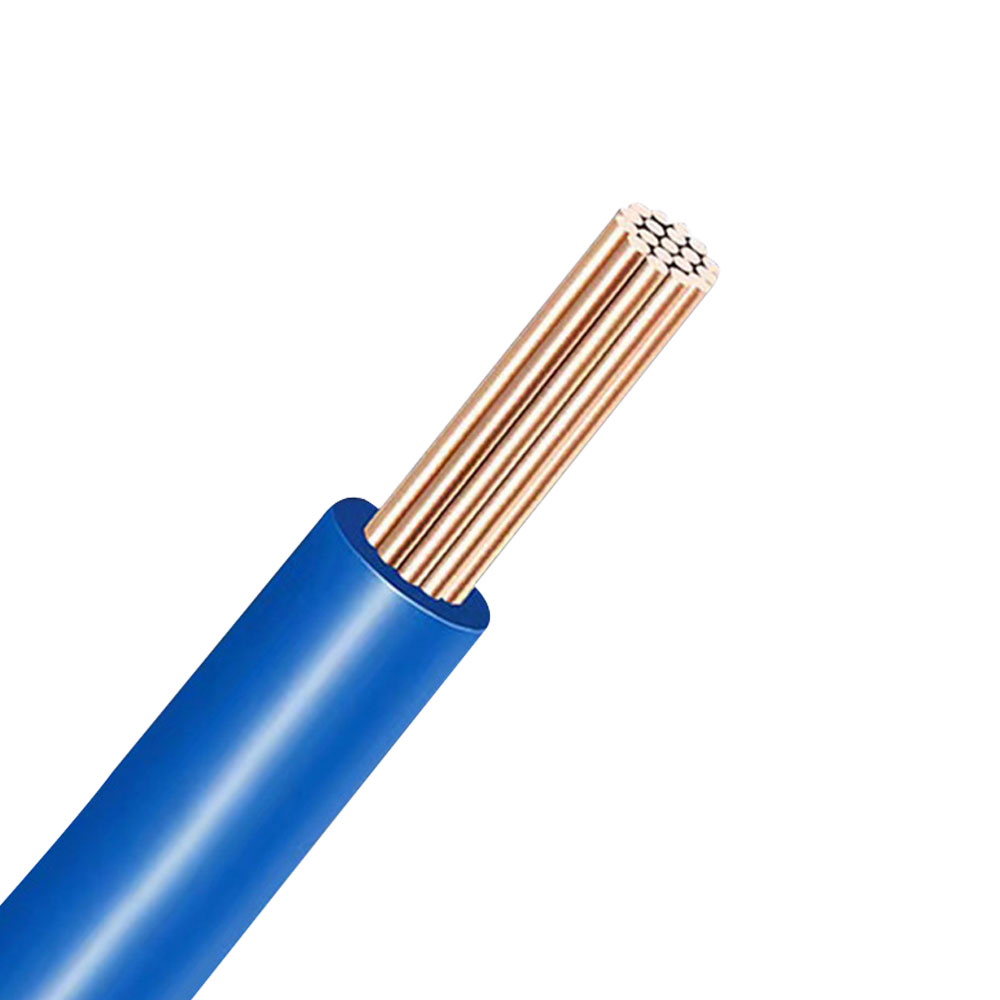
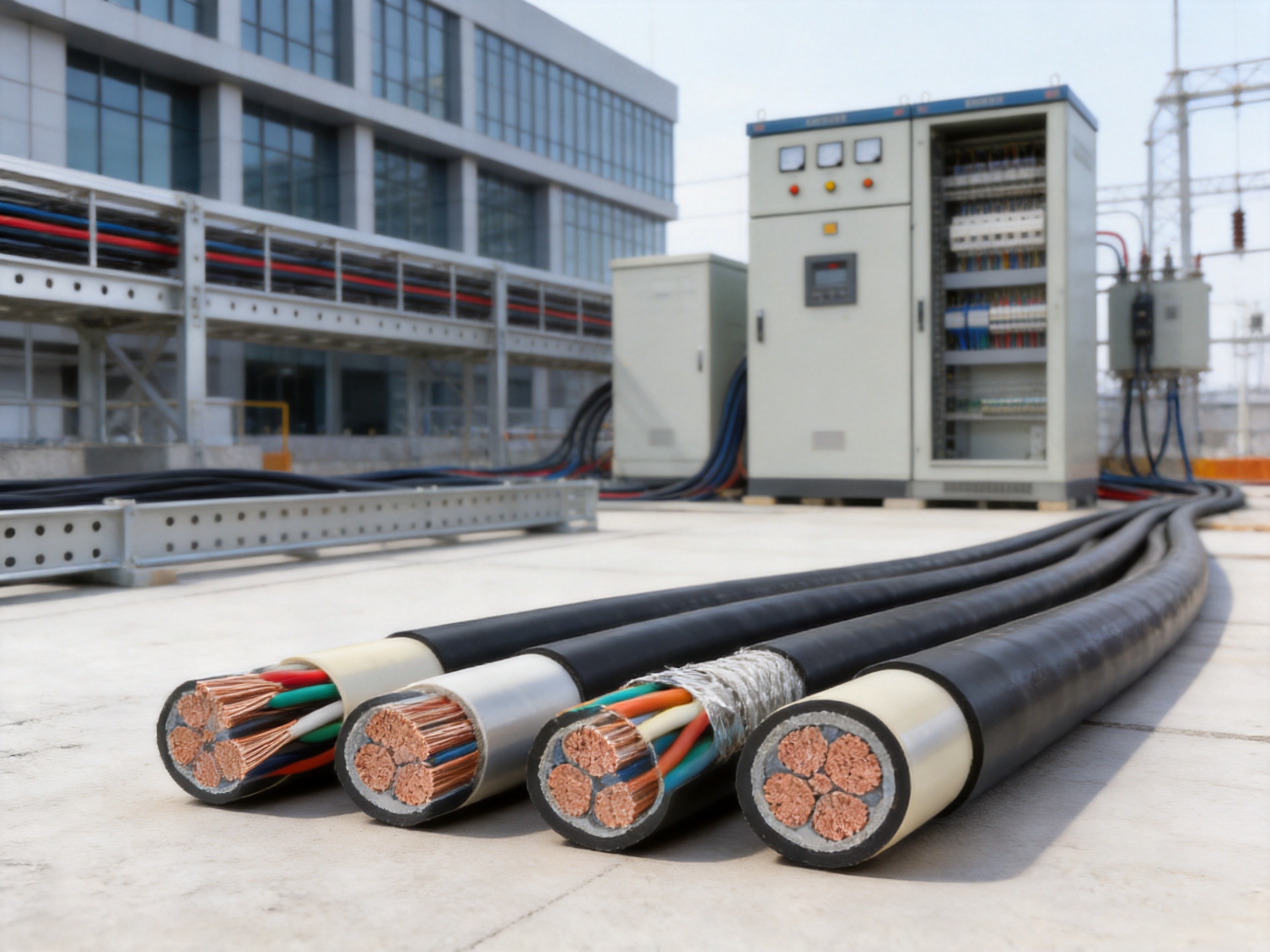
The conductor is made from annealed copper. Copper provides high electrical conductivity, good connection reliability, and effective compatibility with common low-voltage electrical accessories. The product information describes both single-core and multi-strand conductor options, including Class 5 stranded ultra-fine copper construction for flexible variants.
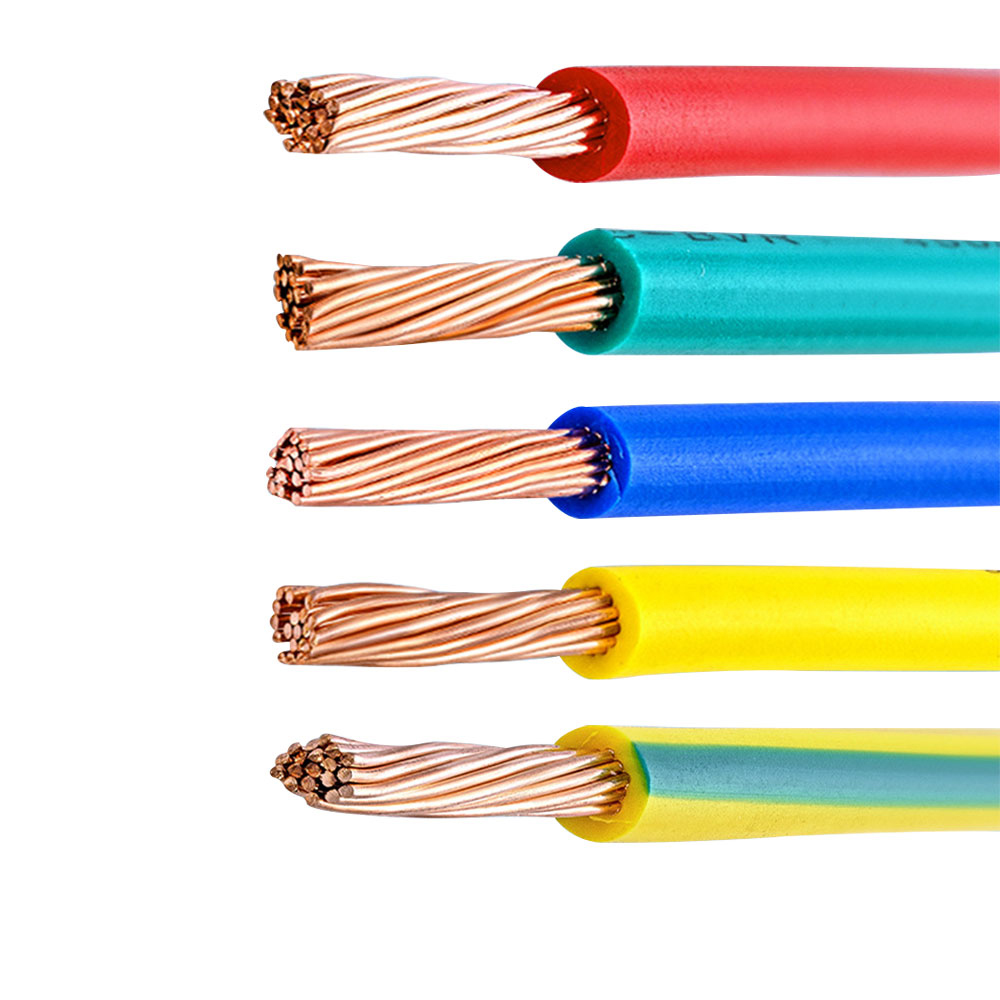
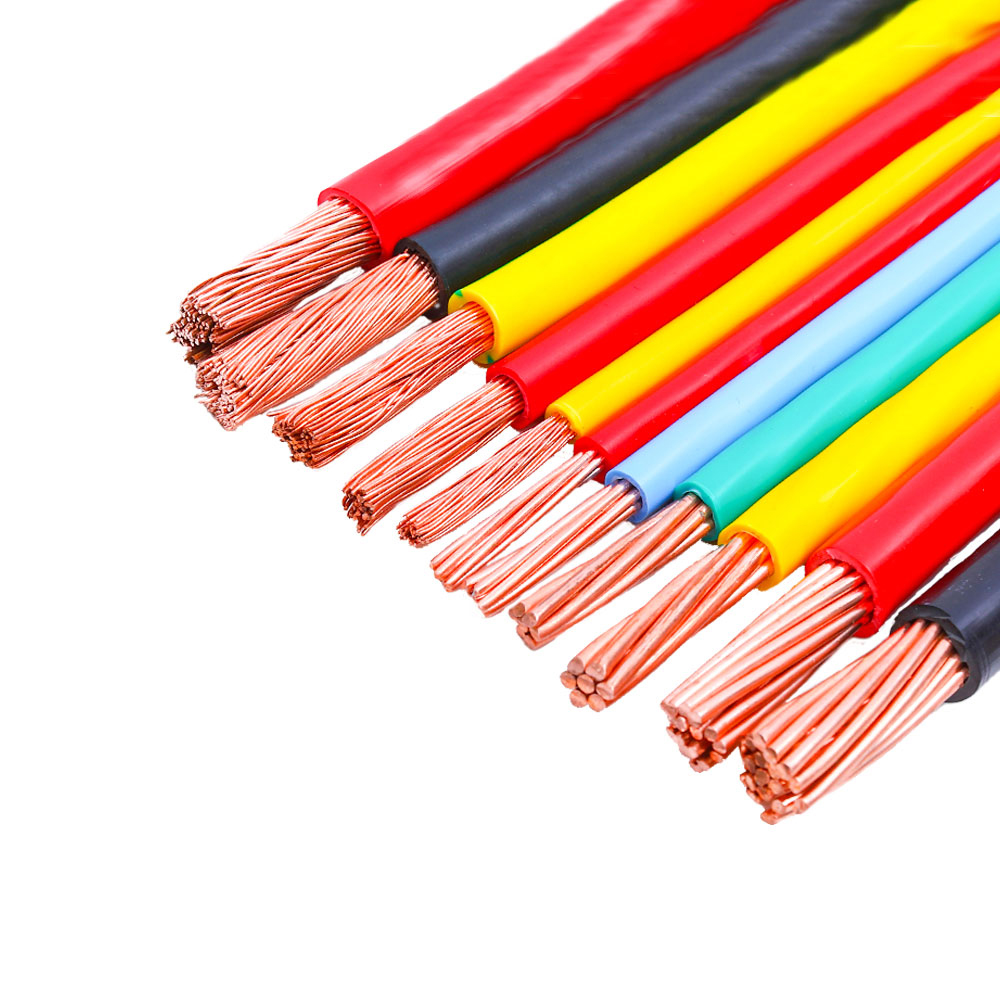
Class 5 conductors contain many fine copper wires assembled into a flexible conductor. This structure is useful where the cable must be bent around corners, routed through narrow spaces, or connected to equipment that may experience movement or vibration. It can also reduce installation difficulty in crowded electrical cabinets and building service areas.
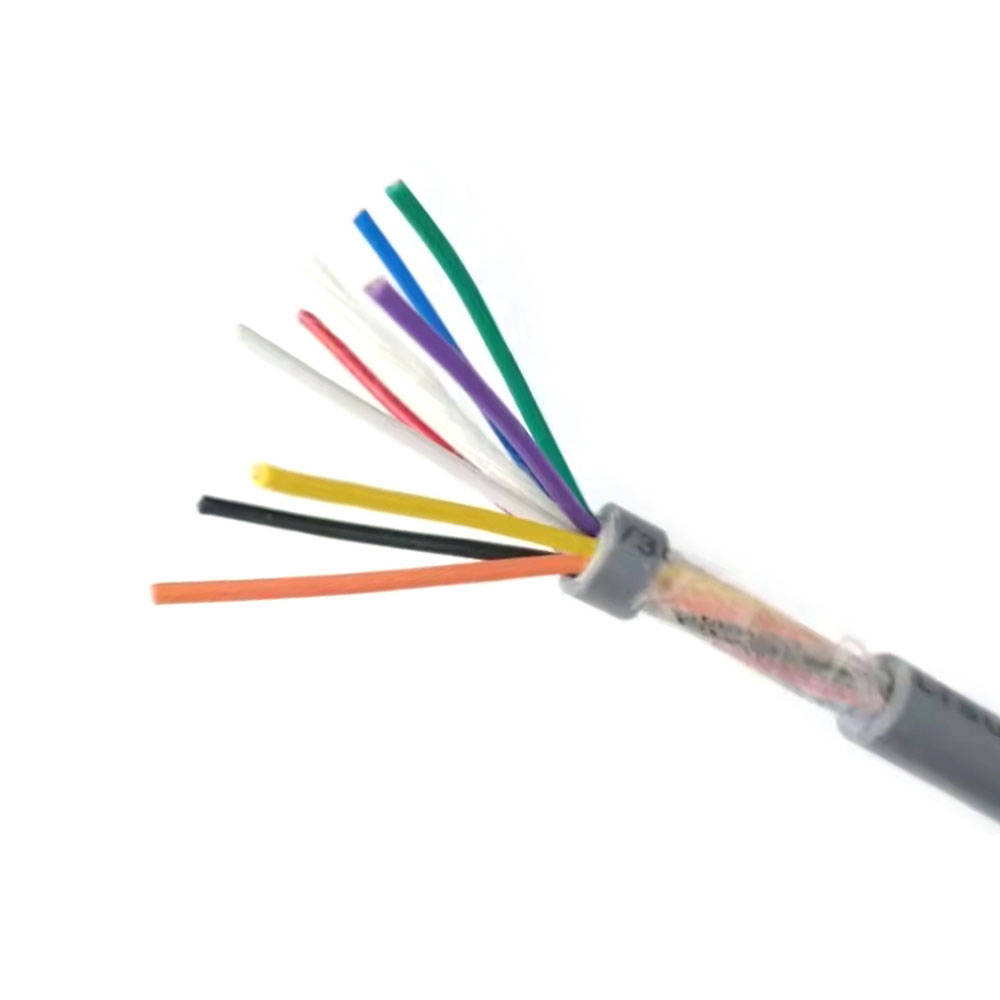
The stated cross-sectional range for the flexible control and signaling configuration is 0.5 mm² to 6 mm². Actual conductor size, number of cores, and cable configuration should be selected according to load current, voltage drop, installation method, ambient temperature, grouping conditions, and applicable local regulations.
The insulation is based on irradiated cross-linked polyethylene. During production, controlled irradiation creates cross-links within the polymer structure. This changes the material from a conventional thermoplastic into a more stable cross-linked insulation system.
Cross-linking helps the insulation retain its shape under elevated temperatures. It also improves resistance to thermal aging and reduces the likelihood of deformation when the conductor is exposed to operating heat. The result is a more stable electrical barrier between the conductor and the surrounding cable components.
For applications with repeated temperature changes, continuous operation, or higher installation density, insulation stability is particularly important. The cable must preserve adequate dielectric strength and insulation resistance throughout its service life rather than only pass an initial production test.
The sheath provides the cable’s external environmental and mechanical protection. In the RYJY construction, the sheath uses irradiated cross-linked polyethylene. In the listed flexible configuration, the sheath is described as a halogen-free, low-smoke flame-retardant polyolefin material. The exact material formulation should be confirmed in the technical data sheet for the selected model.
A properly engineered sheath protects the cable from abrasion, moisture, moderate impact, contamination, and environmental exposure. The stated weather-resistant characteristics also make the product suitable for certain outdoor and semi-outdoor installations, including façade lighting, landscape lighting, and building equipment power supplies.
Outdoor suitability does not mean that every installation may be exposed without additional protection. Cable routing, sunlight intensity, water exposure, ultraviolet requirements, conduit selection, support spacing, and local installation rules must still be evaluated by the project engineer.
| Characteristic | Stated Product Information | Project Significance |
|---|---|---|
| Product family | WDZ(A/B/C/D)-RYJY and WDZ(A/B/C/D)N-RYJY | Provides different flame-retardant grades and an optional fire-resistant type |
| Conductor | Annealed copper; single-core or stranded construction | Supports conductivity, connection reliability, and flexible routing |
| Insulation | Irradiated cross-linked polyethylene | Improves thermal stability, aging resistance, and insulation reliability |
| Sheath | Irradiated cross-linked polyethylene or specified halogen-free low-smoke polyolefin | Provides environmental and mechanical protection |
| Long-term conductor temperature | 90°C | Supports continuous operation under properly designed loading conditions |
| Short-circuit temperature | Up to 250°C for a duration of no more than five seconds | Provides a reference for short-circuit withstand calculations |
| Installation temperature | Not lower than 0°C | Helps prevent installation damage during cold-weather handling |
| Minimum bending radius | At least six times the cable outside diameter | Reduces excessive mechanical stress during routing |
| Flame-retardant grades | Grades A, B, C, and D | Allows selection according to building fire-risk requirements |
| Fire-resistant type | N-designated cable; 750°C for 90 minutes as stated | Supports selected emergency and life-safety circuits |
| Halogen-free performance | Combustion gas pH at least 4.3 and conductivity no more than 10 μS/mm | Reduces corrosive gas risks during combustion |
| Low-smoke performance | Combustion light transmittance at least 60% or 80%, according to the applicable requirement | Helps preserve visibility during evacuation |
| Insulation resistance | At least 0.010 MΩ·km as stated | Provides a reference for insulation quality verification |
| Rated voltage options | Product information identifies 0.6/1 kV and a flexible configuration of 300/500 V | The exact rating must be confirmed for each model and order |
The table summarizes the supplied information, but cable specifications can vary according to conductor size, number of cores, construction, certification scope, and production standard. Buyers should request the product technical data sheet and test report for the exact model before approving it for a project.
Flame retardancy describes a cable’s ability to limit flame spread when exposed to a defined ignition source. The WDZ product family offers grades A, B, C, and D, allowing designers to match cable selection with the fire-risk profile of the building and the requirements of the project specification.
Grade A provides the highest flame-retardant level within the listed classification. It may be selected for major public buildings, high-rise developments, transportation facilities, densely occupied spaces, and areas where cable-bundle fire propagation must be controlled as strongly as possible.
Grades B, C, and D provide progressively different performance levels. The correct grade depends on the quantity of installed cable, grouping arrangement, cable tray design, compartmentation, evacuation strategy, and applicable national or regional codes. A lower grade should not be selected simply to reduce initial cost when the building risk assessment requires a higher level of protection.
Flame-retardant and fire-resistant are not identical terms. A flame-retardant cable is designed to resist flame spread. A fire-resistant cable is designed to continue performing for a defined period while subjected to fire conditions.
The WDZ(A/B/C/D)N-RYJY type is intended for circuits where operational continuity may be essential. Examples may include emergency lighting, fire pumps, smoke-control systems, alarm systems, public-address systems, evacuation equipment, communication links, and selected control circuits. The application must be determined by the fire-engineering design and the local code.
The stated 750°C and 90-minute fire-resistance performance provides a useful reference, but project approval should be based on the test certificate for the exact cable construction. Fire-resistance performance may depend on conductor size, number of cores, installation support system, test method, jointing accessories, and the complete installed arrangement.
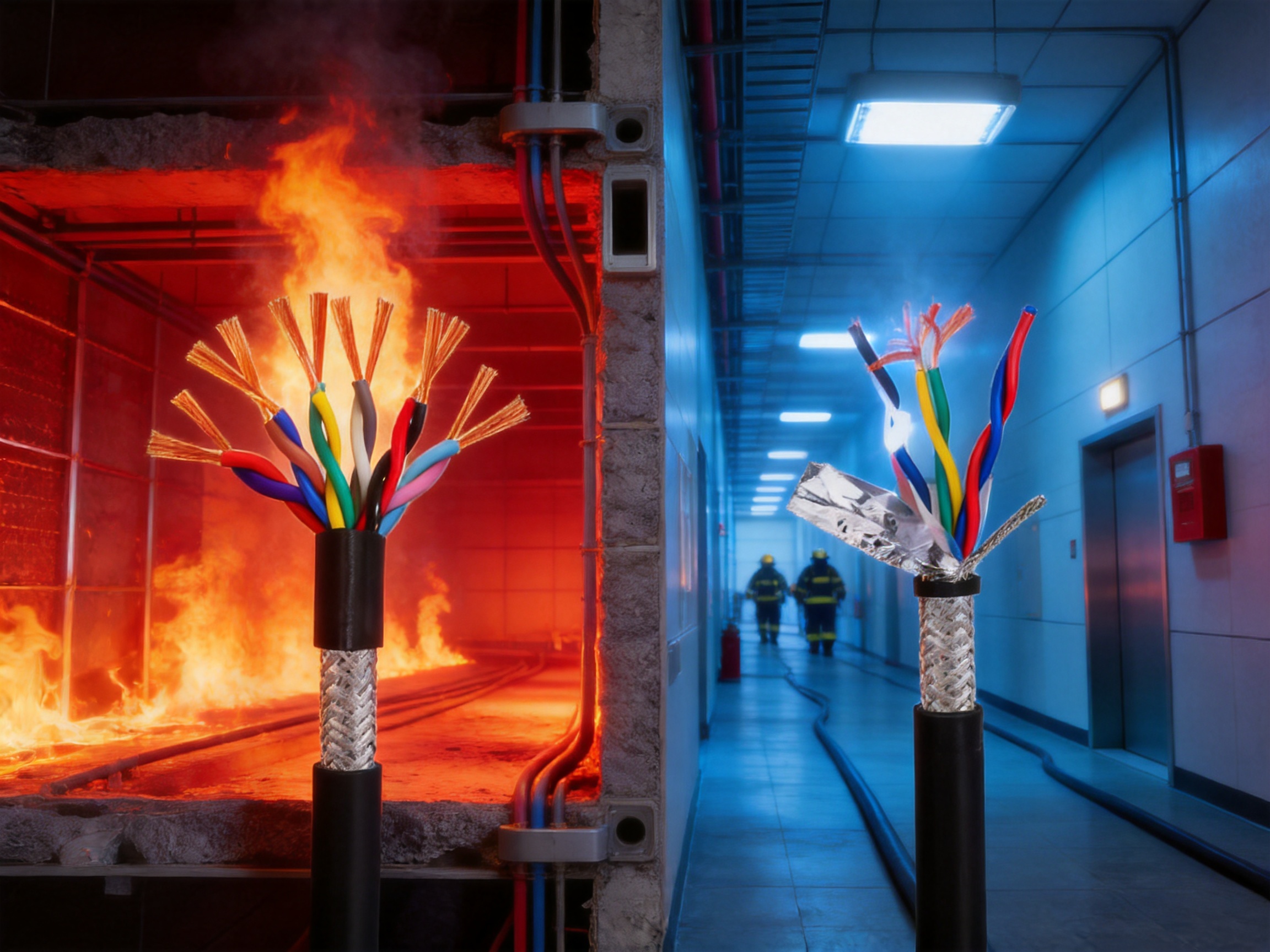
When a cable burns, smoke can become a greater immediate hazard than the flame itself. Dense smoke can obscure exit signs, stairways, doors, and obstacles. Toxic or corrosive combustion products can injure occupants and damage sensitive equipment.
Halogen-free materials are designed to limit the release of halogen-containing acid gases. The listed performance requirements include combustion gas pH of at least 4.3 and conductivity of no more than 10 μS/mm, corresponding to the stated GB/T 17650 evaluation. These characteristics help reduce corrosive effects on metallic structures, electrical contacts, and electronic systems.
The low-smoke performance is associated with combustion light transmittance of at least 60% or 80%, depending on the applicable requirement. Higher smoke transparency can assist evacuation and firefighting operations by improving visibility in affected areas.
Compared with ordinary flame-retardant cable constructions, the WDZ range therefore offers a more comprehensive fire-safety approach: reduced flame spread, reduced smoke generation, reduced corrosive gas release, and an optional fire-resistant design for continuity-critical circuits.
Electrical reliability begins with conductor quality. The use of copper conductors supports low resistance and stable current transmission. Fine-stranded conductors also provide flexibility without sacrificing the basic electrical benefits of copper, provided that the conductor is correctly sized and properly terminated.
The 90°C long-term conductor temperature rating gives engineers a useful operating reference. It allows the cable to tolerate higher continuous conductor temperatures than many general-purpose 70°C cable designs. This can be valuable in equipment rooms, distribution panels, cable trays, and locations where multiple circuits are grouped together.
However, a higher temperature rating does not automatically permit unlimited loading. Current-carrying capacity is affected by ambient temperature, installation method, number of loaded conductors, spacing, ventilation, soil conditions for buried systems, and allowable voltage drop. The final ampacity must be calculated in accordance with the applicable electrical code.
The stated short-circuit temperature is up to 250°C for a duration not exceeding five seconds. This parameter is important when coordinating protective devices and calculating the thermal withstand of the conductor during a fault. The protective device must disconnect the fault within the permitted time, and the cable must be installed so that the complete circuit remains safe under abnormal conditions.
Irradiated cross-linked insulation and sheathing also provide an advantage in long-term thermal aging. The cross-linked material is less likely to soften or deform when exposed to operating heat. This helps preserve dimensional stability, insulation thickness, and mechanical protection over time.
Building projects often contain complicated routes. Cables may need to pass through conduits, cable trays, risers, equipment rooms, suspended ceilings, raised floors, and service shafts. A cable that is electrically capable but difficult to handle can increase installation time and create avoidable workmanship risks.
The flexible versions of the product use Class 5 stranded copper conductors. This construction allows the cable to bend more easily than a rigid solid conductor and can simplify connections inside distribution boards and control equipment. Flexible sheathing further improves handling during pulling, positioning, and termination.
The stated minimum bending radius during installation is at least six times the cable outside diameter. Installers should avoid sharp bends, kinks, twisting, or excessive pulling tension. Respecting the bending radius helps protect the insulation and sheath from internal stress and prevents long-term deformation.
Installation should normally be performed at temperatures of 0°C or above, as specified in the product information. If cable must be handled in colder conditions, the project team should review the manufacturer’s cold-weather installation recommendations before moving, bending, or terminating it.
Good installation practice also includes:
• Checking the cable drum, package, and markings before use.
• Confirming that the cable has not been cut, crushed, or exposed to water.
• Using suitable rollers and pulling equipment for long routes.
• Avoiding direct dragging over rough surfaces.
• Maintaining the specified bending radius at corners and terminations.
• Supporting the cable at suitable intervals.
• Using compatible glands, lugs, terminals, and fire-stopping materials.
• Sealing cable ends during storage and installation.
• Testing insulation resistance and continuity before energization.
These measures ensure that the cable’s factory performance is not compromised by poor site handling.
Airports, railway stations, hospitals, schools, museums, and government facilities often have high occupant density and complex evacuation requirements. In these environments, low-smoke and halogen-free cable can reduce the secondary hazards associated with a fire.
The cables may be used in low-voltage distribution trunks, lighting circuits, mechanical service equipment, emergency systems, and selected control applications. Grade A flame-retardant products can be considered where the project specification calls for enhanced control of flame spread.
Shopping centers, cinemas, exhibition halls, stadiums, hotels, and office complexes contain large numbers of people and extensive cable networks. Cables may be installed in vertical risers, crowded ceiling spaces, cable trays, and service corridors.
The low-smoke characteristics of the WDZ family are particularly relevant in these environments. If a fault or external fire occurs, limiting smoke and corrosive emissions can help protect occupants, maintenance personnel, and electronic equipment.
High-rise buildings present special challenges because vertical cable routes can contribute to chimney-like flame movement if cable systems are not properly designed. Flame-retardant cable selection must be combined with fire compartments, suitable support systems, fire barriers, and tested penetration seals.
Grade A or other specified grades may be selected for critical vertical risers and high-density cable bundles. Fire-resistant N-type cable may be selected for emergency circuits that must remain available while evacuation or firefighting operations are taking place.
Buildings designed around environmental performance, occupant health, and sustainable materials can benefit from halogen-free cable systems. The absence of halogen-containing materials in the insulation and sheath supports a cleaner combustion profile and may contribute to the project’s material and indoor-environment goals.
Applications may include green office buildings, energy-efficient commercial properties, environmentally controlled facilities, and projects pursuing recognized sustainability assessments. Cable selection should still be coordinated with the complete environmental certification strategy rather than treated as a substitute for broader building compliance.
Food-processing plants, pharmaceutical facilities, electronics factories, clean production areas, and automated manufacturing sites often require reliable and hygienic electrical infrastructure. The halogen-free, low-smoke construction is suitable for projects where smoke contamination, corrosive gas, and maintenance reliability are important considerations.
In industrial environments, the cable may be used for power distribution, equipment supplies, control panels, signal circuits, and auxiliary systems. Engineers should separately evaluate exposure to oils, chemicals, mechanical impact, electromagnetic interference, vibration, and continuous flexing.
The weather-resistant sheath characteristics support certain outdoor and semi-outdoor uses. Potential applications include façade lighting, landscape lighting, parking structures, outdoor equipment power supplies, canopies, and building perimeter systems.
Outdoor installation requires careful attention to ultraviolet exposure, water drainage, temperature cycling, support spacing, and protection against rodents or mechanical damage. Conduit, trunking, cable tray covers, or additional protective measures may be required depending on the location.
A cable’s specification is only meaningful when manufacturing processes can reproduce it consistently. Variations in conductor resistance, insulation thickness, cross-linking, sheath quality, or printing accuracy can affect installation performance and long-term reliability.
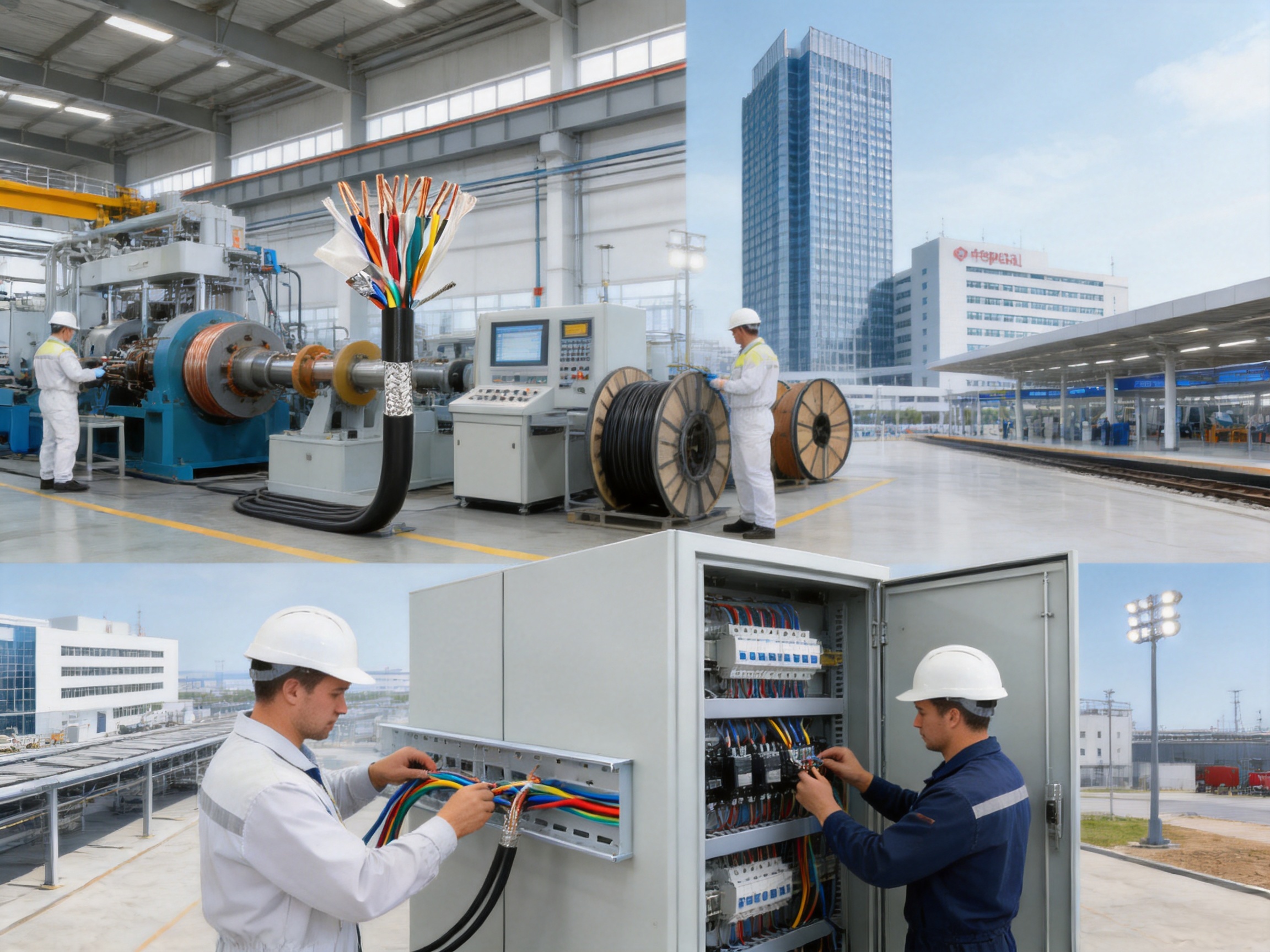
Anhui Zhishang Cable Technology Co., Ltd. operates a modern production base of approximately 5,000 square meters and uses 10 automated production lines. The company reports monthly production capacity of up to 10 million meters. This manufacturing scale supports standard product availability, repeat orders, and project supply coordination.
Automation helps reduce variation in several stages of production. Conductor stranding can be controlled for wire count, lay length, and compactness. Insulation extrusion can be monitored for dimensional consistency. Sheath extrusion can be coordinated with cable diameter, surface finish, and marking requirements.
For irradiated cross-linked products, process control is especially important. The irradiation dose must be managed within the required range to achieve effective cross-linking without damaging the polymer. Production teams must also control material formulation, extrusion temperature, line speed, cooling, surface quality, and final dimensional inspection.
Full-core and full-length quality assurance provides an additional advantage. Rather than relying only on limited sampling, the company’s stated quality approach emphasizes complete cable production control, pure copper specifications, test reports, and warranty support for standard models.
Quality engineers and research and development technicians with more than 10 years of industry experience support the company’s manufacturing and technical operations. Their experience can be valuable when adapting conductor structures, insulation systems, sheath materials, colors, markings, packaging, and delivery specifications for different customers.
The company also supports OEM and ODM development based on customer drawings or samples. This is useful for contractors, distributors, equipment manufacturers, and system integrators that need a cable with defined dimensions, printing, packaging, electrical characteristics, or installation behavior.
Many ordinary building wires focus primarily on current carrying and basic flame resistance. The WDZ range combines several fire-safety functions: flame-retardant classification, halogen-free materials, low-smoke performance, and an N-type fire-resistant option.
This broader performance profile can simplify cable selection across a building. Designers can choose different grades for different risk areas while retaining a common material concept and product family.
Using irradiated cross-linked material for both insulation and sheath provides a coordinated protection system. The insulation maintains electrical separation, while the sheath protects the cable from external conditions. Both layers benefit from improved heat and aging resistance.
Some competing products may use cross-linked insulation with a less durable thermoplastic sheath, or conventional thermoplastic materials for both layers. Such products may be suitable for ordinary applications, but dual cross-linked construction can provide stronger dimensional and thermal stability where the project demands a higher reliability margin.
Halogen-free and low-smoke characteristics reduce the risks associated with corrosive gas and dense smoke. This is especially valuable in enclosed public spaces, data-related areas, hospitals, transportation facilities, and high-rise buildings.
The environmental advantage is not limited to the moment of fire. Halogen-free material selection can also support project sustainability objectives and reduce concerns about corrosive combustion residues affecting equipment and building structures.
Fine-stranded copper construction and flexible sheathing can reduce the labor required for routing and termination. This may be an advantage over rigid building wire in complex layouts, compact electrical rooms, and equipment connections.
Installation efficiency can reduce project schedule pressure and lower the chance of excessive bending or forced positioning. Of course, the cable must still be installed within its specified bending radius and pulling limits.
Large construction and industrial projects often require more than a standard catalog product. They may need particular colors, lengths, core arrangements, package sizes, conductor classes, markings, or documentation.
With in-house research and development, automated production lines, and OEM or ODM capability, the manufacturer can discuss customized cable designs based on drawings or samples. Standard products are also reported to be stocked for fast shipment, while customized products generally require a lead time of approximately 7 to 20 days, subject to specification and order quantity.
Product selection should begin with the electrical design rather than with price alone. The following factors should be reviewed before ordering.
The supplied information identifies a 0.6/1 kV rating for the main product description and a 300/500 V rating for a flexible configuration described later in the specifications. These are not interchangeable ratings. The purchaser must confirm the exact voltage rating of the selected cable, especially when choosing between power-distribution and control or signaling applications.
A 300/500 V flexible cable may be appropriate for certain control, signaling, or equipment circuits, while a 0.6/1 kV cable may be required for low-voltage power distribution. The final selection must match the system voltage and the applicable installation standard.
Conductor cross-sectional area must be selected according to design current, allowable temperature rise, voltage drop, short-circuit requirements, installation method, and correction factors. A cable with a 90°C conductor rating may have a higher ampacity than a comparable 70°C cable, but the complete electrical system must be evaluated.
The flame-retardant grade should reflect the building’s occupancy, cable quantity, route geometry, fire compartments, and regulatory requirements. Grade A may be suitable for areas requiring the highest stated flame-spread control, while Grades B through D may be used where the project allows their performance level.
If a circuit must remain operational during a fire, the N-type should be considered. The system designer must confirm which circuits are safety-critical and verify that cable accessories, supports, joints, and penetrations are also suitable for the required fire-resistance period.
Indoor, outdoor, semi-outdoor, humid, dusty, chemically exposed, high-temperature, and mechanically vulnerable environments may require different protection measures. The cable’s weather-resistant sheath can support some outdoor uses, but the project must determine whether conduit, armored protection, UV protection, or special chemical resistance is necessary.
Before approval, buyers should request the technical data sheet, conductor resistance data, insulation and sheath material information, applicable test reports, certificate scope, packing details, and installation recommendations. Documentation should identify the exact model rather than referring only to the general product family.
Before installation, inspect the cable drum and outer package. Check for impact damage, water penetration, missing labels, or broken end seals. Confirm the model, voltage rating, conductor size, number of cores, length, and flame-retardant or fire-resistant designation.
During cable pulling, use equipment suitable for the cable diameter and weight. Do not exceed the manufacturer’s recommended pulling tension. Avoid sudden jerks and prevent the cable from rubbing against sharp edges or rough surfaces.
At bends, maintain a radius of at least six times the cable outside diameter unless the exact product documentation specifies a larger value. Do not flatten or twist the cable to fit a congested route. If the route cannot accommodate the cable naturally, redesign the support arrangement or select a more suitable construction.
At terminations, remove the sheath and insulation carefully. Avoid nicking conductor strands or damaging the remaining insulation. Use terminals compatible with the conductor class. Fine-stranded conductors may require suitable ferrules or termination accessories depending on the equipment manufacturer’s instructions.
After installation, perform continuity checks, phase identification, insulation resistance testing, protective conductor verification, and any additional tests required by the electrical code. For fire-resistant circuits, inspect the support system, fire stops, joints, and equipment connections as part of the complete circuit installation.
During commissioning, verify that the cable is not overloaded and that protective devices are correctly coordinated. Record test results, cable locations, circuit identification, and inspection details for future maintenance.
Projects outside China may have requirements based on local electrical codes, international standards, client specifications, or certification systems. The product information identifies compliance with GB/T 19666, GB 31247, GB/T 17650, GB/T 17651, and related flame-retardant testing requirements. It also identifies CCC and RoHS-related compliance information.
International buyers should confirm whether additional approvals are needed in the destination market. Depending on the project, this may include CE-related documentation, country-specific fire testing, CPR classification, utility approval, marine approval, or customer-specific inspection procedures.
Zhishang’s experience in international markets, including sales to North America, Australia, Japan, and parts of Eurasia, supports communication with overseas customers. However, each export project should be reviewed individually because market requirements differ significantly.
Customized cable development can begin with a drawing, sample, performance specification, or application description. The engineering team can then evaluate conductor structure, insulation thickness, sheath material, voltage rating, bending requirements, color, printing, packaging, and test documentation.
A well-prepared inquiry should include the intended application, rated voltage, conductor area, number of cores, required length, operating temperature, installation method, flame-retardant grade, fire-resistance duration, environmental conditions, applicable standards, annual demand, and delivery destination.
Anhui Zhishang Cable Technology Co., Ltd. is located in Xuanzhou District, Xuancheng City, Anhui Province, China. The company integrates cable research and development, production, sales, and technical service.
Its stated operating philosophy emphasizes quality orientation, integrity, and stability. The company serves applications including industrial automation, weak-current engineering, intelligent manufacturing, appliance equipment, power engineering, and other electrical fields.
The company reports a production base of approximately 5,000 square meters, more than 50 employees, 10 automated production lines, and monthly output of up to 10 million meters. These resources support both routine production and project-based supply.
For standard cable models, the company provides full-core and full-length quality assurance, pure copper specifications, product test reports, and warranty support. Standard products may be available from stock for rapid shipment. Customized products generally require 7 to 20 days of production lead time, although the final schedule depends on material availability, cable construction, order quantity, and testing requirements.
The company’s technical staff can provide product selection guidance and customized cable design solutions. This is useful when the customer needs to balance flexibility, fire performance, voltage rating, mechanical protection, delivery schedule, and budget.
Although a properly selected cable requires limited routine maintenance, periodic inspection remains important. Maintenance personnel should check for overheating at terminations, unusual discoloration, sheath damage, water ingress, excessive bending, loose supports, and evidence of mechanical abrasion.
Thermal imaging can help identify abnormal heating at connections and overloaded routes. Insulation resistance testing may be scheduled according to the facility’s maintenance plan, especially in humid or heavily used environments. Any test should be carried out by qualified personnel using procedures appropriate for connected equipment.
Fire-resistant circuits deserve particular attention. The cable may retain its performance only as part of a properly installed system. Damaged fire stops, unapproved joints, missing supports, or later modifications can reduce the effectiveness of the original fire-safety design.
Clear circuit labeling and accurate as-built documentation also improve reliability. Maintenance teams should know the cable model, voltage rating, circuit function, installation date, test results, and route. This information makes future extensions and troubleshooting safer.
WDZ identifies a halogen-free, low-smoke, flame-retardant cable design. The A, B, C, and D letters identify different flame-retardant grades.
RYJY describes the irradiated cross-linked polyethylene insulation and sheathing construction. The N designation identifies the fire-resistant version, which is intended to maintain circuit operation for a defined period under specified fire-test conditions.
Grade A provides the highest flame-retardant level in the stated classification, but the correct selection depends on the building code, fire-risk assessment, cable grouping, occupancy, and project specification. The highest grade is not automatically required for every circuit.
The weather-resistant sheath characteristics support certain outdoor and semi-outdoor applications. The installation must still be assessed for ultraviolet exposure, moisture, mechanical damage, temperature, support, and local code requirements.
Halogen-free means the specified insulation and sheath materials are designed to avoid halogen-containing compounds that can release corrosive acid gases during combustion. The supplied performance references include combustion gas pH and conductivity requirements.
Low-smoke performance helps reduce the density of smoke produced during combustion. Better visibility can assist occupants in finding exits and help firefighters operate more effectively.
The stated long-term allowable conductor operating temperature is 90°C. Actual allowable current depends on installation conditions, ambient temperature, grouping, ventilation, and applicable regulations.
The supplied information states a minimum installation bending radius of at least six times the cable outside diameter. The product-specific technical document should be checked before installation.
The product information identifies a 0.6/1 kV rating for the main building-wire description and 300/500 V for a flexible configuration used commonly for control and signaling. Buyers must confirm the exact rating of the selected model before ordering.
The listed flexible configuration covers conductor cross-sections from 0.5 mm² to 6 mm². Other sizes or constructions may be available through customized production. The required size should be selected from the electrical design.
The N-designated fire-resistant version may be considered for selected emergency and life-safety circuits. The complete system, including supports, joints, terminations, and penetrations, must satisfy the project’s fire-resistance requirements.
Normal cable pulling, stripping, crimping, and testing equipment may be used, provided it is compatible with the cable construction. Fine-stranded conductors may require suitable ferrules or terminals.
Yes. The company supports OEM and ODM development based on customer drawings or samples. Customization may include conductor structure, dimensions, colors, markings, packaging, cable length, and other defined requirements.
Standard products may be stocked for fast shipment. Customized products typically require approximately 7 to 20 days of lead time, subject to the final design, order quantity, material availability, and testing requirements.
A buyer should request the exact technical data sheet, certificate scope, test reports, conductor information, insulation and sheath details, packing specification, warranty terms, and installation recommendations. Destination-market approvals should also be confirmed before purchase.
The WDZ(A/B/C/D)-RYJY and WDZ(A/B/C/D)N-RYJY building wire families provide a practical solution for projects that require more than basic electrical transmission. Their principal strengths include halogen-free and low-smoke construction, graded flame-retardant performance, an optional fire-resistant design, irradiated cross-linked insulation and sheathing, copper conductors, 90°C long-term conductor operation, weather resistance, and flexible installation characteristics.
Compared with conventional cable options, the product family offers a more comprehensive approach to fire protection and environmental safety. The availability of Grades A through D gives designers flexibility, while the N-type supports circuits where continuity during fire conditions is important.
Manufacturing capability is another important advantage. Automated production lines, a modern production base, experienced technical personnel, full-length and full-core quality assurance, test-report support, standard-product inventory, and OEM or ODM development allow Anhui Zhishang Cable Technology Co., Ltd. to serve both standard building projects and specialized cable requirements.
To obtain the best result, engineers and purchasers should select the exact cable model according to voltage, conductor size, application, installation environment, flame-retardant grade, fire-resistance requirement, and destination-market regulations. When properly specified, installed, tested, and maintained, this building wire family can contribute to reliable power distribution, improved fire safety, and long-term electrical system performance.
1. GB/T 19666, General Rules for Flame-Retardant and Fire-Resistant Electric Wires and Cables.
2. GB 31247, Classification and Test Methods for Flame-Retardant Cables and Wires.
3. GB/T 18380, Tests on Electric and Optical Fibre Cables Under Fire Conditions.
4. GB/T 17650, Test on Gases Evolved During Combustion of Materials from Cables.
5. GB/T 17651, Measurement of Smoke Density of Cables Burning Under Defined Conditions.
6. GA 306, Requirements and Test Methods for Combustion Performance and Smoke Toxicity of Cables.
7. Product technical information for WDZ(A/B/C/D)-RYJY and WDZ(A/B/C/D)N-RYJY building wire.
8. Manufacturer quality, production, customization, and service information supplied for Anhui Zhishang Cable Technology Co., Ltd.

We firmly believe that good cables are not only a competition of materials, but also a reflection of craftsmanship, quality, and responsibility.

Links
Product
Send Inquiry
No. 29 Sankeshu Road, Xuanzhou District, Xuancheng City, Anhui Province, China
+86-18621104555/+86-563-2622999
 Electrical Cable Manufacturer
OEM/ODM Wire and Cable Solutions
Electrical Cable Manufacturer
OEM/ODM Wire and Cable Solutions
 English
 Español
 عربى
عربى
 русский