
Get more content that can help you
Content
Modern communication networks increasingly operate in environments where ordinary unarmored cables are not sufficient. A cable installed between buildings, along a bridge, on a mobile communication tower, or through a direct-burial transition section may be exposed to tensile stress, vibration, moisture, mechanical impact, temperature changes, and difficult routing conditions. At the same time, the cable must preserve stable electrical performance and support increasingly demanding high-frequency transmission requirements.
HYAT33 is designed for these conditions. It is a copper-core, foam polyolefin-insulated, petroleum-jelly-filled local communication cable with a longitudinal moisture barrier, polyethylene inner and outer sheaths, and a single layer of fine round steel wire armor. This combination gives the cable a balanced performance profile: high-frequency transmission capability, longitudinal water resistance, mechanical protection, tensile strength, corrosion resistance, and improved flexibility compared with conventional steel tape armored communication cables.
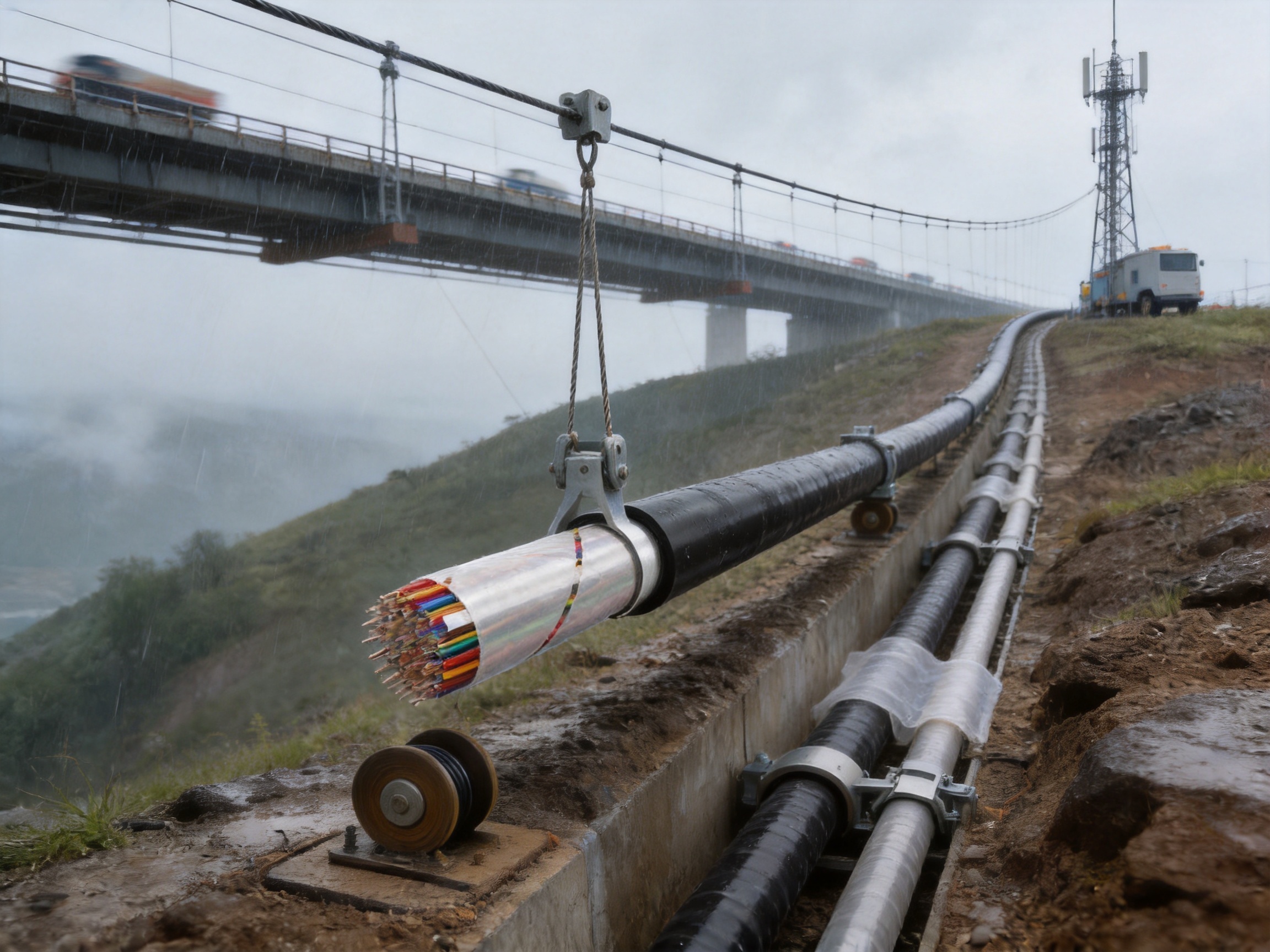
The cable is intended for urban communication infrastructure, local telecommunication networks, aerial installations, bridge suspension systems, overhead-to-direct-burial transitions, sloped routes, and other applications where a communication cable must withstand movement and mechanical stress. Its structure is also suitable for special environments involving water flow erosion, vibration, high humidity, or complex three-dimensional cable routing.
Manufactured by Anhui Zhishang Cable Technology Co., Ltd., HYAT33 reflects an integrated approach to cable development. The product combines material selection, conductor precision, foam insulation technology, petroleum jelly filling, moisture barrier application, armor forming, sheath extrusion, and complete performance testing into one controlled production process. The result is a specialized cable solution for projects that require more than basic signal transmission.
Communication cables are often evaluated first according to their electrical characteristics, but real-world reliability depends on much more than attenuation and impedance. A cable may perform well in a laboratory yet fail prematurely if it cannot tolerate water migration, repeated bending, installation tension, impact, vibration, or sheath damage. For outdoor and semi-exposed installations, mechanical and environmental protection are essential parts of signal quality.
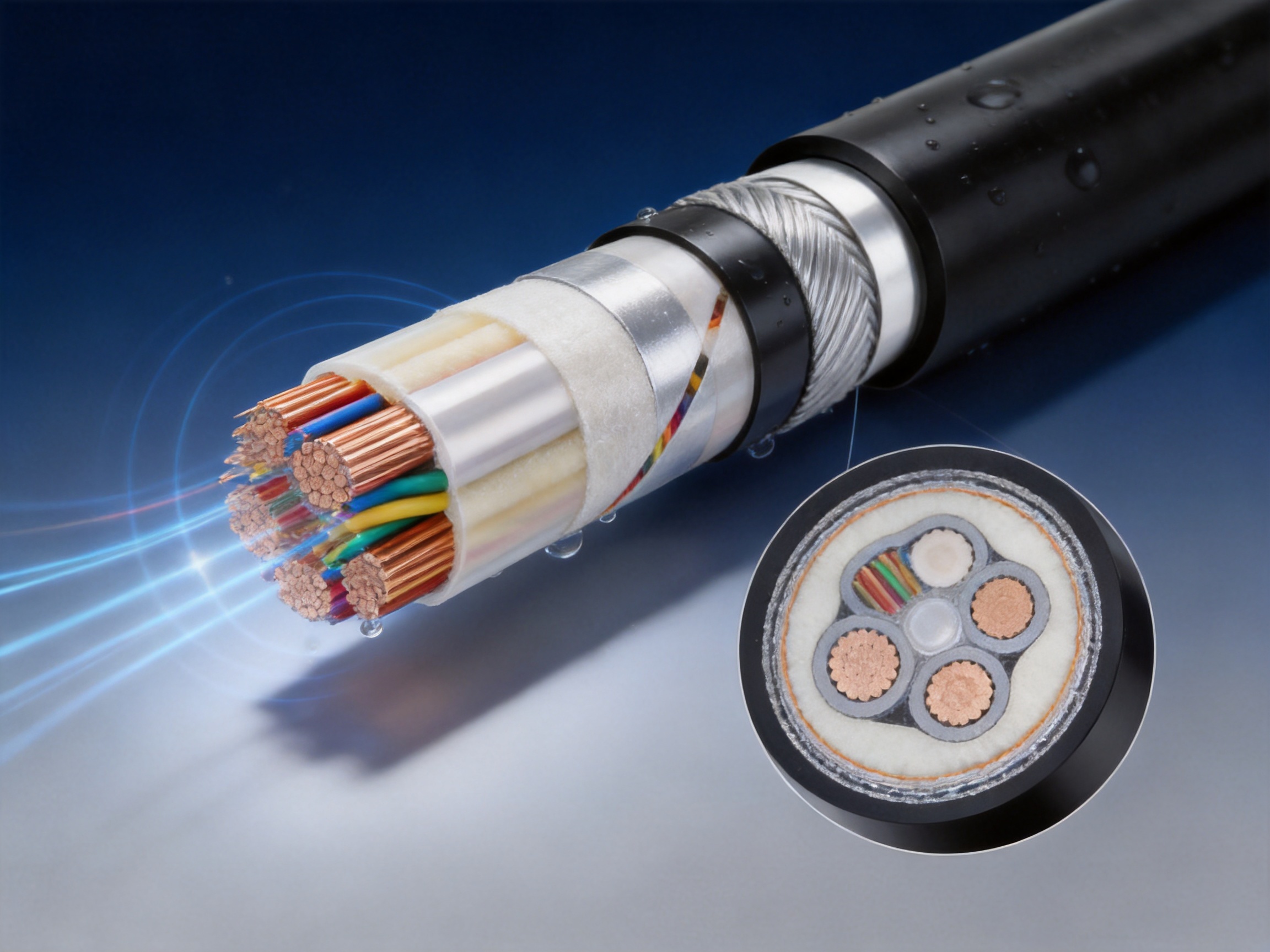
HYAT33 addresses these challenges through a layered construction. The conductor provides the metallic path for communication signals. Foam polyolefin insulation reduces dielectric losses and supports high-frequency transmission. Petroleum jelly fills the cable core and helps prevent water movement through internal spaces. A double-sided aluminum-polyethylene laminate is applied longitudinally as a moisture barrier. A polyethylene inner sheath stabilizes the core and protects the barrier. Fine galvanized steel wires provide tensile and mechanical reinforcement. Finally, a black polyethylene outer sheath protects the completed cable from abrasion, moisture, and environmental exposure.
Each structural layer has a specific purpose, but the main advantage comes from the way the layers work together. Foam insulation supports high-frequency performance, while the filling compound and moisture barrier reduce the risk of water-related degradation. The steel wire armor carries tensile loads and improves resistance to external damage. Polyethylene sheathing provides a durable, weather-resistant external surface. This integrated structure allows HYAT33 to be used in locations where a lighter unarmored cable may be vulnerable and a heavily armored cable may be unnecessarily rigid or difficult to install.
The cable is available with solid annealed copper conductors in standard diameters of 0.4 mm, 0.5 mm, 0.6 mm, and 0.8 mm. Pair counts range from 10 pairs to 600 pairs, allowing the product to serve both smaller distribution routes and larger local communication cable systems. This range gives engineering teams flexibility when designing networks with different subscriber capacities, route lengths, and cabinet or exchange requirements.
HYAT33 uses solid annealed copper conductors. Copper offers high electrical conductivity, reliable termination performance, and stable transmission characteristics. Annealing improves the conductor’s balance between electrical performance and practical manufacturing requirements. The solid conductor design is appropriate for fixed communication infrastructure, where consistent geometry and stable pair characteristics are important.
Conductor diameter affects the electrical and mechanical behavior of a communication cable. Smaller gauges can support compact designs and lower material consumption, while larger gauges can provide lower resistance and improved transmission over selected distances. By offering 0.4 mm, 0.5 mm, 0.6 mm, and 0.8 mm conductors, the cable series can be selected according to the required attenuation, loop resistance, route length, and installation conditions.
Precise conductor drawing and annealing are important to the final quality of the cable. Variations in diameter can affect resistance, capacitance, pair balance, and insulation application. A controlled production process therefore begins with consistent copper rod selection, accurate drawing, and appropriate thermal treatment. These steps help create a stable foundation for the cable’s electrical performance.
The individual conductors are insulated with foam polyolefin. Compared with fully solid insulation, foam insulation introduces microscopic gas cells into the dielectric structure. Because air has a lower dielectric constant than most solid polymer materials, the effective dielectric constant of the insulation can be reduced. This supports lower capacitance and improved high-frequency transmission behavior when the foam structure is properly controlled.
HYAT33 specifies a foam degree of approximately 40% to 60%, with insulation thickness ranging from 0.15 mm to 0.25 mm depending on conductor gauge. The objective is to achieve an appropriate balance among dielectric performance, mechanical integrity, process stability, and dimensional consistency. Excessive foaming could reduce mechanical strength, while insufficient foaming could limit the intended high-frequency advantages.
Foam polyolefin insulation is particularly useful in communication cables designed for higher bandwidth transmission. The cable data includes attenuation values of no more than 1.0 dB per 100 meters at 1024 kHz for the 0.4 mm gauge and no more than 0.7 dB per 100 meters at 1024 kHz for the 0.5 mm gauge. These values support applications requiring stable transmission over local communication routes and selected high-frequency services such as VDSL2-related infrastructure.
The insulation color may use a full color spectrum or a pilot color code. Clear identification is essential during termination, splicing, maintenance, and fault tracing. Accurate color coding helps reduce installation errors and shortens service time when a communication route must be tested or repaired.
The HYAT33 core is fully filled with petroleum jelly. Filling compounds are widely used in moisture-resistant communication cables because they occupy internal spaces and reduce the opportunity for water to migrate along the cable core. If a sheath is damaged or moisture enters at a connection point, the filling compound helps limit the movement of water toward other cable sections.
Full core filling also complements the longitudinal moisture barrier. The petroleum jelly acts as an internal protective medium, while the laminated barrier provides a continuous external barrier around the cable core. Together, these elements help improve moisture resistance and support stable insulation resistance over the service life of the cable.
The filling process requires uniform distribution. Voids, incomplete filling, or inconsistent compound application can weaken the moisture protection system. For this reason, the production line must control the temperature, viscosity, filling pressure, cable speed, and core geometry. Consistent filling is especially important for cables used in underground transitions, bridge routes, coastal areas, and locations exposed to water flow or seasonal humidity.
A double-sided aluminum-polyethylene laminate is applied longitudinally as the moisture barrier. The laminate combines the barrier properties of aluminum with the processing and bonding advantages of polyethylene. When properly formed and sealed, the barrier helps reduce water penetration from the outer environment into the cable core.
The longitudinal application method is suitable for continuous cable production and allows the barrier to follow the length of the cable. The overlap and bonding condition must be controlled during manufacturing because the quality of the longitudinal seam directly affects water resistance. The barrier is positioned within the cable structure and protected by the inner and outer sheaths, reducing the likelihood of direct mechanical damage during normal handling.
For projects involving overhead-to-direct-burial transitions, the moisture barrier is particularly valuable. These transition zones may experience changing water conditions, soil moisture, temperature cycling, and movement caused by wind or traffic. A cable that combines internal filling with a laminated barrier is better positioned to maintain insulation performance than a cable relying solely on an outer sheath.
The defining mechanical feature of HYAT33 is its single-layer fine round steel wire armor. The armor is formed around the inner cable structure and covered by the outer polyethylene sheath. The steel wires provide tensile reinforcement, improve resistance to impact and crushing forces, and help protect the cable from external mechanical damage.
Round wire armor offers a different mechanical profile from steel tape armor. Steel tape can provide strong radial protection, but it may reduce flexibility and make the cable more difficult to bend around irregular routes. Fine round wires distribute reinforcement around the cable circumference while allowing more movement between individual wires. This supports better flexibility in three-dimensional routing and can simplify installation through conduits, risers, bridge structures, and aerial support systems.
The specified armor wire diameter is approximately 0.8 mm to 2.0 mm depending on the cable’s outer diameter, with armor coverage of at least 80%. The steel wires are galvanized for corrosion prevention. Galvanization is important because armor exposed to moisture or damaged sheath conditions may otherwise become vulnerable to rust. The combination of galvanized wires, petroleum jelly, moisture barrier, and polyethylene sheathing creates multiple layers of protection against humid and corrosive environments.
The product information specifies a tensile strength of at least 4,000 N and identifies the cable as suitable for installation environments with longitudinal tension. The armor is also designed to provide grounding and a degree of lightning protection when correctly bonded according to the project’s grounding design. It should not be treated as a replacement for a complete lightning protection system, but its conductive metallic layer can contribute to the overall protection and bonding strategy.
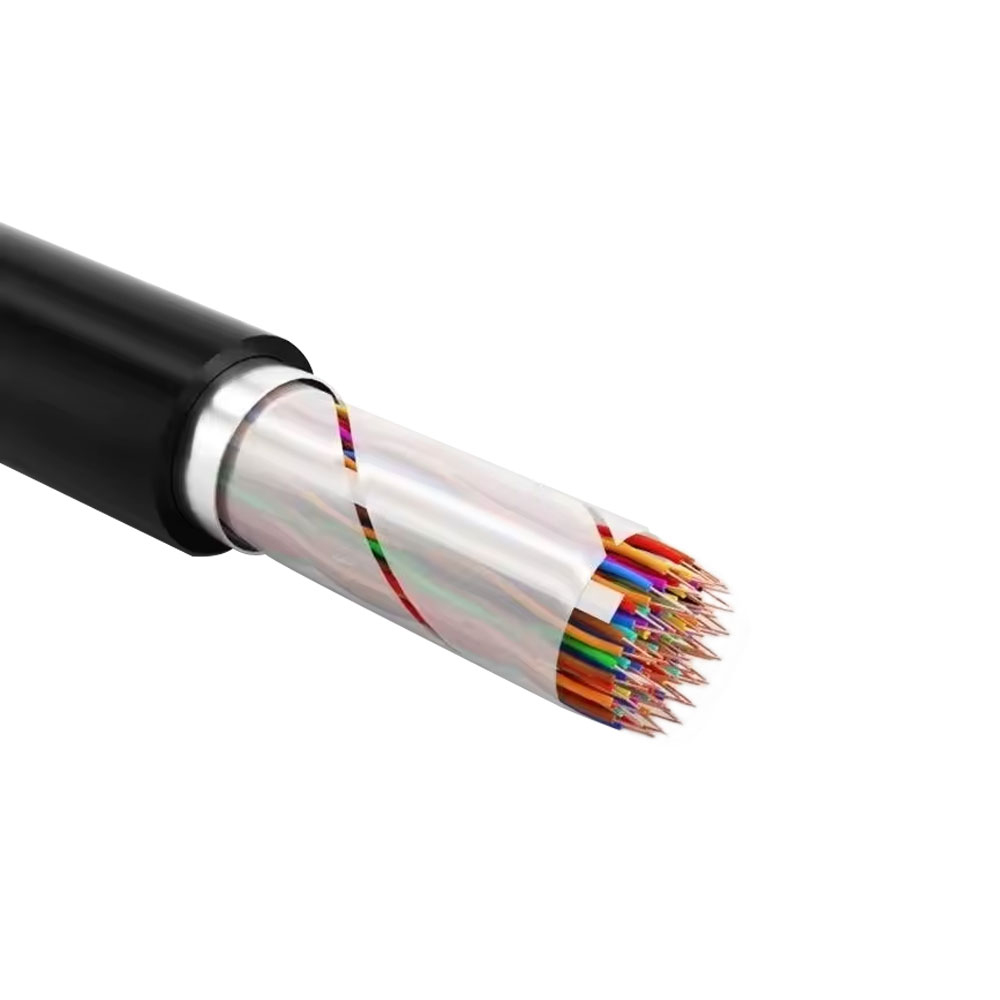
HYAT33: Copper-core foam polyolefin insulated, filled moisture barrier layer, polyethylene sheathed, single fine steel wire armored polyethylene sheathed local communication cable
A communication cable must maintain predictable electrical properties across all pairs and throughout the entire manufactured length. HYAT33 is designed around several electrical performance indicators, including insulation resistance, working capacitance, capacitance unbalance, attenuation, characteristic impedance, crosstalk attenuation, propagation velocity, and return loss.
The specified insulation resistance is at least 8,000 MΩ·km at 20°C after filling. High insulation resistance indicates that the insulation system effectively limits leakage current between conductors and between conductors and metallic elements. This characteristic supports dependable signal separation and reduces the risk of performance degradation caused by moisture, contamination, or insulation defects.
Insulation resistance is influenced by conductor surface quality, insulation thickness, foam structure, polymer cleanliness, filling condition, moisture exposure, and manufacturing precision. Testing after filling is especially relevant because the final cable structure includes the petroleum jelly and moisture protection system used in the finished product.
Working capacitance is specified at no more than 45 nF/km for the 0.4 mm gauge and no more than 50 nF/km for the 0.5 mm gauge. Lower and more consistent capacitance helps control signal distortion and supports higher-frequency transmission. The capacitance of a pair depends on conductor spacing, insulation dielectric properties, insulation thickness, and the geometry of the twisted pair.
Capacitance unbalance is specified at no more than 300 pF per 500 meters between any pair. Excessive unbalance can increase interference, reduce common-mode rejection, and create differences in transmission behavior among pairs. Precise insulation extrusion and pair-forming processes are therefore essential to maintaining consistent pair geometry.
Attenuation represents the reduction in signal strength as a signal travels along the cable. The supplied specifications list attenuation of no more than 1.0 dB per 100 meters at 1024 kHz for 0.4 mm conductors and no more than 0.7 dB per 100 meters at 1024 kHz for 0.5 mm conductors. Lower attenuation supports longer transmission distances or greater system margin at the same distance.
The characteristic impedance is 100 ohms plus or minus 10 ohms at 1024 kHz. Controlled impedance helps reduce reflections at interfaces and supports more stable operation for high-frequency transmission systems. The impedance depends on the relationship between conductor diameter, insulation dielectric constant, conductor spacing, pair geometry, and manufacturing consistency.
Foam polyolefin contributes to the high-frequency design by reducing the effective dielectric constant. However, the benefit depends on maintaining a uniform foam structure and stable insulation dimensions. This is why the insulation extrusion process is one of the most important manufacturing stages for the product.
HYAT33 specifies far-end crosstalk attenuation of at least 62 dB per 500 meters at 1024 kHz. Crosstalk attenuation indicates how effectively the cable prevents energy from one pair from interfering with another. Good pair balance, consistent twisting, appropriate lay lengths, and stable cable geometry all contribute to crosstalk performance.
Return loss is specified at 20 dB or higher at 1024 kHz. Return loss is associated with impedance discontinuities and signal reflections. A higher return loss generally indicates that a greater proportion of the signal is transmitted forward rather than reflected back toward the source. Stable pair geometry and uniform insulation are important contributors to this characteristic.
The propagation velocity is specified at 75% or more of the speed of light. This value describes how quickly electrical signals travel through the cable relative to propagation through free space. It is affected by the dielectric properties of the insulation and the geometry of the pair. Foam polyolefin insulation supports a relatively favorable propagation velocity for local communication applications.
HYAT33 is intended for more demanding conditions than ordinary indoor communication cable. Its mechanical and environmental features are particularly relevant to outdoor network designers and installation contractors.
The steel wire armor provides a dedicated load-bearing function. A minimum tensile strength of 4,000 N gives the cable additional resistance when the route includes longitudinal pulling, suspended sections, sloped installation, or transitions between support systems. During installation, pulling loads must still be controlled according to the approved project method. The armor improves the cable’s tolerance to tension, but it does not eliminate the need for correct pulling equipment, bend-radius control, and suitable anchoring.
Long-distance suspended sections can place continuous stress on a cable. Wind, ice, vibration, and changes in support alignment may introduce additional dynamic loads. A fine steel wire armored design can provide a more appropriate balance between tensile performance and flexibility than an excessively heavy armor system.
The minimum bending radius is specified as at least 20 times the cable outer diameter during installation and at least 25 times the cable outer diameter during service. These values should be observed carefully, especially near termination points, suspension hardware, conduit entries, and transition zones.
Although HYAT33 is more flexible than steel tape armored alternatives, it remains a metallic armored cable with a layered construction. Excessive bending can deform the insulation, disturb pair geometry, damage the moisture barrier, or place stress on the steel armor and sheaths. Proper route planning and use of correctly sized pulleys, rollers, guides, and support clamps are important for preserving long-term performance.
The cable is specified to pass an IEC 60229 drop weight impact test. This demonstrates resistance to a defined mechanical impact condition and is relevant to construction sites where cables may be exposed to tools, materials, installation equipment, or accidental contact. The armor distributes impact energy and helps protect the internal communication core.
Mechanical protection is especially valuable in direct-burial transition areas, utility corridors, bridge approaches, industrial sites, and pole-mounted installations. The outer polyethylene sheath provides the first line of protection, while the steel armor adds a deeper protective layer below the sheath.
HYAT33 is designed to resist both general moisture exposure and longitudinal water movement. The supplied product information identifies compliance with a GB/T 13849 water immersion test and an IEC 60794-1-F1 water penetration test. These tests address the ability of the cable structure to limit water entry and movement under defined conditions.
Water can cause several forms of cable degradation. It may lower insulation resistance, increase leakage, corrode metallic components, alter dielectric behavior, and create faults that spread away from the original damage point. Petroleum jelly filling and the longitudinal aluminum-polyethylene laminate work together to reduce these risks.
The specified installation temperature range is -30°C to +70°C. The storage and transportation range is -55°C to +70°C. These limits help define the conditions under which the cable can be handled, installed, stored, and transported. Installation at low temperatures requires care because polymer sheaths and filling compounds may become less flexible. The cable should be conditioned and handled according to the project’s installation procedures.
In hot environments, cable spacing, exposure to direct sunlight, support design, and thermal expansion should be considered. Black polyethylene sheathing provides a practical outdoor finish, but cable routing should still prevent unnecessary heat accumulation and mechanical stress.
Galvanized armor wires provide improved resistance to rust compared with untreated steel. This is important for coastal installations, industrial areas, humid regions, bridge structures, and other environments where salt, condensation, chemical pollutants, or persistent moisture may be present.
Corrosion resistance is not provided by the armor alone. The polyethylene outer sheath helps isolate the wire from the environment, the inner moisture barrier limits water migration, and the petroleum jelly protects the cable core. The multi-layer system is more reliable than depending on a single corrosion-control measure.
Transition sections between overhead routes and buried cable systems can experience movement, pulling tension, water exposure, and mechanical contact. HYAT33 is suitable for these areas because its steel wire armor provides tensile and impact protection while its filling system and moisture barrier help protect the communication core from water.
At the transition point, the cable should be supported so that the armor is not forced to carry an unintended bending load. A suitable termination or transition arrangement should maintain sheath integrity and provide proper bonding for the metallic armor where required.
Sloped routes can create continuous gravitational tension, especially when the cable is installed over a long incline. A cable without reinforcement may creep, deform, or experience excessive stress at supports. HYAT33’s steel wire armor helps carry longitudinal forces and makes it appropriate for selected sloped communication routes.
Engineers should calculate the route tension, support spacing, cable weight, environmental loading, and installation method. The product’s tensile rating should not be treated as a blanket permission to suspend the cable without structural analysis. Proper clamps and load distribution remain necessary.
Bridges and elevated structures expose cables to vibration, wind movement, traffic-induced oscillation, temperature changes, and occasional water spray. HYAT33 is designed for applications requiring tensile and bending performance in such environments. Its fine steel wire armor provides mechanical reinforcement while retaining greater flexibility than rigid tape armor.
For bridge installations, the cable should be separated from sharp edges, expansion joints, moving components, and high-friction surfaces. Support systems should allow for controlled movement where the structure expands or contracts. The cable should also be protected at entry and exit points to prevent local sheath wear.
Mobile base station towers and other elevated communication structures often require cables that can tolerate wind-induced vibration and difficult access conditions. The HYAT33 design is suitable for high-altitude dynamic connection scenarios and can help reduce the risk associated with lightweight but mechanically vulnerable cables.
The product’s fine wire armor supports tensile protection without the excessive stiffness associated with some heavy armor constructions. This can simplify routing around tower members and reduce installation difficulty. However, tower loading calculations should include cable weight, wind area, ice loading where applicable, and the effect of support hardware.
Smart streetlights, intelligent traffic systems, environmental sensors, security devices, and connected urban infrastructure require reliable physical communication paths. Cables installed on poles or along public structures may be exposed to weather, vibration, accidental impact, and complex routing conditions.
HYAT33 can provide a durable physical layer for selected urban communication applications. Its moisture resistance is beneficial in outdoor cabinets and pole-mounted routes, while its armor can reduce vulnerability to mechanical damage. The available pair-count range also supports different distribution capacities within urban infrastructure projects.
The product information identifies underwater installation with water flow erosion environments as an application area. In such projects, route engineering must consider water velocity, abrasion, sediment movement, anchoring, buoyancy, depth, and external protection. HYAT33’s moisture-resistant construction and steel wire armor can support the cable in demanding conditions, but installation design should determine whether additional bedding, conduit, weights, or protective structures are necessary.
An unarmored cable may be lighter and easier to handle, but it provides less resistance to tensile stress, impact, crushing, and accidental damage. It may be appropriate for protected ducts or controlled indoor environments, but it becomes more vulnerable in bridge, aerial, industrial, or transition installations.
HYAT33 adds a galvanized fine steel wire armor layer that carries mechanical loads and improves external protection. The tradeoff is a higher cable weight and a larger outer diameter than an unarmored cable. For demanding routes, however, the additional protection can reduce the risk of installation damage and unplanned maintenance.
Steel tape armor can provide strong radial protection, but its layered tape structure may make the cable comparatively stiff. Tight routing, repeated changes in direction, and three-dimensional installation can become more difficult. Poor handling may also crease or deform the tape.
HYAT33 uses fine round steel wires instead of steel tape. The wire armor provides circumferential reinforcement and tensile capability while supporting improved bending performance. The product information specifically identifies the cable as more flexible and easier to bend than steel tape armored alternatives. This can reduce installation difficulty and help contractors complete complex routes more efficiently.
Heavy steel wire armor can deliver high tensile strength, but it may add substantial weight to long routes. Increased cable weight affects support structures, transportation, lifting equipment, installation brackets, and worker handling. In elevated applications, excess weight may also increase the loading on towers and bridges.
The fine wire armor approach aims to reduce unnecessary weight while retaining useful tensile and mechanical performance. The supplied product information describes the design as a lightweight tensile-strength solution and cites a claimed reduction in weight compared with thick steel wire armor. Actual weight depends on conductor gauge, pair count, cable diameter, armor selection, and manufacturing configuration, so project-specific technical data should be confirmed before structural calculations.
A cable without full filling may have less protection against longitudinal water movement. If moisture enters at a damaged section, it may travel along internal gaps and affect a much longer route. HYAT33’s petroleum jelly filling occupies the core and works with the moisture barrier to limit this risk.
Full filling can require more specialized production equipment and careful handling during termination. The additional process complexity is justified in applications where water resistance and service continuity are more important than the simplest installation procedure.
Solid polymer insulation can provide good mechanical stability, but foam polyolefin may offer a lower effective dielectric constant and improved high-frequency characteristics when manufactured accurately. HYAT33 combines foam insulation with controlled pair geometry and a nominal 100-ohm characteristic impedance at 1024 kHz.
The benefit is not limited to a single electrical parameter. Lower capacitance, controlled attenuation, stable propagation velocity, and improved high-frequency performance can contribute to a more suitable cable for higher-bandwidth local communication systems. Application engineers should still verify compatibility with the equipment, transmission protocol, route length, and required operating frequency.
Product performance is closely related to manufacturing capability. A complex cable such as HYAT33 requires more than a basic conductor and sheath extrusion line. The foam insulation, full petroleum jelly filling, laminated moisture barrier, fine wire armor, and multiple test requirements must be coordinated through controlled production steps.
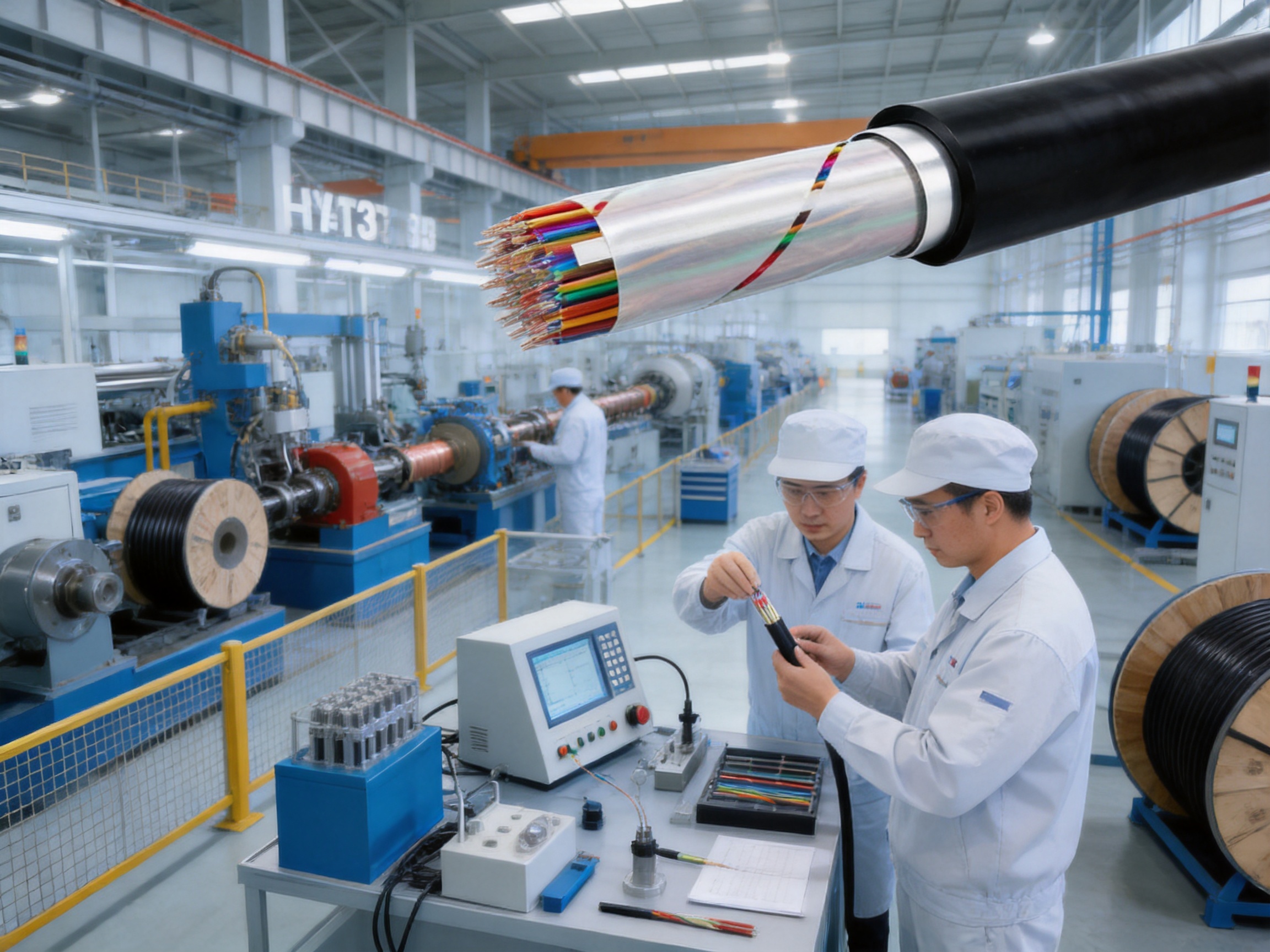
Anhui Zhishang Cable Technology Co., Ltd. integrates research and development, production, and sales. Its manufacturing base covers approximately 5,000 square meters and includes 10 automated production lines. The company reports a monthly output capacity of up to 10 million meters. This capacity supports both standard cable supply and project-based production planning.
Integrated production allows the company to manage more stages of the cable process within one organization. Conductor preparation, insulation application, pair assembly, filling, barrier application, inner sheathing, armor forming, outer sheathing, marking, coiling, and testing can be coordinated according to the product design.
This approach can reduce communication gaps between separate suppliers and improve traceability. When a product contains several interacting layers, consistent process coordination is particularly important. For example, the dimensions of the inner sheath affect armor application, and armor coverage affects the final outer sheath diameter. The insulation geometry affects capacitance and impedance, while the filling process affects moisture resistance and finished cable handling.
Automation supports repeatability in high-volume cable manufacturing. Automated lines can regulate conductor speed, extrusion temperature, cooling conditions, take-up tension, filling quantity, and dimensional parameters more consistently than fully manual production. Stable line control is important for maintaining the uniformity of foam insulation and the concentricity of the cable structure.
Automation also supports production efficiency. The company’s reported output capacity enables it to serve large orders while maintaining a production framework for standard models. For customers with urgent construction schedules, standard products may be available from stock, while customized designs can be scheduled according to project requirements.
The company has a team of more than 50 employees, including quality engineers and research and development technicians with more than 10 years of industry experience. This experience supports product selection, technical consultation, drawing review, sample-based development, and OEM/ODM cable design.
Communication cable projects often involve detailed requirements that differ from a general catalog specification. Customers may need a particular conductor diameter, pair count, sheath thickness, armor structure, color sequence, packaging format, or test report. An experienced technical team can review these requirements and determine whether they are compatible with the production process and intended application.
HYAT33 requires both electrical and physical testing. Electrical tests may include conductor resistance, insulation resistance, capacitance, capacitance unbalance, attenuation, impedance, crosstalk, propagation velocity, and return loss. Physical and environmental tests may include tensile strength, impact resistance, water immersion, longitudinal water penetration, sheath integrity, dimensional inspection, and temperature-related evaluation.
Full-core and full-length production, pure copper specifications, product test reports, and warranty support for standard cable models are identified among the company’s quality assurance practices. Testing helps verify that the completed cable conforms to defined requirements rather than relying solely on inspection of raw materials or individual production stages.
Quality control begins with material verification. Copper conductors, polyolefin insulation compounds, filling compounds, aluminum-polyethylene laminates, galvanized steel wires, and polyethylene sheath materials must be checked for suitability. Process inspections then verify conductor dimensions, insulation thickness, foam degree, pair geometry, filling condition, barrier overlap, armor coverage, and sheath dimensions.
Final inspection provides an additional opportunity to identify defects before shipment. Cable drums or coils should be labeled with product type, size, length, production information, and handling instructions. Proper packaging protects the cable during transport and storage.
Anhui Zhishang Cable Technology Co., Ltd. supports OEM and ODM development based on customer drawings or samples. This is valuable for contractors, system integrators, distributors, and equipment manufacturers that require a cable adapted to an existing design or project specification.
Customization may involve conductor size, pair count, color coding, armor diameter, sheath material, sheath color, printing, packing length, or testing requirements. Technical engineers can provide product selection guidance and tailored cable design solutions according to project needs. Standard customized products generally require a lead time of approximately 7 to 20 days, although actual timing depends on specifications, quantity, raw material availability, and testing requirements.
The company emphasizes green manufacturing and responsible production practices. Efficient material use, automated processes, production planning, waste reduction, and quality control can help reduce unnecessary consumption and rework. Longer-lasting cable products also support sustainability by reducing replacement frequency, repair activities, transportation requirements, and disposal volumes.
| Item | HYAT33 Specification |
|---|---|
| Conductor | Solid annealed copper conductor |
| Conductor Diameter | 0.4 mm, 0.5 mm, 0.6 mm, or 0.8 mm |
| Number of Pairs | 10 pairs to 600 pairs |
| Rated Voltage | 300/300 V |
| Test Voltage | 2 kV DC for 2 seconds or AC for 1 minute |
| Insulation | Foam polyolefin |
| Insulation Thickness | Approximately 0.15 mm to 0.25 mm, depending on gauge |
| Foam Degree | Approximately 40% to 60% |
| Filling Compound | Petroleum jelly, fully filled core |
| Moisture Barrier | Double-sided aluminum-polyethylene laminate applied longitudinally |
| Inner Sheath | Polyethylene, approximately 1.2 mm to 2.0 mm thick |
| Armor | Single-layer thin round galvanized steel wire armor |
| Outer Sheath | Black polyethylene, approximately 2.0 mm to 3.5 mm thick |
| Installation Temperature | -30°C to +70°C |
| Storage and Transport Temperature | -55°C to +70°C |
| Minimum Bending Radius | At least 20 times the cable outer diameter during installation; at least 25 times in service |
| Insulation Resistance | At least 8,000 MΩ·km at 20°C after filling |
| Working Capacitance | Maximum 45 nF/km for 0.4 mm gauge; maximum 50 nF/km for 0.5 mm gauge |
| Capacitance Unbalance | Maximum 300 pF/500 m between any pair |
| Attenuation | Maximum 1.0 dB/100 m at 1024 kHz for 0.4 mm; maximum 0.7 dB/100 m for 0.5 mm |
| Characteristic Impedance | 100 Ω ±10 Ω at 1024 kHz |
| Far-End Crosstalk Attenuation | At least 62 dB/500 m at 1024 kHz |
| Tensile Strength | At least 4,000 N |
| Impact Resistance | Passes IEC 60229 drop weight impact test |
| Moisture Resistance | Passes GB/T 13849 water immersion test |
| Longitudinal Water Resistance | Passes IEC 60794-1-F1 water penetration test |
| Propagation Velocity | At least 75% of the speed of light |
| Return Loss | At least 20 dB at 1024 kHz |
| Armor Coverage | At least 80% |
| Armor Wire Diameter | Approximately 0.8 mm to 2.0 mm, depending on cable diameter |
Selecting the correct HYAT33 configuration begins with the communication requirement. Engineers should determine the required pair count, conductor diameter, transmission frequency, route length, expected attenuation, environmental exposure, and mechanical loading. A larger conductor may be preferred for longer routes or lower loop resistance, while a smaller conductor may be appropriate where compactness and capacity optimization are priorities.
The number of pairs should account for active services, spare capacity, future expansion, testing pairs, and maintenance requirements. Ordering a cable with insufficient spare pairs can make future upgrades difficult. Conversely, excessive pair capacity may increase cable diameter, weight, and installation cost. A project-specific balance is therefore recommended.
Route design should consider the cable’s minimum bending radius. Corners, vertical drops, handholes, transition cabinets, pole attachments, bridge supports, and termination locations should provide adequate space for the cable to turn without forced bending. Temporary bending during drum handling should also be controlled.
During pulling, the cable should be guided with rollers or suitable low-friction equipment. Pulling tension should be measured or controlled, particularly on long routes and steep slopes. The cable should not be dragged over sharp stones, metal edges, unfinished concrete, or contaminated surfaces. If the outer sheath is damaged, the affected section should be inspected and repaired or replaced according to the project’s quality procedure.
Armor bonding and grounding should be designed by qualified electrical personnel. The steel armor can contribute to grounding and lightning protection, but the installation must include appropriate bonding points, earth connections, separation from incompatible systems, and protection against touch voltage where applicable.
Terminations and joints deserve special attention. The outer sheath, armor, moisture barrier, inner sheath, filling compound, and insulated pairs must be prepared in the correct sequence. Improper stripping can damage the moisture barrier or allow water to enter the core. Joint closures should be selected for the cable diameter, pair count, filling compound, and environmental conditions.
After installation, the cable should be tested before being placed into service. Recommended checks include continuity, conductor resistance, insulation resistance, pair identification, capacitance, capacitance unbalance, attenuation, impedance, and crosstalk where required by the network design. Test results should be documented for future maintenance and fault diagnosis.
The initial purchase price is only one part of the total cost of a communication cable system. Transportation, installation, support hardware, repairs, service interruptions, and replacement costs can have a greater effect on the project lifecycle. HYAT33 is designed to create value across these stages.
The fine steel wire armor can reduce vulnerability to installation damage and external impact. Its flexibility can simplify routing compared with stiffer tape armored constructions. Its moisture protection system can reduce the risk of water-related faults. Together, these characteristics may reduce maintenance requirements and improve service continuity in exposed environments.
In aerial installations, cable weight affects tower or support loading. A lighter armored design may reduce the structural burden compared with heavy armor, although the actual result must be confirmed from the final cable weight and project loading calculations. Lower weight can also influence handling equipment, transportation efficiency, installation labor, and bracket selection.
Reliable cable performance can help reduce the hidden costs associated with intermittent communication faults. Moisture-related faults are often difficult to locate because the visible damage may be far from the area where signal degradation appears. A filled, moisture-resistant structure helps reduce the likelihood of this type of failure when the cable is correctly installed and terminated.
Long service life also supports more sustainable infrastructure. Replacing fewer cable sections reduces raw material use, construction waste, traffic disruption, labor consumption, and transportation emissions. A durable cable is therefore not only a technical asset but also a lifecycle efficiency measure.
For an infrastructure cable, compliance must be considered in relation to the project’s applicable national standards, international standards, utility specifications, and customer requirements. HYAT33 product data references IEC 60229, IEC 60794-1-F1, and GB/T 13849 test methods for selected mechanical and environmental evaluations. The exact compliance package should be confirmed for each order.
Anhui Zhishang Cable Technology Co., Ltd. follows national standards, relevant international standards, and industry benchmarks when customizing cable products. Its technical team can assist with product selection and provide documentation such as test reports and product specifications. Customers should request the appropriate technical file for the intended installation environment and network application.
The company serves customers in industrial automation, weak-current engineering, intelligent manufacturing, appliance equipment, power engineering, and related fields. Its cable portfolio includes low-voltage wiring cable, flexible cable, power cable, automotive cable, communication cable, flat cable, control cable, computer cable, specialty cable, bus cable, aerial insulated cable, mining cable, fluoroplastic cable, wire harnesses, and battery box products.
This broad product scope can be useful for projects requiring more than one cable family. A supplier with experience across communication, control, power, and specialty cables may be able to coordinate technical discussions and procurement more efficiently. It also gives customers access to OEM and ODM support for cable assemblies and application-specific designs.
HYAT33 is mainly used for local communication and telecommunication networks installed in environments requiring tensile strength, mechanical protection, moisture resistance, and improved flexibility. Typical applications include overhead-to-direct-burial transitions, bridge suspension, sloped installations, aerial communication routes, mobile communication tower connections, and water-exposed infrastructure sections.
The structure includes solid annealed copper conductors, foam polyolefin insulation, petroleum jelly filling, a longitudinal double-sided aluminum-polyethylene laminate moisture barrier, a polyethylene inner sheath, single-layer fine round galvanized steel wire armor, and a black polyethylene outer sheath.
Foam polyolefin can reduce the effective dielectric constant of the insulation and support lower capacitance and improved high-frequency transmission. The cable is specified for high-frequency performance at 1024 kHz and is identified as suitable for applications such as VDSL2-related communication systems. The benefit depends on accurate foam structure and dimensional control during manufacturing.
Petroleum jelly fills the cable core and reduces the open spaces through which water could travel. It works with the moisture barrier and polyethylene sheaths to limit moisture penetration and longitudinal water migration. Full filling is particularly useful in outdoor, underground-transition, humid, and water-exposed routes.
Yes. The fine round steel wire armor is designed to provide tensile and mechanical reinforcement while retaining better bending performance than conventional steel tape armor. The cable still has a defined minimum bending radius and must be installed without sharp or forced bends.
The supplied specification identifies a minimum tensile strength of 4,000 N. The actual allowable installation tension should be determined from the final cable configuration, route design, support system, and approved installation method.
Yes. The cable has a black polyethylene outer sheath, galvanized steel wire armor, a moisture barrier, and petroleum jelly filling. These features support outdoor and exposed applications. Engineers must still account for sunlight, temperature, wind, ice, water, mechanical loading, and appropriate support hardware.
It can be used in selected direct-burial and overhead-to-direct-burial transition applications, particularly where moisture resistance and mechanical protection are required. The final installation should follow the project’s burial depth, bedding, warning tape, conduit, drainage, and external protection requirements.
Standard conductor diameters include 0.4 mm, 0.5 mm, 0.6 mm, and 0.8 mm. The best choice depends on route length, attenuation, loop resistance, network design, and required pair capacity.
The standard range is approximately 10 pairs to 600 pairs. Customized pair counts may be evaluated according to production feasibility, project requirements, and the intended cable dimensions.
Yes. Foam polyolefin insulation, controlled pair geometry, a nominal 100-ohm characteristic impedance at 1024 kHz, defined attenuation, crosstalk performance, propagation velocity, and return loss make the cable suitable for selected high-frequency local communication applications. System designers should verify the complete link budget and equipment compatibility.
The steel wire armor can provide a conductive path for bonding and can contribute to lightning and grounding protection when correctly connected to the project grounding system. It should not be considered a complete lightning protection system by itself. A qualified engineer should design the grounding and bonding arrangement.
Testing can include electrical, mechanical, dimensional, and environmental evaluations. The supplied product information references insulation resistance, attenuation, impedance, crosstalk, tensile strength, impact resistance, water immersion, longitudinal water penetration, and other performance checks. Customers should confirm the required test report format before ordering.
Yes. Anhui Zhishang Cable Technology Co., Ltd. supports OEM and ODM development based on customer drawings or samples. Engineers can assist with conductor size, pair count, construction, sheath specifications, color coding, packaging, and project-specific performance requirements.
The company indicates that customized products typically require approximately 7 to 20 days. Actual lead time depends on the cable design, order quantity, raw material availability, testing requirements, and production schedule. Standard products may be available for faster shipment subject to stock status.
Customers should provide the desired conductor diameter, pair count, rated voltage, cable length, route type, installation environment, sheath requirements, armor requirements, applicable standards, packaging needs, delivery location, and required documentation. Drawings, samples, and project specifications are also helpful for customized designs.
HYAT33 is not simply a standard copper communication cable with an added protective layer. Its value comes from the coordinated design of high-frequency insulation, full core filling, laminated moisture protection, fine steel wire armor, and polyethylene sheathing. Each feature addresses a specific failure mode encountered in outdoor and mechanically demanding communication networks.
Compared with unarmored cables, HYAT33 provides stronger protection against tension, impact, and external damage. Compared with steel tape armored cables, it offers improved flexibility for complex routes. Compared with heavy steel wire armored designs, its fine wire approach is intended to reduce unnecessary weight while retaining useful tensile reinforcement. Compared with cables without full filling, it offers a more comprehensive defense against water movement.
The product is also supported by the manufacturing capabilities of Anhui Zhishang Cable Technology Co., Ltd. The company combines automated production lines, research and development experience, quality engineering, OEM/ODM support, product testing, and a broad cable portfolio. Its production base, monthly capacity, and technical team provide a foundation for both standard supply and customized project development.
For network owners, contractors, and system integrators, the most important benefit is installation confidence. A cable that can tolerate the actual conditions of its route is less likely to create avoidable failures during construction or operation. HYAT33 is therefore well suited to communication infrastructure where electrical performance must be combined with moisture resistance, mechanical strength, flexibility, and long-term service reliability.
HYAT33 offers a specialized solution for local communication networks exposed to tensile stress, vibration, moisture, impact, and complex installation conditions. Its solid copper conductors support dependable electrical transmission, while foam polyolefin insulation contributes to high-frequency performance. Petroleum jelly filling and a longitudinal aluminum-polyethylene laminate provide layered moisture protection. Fine round galvanized steel wire armor adds tensile capacity and mechanical protection without the stiffness associated with many steel tape armored designs. Polyethylene inner and outer sheaths complete the environmental protection system.
The cable’s application range includes aerial communication routes, bridge suspension, sloped installations, overhead-to-burial transitions, tower connections, smart urban infrastructure, and selected water-exposed environments. Its available conductor diameters and pair counts allow project designers to select a configuration according to transmission and capacity requirements.
Backed by automated manufacturing, experienced technical personnel, quality testing, and OEM/ODM development support, Anhui Zhishang Cable Technology Co., Ltd. can provide cable solutions for standard orders and customized engineering projects. When a communication route requires a combination of signal stability, tensile performance, moisture resistance, and installation flexibility, HYAT33 is a strong candidate for consideration.
1. Product technical information for HYAT33 copper-core foam polyolefin insulated, filled, steel wire armored local communication cable.
2. IEC 60229, electrical cables: tests on extruded oversheaths with a special protective function.
3. IEC 60794-1-F1, optical and communication cable water penetration test methodology.
4. GB/T 13849, communication cable water immersion and moisture resistance testing requirements.
5. General engineering practices for copper local telecommunication cable design, installation, testing, and maintenance.
6. Manufacturer-provided information concerning cable construction, production capacity, quality assurance, OEM/ODM services, and application support.

We firmly believe that good cables are not only a competition of materials, but also a reflection of craftsmanship, quality, and responsibility.

Links
Product
Send Inquiry
No. 29 Sankeshu Road, Xuanzhou District, Xuancheng City, Anhui Province, China
+86-18621104555/+86-563-2622999
 Electrical Cable Manufacturer
OEM/ODM Wire and Cable Solutions
Electrical Cable Manufacturer
OEM/ODM Wire and Cable Solutions
 English
 Español
 عربى
عربى
 русский