Get more content that can help you
Content
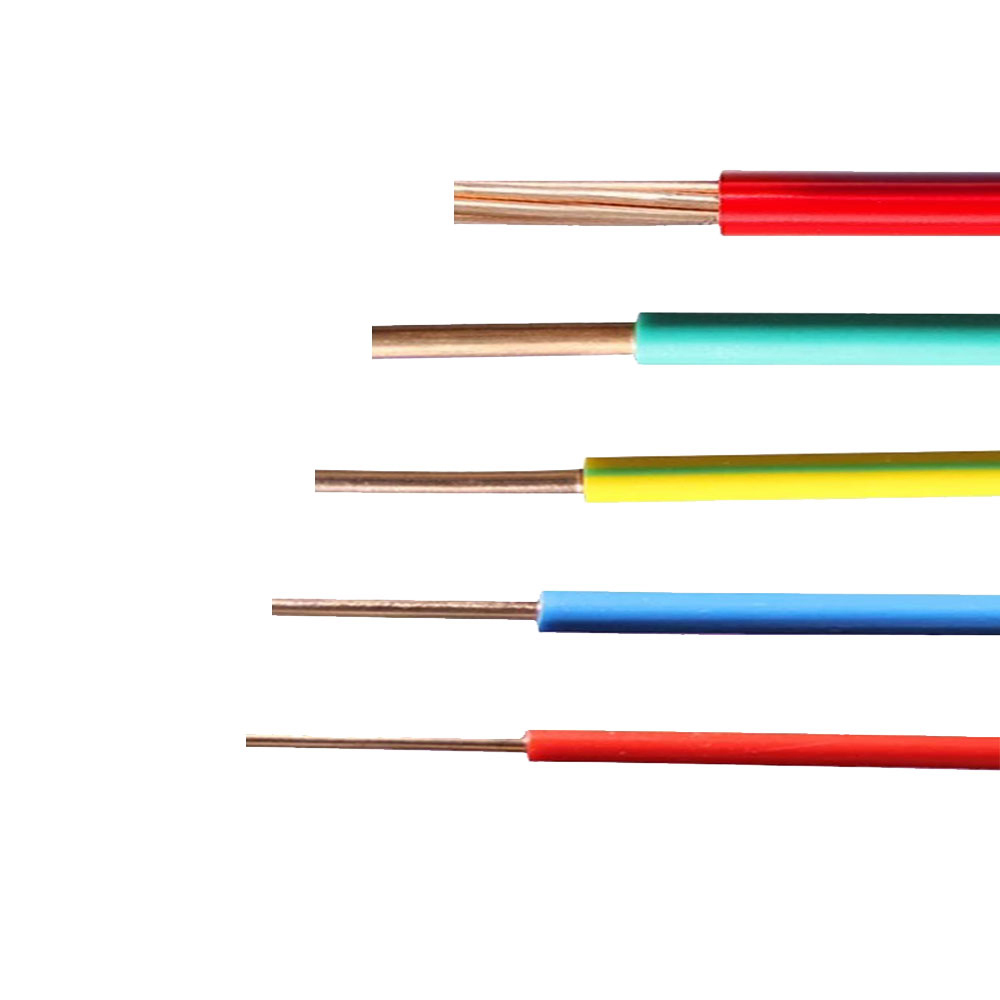
H05V-U is a European harmonized single-core cable designed for low-voltage fixed wiring, internal equipment connections, lighting systems, control cabinets, and other conventional indoor electrical applications. With a rated voltage of 300/500 V, PVC insulation, copper conductors, and a simple round-wire construction, it provides a practical balance of electrical reliability, installation compatibility, manufacturing efficiency, and cost control.
Although single-core cables may appear straightforward, their performance depends on the quality of the conductor, the consistency of insulation extrusion, dimensional control, electrical testing, flame behavior, packaging, and supply management. A well-manufactured H05V-U cable is therefore more than a basic copper wire covered with PVC. It is a standardized electrical component that must deliver stable conductivity, dependable insulation, predictable installation performance, and consistent compliance across production batches.
This article examines the structure, technical characteristics, advantages, applications, manufacturing process, quality controls, and supply capabilities associated with H05V-U cable. It also explains why this cable can be a competitive solution for European-market equipment, household appliances, lighting assemblies, control cabinets, electronic instruments, and maintenance projects requiring a recognized low-voltage wiring format.
The designation H05V-U communicates several important product characteristics. The letter “H” identifies a harmonized European cable designation. The number “05” indicates a rated voltage of 300/500 V. The letter “V” identifies PVC insulation, while the letter “U” refers to the single-core construction specified for this cable type.
H05V-U cable is generally supplied as an insulated single conductor. Its primary electrical path is made from copper, while the external insulation is manufactured from polyvinyl chloride. Depending on the required cross-sectional area and the applicable construction specification, the conductor may be produced in a solid or appropriately configured copper form. Product selection should always be confirmed against the required standard, conductor class, cross-sectional area, and installation method.
The cable is intended primarily for fixed internal wiring rather than continuous flexing applications. It is frequently used where a compact, clearly identified, easy-to-terminate conductor is required. Common installation locations include electrical appliances, luminaires, distribution assemblies, low-voltage control panels, electronic equipment, terminal blocks, and fixed internal connections.
The standard rated voltage is 300/500 V. The conductor sizes described for the product range extend from 0.5 mm² to 25 mm², allowing the same general cable family to serve small signal and control connections as well as comparatively higher-current internal wiring. Actual current-carrying capacity depends on conductor size, ambient temperature, grouping, installation conditions, permissible voltage drop, and the requirements of the final equipment.
The standard long-term operating temperature associated with H05V-U is commonly identified as 70°C under the relevant product designation. The supplied technical information also identifies a fixed-installation temperature range of approximately -30°C to +80°C and a movable-installation range of approximately -5°C to +70°C. Because temperature limits can vary according to the exact construction, standard edition, and application, the final installation should be evaluated using the applicable technical documentation and project requirements.
Copper is used as the conductive core because it combines high electrical conductivity with good mechanical processability and reliable termination characteristics. A copper conductor offers lower resistance than many alternative conductive materials of equivalent size, helping reduce voltage drop and resistive heat during operation.
For equipment manufacturers, copper also provides practical advantages during assembly. It can be cut, stripped, crimped, clamped, and connected using widely available terminals and electrical accessories. Its compatibility with common European installation components helps reduce the need for special tooling or conversion parts.
Conductor quality has a direct influence on cable performance. The copper should have stable composition, consistent diameter, suitable surface quality, and controlled elongation. Conductor resistance must remain within the applicable standard limits. Irregularities such as excessive surface oxidation, inconsistent drawing, damaged strands, or dimensional variation can affect termination reliability and electrical performance.
For this reason, a professional cable manufacturer normally controls the complete conductor process, including incoming material inspection, wire drawing, annealing where applicable, stranding where required, surface inspection, and electrical resistance testing. These controls help ensure that the conductor remains consistent from one production lot to another.
Polyvinyl chloride is used as the primary insulation material for H05V-U because it provides a mature and economical combination of electrical insulation, moisture resistance, chemical resistance, processability, and colorability. PVC compounds can be formulated for different levels of flexibility, temperature performance, flame behavior, and environmental resistance.
The insulation must fully cover the conductor and maintain a uniform wall thickness. A stable extrusion process reduces the risk of thin spots, pinholes, eccentricity, surface defects, and dimensional instability. Uniform insulation is important because a localized weak point can reduce the cable’s dielectric strength even when the overall appearance is acceptable.
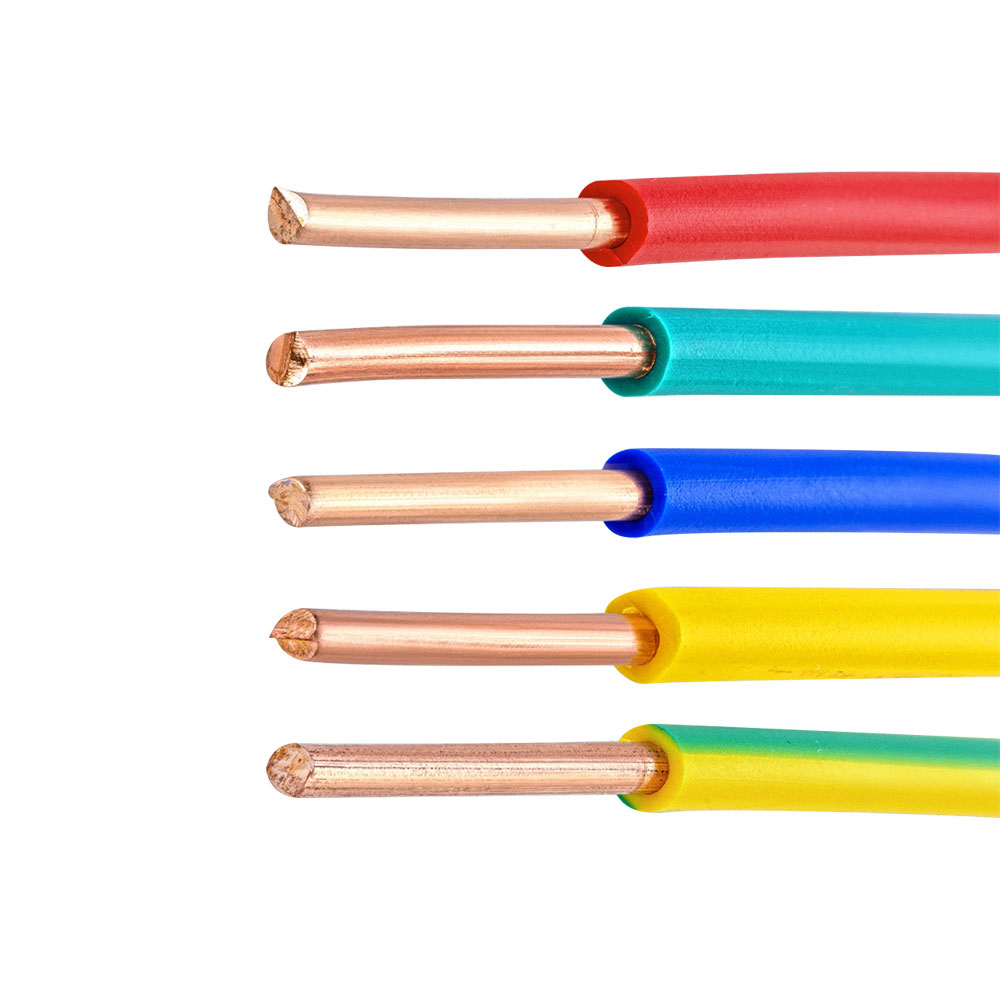
PVC insulation also supports clear color identification. Different conductor colors can be supplied for phase, neutral, protective, control, or equipment-specific functions, subject to the applicable wiring code and customer requirements. Consistent colors simplify installation, inspection, troubleshooting, and future maintenance.
The round single-core structure is simple, compact, and compatible with many common wiring methods. It can be routed through equipment spaces, terminal channels, wiring ducts, and control cabinet assemblies. The absence of an external sheath keeps the cable relatively small and economical when individual insulated conductors are more suitable than a multicore cable.
This structure is particularly useful when several circuits must be routed separately and identified by color. It also allows individual conductors to be replaced or rearranged without removing an entire multicore assembly. In factory-built equipment, single-core wires can be cut to specific lengths and organized through wire ducts or harness systems.
| Product designation | H05V-U |
| Cable type | European harmonized single-core PVC-insulated cable |
| Number of conductors | Single core |
| Conductor material | Copper |
| Insulation material | Polyvinyl chloride |
| Rated voltage | 300/500 V |
| Available cross-sectional area | Approximately 0.5 mm² to 25 mm² |
| Nominal long-term operating temperature | 70°C |
| Test voltage | 4,000 V, according to supplied product information |
| Insulation resistance | 10 MΩ × km, according to supplied product information |
| Reference standards | DIN VDE 0281 Part 2 and HD 21.2 |
| Flame test references | IEC 60332-1-2 and EN 60332-1-2; UL VW-1 and CSA FT1 references are also stated for the product information |
| Minimum bending radius | 12.5 × D, where D is the cable outer diameter, according to supplied information |
The table provides a general overview, but it should not replace the technical datasheet for a specific size. Electrical resistance, outside diameter, insulation thickness, weight, permissible current, and packaging length can change according to the selected cross-section and production specification.
In particular, designers should not determine current capacity from voltage rating alone. A 300/500 V rating identifies the insulation system’s intended voltage class, while the allowable operating current depends on conductor cross-sectional area and installation conditions. Engineers should also consider ambient temperature, conductor grouping, enclosure ventilation, terminal ratings, and the equipment manufacturer’s requirements.
One of the most important advantages of H05V-U cable is its association with European harmonized cable designations. Harmonized products help manufacturers, installers, distributors, and inspectors communicate using a consistent technical language. This is valuable when electrical equipment is designed in one country, assembled in another, and distributed across several European markets.
A harmonized designation can simplify product selection because it identifies the cable family, voltage class, insulation material, and basic construction. Instead of developing a completely new cable specification for every project, equipment manufacturers can select a recognized product type and then confirm the required size, color, conductor construction, test documentation, and regulatory conditions.
The product information identifies compliance with standards such as DIN VDE 0281 Part 2 and HD 21.2. It also states CE and RoHS compliance. These statements are important for market access, but the exact conformity route depends on the final product, intended application, applicable European legislation, and available technical documentation.
CE marking is not simply a general quality label. It indicates that the relevant product or finished equipment has been assessed against applicable European Union requirements. For cable supplied as a component, the manufacturer and customer should establish which declarations, test reports, technical files, and product markings are required. Customers should request current documentation and confirm that the cable configuration purchased corresponds to the tested configuration.
RoHS compliance addresses the restriction of certain hazardous substances in electrical and electronic products. For equipment manufacturers exporting to regulated markets, sourcing cables with suitable RoHS documentation can simplify material approval and environmental compliance procedures.
Compared with an unmarked or nonstandard wire, a documented H05V-U cable can therefore reduce uncertainty during procurement. It provides a recognizable reference point for engineering review, incoming inspection, technical files, and replacement purchasing.
The use of copper provides dependable conductivity for power, control, and internal equipment wiring. When the conductor cross-section and resistance are controlled correctly, the cable can support predictable circuit performance and help manage voltage drop within the intended application.
Generic low-cost wires may use inconsistent conductor dimensions, lower-grade copper, or insufficient process control. Such variation can lead to higher resistance, uneven heating, difficult termination, and inconsistent performance between batches. A controlled H05V-U production process is designed to reduce these risks.
The 300/500 V rating makes the cable suitable for a broad range of low-voltage internal wiring tasks. This is more useful for many European equipment applications than an informal wire specification with no clearly identified voltage class.
A defined voltage rating assists engineers in separating suitable cables from products intended only for extra-low-voltage signal circuits. It also supports more consistent documentation when an equipment assembly includes mains-connected circuits, control wiring, and internal power connections.
The single-core format is easy to route and terminate. Installers can select individual colors, cut conductors to the required length, and arrange them in wiring ducts or terminal blocks. This can improve accessibility in control cabinets and reduce confusion during commissioning.
The cable’s compatibility with commonly used European terminals, connectors, ferrules, and wiring accessories further improves installation efficiency. Customers do not normally need a special conversion system simply because the cable is being used in a European-standard assembly.
H05V-U has a relatively simple construction consisting of a copper conductor and PVC insulation. Compared with shielded cables, armored cables, heat-resistant specialty cables, or complex multicore assemblies, this construction can provide a lower material and processing cost when advanced protection is not required.
Its cost advantage is especially relevant in high-volume equipment production. Household appliances, lighting products, control cabinets, instruments, and electrical assemblies may require thousands of meters of internal wiring. A standardized, economical cable can reduce total material expenditure without sacrificing the basic electrical and installation requirements of the application.
Single-core PVC cable is produced using well-established processes. This maturity helps manufacturers maintain stable output, predictable lead times, and repeatable quality. It also supports a broad size and color range, standard packaging, and efficient production planning.
However, mature technology does not eliminate the need for strict quality control. The advantage comes from combining proven process methods with modern equipment, trained operators, laboratory testing, documented procedures, and continuous improvement.
PVC insulation provides resistance to moisture, weak acids, and weak alkalis under conventional service conditions. This makes H05V-U suitable for many indoor environments found in appliances, lighting installations, control cabinets, electronic equipment, and general electrical assemblies.
The cable should not automatically be treated as suitable for every harsh environment. Continuous outdoor exposure, immersion, oil contact, extreme heat, severe cold, strong solvents, intense ultraviolet radiation, repetitive mechanical movement, or mining conditions may require a different cable construction. Proper application selection remains essential.
Professional cable production begins before the machinery is started. The manufacturer reviews the customer’s required product designation, cross-sectional area, conductor construction, color, voltage rating, packaging, quantity, delivery date, and documentation requirements.
For standard H05V-U orders, this review confirms that the selected specification corresponds to the intended application. For customized requirements, engineering personnel may evaluate customer drawings, samples, equipment constraints, stripping length, marking, packaging format, or harness assembly needs.
A clear order review process prevents avoidable errors such as incorrect conductor size, wrong insulation color, unsuitable packaging, or missing test documentation. It also allows production and quality teams to align the manufacturing plan before materials are released.
High-quality copper conductors begin with suitable copper rod or approved conductor material. Incoming materials should be checked according to purchasing specifications and internal quality procedures. Typical inspection items include appearance, dimensions, electrical properties, supplier documentation, and batch traceability.
Traceability is valuable because it allows the manufacturer to associate finished cable with the raw material lot, production date, machine, operator, and inspection records. If a customer later raises a technical question, the production history can be reviewed more efficiently.
Wire drawing reduces the diameter of copper rod through a series of dies. The process must be controlled to achieve the required conductor dimensions and surface condition. Excessive drawing force, poor die condition, incorrect lubrication, or unstable line speed can affect the conductor’s surface and mechanical properties.
Modern drawing equipment supports accurate diameter control and continuous production. Regular die maintenance and process monitoring are important for keeping conductor resistance and dimensions within the required range.
Drawing can make copper harder and less ductile. Where required by the construction, annealing restores suitable softness and elongation. Proper thermal control helps produce a conductor that can be handled and terminated without unnecessary cracking or breakage.
Annealing parameters must be matched to conductor size and production speed. Inadequate annealing can result in excessive hardness, while excessive thermal exposure can affect surface quality or productivity. Process records and periodic mechanical testing help maintain consistency.
For conductor constructions requiring multiple wires, the individual copper wires are combined through a controlled stranding process. The lay length, tension, alignment, and take-up must be controlled to achieve a stable conductor.
Where the selected H05V-U specification requires a solid conductor, the conductor preparation stage is organized accordingly. The key objective in either case is to produce a conductor with stable cross-sectional area, suitable flexibility for installation, clean surface condition, and reliable compatibility with terminals.
PVC insulation performance depends on the formulation and handling of the compound. The material must be suitable for the required temperature class, electrical insulation performance, flame behavior, color, and environmental conditions.
Material preparation may include controlled storage, drying or conditioning where required, mixing, batch identification, and contamination prevention. Color concentrates and additives must be dosed consistently. Material variation can affect insulation appearance, hardness, surface finish, extrusion stability, and electrical performance.
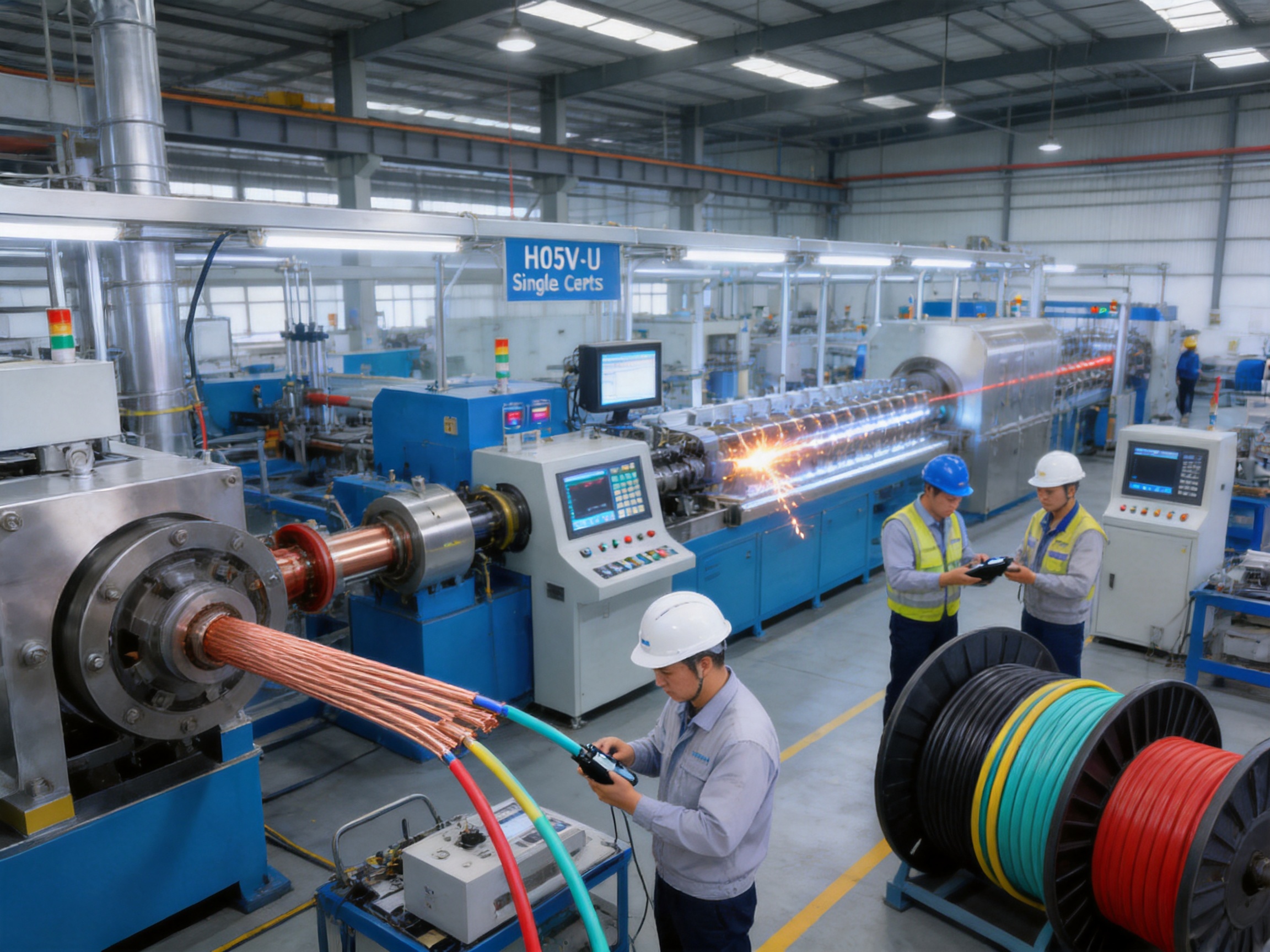
During extrusion, the copper conductor passes through the extrusion line while molten PVC is applied around it. The conductor and insulation are then cooled, measured, inspected, and wound onto a reel or packaged in coils.
Extrusion is one of the most important stages in cable manufacturing. The process must control temperature, pressure, screw speed, line speed, concentricity, insulation thickness, and cooling conditions. A stable process produces a smooth surface and uniform insulation around the conductor.
Online diameter measurement can identify deviations during production. Spark testing can detect insulation pinholes or weak points by applying a controlled high-voltage test to the insulated conductor. These systems help identify defects before the product reaches final packaging.
Depending on the product specification and customer needs, cable surfaces may include identification marks, meter marks, production codes, or other information. Marking must remain legible without damaging the insulation.
Color consistency is also important. A production team should compare the finished cable with approved color samples or defined color references. Stable color identification supports correct field installation and reduces the risk of wiring mistakes.
Finished cable is tested and inspected before release. Typical controls may include conductor resistance, insulation resistance, withstand voltage, dimensional inspection, appearance inspection, spark testing records, and packaging verification.
Packaging protects the cable during transportation and storage. Reels, coils, cartons, labels, and protective wrapping should be selected according to cable size, shipment length, customer handling equipment, and destination requirements. Correct labeling should identify product type, size, color, length, batch information, and any required compliance marks.
<
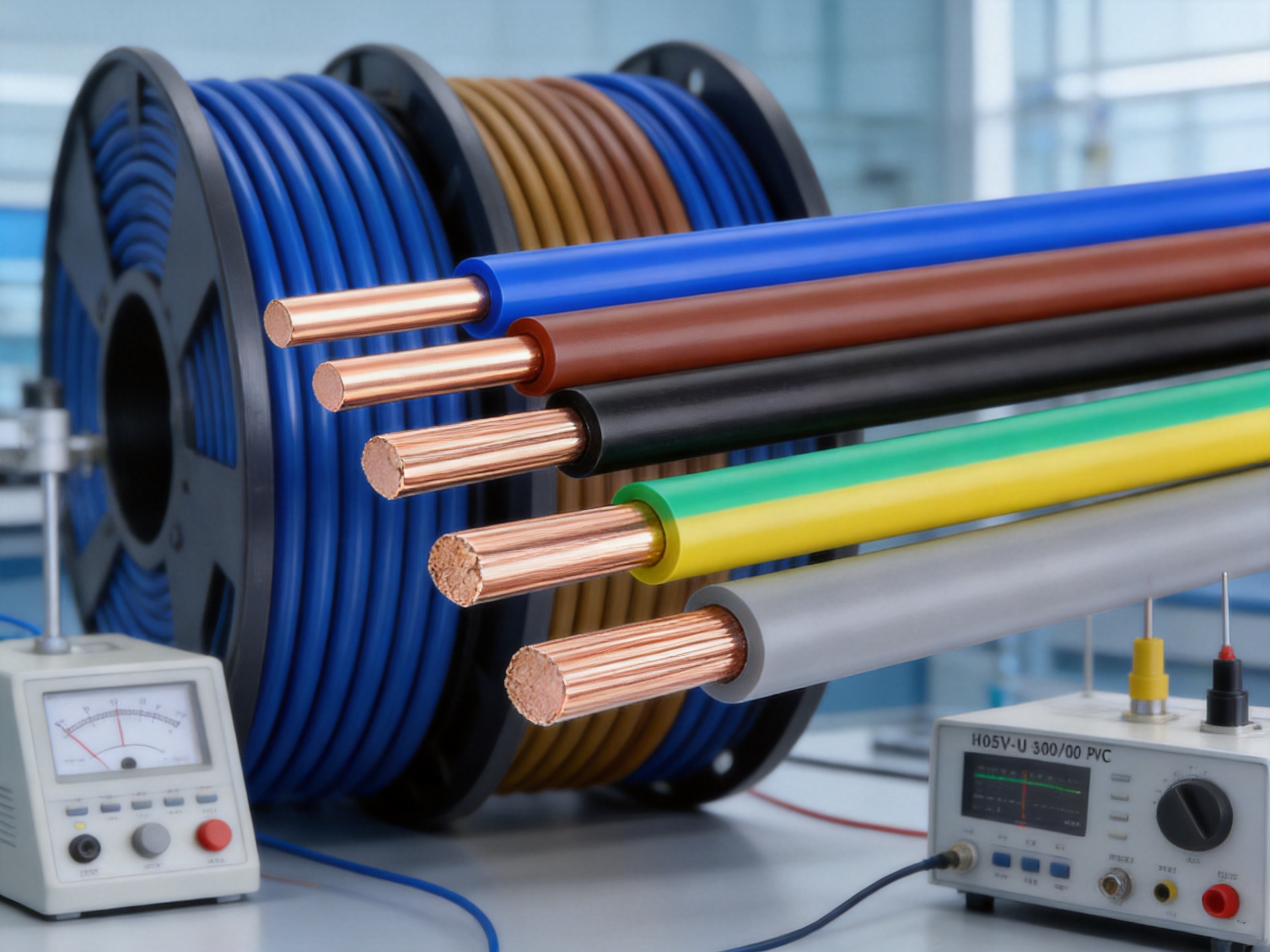
H05V-U Environmental adaptability CE-Certified Cable
Anhui Zhishang Cable Technology Co., Ltd. integrates research and development, production, and sales. Its production base covers approximately 5,000 square meters and includes automated cable manufacturing equipment. The company reports a team of more than 50 employees, including quality engineers and research and development technicians with more than 10 years of industry experience.
The combination of production personnel, technical engineers, quality staff, and sales support allows the company to approach cable supply as an integrated process rather than a simple trading transaction. Customers can discuss product selection, technical requirements, sample approval, production scheduling, inspection records, and delivery arrangements with a coordinated supplier.
The company operates 10 automated production lines and reports a monthly production capacity of up to 10 million meters. This capacity is valuable for customers that require stable, repeated deliveries rather than one-time purchases. It also supports production planning for standard cable sizes and helps reduce the risk of supply interruptions caused by limited equipment availability.
Standard cable models are reported to be stocked for fast shipment. Customized products typically require approximately 7 to 20 days of lead time, depending on construction, quantity, testing, packaging, and material availability. Actual delivery should be confirmed for each order, but the distinction between stocked standard products and scheduled custom production gives buyers a clearer procurement framework.
The company emphasizes full-core, full-length, pure copper specifications, test reports, and warranty support for standard cable models. These commitments are relevant to buyers that need more than a low purchase price. Consistent conductor quality and traceable testing can reduce the risk of receiving cables that differ from the approved sample.
In addition to standard cables, the company supports OEM and ODM development based on customer drawings or samples. This can be useful when a customer needs special lengths, colors, packaging, markings, conductor arrangements, or related wire harness services. Technical engineers can help translate equipment requirements into a practical cable or harness specification.
The company serves industries including industrial automation, weak-current engineering, intelligent manufacturing, appliance equipment, power engineering, and other electrical applications. This broad experience can help the supplier understand the differences between a general-purpose internal wire, a control cabinet conductor, a harness component, and a cable requiring more specialized environmental performance.
The company also describes a commitment to green manufacturing and responsible production. For international customers, environmental documentation and responsible material management are increasingly important during supplier qualification. RoHS-related information, production records, and quality documents can support customers’ regulatory and sustainability reviews.
H05V-U is suitable for many fixed internal connections in appliances designed for conventional indoor use. Examples include refrigerators, washing machines, ovens, dishwashers, ventilation equipment, and other household electrical products.
Within an appliance, the cable may connect internal terminals, switches, control boards, relays, motors, heating elements, lamps, or power distribution points. The selected cable size and temperature rating must be appropriate for the specific circuit. Areas near heating elements or hot surfaces may require a higher-temperature wire construction rather than a standard 70°C PVC-insulated cable.
Appliance manufacturers benefit from standardized colors, repeatable lengths, stable insulation dimensions, and consistent stripping performance. These characteristics support automated or semi-automated assembly and reduce variation in production.
The cable can be used in luminaires, lamp holder connections, fixed lighting equipment, and internal lighting assemblies where the operating temperature and mechanical conditions remain within the cable’s design limits.
Lighting manufacturers often require compact wires that can be routed through narrow spaces and terminated quickly. The single-core format is suitable for separating conductors by function and color. However, luminaires exposed to high heat, outdoor weather, ultraviolet radiation, or repeated movement may require a specialized cable with different insulation materials and temperature characteristics.
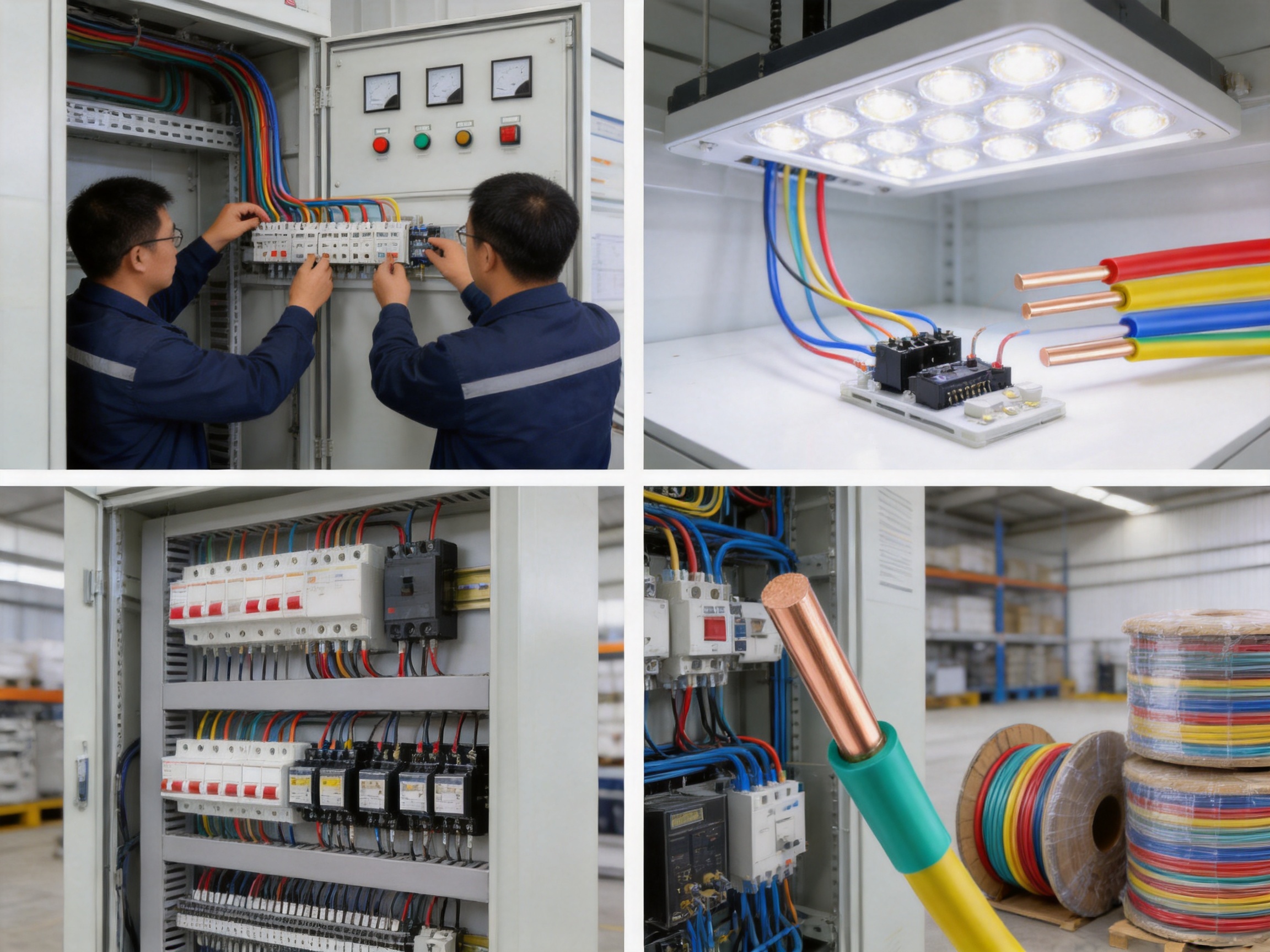
Control cabinets commonly contain a large number of individual conductors connecting terminal blocks, relays, circuit breakers, PLC inputs and outputs, contactors, switches, and instrumentation. H05V-U can provide a practical wiring solution for fixed internal connections within low-voltage control assemblies.
Its range of cross-sectional areas supports both control and power distribution tasks. Smaller sizes may be used for signals and relay circuits, while larger sizes may be selected for internal power connections. Cable color and identification can help technicians trace circuits during commissioning and maintenance.
In a control cabinet, the cable should be routed with suitable bend radii and separated from sources of excessive heat or mechanical abrasion. If the application involves continuous flexing, vibration beyond normal cabinet conditions, or electromagnetic interference concerns, a flexible, shielded, or specially designed cable may be more appropriate.
H05V-U may be used for fixed internal power connections in instruments, meters, adapters, power supplies, and electronic equipment. The cable can connect circuit boards, terminal points, switches, fuses, and internal distribution components where the voltage, temperature, and mechanical requirements are suitable.
Electronic equipment manufacturers often value a cable that is easy to strip, cut, identify, and secure. Consistent insulation thickness helps improve terminal compatibility and reduces the risk of conductor exposure during assembly.
European-standard replacement wire is useful for equipment repair, panel refurbishment, appliance maintenance, and old wiring replacement. A recognized product designation helps maintenance teams select a replacement with a defined voltage class and insulation type.
Before replacement, technicians should verify conductor size, circuit function, temperature exposure, installation method, terminal compatibility, and applicable local regulations. Replacing an old wire with a visually similar but electrically unsuitable product can create unnecessary risk.
H05V-U can also be incorporated into wire harnesses for electrical equipment. Harness production may include cutting, stripping, crimping, labeling, bundling, terminal insertion, and electrical continuity testing.
When supplied as part of a harness program, the cable supplier must coordinate conductor colors, lengths, terminal types, stripping dimensions, and packaging. Accurate production drawings and sample approval are especially important for harness applications because a small dimensional error can affect assembly efficiency.
<
Correct installation is necessary to obtain the intended performance of H05V-U cable. The cable should be selected according to the circuit voltage, current, temperature, installation environment, mechanical stress, and applicable electrical code.
The minimum bending radius stated for the supplied product information is 12.5 times the cable outer diameter. Installers should avoid sharp bends, repeated kinking, crushing, excessive pulling force, or routing over sharp edges. Even when the insulation appears intact, severe mechanical deformation can affect internal conductor condition or reduce the remaining insulation margin.
During stripping, tools should be adjusted so that the copper conductor is not nicked or cut. Damage to the conductor can reduce its effective cross-sectional area and create a stress concentration at the termination point. Damage to the insulation near a terminal can also reduce protection against accidental contact or short circuits.
Terminals, ferrules, connectors, and clamps should match the conductor size. The connection must be tightened according to the component manufacturer’s instructions. Loose connections may generate heat, while excessive tightening may deform the conductor or terminal.
Wiring ducts and cable channels should provide adequate space. Overcrowding can make installation difficult and may restrict heat dissipation. Conductors should be organized so that inspection and future maintenance remain possible.
The cable should be protected from direct contact with hot surfaces, aggressive chemicals, sharp metal edges, and sources of continuous abrasion. If it must pass through a metal panel, a suitable bushing or edge protection should be used.
Although the supplied information includes a movable-installation temperature range, H05V-U is generally selected for fixed wiring. It should not be used in applications involving continuous robotic motion, repeated drag-chain travel, torsion, or frequent flexing unless the exact product construction has been specifically tested and approved for those conditions.
Conductor resistance testing verifies whether the copper conductor provides the expected electrical performance. Resistance is affected by conductor material, cross-sectional area, temperature, length, and manufacturing consistency. Testing results should be corrected or interpreted according to the applicable reference temperature and standard method.
Stable resistance values are especially important for high-volume customers. A conductor that is consistently within specification helps engineers maintain predictable thermal calculations and voltage-drop performance.
Insulation resistance testing evaluates the ability of the PVC layer to prevent unwanted current leakage. The supplied product information identifies an insulation resistance value of 10 MΩ × km. The applicable test method, temperature, voltage, and acceptance criteria should be confirmed in the technical documentation.
Insulation resistance may be influenced by material formulation, moisture, insulation thickness, surface contamination, conductor condition, and temperature. Routine testing helps identify process problems before shipment.
The product information identifies a 4,000 V test voltage. A withstand test applies a voltage significantly above normal operating conditions for a defined period to assess the insulation system’s dielectric integrity.
Withstand testing must be performed using suitable equipment and safe procedures. The test voltage and duration should follow the applicable standard or approved product specification. Passing this test provides evidence that the insulation can tolerate the specified electrical stress without breakdown.
Online spark testing is commonly used during insulation extrusion. It can detect pinholes, small cracks, and local defects in the insulation as the cable passes through the production line. This is an important process control because defects can occur at isolated points and may not be visible during a simple visual inspection.
Outside diameter and insulation thickness affect terminal fit, wiring density, stripping settings, and dielectric performance. Dimensional inspection helps confirm that the cable remains within the product specification.
Concentricity is also important. If the insulation is uneven around the conductor, one side may have less protective thickness than intended. Stable extrusion tooling and online process monitoring help control this risk.
The product information references IEC 60332-1-2 and EN 60332-1-2, as well as UL VW-1 and CSA FT1. These references relate to flame behavior under specified test conditions. They should not be interpreted as meaning that the cable is noncombustible or suitable for every fire-performance category.
Project designers should distinguish between a vertical flame test for an individual wire and more demanding tests for cable bundles, low-smoke applications, fire resistance, or circuit integrity. Where a building or industrial project requires a particular fire classification, the cable must be selected and documented accordingly.
Final inspection should verify smooth insulation, correct color, clear marking where required, absence of visible damage, correct length, and proper packaging. Packaging inspection is often overlooked, but damaged reels or poorly secured coils can create installation problems and increase the risk of insulation damage during transport.
<
Standard H05V-U cable meets many routine requirements, but equipment manufacturers may need variations in delivery length, color, labeling, packaging, or assembly. A supplier with engineering and production capabilities can support these requirements more efficiently than a supplier that only resells fixed catalog products.
Customization may include specified conductor cross-sections, insulation colors, printing, reel lengths, coil lengths, carton quantities, export labels, or batch identification. Customers may also request cut-to-length wire, stripped ends, preassembled terminals, or complete wire harnesses.
OEM and ODM projects normally begin with a technical review. The customer provides drawings, samples, circuit information, target quantities, or installation constraints. The supplier evaluates material availability, tooling, production route, testing needs, and packaging. A sample or first article can then be prepared for customer approval before volume production.
For wire harness applications, the technical review should include conductor length tolerance, strip length, terminal model, crimp height, pull force, connector orientation, labeling, bundling, and continuity testing. The more complete the drawing and approval record, the lower the risk of assembly errors.
Customization should not change the fundamental safety requirements. Any modified cable construction must be reviewed for voltage rating, temperature performance, insulation characteristics, conductor resistance, flame behavior, and compliance documentation. A custom color or length is relatively simple, while a change in insulation compound or conductor construction may require additional validation.
For electrical equipment manufacturers, cable availability can influence production continuity. Delayed wire shipments may stop assembly lines even when other components are ready. Maintaining standard sizes in stock can therefore provide a practical advantage.
The reported supply model combines stocked standard products with scheduled custom manufacturing. Standard H05V-U sizes can support urgent replenishment and routine orders, while customized products can be planned according to project requirements. This approach allows buyers to balance speed and specification control.
Production capacity of up to 10 million meters per month provides a foundation for handling repeat orders and larger volume requirements. Capacity alone does not guarantee delivery performance, but it becomes valuable when supported by material planning, equipment maintenance, production scheduling, quality release procedures, and clear communication.
Customers should evaluate a cable supplier using several criteria rather than price alone. Important factors include copper quality, standard conformity, technical documents, test capability, production traceability, sample consistency, packaging, lead time, response speed, and after-sales support.
A stable supplier can also reduce qualification costs. Once the cable has been approved for a particular equipment model, repeat purchasing from the same controlled source reduces the need for repeated design changes and incoming inspection adjustments.
H05V-U is suitable for conventional indoor environments where PVC insulation provides adequate protection against moisture and limited chemical exposure. The product information identifies resistance to moisture, weak acids, and weak alkalis. This makes it practical for many electrical rooms, cabinets, appliances, and indoor production areas.
Environmental selection must nevertheless consider the complete service condition. Strong acids, concentrated alkalis, oils, solvents, ozone, ultraviolet radiation, high temperatures, low temperatures, water immersion, and mechanical movement may affect PVC insulation differently. If these conditions are present, a fluoroplastic, elastomeric, low-smoke, heat-resistant, oil-resistant, or specialty cable may be required.
RoHS-related compliance supports the needs of customers producing electrical and electronic equipment for regulated markets. Buyers should obtain current declarations and confirm that the document applies to the exact material and product configuration supplied.
Responsible manufacturing also includes reducing material waste, controlling production scrap, managing packaging, maintaining equipment, and improving energy efficiency. Cable production can benefit from accurate extrusion control because stable dimensions reduce rejected material and rework.
The available H05V-U range extends from approximately 0.5 mm² to 25 mm². Choosing the correct cross-section requires more than matching the wire to a terminal opening.
The first consideration is the expected load current. The conductor must be large enough to carry the current without exceeding the permissible temperature. The second consideration is voltage drop, especially where the conductor length is significant or the connected equipment has strict voltage requirements.
Ambient temperature and conductor grouping can reduce the allowable current. Several loaded conductors installed together may generate additional heat. Enclosures with poor ventilation can also raise the operating temperature. Engineers should apply the relevant correction factors and installation rules.
Mechanical requirements matter as well. A larger conductor may be electrically suitable but difficult to route or terminate in a small cabinet. A smaller conductor may fit easily but fail to provide the required current capacity or mechanical robustness.
Terminal compatibility must be checked. The conductor size should match the terminal, ferrule, connector, circuit breaker, or other component. If ferrules are used, the ferrule dimensions and crimping tool must be compatible with the selected conductor construction.
For high-reliability projects, the final specification should identify product designation, cross-sectional area, color, conductor class, voltage rating, temperature requirements, applicable standard, test documentation, and packaging format.
A specialized cable manufacturer can provide greater technical control than a general electrical goods distributor. The manufacturer understands the relationship between conductor drawing, insulation extrusion, material formulation, testing, and packaging.
This knowledge is useful when a customer experiences a practical problem. For example, difficult stripping may be associated with insulation hardness or wall thickness. Terminal insertion problems may relate to conductor dimensions. Diameter variation may affect wiring duct capacity. Surface defects may indicate extrusion or material issues. A manufacturer with engineering capability can investigate the cause rather than simply replace the shipment.
Integrated production also improves communication. The same organization can coordinate technical review, material preparation, manufacturing, inspection, documentation, and shipment. This can shorten the feedback cycle during new product development and help maintain consistency during repeat orders.
Anhui Zhishang Cable Technology Co., Ltd. positions itself as a supplier of wire and cable solutions for industrial automation, intelligent manufacturing, appliance equipment, power engineering, weak-current projects, and related markets. Its stated business philosophy emphasizes quality orientation, integrity, stability, and responsibility.
The company’s R&D and technical personnel support customized cable development based on customer drawings or samples. This is important for international buyers that may have existing internal specifications but need a manufacturing partner capable of producing them at consistent quality and volume.
<
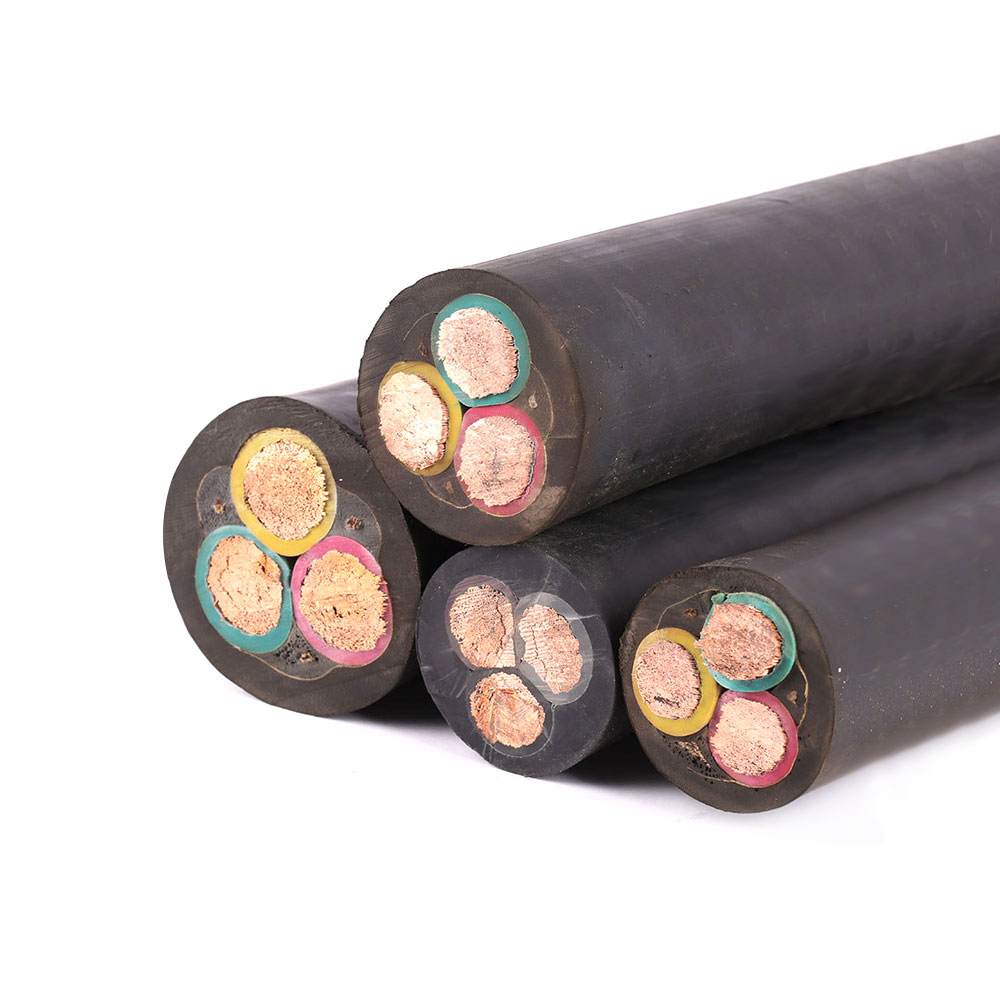
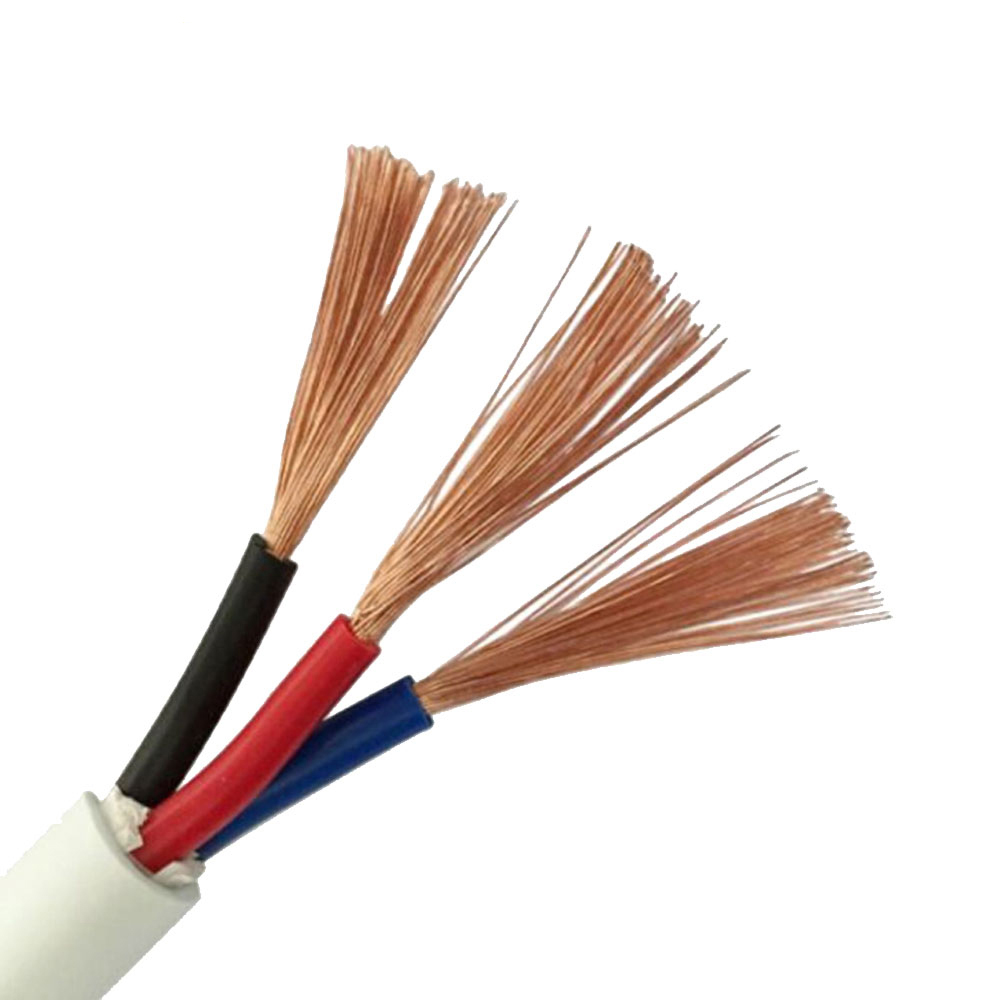
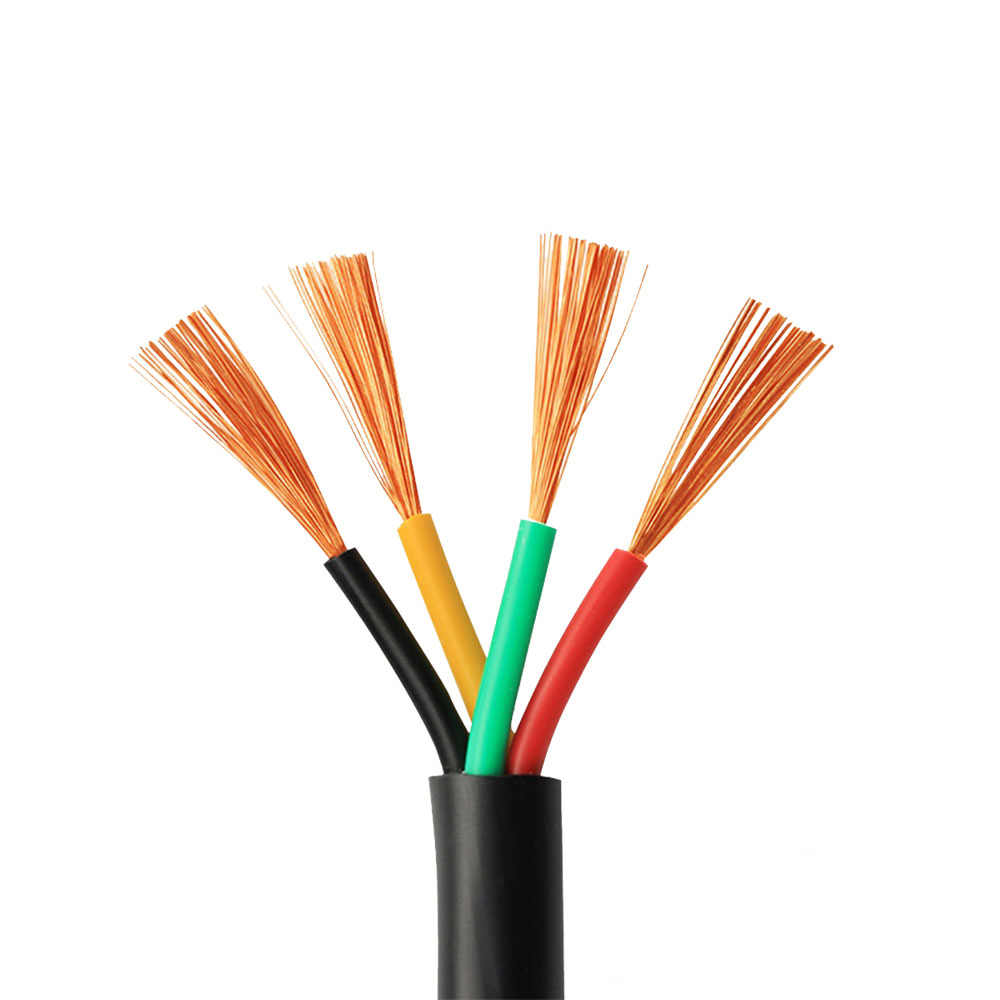
H05V-U consists of individual single-core conductors, while a multicore cable contains several insulated conductors within one common sheath. H05V-U is often preferable when circuits must be separated, color-coded, individually terminated, or routed through a control cabinet.
A multicore cable may be more efficient when several related circuits follow the same route and require common mechanical protection. The selection depends on installation layout, space, assembly method, maintenance requirements, and environmental conditions.
Flexible PVC wire is designed with a conductor construction that allows more movement. H05V-U is primarily intended for fixed installation. If a wire must be repeatedly flexed, moved through a hinge, or installed in a drag chain, a flexible cable specifically rated for that duty should be selected.
Using a fixed-installation cable in a continuous-motion application can cause conductor fatigue, insulation cracking, or premature failure even when the voltage and current are within limits.
H05V-U is generally associated with a 70°C long-term operating temperature. Heat-resistant cables may use silicone, fluoroplastic, cross-linked polymers, or other materials to withstand higher temperatures.
Where a cable is routed close to heating elements, ovens, engines, lamps, or high-temperature machinery, the actual surface temperature must be measured or calculated. A standard PVC cable should not be substituted for a high-temperature product simply because it has the same conductor size.
H05V-U provides basic insulated conductor functionality but does not inherently include an electromagnetic shield. In environments with significant electrical noise, variable-frequency drives, sensitive measurement circuits, or long parallel runs, a shielded cable may be necessary.
For simple internal power, relay, or fixed control wiring, an individual H05V-U conductor may be the more economical choice. For signal integrity requirements, cable selection should include electromagnetic compatibility considerations.
Equipment manufacturers can use H05V-U to standardize internal wiring across product models. A common cable family simplifies purchasing, warehouse management, production instructions, and maintenance documentation.
Consistent insulation colors and dimensions can also improve assembly efficiency. When the supplier provides stable batch quality, stripping tools and terminal processes can be standardized more easily.
Contractors benefit from a cable that is easy to identify, route, cut, and terminate. The broad size range supports many low-voltage wiring requirements, while the harmonized designation helps with specification review and material approval.
Distributors can stock frequently used cross-sections and colors for quick delivery. A reliable manufacturer with regular output can support replenishment planning and reduce stockout risk.
Maintenance departments can use standard replacement wire for equipment repair and panel modification. Clear product identification helps technicians select a replacement with a suitable voltage rating and insulation material.
International buyers often need a supplier that can provide technical documents, consistent packaging, export-ready labeling, and responsive communication. A manufacturer with experience serving overseas markets can help coordinate these requirements.
Before approving H05V-U cable for production use, customers should request documentation appropriate to their project. A typical package may include a product datasheet, dimensional information, conductor resistance data, insulation resistance results, withstand voltage information, applicable conformity declarations, RoHS documentation, test reports, and packaging specifications.
For customized products, the documentation should identify the exact construction. It should state conductor material, cross-sectional area, insulation material, color, temperature class, voltage rating, applicable standard, test method, and any deviations from the standard product.
Samples should be labeled with product type, size, production batch, and date where possible. Sample approval records should be retained so that future production can be compared against the approved reference.
For recurring orders, buyers may establish an incoming inspection plan. This may include checking package condition, cable marking, color, length, outer diameter, conductor size, and certificate consistency. More detailed electrical tests may be performed periodically or when a new batch or material source is introduced.
Cable should be stored in a clean, dry location away from direct sunlight, excessive heat, water, chemicals, and sharp objects. Reels should be supported securely and protected from rolling. Coils should not be stacked in a way that causes crushing or permanent deformation.
During transportation, the cable should remain protected from impact and abrasion. Reels should be secured to prevent movement, while exposed cable ends should be sealed or protected. Long-term storage conditions should follow the manufacturer’s recommendations, especially when the cable will be held for extended periods before installation.
Before use, the cable should be inspected for cuts, flattening, discoloration, contamination, or other visible damage. If storage conditions were poor or the cable has been exposed to moisture or extreme temperature, additional inspection may be appropriate.
H05V-U is a harmonized European cable designation. “H” identifies the harmonized cable system, “05” indicates a rated voltage of 300/500 V, “V” identifies PVC insulation, and “U” identifies the single-core construction.
The product uses copper conductors. Depending on the selected construction and applicable specification, the conductor may be solid or otherwise configured as stated in the approved technical datasheet.
The rated voltage is 300/500 V. This makes it suitable for many low-voltage internal wiring applications, provided that current, temperature, installation, and regulatory requirements are also satisfied.
It is primarily intended for conventional indoor fixed wiring. Outdoor use should only be considered when the exact product has suitable protection from ultraviolet radiation, moisture, temperature variation, mechanical damage, and other environmental factors.
Yes. It can be used for many fixed internal connections in appliances such as refrigerators, washing machines, ovens, and similar equipment. Areas exposed to high temperatures or repeated movement may require a different cable type.
Yes. It is commonly suitable for fixed internal connections in low-voltage control cabinets, including terminal block jumpers, relay circuits, control wiring, and internal power connections. The selected cross-section must match the circuit requirements.
It is a single-core cable with limited installation flexibility, but it is generally intended for fixed wiring rather than continuous movement. Applications involving repeated flexing or drag-chain travel should use a cable specifically designed for that service.
The stated product range covers approximately 0.5 mm² to 25 mm². Availability may depend on color, conductor construction, order quantity, and production schedule.
The standard long-term operating temperature is identified as 70°C. The supplied information also gives a fixed-installation range of approximately -30°C to +80°C and a movable-installation range of approximately -5°C to +70°C. The exact permissible temperature should be confirmed for the selected product configuration.
The supplied product information specifies a minimum bending radius of 12.5 times the cable outer diameter. Installers should avoid sharp bends and follow the latest product documentation.
The product information references IEC 60332-1-2 and EN 60332-1-2, with UL VW-1 and CSA FT1 references also stated. The applicable test result and classification should be confirmed from the relevant test report.
No. CE-related conformity supports applicable European market requirements, but it does not mean that the cable is suitable for every temperature, environment, mechanical condition, or installation method. The product must still be selected according to the application.
The product information states RoHS compliance. Customers should request current documentation covering the exact product and material configuration supplied for their project.
Customization may include size, color, length, printing, packaging, stripping, terminals, and wire harness assembly. OEM and ODM support can be developed from customer drawings or samples after technical review.
Standard products are reported to be stocked for fast shipment, while customized products typically require approximately 7 to 20 days of lead time. The actual schedule depends on quantity, construction, materials, testing, packaging, and shipping arrangements.
Buyers should compare conductor quality, standard conformity, testing capability, production capacity, traceability, sample consistency, documentation, packaging, lead time, customization support, and after-sales service in addition to unit price.
H05V-U cable is a practical and widely applicable solution for 300/500 V low-voltage internal wiring. Its copper conductor, PVC insulation, single-core construction, European harmonized designation, broad cross-sectional range, and compatibility with common electrical accessories make it suitable for household appliances, lighting equipment, control cabinets, electronic instruments, maintenance work, and equipment manufacturing.
Its principal advantages over generic unclassified wire include clearer technical identification, more predictable electrical performance, standardized installation compatibility, cost-effective construction, and improved documentation potential. The cable is especially valuable when a project requires a recognized European cable format without the additional cost or complexity of shielding, armoring, high-temperature insulation, or specialized mechanical protection.
Product performance depends on manufacturing discipline. Conductor inspection, controlled drawing, suitable annealing, stable PVC compounding, precise extrusion, online spark testing, dimensional inspection, electrical testing, and secure packaging all contribute to final cable quality. A supplier with modern production lines, experienced technical personnel, quality engineers, OEM/ODM capabilities, and established export experience can provide additional value beyond the cable itself.
Anhui Zhishang Cable Technology Co., Ltd. combines cable research and development, production, sales, customization, and technical support. Its reported 5,000-square-meter production base, 10 automated production lines, team of more than 50 employees, monthly output of up to 10 million meters, standard product stock, and customized lead-time capability provide a foundation for serving both routine and project-based requirements.
For the best result, buyers should define the required cross-section, conductor construction, color, voltage, temperature, installation method, compliance documents, packaging, and delivery schedule before placing an order. When the product specification is matched carefully to the application, H05V-U can provide dependable performance, efficient assembly, and a competitive total cost for a wide range of electrical products and systems.
1. Harmonized European Cable Designation Principles, reference guidance for H-type low-voltage cable markings.
2. DIN VDE 0281, Polyvinyl Chloride Insulated Cables of Rated Voltages up to and Including 450/750 V.
3. HD 21.2, Polyvinyl Chloride Insulated Cables of Rated Voltages up to and Including 450/750 V.
4. IEC 60332-1-2, Tests on Electric and Optical Fibre Cables under Fire Conditions.
5. EN 60332-1-2, European Standard for Vertical Flame Propagation Testing of a Single Insulated Wire or Cable.
6. European Union Low Voltage Electrical Equipment Safety Requirements.
7. European Union Restriction of Hazardous Substances Requirements for Electrical and Electronic Equipment.
8. General Electrical Installation Practice for Copper Conductors, PVC Insulation, and Low-Voltage Equipment Wiring.

We firmly believe that good cables are not only a competition of materials, but also a reflection of craftsmanship, quality, and responsibility.

Links
Product
Send Inquiry
No. 29 Sankeshu Road, Xuanzhou District, Xuancheng City, Anhui Province, China
+86-18621104555/+86-563-2622999
 Electrical Cable Manufacturer
OEM/ODM Wire and Cable Solutions
Electrical Cable Manufacturer
OEM/ODM Wire and Cable Solutions
 English
 Español
 عربى
عربى
 русский