
Get more content that can help you
Content
Reliable low-voltage wiring is essential for safe electrical distribution, control cabinets, commercial buildings, industrial equipment, and infrastructure projects. The H07V-U cable is a widely recognized single-core PVC-insulated wire designed for fixed electrical installations. Its European harmonized designation, standardized construction, broad cross-section range, and compatibility with common installation accessories make it a practical choice for contractors, panel builders, equipment manufacturers, distributors, and engineering procurement teams.
As a 450/750 V harmonized cable designation, H07V-U is associated with a single-core conductor, PVC insulation, and a solid or rigid conductor construction. The cable is generally selected for internal wiring, fixed power distribution, electrical cabinets, distribution boxes, lighting circuits, socket circuits, and fixed connections to equipment. Its simple structure supports efficient manufacturing, convenient termination, and cost-effective project deployment.
The product is particularly suitable for customers who require European-style cable identification, stable production quality, CE-related compliance support, and compatibility with established electrical installation practices. Compared with more complex multi-core or heavily armored cables, H07V-U offers a streamlined solution where mechanical protection is provided by the enclosure, conduit, trunking, panel, or other installation environment.
This article examines the construction, technical characteristics, application advantages, manufacturing capabilities, quality assurance methods, and procurement considerations associated with H07V-U cable. It also explains how an experienced cable manufacturer can support standard supply, OEM and ODM development, project customization, and international delivery.
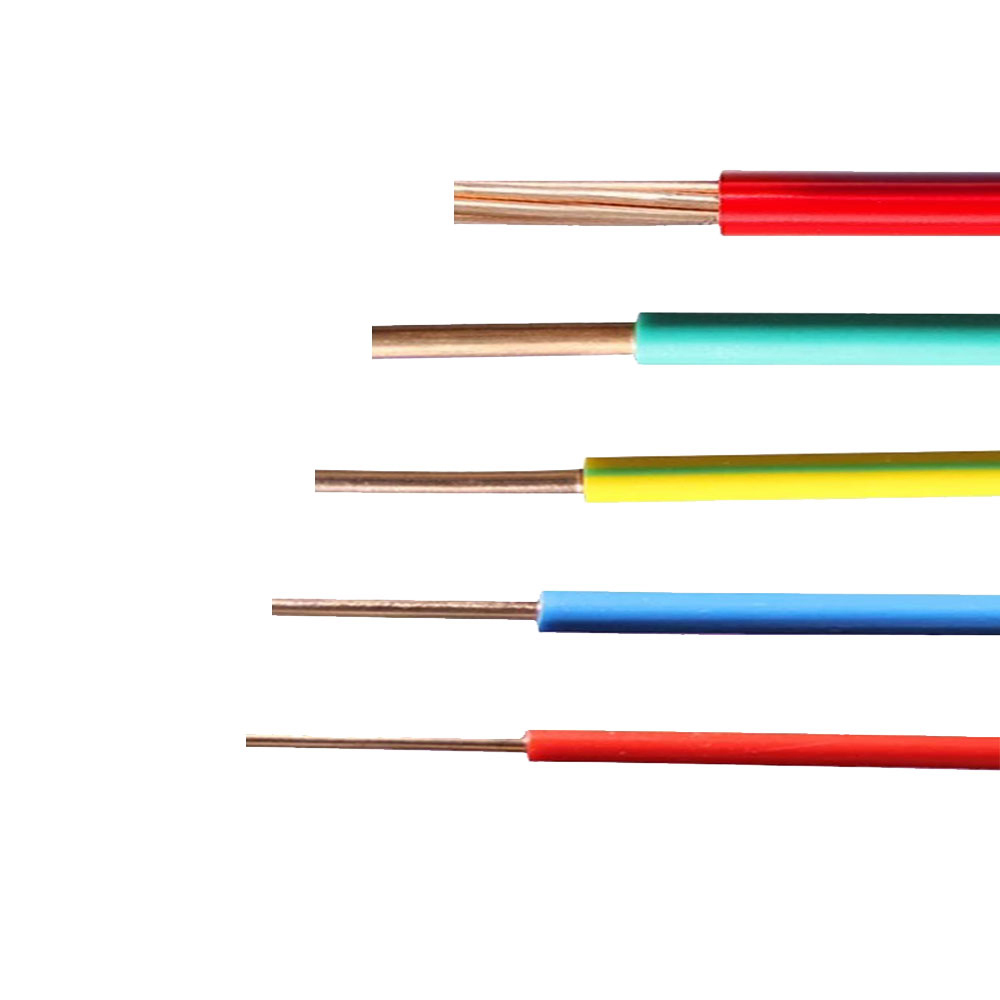
H07V-U High compatibility CE-Certified Cable
The H07V-U designation follows a European harmonized cable naming system. Each part of the designation communicates important information about the cable’s intended electrical and construction characteristics.
Designation Element |
Meaning |
H |
Harmonized European cable designation |
07 |
Nominal voltage class commonly associated with 450/750 V |
V |
PVC insulation material |
U |
Single-core rigid or solid conductor construction |
The H07V-U format is useful because it provides a concise reference to the cable’s basic design. Buyers, designers, and installers can quickly identify that the product is a single-core PVC-insulated wire intended for low-voltage fixed wiring. The designation also helps simplify communication between manufacturers, distributors, consultants, and contractors working across different European markets.
Although the designation indicates a 450/750 V class, project documents should always be checked carefully. Some product tables or commercial listings may show alternative voltage expressions, such as 300/500 V, because of different product variants, market conventions, or data-entry inconsistencies. Before ordering, the purchaser should confirm the rated voltage printed on the final datasheet, cable marking, certificate, and test documentation.
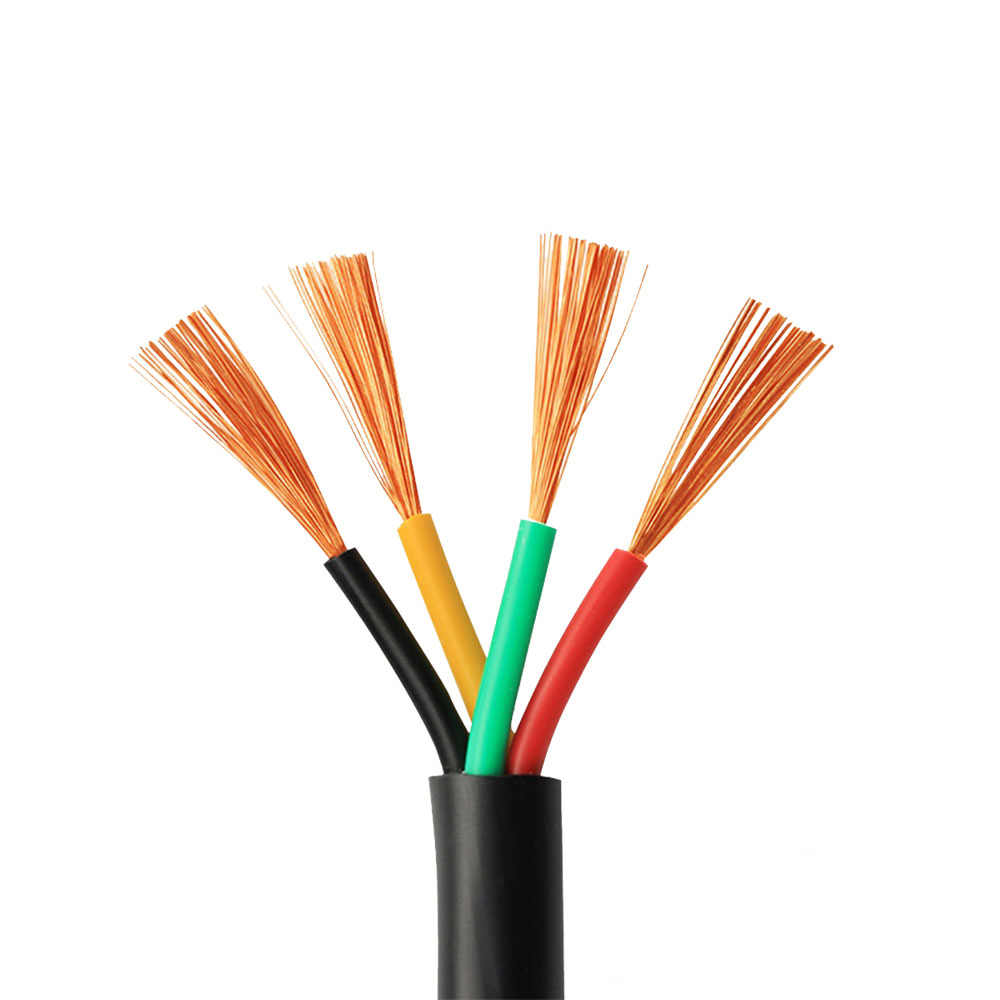
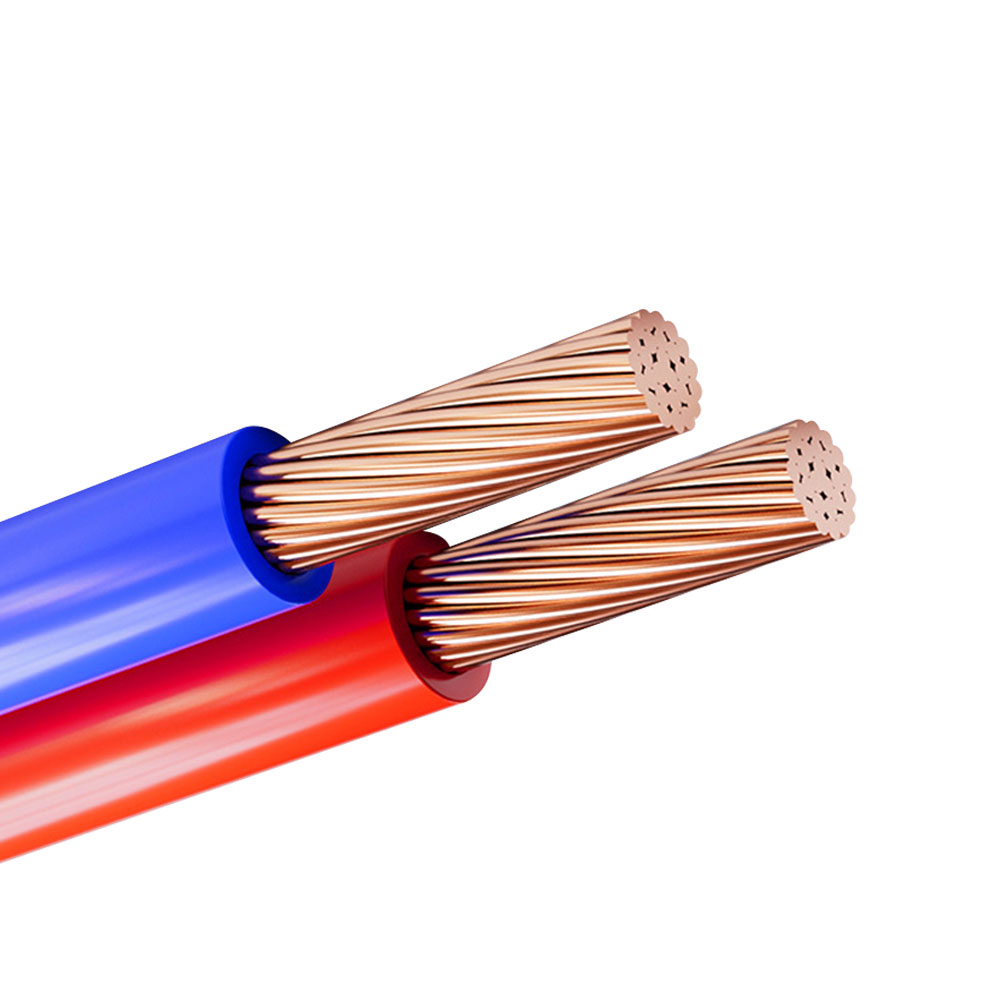
The conductor is manufactured from copper selected for electrical conductivity, mechanical consistency, and reliable termination. Depending on the required cross-sectional area and production specification, the conductor may be produced as a solid single wire or as a compact multi-strand rigid conductor. These structures are designed for fixed installations rather than continuous flexing applications.
Copper provides low electrical resistance and supports stable current transmission. It also offers good compatibility with common terminals, circuit breakers, busbars, terminal blocks, cable lugs, and electrical accessories. When correctly stripped and terminated, the conductor can provide a secure electrical connection with low contact resistance.
For building wiring and control cabinet applications, conductor dimensional accuracy is important. A conductor that is too large may be difficult to insert into a terminal. A conductor that is too small may not provide the expected electrical performance or mechanical holding force. Controlled drawing, annealing, stranding where applicable, and dimensional inspection help maintain consistency across production batches.
The insulation is made from polyvinyl chloride, commonly known as PVC. PVC is widely used in low-voltage cable production because it combines electrical insulation performance, mechanical durability, processability, and cost efficiency. It can be extruded at high production speeds while maintaining a uniform covering around the conductor.
PVC insulation helps protect the conductor from accidental contact, short circuits, moisture exposure, dust, and ordinary environmental contamination. It also provides a visible color surface for circuit identification. Standard color options can be selected according to project requirements, wiring conventions, customer specifications, or equipment assembly practices.
The insulation compound can be formulated to meet defined electrical, thermal, flame-retardant, and mechanical requirements. The final performance depends on the material formulation, extrusion parameters, conductor preparation, cooling process, and quality-control procedures. For this reason, the manufacturing process is as important as the nominal material description.
H07V-U is generally produced as a single-core round wire. The round profile makes it compatible with conduits, cable channels, panel wiring ducts, terminal blocks, and common cable-management systems. A stable circular profile also helps support consistent insulation thickness and predictable stripping behavior.
In fixed wiring applications, the cable is typically installed inside a protective enclosure or routing system. The enclosure may be a wall conduit, electrical cabinet, distribution box, equipment housing, or cable tray. The cable itself is not intended to replace heavy mechanical protection where the installation is exposed to impact, crushing, abrasion, or severe movement.
H07V-U cable is valued for its straightforward electrical and mechanical design. The main characteristics supplied for this product include a single conductor, cross-sectional options from approximately 1.5 mm² to 400 mm², PVC insulation, and a nominal voltage class associated with European low-voltage wiring.
Technical Item |
Typical Product Information |
Product Type |
H07V-U single-core PVC-insulated cable |
Number of Conductors |
Single core |
Conductor Material |
Copper |
Cross-Sectional Area |
Approximately 1.5 mm² to 400 mm², subject to final specification |
Rated Voltage |
Commonly identified as 450/750 V for H07V-U; confirm the final datasheet |
Insulation Material |
PVC |
Long-Term Operating Temperature |
Commonly 70°C for standard PVC insulation |
Test Voltage |
Up to 4,000 V according to the supplied product information and applicable standard |
Insulation Resistance |
Specified product value of 10 MΩ × km |
Flame Performance |
IEC 60332-1-2 and EN 60332-1-2; additional claims require project confirmation |
Conformity Information |
CE and RoHS support, subject to product documentation |
The cable information includes a fixed-installation temperature range of approximately -30°C to +80°C and a movable-installation range of approximately -5°C to +70°C. These values should not be interpreted as permission for continuous flexing. H07V-U is principally intended for fixed wiring. If the cable will be repeatedly moved, bent, dragged, or installed in an energy chain, a specially designed flexible cable should be selected instead.
The listed minimum bending radius is 12.5 times the cable outer diameter for both fixed and movable installation in the supplied information. Because bending recommendations can vary according to conductor size, insulation construction, installation temperature, and applicable standard, the final technical datasheet should be used for project engineering and installation planning.
One of the most important advantages of H07V-U is its alignment with a familiar European harmonized cable designation. This can reduce uncertainty when a project has been designed around European electrical practices, European panel components, or regional procurement specifications.
Using a cable that matches the required designation helps engineers and contractors compare products more efficiently. It also makes it easier to communicate the expected conductor type, insulation material, voltage class, and application category. For exporters of electrical equipment, using a recognized cable type can simplify internal wiring specifications and support customer acceptance procedures.
The single-core design is well suited to circuits that must be routed individually through a conduit, trunking system, cable duct, or panel wiring channel. Installers can select different colors and cross-sectional areas for phase, neutral, protective, control, and auxiliary circuits. The cable can then be arranged in a clear and serviceable manner.
Compared with a multi-core cable, individual single-core wires may offer greater flexibility in circuit layout. A panel builder can route each circuit to the most convenient terminal location without carrying unused cores. This can be advantageous in electrical cabinets, distribution boxes, machine-control assemblies, and customized equipment.
H07V-U uses a relatively simple construction: a copper conductor and PVC insulation. It normally does not require an armor layer, metallic screen, inner sheath, outer sheath, or complex filler system. This reduces material complexity and makes the cable economical for installations where those additional protective layers are not needed.
The streamlined structure can also reduce stripping and termination time. Installers generally need to remove only the outer insulation at the connection point. The exact stripping method should be selected according to conductor size and terminal requirements to prevent conductor nicking or insulation damage.
A broad range of cross-sectional areas allows the same general cable family to be used for small lighting and control circuits as well as larger fixed power connections. Common project sizes may include 1.5 mm², 2.5 mm², 4 mm², 6 mm², 10 mm², 16 mm², 25 mm², 35 mm², 50 mm², 70 mm², 95 mm², 120 mm², 150 mm², 185 mm², 240 mm², and larger sizes subject to production capability and applicable standard.
The correct size must be selected based on current-carrying capacity, installation method, ambient temperature, grouping, voltage drop, short-circuit conditions, terminal ratings, and local electrical regulations. A larger conductor is not automatically the best choice, because it may increase cost, reduce installation convenience, and create compatibility issues with terminals or conduits.
Color-coded single-core wires support easier circuit identification during installation, commissioning, inspection, and maintenance. Clear identification reduces the risk of incorrect connections, particularly in distribution boxes and control cabinets containing many parallel circuits.
For industrial equipment manufacturers, consistent wire colors and cable markings can improve assembly procedures. Operators and maintenance engineers can follow wiring diagrams more easily when the physical wiring corresponds to the documentation. This can reduce troubleshooting time and support safer service work.
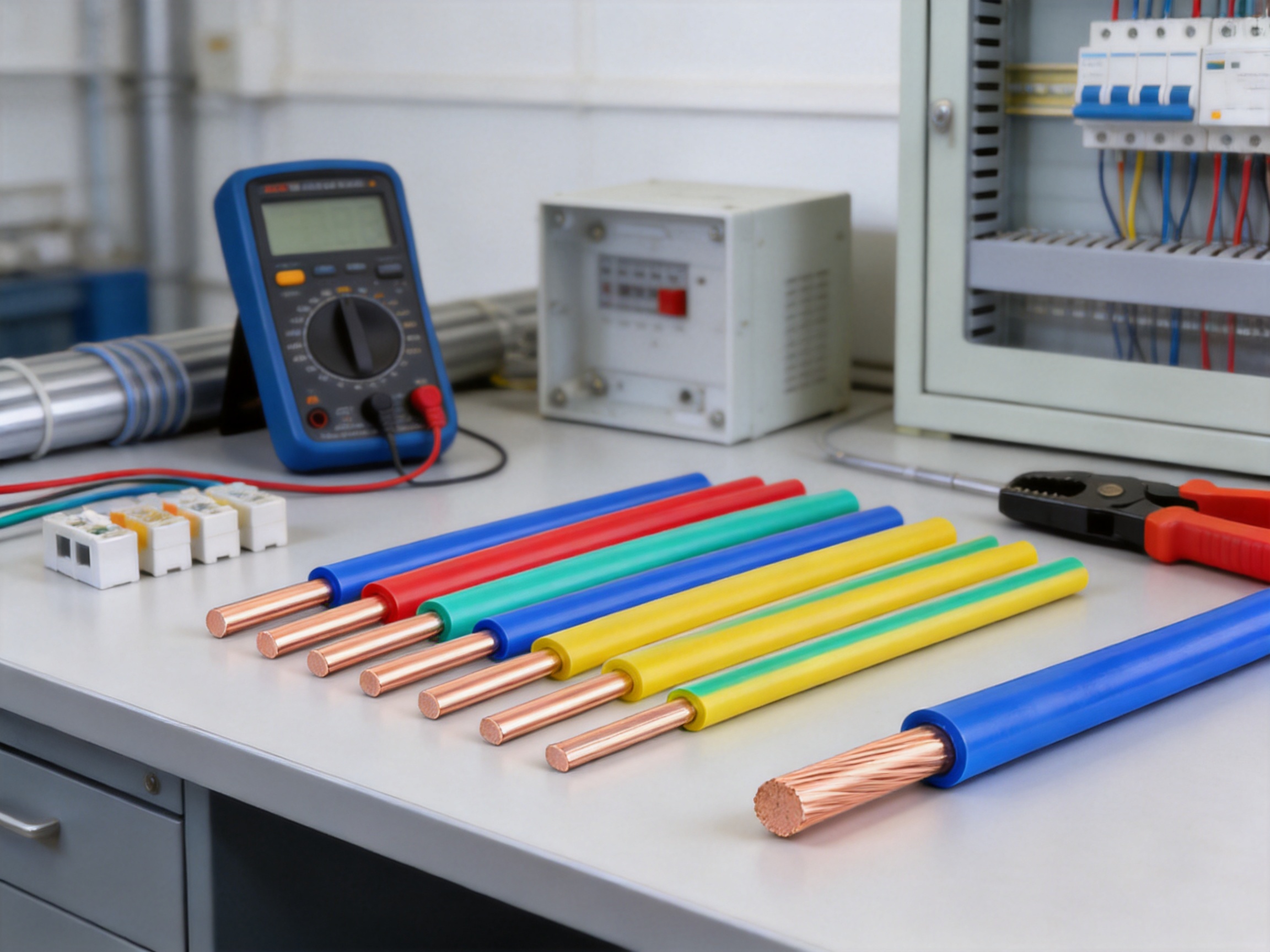
H07V-U can be used for fixed internal wiring in residential buildings when the selected product, installation method, and local regulations are compatible. Typical applications include lighting circuits, socket circuits, distribution-board connections, and internal wiring routed through approved conduit or trunking.
For residential projects, the cable’s main value is its standardized single-core configuration. It can be routed neatly through walls, conduits, wiring channels, and distribution boxes. The conductor size and protective-device rating must be coordinated to ensure that the circuit is protected against overload and short circuit.
Commercial buildings often contain extensive lighting, socket, HVAC, access-control, and equipment circuits. Single-core PVC-insulated cables can support organized routing in electrical rooms, distribution panels, and service areas. They may also be used for fixed connections to pumps, fans, air-conditioning units, and other equipment where the installation design permits.
Large commercial projects typically require traceable documentation, consistent delivery, and stable product dimensions. A manufacturer with controlled production and testing procedures can help reduce variation between cable batches. This is important when a project involves multiple contractors, phased deliveries, or repeated construction across different locations.
Control cabinets require wiring that is easy to route, terminate, label, and inspect. H07V-U can be used for main circuit connections, incoming and outgoing lines, internal distribution, auxiliary power, and selected control wiring. The application must take account of the difference between fixed power wiring and highly flexible signal or moving-machine wiring.
In a cabinet, the cable is often installed in wiring ducts and connected to terminal blocks, circuit breakers, contactors, relays, fuses, busbars, and other components. The conductor cross-section should match the terminal capacity and the electrical load. Where vibration or repeated access is expected, appropriate ferrules, lugs, supports, and strain-relief methods should be considered.
Fixed equipment such as pumps, fans, air-conditioning units, machine tools, and production-line assemblies may use H07V-U for internal or fixed power connections. The cable is especially suitable where the equipment enclosure provides mechanical protection and the cable does not experience continuous movement.
Industrial users should evaluate oil exposure, chemical contact, heat, vibration, dust, moisture, electromagnetic interference, and mechanical hazards. A standard PVC-insulated single-core wire may be suitable for ordinary industrial environments, but specialty cables may be required for harsh conditions or dynamic applications.
The product may be considered for fixed internal wiring in small substations, distribution equipment, charging-pile assemblies, and other infrastructure projects. Such projects often require clearly documented voltage ratings, insulation performance, conductor resistance, flame performance, and conformity information.
Project engineers should distinguish between internal wiring and exposed field cabling. H07V-U can be appropriate inside a protected assembly, while an outdoor feeder or underground connection may require a cable with a suitable outer sheath, water resistance, UV resistance, armor, or other specialized construction.
Compliance documentation is a central part of international cable procurement. Customers may require evidence relating to harmonized standards, CE marking obligations, RoHS material restrictions, electrical testing, flame performance, and batch traceability.
The supplied product information references DIN VDE 0281, HD 21, IEC 60332-1-2, and EN 60332-1-2. The exact edition, applicable part, product scope, and test method should be verified in the formal technical file. A product should not be described as compliant with a standard solely because a similar designation appears in a commercial listing.
CE-related documentation should be prepared according to the applicable European legal framework and product category. For low-voltage electrical products, the Low Voltage Directive may be relevant, but the manufacturer and importer must evaluate the complete compliance obligations for the product and intended market. CE marking is not a universal quality grade; it is a conformity declaration associated with applicable European requirements.
RoHS support is relevant to customers who need products that restrict certain hazardous substances. The material declaration and supporting evidence should correspond to the actual insulation compounds, conductor materials, inks, packaging, and accessories supplied with the product.
Quality or Compliance Area |
Recommended Documentation |
Product Identification |
Datasheet, product designation, conductor construction, insulation type, and size range |
Electrical Performance |
Conductor resistance, insulation resistance, voltage test, and rated-voltage information |
Material Compliance |
PVC material information, RoHS declaration, and relevant substance documentation |
Flame Performance |
Applicable flame test report or declaration according to the specified standard |
Production Traceability |
Batch number, production date, inspection record, and packaging information |
Conformity Support |
Declaration of conformity and relevant certification records where applicable |
For engineering projects, document consistency is as important as product consistency. The cable marking, packing label, purchase order, datasheet, inspection report, and certificate should identify the same product type and cross-sectional area. Any difference in voltage expression or temperature rating should be resolved before shipment and installation.
Manufacturing begins with the selection and inspection of copper rod, PVC resin, plasticizers, stabilizers, pigments, and other compound components. Material control is important because the conductor determines electrical performance while the insulation compound influences thermal, mechanical, and flame behavior.
Incoming materials should be checked against purchasing specifications and internal acceptance criteria. Copper may be inspected for surface quality, dimensions, conductivity, and cleanliness. PVC compounds may be checked for batch identification, processing characteristics, color, and conformity to the required formulation.
Copper rod is drawn through a series of dies to achieve the required conductor diameter. Controlled wire drawing improves dimensional accuracy and surface quality. Depending on the conductor structure, the wire may undergo annealing to restore suitable softness and improve bending and termination behavior.
For rigid multi-strand constructions, individual wires may be stranded or compacted according to the selected design. The stranding process must maintain consistent lay, dimensional stability, and conductor integrity. Excessive tension can deform the conductor, while insufficient control may create irregular geometry.
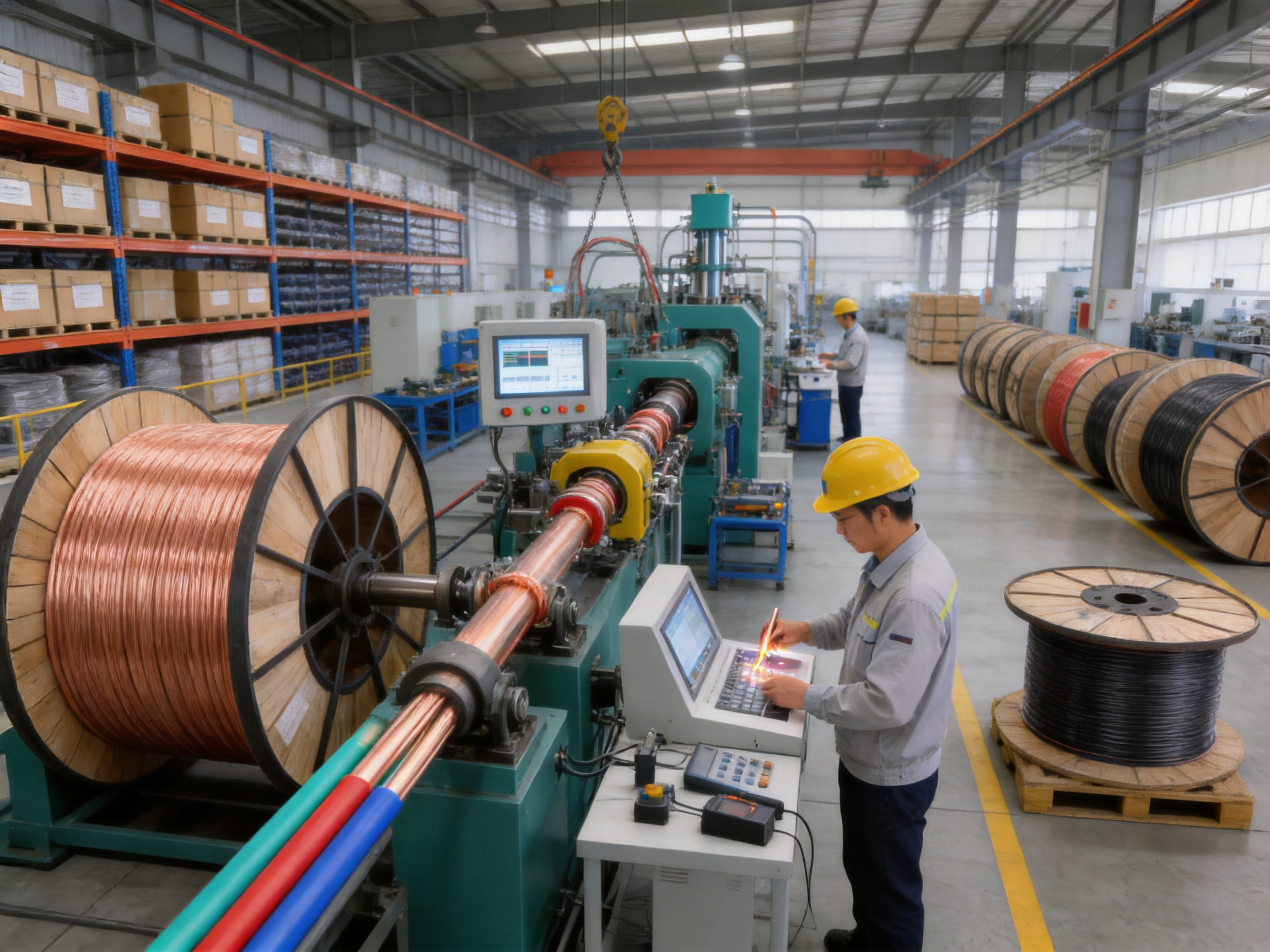
During extrusion, the prepared conductor passes through an extruder that applies molten PVC around its surface. The insulation must be continuous and sufficiently uniform to provide reliable dielectric performance. Extrusion temperature, screw speed, line speed, die alignment, cooling-water conditions, and material pressure all influence the final result.
Modern production lines can use online diameter measurement, spark testing, temperature monitoring, and process alarms. These systems help identify defects during production instead of waiting until final inspection. Automatic control also supports repeatability when the manufacturer produces large volumes or multiple cross-sectional sizes.
After extrusion, the insulated wire passes through controlled cooling sections. Cooling must be sufficient to stabilize the insulation without causing dimensional distortion, surface cracking, or internal stress. The wire is then dried, measured, marked, wound, or packaged according to the order requirements.
Surface appearance is not the only quality indicator, but it can reveal problems such as contamination, bubbles, roughness, eccentricity, color variation, or incomplete insulation coverage. Visual inspection is therefore combined with electrical and dimensional tests.
Product marking may include the cable designation, voltage information, conductor size, manufacturer identification, standard reference, and production information. Markings should be legible, durable, and positioned at an appropriate interval.
Packaging is selected according to cable size, length, transport method, and customer preference. Smaller sizes may be supplied in coils or cartons, while larger sizes are commonly supplied on drums. Correct winding prevents unnecessary deformation and makes installation more efficient. Packaging labels should include product type, size, length, batch information, gross weight, and handling guidance where required.
A dependable cable supplier should operate quality control throughout the entire manufacturing process rather than relying only on final inspection. Process control reduces the likelihood of defects and provides evidence that the product was made according to the approved specification.
The manufacturer described in the supplied information operates a modern production base of approximately 5,000 square meters and maintains more than 10 automated production lines. This production infrastructure supports stable output, repeatable processing, and the ability to handle both standard cable orders and customized development projects.
Reported monthly output can reach approximately 10 million meters. High production capacity is valuable for contractors and distributors that need regular replenishment, project-based supply, or rapid delivery of standard sizes. Capacity must always be matched with appropriate quality management, because volume alone does not guarantee product reliability.
Testing may include conductor resistance measurement, insulation resistance testing, high-voltage withstand testing, dimensional inspection, spark testing during extrusion, tensile and elongation evaluation, aging tests, and flame-retardancy verification. The exact test program depends on the product type, standard, customer specification, and intended market.
Production Stage |
Typical Control Focus |
Raw Material Receiving |
Material identity, batch control, conductivity-related properties, and compound condition |
Conductor Processing |
Diameter, surface quality, resistance, annealing condition, and strand geometry |
Insulation Extrusion |
Insulation thickness, eccentricity, surface condition, temperature, and line speed |
Online Testing |
Insulation continuity, spark detection, diameter monitoring, and marking quality |
Final Inspection |
Electrical performance, dimensions, appearance, packaging, and documentation |
Shipment Control |
Length, batch traceability, drum or coil condition, labels, and order conformity |
Although H07V-U is a standardized cable type, customers may still require variations in length, packaging, color, marking, conductor structure, inspection documents, delivery schedule, or private-label presentation. A capable manufacturer can manage these requirements without losing control of the basic product specification.
OEM and ODM support is useful for electrical equipment manufacturers, distributors, panel builders, and engineering companies. Customers may provide drawings, samples, technical schedules, or performance requirements. The manufacturer’s technical team can then review conductor dimensions, insulation thickness, color, marking, packaging, and testing needs.
Customization should begin with a documented technical review. The manufacturer and customer should confirm the intended application, rated voltage, conductor class, cross-sectional area, environmental conditions, standards, tolerances, delivery length, and required certificates. This prevents ambiguity and ensures that the delivered cable is suitable for the final assembly or project.
According to the supplied company information, customized products typically require approximately 7 to 20 days of lead time, depending on design complexity, materials, production scheduling, and order quantity. Standard products may be available from stock for faster shipment. Actual lead time should be confirmed for each purchase order.
Choosing a cable supplier involves more than comparing a unit price. A low purchase price can become expensive if the cable has inconsistent dimensions, unreliable documentation, poor packaging, delayed delivery, or inadequate technical support. Manufacturer capability directly affects project risk.
Projects often require the same cable specification across several delivery stages. A supplier with organized production planning and stocked standard sizes can help prevent interruptions. Stable supply is particularly important for contractors working under fixed construction schedules or equipment manufacturers managing regular assembly cycles.
Technical engineers with practical cable experience can help customers identify inconsistencies in a purchase specification. Examples include a mismatch between cable designation and voltage rating, an unrealistic temperature requirement, an incorrect conductor class, or a bending-radius value that does not fit the installation.
Early technical review reduces the risk of ordering a cable that cannot be accepted by the end customer or installed safely. It also supports better cost control because the manufacturer can recommend a suitable construction without unnecessary materials.
International supply requires familiarity with export packaging, commercial documentation, product marking, shipping coordination, and customer communication across different regions. The company profile states that products have been supplied to markets including the United States, Canada, Australia, Japan, and parts of Eurasia.
Different markets may have different rules for cable construction, labeling, testing, and conformity. International experience does not replace local certification requirements, but it can improve the supplier’s ability to prepare documents, respond to technical questions, and coordinate export orders.
A supplier that integrates research and development, manufacturing, quality control, and sales can usually communicate more efficiently than a trading chain involving several independent parties. Technical questions can be directed to internal engineers, production issues can be reviewed directly with factory personnel, and customized designs can move more quickly from discussion to trial production.
The described company has a team of more than 50 employees, including quality engineers and research and development technicians with more than 10 years of industry experience. This combination of technical and production personnel can support product selection, specification review, sample evaluation, and custom cable development.
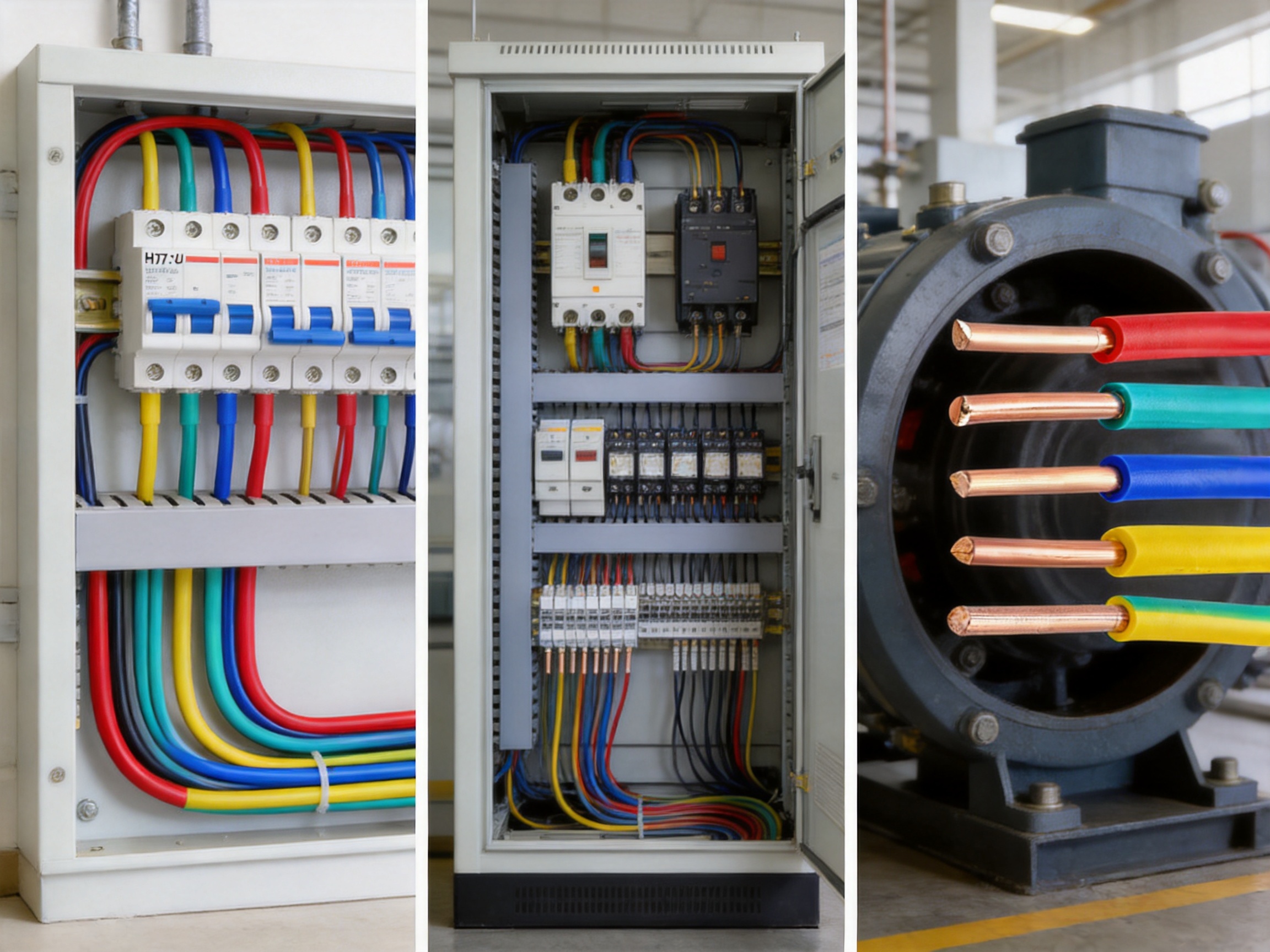
H07V-U should be installed by qualified personnel according to applicable electrical codes, project drawings, and manufacturer instructions. The cable must be selected according to the circuit voltage, load current, ambient conditions, routing method, grouping, protective devices, and connection hardware.
The cable is primarily intended for fixed installation. It should not be used as a substitute for flexible control cable, drag-chain cable, robotics cable, welding cable, or appliance cord where repeated movement occurs. Repeated bending can fatigue a rigid conductor and damage the insulation.
When installed in conduit or cable duct, the cable should have sufficient space for heat dissipation and future maintenance. Excessive filling can make installation difficult and increase thermal accumulation. The conduit should also have a suitable internal surface and bending path to prevent abrasion during pulling.
Termination components should match the conductor size and construction. Terminal screws, spring terminals, ferrules, lugs, and busbars must be tightened or installed according to the component manufacturer’s instructions. Damaged insulation should be removed cleanly, and exposed conductor length should be minimized while still allowing secure insertion.
Sharp bends should be avoided. The recommended minimum bending radius should be applied during installation, with additional allowance where the cable is cold, large, or difficult to manipulate. Cables should be routed without unnecessary crossings, compression, or tension.
Standard PVC insulation is suitable for many conventional building and industrial environments, including ordinary moisture exposure and weak chemical conditions. It may not be suitable for prolonged contact with strong chemicals, oils, solvents, ultraviolet radiation, high heat, or severe low temperatures without additional evaluation.
Environmental conditions also affect current-carrying capacity. A cable installed in a hot enclosure or grouped tightly with other energized cables may require derating. The electrical designer should use applicable ampacity tables and local regulations rather than relying only on the nominal cross-sectional area.
H07V-U has advantages when the installation requires a single-core, PVC-insulated, European-style wire. It is not intended to replace every other cable category. Understanding the differences helps buyers select the correct product.
Cable Type |
Typical Strength |
When It May Be Preferred |
H07V-U |
Single-core, economical, standardized, suitable for fixed wiring |
Buildings, cabinets, distribution boxes, and protected fixed connections |
Flexible PVC Cable |
Improved flexibility and easier movement |
Portable equipment, moving assemblies, and frequent connection changes |
Multi-Core Control Cable |
Several insulated conductors within one outer sheath |
Organized transmission of multiple control or signal circuits |
Armored Power Cable |
Enhanced mechanical protection |
Exposed, underground, industrial, or mechanically demanding installations |
Shielded Cable |
Improved control of electromagnetic interference |
Sensitive signal, communication, instrumentation, or variable-frequency applications |
Fluoroplastic Cable |
High temperature and chemical resistance |
Specialty environments beyond ordinary PVC capability |
Compared with flexible cable, H07V-U may offer lower cost and a more stable form in fixed routing, but it is less suitable for repeated movement. Compared with armored cable, it is lighter and easier to handle but provides less inherent mechanical protection. Compared with shielded cable, it is simpler and more economical but does not provide a dedicated electromagnetic shield.
The correct comparison is therefore application-based rather than price-based. A cable that appears cheaper may be unsuitable if the installation requires flexibility, shielding, outdoor protection, fire performance, or chemical resistance. H07V-U provides strong value when its intended operating conditions match the project.
Before purchasing H07V-U cable, buyers should prepare a clear technical and commercial checklist. This helps prevent delays and reduces the likelihood of receiving a product that differs from the project requirement.
Confirm the exact designation and applicable harmonized standard.
Confirm whether the required rated voltage is 450/750 V or another documented value.
Specify the conductor material, conductor class, and cross-sectional area.
Confirm PVC insulation type, color, temperature rating, and environmental requirements.
Define the required cable length, coil size, drum size, and packaging method.
Request the applicable test reports, conformity documents, and material declarations.
Confirm conductor resistance and insulation resistance requirements.
Review flame-retardancy requirements and the exact test standard.
Confirm printing, marking, private-label, and batch-traceability requirements.
Check production lead time, stock status, minimum order quantity, and shipping terms.
Ask for a sample when the product will be integrated into a new assembly.
Ensure that the final datasheet agrees with the purchase order and certificate.
For large projects, a pre-production approval process can be useful. The buyer may approve a sample, label design, packing method, and test format before full production. This creates a documented reference for future deliveries and helps maintain consistency between order batches.
Wire and cable production involves copper, polymer materials, energy consumption, packaging, and transport. Responsible manufacturing should therefore address material efficiency, process control, waste reduction, and compliance with relevant substance restrictions.
PVC remains widely used because it offers a balance of insulation performance, durability, processability, and cost. Correct extrusion control can reduce scrap caused by dimensional defects or surface problems. Accurate conductor sizing also prevents unnecessary copper consumption while maintaining the required electrical performance.
RoHS-related documentation can support customers who need restricted-substance compliance for electrical and electronic equipment. Buyers should request current declarations that apply to the actual product and production batch. Where environmental regulations or project specifications require a different insulation material, the manufacturer should review the application before proposing an alternative.
Packaging optimization can reduce transport volume and handling waste. Recyclable or appropriately selected packaging materials may be considered, provided they protect the cable during storage and shipment. The manufacturer can also help customers select drum sizes that balance installation convenience, transport efficiency, and total project cost.
Distributors need products that are easy to explain, stock, identify, and resell. H07V-U is commercially attractive because its designation communicates a recognizable construction and application category. A distributor can organize inventory by cross-sectional area, color, packaging length, and voltage class.
Standardized products also simplify repeat ordering. Once the buyer has approved the technical specification and documentation, future orders can follow the same structure. This reduces the time required for technical review and helps maintain consistency across customer projects.
Engineering contractors benefit from predictable handling and compatibility with common European installation components. The single-core structure allows wiring routes to be adjusted during installation, while the PVC insulation offers an economical solution for ordinary fixed environments.
Equipment manufacturers may use H07V-U as an internal wiring component in products intended for European or international markets. OEM labeling, customized lengths, color selection, and packaging can help integrate the cable into the manufacturer’s assembly and supply-chain system.
H07V-U is a European harmonized cable designation. H refers to harmonized construction, 07 commonly indicates a 450/750 V voltage class, V identifies PVC insulation, and U indicates a single-core rigid or solid conductor design.
Yes. It is commonly used for fixed internal wiring in residential, commercial, and industrial buildings, provided the installation method, conductor size, protective devices, and local regulations are suitable.
It may be used in a suitably protected outdoor assembly if the complete installation meets environmental requirements. Standard PVC insulation alone may not provide sufficient UV, water, impact, or mechanical protection for exposed outdoor service. A cable specifically designed for outdoor use may be required.
It is primarily intended for fixed installation and should not normally be used for continuous or repeated movement. Flexible cable or specialty dynamic cable is more appropriate for moving equipment, robotics, drag chains, and portable devices.
The product is specified with a copper conductor. The exact conductor structure may be solid or rigid multi-strand depending on the selected size and approved product design.
The supplied information lists a range from approximately 1.5 mm² to 400 mm². Availability may depend on conductor construction, color, order quantity, production schedule, and applicable standard.
The supplied information identifies a long-term operating temperature of 70°C for standard PVC insulation. It also lists installation-related ranges of approximately -30°C to +80°C for fixed installation and -5°C to +70°C for movable installation. The final product datasheet should be used for a specific project.
The product information states CE certification and references harmonized European standards. Buyers should request the relevant declaration of conformity and technical documents for the exact cable size and product version before making a compliance claim.
The supplied information references IEC 60332-1-2 and EN 60332-1-2 flame-performance requirements. Any additional claim, including UL VW-1 or CSA FT1 performance, should be verified with a product-specific test report because flame ratings depend on the exact construction and test method.
The buyer should ask the manufacturer to clarify the difference between the commercial table and the H07V-U designation. The final rated voltage should be confirmed through the approved datasheet, cable marking, test report, and conformity documentation. The purchase order should use one consistent specification.
Depending on the order and market, documents may include a technical datasheet, inspection report, test report, declaration of conformity, RoHS declaration, packing list, certificate of origin, and batch traceability records.
Customization may include cable color, marking, length, packaging, private labeling, conductor configuration, documentation format, and selected technical parameters. OEM and ODM development can also be considered when customers provide drawings, samples, or detailed technical requirements.
Standard products may be available from stock, while customized products typically require approximately 7 to 20 days according to the supplied company information. Actual delivery depends on size, quantity, color, packaging, production scheduling, inspection, and transportation.
H07V-U is a practical single-core PVC-insulated cable for European-style fixed wiring. Its main advantages include a recognizable harmonized designation, copper conductivity, simple construction, broad cross-sectional availability, convenient termination, compatibility with common installation accessories, and cost-effective performance in protected environments.
The cable is suitable for many building, cabinet, distribution-box, equipment, and infrastructure applications. Its value is strongest when the installation does not require continuous flexing, heavy armor, electromagnetic shielding, severe chemical resistance, or specialized fire performance. Proper selection must always consider voltage, current, temperature, routing, environmental exposure, bending radius, protective devices, and local electrical regulations.
Manufacturing capability is a major factor in achieving consistent results. Controlled copper processing, accurate insulation extrusion, automated production lines, online testing, final inspection, traceable packaging, and responsive technical support all contribute to dependable supply. The described manufacturer combines research and development, production, quality management, OEM/ODM support, and international sales experience to serve standard and customized cable requirements.
For buyers, the best procurement decision is based on a complete technical review rather than a price comparison alone. Confirming the exact designation, voltage, conductor structure, insulation properties, compliance documents, test standards, delivery schedule, and packaging requirements can help ensure that the selected cable performs reliably throughout the project lifecycle.
1. DIN VDE 0281, Polyvinyl Chloride Insulated Cables of Rated Voltages up to and Including 450/750 V.
2. HD 21, Polyvinyl Chloride Insulated Cables of Rated Voltages up to and Including 450/750 V.
3. IEC 60332-1-2, Tests on Electric and Optical Fibre Cables Under Fire Conditions.
4. EN 60332-1-2, Tests on Electric and Optical Fibre Cables Under Fire Conditions.
5. European Low Voltage Electrical Equipment Safety Requirements and Conformity Assessment Guidance.
6. Restriction of Hazardous Substances Requirements for Electrical and Electronic Equipment.
7. Manufacturer-provided H07V-U product information, technical specifications, and quality-assurance data.

We firmly believe that good cables are not only a competition of materials, but also a reflection of craftsmanship, quality, and responsibility.

Links
Product
Send Inquiry
No. 29 Sankeshu Road, Xuanzhou District, Xuancheng City, Anhui Province, China
+86-18621104555/+86-563-2622999
 Electrical Cable Manufacturer
OEM/ODM Wire and Cable Solutions
Electrical Cable Manufacturer
OEM/ODM Wire and Cable Solutions
 English
 Español
 عربى
عربى
 русский