
Get more content that can help you
Content
Urban communication networks are expected to carry stable voice, data, monitoring, control, and broadband access signals through environments that are becoming more crowded, more corrosive, and more difficult to maintain. In aging city districts, utility tunnels, roadside ducts, direct-burial routes, coastal infrastructure, industrial zones, and soft-soil settlement areas, local telecommunication cables must resist moisture, compression, rodent attack, soil movement, and installation stress while preserving electrical transmission performance over long service periods. HYAT53 cable is engineered for this demanding role.
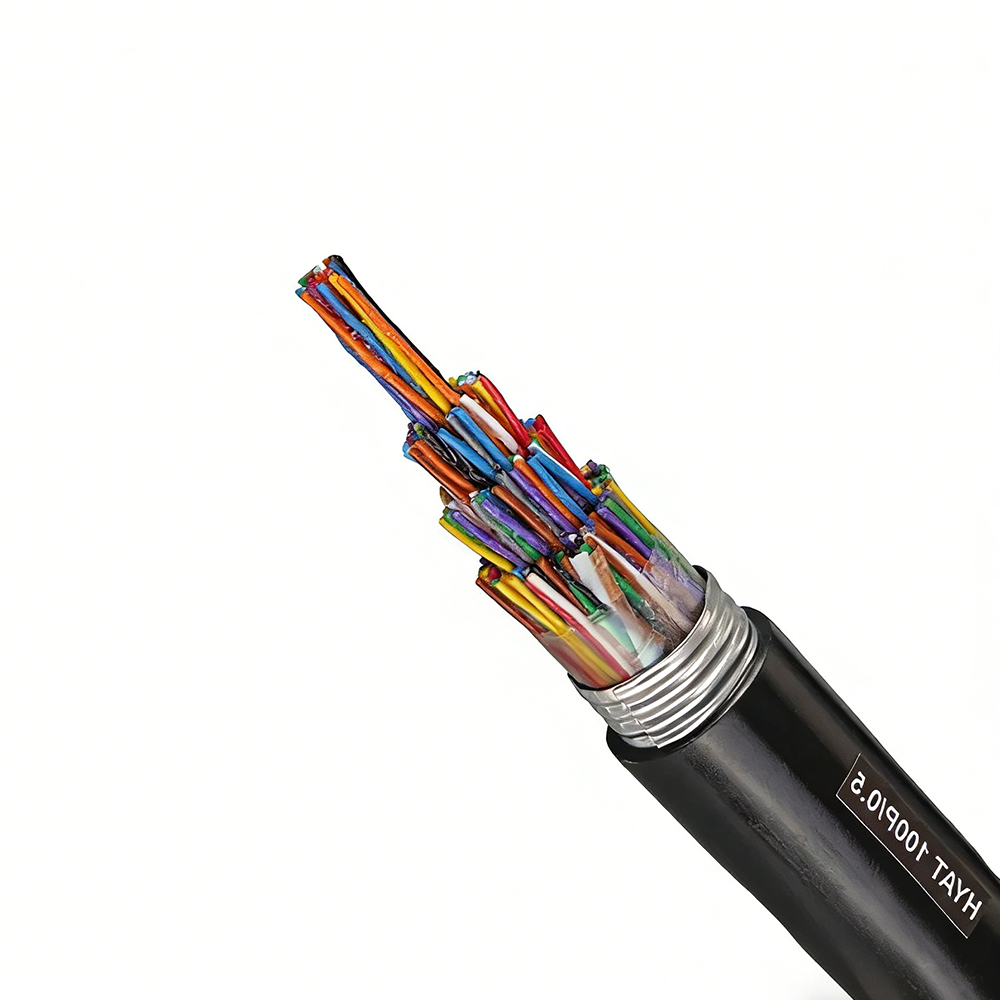
HYAT53 is a copper-core, solid polyolefin insulated, fully filled, moisture-barrier, polyethylene sheathed, single-layer longitudinal corrugated steel tape armored, polyethylene outer sheathed local communication cable. Its design combines reliable copper conductors, stable solid polyolefin insulation, petroleum jelly full filling, an aluminum-polyethylene laminate moisture barrier, an inner polyethylene sheath, longitudinal corrugated steel tape armor, and a black polyethylene outer sheath. The result is a cable that delivers dependable transmission, excellent moisture protection, high mechanical security, and better flexibility than many traditional armored communication cable structures.
This article focuses on the technical value of HYAT53, its advantages over conventional alternatives, its role in modern urban communication engineering, and the manufacturing strengths that support consistent cable quality. It also explains why the corrugated steel tape structure, filled moisture barrier design, and refined production processes make HYAT53 a practical choice for projects that require both protection and installation convenience.
Local communication cables are the physical foundation of many urban information systems. They are used in access networks, municipal communication lines, building-to-building links, railway and road communication support, monitoring systems, industrial park communication backbones, and utility network upgrades. Although optical fiber is widely used in many new long-distance communication systems, copper-core local communication cables continue to play an important role where low-frequency signal transmission, legacy network compatibility, voice service continuity, control signal transmission, and cost-effective urban network expansion are required.
The HYAT53 structure is especially suited to direct burial and complex installation environments where moisture and mechanical hazards are both present. In urban renewal projects, old ducts may be narrow, irregular, or partially occupied by existing lines. Road reconstruction can introduce temporary compression loads and vibration. Soft soil settlement can create slight but persistent ground displacement. Coastal and industrial areas may expose cable sheaths and armor systems to salt spray, acidic soil, and chemical corrosion risks. In these situations, a cable needs more than basic insulation; it needs a complete protective system.
HYAT53 answers this need by integrating a fully filled cable core with a longitudinal moisture barrier and corrugated steel tape armor. The petroleum jelly filling helps block longitudinal water migration and protects the insulated pairs from moisture ingress. The aluminum-polyethylene laminate barrier further improves radial moisture resistance. The polyethylene inner sheath stabilizes the cable core and separates the moisture barrier from the armor. The single-layer corrugated steel tape provides compression protection, impact resistance, rodent resistance, and grounding support, while its corrugation improves flexibility compared with flat steel armor. The outer polyethylene sheath provides environmental protection and a durable external surface suitable for burial and conduit installation.
Compared with unarmored local communication cables, HYAT53 offers substantially higher resistance to crushing, accidental digging damage, rodent attack, and external impact. Compared with heavy double steel tape armored cables, it offers lower weight, improved bending behavior, easier routing, and reduced handling difficulty. Compared with non-filled cable structures, it provides better moisture resistance and greater reliability in wet underground conditions. This balance makes HYAT53 attractive for medium-risk to high-reliability urban projects where the cable must remain serviceable even after years of environmental stress.
The performance of HYAT53 comes from its layered engineering. Each layer contributes a specific function, and the complete cable structure is designed so that the layers work together rather than acting independently. The conductor transmits the signal. The insulation maintains dielectric integrity and electrical separation. The filling compound prevents moisture migration. The moisture barrier resists radial water penetration. The inner sheath supports the structure. The corrugated steel tape armor provides mechanical defense. The outer sheath protects the entire cable against soil, weather, abrasion, and corrosion.
HYAT53 uses solid annealed copper conductors. Copper remains the preferred conductor material for local communication cables because of its high conductivity, good ductility, stable electrical characteristics, and long service record. Annealing improves flexibility and reduces the risk of conductor cracking during twisting, cabling, installation, and bending. Standard conductor diameters include 0.4 mm, 0.5 mm, 0.6 mm, and 0.8 mm, allowing the cable to be matched to required transmission distance, attenuation limits, pair count, and project budget.
Smaller conductor diameters are often used where space efficiency and economy are priorities. Larger conductor diameters reduce loop resistance and attenuation, making them suitable for longer runs or stricter transmission requirements. The availability of multiple gauges gives designers the flexibility to optimize both performance and cost.
The conductors are insulated with solid polyolefin, typically high-density polyethylene or medium-density polyethylene. Solid polyolefin insulation offers good dielectric strength, stable capacitance characteristics, moisture resistance, and mechanical durability. In communication cables, insulation uniformity is critical because variations in insulation thickness or eccentricity can affect capacitance unbalance, impedance, attenuation, and crosstalk performance.
HYAT53 insulation thickness is generally in the range of 0.15 mm to 0.25 mm, depending on conductor gauge and design requirements. Full color spectrum or pilot color code systems can be used for identification, supporting efficient termination and maintenance. Accurate color coding is essential in high-pair-count cables, where a single cable may contain hundreds or even one thousand pairs.
A defining feature of HYAT53 is its petroleum jelly full filling. The filling compound occupies the spaces within the cable core, creating a moisture-blocking system that prevents water from migrating longitudinally along the cable if the sheath is damaged. This is especially important in direct-burial applications, where a small localized sheath breach can otherwise allow water to travel long distances inside the cable.
Moisture is one of the most damaging factors for copper communication cables. It can reduce insulation resistance, increase dielectric losses, accelerate corrosion, and destabilize transmission parameters. The fully filled Type T structure helps maintain long-term electrical reliability even when the cable is exposed to damp soil, underground condensation, or temporary flooding.
HYAT53 uses a double-sided aluminum-polyethylene laminate applied longitudinally as a moisture barrier. This barrier provides radial water resistance and improves the overall shielding and environmental protection of the cable core. The aluminum layer acts as a metallic barrier, while the polyethylene bonding surfaces support compatibility with the surrounding sheath materials.
In traditional cables, bending and deformation can sometimes compromise moisture barrier continuity. HYAT53 reduces this risk through the combination of flexible corrugated armor and filled core technology. The filling compound supports moisture resistance even during dynamic deformation, while the laminate barrier adds a second line of defense against water ingress.
The inner polyethylene sheath protects the filled cable core and moisture barrier before the armor layer is applied. It contributes to structural stability, improves resistance to handling damage during manufacturing, and helps create a smooth bedding layer for the corrugated steel tape. Typical inner sheath thickness ranges from 1.0 mm to 2.0 mm, depending on cable size and pair count.
The corrugated steel tape armor is the key mechanical feature that distinguishes HYAT53 from lighter unarmored cables and from many conventional flat tape armored designs. The armor is applied longitudinally and corrugated to improve flexibility, compression absorption, and deformation tolerance. Corrugation allows the steel layer to bend more naturally with the cable and helps absorb minor ground displacement or installation stress.
The armor provides high mechanical protection, including rodent resistance, compression resistance, impact protection, and a grounding path that can assist in lightning protection when properly bonded and grounded according to engineering requirements. The specified compression strength can reach at least 2500 N per 100 mm, making the cable suitable for many direct-burial and urban construction conditions.
The black polyethylene outer sheath is the cable’s first external defense against soil, abrasion, moisture, sunlight during storage and installation, and chemical exposure. Outer sheath thickness generally ranges from 2.0 mm to 4.0 mm depending on cable diameter. Polyethylene is widely used for buried communication cables because it offers good toughness, water resistance, chemical resistance, and processing stability.
In HYAT53, the outer sheath also protects the galvanized corrugated steel tape from corrosion. Combined with the full polyethylene coating around the armor system and the filled moisture barrier, the cable is suitable for coastal salt spray areas and industrial acidic soil environments where ordinary structures may deteriorate more quickly.
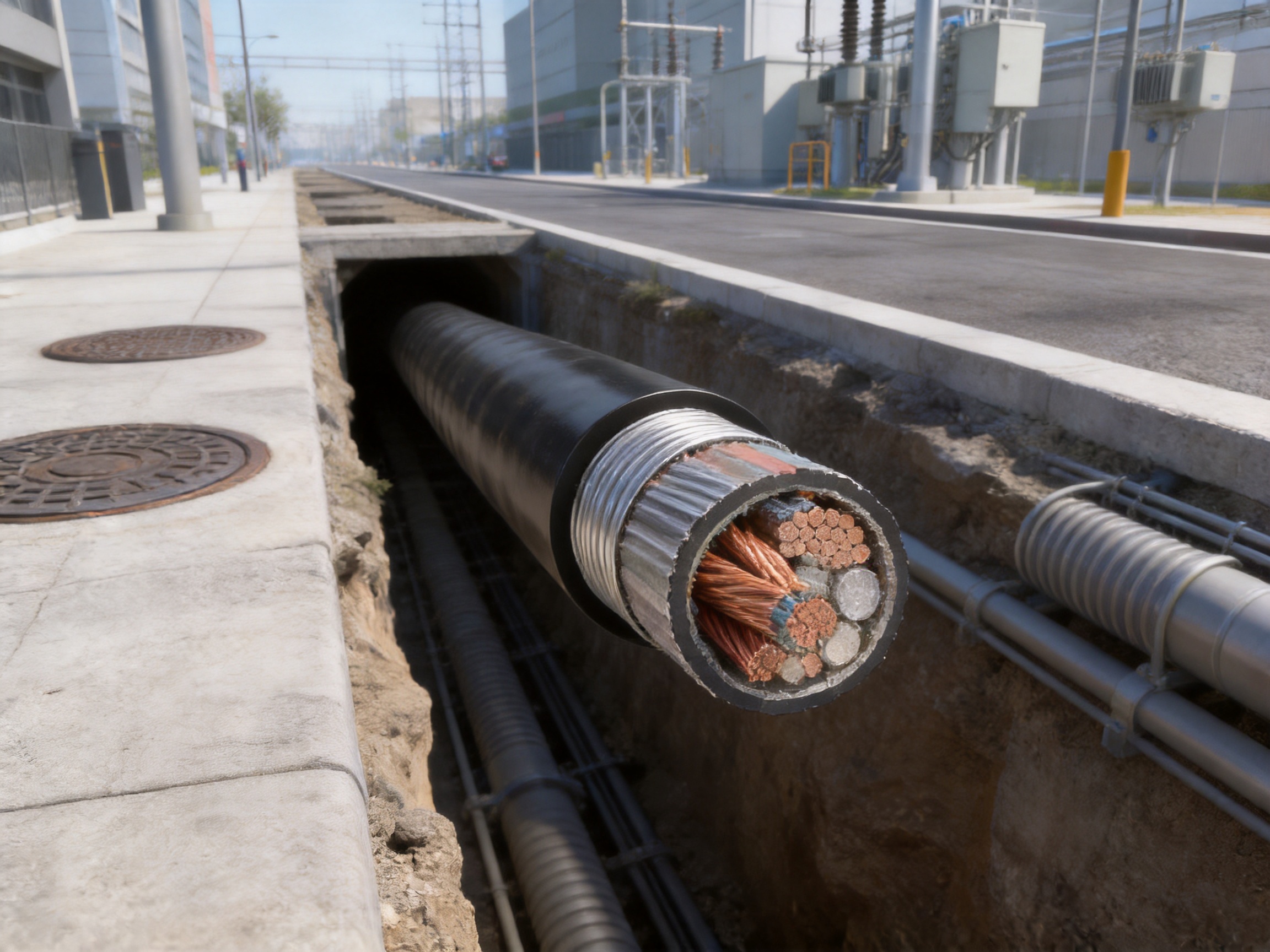
The following table summarizes major technical parameters for HYAT53 cable. Actual values may be adjusted according to pair count, conductor size, project standards, and customer requirements.
Item |
Typical HYAT53 Specification |
Conductor |
Solid annealed copper conductor |
Conductor Diameter |
0.4 mm, 0.5 mm, 0.6 mm, 0.8 mm |
Number of Pairs |
10 pairs to 1000 pairs |
Rated Voltage |
300/300 V |
Test Voltage |
2 kV, DC 2 seconds or AC 1 minute |
Insulation Material |
Solid polyolefin, HDPE or MDPE |
Filling Material |
Petroleum jelly, fully filled core |
Moisture Barrier |
Double-sided aluminum-polyethylene laminate, longitudinally applied |
Armor Structure |
Single-layer longitudinal corrugated steel tape armor |
Outer Sheath |
Black polyethylene |
Temperature Range |
-30℃ to +70℃ for installation, -55℃ to +70℃ for storage and transport |
Minimum Bending Radius |
At least 18 times cable outer diameter during installation, at least 22 times during service |
Insulation Resistance |
At least 10000 MΩ·km at 20℃ after filling |
Working Capacitance |
Not more than 52 nF/km for 0.4 mm gauge, not more than 57 nF/km for 0.5 mm gauge |
Characteristic Impedance |
100 Ω ±15 Ω at 1024 kHz |
Crosstalk Attenuation |
At least 58 dB/500 m at 1024 kHz, far-end |
Compression Strength |
At least 2500 N/100 mm |
Moisture Resistance |
Passes GB/T 13849 water immersion test |
Longitudinal Water Resistance |
Passes IEC 60794-1-F1 water penetration test |
Weight Advantage |
Approximately 15 percent to 20 percent lighter than HYAT23-type flat steel tape structures |
The value of HYAT53 becomes clearer when it is compared with other commonly used communication cable structures. Many projects face a trade-off between protection and installation convenience. Unarmored cables are easier to install but weaker against compression and rodents. Heavy double steel tape armored cables are strong but more difficult to route through narrow ducts or congested utility corridors. Non-filled cables may be economical but are vulnerable to moisture migration. HYAT53 is designed to reduce these compromises.
Traditional flat steel tape armor provides good mechanical protection, but it can increase cable stiffness. In narrow urban routes, stiffness can make installation slow and difficult. Pulling a stiff cable through existing conduit may increase friction, raise the risk of sheath damage, and require more labor. HYAT53 uses a corrugated steel tape structure that bends more easily and follows route changes more smoothly.
This flexibility does not mean the cable is weak. Corrugation allows the steel tape to deform in a controlled way, absorbing bending and minor displacement without sacrificing essential mechanical protection. For urban renewal projects, where routes may include turns, duct offsets, manhole entries, and crossings with existing infrastructure, this installation advantage can reduce construction time and risk.
HYAT53 is designed as a light armored communication cable. Compared with double steel tape structures, its single-layer corrugated steel tape can reduce cable diameter and weight while still providing strong compression resistance. The provided design data indicates that corrugated armor can reduce weight by about 20 percent compared with flat steel tape alternatives, and HYAT53 may be approximately 15 percent to 20 percent lighter than HYAT23-type structures. In some project comparisons, reduced diameter and weight can be even more meaningful when long cable lengths must be transported, pulled, lifted, or installed in confined spaces.
Lower weight improves construction efficiency. It can reduce manpower requirements, ease drum handling, lower pulling tension, and decrease the chance of installation damage. For contractors, these benefits can translate into lower total installed cost, not merely lower product cost.
Moisture protection is one of HYAT53’s most important advantages. Non-filled communication cables may perform adequately in dry indoor or protected duct environments, but they are vulnerable when exposed to underground water, sheath damage, condensation, or flooding. Once water enters a non-filled cable core, it can travel along the interstices and affect long sections of cable.
HYAT53 uses petroleum jelly full filling to block this longitudinal water migration. Even if the outer sheath is locally compromised, the filling compound helps confine moisture and protect the insulated pairs. The double-sided aluminum-polyethylene laminate moisture barrier adds radial protection. This dual moisture system is particularly important in direct-burial networks, coastal areas, soft soil routes, and municipal projects where the future condition of ducts or soil cannot be fully controlled.
A common challenge in armored cables is maintaining moisture barrier integrity at bends and under repeated deformation. When a cable is bent sharply or exposed to ground movement, rigid layers can experience stress concentration. HYAT53 addresses this issue through the synergy of corrugated armor and filling technology. The corrugated steel tape absorbs deformation more flexibly, while the filling compound preserves internal moisture blocking even if the cable experiences minor dynamic movement.
This feature is valuable in soft soil settlement areas, roadside installations, and routes near construction zones. The cable can tolerate millimeter-level ground displacement more effectively than many rigid armored structures, helping maintain long-term network stability.
Not every project requires the heaviest possible armor, but many projects require more protection than a standard sheathed cable can provide. HYAT53 occupies a practical middle ground. Its single-layer corrugated steel tape can achieve a substantial portion of the compressive protection associated with heavier double tape designs while reducing weight, diameter, installation difficulty, and material cost.
For budget-sensitive urban projects, this balance is important. A cable that is too light may create future maintenance costs because of damage or moisture failure. A cable that is too heavy may increase installation cost and complicate construction. HYAT53 provides a cost-effective flexible protection solution for communication routes where moderate to high environmental resistance is required.
The corrugated armor structure can also support maintenance awareness. External mechanical events may leave visible deformation patterns, making it easier for inspection teams to identify locations that may have experienced pressure, impact, or construction interference. Early detection allows preventive maintenance before electrical faults become severe. In municipal networks where downtime is costly, this maintenance-friendly feature has practical value.
A communication cable must do more than survive underground; it must preserve signal quality. HYAT53 is engineered to maintain stable electrical properties across its service life. The conductor quality, insulation uniformity, pair twisting, core formation, filling process, moisture barrier application, and sheathing precision all affect the final electrical performance.
The cable’s working capacitance is controlled to support reliable signal transmission. Typical values are not more than 52 nF/km for 0.4 mm conductors and not more than 57 nF/km for 0.5 mm conductors. Capacitance unbalance between pairs is limited to not more than 330 pF/500 m, which helps reduce interference and maintain transmission consistency. Characteristic impedance is specified at 100 Ω ±15 Ω at 1024 kHz, while far-end crosstalk attenuation is specified at least 58 dB/500 m at 1024 kHz.
Attenuation limits are also important. Typical attenuation is not more than 1.1 dB/100 m at 1024 kHz for 0.4 mm conductors and not more than 0.8 dB/100 m at 1024 kHz for 0.5 mm conductors. These parameters reflect the importance of conductor gauge selection and manufacturing control. For longer routes or stricter signal requirements, a larger conductor diameter may provide better attenuation performance.
Insulation resistance of at least 10000 MΩ·km at 20℃ after filling indicates strong dielectric performance. The rated voltage is 300/300 V, and test voltage is 2 kV under DC 2 seconds or AC 1 minute conditions. These values support safe and reliable service in typical local communication applications when the cable is selected and installed according to applicable engineering standards.
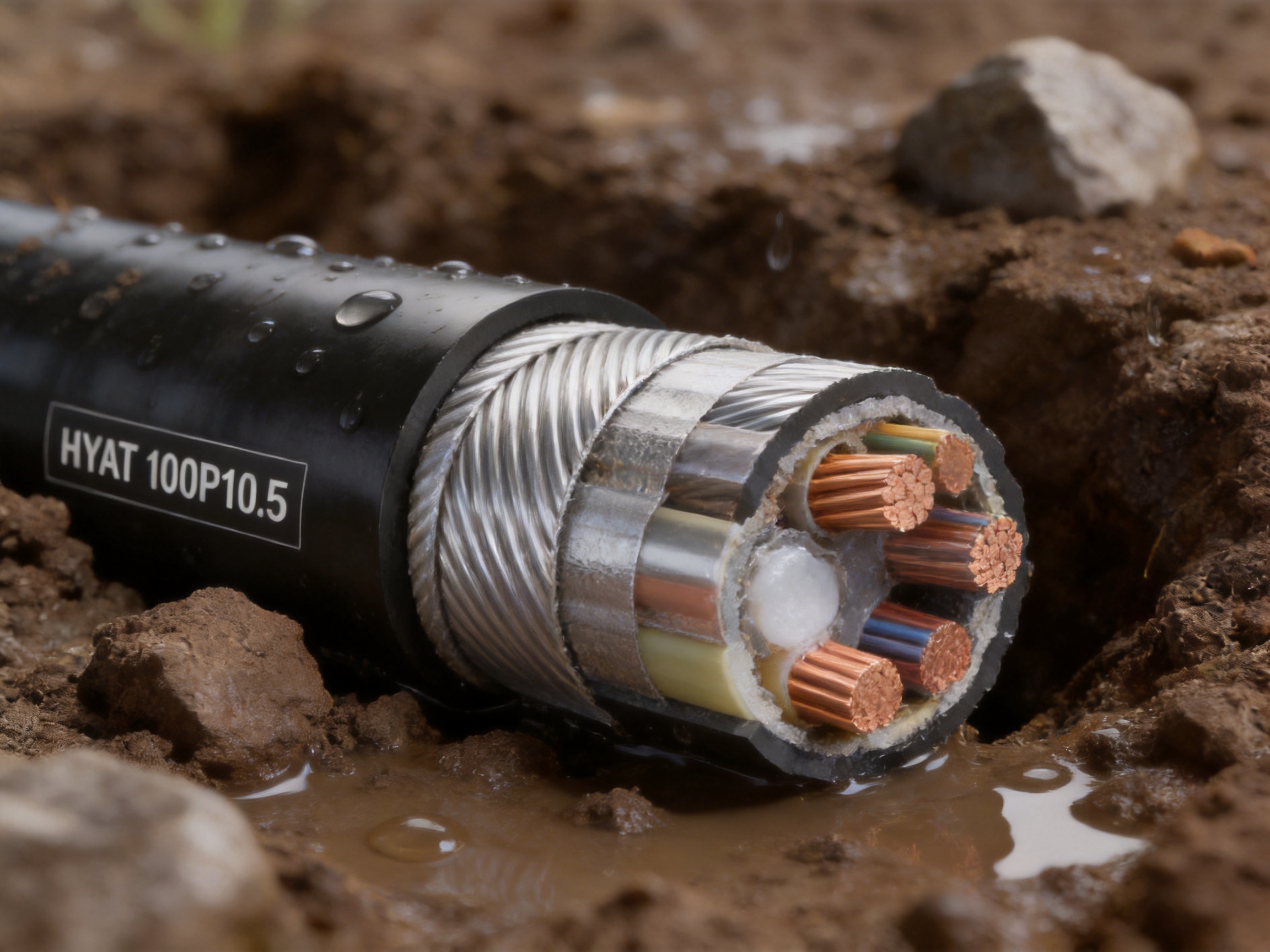
Urban direct-burial cable routes face multiple mechanical threats. Soil pressure, road vibration, accidental tool impact, construction machinery, rodents, sharp stones, pipe crossings, and settlement can all damage conventional cables. HYAT53 is designed with a high mechanical protection level to reduce these risks.
The corrugated steel tape armor provides compression strength of at least 2500 N/100 mm. It also passes drop weight impact requirements according to IEC 60229 testing principles. The steel armor acts as a physical barrier against rodents and external mechanical damage. When properly grounded, the armor can also support lightning protection and electromagnetic safety strategies within the overall network design.
The corrugation depth, typically 0.5 mm to 1.0 mm, is an important design feature. It increases the armor’s deformation capacity and helps distribute pressure. Instead of behaving like a rigid flat shell, the corrugated layer can flex while still resisting crushing. This is one reason HYAT53 can combine protection with improved bending performance.
The cable’s recommended minimum bending radius is at least 18 times the cable outer diameter during installation and at least 22 times during service. Observing these limits is important. Even a flexible armored cable can be damaged by excessive bending, especially at low temperatures or under high pulling tension. Proper installation practices help preserve both mechanical and electrical performance.
Moisture protection in HYAT53 is not dependent on a single layer. It is achieved through a coordinated system. The outer polyethylene sheath resists water exposure from the environment. The corrugated steel tape armor, protected by polyethylene and galvanization, provides a strong mechanical layer. The inner sheath and aluminum-polyethylene laminate moisture barrier resist radial water penetration. The petroleum jelly filling blocks longitudinal water migration within the cable core.
This multi-layer moisture strategy is valuable because real-world cable damage is rarely predictable. A cable may be scratched during pulling, compressed during road repair, exposed to water in a flooded duct, or disturbed by soil settlement years after installation. If one barrier is locally challenged, the other layers continue to provide protection.
HYAT53 is designed to pass water immersion testing according to GB/T 13849 and water penetration testing based on IEC 60794-1-F1 methods. These tests are important indicators of moisture resistance integrity, but the true value is seen in long-term service where water, pressure, and temperature variation occur together.
For coastal salt spray and industrial acidic soil environments, corrosion resistance is also essential. The galvanized armor tape helps resist rust, while the full polyethylene external protection reduces direct contact between steel and corrosive media. The filled structure reduces the possibility that moisture will accumulate inside the cable core and attack the copper conductors.
Installation cost often accounts for a large share of total cable project cost. A cable that is easier to handle, pull, bend, and route can save labor and reduce project risk. HYAT53’s lighter weight and corrugated armor design directly support installation convenience.
In utility tunnel expansion projects, existing structures can leave limited space for new cables. A cable with reduced diameter and improved flexibility can pass through congested areas more easily. In road renovation projects, construction schedules may be tight, and cables must be installed quickly to reduce traffic disruption. In aging pipeline network upgrades, old duct routes may include bends, offsets, sediment, or partial deformation. HYAT53’s flexible armored construction is well matched to these conditions.
The cable is also suitable for projects that require good bending performance without sacrificing moisture protection. Many filled cables can become heavy or stiff, especially at high pair counts. HYAT53’s corrugated armor helps offset this tendency by providing a more installation-friendly mechanical layer. This makes it especially useful where engineers require a filled, armored cable but also face practical routing limitations.
For contractors, lower weight means easier drum movement, reduced pulling tension, simpler manual handling, and potentially less equipment demand. For owners, easier installation can reduce the probability of hidden installation damage. For maintenance teams, the cable’s deformation visibility and moisture-resistant design can reduce future troubleshooting complexity.
High-performance cable depends not only on good design but also on manufacturing discipline. Anhui Zhishang Cable Technology Co., Ltd. integrates research and development, production, and sales of wire and cable products from its modern production base in Xuancheng City, Anhui Province, China. The company operates approximately 5,000 square meters of production facilities and has a team of more than 50 employees, including quality engineers and R&D technicians with more than 10 years of industry experience.
The manufacturing of HYAT53 requires careful control at every stage. Copper conductors must be drawn and annealed to stable diameter and mechanical properties. Insulation extrusion must maintain concentricity, surface smoothness, and dielectric consistency. Pair twisting and core assembly must control lay length and pair balance to support capacitance and crosstalk performance. Filling must be complete and uniform, with the petroleum jelly fully occupying interstitial spaces without damaging insulation or causing contamination problems. Moisture barrier application must be longitudinally stable and properly overlapped. Sheathing and armor processes must maintain adhesion, thickness, roundness, and dimensional consistency.
The company’s automated production lines support stable process control and consistent output. With 10 automated production lines and monthly output capacity of up to 10 million meters, the manufacturing system is suitable for both standard product supply and project-scale delivery. Automation helps reduce human error, improve dimensional repeatability, stabilize extrusion quality, and support efficient production planning.
Quality assurance is built around material selection, process inspection, and final testing. For HYAT53, important inspection points include conductor diameter, conductor resistance, insulation thickness, insulation resistance, pair identification, filling completeness, sheath thickness, armor structure, outer diameter, spark testing, voltage withstand testing, capacitance, capacitance unbalance, attenuation, crosstalk, water resistance, compression resistance, and appearance inspection. Full-core, full-length, pure copper specifications and product test reports can be provided for standard cable models, helping customers verify compliance and project suitability.
The company also supports OEM and ODM development based on customer drawings, samples, or project requirements. This capability is important because communication cable projects often require customized pair counts, conductor gauges, sheath thicknesses, packaging, color coding, or standard references. Technical engineers can provide product selection guidance and cable design recommendations according to route conditions, installation method, environmental risk, and transmission requirements.
Standard products are stocked for faster shipment, while customized products generally require 7 to 20 days of lead time depending on specification complexity and production scheduling. This combination of stock availability and customization capability helps customers balance urgent delivery needs with project-specific design requirements.
The quality of a filled armored communication cable depends strongly on raw materials. Copper purity and conductor surface quality affect resistance and long-term reliability. Polyolefin insulation quality affects dielectric performance, capacitance stability, and resistance to cracking. Petroleum jelly filling must remain stable across temperature changes and must be compatible with insulation materials. Aluminum-polyethylene laminate must provide moisture resistance without delamination. Steel tape must have adequate strength, galvanization quality, and corrugation precision. Polyethylene sheath material must resist cracking, abrasion, and environmental aging.
During conductor preparation, stable diameter is essential. Even small variations can affect conductor resistance and insulation coverage. During insulation extrusion, temperature control and extrusion pressure influence surface finish and insulation concentricity. Poor eccentricity can create weak points and unstable electrical parameters. During pair twisting, precision controls help maintain balanced electrical behavior. In high-pair-count cables, pair organization and color identification must be accurate to avoid termination errors.
The filling stage is especially important for HYAT53. The petroleum jelly must be applied thoroughly but not excessively. Insufficient filling can leave moisture paths, while uncontrolled overfilling may create processing issues or installation mess. Proper viscosity and temperature control are required so the compound penetrates the cable core without damaging insulated conductors.
The aluminum-polyethylene laminate moisture barrier must be applied with correct overlap and alignment. A poorly applied barrier may wrinkle, crack, or fail to provide consistent radial protection. The inner sheath must then be extruded with sufficient thickness and uniformity to stabilize the core and prepare for armor application.
Corrugated steel tape application requires specialized forming control. The corrugation profile, depth, overlap, and tension must be consistent. If corrugation is too shallow, flexibility and deformation absorption may be reduced. If it is too deep or uneven, the cable surface may become irregular or difficult to sheath. The outer polyethylene sheath must fully cover and protect the armor, with controlled thickness across the circumference.
These process details demonstrate why manufacturing strength matters. Two cables may look similar from the outside, but their long-term performance can differ significantly if material quality, filling uniformity, armor forming, or testing discipline is inconsistent. HYAT53 benefits from a production approach that emphasizes quality orientation, stable processes, and engineered reliability.
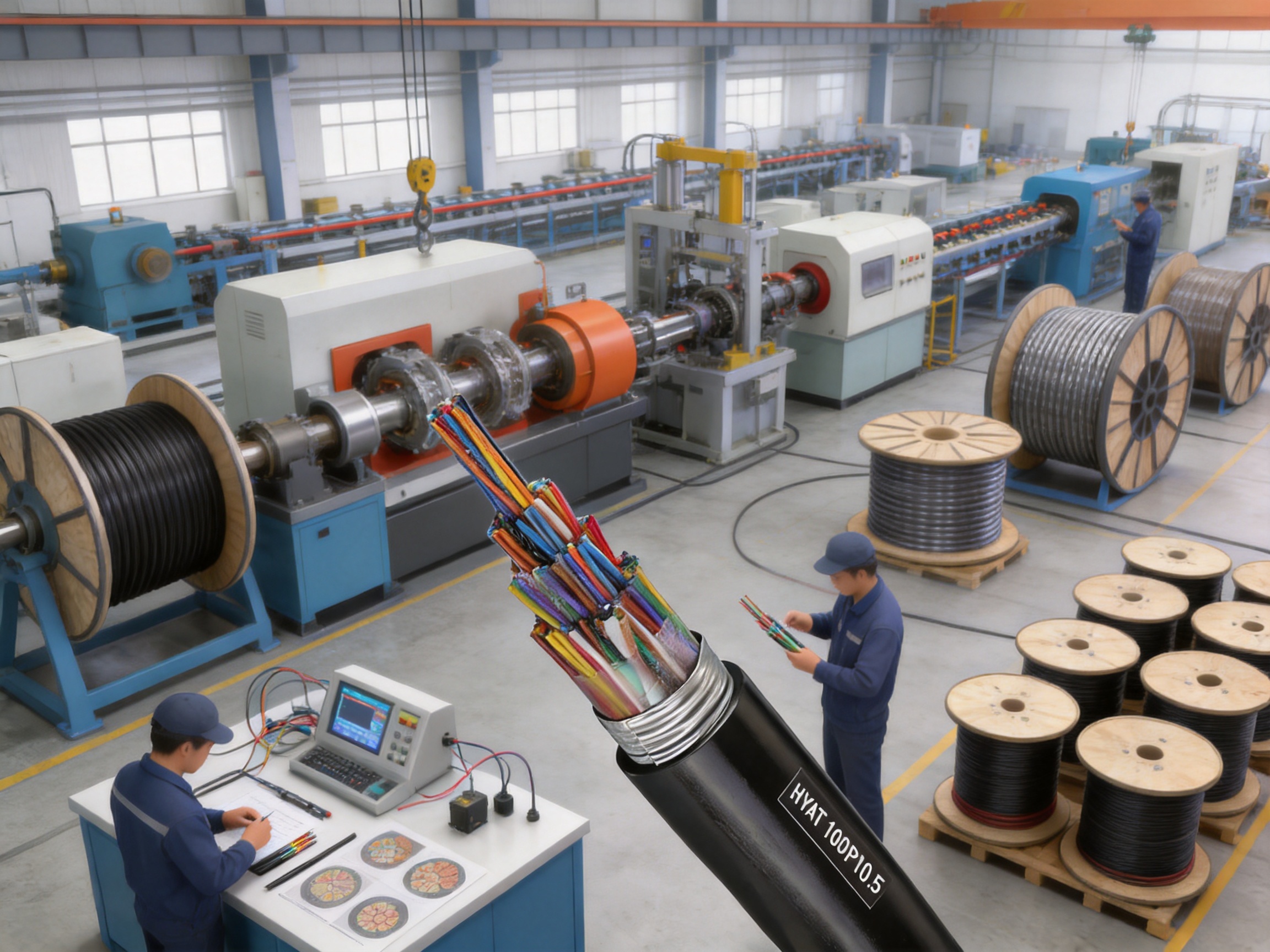
HYAT53 is suitable for direct-burial lines requiring both good moisture protection and moderate to high mechanical protection. It is especially valuable in complex terrain installation environments where cable bending performance and weight control are important. Typical applications include urban local telecommunication networks, municipal renewal projects, road reconstruction communication lines, industrial park communication routes, soft soil settlement areas, coastal communication infrastructure, and filled cable applications where improved bending behavior is required.
In urban renewal projects, HYAT53 can be used where geological disturbance is uncertain. Road renovations, aging pipeline upgrades, and utility corridor expansions often involve unknown underground conditions. The cable’s flexible armor and moisture-resistant core provide a safety margin against both mechanical and environmental risks.
In narrow spaces, such as existing ducts or utility tunnels, the cable’s reduced weight and improved flexibility can make installation more practical. Compared with heavier double steel tape armored designs, HYAT53 can lower routing difficulty. This is particularly helpful when crossing existing structures or expanding utility networks without major excavation.
In coastal or industrial areas, corrosion resistance becomes important. HYAT53’s polyethylene sheath system, galvanized steel armor, and filled moisture barrier help protect against salt spray, acidic soil, and industrial underground environments. While no cable should be installed without proper route assessment, HYAT53 provides a robust structure for demanding conditions.
In soft soil settlement zones, the corrugated armor can absorb minor ground movement. The filled core helps maintain moisture resistance if deformation occurs. This combination supports long-term stable operation in areas where rigid cables may experience higher stress concentration.
When selecting HYAT53, engineers should consider transmission distance, pair count, conductor diameter, installation method, soil condition, moisture exposure, mechanical risk, bending route, grounding requirements, and future maintenance access. The conductor diameter should be selected based on attenuation, loop resistance, and network design. Pair count should include current demand and reasonable reserve capacity. The outer diameter and weight should be reviewed against duct size, pulling equipment, and route complexity.
For direct burial, bedding material, burial depth, warning tape, route marking, and mechanical protection practices should follow local engineering standards. Although HYAT53 has strong armor, good installation practice remains essential. Avoid sharp stones in direct contact with the cable, excessive pulling tension, improper bending radius, and unsealed cable ends during storage or installation.
For routes with high water exposure, termination and jointing quality are critical. A moisture-resistant cable can still fail if joints are poorly sealed. All joints, closures, grounding connections, and cable ends should be handled with compatible materials and proper procedures. For armored cables, grounding and bonding should be designed by qualified engineers according to network safety and lightning protection requirements.
Procurement teams should not evaluate cable only by purchase price. Total project cost includes installation labor, equipment, failure risk, downtime, maintenance, and replacement difficulty. HYAT53’s balance of protection, flexibility, and moisture resistance can reduce lifecycle cost in many urban environments. Its lighter construction compared with heavier alternatives may also reduce freight, handling, and installation expenses.
For infrastructure projects, cable reliability depends on repeated consistency across long production lengths. A single weak section can affect an entire route. Therefore, choosing a manufacturer with stable production capacity, experienced technical staff, and quality assurance systems is important.
Anhui Zhishang Cable Technology Co., Ltd. follows national standards, relevant international standards, and industry benchmarks to customize cable products that meet defined quality and technical requirements. Its experienced R&D team can assist customers with product selection and tailor-made cable design solutions. This is especially useful for projects requiring OEM or ODM development based on drawings or samples.
The company’s philosophy of quality orientation, integrity foundation, and stability priority aligns with the requirements of communication infrastructure. Cable products must not only meet factory tests but also perform consistently after years underground. Stable material sourcing, automated production, process monitoring, and final inspection all contribute to this long-term performance.
Green manufacturing and responsible production practices are also part of modern cable manufacturing expectations. Efficient production lines, controlled material usage, and continuous technology improvement help support sustainable manufacturing while maintaining product reliability. The company’s products have been supplied to markets including the United States, Canada, Australia, Japan, and parts of Eurasia, reflecting its ability to serve diverse technical and commercial requirements.
For network owners, HYAT53 provides long-term reliability in environments where moisture and mechanical stress can threaten service continuity. Its filled core and armored protection reduce the likelihood of costly underground failures. Its electrical performance supports stable communication transmission, while its moisture resistance helps preserve insulation integrity over time.
For engineering designers, HYAT53 offers a balanced specification. It provides more protection than unarmored or non-filled cables while avoiding some of the weight and stiffness penalties of heavier armored alternatives. The availability of multiple conductor diameters and pair counts makes it adaptable to varied project requirements.
For contractors, HYAT53’s reduced weight and improved flexibility can simplify installation. Easier handling can improve site efficiency, reduce pulling difficulty, and lower the probability of damage during routing. In narrow spaces and renovation projects, these benefits can be decisive.
For maintenance teams, the cable’s moisture-blocking system, armor deformation visibility, and robust sheath design support easier risk management. If external damage occurs, the filled structure helps limit water migration, while visible mechanical indicators can guide inspections.
For procurement departments, HYAT53 provides a cost-performance balance. It can deliver high-value protection without automatically requiring the heaviest and most expensive construction. When lifecycle reliability is considered, this balanced design can be more economical than selecting a lower-cost cable that lacks adequate moisture or mechanical defense.
HYAT53 is mainly used for local communication networks requiring reliable moisture protection and mechanical protection. It is suitable for direct burial, urban renewal projects, complex terrain installation, utility tunnel expansion, aging duct upgrades, coastal areas, industrial soil environments, and soft soil settlement zones.
The petroleum jelly filling blocks longitudinal water migration inside the cable core. If the outer sheath is damaged, the filling compound helps prevent water from traveling along the cable and affecting long sections. This improves long-term insulation resistance and transmission reliability in wet environments.
Corrugated steel tape provides compression, impact, rodent, and mechanical damage protection while improving flexibility compared with flat steel tape armor. The corrugated structure can absorb minor deformation and ground displacement, making the cable easier to install and more suitable for complex urban routes.
Yes. HYAT53 is a light armored communication cable. Its single-layer corrugated steel tape structure can be approximately 15 percent to 20 percent lighter than HYAT23-type flat steel tape armored structures while still providing strong mechanical protection.
Yes. The polyethylene outer sheath, galvanized corrugated steel tape, aluminum-polyethylene laminate moisture barrier, and filled cable core make HYAT53 suitable for many coastal salt spray and industrial acidic soil environments. Proper installation and route assessment are still required.
Common conductor diameters include 0.4 mm, 0.5 mm, 0.6 mm, and 0.8 mm. The correct selection depends on transmission distance, attenuation requirements, loop resistance, and project design.
HYAT53 can generally be supplied from 10 pairs to 1000 pairs, making it suitable for small branch routes as well as larger local communication distribution networks.
HYAT53 depends on precise conductor control, insulation uniformity, pair balance, complete filling, accurate moisture barrier application, stable corrugated armor forming, and uniform sheathing. Manufacturing quality directly affects electrical performance, moisture resistance, mechanical strength, and service life.
Yes. Customization can include conductor size, pair count, sheath thickness, packaging, color coding, and project-specific design requirements. OEM and ODM development can be supported based on customer drawings, samples, or technical specifications.
Installers should observe the minimum bending radius, avoid excessive pulling tension, protect cable ends from moisture, use proper jointing and sealing methods, prepare the trench or duct route correctly, and follow grounding requirements for the armor system where applicable.
HYAT53 is a well-balanced armored local communication cable designed for modern urban infrastructure challenges. Its copper conductor and solid polyolefin insulation provide stable electrical performance. Its petroleum jelly full filling and aluminum-polyethylene laminate moisture barrier deliver strong protection against water ingress and longitudinal moisture migration. Its single-layer longitudinal corrugated steel tape armor provides high mechanical protection while improving flexibility and reducing weight compared with heavier armored designs. Its polyethylene sheath system protects the cable against underground environmental stress, corrosion, and abrasion.
The cable’s advantages are especially clear in urban renewal, direct-burial communication lines, soft soil settlement areas, coastal and industrial environments, narrow installation spaces, and projects requiring both protection and construction convenience. Compared with unarmored, non-filled, or overly rigid armored competitors, HYAT53 offers a practical combination of reliability, flexibility, moisture resistance, and cost-effectiveness.
Supported by advanced manufacturing processes, automated production lines, experienced technical teams, quality inspection, OEM and ODM capabilities, and project-oriented engineering support, HYAT53 is not merely a cable structure but a complete communication infrastructure solution. For engineers, contractors, network owners, and procurement teams seeking durable copper-core local communication cable performance in demanding urban environments, HYAT53 provides a strong and technically sound option.
GB/T 13849, Local Communication Cable and Water Immersion Test Requirements.
IEC 60229, Electric Cables: Tests on Extruded Oversheaths with a Special Protective Function.
IEC 60794-1-F1, Optical Fibre Cables: Water Penetration Test Method, referenced for longitudinal water resistance principles.
IEC 60092 and IEC 60502 series, general references for cable construction, test philosophy, and insulation performance principles.
Telecommunication Cable Engineering Handbook, copper access network cable design and installation principles.
Polyethylene and Polyolefin Materials in Wire and Cable Applications, technical reference for insulation and sheath performance.
Urban Underground Utility Engineering Practice Manual, guidance on direct-burial cable route design, duct installation, grounding, and maintenance.

We firmly believe that good cables are not only a competition of materials, but also a reflection of craftsmanship, quality, and responsibility.

Links
Product
Send Inquiry
No. 29 Sankeshu Road, Xuanzhou District, Xuancheng City, Anhui Province, China
+86-18621104555/+86-563-2622999
 Electrical Cable Manufacturer
OEM/ODM Wire and Cable Solutions
Electrical Cable Manufacturer
OEM/ODM Wire and Cable Solutions
 English
 Español
 عربى
عربى
 русский