
Get more content that can help you
Content
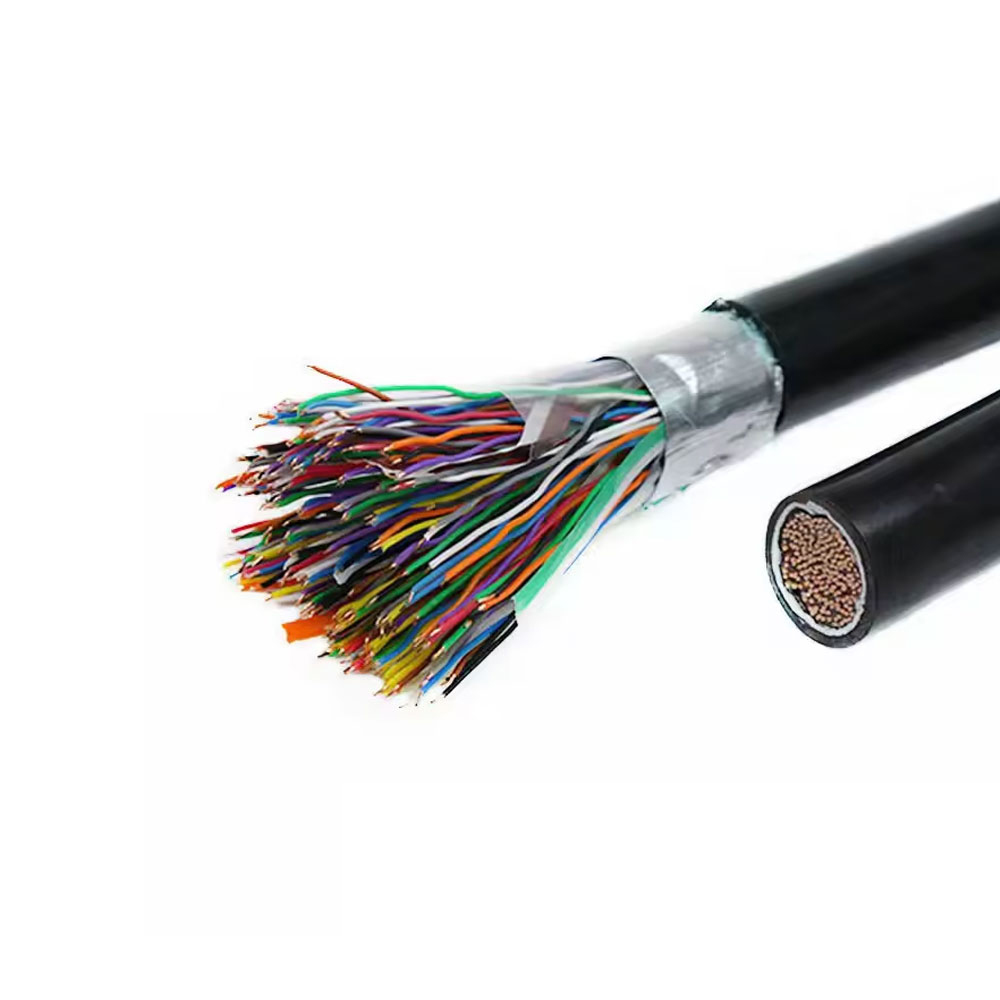
HYAT553 is a copper-core, solid polyolefin insulated, moisture-barrier protected, polyethylene sheathed, double-layer longitudinal corrugated steel tape armored local communication cable engineered for the most demanding urban, underground, underwater, and high-humidity communication environments.
Modern communication networks are expected to operate continuously in environments that are becoming more complex, more crowded, and more vulnerable to physical and environmental stress. Urban expansion, underground utility corridors, cross-river tunnels, wetland development, mining subsidence zones, and coastal infrastructure all require communication cables that can resist moisture, compression, corrosion, impact, and long-term mechanical deformation. In these conditions, ordinary local communication cables may not provide sufficient protection for signal continuity or long service life.
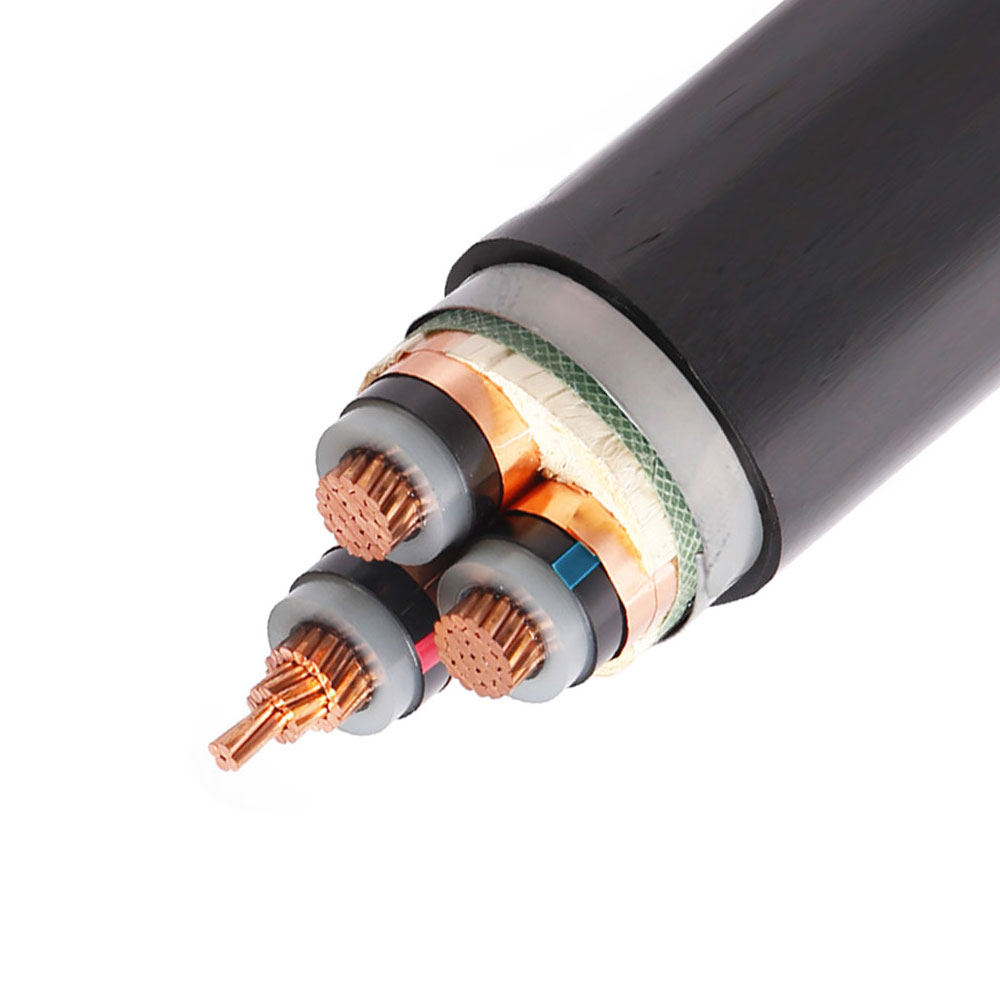
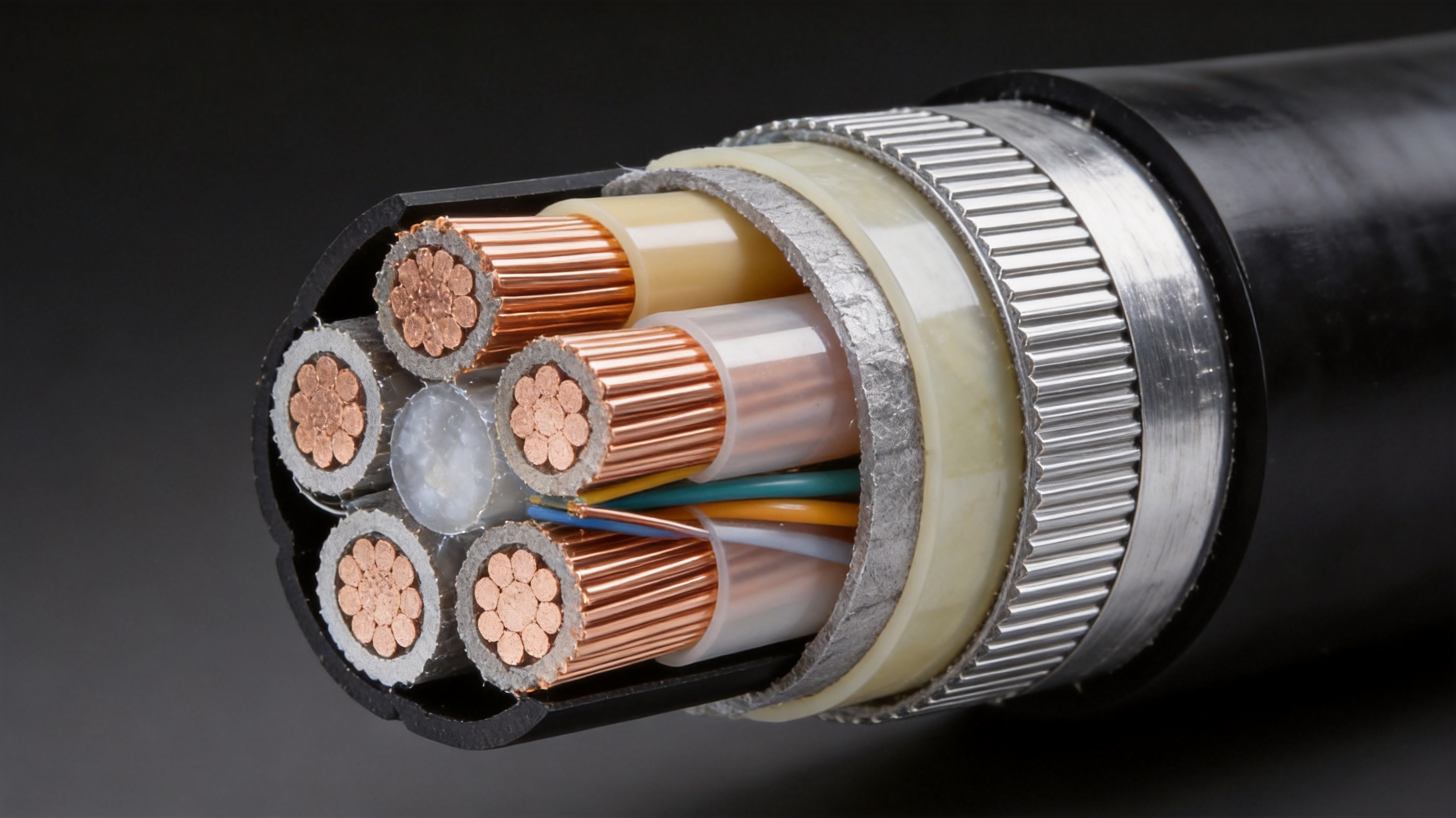
HYAT553 is designed for exactly these difficult applications. It combines solid annealed copper conductors, solid polyolefin insulation, petroleum jelly filling, a longitudinal aluminum-polyethylene moisture barrier, an inner polyethylene sheath, double-layer longitudinal corrugated steel tape armor, and a robust outer polyethylene sheath. This multi-layer structure creates a cable system with excellent electrical transmission performance, high longitudinal water resistance, superior crush resistance, and enhanced protection against geological movement and heavy external loads.
Unlike standard unarmored or single-armored communication cables, HYAT553 is intended for projects where cable failure would cause serious communication disruption, expensive emergency repair, or safety risks. It is especially suitable for underwater communication lines, marsh and wetland areas, high-humidity tunnels, long-term immersion environments, ultra-deep burial scenarios, municipal backbone communication networks, emergency command systems, and infrastructure projects requiring the highest level of moisture and mechanical protection.
The product belongs to the urban communication cable family and is particularly valuable in local telecommunication networks where copper-pair transmission remains essential. With conductor diameters commonly available in 0.4 mm, 0.5 mm, 0.6 mm, and 0.8 mm, and pair counts from 10 pairs to 800 pairs, HYAT553 can be adapted to different project capacities. Its rated voltage of 300/300V, insulation resistance of at least 10000 MΩ·km at 20℃ after filling, controlled capacitance, characteristic impedance of 100 Ω ±15 Ω at 1024 kHz, and strong crosstalk performance help maintain stable communication quality.
The design philosophy of HYAT553 is based on layered defense. Instead of relying on one protective component, the cable integrates multiple functional layers, each responsible for a specific type of protection. The conductor and insulation provide the signal path and electrical separation. The filling material blocks longitudinal water migration. The aluminum-polyethylene laminate moisture barrier improves radial moisture resistance. The inner polyethylene sheath stabilizes and protects the core. The double-layer corrugated steel tape armor delivers heavy mechanical protection. The outer polyethylene sheath provides environmental sealing, abrasion resistance, and corrosion protection.
This integrated construction is important because harsh installation environments rarely present only one risk. For example, an underwater tunnel may expose the cable to high humidity, immersion, compression from backfill, vibration from traffic, corrosive water, and difficult maintenance access. A mining subsidence area may subject the cable to longitudinal stress, soil shear, impact, and moisture migration. A coastal industrial zone may combine saline soil, chemical pollution, mechanical stress, and groundwater. HYAT553 is built to address these combined risks through a coordinated structure.
The conductor is the foundation of any communication cable. HYAT553 uses solid annealed copper conductors to provide reliable conductivity, stable transmission characteristics, and strong mechanical consistency. Annealed copper offers good ductility, which helps the conductor tolerate bending and handling during manufacturing, cabling, and installation. The solid conductor format supports stable electrical parameters and is suitable for local telecommunication applications where pair balance and impedance control are important.
Available standard conductor diameters include 0.4 mm, 0.5 mm, 0.6 mm, and 0.8 mm. This range allows project designers to balance cost, attenuation, transmission distance, cable diameter, and pair capacity. For example, smaller conductors may be selected where compact size and high pair count are priorities, while larger conductors may be preferred for lower attenuation or longer routes.
HYAT553 uses solid polyolefin insulation, typically HDPE or MDPE, around each copper conductor. Polyolefin insulation provides excellent electrical insulation, low moisture absorption, good dielectric characteristics, and durable mechanical behavior. Solid insulation is particularly suitable for copper-pair communication cables because it helps maintain stable capacitance and impedance across long cable lengths.
The insulation thickness usually ranges from 0.15 mm to 0.25 mm depending on conductor gauge and design requirements. Consistent insulation thickness is essential for maintaining pair balance, reducing capacitance unbalance, and ensuring predictable transmission performance. The insulation color system can use full color spectrum coding or pilot color coding, helping installers and technicians identify pairs accurately during termination and maintenance.
One of the defining features of HYAT553 is petroleum jelly full filling, also referred to as Type T filling. This filling material occupies spaces within the cable core and prevents water from migrating longitudinally along the cable if the sheath is damaged or the cable end is exposed. In high-humidity or long-term immersion environments, this feature is critical.
Unfilled communication cables may allow water to travel along the cable core over significant distances, causing insulation degradation, increased capacitance, signal attenuation, corrosion, and service interruption. HYAT553’s filling compound forms a continuous water-blocking medium that improves long-term moisture resistance and helps localize potential damage. This contributes to lower repair costs and greater network reliability.
The cable includes a double-sided aluminum-polyethylene laminate applied longitudinally as a moisture barrier. This APL layer improves radial water and vapor resistance, protecting the cable core from external moisture ingress. The aluminum layer acts as a metallic barrier, while the polyethylene bonding supports compatibility with the sheath system and helps form a sealed structure.
The moisture barrier works together with petroleum jelly filling and the polyethylene sheath layers. While the filling resists longitudinal water migration, the APL layer resists radial penetration, and the sheath system provides the first line of environmental protection. This three-level moisture defense is one of the reasons HYAT553 is well suited for underwater installation, marshland routes, wet tunnels, and areas with persistent groundwater.
The inner polyethylene sheath is applied over the moisture-protected cable core. It helps stabilize the cable structure, protects the core before armoring, and provides a smooth base for the steel tape armor. The inner sheath thickness typically ranges from 1.2 mm to 2.2 mm, depending on cable size and design.
Polyethylene is chosen for its moisture resistance, chemical resistance, toughness, and compatibility with outdoor and underground cable applications. In HYAT553, the inner sheath also contributes to separation between the communication core and the metallic armor, improving structural integrity and helping prevent mechanical damage to the insulated pairs.
The most prominent mechanical feature of HYAT553 is its double-layer longitudinal corrugated steel tape armor. Compared with ordinary single-layer armor, the double-layer design provides a much higher level of compression and impact resistance. It is particularly valuable for direct burial, deep burial, municipal construction zones, road crossings, utility tunnels, mining areas, and routes exposed to heavy machinery or unstable ground.
The corrugated form gives the steel tape improved flexibility compared with flat armor, allowing the cable to maintain a practical bending performance while still offering strong mechanical protection. The double-layer corrugated structure can absorb and distribute multi-directional stresses caused by ground movement, traffic load, backfill pressure, and localized impact. This dynamic deformation adaptability is a major advantage in geological risk zones.
The armor also contributes to grounding and lightning protection when properly installed as part of an engineered system. For outdoor and underground communication networks, the metallic armor layer can help improve protection against external electrical disturbances, provided that bonding and grounding are designed according to relevant standards and project requirements.
The outer sheath is made of black polyethylene and typically ranges from 2.5 mm to 4.5 mm in thickness depending on the cable outer diameter. This sheath protects the armor from environmental exposure, corrosion, abrasion, and mechanical damage during installation and service. The polyethylene outer jacket is especially valuable in wet soil, saline-alkali environments, industrial pollution zones, and long-term underground installations.
Because the steel tape armor is protected by polyethylene, the cable has enhanced corrosion resistance. This is important in harsh soil conditions where unprotected metal layers could degrade over time. The black sheath also provides UV resistance for temporary outdoor exposure during storage and installation, although final application is typically underground, underwater, or in ducts and tunnels.
Item |
HYAT553 Typical Specification |
Engineering Value |
Conductor |
Solid annealed copper conductor |
Stable conductivity and reliable communication transmission |
Conductor Diameter |
0.4 mm, 0.5 mm, 0.6 mm, 0.8 mm |
Flexible selection for different capacity and attenuation requirements |
Number of Pairs |
10 pairs to 800 pairs |
Suitable for small branch networks and large local communication routes |
Rated Voltage |
300/300V |
Appropriate for local communication cable service conditions |
Insulation Material |
Solid polyolefin, HDPE or MDPE |
Good dielectric performance and moisture resistance |
Moisture Barrier |
Double-sided aluminum-polyethylene laminate |
Improves radial moisture protection |
Filling Material |
Petroleum jelly full filling, Type T |
Provides excellent longitudinal water resistance |
Armor Structure |
Double-layer longitudinal corrugated steel tape armor |
High compression, impact, and geological stress resistance |
Outer Sheath |
Black polyethylene |
Environmental sealing, abrasion resistance, and corrosion protection |
Temperature Range |
-30℃ to +70℃ installation, -55℃ to +70℃ storage and transport |
Adaptable to cold, hot, and variable climate conditions |
Minimum Bending Radius |
At least 22 times cable outer diameter during installation, at least 28 times in service |
Supports safe handling of armored cable structure |
Compression Strength |
At least 3500 N/100 mm |
Suitable for heavy direct burial and high-load environments |
Moisture Resistance |
Passes water immersion and water penetration requirements |
Reliable in wet, submerged, and high-humidity installations |
Moisture is one of the most serious threats to communication cable service life. Water intrusion can increase dielectric loss, alter capacitance, reduce insulation resistance, accelerate conductor corrosion, and cause unpredictable signal degradation. In underground or underwater installations, moisture exposure is not temporary; it can last for decades. HYAT553 addresses this challenge through a sealed and filled construction.
The petroleum jelly filling prevents water from traveling through the cable core. The longitudinal aluminum-polyethylene barrier blocks radial moisture entry. The inner and outer polyethylene sheaths create durable polymeric sealing layers. The double-layer armor adds physical protection that reduces the probability of sheath damage from compression or impact. Together, these features form a comprehensive moisture protection system.
In a typical competitor cable with no filling, even a small sheath defect can allow water to migrate through the core. In a single-barrier cable, water resistance may depend too heavily on the outer sheath remaining completely intact. HYAT553 reduces this vulnerability by combining multiple moisture defense mechanisms. This makes it an excellent choice for marsh wetlands, river crossings, high-humidity utility tunnels, underground municipal corridors, and long-term immersion routes.
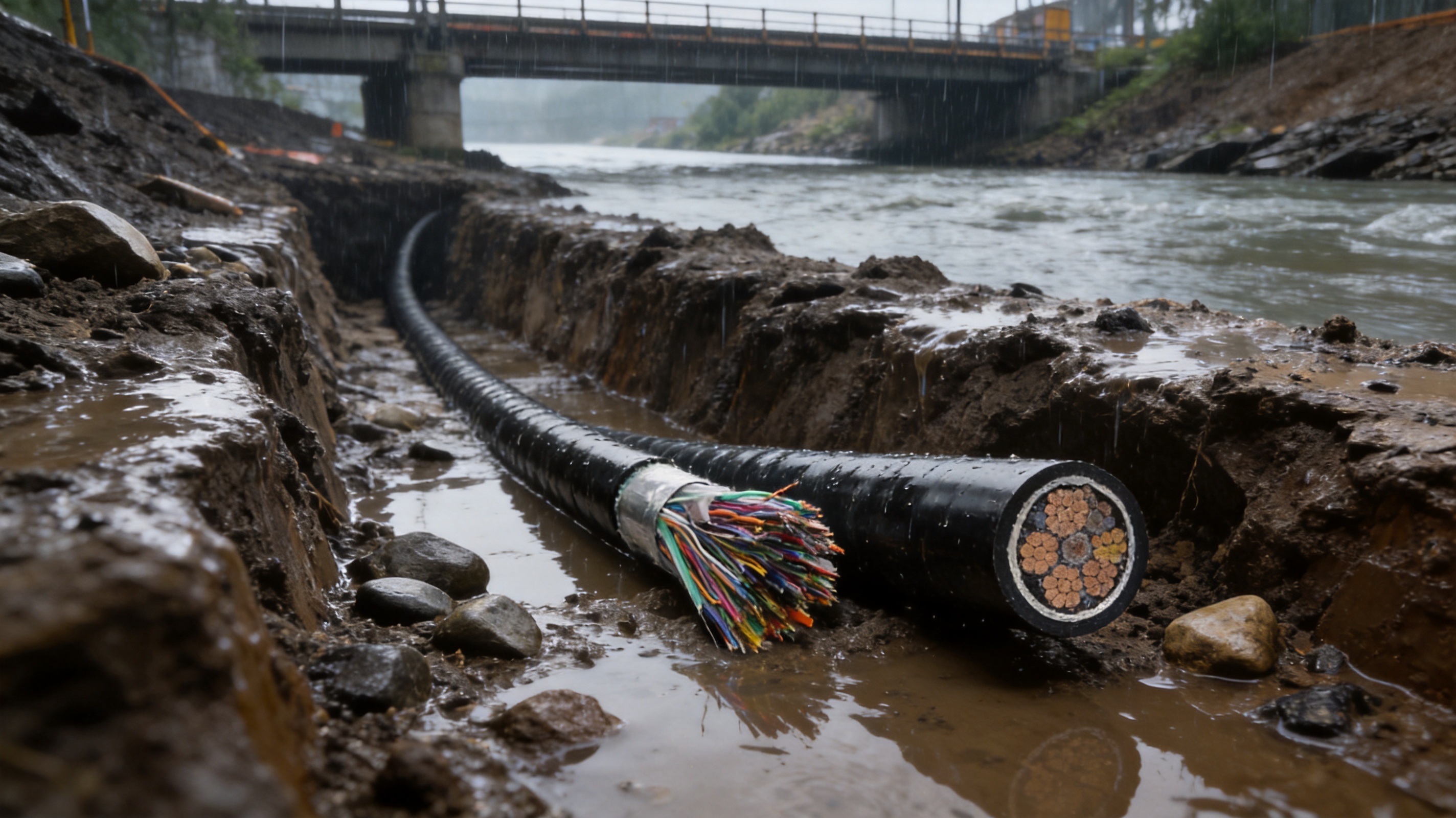
In communication cable selection, mechanical protection is often underestimated until a failure occurs. Direct burial cables may be crushed by construction equipment, damaged by stones in backfill, stressed by soil settlement, or sheared by geological displacement. Tunnel cables may face vibration, thermal cycling, moisture, and accidental impact. Underwater or river-crossing cables may experience pressure, dragging forces, and difficult repair conditions.
HYAT553 is designed with double-layer longitudinal corrugated steel tape armor to address these conditions. The compression strength of at least 3500 N/100 mm gives the cable strong resistance against external loads. The corrugated structure provides both stiffness and controlled flexibility, allowing the cable to absorb stress more effectively than rigid flat metal structures. The double-layer design improves impact resistance and helps protect the inner communication core from localized damage.
Compared with unarmored cables, HYAT553 offers far superior resistance to crushing and external mechanical force. Compared with single-armored cables, it provides an additional protective layer and improved stress distribution. Compared with non-filled armored cables, it adds strong moisture blocking capability. Compared with ordinary PE sheathed local communication cables, it is far better suited to extreme installation conditions where both water resistance and mechanical protection are essential.
Although HYAT553 is heavily protected, it remains a communication cable first. Its mechanical and moisture protection would not be meaningful without stable transmission performance. The cable is designed to maintain appropriate electrical parameters for local telecommunication networks, including insulation resistance, working capacitance, capacitance unbalance, attenuation, characteristic impedance, and crosstalk attenuation.
The insulation resistance is at least 10000 MΩ·km at 20℃ after filling, indicating strong electrical separation between conductors. Working capacitance is controlled, with typical values not exceeding 52 nF/km for 0.4 mm gauge and 57 nF/km for 0.5 mm gauge. Capacitance unbalance is limited to no more than 330 pF/500 m between any pair, supporting signal balance and reducing interference. The characteristic impedance is 100 Ω ±15 Ω at 1024 kHz, and far-end crosstalk attenuation is at least 58 dB/500 m at 1024 kHz.
These electrical characteristics are supported by precise conductor drawing, stable insulation extrusion, accurate pair twisting, controlled cabling tension, and uniform filling. The product’s design recognizes that a rugged cable must still deliver stable communication performance under real operating conditions.
Underwater cable installation requires excellent sealing, water resistance, and mechanical strength. Cables may be exposed to long-term immersion, pressure, movement, and difficult maintenance access. HYAT553’s full filling, moisture barrier, and double-layer armor make it highly suitable for underwater local communication routes, river crossings, lake-area infrastructure, and wet tunnel projects.
Wetlands and marsh environments present continuous moisture exposure and often unstable soil. A cable installed in these areas must resist water migration and mechanical deformation. HYAT553 provides strong longitudinal water resistance and a corrugated armor structure capable of adapting to soil movement more effectively than simpler cable designs.
Urban tunnels and underground utility corridors often combine high humidity, condensation, vibration, limited maintenance access, and the presence of multiple utilities. HYAT553’s moisture barrier system and mechanical protection help reduce the risk of long-term degradation and accidental damage.
Mining areas and geological disaster zones can cause ground settlement, shear displacement, compression, and unexpected cable deformation. The double-layer corrugated steel tape armor of HYAT553 provides enhanced resistance to these mechanical risks. For critical communication lines in such areas, a cable with high deformation adaptability can reduce service interruption and emergency repair frequency.
Some infrastructure projects require cable burial depths exceeding 3 meters or installation beneath roads, foundations, and utility structures. Deep burial subjects cables to higher soil pressure and increased risk from stones, construction loads, and excavation activity. HYAT553’s high compression strength and double-layer armor make it a preferred choice for these demanding burial conditions.
Communication networks that support emergency response, urban command centers, transportation management, and regional backbone lines require high reliability. HYAT553 provides a strong protection platform for such critical circuits, especially in locations where cable replacement would be costly, slow, or disruptive.
The main advantage of HYAT553 is not based on a single specification but on the combination of features. Competitor products may offer one or two protective elements, such as PE sheathing or single steel tape armor, but may not integrate full filling, a laminated moisture barrier, double-layer armor, and dual sheath protection into one system.
Against unfilled local communication cables, HYAT553 provides superior longitudinal water resistance. If water enters an unfilled cable, it can travel along the core and affect long sections. HYAT553’s petroleum jelly filling helps localize water exposure and preserve cable performance.
Against unarmored moisture-barrier cables, HYAT553 offers far stronger mechanical protection. A moisture barrier alone cannot protect against heavy machinery rolling, boulder impact, deep burial pressure, or geological shear. The double-layer corrugated steel tape armor gives the cable a much higher level of physical defense.
Against single-armored filled cables, HYAT553 provides enhanced crush and impact resistance. The second armor layer improves protection redundancy and stress distribution, which is important for high-risk municipal routes, tunnels, and unstable soil conditions.
Against ordinary flat armored cables, HYAT553’s corrugated armor offers better flexibility and deformation absorption. Corrugation helps the armor respond to bending and external pressure without creating excessive stress concentration. This is particularly important during installation and in service areas with ground movement.
Against low-cost cables using inconsistent materials or loose process control, HYAT553 benefits from disciplined manufacturing, quality testing, and customization support. In long-life infrastructure, initial cable price is only one factor. The total cost of ownership includes repair costs, downtime, excavation expense, traffic disruption, and emergency response. A robust cable can deliver better whole-life-cycle value even if its initial purchase cost is higher.
Anhui Zhishang Cable Technology Co., Ltd. supports HYAT553 with a production philosophy centered on quality orientation, integrity, and stability. The company integrates research and development, production, and sales of wire and cable products, with a modern production base of approximately 5,000 square meters in Xuancheng City, Anhui Province, China. Its location in the Yangtze River Delta region provides logistical and industrial advantages for serving domestic and international markets.
The company operates automated production lines and has a monthly output capacity of up to 10 million meters. This production scale allows stable delivery for standard models while also supporting customized cable projects. Standard products can be stocked for faster shipment, while customized products are typically produced within a project-dependent lead time, commonly 7 to 20 days.
For a cable such as HYAT553, advanced manufacturing capability is essential. The structure includes multiple layers that must be applied accurately and consistently. Conductor diameter must be controlled. Insulation thickness must be uniform. Pair twisting must maintain electrical balance. Filling must be complete and stable. Moisture barrier application must be continuous. Sheath extrusion must maintain thickness and adhesion requirements. Steel tape armoring must be aligned, corrugated, wrapped, and protected correctly. Any weakness in one stage can compromise the final cable.
The company’s quality engineers and R&D technicians bring more than 10 years of industry experience, supporting product selection, custom design, process optimization, and technical communication. This experience is particularly valuable for infrastructure customers who need a cable matched to route conditions, installation method, pair count, conductor size, moisture exposure, mechanical risk, and service life expectations.
High-quality solid annealed copper conductors require controlled drawing and annealing. Diameter consistency affects conductor resistance, attenuation, and mechanical behavior. Surface quality affects insulation adhesion and long-term reliability. By controlling conductor preparation, the manufacturer helps ensure that each pair performs consistently across the cable length.
Solid polyolefin insulation must be extruded with stable thickness, concentricity, and surface smoothness. Uneven insulation can cause capacitance imbalance, reduced dielectric strength, and inconsistent pair performance. Advanced extrusion control supports stable communication parameters and improves product reliability.
Communication cable performance depends heavily on pair geometry. Accurate twisting helps control crosstalk and impedance. During core assembly, tension control and lay consistency are important to avoid conductor stress and maintain stable dimensions. HYAT553’s layered filled construction requires disciplined core formation before filling and sheathing.
Petroleum jelly filling must be applied thoroughly to prevent voids. Incomplete filling can create channels for water migration, reducing the cable’s moisture protection. Proper temperature control, filling pressure, and process monitoring help ensure that the cable core is fully protected.
The aluminum-polyethylene laminate moisture barrier must be longitudinally applied with precision. A continuous barrier improves radial moisture resistance and contributes to the cable’s sealed design. Process control reduces the risk of overlap defects, wrinkles, gaps, or inconsistent bonding.
The inner and outer polyethylene sheaths must have sufficient thickness, uniform coverage, and smooth surfaces. Sheath extrusion quality affects moisture resistance, abrasion protection, armor isolation, and overall cable durability. The outer sheath is especially important because it protects the steel armor from corrosion and environmental damage.
Applying double-layer longitudinal corrugated steel tape armor requires careful alignment and mechanical control. The armor must protect the cable without damaging the inner sheath or restricting bending beyond acceptable limits. Corrugation geometry, wrap consistency, and layer positioning all influence compression resistance, impact resistance, and installation flexibility.
Final inspection may include dimensional checks, conductor continuity, voltage testing, insulation resistance measurement, capacitance evaluation, attenuation testing, sheath integrity inspection, bending performance verification, and mechanical protection assessment. Product test reports and quality assurance support help customers confirm that the cable meets defined project requirements.
HYAT553 is designed with reference to relevant communication cable performance expectations and test methods, including water immersion, water penetration, impact resistance, voltage withstand, and electrical transmission parameters. The cable is described as passing GB/T 13849 water immersion testing and IEC 60794-1-F1 water penetration testing, while impact resistance is associated with IEC 60229 drop weight impact testing.
Standards compliance is not merely a documentation issue. It gives engineers confidence that the cable’s claimed performance can be evaluated through recognized methods. For infrastructure owners, contractors, and communication network operators, test-based quality assurance reduces project risk and supports long-term asset management.
The manufacturer follows national standards, relevant international standards, and industry benchmarks to customize cable products according to defined requirements. This is important for international customers who may need project-specific documentation, material confirmation, inspection reports, or customized design support.
Not every communication project has identical requirements. Pair count, conductor diameter, sheath thickness, armor design, marking, packaging, color coding, and testing documentation may vary according to project specifications. The manufacturer supports OEM and ODM development based on customer drawings or samples. Technical engineers can provide product selection guidance and tailor-made cable design solutions according to actual project needs.
For HYAT553, customization may involve selecting the appropriate conductor gauge, number of pairs, sheath thickness range, packaging length, cable marking, or test documentation. Customers working on underwater, tunnel, mining, or municipal backbone projects can communicate installation conditions so that the cable design and production plan are aligned with application risk.
This engineering support is a significant competitive advantage. Many cable suppliers can provide standard catalog products, but high-risk infrastructure often needs deeper technical discussion. A supplier with manufacturing capability, R&D knowledge, and practical cable design experience can help customers avoid under-specification and over-specification, achieving a better balance of reliability, cost, and installation practicality.
HYAT553 is a heavily protected armored cable, so proper installation is essential. The minimum bending radius should be no less than 22 times the cable outer diameter during installation and no less than 28 times the cable outer diameter in service. Observing these limits helps protect the insulation, moisture barrier, sheath, and armor structure from excessive bending stress.
During direct burial, the trench bottom should be prepared to reduce sharp stone contact. Although HYAT553 has strong impact and compression resistance, good installation practice always improves service life. Backfill should be controlled where possible, and cable routes should be marked to reduce future excavation damage.
For underwater or high-humidity tunnel installation, cable ends and joints must be sealed correctly. A water-resistant cable can still be compromised by poor jointing or termination. The petroleum jelly filling helps protect the cable core, but complete system reliability requires compatible accessories, correct grounding of metallic armor where required, and qualified installation workmanship.
For armored cables, grounding and bonding should follow project electrical safety requirements. The double-layer steel tape armor can contribute to lightning protection and shielding, but only when integrated into a properly designed grounding system. Engineers should review local standards, project specifications, and site conditions before installation.
In high-risk communication infrastructure, the lowest initial cable cost is not always the best economic choice. Cable failure in a tunnel, underwater route, deep burial corridor, or urban road crossing can require excavation, traffic control, emergency repair teams, network rerouting, and downtime. These indirect costs may greatly exceed the price difference between a basic cable and a high-protection cable.
HYAT553 is designed to reduce whole-life-cycle risk. Its moisture protection helps prevent long-term water-related degradation. Its double-layer armor reduces damage from compression, impact, and ground movement. Its corrosion-resistant sheath system protects metallic layers in harsh soil. Its electrical stability supports reliable communication performance. For critical networks, these features can reduce repair frequency and extend service life.
The product is especially suitable for projects expected to operate for decades. Its fully sealed, moisture-resistant, corrosion-resistant, and mechanically reinforced design supports long-term infrastructure value. When used in appropriate conditions and installed correctly, HYAT553 can help owners build communication lines with greater resilience against environmental and mechanical threats.
Urban communication networks often run through environments full of uncertainty. New construction may disturb existing cable routes. Roads may be widened. Underground water levels may change. Utility tunnels may become crowded. Heavy equipment may operate above direct-buried lines. Geological settlement may occur in reclaimed land or mining-influenced areas. A communication cable must therefore be selected not only for today’s environment but also for future risk.
HYAT553 provides a safety margin for these uncertainties. Its double-layer armor protects against external force. Its filled structure protects against water migration. Its polyethylene sheaths protect against moisture and corrosion. Its corrugated design helps preserve flexibility and absorb stress. Its electrical design maintains communication performance. Together, these characteristics make it a strong candidate for resilient urban communication infrastructure.
For emergency command systems, communication continuity is not optional. For backbone routes, a single failure can affect many downstream users. For cross-river or tunnel routes, access for repair may be limited. For industrial or coastal zones, corrosion and moisture may accelerate cable aging. In all these cases, HYAT553 offers a higher protection level than ordinary communication cable constructions.
Anhui Zhishang Cable Technology Co., Ltd. has developed a product portfolio that includes low-voltage wiring cable, flexible cable, power cable, automotive cable, communication cable, flat cable, control cable, computer cable, specialty cable, bus cable, aerial insulated cable, mining cable, and fluoroplastic cable. This broad cable manufacturing background gives the company experience with different insulation materials, conductor structures, sheath systems, armoring methods, and testing requirements.
The company emphasizes pure copper specifications, full-core and full-length quality assurance, product test reports, and warranty support for standard cable models. Its R&D and engineering team can support customers from product selection through customized development. This is particularly useful for communication cable projects where installation conditions may be complex and technical parameters must be matched carefully.
The company also emphasizes responsible production practices and continuous innovation. Its products have been sold to markets including the United States, Canada, Australia, Japan, and parts of Eurasia. International market experience helps the manufacturer understand diverse customer expectations, documentation needs, packaging requirements, and project communication practices.
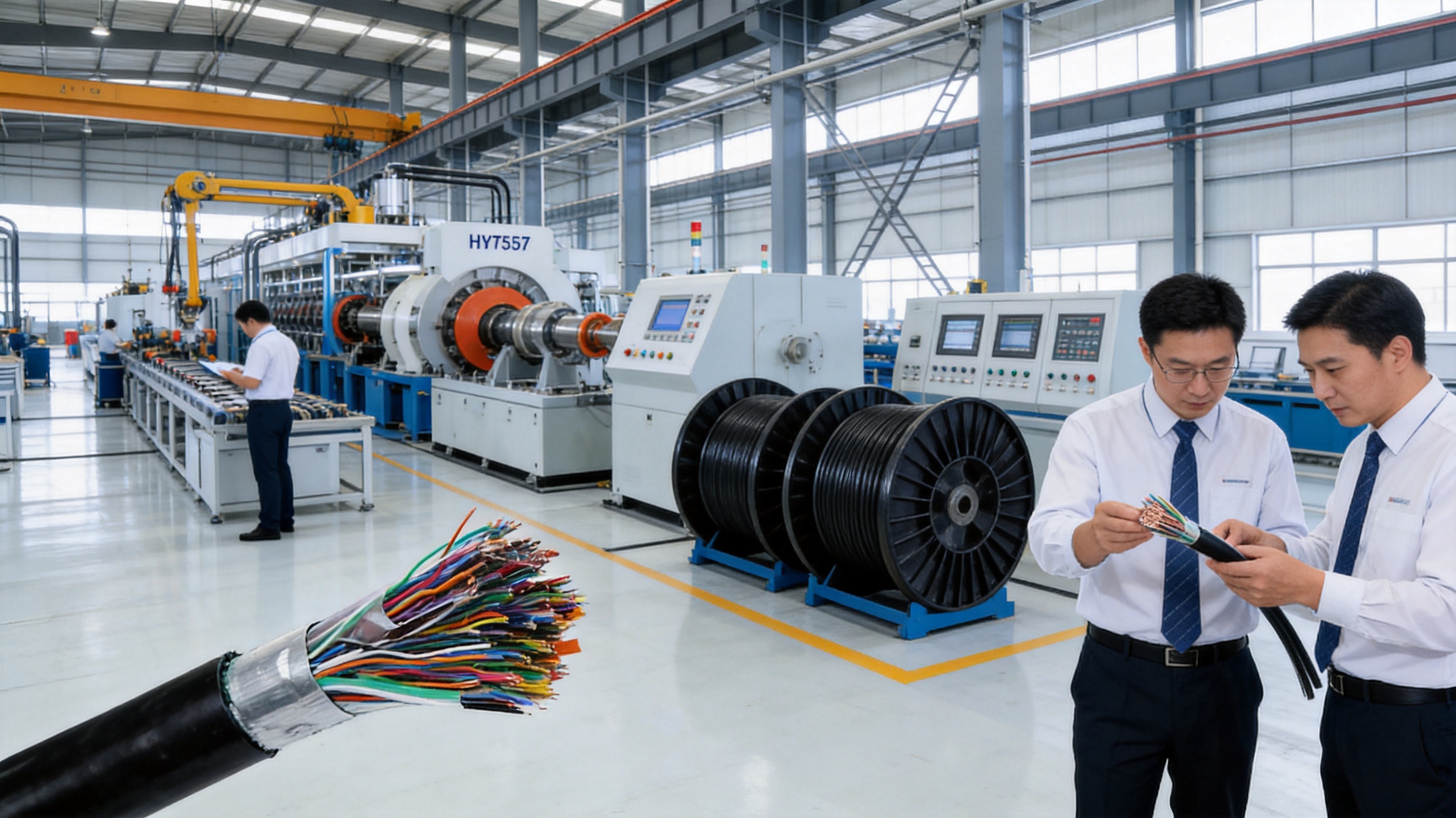
When selecting HYAT553, engineers should first evaluate the installation environment. If the route involves long-term moisture, underwater sections, deep burial, heavy traffic load, unstable soil, mining subsidence, or difficult maintenance access, HYAT553 is strongly aligned with the risk profile. If the route is dry, protected, shallow, and easy to maintain, a lighter cable design may be sufficient. The value of HYAT553 is greatest where failure prevention is more important than minimizing initial cable cost.
Next, the required pair count should be determined. HYAT553 can be supplied from 10 pairs to 800 pairs, allowing it to serve both smaller branch applications and large local communication routes. The conductor diameter should be selected according to transmission distance, attenuation requirements, installation space, and cost considerations.
Environmental conditions should also be reviewed. For saline-alkali soil, industrial pollution zones, or high groundwater areas, the polyethylene-coated armor and sheath system provide important corrosion resistance. For geological risk zones, the double-layer corrugated armor offers deformation adaptability and mechanical redundancy. For underwater applications, special attention should be given to jointing, sealing, pulling method, and route protection.
Finally, customers should confirm project documentation needs. These may include test reports, dimensional data, electrical performance data, material declarations, packing specifications, or custom marking. Working directly with a manufacturer capable of OEM/ODM support can simplify this process.
HYAT553 is mainly used for local communication lines in harsh environments, including underwater routes, marsh wetlands, high-humidity tunnels, deep direct burial, mining subsidence zones, cross-river infrastructure, and critical urban communication networks requiring strong moisture and mechanical protection.
Petroleum jelly filling prevents water from migrating longitudinally through the cable core. If external moisture enters through accidental damage or at an exposed end, the filling helps block water movement and reduces the risk of widespread cable degradation.
The double-layer corrugated steel tape armor provides high compression resistance, impact resistance, and mechanical redundancy. Its corrugated structure helps the cable maintain a degree of flexibility while absorbing stresses from ground movement, traffic loads, and deep burial pressure.
Ordinary local communication cable may have only basic insulation and sheathing, or at most a single protective layer. HYAT553 combines full filling, a laminated moisture barrier, inner sheath, double-layer corrugated steel tape armor, and outer polyethylene sheath. This makes it much more suitable for wet, buried, underwater, and mechanically demanding environments.
Yes. The cable can be customized according to project needs, including conductor diameter, pair count, sheath requirements, marking, packaging, and documentation. OEM and ODM support can be provided based on drawings, samples, or technical specifications.
Common conductor diameters include 0.4 mm, 0.5 mm, 0.6 mm, and 0.8 mm. The correct selection depends on transmission distance, attenuation requirements, cable capacity, and project design.
HYAT553 is generally available from 10 pairs to 800 pairs, making it suitable for both smaller distribution routes and larger urban communication lines.
Yes. HYAT553 is highly suitable for direct burial, including deep burial and heavy-load areas, because of its double-layer corrugated steel tape armor, polyethylene sheath protection, moisture barrier, and filled construction.
Installers should observe the minimum bending radius, protect cable ends and joints from water entry, prepare trenches properly, avoid sharp backfill where possible, and follow grounding and bonding requirements for armored cables.
HYAT553 has a complex multi-layer structure. Reliable performance depends on precise conductor processing, insulation extrusion, pair twisting, filling, moisture barrier application, armoring, sheathing, and final testing. A capable manufacturer with automated lines, experienced engineers, and quality control systems can deliver more consistent and dependable cable.
HYAT553 is a high-protection local communication cable designed for environments where moisture, compression, impact, corrosion, and ground movement create serious risks. Its solid annealed copper conductors and solid polyolefin insulation provide the electrical foundation for stable communication. Its petroleum jelly filling and aluminum-polyethylene moisture barrier deliver excellent water resistance. Its inner and outer polyethylene sheaths create environmental sealing and armor protection. Its double-layer longitudinal corrugated steel tape armor provides outstanding mechanical strength and deformation adaptability.
Compared with ordinary unfilled, unarmored, or single-armored communication cables, HYAT553 offers a more complete protection system. It is particularly valuable for underwater installations, wetland routes, high-humidity tunnels, deep burial, mining subsidence zones, and critical municipal communication networks. For projects where repair is difficult and uninterrupted communication is essential, HYAT553 provides a robust, long-life, whole-life-cycle value solution.
Behind the product is a manufacturer with modern production facilities, automated production lines, experienced R&D and quality personnel, OEM/ODM capability, and broad wire and cable manufacturing expertise. This combination of product design and manufacturing strength enables HYAT553 to meet demanding infrastructure requirements and deliver dependable performance in some of the most challenging communication cable applications.
GB/T 13849, Local Telecommunication Cable Test Methods and Water Immersion Performance Requirements.
IEC 60229, Electric Cables: Tests on Extruded Oversheaths with a Special Protective Function.
IEC 60794-1-F1, Optical Fibre Cable Test Procedures: Water Penetration Test Method, referenced for longitudinal water-blocking evaluation principles.
IEC 60708, Low-Frequency Cables with Polyolefin Insulation and Moisture Barrier Polyolefin Sheath.
Telecommunication Cable Engineering Handbook, Materials, Pair Design, Moisture Protection, and Armoring Practices.
Underground Cable Installation Guide, Direct Burial, Duct, Tunnel, and High-Moisture Infrastructure Applications.

We firmly believe that good cables are not only a competition of materials, but also a reflection of craftsmanship, quality, and responsibility.

Links
Product
Send Inquiry
No. 29 Sankeshu Road, Xuanzhou District, Xuancheng City, Anhui Province, China
+86-18621104555/+86-563-2622999
 Electrical Cable Manufacturer
OEM/ODM Wire and Cable Solutions
Electrical Cable Manufacturer
OEM/ODM Wire and Cable Solutions
 English
 Español
 عربى
عربى
 русский