Get more content that can help you
Content
Modern elevator systems are no longer simple lifting machines. They are intelligent, high-frequency, safety-critical platforms that integrate power delivery, control signals, video communication, emergency communication, door control, lighting, monitoring, and sensor feedback into one moving vertical system. In this environment, the elevator traveling cable becomes one of the most important components in the shaft. It must move repeatedly with the elevator car, remain flexible under long-term dynamic bending, withstand mechanical stress, resist electromagnetic interference, and maintain stable transmission throughout years of operation.
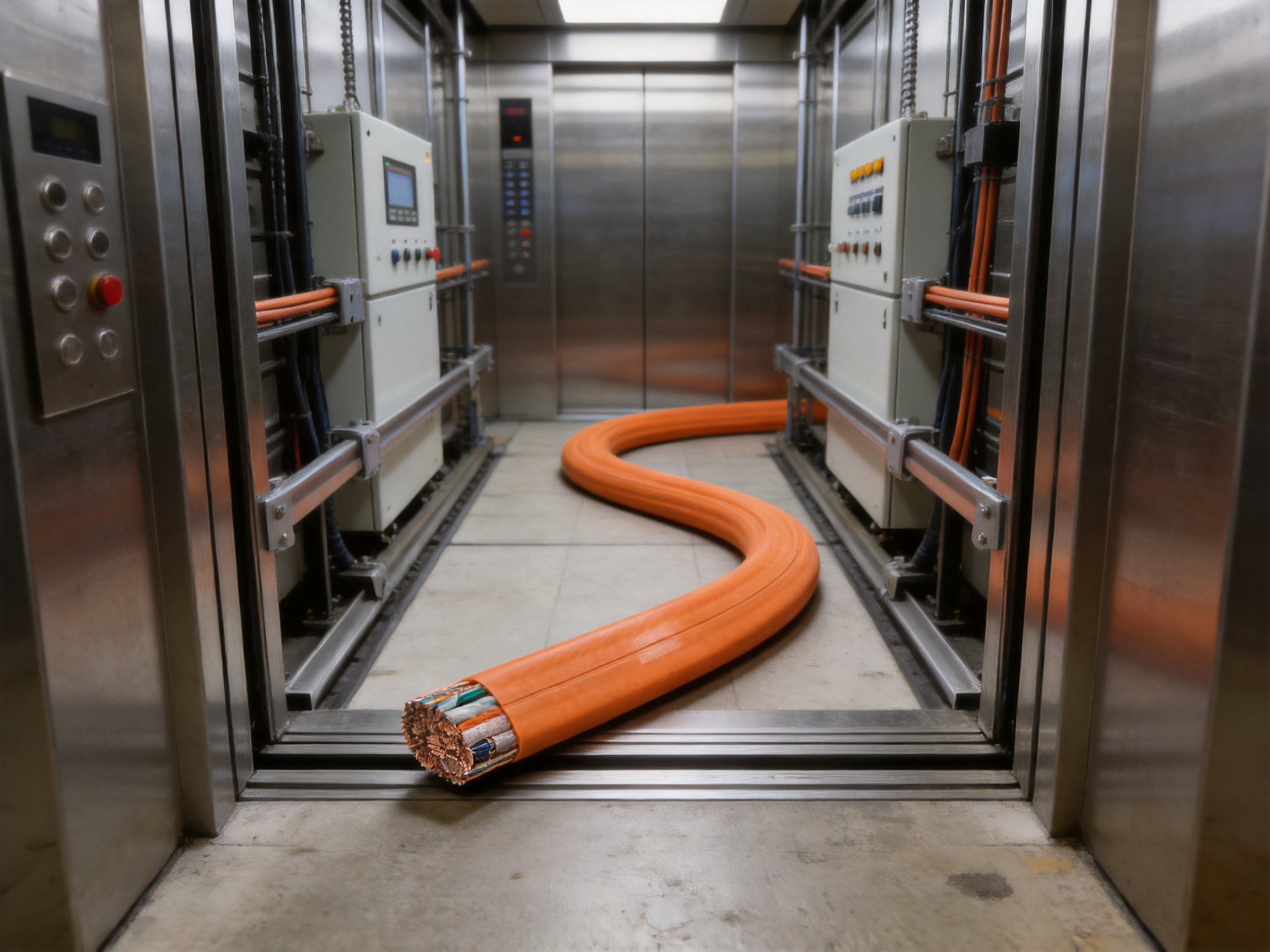
TVVBG flexible and durable structure elevator traveling flat cable is designed for exactly this demanding application. It is a reinforced shielded elevator trailing flat cable developed from the TVVB flat cable structure, with an added reinforcement core to improve tensile capacity and mechanical protection. Its structure combines fine-stranded annealed copper conductors, PVC insulation, copper braid shielding, a flat reinforced configuration, and a durable PVC sheath. This combination allows the cable to perform reliably in high-speed elevators, super high-rise building elevators, heavy-load elevators, escalators, mine hoisting equipment, and other vertical or moving installations requiring high tensile strength and stable signal integrity.
Compared with ordinary elevator flat cables, TVVBG offers a more robust solution. The reinforcement core, which can be galvanized steel wire rope or aramid fiber depending on project requirements, significantly improves tensile capacity. The copper braid shield suppresses electromagnetic interference and supports stable signal transmission in crowded electrical environments. The flat structure optimizes shaft space and improves cable guidance during movement. The finely stranded copper conductors support frequent bending, while the abrasion-resistant and oil-resistant sheath helps the cable endure the challenging conditions commonly found in elevator shafts and industrial lifting environments.
TVVBG Flexible and durable structure Elevator Traveling Flat Cable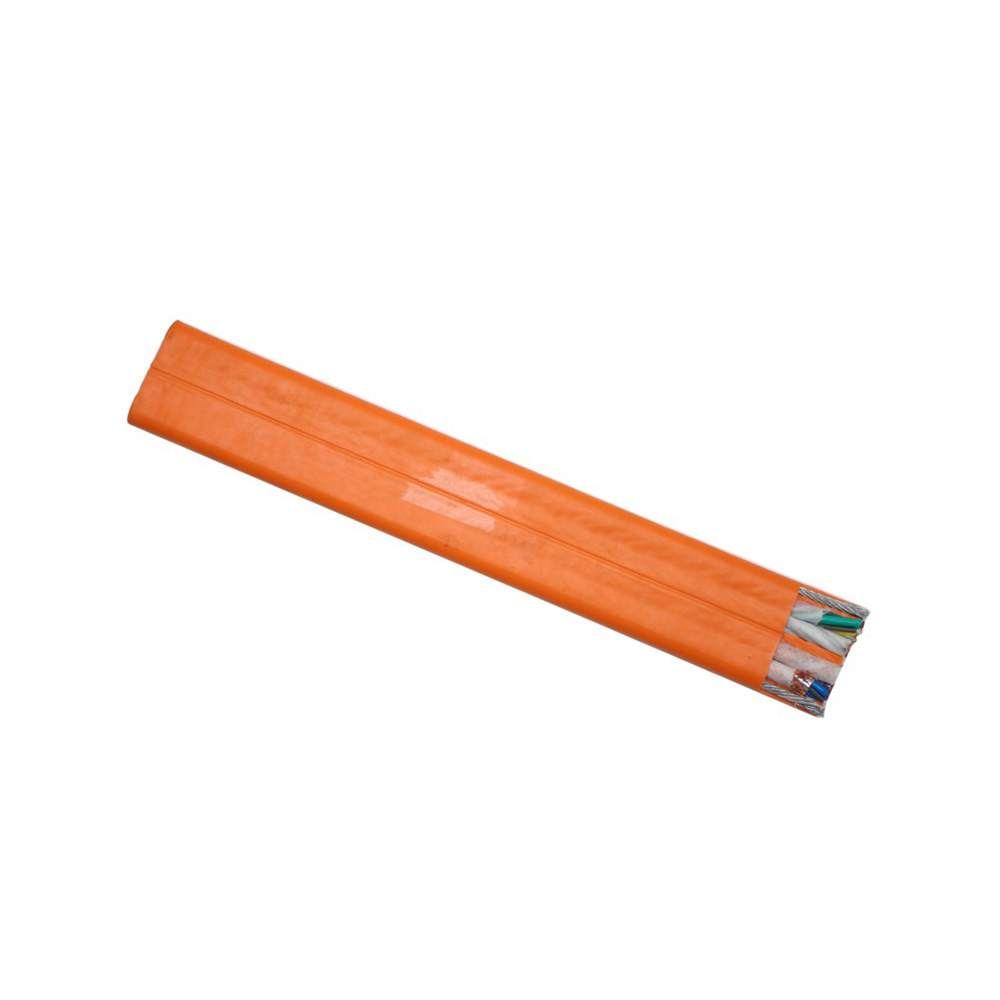
An elevator traveling cable is installed between the moving elevator car and the stationary control system. As the elevator car moves up and down, the cable bends, hangs, flexes, and returns repeatedly. Unlike fixed building wiring, it is exposed to constant mechanical movement. Unlike ordinary flexible cable, it often carries multiple circuits within one flat structure, including control wiring, communication wiring, power lines, safety circuits, intercom wiring, video monitoring lines, and other functional conductors.
The flat design is especially valuable in elevator applications because it helps the cable move in a predictable plane. A round cable may twist, swing, or occupy more shaft space, especially in installations with many conductors. A flat cable is easier to arrange, easier to suspend, and more suitable for compact hoistway layouts. When reinforced and shielded, the flat cable becomes even more capable of serving elevators that operate frequently, carry heavy loads, or travel over longer vertical distances.
TVVBG is designed for installations where basic flat cable may not be enough. In high-rise buildings, the hanging length of the traveling cable can be considerable, which increases tensile load. In heavy-load elevators or mine hoisting systems, mechanical stress may be more severe. In intelligent elevators with variable-frequency drives, monitoring systems, and digital control equipment, electromagnetic interference can affect signal reliability. TVVBG addresses these challenges with reinforcement and shielding while maintaining flexibility and durability.
The TVVBG elevator traveling flat cable uses stranded annealed copper conductors with fine stranding. Fine stranding improves conductor flexibility and reduces the risk of fatigue during repeated bending. The conductor cross-section range is typically 0.5 mm² to 2.5 mm², allowing the cable to support a variety of control, signal, and low-voltage power functions. The number of cores can range from 4 to 48 in a flat arrangement, giving engineers the flexibility to design cable systems for simple or complex elevator configurations.
The insulation material is polyvinyl chloride, commonly known as PVC. PVC provides reliable electrical insulation, good mechanical properties, and practical cost efficiency for elevator cable applications. The insulation thickness generally ranges from 0.4 mm to 0.8 mm, depending on conductor size and design requirements. The rated voltage is 300/500V, and the cable is tested at 2kV AC for one minute, helping confirm insulation integrity and production consistency.
The reinforcement structure is one of the defining elements of TVVBG. A galvanized steel wire rope or aramid fiber reinforcement core can be integrated into the flat structure. This reinforcement carries mechanical load and reduces stress on the electrical conductors. As a result, the conductors are less likely to be damaged by pulling force, long suspension length, or repeated elevator operation. For reinforced configurations, tensile strength can reach at least 30 N/mm², and reinforcement core tensile strength can reach at least 2000 N.
The shielding structure uses copper braid shielding with coverage of at least 70%. This shield helps reduce electromagnetic interference and improves the reliability of control and signal transmission. In modern elevator systems, electromagnetic noise may originate from motors, variable-frequency drives, control cabinets, relays, power cables, and nearby industrial equipment. The copper braid shield provides an important protective layer for stable operation.
The sheath is also made of PVC, with thickness generally ranging from 1.0 mm to 2.0 mm. The sheath protects the internal structure from abrasion, oil exposure, moisture, and mechanical contact. The cable passes an IRM 902 oil immersion test and an 8000-cycle reciprocating abrasion test, demonstrating that it is designed for real elevator shaft conditions rather than only static installation environments.
Item |
Specification |
Product Type |
Reinforced shielded elevator traveling flat cable |
Conductor |
Stranded annealed copper conductor, fine stranding |
Cross-Section Range |
0.5 mm² to 2.5 mm² |
Number of Cores |
4 cores to 48 cores, flat arrangement structure |
Rated Voltage |
300/500V |
Test Voltage |
2kV AC for 1 minute |
Insulation Material |
Polyvinyl chloride, PVC |
Insulation Thickness |
0.4 mm to 0.8 mm |
Reinforcement Structure |
Galvanized steel wire rope or aramid fiber reinforcement core |
Shielding Structure |
Copper braid shield, coverage at least 70% |
Sheath Material |
Polyvinyl chloride, PVC |
Sheath Thickness |
1.0 mm to 2.0 mm |
Structure Type |
Flat structure with reinforcement core |
Temperature Range |
-15℃ to +70℃ |
Minimum Bending Radius |
Mobile installation at least 6 times cable thickness; fixed installation at least 4 times cable thickness |
Insulation Resistance |
At least 20 MΩ·km at 20℃ |
Shielding Effectiveness |
Shielding attenuation factor not greater than 0.9 at 1MHz |
Tensile Strength |
At least 30 N/mm² for reinforced type |
Bending Life |
At least 8 million cycles under elevator operating conditions |
Oil Resistance |
Passes IRM 902 oil immersion test |
Abrasion Resistance |
Passes 8000 reciprocating abrasion test |
Tensile Capacity |
Reinforcement core tensile strength at least 2000 N |
Cable Thickness |
3.0 mm to 15 mm, depending on cores and cross-section |
Cable Width |
12 mm to 75 mm, depending on cores and cross-section |
One of the most important advantages of TVVBG over standard elevator flat cable is tensile reinforcement. In an elevator shaft, the traveling cable hangs between the moving car and the fixed connection point. The longer the travel height, the greater the weight and tensile force acting on the cable. Ordinary flat cables rely mainly on the cable body and conductors to bear movement and weight. Over time, this can increase the risk of conductor elongation, insulation stress, or internal fatigue.
TVVBG reduces this risk by integrating a reinforcement core. Galvanized steel wire rope provides excellent tensile strength and mechanical stability, while aramid fiber offers high strength with relatively low weight. This reinforcement helps the cable maintain its structure under vertical load. It also reduces mechanical strain on the copper conductors, allowing the electrical components to focus on conductivity instead of carrying excessive mechanical stress.
This advantage is especially important for high-speed elevators, super high-rise buildings, freight elevators, heavy-duty passenger elevators, and mine hoisting equipment. In these environments, downtime can be expensive and safety requirements are strict. A reinforced cable can help reduce the risk of premature failure and support long-term stable operation.
Modern elevator systems are full of electrical activity. Variable-frequency drives, motor controllers, braking systems, sensors, door operators, communication modules, and monitoring equipment may all be installed close to each other. In such environments, unshielded cables can become vulnerable to electromagnetic interference. Interference may cause unstable signals, inaccurate control feedback, image noise in camera systems, communication errors, or intermittent faults that are difficult to diagnose.
TVVBG uses copper braid shielding with coverage of at least 70%. Copper braid is mechanically flexible and electrically effective, making it suitable for moving cable applications. Compared with cables that have no shielding or minimal shielding, TVVBG provides stronger protection for control and signal lines. It helps suppress external interference and can also reduce unwanted emission from circuits within the cable.
This shielding advantage is valuable in intelligent elevator systems, industrial lifting systems, and elevator installations in electrically noisy buildings. When stable control and communication are required, shielded traveling cable can contribute directly to system reliability.
Elevator shafts often have limited space. Cables must be arranged carefully to avoid contact with moving parts, guide rails, brackets, counterweights, and other components. Round multi-core cables can occupy more space and may twist during movement. Cable twisting can increase wear, create uneven stress, and make installation less predictable.
The TVVBG flat structure improves spatial arrangement. The cores are laid out in a flat configuration, allowing the cable to hang and move in a controlled bending plane. This design helps optimize shaft space and makes it easier to install the cable in applications where clearance is limited. The flat shape also supports more orderly cable movement, reducing the risk of tangling or uncontrolled swinging.
For installers and maintenance teams, a flat traveling cable can be easier to inspect, secure, and replace. For building owners, better cable organization may support safer and cleaner shaft management.
Elevator cables experience repeated bending every day. In busy commercial buildings, hospitals, residential towers, airports, stations, hotels, and industrial plants, elevators may run thousands of times per week. Every trip causes the traveling cable to flex. A cable that looks strong in a static state may fail if it cannot withstand dynamic bending.
TVVBG is designed with fine-stranded annealed copper conductors and a flexible flat structure. Fine stranding reduces stress concentration inside the conductor. Annealed copper has good ductility, which helps it withstand bending without brittle failure. The reinforced design and appropriate sheath structure further support long service life. Under elevator operating conditions, the cable has a bending life of at least 8 million cycles.
This long bending performance is one of the product’s key competitive strengths. It helps reduce maintenance frequency, replacement cost, and unexpected downtime. In critical buildings where elevator availability is essential, cable durability becomes a direct operational advantage.
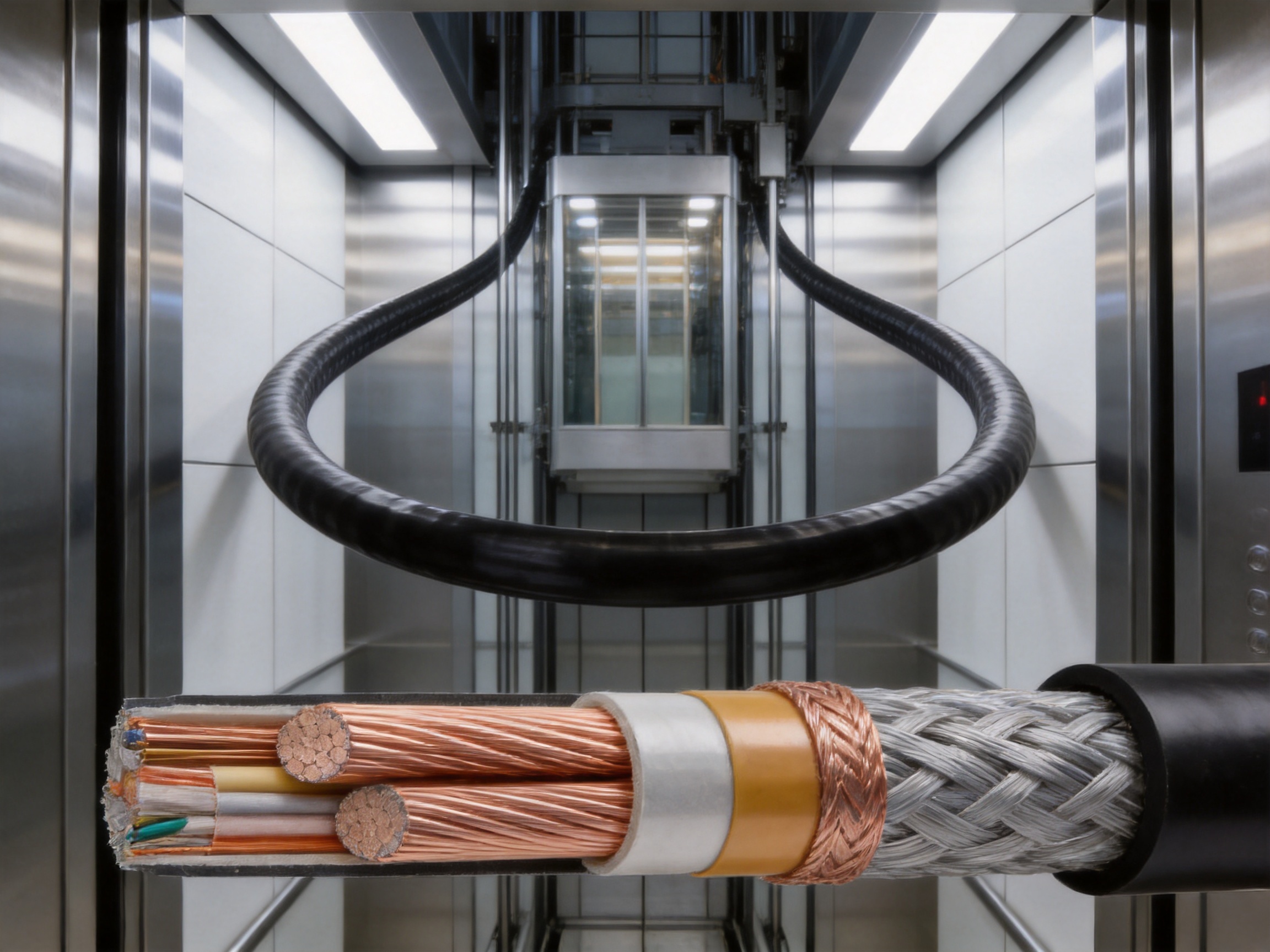
Reliable electrical performance begins with conductor quality. TVVBG uses stranded annealed copper conductors to provide stable conductivity and flexibility. Copper remains one of the most widely used conductor materials because of its excellent electrical performance, mechanical workability, and long-term reliability. Fine stranding supports repeated bending while maintaining conductive path continuity.
The cable’s insulation resistance is at least 20 MΩ·km at 20℃, indicating good insulation performance. The 300/500V rated voltage makes it suitable for many elevator control and auxiliary power circuits. The 2kV AC one-minute test voltage provides a production-level verification of insulation integrity. These parameters matter because elevator systems require dependable electrical separation between circuits, especially when multiple functions are integrated into one cable.
The shielding design further improves signal reliability. In applications involving video, audio, data, monitoring, control, and emergency communication, signal clarity is essential. The copper braid shield helps protect signals from electromagnetic noise and supports more stable transmission in complex environments. When combined with proper grounding and installation practice, the shielded structure can reduce the risk of signal distortion or intermittent communication failures.
For high-definition surveillance, industrial monitoring, elevator intercoms, access control systems, and machine vision-related installations, signal stability can be as important as power continuity. A cable failure in these circuits may not stop the elevator immediately, but it can compromise passenger safety, monitoring, diagnostics, and building management efficiency. TVVBG is designed to reduce such risks.
Elevator shafts and industrial lifting environments expose cables to more than simple bending. The cable may face rubbing, occasional impact, oil mist, dust, moisture, temperature variation, and contact with installation hardware. Over many years, these environmental factors can degrade ordinary cable materials. The TVVBG design addresses these challenges through reinforced construction and durable PVC sheathing.
The sheath passes an 8000-cycle reciprocating abrasion test. Abrasion resistance is important because a traveling cable may contact guide components or move near surfaces inside the shaft. Even small repetitive contact can damage a weak sheath over time. A more abrasion-resistant sheath helps protect internal conductors and insulation from exposure.
Oil resistance is another practical advantage. Elevators and hoisting equipment may use lubricants, hydraulic fluids, or greases in nearby mechanical systems. The cable passes IRM 902 oil immersion testing, demonstrating that the sheath can resist oil exposure under defined test conditions. This makes the cable suitable for applications where occasional oil contact is possible.
The standard operating temperature range of the product is -15℃ to +70℃. This range covers many indoor elevator shafts, commercial buildings, industrial facilities, and standard operating environments. For special environments with unusual temperature extremes, project-specific material selection and customization can be discussed to match practical requirements.
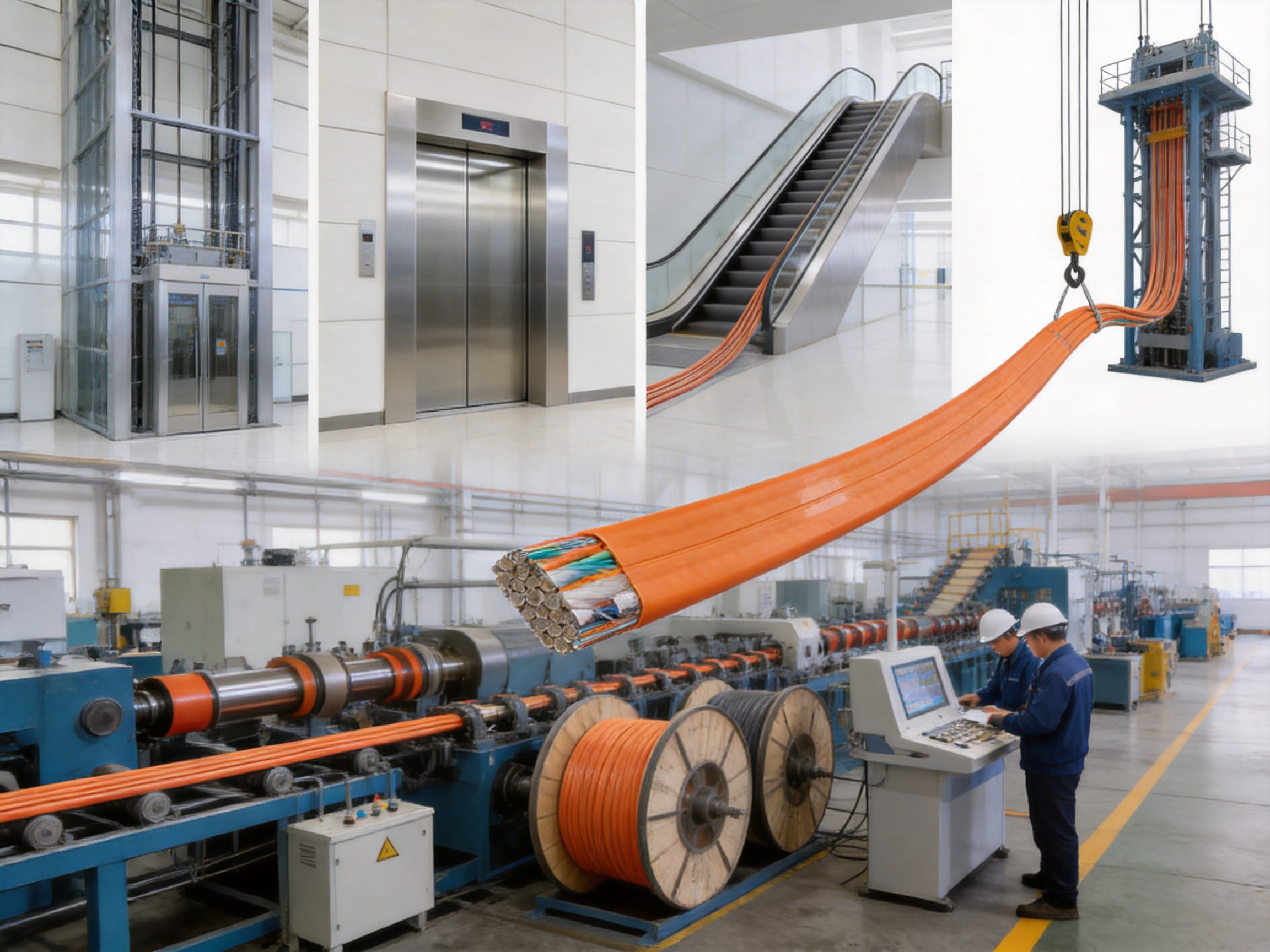
TVVBG is primarily used in elevator traveling cable systems where tensile strength, shielding, flexibility, and long-term durability are required. Its application range includes high-speed elevators, super high-rise building elevators, heavy-load elevators, escalators, mine hoisting equipment, and other installations requiring high tensile capacity.
In high-speed elevators, cable movement is more dynamic. Acceleration, deceleration, vibration, and long travel distances create demanding mechanical conditions. The reinforced structure helps the cable remain stable, while shielding supports control signal reliability in systems that often use advanced drives and intelligent controls.
In super high-rise buildings, the hanging length of the cable can be substantial. A non-reinforced cable may face excessive tensile load. TVVBG’s reinforcement core helps distribute mechanical stress and improves safety margins. This makes it suitable for tall office buildings, hotels, residential towers, and commercial complexes.
In heavy-load elevators and freight elevators, the operating environment may be harsher than standard passenger elevators. Equipment may be exposed to dust, oil, vibration, and frequent loading activity. A cable with abrasion resistance, oil resistance, tensile reinforcement, and flexible conductors offers a more practical long-term solution.
In escalators and moving platforms, cable movement patterns may differ from vertical elevator travel, but flexibility and mechanical resistance remain important. Where a flat reinforced cable is appropriate, TVVBG can provide reliable wiring support.
In mine hoisting equipment and industrial lifting systems, mechanical stress and environmental exposure may be even more severe. Reinforcement, shielding, and durable sheathing help the cable cope with more demanding working conditions. For these specialized applications, technical confirmation and customization are especially important.
Cost-effective cable selection is not simply about choosing the lowest purchase price. In elevator systems, the real cost includes installation labor, downtime, maintenance, troubleshooting, replacement frequency, passenger inconvenience, and safety risk. A cheaper cable that fails early may become far more expensive than a higher-quality reinforced cable.
TVVBG provides value through durability. Its bending life of at least 8 million cycles reduces the likelihood of early fatigue failure. Its reinforcement core improves tensile performance and protects conductors from mechanical overload. Its copper braid shield reduces interference-related issues that can lead to costly troubleshooting. Its abrasion and oil resistance help extend service life in real working conditions.
Compared with ordinary unreinforced or unshielded elevator flat cables, TVVBG is better suited for demanding applications. It is not only a cable for carrying current; it is an engineered moving connection system. By reducing the risks associated with mechanical strain, signal interference, and environmental wear, it can lower long-term maintenance costs and improve system availability.
For contractors, selecting a reliable cable can reduce project callbacks. For elevator manufacturers, it can improve product quality and reputation. For building owners, it can help reduce operational interruptions. For maintenance companies, it can simplify troubleshooting and improve service confidence.
Anhui Zhishang Cable Technology Co., Ltd. is located in Xuanzhou District, Xuancheng City, Anhui Province, China, a key node city in the Yangtze River Delta region. The company integrates research and development, production, and sales of wires and cables. Its modern production base covers approximately 5,000 square meters and is supported by a team of more than 50 employees, including quality engineers and research and development technicians with more than 10 years of industry experience.
The company’s business philosophy is based on quality orientation, integrity foundation, and stability priority. This philosophy is highly relevant to elevator cable manufacturing because an elevator cable is not a disposable component. It must perform consistently under repetitive motion and safety-sensitive operating conditions. Material selection, conductor processing, insulation quality, shielding consistency, reinforcement integration, and final testing all influence cable reliability.
The company operates 10 automated production lines, with monthly output of up to 10 million meters. Automated production improves dimensional consistency, production efficiency, and process repeatability. For cables such as TVVBG, consistency is essential. The spacing of flat conductors, the position of reinforcement cores, the uniformity of insulation, the coverage of copper braid shielding, and the thickness of the sheath must be controlled to achieve stable performance.
Advanced manufacturing does not only mean equipment; it also means process discipline. Cable production requires conductor drawing or preparation, stranding, insulation extrusion, core arrangement, shielding, reinforcement assembly, sheath extrusion, cooling, printing, testing, coiling, packaging, and inspection. At each stage, process control affects the final product. A small defect in conductor stranding can reduce flexibility. Uneven insulation can affect voltage endurance. Poor braid coverage can weaken shielding. Inconsistent sheath thickness can reduce mechanical protection. Zhishang’s manufacturing capability is designed to manage these details.
Quality assurance is especially important for elevator traveling cables because many defects may not appear during short-term inspection. A cable may pass simple continuity testing but fail after months of movement if materials or structure are inadequate. Therefore, reliable production must include both electrical and mechanical considerations.
The company offers quality assurance through full-core, full-length, pure copper specifications, product test reports, and warranty support for standard cable models. Full-core and full-length specifications help ensure that the cable delivered matches the required conductor count and length. Pure copper conductors support stable conductivity and long-term reliability. Product test reports provide documented confirmation of performance parameters, helping customers manage project acceptance and technical files.
For TVVBG, important tests and inspections include conductor resistance, insulation resistance, voltage withstand testing, dimensional measurement, sheath quality inspection, shielding coverage inspection, tensile performance review, bending performance evaluation, abrasion resistance, oil resistance, and appearance inspection. Each of these checks contributes to confidence in the final product.
Quality control also helps ensure batch consistency. In large elevator projects, multiple cable lengths may be required for different shafts or buildings. Consistency across batches reduces installation variation and simplifies maintenance. When replacement cable is needed, stable manufacturing standards help ensure compatibility with existing systems.
Elevator projects often have unique requirements. One project may require many small control cores. Another may require a combination of power conductors and signal conductors. A high-rise elevator may need higher tensile reinforcement. A factory freight elevator may require stronger oil and abrasion resistance. A monitoring system may require improved shielding performance. Because of these differences, cable customization is often necessary.
Anhui Zhishang Cable Technology Co., Ltd. supports OEM and ODM development based on customer drawings or samples. Its technical engineers can provide product selection guidance and tailor-made cable design solutions according to project needs. This capability is a significant advantage for elevator manufacturers, engineering contractors, maintenance companies, and distributors serving specialized markets.
Customization may include conductor cross-section, number of cores, cable width, cable thickness, reinforcement type, shielding configuration, sheath characteristics, printing, packaging, and project documentation. Standard products are stocked for fast shipment, while customized products typically require 7 to 20 days of lead time, depending on complexity and production arrangement.
Engineering support is especially valuable when replacing an existing cable. If an old elevator cable has failed, the replacement must match electrical function, mechanical movement, installation space, and connection requirements. A knowledgeable cable manufacturer can help evaluate cross-section, conductor count, bending radius, tensile requirements, and environmental conditions. This reduces the risk of selecting a cable that is electrically correct but mechanically unsuitable.
In the elevator cable market, buyers may encounter many types of traveling cables. Some are basic flat PVC cables without reinforcement. Some have limited shielding. Some are flexible but lack tensile support. Some are mechanically strong but too stiff for long-term dynamic bending. Some use lower-grade conductors or inconsistent sheath materials to reduce cost. TVVBG stands out by balancing flexibility, tensile strength, shielding, and durability in one structure.
Against ordinary TVVB flat cable, TVVBG has the advantage of a reinforcement core. This makes it more suitable for high-rise, heavy-load, and harsh mechanical environments. Ordinary TVVB may be acceptable for less demanding elevators, but where tensile capacity is critical, TVVBG provides a stronger safety margin.
Against unshielded traveling cable, TVVBG offers copper braid shielding. This is important for elevators with sensitive control circuits, communication lines, monitoring systems, and variable-frequency drive environments. In many modern buildings, signal reliability is no longer optional. Shielded cable can reduce unexplained interference problems and improve system stability.
Against low-cost cables with coarse conductor stranding, TVVBG benefits from fine-stranded annealed copper conductors. Fine stranding improves flexibility and bending life. Coarse stranding may reduce material cost but can increase fatigue risk during repeated movement. For elevator applications, conductor fatigue is a serious concern because the cable bends continuously throughout its service life.
Against cables with weak sheathing, TVVBG provides abrasion resistance and oil resistance verified by relevant testing. A traveling cable sheath must protect the internal structure for years. If the sheath cracks, wears through, or swells under oil exposure, the cable’s electrical and mechanical safety may be compromised.
Against suppliers with limited production capacity, Zhishang offers automated production lines, significant monthly output, experienced technical personnel, and customization capability. Product quality is not only a matter of design but also manufacturing execution. A strong manufacturer can provide stable delivery, batch consistency, technical documentation, and after-sales support.
Even a high-quality elevator traveling cable must be installed correctly. The recommended minimum bending radius for TVVBG is at least 6 times the cable thickness for mobile installation and at least 4 times the cable thickness for fixed installation. Respecting the bending radius helps prevent excessive stress on conductors, insulation, shielding, and reinforcement components.
The cable should be suspended and guided according to elevator system requirements. It should not be twisted during installation. Twisting can create uneven stress during movement and may reduce cable life. The flat surface should be oriented to support smooth bending in the intended direction. Cable clamps and suspension devices should hold the cable securely without crushing it.
Shield grounding should be handled according to the electrical design of the elevator system. Proper grounding is necessary for the copper braid shield to provide effective electromagnetic interference suppression. Incorrect grounding may reduce shielding effectiveness or create unwanted ground loops. Electrical engineers should confirm grounding practice based on the control system and applicable standards.
The cable should be protected from sharp edges, excessive pulling force, chemical exposure beyond its design range, and contact with moving mechanical components. During installation, pulling should be controlled so that the reinforcement structure carries mechanical load appropriately and conductors are not overstressed. After installation, the cable should move smoothly throughout the full travel range of the elevator.
Regular inspection helps maximize cable service life. Maintenance teams should inspect the cable surface for abrasion, cuts, cracks, swelling, discoloration, deformation, or local flattening. The hanging loop should be observed during elevator movement to confirm that bending is smooth and that the cable does not twist, rub, or strike other components.
Electrical symptoms such as intermittent door control faults, communication errors, camera image disturbance, unstable intercom audio, or unexplained controller alarms may indicate cable damage or connection problems. Because TVVBG includes shielding and reinforcement, it is designed to reduce such problems, but any moving cable should still be monitored as part of preventive maintenance.
Connections should be checked for secure termination, proper strain relief, and correct shield grounding. If the cable is installed in an environment with oil exposure, the sheath should be inspected for signs of chemical degradation. If the elevator operates in high-frequency service, inspection intervals may need to be shorter.
When replacement is needed, the new cable should match the original electrical and mechanical requirements. It is not advisable to replace a reinforced shielded traveling cable with a lower-grade unreinforced or unshielded cable simply to reduce purchase cost. Doing so may compromise system reliability and increase long-term maintenance expenses.
Selecting the correct TVVBG configuration begins with the number of cores. Engineers should list all required circuits, including control, power, lighting, communication, monitoring, safety, spare cores, and future expansion. The conductor cross-section should be selected according to current load, voltage drop, circuit function, and applicable standards.
The elevator travel height and cable hanging length should be evaluated to determine reinforcement requirements. For long travel or heavy-duty applications, reinforcement becomes especially important. The available shaft space should be checked to confirm suitable cable width and thickness. The minimum bending radius should be compatible with the installation layout.
Electromagnetic environment should also be considered. If the elevator uses variable-frequency drives or carries sensitive signals, shielded cable is strongly recommended. The copper braid shield of TVVBG supports signal stability, but shielding performance also depends on proper installation and grounding.
Environmental factors should be reviewed, including temperature, oil exposure, moisture, abrasion risk, and mechanical contact. The standard TVVBG PVC configuration is suitable for many elevator applications, but unusual environments may require customized material solutions. Consulting the manufacturer during the design stage can prevent costly changes later.
Responsible cable manufacturing is increasingly important in modern industry. High-quality cables contribute to sustainability by lasting longer, reducing replacement frequency, and minimizing waste. A durable elevator cable that performs reliably for a long service period is more resource-efficient than a low-quality cable that must be replaced prematurely.
Anhui Zhishang Cable Technology Co., Ltd. emphasizes green manufacturing and responsible production practices. Through continuous innovation and technical development, the company has expanded into international markets, with products sold in the United States, Canada, Australia, Japan, and parts of Eurasia. International market participation requires attention to quality consistency, documentation, packaging, communication, and customer-specific requirements.
For customers, responsible manufacturing also means receiving a product that matches declared specifications. Cable quality is difficult to judge by appearance alone. A trustworthy manufacturer provides material consistency, production control, test documentation, and technical support. These strengths help customers build reliable systems and reduce project risk.
Company Name: Anhui Zhishang Cable Technology Co., Ltd.
Company Address: No. 29 Sankeshu Road, Xuanzhou District, Xuancheng City, Anhui Province, China
Email: [email protected]
Phone: +86-18621104555
Phone: +86-563-2622999
WhatsApp: +86 180 4970 5886
TVVBG is a reinforced shielded elevator traveling flat cable. It is based on a flat elevator cable structure and includes an additional reinforcement core for higher tensile capacity. It also uses copper braid shielding to reduce electromagnetic interference, making it suitable for elevators and hoisting systems that require reliable mechanical and electrical performance.
The main difference is reinforcement and shielding performance. TVVBG adds a galvanized steel wire rope or aramid fiber reinforcement core, improving tensile strength and mechanical protection. It also includes copper braid shielding with coverage of at least 70%, which helps protect control and signal circuits from electromagnetic interference.
It can be used in high-speed elevators, super high-rise building elevators, heavy-load elevators, escalators, mine hoisting equipment, and other applications requiring high tensile capacity, flexible movement, stable signal transmission, and reliable long-term operation.
The cable uses stranded annealed copper conductors with fine stranding. This conductor design provides good conductivity and flexibility, helping the cable withstand repeated bending during elevator operation.
The rated voltage is 300/500V. The cable is tested at 2kV AC for one minute to verify insulation integrity during production testing.
Copper braid shielding helps reduce electromagnetic interference from motors, drives, control cabinets, and other electrical equipment. This supports stable transmission of control signals, communication signals, audio, video, and data in modern elevator systems.
The cable is designed for a bending life of at least 8 million cycles under elevator operating conditions. This makes it suitable for frequent movement in passenger elevators, freight elevators, and other vertical transport systems.
For mobile installation, the minimum bending radius should be at least 6 times the cable thickness. For fixed installation, it should be at least 4 times the cable thickness. Correct bending radius helps protect the conductors, insulation, shield, and sheath.
Yes. The cable passes the IRM 902 oil immersion test, indicating that its sheath is suitable for environments where oil exposure may occur, such as elevator shafts and industrial hoisting systems.
Yes. Customization can be provided according to drawings, samples, or project requirements. Options may include conductor size, number of cores, reinforcement structure, shielding configuration, cable dimensions, sheath requirements, marking, packaging, and technical documentation.
Standard products may be available for fast shipment. Customized products typically require 7 to 20 days of lead time, depending on complexity, material requirements, and production scheduling.
A cheaper cable may reduce initial purchase cost but can increase long-term risk. In elevator applications, cable failure may cause downtime, maintenance cost, signal faults, and safety concerns. A reinforced shielded cable provides better tensile capacity, improved interference protection, longer bending life, and stronger mechanical durability, making it more cost-effective over the service life of the elevator system.
TVVBG reinforced shielded elevator traveling flat cable is a practical high-performance solution for demanding elevator and hoisting applications. Its reinforced structure improves tensile capacity, its copper braid shield enhances electromagnetic interference resistance, and its fine-stranded copper conductors support long-term flexibility. The flat design helps optimize shaft space, while the durable PVC sheath provides abrasion and oil resistance for real operating environments.
Compared with ordinary elevator flat cables, TVVBG offers stronger mechanical protection, better signal stability, and longer service potential. These advantages make it suitable for high-speed elevators, super high-rise buildings, heavy-load elevators, escalators, mine hoisting equipment, and other installations where reliability is essential. When supported by advanced manufacturing processes, automated production lines, experienced technical personnel, quality testing, and customization capability, the product becomes more than a cable; it becomes a dependable connection solution for modern vertical mobility systems.
For elevator manufacturers, engineering contractors, maintenance companies, and building owners, selecting the correct traveling cable is a decision that affects safety, uptime, and long-term cost. TVVBG provides a balanced combination of flexibility, tensile strength, shielding, durability, and manufacturing reliability, making it a strong choice for projects that demand stable performance over millions of movement cycles.
1. International Electrotechnical Commission. Electrical Cables: General Requirements for Conductors, Insulation, and Testing Practices.
2. International Organization for Standardization. Elevator and Escalator Safety Engineering Principles and Maintenance Considerations.
3. National Standards for Wire and Cable Products. Requirements for Low-Voltage Flexible Cables and Control Cable Applications.
4. Cable Engineering Handbook. Principles of Conductor Stranding, Shielding, Bending Performance, and Mechanical Reinforcement.
5. Elevator System Design Guide. Traveling Cable Selection, Installation, Inspection, and Service Life Considerations.

We firmly believe that good cables are not only a competition of materials, but also a reflection of craftsmanship, quality, and responsibility.

Links
Product
Send Inquiry
No. 29 Sankeshu Road, Xuanzhou District, Xuancheng City, Anhui Province, China
+86-18621104555/+86-563-2622999
 Electrical Cable Manufacturer
OEM/ODM Wire and Cable Solutions
Electrical Cable Manufacturer
OEM/ODM Wire and Cable Solutions
 English
 Español
 عربى
عربى
 русский