
Get more content that can help you
Content
Modern buildings, industrial facilities, transportation systems, and public infrastructure require wiring that does more than carry electrical current. In many applications, the cable must remain flexible during installation, withstand elevated temperatures, limit the spread of fire, produce minimal smoke, and preserve a safe environment for people who may need to evacuate. These requirements are especially important in hospitals, commercial kitchens, laboratories, rail vehicles, industrial production lines, data-related facilities, and green buildings.
WDZB1-RYJ and WDZB1N-RYJ building wires are designed for these demanding conditions. They combine fine-stranded copper conductors, irradiated cross-linked polyethylene insulation, halogen-free and low-smoke performance, Class B1 flame-retardant characteristics, and flexible handling. The WDZB1N-RYJ fire-resistant version adds circuit-integrity performance for applications in which power must continue operating during a fire.
This product family is manufactured by Anhui Zhishang Cable Technology Co., Ltd., a Chinese cable manufacturer integrating research and development, production, quality control, and technical service. The company supports standard cable supply as well as OEM and ODM development based on customer drawings, samples, performance requirements, and project specifications.
Unlike ordinary building wire, which may focus primarily on voltage rating and conductor size, these cables are developed as part of a broader fire-safety and environmental protection strategy. Their value lies in the combined performance of the conductor, insulation system, flame-retardant formulation, fire-resistant structure, production process, and inspection program.
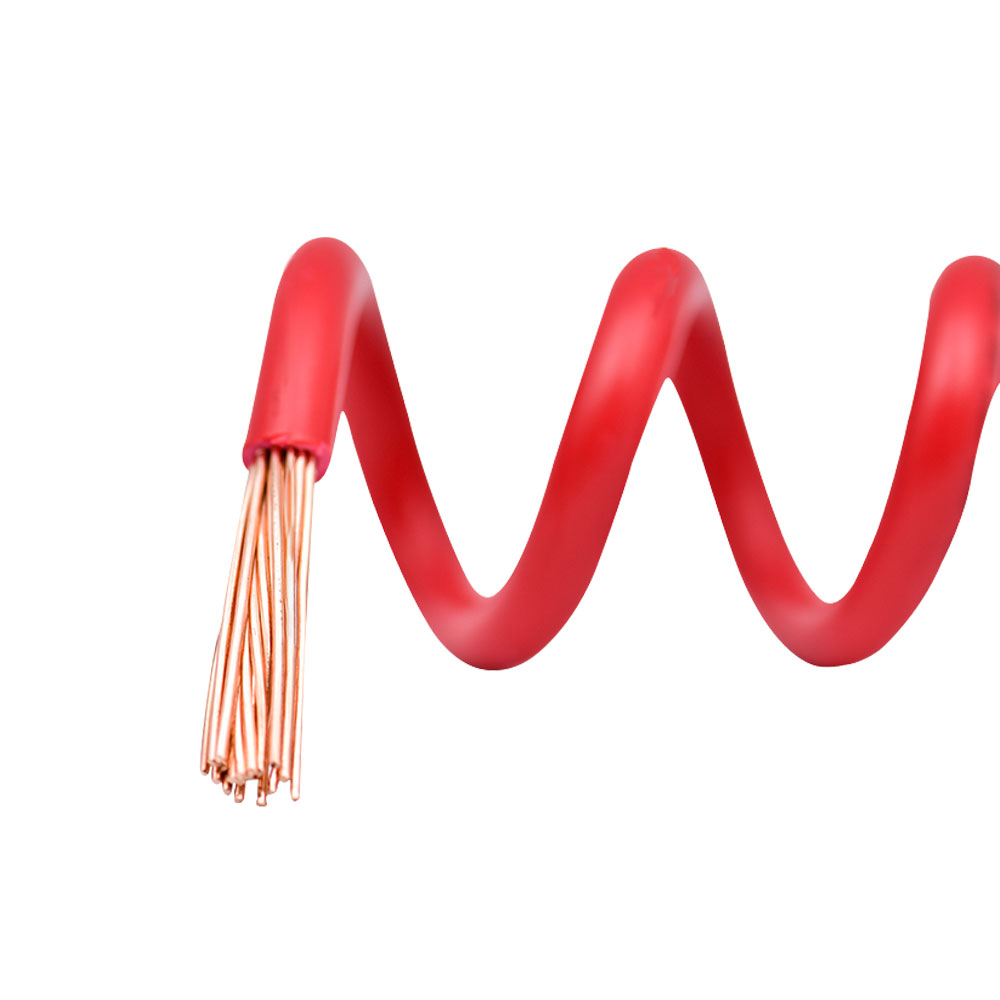
WDZB1-RYJ WDZB1N-RYJ High reliability Building Wire
WDZB1-RYJ and WDZB1N-RYJ are low-voltage flexible building wires with a rated voltage of 300/500V. The product designation identifies a halogen-free, low-smoke, flame-retardant cable with Class B1 performance. The RYJ designation refers to a flexible conductor with irradiated cross-linked polyethylene insulation. The N designation identifies the fire-resistant version.
The standard WDZB1-RYJ model is suitable for flexible power, control, and connection wiring where flame-retardant and low-smoke performance are required. The WDZB1N-RYJ model is intended for situations where the circuit must maintain functional integrity during a defined fire exposure. According to the supplied product information, the N type is tested for 750°C over 90 minutes in accordance with GB/T 19666 requirements.
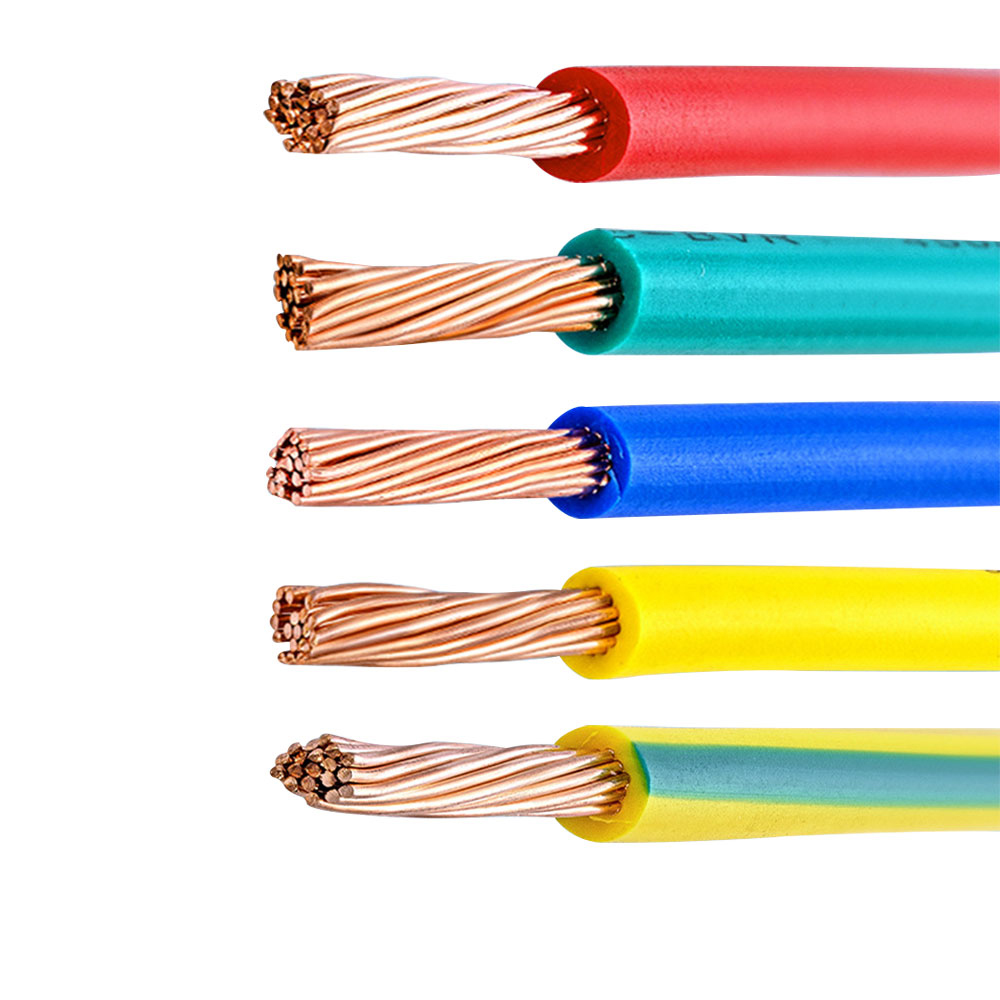
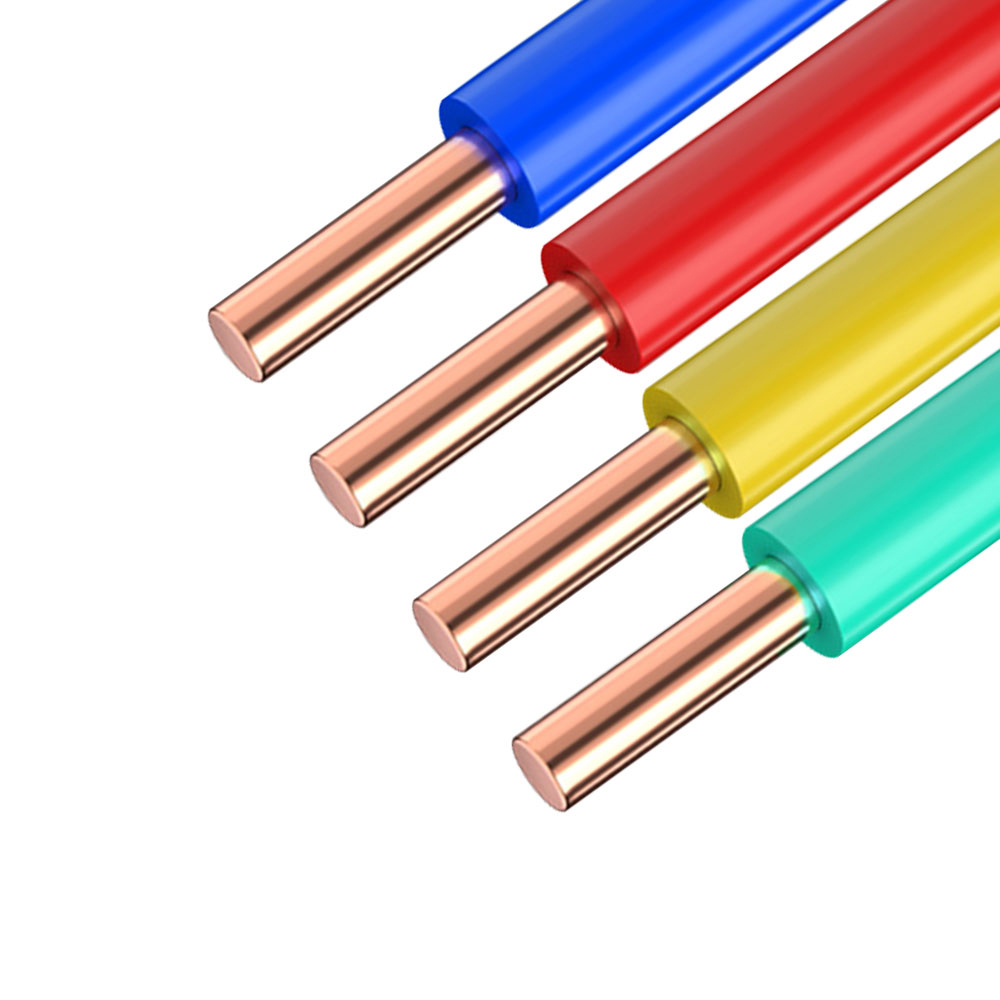
The cable uses a Class 5 annealed copper conductor. The conductor is formed from multiple fine copper wires rather than a single solid wire or a large number of relatively coarse strands. This construction improves flexibility, simplifies routing through narrow spaces, and reduces installation stress at bends and connection points.
The available conductor cross-sectional range is generally 0.5 mm² to 6 mm². This range is practical for low-current control circuits, signal-related connections, equipment wiring, building services, flexible distribution lines, and compact power connections. Larger cross-sections may be available for particular projects, although they are less common because manufacturing complexity, handling requirements, and production cost increase as conductor size grows.
The insulation is based on irradiated cross-linked polyethylene. Cross-linking improves thermal stability, resistance to deformation, aging performance, and resistance to cracking compared with many conventional thermoplastic insulation materials. Irradiation creates a controlled cross-linked molecular structure after extrusion, helping the insulation maintain its mechanical and electrical properties over an extended service life.
The product is intended to offer a long-term operating temperature of up to 125°C according to the principal product description, with short-term operation reaching approximately 150°C. A separate technical note supplied for the product identifies a 90°C long-term allowable operating temperature for a specified construction or application condition. Because allowable temperature can depend on conductor size, installation method, sheath or insulation configuration, and the applicable certification file, the final project specification should confirm the exact temperature rating before ordering.
This clarification does not reduce the value of the product. Instead, it reflects the importance of matching the selected cable construction to the actual installation conditions. A professional cable supplier should provide the applicable technical data sheet, test evidence, conductor size, installation requirements, and temperature rating for the exact model being supplied.
| Item | WDZB1-RYJ | WDZB1N-RYJ |
|---|---|---|
| Product type | Halogen-free, low-smoke, Class B1 flexible building wire | Halogen-free, low-smoke, Class B1 fire-resistant flexible building wire |
| Rated voltage | 300/500V | 300/500V |
| Conductor | Class 5 annealed, fine-stranded soft copper | Class 5 annealed, fine-stranded soft copper |
| Insulation | Irradiated cross-linked polyethylene | Irradiated cross-linked polyethylene with fire-resistant construction |
| Typical cross-sectional range | 0.5 mm² to 6 mm² | 0.5 mm² to 6 mm², subject to project confirmation |
| Flame performance | Class B1 requirements | Class B1 requirements plus fire-resistance performance |
| Halogen performance | Halogen-free, low-smoke, low-toxicity | Halogen-free, low-smoke, low-toxicity |
| Fire-resistance indication | Not the primary function | 750°C for 90 minutes according to the stated test requirement |
| Installation bending radius | At least 6 times the cable diameter | At least 6 times the cable diameter, subject to construction confirmation |
| Certification references | GB/T 19666, GB 31247, CCC, and applicable RoHS requirements | GB/T 19666, GB 31247, CCC, and applicable RoHS requirements |
The most important characteristic of this cable is not one isolated specification. It is the coordinated performance of several features. Fine-stranded copper supports installation flexibility. Cross-linked insulation supports elevated-temperature operation and aging resistance. Halogen-free materials reduce corrosive and toxic combustion products. Class B1 performance limits flame propagation and heat release. The N version extends the product’s use into emergency circuits that require fire resistance.
Flame-retardant cable classifications are increasingly important in modern construction. In a fire, a cable installed in a building can become a pathway for flame spread if its materials ignite easily or continue burning after the initial flame source is removed. A cable that performs well electrically but burns rapidly may increase the fire load and accelerate the movement of flames through cable trays, conduits, shafts, ceilings, and equipment areas.
Class B1 performance is intended for applications requiring a high level of reaction-to-fire performance. The supplied technical information states that the product must meet the stringent tests specified in GB 31247 and that its performance is comparable with the European Class B1ca level in the relevant product positioning. The classification involves more than a simple vertical flame test. It considers several factors, including flame spread, heat release, smoke, burning droplets, and combustion safety.
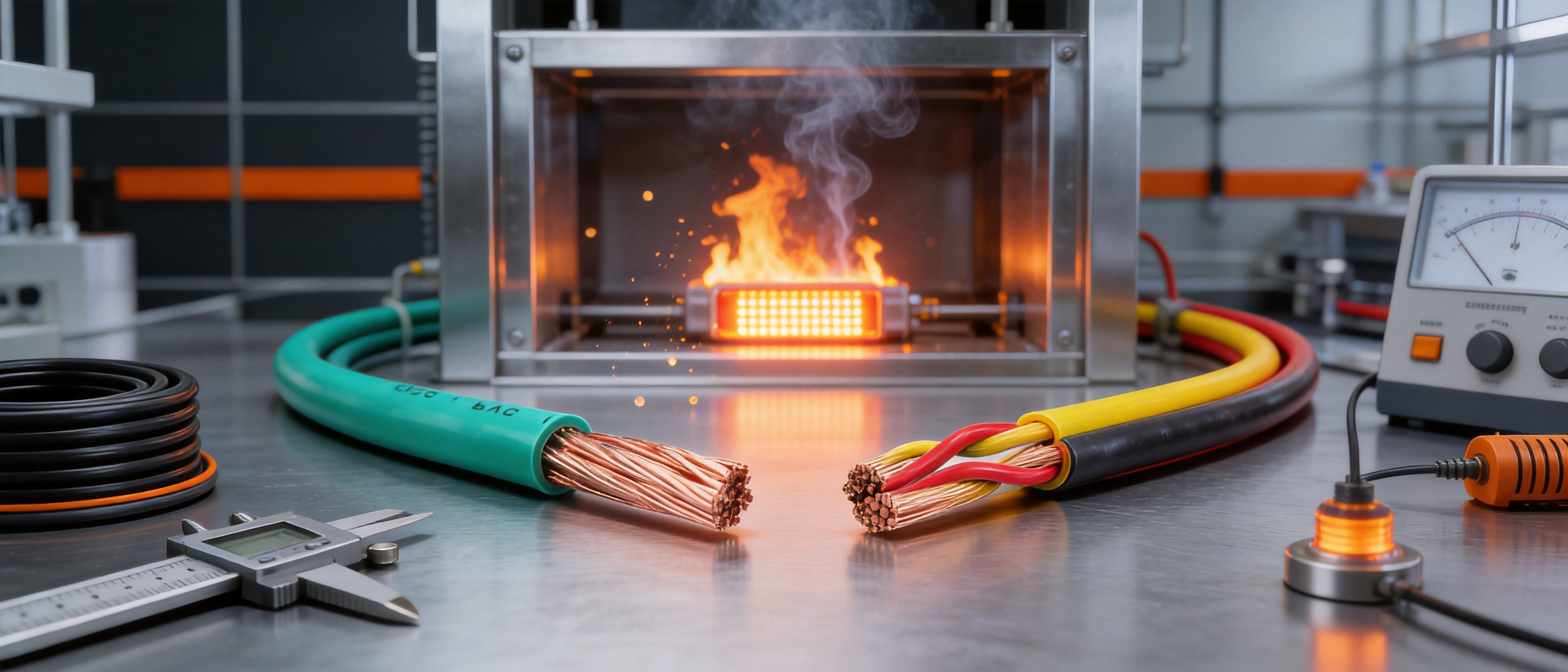
The product is also described as passing severe bundled flame testing associated with IEC 60332-3 requirements. This is important because cables are rarely installed in isolation in commercial or industrial projects. They may be grouped together in trays, shafts, panels, or equipment cabinets. A cable that performs acceptably alone may behave differently when installed in a bundle. Bundled flame testing therefore provides a more demanding indication of how the cable may behave in a realistic installation.
Heat release is another essential consideration. A cable that generates high heat during combustion can contribute to the development of a fire even if its visible flame spread appears limited. Class B1 requirements place strict limits on total heat release and peak heat release rate. This helps reduce the contribution of the cable to overall fire growth.
Burning droplets are also controlled. Ignited droplets can fall onto lower levels, equipment, insulation, or combustible materials and start secondary fires. The supplied product information states that the cable must not produce burning droplets that ignite filter paper during the applicable test. This “no dripping” characteristic is especially valuable in vertical cable runs and multi-level facilities.
For building owners and system designers, Class B1 cable can contribute to a more comprehensive fire-protection design. It does not replace fire detection, suppression, compartmentation, emergency lighting, evacuation planning, or professional installation. Instead, it reduces one potential source of fire propagation within the electrical infrastructure.
Traditional halogen-containing materials may release acidic and corrosive gases when exposed to fire. These gases can damage metal components, electronic equipment, switchgear, control systems, and structural surfaces. They may also create an unsafe atmosphere for people evacuating through corridors, stairwells, and equipment rooms.
WDZB1-RYJ and WDZB1N-RYJ are designed with halogen-free insulation materials. The supplied information identifies compliance with GB/T 17650.2, including combustion gas requirements involving pH and conductivity. A combustion gas pH of at least 4.3 and conductivity of no more than 10 μS/mm indicate controlled acidity and corrosivity under the relevant test conditions.
Low-smoke performance is equally important. Dense smoke can obscure exit signs, reduce visibility, interfere with rescue operations, and increase panic during an emergency. The product information identifies compliance with GB/T 17651.2 and a smoke-density light-transmittance requirement of at least 80%. This type of performance helps preserve visibility compared with conventional materials that generate heavy smoke during combustion.
Low-smoke and halogen-free characteristics are particularly valuable in enclosed or highly occupied buildings. Hospitals, schools, airports, shopping centers, offices, hotels, laboratories, museums, and public transportation facilities may contain large numbers of people unfamiliar with the building layout. Reducing smoke and corrosive gas generation can improve the conditions for evacuation and emergency response.
The low-toxicity design also supports environmental and occupational considerations. It can reduce secondary damage to sensitive equipment and help protect maintenance personnel and emergency responders. For projects pursuing environmental certifications or responsible-material requirements, halogen-free construction can be an important part of the cable selection process.
It is important to understand that “halogen-free” does not mean that a cable cannot produce any smoke under fire conditions. All organic insulation materials can produce combustion products when exposed to sufficient heat. The benefit is that the material system is engineered to reduce halogen gases, smoke density, corrosivity, and toxicity within the applicable test requirements.
Installation efficiency is one of the clearest advantages of this product family. Class 5 fine-stranded copper conductors are easier to bend than solid conductors and many conventional stranded conductors. This makes them suitable for control cabinets, equipment connections, compact distribution boxes, machinery, prefabricated assemblies, and areas where the cable must follow a complicated route.
A flexible cable can reduce the time required to position conductors and complete terminations. Installers can route the wire around corners, through conduits, and into terminal blocks without applying excessive force. Correctly managed flexibility also reduces the possibility of damaging the insulation during installation.
The stated minimum installation bending radius is at least six times the cable’s outer diameter. The bending radius must be respected because excessive bending can stress the conductor strands, deform the insulation, reduce electrical clearance, and create long-term reliability problems. The recommended radius should be treated as a minimum rather than a target wherever space permits.
Fine-stranded conductors are especially useful in applications involving vibration or repeated adjustment. Examples include industrial machinery, production equipment, heating systems, vehicle wiring, and movable assemblies. However, the cable should not be treated as an unlimited continuous-flex cable unless the exact product design has been tested and approved for continuous drag-chain or robotic movement.
Proper termination is also essential. Fine-stranded conductors should be prepared using appropriate ferrules, lugs, terminals, or connection methods suitable for the conductor class. Correct stripping tools, crimping tools, terminal torque, and inspection practices help ensure that the flexibility of the conductor does not create a weak connection.
Compared with rigid building wire, WDZB1-RYJ offers a practical combination of flexibility and elevated-temperature insulation performance. Compared with ordinary flexible PVC wire, it provides a higher level of fire-safety and environmental performance for projects where smoke, halogens, flame spread, and heat exposure are significant concerns.
The insulation system is central to the long-term reliability of the cable. Irradiated cross-linked polyethylene, often abbreviated as XLPE in the industry, is produced through a controlled process that changes the molecular structure of the extruded insulation. The resulting cross-linked network improves resistance to heat, deformation, aging, and mechanical cracking.
In high-temperature environments, ordinary thermoplastic insulation may soften or deform if exposed to sustained heat. Cross-linked insulation retains its shape and dielectric properties more effectively. This is beneficial for cables installed near heat sources, in equipment compartments, inside industrial machines, or alongside heating systems.
The product information states a long-term operating temperature of 125°C and a short-term temperature capability of up to 150°C for the principal product description. As noted earlier, another supplied technical line identifies 90°C as the long-term allowable operating temperature for a specified configuration. The exact rating should therefore be confirmed against the purchase specification and certification documentation.
Cross-linked insulation also supports aging resistance. Repeated heating and cooling cycles can cause some materials to become brittle, shrink, crack, or lose mechanical strength. A well-formulated irradiated XLPE system is designed to resist these effects and maintain stable insulation performance over time.
The insulation formulation must also balance several properties that can sometimes conflict with one another. A material designed for high-temperature performance must still remain flexible. A flame-retardant formulation must maintain processability during extrusion. A low-smoke and halogen-free compound must provide adequate mechanical strength, electrical insulation, and environmental resistance.
Manufacturing consistency is therefore critical. The extrusion temperature, line speed, conductor preheating, cooling conditions, insulation concentricity, irradiation dose, and post-process inspection all influence final cable quality. Advanced production management is necessary to ensure that every production length performs consistently rather than relying only on final visual inspection.
The WDZB1N-RYJ model is intended for applications in which the circuit must continue operating during a fire. A flame-retardant cable helps limit the spread of fire, but a fire-resistant cable has an additional function: it is designed to maintain electrical continuity for a specified duration under fire conditions.
According to the supplied information, the N type meets a 750°C/90-minute fire-resistance test in accordance with GB/T 19666. This performance is relevant to emergency systems, fire pumps, emergency lighting, alarm circuits, smoke-control equipment, evacuation systems, communication systems, and other installations where loss of power could create additional danger.
Fire resistance is not the same as flame retardancy. Flame retardancy focuses on how the cable reacts to fire, including ignition, flame spread, heat release, smoke, and burning droplets. Fire resistance focuses on whether the circuit remains electrically functional under a defined fire exposure. A project may require one feature or both, depending on its risk assessment and applicable regulations.
Selection of the fire-resistant version should consider the complete system. The cable, terminals, glands, junction boxes, supports, trays, conduits, and connection points must all be suitable for the required fire-resistance duration. A fire-resistant cable cannot maintain circuit integrity if it is installed with unsuitable accessories or if supports collapse during the fire.
The N type is therefore particularly appropriate for high-consequence circuits. In a hospital, it may support critical equipment or emergency power distribution. In a transportation system, it may serve emergency communication or control circuits. In a commercial building, it may be used for fire alarms, emergency lighting, smoke extraction, or other life-safety services.
Many projects still use standard PVC-insulated building wire because it is widely available and economical. Conventional PVC products may be suitable for ordinary environments where fire performance, smoke control, and elevated-temperature operation are not demanding. However, they may not provide the same combined performance as a Class B1 halogen-free flexible cable.
| Comparison factor | Conventional rigid building wire | Ordinary flexible PVC wire | WDZB1-RYJ and WDZB1N-RYJ |
|---|---|---|---|
| Flexibility | Limited to moderate | Good | Good to very good due to fine-stranded copper |
| Halogen-free construction | Not always available | Usually not the primary feature | Core product characteristic |
| Smoke reduction | Depends on material | Generally lower than specialized LSZH materials | Designed for low-smoke performance |
| Flame classification | May meet basic flame tests | Varies by formulation | Class B1 performance focus |
| Fire resistance | Usually not included | Usually not included | Available in the WDZB1N-RYJ version |
| Temperature capability | Often lower | Depends on PVC grade | Cross-linked insulation supports elevated-temperature applications |
| Environmental positioning | General-purpose | General-purpose | Suitable for green-building and safety-focused projects |
| Complex installation suitability | Moderate | Good | Good for flexible, compact, and high-risk wiring situations |
The advantage of WDZB1-RYJ is especially clear when a project requires flexibility, low smoke, halogen-free materials, and high flame-retardant performance in the same product. The advantage of WDZB1N-RYJ is greater still when circuit continuity during fire exposure is required.
However, product selection should always be based on the complete technical specification. A specialized fire-performance cable may have a higher purchase price than a basic cable, but the total project value includes installation efficiency, reduced fire risk, equipment protection, regulatory compliance, maintenance, and the consequences of system failure.
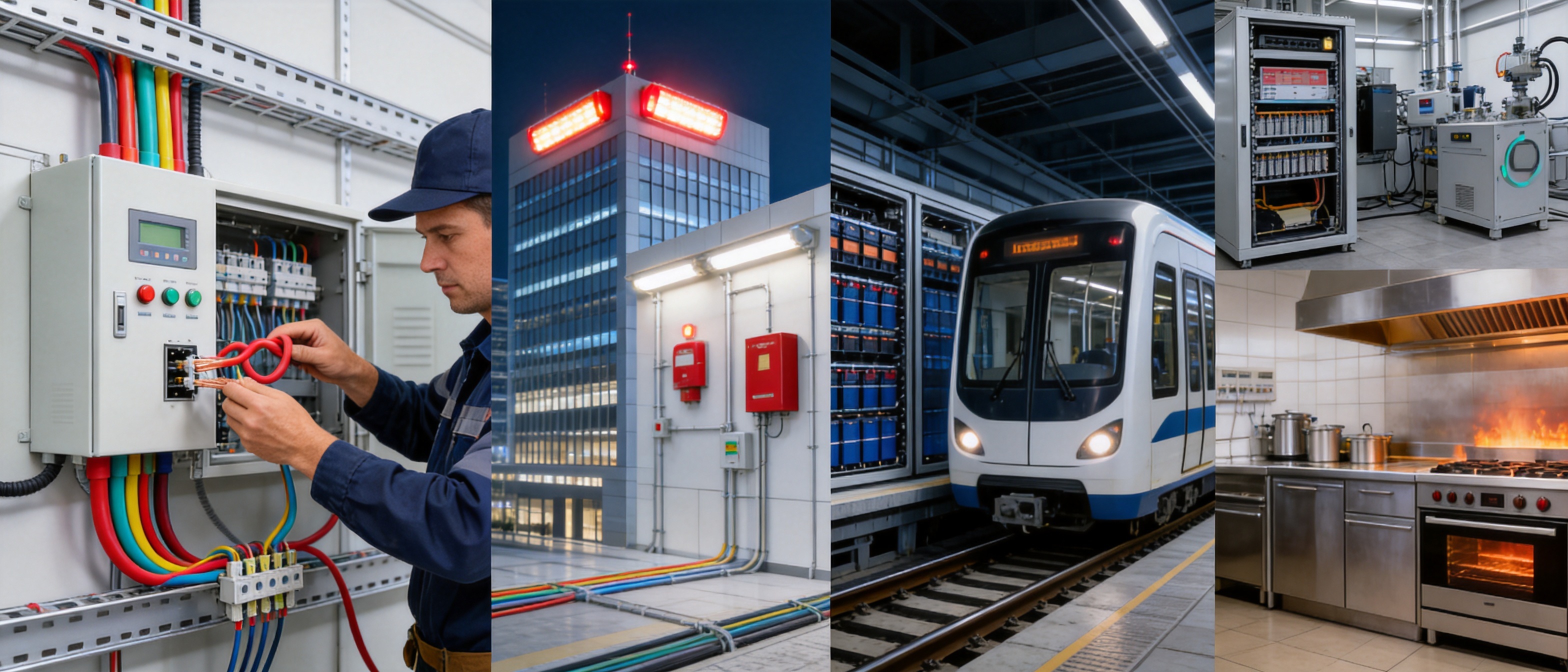
Drying production lines, heat-treatment equipment, industrial ovens, kilns, and thermal processing machinery often expose wiring to elevated temperatures. Flexible conductors simplify equipment assembly and internal routing, while cross-linked insulation helps maintain stability near heat sources.
The cable can be used for internal connections, control wiring, low-voltage power connections, sensor-related circuits, and flexible links between equipment modules. Designers should calculate current capacity according to conductor size, ambient temperature, grouping, installation method, and allowable voltage drop.
Transportation vehicles contain compact spaces, vibration, complex routing, and strict fire-safety requirements. The product information identifies electric vehicle battery pack connections and rail-transit cabin wiring as potential applications. In these areas, fine-stranded copper helps with installation, while halogen-free and low-smoke performance supports passenger and operator safety.
Vehicle applications require careful confirmation of mechanical vibration, abrasion, fluid exposure, electromagnetic compatibility, temperature cycling, and vehicle-specific standards. The cable should be selected only after verifying that its exact construction is approved for the intended vehicle environment.
Commercial kitchens contain ovens, heating equipment, steam, grease, and high ambient temperatures. Hotels and catering facilities may also have dense cable routes and high occupancy. A flexible, low-smoke, halogen-free cable can be used for connections to suitable equipment where its voltage, temperature, current, and environmental ratings are appropriate.
Heating pipeline tracing systems and other heat-related installations may also benefit from elevated-temperature insulation. The cable should be routed away from direct contact with heating elements unless the installation design specifically permits that exposure.
Hospitals and laboratories often contain critical equipment and vulnerable occupants. Fire safety is a central design concern because smoke and corrosive gases can affect both people and sensitive medical or scientific equipment. The cable is suitable for selected connections involving sterilization equipment, laboratory instruments, laundry systems, and other high-temperature devices.
In public buildings, the product can support flexible power and control distribution in areas where low smoke, low toxicity, and flame-retardant performance are required. The fire-resistant N type may be considered for emergency circuits after the project engineer confirms the required fire duration and system design.
Green-building projects may prioritize low-emission materials, responsible manufacturing, energy efficiency, occupant health, and lifecycle performance. Halogen-free, low-smoke cable can support material-selection objectives associated with environmental certification systems such as LEED and BREEAM.
Cable selection alone does not guarantee a green-building certification. Nevertheless, a cable designed to reduce toxic and corrosive combustion products can contribute to a responsible materials strategy, particularly in high-occupancy buildings and projects that document product ingredients and environmental performance.
Industrial automation systems require reliable wiring in control panels, equipment interfaces, sensors, actuators, and distributed low-voltage circuits. The small and medium conductor sizes available for this product family are suitable for many low-current control applications.
The cable’s flexibility makes it practical for dense control cabinets and complex equipment layouts. Its temperature performance can also be useful near power electronics, motors, heating assemblies, and production machinery. Signal integrity depends on the complete circuit design, so shielding, separation, grounding, and electromagnetic compatibility requirements must be assessed separately where necessary.
Anhui Zhishang Cable Technology Co., Ltd. integrates research and development, manufacturing, and sales. Its production base covers approximately 5,000 square meters and includes more than 10 automated production lines. The reported monthly production capacity reaches up to 10 million meters, allowing the company to support both regular orders and larger project requirements.
Production capacity is valuable only when it is supported by process control. For high-reliability building wire, the conductor must meet the required material and stranding specifications, the insulation must be extruded uniformly, the cross-linking process must be controlled, and the finished cable must pass electrical, dimensional, mechanical, and fire-related inspections.
The company employs quality engineers and research and development technicians with more than 10 years of industry experience. Such experience can be important when translating project requirements into a manufacturable cable design. Cable performance depends on many linked variables, including conductor resistance, strand geometry, insulation thickness, material formulation, irradiation conditions, color stability, bending behavior, and packaging.
Automated production lines can improve repeatability and reduce variation in conductor stranding and insulation extrusion. Automated equipment may also support more stable line speeds, tighter dimensional control, and better production records. These benefits are especially important for flexible cables, where inconsistent strand tension or insulation concentricity can affect installation and long-term reliability.
The company describes a quality-assurance approach based on full-core, full-length, pure-copper specifications, product test reports, and warranty support for standard cable models. Full-length inspection is important because a cable drum should not be evaluated solely from a short sample. Resistance, insulation integrity, appearance, and dimensional consistency must be monitored across the production length.
The use of pure copper conductors supports conductivity and stable electrical performance. Copper quality must be controlled from incoming material inspection through stranding and final testing. Conductor resistance, surface condition, strand count, lay length, and flexibility should be managed according to the relevant product specification.
The manufacturer also supports customer-specific development. OEM and ODM services can be based on customer drawings, samples, conductor requirements, insulation materials, color codes, packaging needs, labeling, and certification targets. This is useful for equipment manufacturers and system integrators that need cable dimensions or markings adapted to their own products.
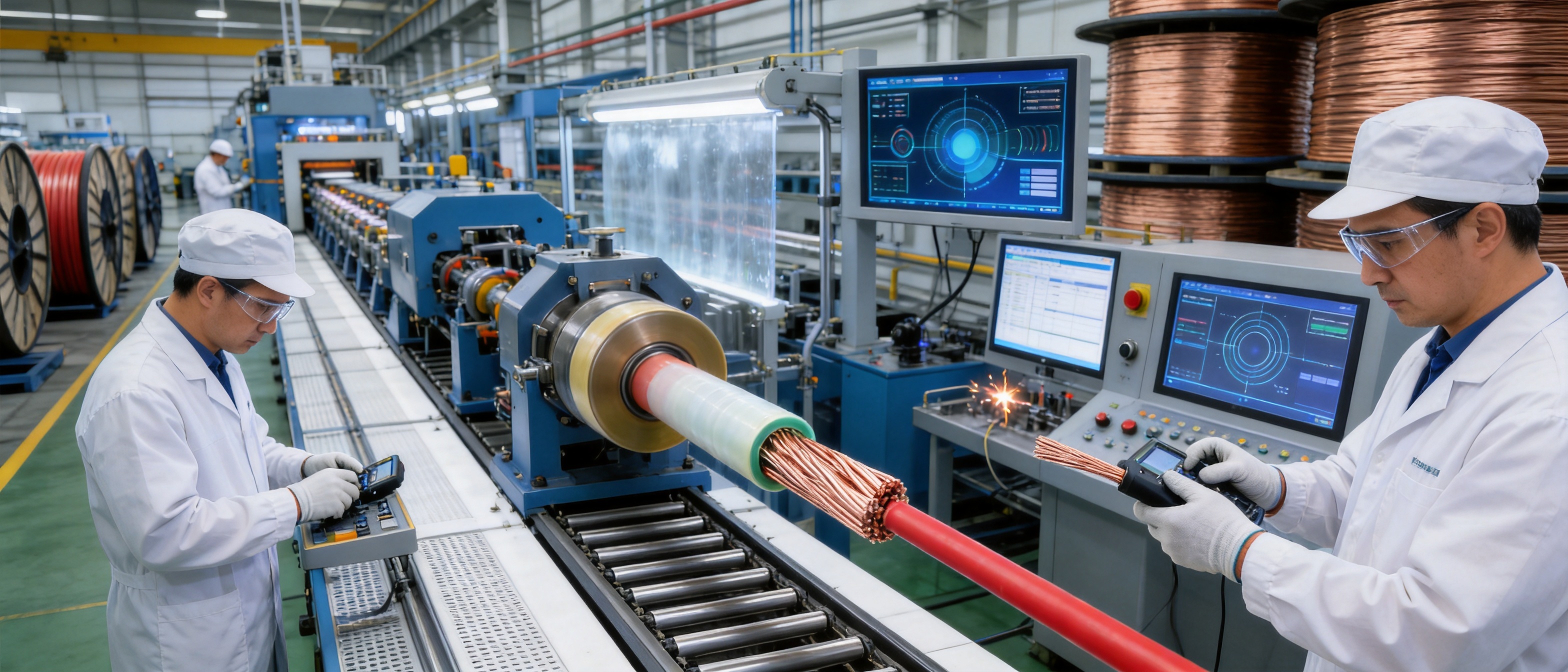
Manufacturing begins with inspection of copper conductors and insulation compounds. Copper should be checked for purity, diameter, surface condition, electrical resistance, and suitability for fine stranding. Insulation materials should be evaluated for formulation, color, moisture, contamination, and batch consistency.
Raw-material traceability helps the manufacturer connect each production batch with its incoming inspection records, process parameters, and final test results. This improves accountability and supports efficient investigation if a technical question arises after delivery.
Individual annealed copper wires are combined into a flexible conductor using controlled stranding equipment. Tension must be managed carefully. Excessive tension can reduce flexibility, while insufficient tension can create irregular construction and unstable dimensions.
The stranding process determines the conductor’s flexibility, compactness, resistance, and handling characteristics. Finished conductors should be checked for diameter, strand arrangement, surface quality, and electrical resistance before insulation extrusion.
The XLPE insulation compound is heated and extruded over the stranded conductor. The extrusion line must control temperature, pressure, speed, and cooling. Insulation thickness and concentricity are monitored to ensure adequate dielectric strength and consistent outer diameter.
Improper extrusion can create voids, thin spots, surface defects, or uneven insulation. These defects may affect electrical performance and bending reliability. Online monitoring and regular sampling help identify deviations before a large production length is completed.
After extrusion, the insulation undergoes controlled irradiation to create the cross-linked structure. The irradiation dose must be appropriate for the selected material and insulation thickness. Under-irradiation may result in insufficient cross-linking, while excessive irradiation may affect flexibility or other properties.
Process records are important because the cross-linking condition directly influences thermal performance, mechanical stability, and aging resistance. Properly controlled irradiation helps the cable maintain its designed performance during service.
The WDZB1N-RYJ version requires additional design and process controls to support circuit integrity during fire exposure. The fire-resistant structure must be compatible with the conductor, insulation, and final dimensions. Material interfaces must remain stable under thermal stress, and the completed cable must be tested using the applicable fire-resistance method.
Fire resistance cannot be judged from appearance alone. It must be supported by documented testing on the relevant construction. If a customer requires a particular fire duration, installation arrangement, or certification format, these requirements should be agreed before production.
Finished cable is checked for conductor resistance, insulation resistance, voltage withstand, dimensions, appearance, marking, flexibility, and other required properties. Fire-performance tests are generally conducted according to the applicable qualification and certification program rather than on every individual meter, while routine production checks confirm that the construction remains consistent.
Cables are then wound onto suitable reels or packed according to customer requirements. Standard products may be stocked for rapid shipment, while customized products generally require approximately 7 to 20 days of lead time, depending on construction, quantity, testing, packaging, and production scheduling.
The supplied product information references GB/T 19666 and GB 31247, as well as CCC certification and applicable RoHS requirements. These standards and certifications should be matched to the exact model, conductor size, insulation construction, and production site. Buyers should request the current certificate and test report rather than relying only on a general product description.
GB 31247 is central to the stated Class B1 flame-retardant positioning. The relevant evaluation includes flame behavior, heat release, smoke, burning droplets, and combustion toxicity. Meeting a high classification requires coordinated material formulation and production consistency.
GB/T 19666 is referenced for fire-resistant performance and other cable combustion-related requirements. The WDZB1N-RYJ version should be evaluated against the exact fire-resistance duration and test conditions required by the project.
CCC certification is significant for applicable products placed on the Chinese market. International projects may also require additional documentation, such as declarations of conformity, factory quality records, material declarations, RoHS evidence, or customer-specific inspection reports.
Purchasers should review the following documents before approving a cable:
1. Product technical data sheet.
2. Conductor material and resistance information.
3. Rated voltage and temperature rating.
4. Applicable flame-retardant and fire-resistance test reports.
5. Halogen-free and low-smoke test results.
6. Certification documents for the exact product family.
7. Dimensional drawings and minimum bending radius.
8. Packaging, marking, and traceability information.
9. Inspection and warranty terms.
10. Confirmation of the cable’s suitability for the intended installation method.
Before installation, inspect the cable drum or package for damage, water exposure, crushed sections, and incorrect labeling. The cable should be stored in a clean, dry location away from direct sunlight, chemicals, sharp objects, and excessive heat.
During unwinding, the reel should rotate in the correct direction and remain supported. Pulling cable from a stationary reel can create twists, loops, and mechanical stress. Fine-stranded flexible conductors benefit from careful handling because kinks may permanently deform the cable.
The installation bending radius should be at least six times the cable diameter, or greater if required by the project specification. Sharp bends, repeated back-and-forth movement, and forced routing around corners should be avoided.
Installers should use terminals and accessories compatible with fine-stranded copper conductors. Where required, use properly sized ferrules or lugs. Connections should be tightened to the manufacturer’s specified torque. Loose connections can create resistance heating, while excessive tightening can damage conductor strands or terminals.
Do not exceed the cable’s current-carrying capacity. Ampacity depends on conductor cross-section, ambient temperature, grouping, enclosure, installation method, and allowable temperature rise. Elevated-temperature operation may require derating or special spacing arrangements.
Where the cable is used near heating equipment, keep it away from direct flame, hot surfaces, and radiant heat unless the system has been designed for those conditions. The cable’s elevated-temperature capability does not mean that it can be installed without thermal assessment.
For the fire-resistant WDZB1N-RYJ model, use compatible fire-resistant supports, terminations, junction boxes, and protective systems. The complete emergency circuit must be designed to remain functional for the required duration.
Project owners benefit from a cable that combines safety, reliability, flexibility, and environmental performance in one product family. Selecting a suitable cable at the design stage can simplify material approval, reduce the number of separate cable types, and support consistent installation practices across different areas of a facility.
System integrators benefit from flexible conductors that are easier to route through control cabinets, equipment assemblies, and compact connection spaces. The ability to order standard products or request customized construction can also simplify integration into equipment packages.
Design consultants benefit from a product that can be specified according to clear performance characteristics. Instead of selecting a cable solely by voltage and cross-section, the project can define flame class, smoke performance, halogen status, fire resistance, temperature rating, bending radius, and certification requirements.
Contractors may benefit from shorter installation times and easier termination. Flexible conductors are especially useful when cable routes change during construction or when equipment must be connected in confined areas. Good handling practices remain essential, but the design reduces unnecessary installation difficulty.
Facility operators benefit from long-term insulation stability, reduced fire-related risk, and suitability for demanding areas. The cable’s performance can support preventive maintenance strategies when combined with proper load management, thermal inspection, and connection testing.
Anhui Zhishang Cable Technology Co., Ltd. serves domestic and international markets, with products supplied to customers in the United States, Canada, Australia, Japan, and parts of Eurasia. International supply requires careful attention to voltage systems, labeling, packaging, customs documentation, local certification expectations, and project-specific standards.
The company’s OEM and ODM capability enables customers to discuss conductor size, insulation type, cable color, printing, packaging, length, testing, and production quantities. Customization can be valuable when a customer needs a cable adapted to a particular machine, control system, building standard, or procurement specification.
Technical communication should take place before production. Customers should provide drawings, samples, environmental conditions, operating temperature, current requirements, bending behavior, fire classification, delivery schedule, and certification targets. These details allow the manufacturer to recommend the appropriate construction rather than treating every application as a standard order.
Standard cable models may be stocked for faster shipment. Customized products typically require 7 to 20 days of lead time, although the final schedule depends on quantity, raw materials, production capacity, testing, and packaging. Early communication is recommended for projects with fixed construction deadlines.
WDZB1-RYJ is generally appropriate when the installation requires Class B1 flame retardancy, halogen-free low-smoke performance, flexibility, and elevated-temperature insulation but does not require the circuit to remain operational during a fire.
WDZB1N-RYJ should be considered when the cable forms part of an emergency or life-safety circuit and the project requires fire-resistance performance. Typical examples include emergency lighting, fire alarm systems, smoke-control equipment, fire pumps, evacuation systems, and critical communication circuits.
The correct choice depends on the consequences of circuit failure. If a loss of power during fire conditions could endanger people, disable emergency response, or interrupt critical operations, the fire-resistant version may be more appropriate.
Selection should also consider conductor size. The available range from 0.5 mm² to 6 mm² covers many control and low-current applications, but current-carrying capacity and voltage drop must be calculated. A cable should never be selected solely because its insulation has a high temperature rating.
Project engineers should also confirm the required bending radius, installation environment, exposure to oils or chemicals, vibration, moisture, ultraviolet radiation, mechanical abrasion, and electromagnetic interference. If the application involves continuous flexing, underwater exposure, direct burial, or severe chemical contact, a different specialized cable construction may be required.
The stated rated voltage is 300/500V. The cable is intended for low-voltage building, control, equipment, and flexible connection applications within the limits of the applicable design and installation standards.
Both models are flexible, halogen-free, low-smoke, Class B1 building wires. WDZB1N-RYJ adds fire-resistant performance and is intended to maintain circuit integrity during a defined fire exposure. The N type is therefore more suitable for emergency and life-safety circuits.
The conductor is a Class 5 annealed copper conductor made from multiple fine strands. This construction provides better flexibility than solid conductor building wire and is convenient for complex routing and equipment connections.
The commonly indicated cross-sectional range is 0.5 mm² to 6 mm². Larger sizes may be discussed for specific projects, but availability depends on the required construction, production process, and order quantity.
The product is designed for elevated-temperature applications. The principal product information states a long-term operating temperature of up to 125°C and short-term operation up to 150°C. A separate technical specification identifies 90°C for a specified condition. Buyers should confirm the exact temperature rating for the selected model, size, and certification construction before installation.
It means that the insulation system is designed to avoid halogen-containing materials that can generate corrosive acidic gases during combustion. The product information references relevant halogen-acid gas and conductivity requirements under GB/T 17650.2.
Low-smoke materials can preserve visibility more effectively during a fire, helping occupants locate exits and assisting emergency responders. The supplied information references GB/T 17651.2 and a light-transmittance requirement of at least 80% under the applicable test.
No. Class B1 primarily describes reaction-to-fire performance, including flame spread, heat release, smoke, and burning droplets. Fire resistance concerns circuit continuity during fire exposure. The WDZB1N-RYJ version is the fire-resistant option in this product family.
It may be used only if the project specification does not require circuit integrity during fire conditions. If emergency lighting must remain powered during a defined fire duration, the WDZB1N-RYJ fire-resistant type should be evaluated instead.
The stated minimum installation bending radius is at least six times the cable outer diameter. A larger radius is preferable where space allows, especially for repeated routing, vibration, or installation in equipment with limited mechanical support.
Not automatically. The cable is flexible, but continuous drag-chain, robotic, or repeated-flexing applications require specific mechanical testing and approval. The customer should discuss movement frequency, travel length, bend radius, speed, acceleration, and service life with the manufacturer.
The supplied information references GB/T 19666, GB 31247, CCC, and applicable RoHS requirements. The exact certification scope should be confirmed using current documents for the specific cable model, conductor size, and construction.
Yes. The company supports OEM and ODM development based on customer drawings, samples, and technical requirements. Customization may involve conductor size, insulation construction, colors, marking, packaging, length, testing, and other agreed specifications.
Standard products may be available from stock for rapid shipment. Customized products generally require approximately 7 to 20 days, subject to quantity, materials, production scheduling, testing, and packaging requirements.
Customers should provide the model, conductor cross-section, quantity, required length, operating temperature, installation environment, flame and fire classifications, packaging requirements, destination, certification expectations, and delivery schedule. Drawings or samples are useful for customized projects.
Pure copper provides stable conductivity and supports predictable resistance and voltage-drop performance. It also works well with fine-stranded construction, provided that the conductor is manufactured and terminated correctly.
Its halogen-free and low-smoke characteristics are suitable for material-selection strategies used in many green-building projects. However, the cable itself does not guarantee certification. The complete project must satisfy the requirements of the selected green-building assessment system.
Check the product model, conductor size, certification documents, drum condition, cable marking, temperature rating, bending radius, current capacity, installation method, accessory compatibility, and project-specific fire requirements.
WDZB1-RYJ and WDZB1N-RYJ provide a specialized alternative to ordinary building wire for projects that demand greater fire safety, environmental protection, flexibility, and temperature performance. Their fine-stranded copper conductors simplify installation, while irradiated cross-linked polyethylene insulation supports long-term stability in demanding environments.
The Class B1 flame-retardant focus addresses flame spread, heat release, smoke, burning droplets, and combustion safety. Halogen-free and low-smoke construction helps reduce corrosive gases and visibility loss during a fire. The WDZB1N-RYJ version extends the range to fire-resistant applications where circuit continuity is essential.
The manufacturing strengths of Anhui Zhishang Cable Technology Co., Ltd. include integrated research and development, automated production capacity, experienced technical personnel, OEM and ODM support, quality-control systems, product testing, and international supply experience. These capabilities allow the company to provide both standard cable products and project-specific wire and cable solutions.
For the best result, cable selection should be based on the complete application rather than a single specification. Engineers and purchasers should confirm the exact temperature rating, conductor size, fire classification, certification, installation method, and accessory requirements. When correctly selected and installed, this high-reliability flexible building wire can contribute to safer, more durable, and more adaptable electrical systems.
GB 31247, Classification and Test Requirements for Burning Behavior of Cables and Optical Cables.
GB/T 19666, General Rules for Flame-Retardant and Fire-Resistant Cable and Optical Cable.
GB/T 17650.2, Test on Gases Evolved During Combustion of Materials from Cables.
GB/T 17651.2, Measurement of Smoke Density of Cables Burning Under Defined Conditions.
IEC 60332-3, Tests on Electric and Optical Fibre Cables Under Fire Conditions.
European Construction Products Regulation and related cable reaction-to-fire classification principles.
RoHS material-restriction principles for electrical and electronic products.
Manufacturer-provided technical information for WDZB1-RYJ and WDZB1N-RYJ flexible building wire.
Manufacturer-provided information concerning production capacity, quality assurance, OEM and ODM services, and international supply.

We firmly believe that good cables are not only a competition of materials, but also a reflection of craftsmanship, quality, and responsibility.

Links
Product
Send Inquiry
No. 29 Sankeshu Road, Xuanzhou District, Xuancheng City, Anhui Province, China
+86-18621104555/+86-563-2622999
 Electrical Cable Manufacturer
OEM/ODM Wire and Cable Solutions
Electrical Cable Manufacturer
OEM/ODM Wire and Cable Solutions
 English
 Español
 عربى
عربى
 русский