Get more content that can help you
Content
Modern elevators depend on flexible traveling cables to transfer electrical power, control signals, communication data, safety circuits, and monitoring information between the moving car and the stationary control system. These cables operate under conditions that are considerably more demanding than ordinary fixed wiring. They must repeatedly bend and straighten, tolerate vibration, resist abrasion and oil, maintain electrical continuity, occupy limited shaft space, and continue transmitting stable signals in an environment where motors, drives, lighting systems, and control equipment may generate electromagnetic interference.
The TVVB mechanical protection reinforced elevator traveling flat cable is designed for these requirements. Its flat parallel-core structure, flexible stranded copper conductors, PVC insulation and sheath, and copper braid shielding provide a practical combination of flexibility, mechanical durability, signal stability, and installation efficiency. The cable is suitable for elevator shafts, escalators, lifting platforms, medical elevators, high-speed elevators, and other moving equipment that requires reliable power or signal transmission.
Unlike ordinary round control cables or unshielded elevator cables, a reinforced TVVB design is developed around the specific movement pattern of elevator equipment. The flat configuration helps manage the cable inside a shaft, while the flexible conductor construction supports repeated movement. The shielding layer helps reduce the effects of electromagnetic interference, especially in installations containing variable-frequency drives, switching equipment, motors, and high-density control systems.
An elevator traveling cable forms the flexible electrical connection between the elevator car and the control cabinet or fixed wiring point. During operation, the cable moves continuously as the car travels through the shaft. Depending on the building height, operating speed, and daily traffic, the cable may experience millions of bending cycles during its service life.
The cable may carry several different categories of circuits within one assembly. These can include motor-related auxiliary circuits, door control signals, emergency communication lines, lighting circuits, intercom wiring, alarm circuits, inspection controls, video surveillance signals, and data links for intelligent building systems. A failure in any of these circuits can cause downtime, maintenance work, passenger inconvenience, or a safety-related service interruption.
For this reason, an elevator cable cannot be selected only by its nominal voltage or conductor size. The installation engineer must also evaluate bending performance, tensile strength, resistance to abrasion, shielding effectiveness, temperature range, cable dimensions, core identification, and compatibility with the elevator suspension and support arrangement.
The TVVB cable addresses these considerations through a flat structure containing multiple parallel conductors. The flat profile can improve cable organization in a limited shaft area and may help control how the cable moves relative to the elevator car. Its flexible conductor construction and reinforced external design are intended to reduce the effects of mechanical stress during repeated travel.
The conductors are made from stranded annealed copper. Annealing improves the flexibility of copper by reducing hardness and internal stress developed during drawing. Fine stranding further improves the conductor’s ability to tolerate repeated flexing compared with a single solid conductor or a coarse-stranded construction.
High-purity copper also supports low electrical resistance and stable current transmission. In control and communication applications, conductor quality affects voltage drop, signal integrity, heating, and long-term connection reliability. Properly stranded copper conductors are easier to terminate and can maintain a more consistent electrical path when the cable is repeatedly moved.
The specified cross-section range is 0.5 mm² to 2.5 mm². This range allows the cable to be configured for different combinations of current-carrying circuits, control circuits, and signal circuits. The final conductor size should be selected according to load current, voltage drop, installation length, ambient conditions, duty cycle, and applicable electrical standards.
The conductors are arranged in parallel to form a flat cable profile. This structure differs from a conventional round cable in which conductors are twisted or gathered around a central axis. A flat structure can make the cable easier to position in an elevator shaft, particularly where the available clearance is narrow or where the cable must follow a controlled travel path.
A flat cable can also simplify identification and arrangement during termination. Depending on the selected specification, the cable may contain between 4 and 60 cores. The broad range supports relatively simple control systems as well as complex elevator installations requiring many separate circuits.
Flat construction is especially valuable when space utilization is important. A properly selected width and thickness can help engineers coordinate the cable with guide brackets, traveling cable supports, car-top equipment, shaft walls, and counterweight clearances. The cable dimensions vary according to the number of cores and conductor cross-section. The stated thickness range is approximately 2.8 mm to 12 mm, while the width range is approximately 12 mm to 85 mm.
Each conductor is insulated with polyvinyl chloride. PVC is widely used in industrial cables because it provides a balanced combination of electrical insulation, mechanical strength, processing efficiency, and cost control. The insulation thickness is specified from 0.4 mm to 0.8 mm, depending on the cable construction and conductor size.
Proper insulation extrusion is essential. The insulation must be continuous, concentric, and free from pinholes, cracks, excessive eccentricity, and surface defects. In a moving cable, inconsistent insulation can contribute to uneven flexibility or localized mechanical stress. Production control therefore has a direct effect on both electrical safety and bending performance.
The TVVB design includes a copper braid shield with a stated coverage of at least 70 percent. The braid is formed from copper strands interwoven around the insulated core assembly. Its primary function is to reduce the influence of external electromagnetic fields and help control electrical noise generated by nearby motors, drives, relays, switching power supplies, and other equipment.
Shielding is particularly important when the cable carries low-level communication signals, audio circuits, video signals, encoder feedback, or sensitive control information alongside power-related wiring. The copper braid can also provide a practical grounding path when correctly terminated at the installation ends according to the system design.
Shield performance depends on more than nominal coverage. Braid consistency, contact resistance, termination quality, grounding method, cable routing, and the frequency characteristics of the interference source all influence final results. For demanding applications, the installer should follow the equipment manufacturer’s grounding and shield-termination recommendations.
The external sheath is made from PVC and is designed to protect the internal conductors and shielding structure from mechanical contact, moisture, dust, oil, and general installation stress. The stated sheath thickness range is 0.8 mm to 1.5 mm.
For a traveling cable, the sheath must maintain flexibility while resisting abrasion. An excessively hard sheath can increase bending stress, while an excessively soft sheath may be more vulnerable to wear or deformation. The TVVB construction is intended to balance these requirements through controlled material selection and extrusion processing.
The product information identifies oil resistance, abrasion resistance, tensile strength, and a bending life of at least five million cycles under elevator operating conditions. Actual service life will depend on installation geometry, travel speed, cable weight, suspension method, temperature, bending radius, and maintenance conditions.
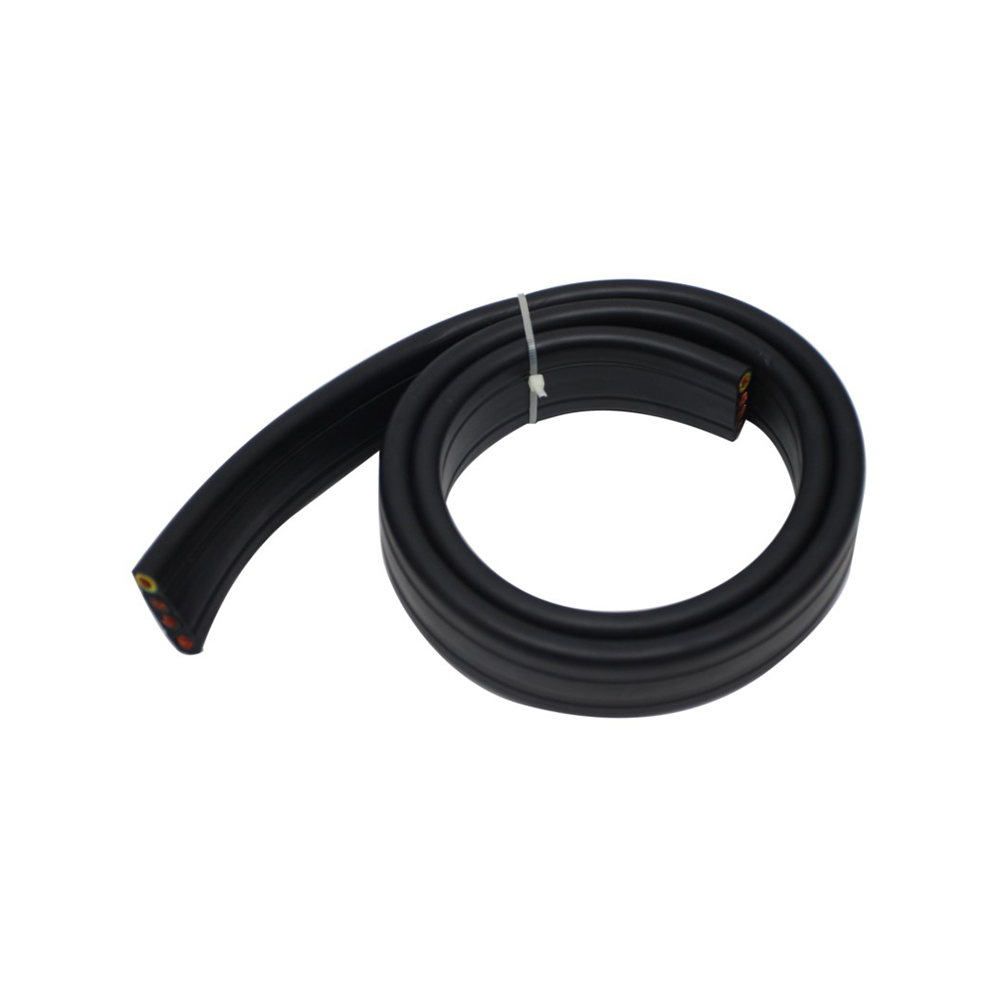
TVVB Mechanical protection reinforcement Elevator Traveling Flat Cable
The following table summarizes the principal specifications supplied for the TVVB mechanical protection reinforced elevator traveling flat cable.
| Item | Specification |
|---|---|
| Conductor | Stranded annealed copper conductor with fine stranding |
| Cross-section range | 0.5 mm² to 2.5 mm² |
| Number of cores | 4 cores to 60 cores |
| Rated voltage | 300/500 V |
| Test voltage | 2 kV AC for 1 minute |
| Insulation material | Polyvinyl chloride |
| Insulation thickness | 0.4 mm to 0.8 mm |
| Sheath material | Polyvinyl chloride |
| Sheath thickness | 0.8 mm to 1.5 mm |
| Shielding structure | Copper braid shield with coverage of at least 70 percent |
| Structure | Flat structure with conductors arranged in parallel |
| Operating temperature | -10°C to +70°C as specified for the standard product |
| Minimum bending radius | Mobile installation: at least 6 times cable thickness; fixed installation: at least 4 times cable thickness |
| Insulation resistance | At least 20 MΩ·km at 20°C |
| Shielding effectiveness | Shielding attenuation factor not greater than 0.9 at 1 MHz |
| Flame performance | Complies with the stated GB/T 19666 non-flame-retardant requirements |
| Tensile strength | At least 15 N/mm² |
| Bending life | At least 5 million cycles under elevator operating conditions |
| Oil resistance | Passes the stated IRM 902 oil immersion test |
| Abrasion resistance | Passes the stated 5,000-cycle reciprocating abrasion test |
| Cable thickness | Approximately 2.8 mm to 12 mm, depending on construction |
| Cable width | Approximately 12 mm to 85 mm, depending on construction |
Technical values should be confirmed against the final product specification, approved drawing, test report, and project requirements before ordering. The exact dimensions and performance characteristics vary according to conductor cross-section, core count, shielding arrangement, sheath formulation, and customized construction.
The most important difference between a standard fixed cable and an elevator traveling cable is the mechanical duty. Fixed cables are generally installed once and remain stationary. Elevator cables move repeatedly, often along a defined vertical or curved path. This movement exposes the cable to bending, tension, vibration, compression, rubbing, and torsion.
The TVVB cable is reinforced through a combination of design features rather than through one single material. Fine-stranded conductors support flexibility. The parallel layout creates a controlled flat profile. The shielding layer contributes to structural cohesion while providing electromagnetic protection. The outer sheath resists contact with surrounding components and helps protect the internal assembly.
The stated mobile-installation bending radius is at least six times the cable thickness. A fixed-installation bending radius of at least four times the cable thickness is specified. Observing the mobile bending radius is critical because forcing a traveling cable into a tighter curve can increase conductor fatigue, sheath stress, shield deformation, and localized pressure.
Installation should also prevent sharp edges, uncontrolled loops, excessive twisting, and contact with moving metal parts. The cable should be supported in a manner that distributes its weight and prevents one section from carrying disproportionate tension. Correct routing is as important as cable construction in achieving the expected bending life.
The stated bending life is at least five million cycles under elevator operating conditions. This value indicates the product’s intended suitability for repeated movement, but it should not be interpreted as an unconditional service-life guarantee for every elevator design. Cycle performance depends on the complete mechanical system, including car travel distance, speed, acceleration, cable support, bending radius, temperature, and installation alignment.
Elevator maintenance teams can extend service life by inspecting the cable regularly. Warning signs include flattening beyond the original profile, sheath cracking, exposed braid, unusual stiffness, permanent twisting, discoloration, excessive noise during movement, and intermittent electrical faults. Early inspection can prevent minor mechanical damage from developing into a major shutdown.
The cable is specified with a tensile strength of at least 15 N/mm². Tensile strength helps the sheath and cable assembly resist pulling forces during installation and operation. However, the cable should not be used as an unintended structural support unless the complete elevator design specifically allows it.
The stated abrasion performance includes passing a 5,000-cycle reciprocating abrasion test. This is relevant to elevator shafts where the cable may experience repeated contact or near-contact with support components. The cable should nevertheless be routed with adequate clearance. Abrasion resistance reduces risk; it does not eliminate the need for proper mechanical installation.
Elevator systems commonly include variable-frequency drives, traction motors, regenerative braking equipment, contactors, relays, switching power supplies, LED lighting, and communication devices. These components can generate conducted and radiated electromagnetic noise. If sensitive circuits share the same cable or run close to a noisy power path, interference may appear as communication errors, unstable monitoring images, audio noise, false signals, or intermittent control faults.
The copper braid shield in the TVVB cable helps isolate the internal circuits from external electromagnetic fields. A coverage level of at least 70 percent provides a broad conductive barrier while retaining flexibility. Compared with an unshielded flat cable, the shielded structure offers better protection for signal-carrying circuits in electrically complex elevator shafts.
The shield may be especially valuable in applications involving high-definition surveillance cameras, emergency intercoms, access-control systems, floor indicators, diagnostic links, and intelligent building networks. Stable transmission is important because elevator communication and monitoring functions must remain dependable even when the drive system is operating at variable speed.
An ordinary unshielded cable can be acceptable for simple power or low-sensitivity control circuits when electromagnetic interference is limited. However, it may provide insufficient protection in a high-rise building with powerful motors, long shaft runs, and dense control equipment. Adding a copper braid shield improves the cable’s ability to reject interference without requiring a separate external shield for every circuit.
The shielded construction can also simplify system design by combining mechanical protection and electromagnetic protection in one cable assembly. This may reduce the need for additional protective conduits or separate signal-routing measures, depending on the project layout.
Shield performance depends on proper termination. The installer must determine whether the shield should be grounded at one end, both ends, or through a designated grounding arrangement based on the elevator controller, signal type, and electromagnetic compatibility strategy. Poor termination can reduce the benefit of the braid and may create unwanted circulating currents or grounding problems.
Shielded cable should also be separated from high-energy conductors where practical. Avoiding unnecessary parallel runs with motor output cables, maintaining reasonable spacing, and using appropriate cable glands or connectors can further improve electromagnetic compatibility.
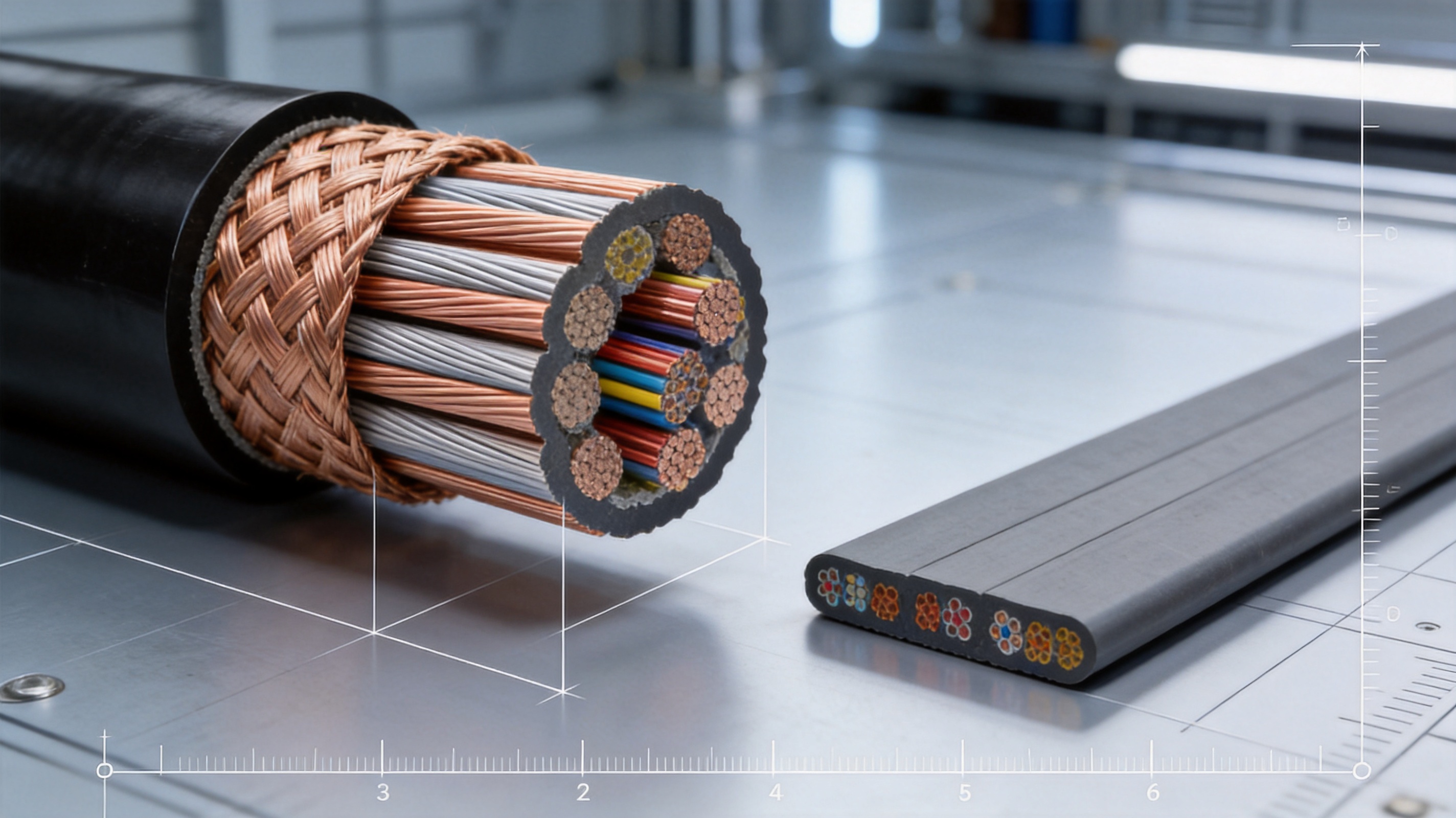
Many conventional cables use a round profile. Round cables are useful for a wide range of industrial applications, but they may require more lateral clearance when installed in a narrow elevator shaft. The flat TVVB arrangement can make better use of available space and support more predictable positioning.
The flat profile can also help prevent uncontrolled rolling or rotation. When the cable is installed according to the elevator manufacturer’s routing requirements, its parallel arrangement may contribute to a more orderly movement pattern. This is particularly useful in high-speed elevators and installations with limited shaft clearance.
Some low-cost cables provide flexibility but omit shielding. Others provide shielding but are designed primarily for fixed installation and may not tolerate continuous movement. The TVVB design combines a flexible traveling-cable structure with copper braid shielding and a protective outer sheath.
This integrated construction can be more practical than assembling multiple separate cable types. It supports the transmission of power, control, and signal circuits while reducing the need for additional external protection in suitable installations. The result can be a cleaner cable layout and a more manageable maintenance process.
The available range from 4 to 60 cores allows the cable to serve different elevator configurations. A small passenger elevator may require only a limited number of circuits, while a high-speed commercial elevator may require connections for surveillance, emergency communication, door controls, lighting, inspection devices, sensors, and data systems.
A broad core-count range also supports project standardization. Elevator contractors can select related cable constructions for multiple equipment models rather than sourcing completely different products for each installation.
Fine-stranded annealed copper conductors provide a mechanical advantage over solid conductors and coarse-stranded conductors in dynamic applications. They distribute bending stress across many small wires and allow the conductor to flex without concentrating strain in one rigid element.
This advantage becomes more important as the elevator travel distance, operating frequency, or movement speed increases. Although conductor flexibility alone cannot guarantee long life, it is a fundamental requirement for any cable intended for repeated bending.
High-performance specialty cables may use advanced elastomer compounds, complex hybrid structures, or highly specialized shielding systems. These designs can be appropriate for extreme environments, but they may also increase procurement costs. The PVC-based TVVB cable offers a practical balance of electrical insulation, mechanical protection, shielding, flexibility, and manufacturing efficiency.
For many indoor and industrial elevator environments, this balance provides a more economical solution than an unnecessarily complex cable. The cable can deliver the essential performance required for repeated elevator movement while maintaining a competitive cost structure for standard and customized orders.
Passenger elevators require reliable connections for door systems, car lighting, emergency controls, alarm circuits, intercoms, inspection switches, and monitoring systems. The TVVB cable can be configured to support these circuits within one flexible flat assembly.
Commercial buildings often have high passenger traffic and demanding operating schedules. In such environments, cable reliability contributes to equipment availability and predictable maintenance. Shielding is useful where the elevator includes video surveillance, communication equipment, or digital monitoring networks.
High-rise elevators generally involve longer cable travel distances and more frequent movement. High-speed operation can increase vibration and dynamic stress, making cable routing, suspension, and bending control especially important.
The flat structure and stated bending performance make the cable suitable for projects requiring organized movement and long-term flexing. The final selection should consider the elevator speed, travel height, cable weight, installation method, and manufacturer’s mechanical requirements.
Medical elevators may include emergency communication, camera monitoring, access management, equipment interfaces, and specialized control signals. Stable signal transmission is important in hospitals because elevator availability affects patient movement, emergency response, and logistical operations.
The shielded structure can help reduce interference in buildings where elevators operate alongside medical devices, communication systems, and complex electrical infrastructure. The cable should be selected with consideration for the building’s fire-safety requirements and the specific standards applicable to medical facilities.
Escalators, lifting platforms, warehouse lifts, and other vertical handling systems also use cables that may experience repeated movement. The TVVB structure can be adapted to control circuits, safety switches, sensors, lighting, and communication links in such equipment.
Before use in a non-elevator application, the project engineer should verify whether the movement pattern, load, bending radius, temperature, and environmental exposure fall within the cable’s design limits.
Automated lifting machinery and precision positioning equipment often require compact, flexible, shielded connections. The cable can support control and feedback circuits where electromagnetic interference must be managed and where space is limited.
For industrial applications involving aggressive chemicals, extreme temperatures, continuous drag-chain movement, or severe mechanical loads, a different jacket material or a specialized industrial motion cable may be more appropriate. TVVB is best applied where its PVC construction and specified environmental range meet the project requirements.
Anhui Zhishang Cable Technology Co., Ltd. integrates research and development, manufacturing, and sales. Its production base covers approximately 5,000 square meters and includes more than 50 employees, including quality engineers and research and development technicians with more than ten years of industry experience.
The company operates ten automated production lines and reports monthly output of up to ten million meters. This production scale can support both standard cable supply and customized cable development. Capacity is important for elevator contractors because project schedules may require consistent deliveries across multiple sites.
Manufacturing begins with conductor preparation. Copper is drawn to the required diameter, annealed to improve flexibility, and stranded according to the target cross-section. Fine stranding must be controlled carefully to achieve consistent pitch, compactness, and flexibility.
Production control at this stage affects resistance, elongation, flexibility, and dimensional stability. Inconsistent strand tension can create irregularities that later influence insulation extrusion and cable bending behavior. A disciplined conductor process is therefore the foundation of a reliable traveling cable.
PVC insulation is applied through an extrusion process. The conductor passes through a heated extrusion head where the compound is formed around the copper. Key process controls include temperature, line speed, pressure, concentricity, surface condition, and insulation diameter.
Online spark testing can help identify insulation defects during production. Dimensional checks verify that insulation thickness remains within the required range. These controls are essential because even a small insulation defect can affect dielectric strength, insulation resistance, and long-term operational safety.
After insulation, the cores are identified through color coding, numbering, or other agreed methods. Clear identification reduces installation time and lowers the risk of wiring errors. The insulated cores are then arranged in the specified flat parallel configuration.
Maintaining consistent core spacing and alignment is important for finished cable dimensions and bending behavior. The arrangement process must avoid excessive compression, twisting, or displacement of individual cores. For higher core counts, careful control is particularly important because the cable becomes wider and may require additional structural support.
The copper braid shield is applied around the core assembly using controlled braiding equipment. Braid angle, strand tension, coverage, overlap, and surface continuity influence shielding performance and flexibility.
A braid that is too tight may reduce flexibility, while a braid that is too loose may provide insufficient coverage or become unstable during sheath extrusion. Automated or carefully monitored braiding equipment helps maintain repeatability between production batches.
The outer PVC sheath is extruded over the shielded assembly. The sheath must provide sufficient thickness and adhesion without creating excessive stiffness. Process parameters are selected according to the cable’s width, thickness, core count, and material formulation.
Surface inspection can identify scratches, bubbles, pits, uneven thickness, or other defects. Dimensional inspection verifies the finished width and thickness. A well-controlled sheath protects the cable during installation and repeated movement while preserving the flexibility required for elevator service.
Quality assurance should cover raw materials, in-process construction, finished cable performance, and traceability. A cable can meet its nominal electrical specifications yet perform poorly in a moving installation if mechanical properties are not controlled. For this reason, a comprehensive test program is important.
The stated test voltage is 2 kV AC for one minute. This dielectric test checks whether the insulation system can withstand a specified electrical stress without breakdown. Insulation resistance is specified at not less than 20 MΩ·km at 20°C.
Conductor resistance testing helps verify conductor size and material consistency. Continuity testing confirms that each core remains electrically continuous throughout the cable length. These tests are commonly performed before shipment and may be supported by test records or inspection reports.
Finished cable width, thickness, sheath thickness, insulation thickness, and core arrangement should be inspected. Dimensional stability is important because the cable must fit within the intended elevator routing space. Excessive width or thickness can interfere with brackets, moving parts, or shaft clearances.
Dimensional inspection also supports manufacturing consistency. When the same cable is supplied for multiple elevators, stable dimensions simplify installation planning and reduce the need for field adjustments.
Tensile strength, abrasion resistance, flexibility, and repeated-bending performance are key mechanical evaluations. The specified bending life of at least five million cycles provides an indication of suitability for elevator movement. The cable should be tested under conditions that reflect its intended installation as closely as possible.
Mechanical testing may be supplemented by visual inspection after cycling. Inspectors can examine the sheath, braid, insulation, and conductors for cracks, deformation, exposure, or electrical discontinuity. The combination of mechanical and electrical evaluation provides a more complete assessment than either method alone.
The cable is specified to pass the stated IRM 902 oil immersion test and a 5,000-cycle reciprocating abrasion test. These tests address common industrial exposures. The standard operating temperature range is listed as -10°C to +70°C.
Some product descriptions may refer to broader temperature capabilities for customized or different material constructions. Because the detailed technical table specifies -10°C to +70°C for the standard product, customers requiring operation from -40°C to +80°C should request written confirmation and a suitable custom formulation before placing an order.
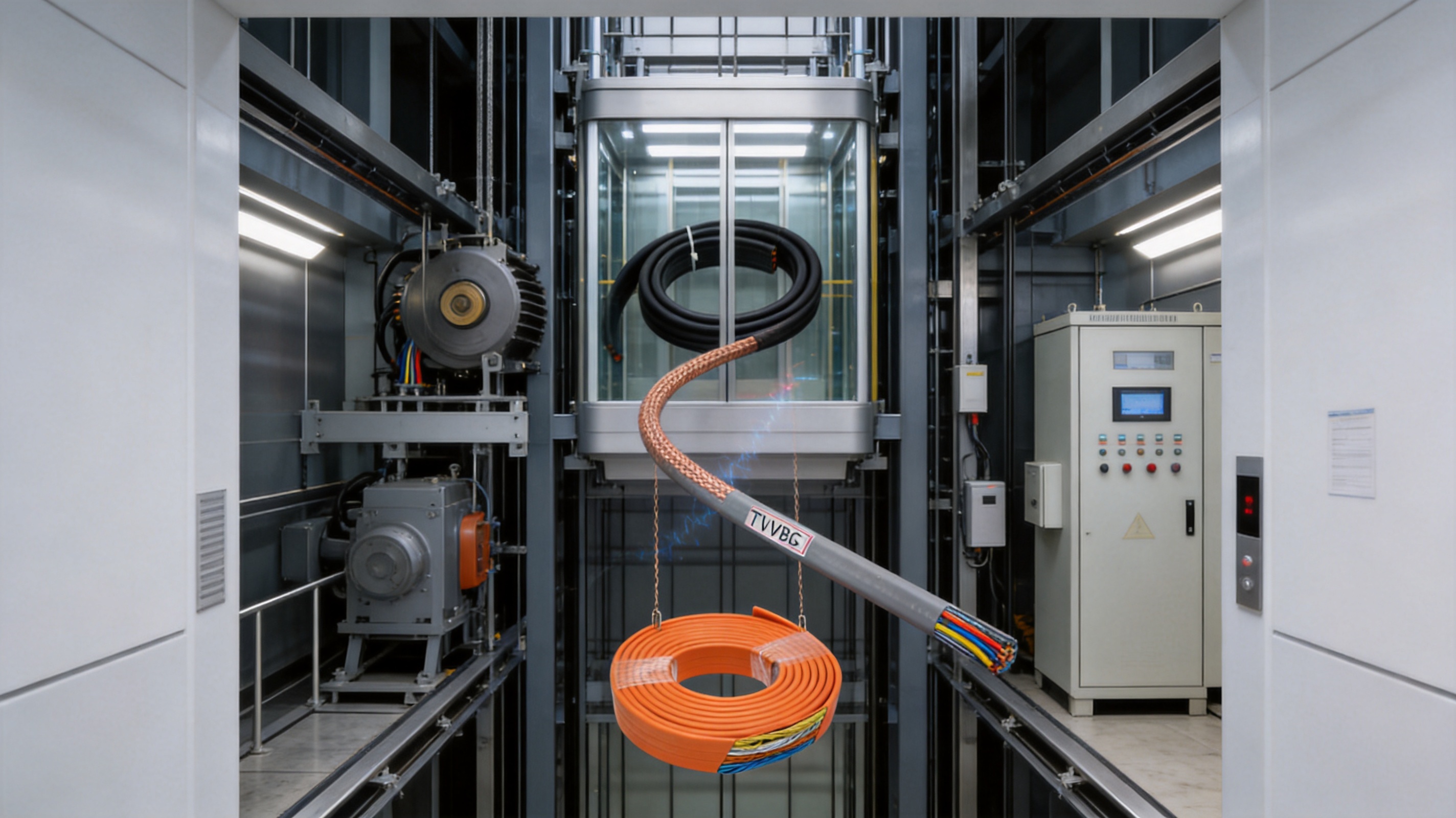
Elevator projects vary widely in travel height, core requirements, control architecture, shaft conditions, and regulatory expectations. A standard cable may be suitable for one project but require modification for another. Customization can involve conductor cross-section, core count, color identification, shielding arrangement, cable width, sheath color, marking, packaging, and connector compatibility.
Anhui Zhishang Cable Technology Co., Ltd. supports OEM and ODM development based on customer drawings or samples. Its technical engineers can assist with product selection and develop cable solutions according to project requirements. This service is valuable for elevator manufacturers, control-system integrators, equipment distributors, and engineering contractors that require a cable matched to a specific installation.
Customers may specify different combinations of power, control, communication, and signal cores. A cable can be designed with suitable conductor sizes for each circuit group, subject to manufacturing feasibility and electrical requirements. Core identification should be agreed before production to ensure efficient field termination.
Flat cables must fit the available shaft space and moving arrangement. Width and thickness can be adjusted through core count, conductor size, insulation dimensions, shielding construction, and sheath design. A dimensional drawing should be approved before production, particularly for replacement projects where the existing cable route has limited clearance.
PVC is suitable for many indoor and general industrial applications. Projects with unusual temperature requirements, higher oil exposure, severe outdoor weather, enhanced flame performance, or special chemical resistance may require alternative materials or a modified compound. The technical team should evaluate the environment before confirming the final design.
Before installation, inspect the cable for damage, moisture ingress, deformation, or packaging problems. Confirm the cable specification, length, core identification, and dimensions against the approved project documents.
Install the cable without sharp bends, uncontrolled twisting, or forced compression. Maintain at least six times the cable thickness as the minimum bending radius for mobile sections unless a specific approved design states otherwise. Fixed sections may use a minimum radius of four times the cable thickness according to the supplied specification.
Use suitable supports and clamps that hold the cable securely without crushing the sheath. The cable should be allowed to move naturally within its intended path. Avoid attaching it in a way that transfers excessive tensile load to individual conductors or terminals.
Keep the cable away from sharp metal edges, welding areas, excessive heat, chemical spills, and components that could repeatedly rub against the sheath. Where the cable passes near mechanical equipment, verify the entire travel path at the top, middle, and bottom positions of the elevator car.
Terminate the conductors using connectors and terminals compatible with the conductor size. Avoid excessive stripping that exposes unnecessary copper. The shield should be terminated according to the system’s electromagnetic compatibility and grounding design.
After installation, perform continuity, insulation resistance, and functional checks. Operate the elevator through its full travel range while observing the cable path. Any unusual movement, rubbing, twisting, or tension should be corrected before the elevator enters regular service.
Routine inspection is an effective way to protect the cable and reduce unexpected downtime. Maintenance personnel should examine the visible sheath for cracks, cuts, flattening, swelling, discoloration, abrasion, and oil damage. The cable should also be observed while the elevator moves because some problems are not visible when the car is stationary.
Electrical checks should be performed according to the maintenance plan. Intermittent communication faults, unstable video, unexpected alarms, or control errors may indicate conductor fatigue, shield damage, loose termination, or insulation deterioration. Troubleshooting should include both the cable and connected equipment.
When cleaning the cable, use methods and materials that are compatible with PVC. Avoid aggressive solvents unless they have been confirmed as suitable. If a cable has suffered severe mechanical damage, replacement is generally safer than attempting an improvised repair in a high-cycle moving section.
Record inspection results, operating conditions, replacement dates, and observed damage patterns. These records can help determine whether the cause is ordinary aging, incorrect bending radius, poor support, excessive tension, environmental exposure, or contact with adjacent equipment.
The performance of a traveling cable is influenced by production consistency. Two cables with similar printed specifications may behave differently if their conductor stranding, insulation extrusion, braid coverage, or sheath formulation is not controlled carefully.
A manufacturer with integrated research and development, production, testing, and technical support can respond more effectively to application-specific requirements. Anhui Zhishang Cable Technology Co., Ltd. combines a modern production base, automated production lines, experienced technical personnel, and OEM/ODM support. This integrated capability helps connect product design with manufacturing execution.
The company’s stated business approach emphasizes quality, integrity, and stability. It provides standard products for common requirements while supporting customized products with typical lead times of approximately 7 to 20 days, subject to the final design and order quantity. Standard products may be stocked for faster shipment.
Its reported monthly production capacity of up to ten million meters provides supply flexibility for distributors and large projects. International market experience in regions including North America, Australia, Japan, and parts of Eurasia also indicates experience with export-oriented documentation, packaging, and customer coordination.
When selecting a TVVB cable, begin by listing every circuit that must travel with the elevator car. Separate power, control, safety, communication, audio, video, and data requirements. Determine the voltage, current, signal frequency, shielding needs, and conductor size for each circuit.
Next, confirm the mechanical requirements. Important parameters include elevator travel height, operating speed, acceleration, daily cycles, cable suspension method, minimum available bending radius, shaft temperature, and contact risk. These details help determine whether the standard TVVB construction is suitable or whether a customized design is necessary.
Check the required width and thickness before ordering. A cable may meet the electrical requirements but be unsuitable if it cannot fit through the intended route. Core count, conductor cross-section, braid thickness, insulation thickness, and sheath dimensions all affect the final profile.
Confirm environmental conditions. The standard specification lists -10°C to +70°C. If the elevator is installed in an unheated space, exposed to strong sunlight, located near oil mist, or subject to unusual cold, heat, moisture, or chemicals, request a technical review.
Finally, request the appropriate product documentation. This may include a technical data sheet, dimensional drawing, conductor resistance data, insulation resistance data, voltage test report, mechanical test information, material declarations, and quality certificate. Documentation supports both purchasing decisions and project approval.
Cost efficiency should be evaluated over the complete service life rather than through purchase price alone. A low-cost cable that fails early can create labor costs, elevator downtime, emergency procurement, and passenger disruption. A cable with suitable mechanical and electrical performance can reduce these indirect expenses.
The TVVB design seeks to provide a balanced solution using widely available PVC materials, copper conductors, and an efficient flat construction. Its broad core-count range can reduce the need for multiple cable types. Its integrated shielding may also reduce the need for separate signal-protection measures in suitable installations.
Responsible manufacturing includes material control, production efficiency, reduced waste, testing, and reliable product design. The company’s emphasis on green manufacturing and continued technical development supports a more sustainable approach to cable production. Correct cable selection and installation also contribute to sustainability by extending service life and reducing replacement frequency.
The TVVB mechanical protection reinforced elevator traveling flat cable offers several advantages for elevator and lifting-equipment projects.
Fine-stranded annealed copper conductors support repeated flexing and reliable electrical transmission.
The flat parallel-core structure helps optimize limited elevator shaft space.
A copper braid shield with at least 70 percent coverage helps reduce electromagnetic interference.
PVC insulation and sheath provide practical electrical insulation and mechanical protection.
The cable is available from 4 to 60 cores for different system configurations.
The rated voltage of 300/500 V supports many control, auxiliary power, and communication applications.
Specified tensile, abrasion, oil-resistance, and bending-life performance supports demanding movement conditions.
Multiple dimensions and cross-sections allow the cable to be matched to different space and load requirements.
OEM and ODM support enables customization based on drawings, samples, and project specifications.
Integrated research, production, testing, and supply capabilities support consistent project delivery.
TVVB refers to a flexible elevator traveling flat cable construction. In this product, the cable includes flexible copper conductors, PVC insulation and sheath, a flat parallel arrangement, and copper braid shielding for electromagnetic interference protection.
The stated range is 4 cores to 60 cores. The appropriate number depends on the elevator control system, communication functions, safety circuits, lighting, monitoring equipment, and other devices installed on the elevator car.
It is designed for elevator traveling applications and is identified as suitable for high-rise and high-speed elevators. However, suitability must be confirmed against the specific elevator speed, travel height, bending path, suspension method, operating temperature, and cable-support arrangement.
The stated rated voltage is 300/500 V. The cable’s use in a particular circuit should also consider current capacity, voltage drop, insulation coordination, local regulations, and the requirements of the elevator control system.
The detailed technical specification lists a range of -10°C to +70°C. Broader temperature claims should not be assumed for the standard product. Customers requiring operation outside this range should request a customized construction and written technical confirmation.
Copper braid shielding helps reduce electromagnetic interference from motors, variable-frequency drives, switching equipment, relays, and other electrical sources. It is useful for communication, video, audio, feedback, and sensitive control signals.
It can be configured with multiple core groups for different functions, but the final arrangement should be reviewed by a qualified engineer. Circuit separation, conductor size, grounding, shielding, insulation requirements, and electromagnetic compatibility must be considered.
The stated minimum bending radius is at least six times the cable thickness for mobile installation and at least four times the cable thickness for fixed installation. The mobile radius is the critical value for the traveling section.
Yes. Customization may include core count, conductor cross-section, cable dimensions, identification, shielding, sheath color, marking, packaging, and other construction details. Technical confirmation should be completed before production.
The company indicates that customized products typically require approximately 7 to 20 days of lead time. Actual timing depends on design approval, material availability, order quantity, production scheduling, and inspection requirements.
The supplied information includes a 2 kV AC test for one minute, insulation resistance of at least 20 MΩ·km at 20°C, a tensile strength of at least 15 N/mm², a stated five-million-cycle bending life, an oil immersion test, and a reciprocating abrasion test.
The supplied specification states compliance with the listed GB/T 19666 non-flame-retardant requirements. Projects with specific flame-retardant, low-smoke, halogen-free, or fire-survival requirements should request a cable designed and tested for those requirements.
Shield grounding depends on the elevator controller, signal type, installation architecture, and electromagnetic compatibility plan. Follow the equipment manufacturer’s instructions and use a qualified electrical professional to determine the correct termination method.
It is designed specifically for repeated elevator movement. The flat structure, fine-stranded conductors, controlled bending requirements, copper braid shielding, and reinforced outer protection address mechanical and electrical conditions that ordinary fixed flexible cables may not be designed to withstand.
Provide the required core count, conductor cross-section, cable length, rated voltage, shielding requirement, elevator travel height, operating speed, environmental temperature, installation method, cable width or thickness limits, required standards, packaging requirements, and delivery schedule.
The TVVB mechanical protection reinforced elevator traveling flat cable is a purpose-built solution for moving electrical connections in elevators, escalators, lifting equipment, and related systems. Its fine-stranded copper conductors provide flexibility, while the parallel flat structure supports organized installation in narrow shaft spaces. PVC insulation and a protective PVC sheath provide practical electrical and mechanical protection, and the copper braid shield helps maintain signal stability in electromagnetic environments.
Its principal advantages over ordinary unshielded or fixed-installation cables include integrated EMI protection, a space-efficient profile, broad core-count availability, flexible conductor construction, and suitability for repeated bending. The stated mechanical performance, including five million bending cycles, oil resistance, abrasion resistance, and tensile strength, supports demanding elevator applications when the cable is installed within its specified limits.
Manufacturing capability is equally important. Anhui Zhishang Cable Technology Co., Ltd. combines production facilities, automated lines, experienced engineering personnel, testing procedures, standard inventory, and OEM/ODM support. This combination allows the company to provide both standard cable products and customized cable solutions for elevator manufacturers, integrators, contractors, and distributors.
For the best result, cable selection should be based on the complete electrical and mechanical design rather than on core count alone. Confirm the operating temperature, bending radius, travel distance, cable support, environmental exposure, shielding termination, and applicable standards. When these factors are properly evaluated, TVVB can provide a reliable, flexible, and cost-effective connection for modern elevator systems.
1. GB/T 19666, General Rules for Flame Retardancy and Fire Resistance of Wires and Cables.
2. General principles of low-voltage cable insulation resistance, dielectric testing, conductor resistance, and dimensional inspection.
3. Industrial cable engineering practices for flexible and continuously moving cable installations.
4. Elevator electrical installation and traveling-cable routing principles.
5. Electromagnetic compatibility practices for shielded control, communication, and signal cables.
6. Manufacturer-supplied technical specifications for TVVB mechanical protection reinforced elevator traveling flat cable.
7. Manufacturer-supplied product information concerning conductor construction, PVC insulation, copper braid shielding, mechanical testing, and customization support.
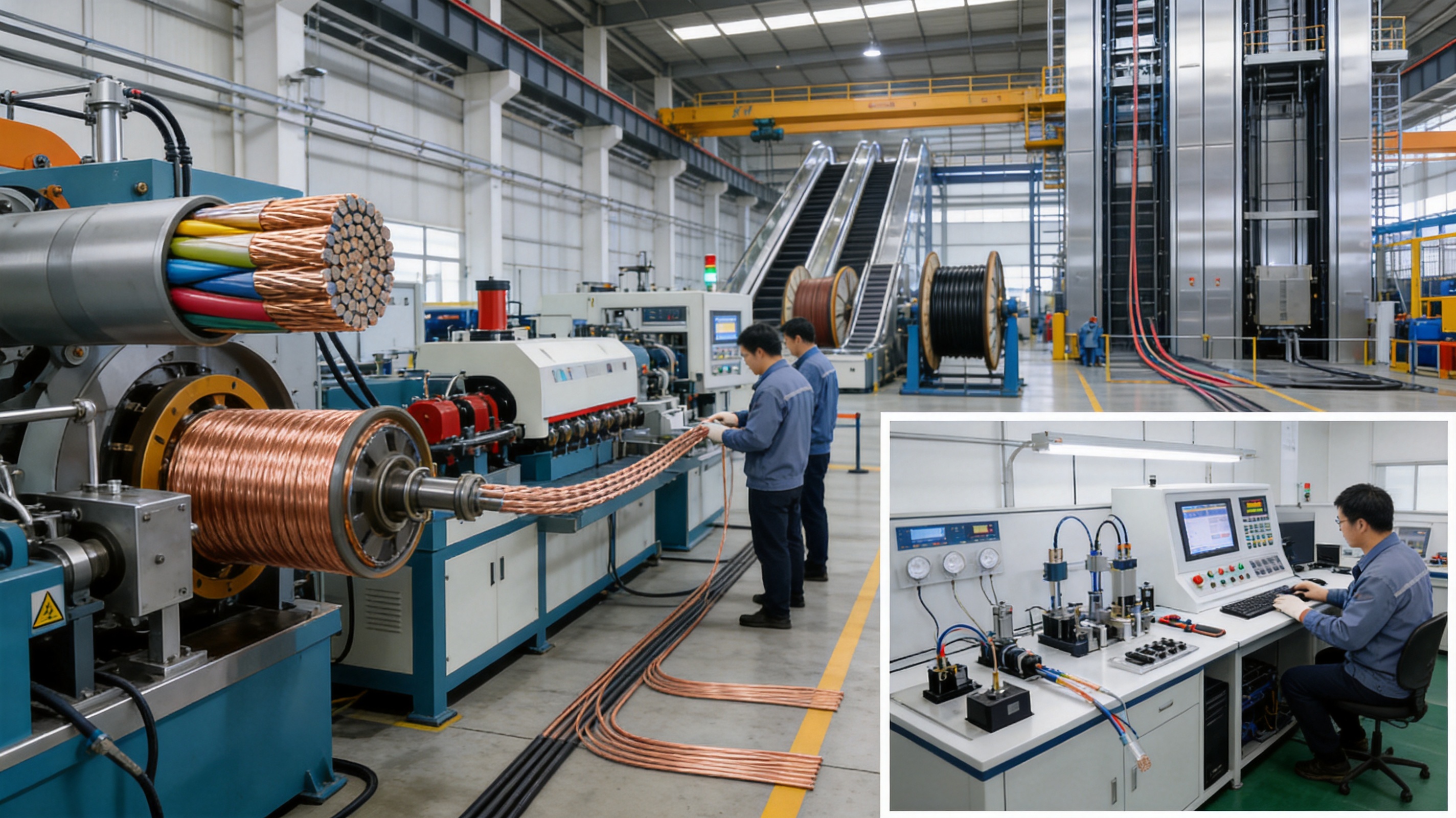

We firmly believe that good cables are not only a competition of materials, but also a reflection of craftsmanship, quality, and responsibility.

Links
Product
Send Inquiry
No. 29 Sankeshu Road, Xuanzhou District, Xuancheng City, Anhui Province, China
+86-18621104555/+86-563-2622999
 Electrical Cable Manufacturer
OEM/ODM Wire and Cable Solutions
Electrical Cable Manufacturer
OEM/ODM Wire and Cable Solutions
 English
 Español
 عربى
عربى
 русский