Get more content that can help you
Content
Reliable overhead power distribution depends on more than electrical conductivity alone. A suitable aerial insulated cable must withstand mechanical tension, changing weather conditions, ultraviolet exposure, temperature variation, installation stress, and long-term environmental aging. It must also be economical to transport and install, especially when projects involve long spans, difficult terrain, rural networks, mining areas, or infrastructure upgrades.
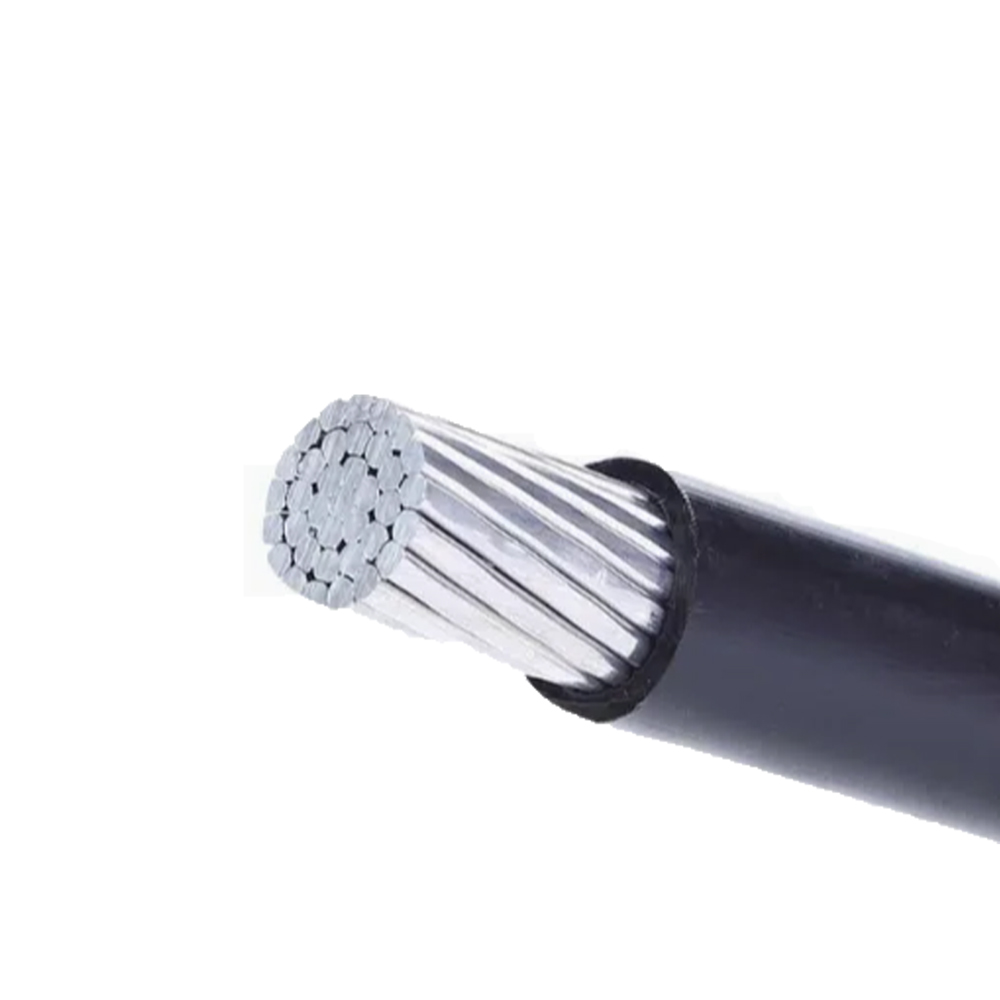
The JKLHYJ aerial insulated cable rated 1 kV and below is designed for these requirements. It is a single-core overhead cable using a multi-stranded aluminum alloy conductor and cross-linked polyethylene insulation. The combination provides a practical balance between electrical performance, mechanical strength, low weight, environmental resistance, and installation efficiency.
With a rated voltage of 0.6/1 kV, a conductor cross-section range of 10 mm² to 400 mm², and a long-term operating temperature range from -40°C to +90°C, the cable is suitable for low-voltage overhead power distribution systems exposed to demanding outdoor conditions. Its XLPE insulation is designed to resist ultraviolet radiation, ozone, moisture, temperature fluctuations, and environmental stress cracking. The aluminum alloy conductor further improves tensile performance, creep resistance, and corrosion resistance compared with conventional pure aluminum conductors.
Anhui Zhishang Cable Technology Co., Ltd. manufactures this type of cable through an integrated research, production, and sales system. The company combines automated production lines, technical engineering support, quality control, OEM and ODM capabilities, and experience in electrical cable development. These strengths allow the product to serve both standard applications and projects requiring customized specifications.
This article examines the structure, performance, advantages, manufacturing process, installation requirements, application areas, and selection considerations associated with JKLHYJ aerial insulated cable.
JKLHYJ Aerial Insulated Cable Rated 1KV and Below
JKLHYJ is an aerial insulated cable for low-voltage overhead distribution systems. Its rated voltage is 0.6/1 kV, which means it is designed for systems with a maximum rated voltage of 1 kV. The cable is intended for exposed outdoor installation rather than underground use or high-voltage transmission.
The cable uses a single-core construction. Single-core aerial cables are frequently selected for overhead distribution because they are comparatively simple to install, easy to terminate, and adaptable to different network configurations. Depending on the project design, multiple single-core cables may be arranged as a circuit or bundled in a suitable overhead configuration.
The conductor is manufactured from aluminum alloy and formed as a multi-stranded conductor. Aluminum alloy offers a lower density than copper, which substantially reduces cable weight. Lower weight can simplify transportation, handling, lifting, support design, and installation across long spans.
Although aluminum alloy is lightweight, it is not simply a weight-reduction substitute. Its alloy composition is selected to improve mechanical performance, including tensile strength and resistance to permanent deformation. The specified conductor tensile strength is at least 150 MPa. This characteristic is important when the cable is exposed to pulling forces during installation or to continuous mechanical loads after installation.
The multi-stranded construction improves flexibility compared with a solid conductor of the same cross-sectional area. It also allows the cable to accommodate normal handling and routing requirements without unnecessary installation difficulty. The conductor cross-section can be selected from 10 mm² to 400 mm², providing options for different current loads, voltage-drop requirements, and span conditions.
The insulation material is cross-linked polyethylene, commonly known as XLPE. XLPE is widely used in power cable applications because it combines strong dielectric properties with high thermal capability and good resistance to environmental aging.
For this aerial cable, the insulation thickness ranges from 0.7 mm to 2.0 mm, depending on the conductor cross-section and product design. The insulation is normally black to improve outdoor durability and resistance to ultraviolet exposure. Other colors may be customized according to customer requirements or circuit identification practices.
The long-term operating temperature is specified as -40°C to +90°C. This range allows the cable to function in cold winter conditions and hot outdoor environments. Under short-circuit conditions, the conductor temperature can reach up to 220°C for a maximum duration of five seconds, subject to correct system protection and installation design.
Unlike ordinary indoor flexible cable, the JKLHYJ product is designed for outdoor overhead distribution. Its insulation must therefore perform as both an electrical barrier and an environmental protective layer. The material must resist direct sunlight, rain, condensation, frost, wind-driven contamination, and repeated heating and cooling cycles.
The cable may also be produced in self-supporting configurations, including designs incorporating a high-strength aluminum alloy messenger wire. The exact construction should be confirmed according to span length, support method, loading conditions, local regulations, and customer requirements.
The following table summarizes the principal specifications of the JKLHYJ-1KV aerial insulated cable.
| Item | Specification |
|---|---|
| Product model | JKLHYJ-1KV |
| Number of cores | Single-core |
| Conductor | Multi-stranded aluminum alloy conductor |
| Cross-section range | 10 mm² to 400 mm² |
| Rated voltage | 0.6/1 kV |
| Test voltage | 3.5 kV AC for 5 minutes |
| Insulation material | Cross-linked polyethylene |
| Insulation thickness | 0.7 mm to 2.0 mm, depending on cross-section |
| Long-term operating temperature | -40°C to +90°C |
| Short-circuit temperature | Up to 220°C for 5 seconds |
| Minimum bending radius during installation | 10 times the cable outer diameter |
| Minimum bending radius during operation | 15 times the cable outer diameter |
| Conductor tensile strength | At least 150 MPa |
| Conductor creep performance | Passes a 500-hour creep test at 70°C |
| Insulation resistance | At least 500 MΩ·km at 20°C |
| UV resistance | Outdoor insulation UV resistance rating of at least Grade 7 |
| Water resistance | Insulation resistance change rate of no more than 18% after 24-hour immersion |
| Insulation color | Black as standard; other colors customizable |
| Outer diameter tolerance | ±10% |
| Flame performance | Passes IEC 60332-1 single vertical flame test |
The specifications demonstrate that the product is designed for a combination of electrical, mechanical, and environmental performance. Selection should nevertheless be based on the complete project design rather than any single rating. Current-carrying capacity, span length, ambient temperature, wind loading, installation method, support spacing, voltage drop, and connection hardware must all be evaluated.
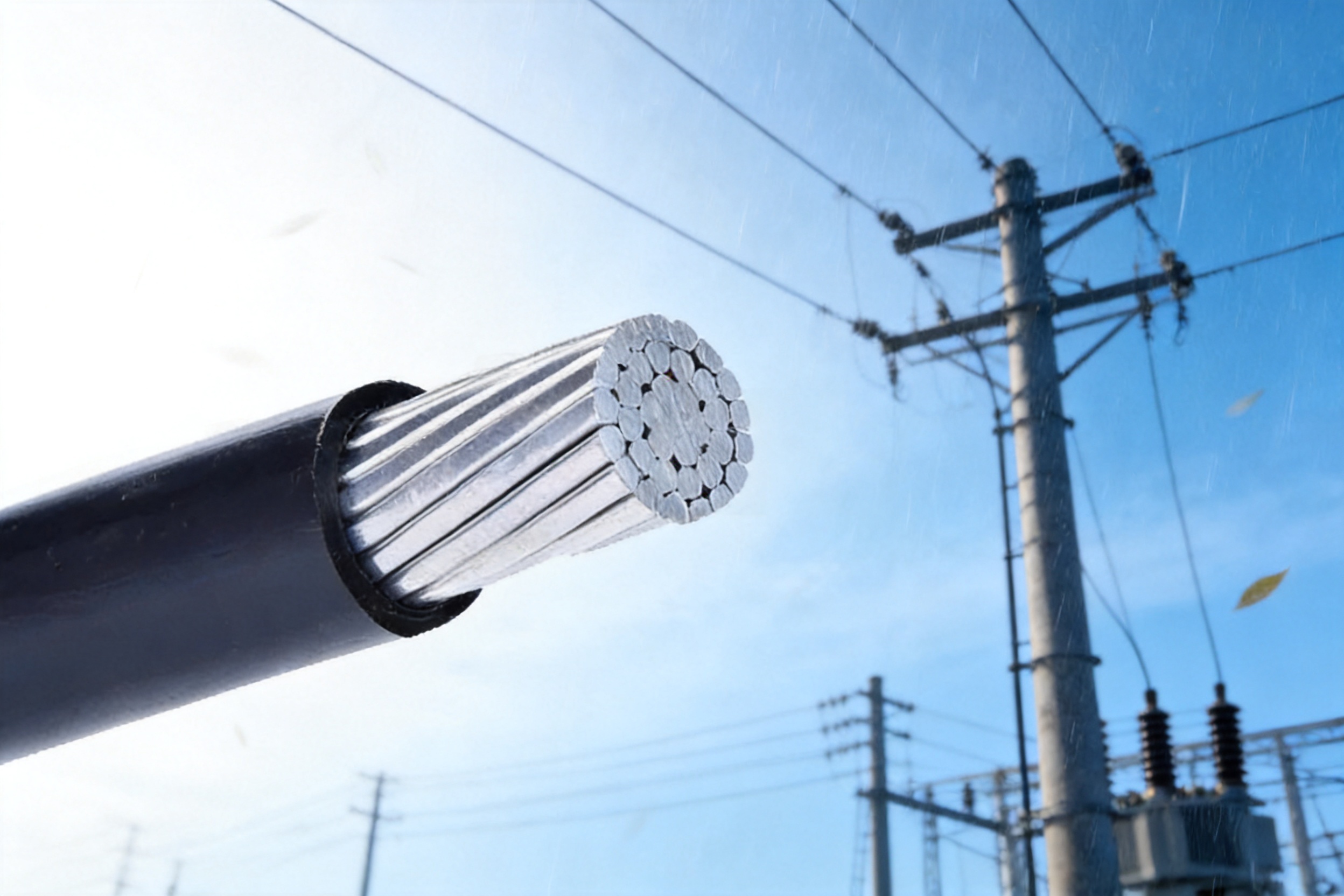
One of the most practical advantages of an aluminum alloy conductor is its lower mass. Aluminum alloy cables can be approximately 50 percent lighter than comparable copper cables, depending on the conductor design and required electrical cross-section. This reduction can lower transportation costs and make manual or mechanical handling easier.
Reduced weight is particularly beneficial in areas with difficult access. Rural electrification projects, mountain routes, mining areas, river crossings, and remote construction sites may require materials to be transported over long distances or lifted onto poles without heavy equipment. A lighter cable can reduce the demands placed on installation teams and supporting structures.
Lower conductor weight may also help with overhead span design. The final structural calculation must include cable weight, wind pressure, ice loading, tension, temperature effects, and support hardware. However, a lighter conductor can contribute to lower vertical loading and may provide additional flexibility in pole and cross-arm design.
Pure electrical performance is not enough for an overhead cable. The conductor must withstand pulling tension during stringing and maintain dimensional stability during long-term service. Aluminum alloy improves the mechanical strength of the conductor and is therefore better suited to installations where span length and environmental loading are important.
The specified tensile strength of at least 150 MPa provides a defined mechanical performance target. The conductor also passes a 500-hour creep test at 70°C. Creep is the gradual permanent deformation that can occur when a conductor remains under tension, particularly at elevated temperatures. Excessive creep can increase sag and reduce clearance from the ground, buildings, roads, vegetation, or other utility lines.
Improved creep performance supports better long-term stability. It does not eliminate the need for correct sag and tension calculations, but it helps the cable maintain its intended geometry during service.
XLPE insulation provides several advantages over ordinary thermoplastic insulation in outdoor power distribution. It has high dielectric strength, good insulation resistance, and a higher permissible continuous operating temperature. The material is also well suited to resisting environmental stress cracking when properly formulated and processed.
The product has an outdoor ultraviolet resistance rating of at least Grade 7. This is important because prolonged exposure to sunlight can cause surface cracking, embrittlement, discoloration, and loss of electrical protection in unsuitable insulation materials. The black insulation is normally selected for outdoor applications because carbon black and related formulation characteristics can improve resistance to ultraviolet aging.
The insulation is also designed for an operating temperature range from -40°C to +90°C. This range helps the cable remain suitable for regions with cold winters, hot summers, and substantial day-night temperature differences. The insulation must still be protected from severe mechanical damage, sharp edges, excessive bending, and incompatible fittings during installation.
Aluminum naturally forms a dense oxide layer when exposed to air. This layer helps protect the underlying metal from atmospheric corrosion. The alloy conductor used in JKLHYJ cable is designed to provide better corrosion resistance than ordinary pure aluminum in many outdoor environments.
This benefit is valuable in areas exposed to moisture, industrial pollutants, coastal air, agricultural chemicals, or temperature cycling. Corrosion resistance can help maintain conductor integrity and reduce the risk of premature deterioration. However, the oxide layer also affects electrical connections, which is why dedicated corrosion-resistant connection fittings are required.
Aluminum alloy conductors provide good conductivity while reducing weight. The correct conductor cross-section must be selected to compensate for the electrical characteristics of aluminum compared with copper. When properly sized, the cable can provide reliable power delivery for low-voltage distribution networks.
XLPE insulation contributes high dielectric strength and low dielectric loss. The cable is tested at 3.5 kV AC for five minutes, providing a defined withstand-voltage requirement for the insulation system. The specified insulation resistance of at least 500 MΩ·km at 20°C further demonstrates the product's ability to limit leakage current under the stated test conditions.
Lower transmission losses may help improve the energy efficiency of a distribution system. Actual energy performance depends on conductor size, circuit length, load balance, operating temperature, connection quality, and system design.
Light weight, flexibility, and a wide cross-section range can help improve installation efficiency. A lighter cable may require fewer workers or less lifting equipment, while the multi-stranded conductor makes routing and handling more practical than a rigid solid conductor of equivalent size.
Lower installation labor, reduced transportation requirements, and easier handling can reduce the total project cost. These savings are especially relevant when the cable is installed over long distances or in remote locations. The cost evaluation should include not only the purchase price but also supports, fittings, transport, labor, maintenance, and expected service life.
Anhui Zhishang Cable Technology Co., Ltd. integrates research and development, production, and sales. This structure enables technical requirements to move directly between engineering, manufacturing, and customer service teams. It also supports product customization based on drawings, samples, performance requirements, and application conditions.
The company operates a modern production base of approximately 5,000 square meters and has more than 50 employees. Its workforce includes quality engineers and research and development technicians with more than 10 years of industry experience. This combination of production capacity and technical experience supports both standard cable manufacturing and project-specific development.
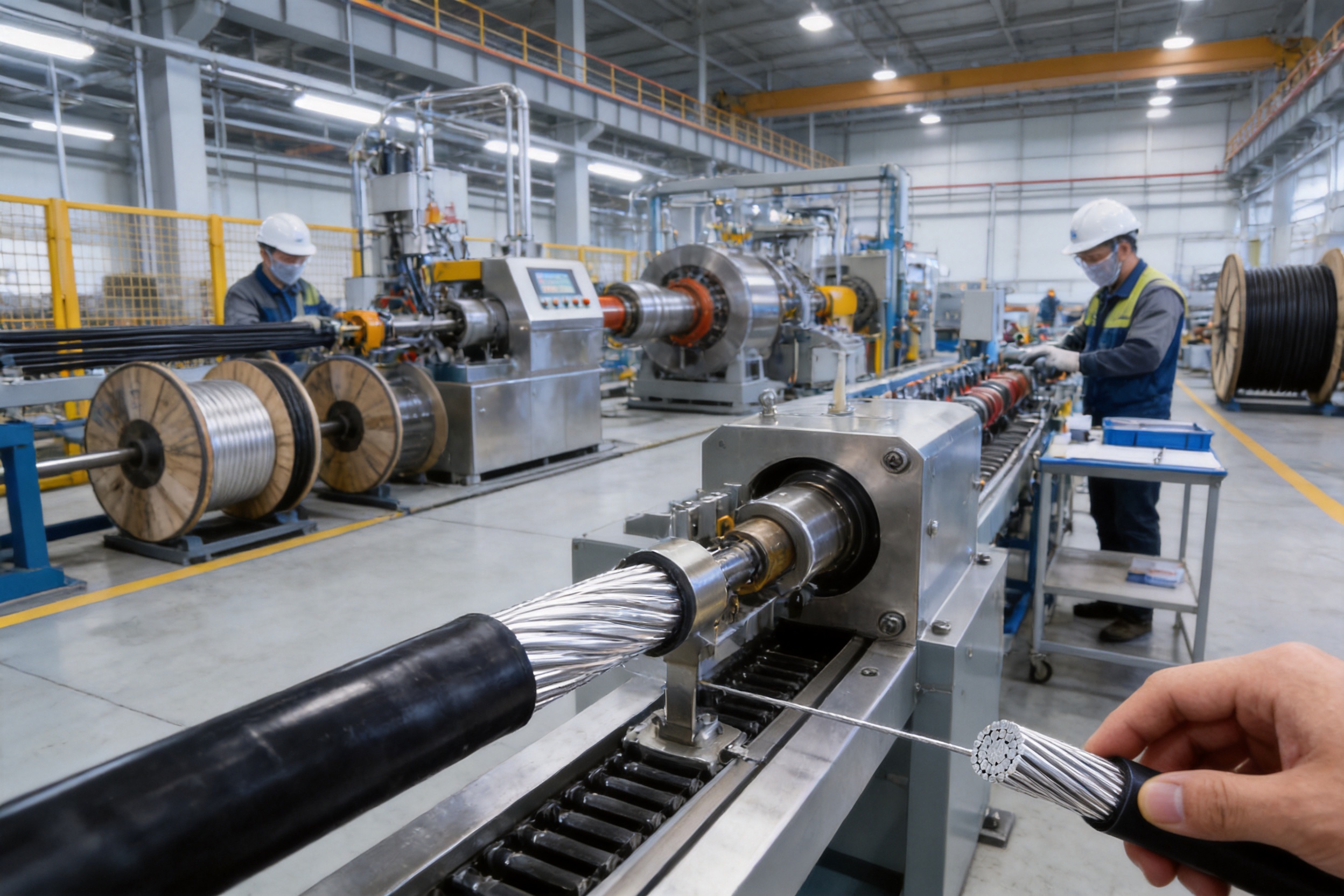
The manufacturing process begins with material verification and conductor preparation. Aluminum alloy material must be checked for composition, surface quality, dimensional consistency, and mechanical characteristics. Controlled drawing and stranding operations are then used to form the required conductor structure.
Multi-stranding must be controlled carefully. Strand diameter, lay length, concentricity, compactness, and surface condition influence conductivity, flexibility, tensile strength, and compatibility with connection fittings. Consistent stranding also helps the conductor maintain a stable shape during insulation extrusion.
Process monitoring is important because small variations in conductor geometry can affect the final outer diameter, insulation thickness, bending behavior, and installation performance. The production team therefore needs to maintain appropriate control of line speed, tension, tooling, and material handling.
After conductor preparation, the XLPE insulation is applied through an extrusion process. The extrusion line must control material feeding, melting, pressure, temperature, concentricity, and cooling. A uniform insulation layer is essential because thin areas can reduce dielectric reliability, while excessive variation can increase material use and alter cable dimensions.
Cross-linking is a critical part of XLPE cable production. The polymer must achieve the required cross-linked structure to provide thermal stability, mechanical integrity, and resistance to deformation. The process must be controlled so that the insulation is properly cured without excessive voids, contamination, surface defects, or dimensional inconsistency.
Online monitoring can help identify changes in outer diameter and insulation thickness during production. Finished cable sections can then be evaluated through dimensional inspection, electrical testing, and physical examination.
Electrical quality control verifies the integrity of the insulation system and the electrical continuity of the conductor. Typical checks include conductor resistance, insulation resistance, and power-frequency withstand voltage. The stated withstand test is 3.5 kV AC for five minutes.
Insulation resistance is measured under controlled conditions because temperature has a direct influence on the result. The product specification identifies a minimum value of 500 MΩ·km at 20°C. This provides a reference point for evaluating insulation quality and consistency.
Testing should be performed using calibrated equipment and documented procedures. Test records can support customer acceptance, batch traceability, project quality files, and after-sales technical service.
Mechanical verification includes tensile performance and creep behavior. The conductor tensile strength is specified at no less than 150 MPa, while the product passes a 500-hour creep test at 70°C. These tests are relevant to overhead service because mechanical tension and elevated conductor temperature may occur simultaneously.
Environmental evaluations include ultraviolet resistance and water resistance. The insulation has an outdoor UV resistance rating of at least Grade 7. After 24-hour immersion, the insulation resistance change rate is limited to no more than 18 percent. These tests help assess the cable's ability to maintain insulation performance under moisture and outdoor exposure.
The cable also passes the IEC 60332-1 single vertical flame test. Although the main purpose of this product is outdoor overhead distribution, flame performance can provide an additional safety characteristic in situations where the cable passes near equipment, structures, or maintenance areas.
The company operates 10 automated production lines with a stated monthly output of up to 10 million meters. Automated equipment helps improve production continuity, dimensional consistency, and repeatability. It can also support larger orders and reduce the risk of variation caused by manual handling.
Automation does not replace engineering control or inspection. Instead, it works together with trained personnel, process documentation, incoming material checks, in-process monitoring, and final testing. This combination is important for maintaining stable performance across different cable sizes and production batches.
Rural power networks often involve long routes, uneven terrain, limited access roads, and a need to control construction costs. The lightweight aluminum alloy conductor can simplify delivery and installation, while the outdoor XLPE insulation supports long-term service under sunlight, rain, wind, and temperature variation.
The product can be considered for low-voltage network reinforcement, replacement of aging overhead conductors, connection of rural consumers, and expansion of distribution capacity. Engineers should verify the required current capacity, voltage drop, pole spacing, and clearances before selecting the cross-section.
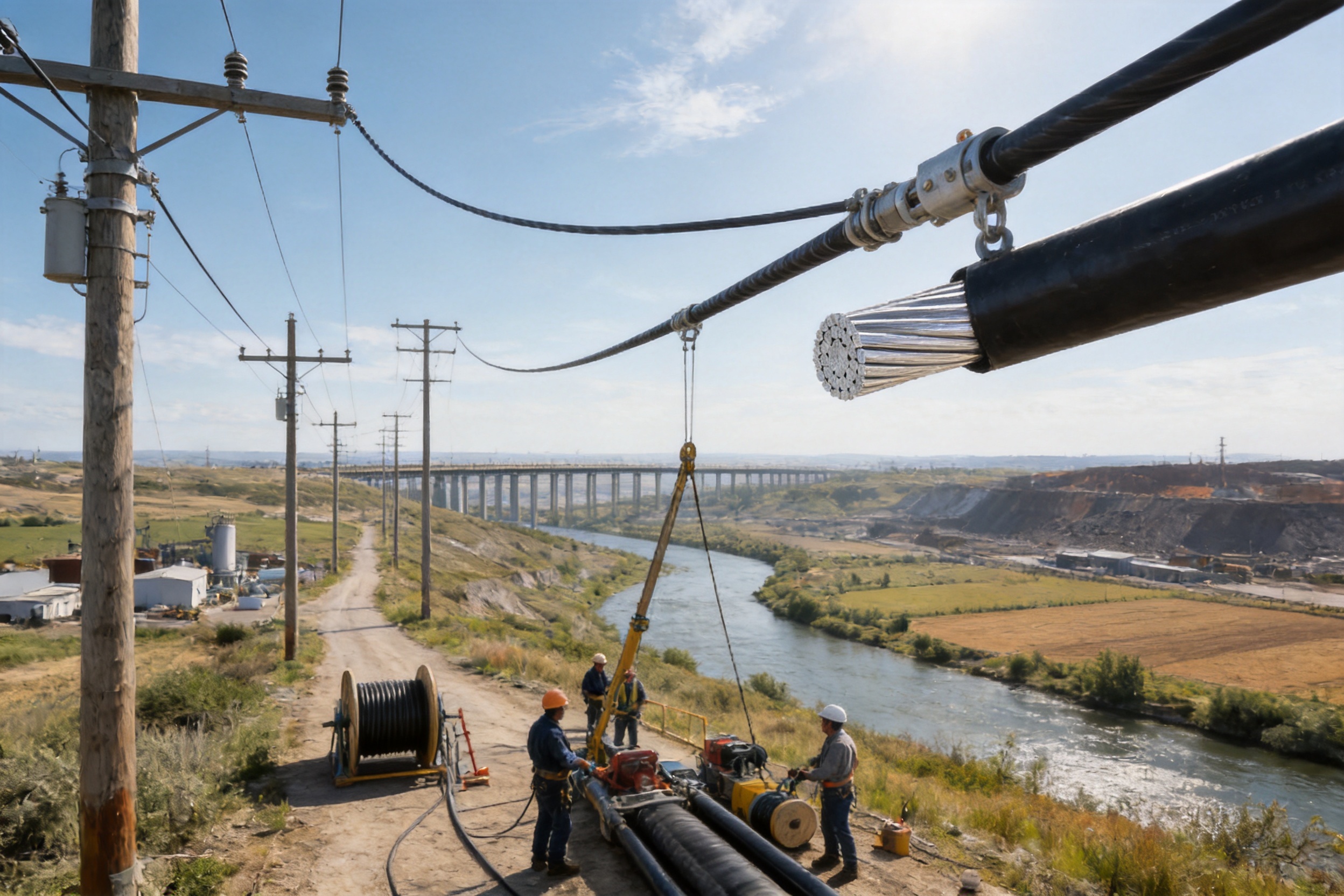
River crossings, valleys, open farmland, and other wide spaces may require longer spans between supports. In these applications, conductor weight and mechanical strength become especially important. The aluminum alloy conductor combines low density with enhanced tensile strength and creep resistance, making it suitable for projects that require a favorable strength-to-weight balance.
Long-span installation requires careful structural analysis. Wind, ice, temperature, conductor sag, support strength, and dynamic movement must be evaluated. The cable's mechanical characteristics can support the design, but the cable should not be installed beyond the limits established by the project engineer or applicable standards.
Mining regions may require long-distance power supply across rugged terrain. Construction access can be difficult, and cables may be exposed to strong sunlight, dust, temperature changes, and mechanical stress. The JKLHYJ cable's low weight, corrosion resistance, UV resistance, and mechanical performance are useful in these conditions.
Mining projects may also have special requirements for flame performance, support spacing, temporary installation, or protection from vehicle and equipment movement. The cable specification and installation method should be reviewed against the particular mining environment and relevant safety regulations.
Low-voltage overhead circuits may be used for industrial premises, utility extensions, temporary construction power, agricultural facilities, and infrastructure projects. The wide conductor range from 10 mm² to 400 mm² allows the product to serve both moderate and relatively high current requirements within the low-voltage category.
Where the cable is installed near buildings, roads, machinery, or public access areas, the system designer must provide appropriate clearances, supports, protective measures, and warning controls. The cable's insulation does not remove the need for safe system design.
The minimum bending radius during installation is specified as 10 times the cable outer diameter. During operation, the minimum bending radius is 15 times the cable outer diameter. These requirements help prevent excessive stress on the conductor and insulation.
Installers should avoid sharp bends, sudden changes in direction, dragging over rough surfaces, and pulling around corners without suitable rollers or guides. If the cable is bent below its permitted radius, the insulation may be damaged or permanently deformed, and the conductor may experience unwanted stress.
The cable should be unwound from a suitable drum in the correct direction and supported during movement. Pulling tension should be controlled according to the cable design and the installation plan. Excessive tension can damage the conductor, while uncontrolled release can create twists, loops, and kinks.
Installation personnel should inspect the cable before installation. The outer surface should be checked for cuts, abrasions, cracking, crushing, contamination, or other visible defects. Any damage should be documented and assessed before the cable is energized.
Aluminum alloy conductors require dedicated corrosion-resistant connection fittings. Standard fittings intended for other conductor materials may not provide suitable contact pressure, oxidation control, or long-term reliability. The use of compatible lugs, clamps, terminals, and connectors is therefore essential.
Connection surfaces should be prepared according to the fitting manufacturer's instructions. Oxide control compounds, approved contact treatments, correct torque, and suitable crimping tools may be required. Connections should be protected against moisture ingress and mechanical loosening.
In mixed-metal connections, galvanic corrosion must be considered. Aluminum-to-copper interfaces require suitable transition fittings or approved bimetallic connectors. Directly joining incompatible metals without proper protection can increase contact resistance and generate heat during operation.
Overhead cable installation must follow an engineered sag and tension plan. The cable's final position changes with temperature and mechanical loading. The installation team should account for ambient temperature, span length, support height, wind, ice, and expected operating conditions.
Required clearances from roads, buildings, trees, waterways, and other lines must comply with the applicable electrical and construction requirements. The cable's mechanical strength and creep performance help maintain stable geometry, but correct installation remains essential.
The product is suitable for ambient temperatures from -40°C to +90°C and for installation areas at altitudes up to 1,000 meters according to the stated special notes. Projects outside these conditions should be reviewed with the manufacturer and system designer.
Although the insulation has good water resistance, cable ends and connections should be sealed or protected as required. Water entering an improperly prepared termination can reduce insulation reliability and create a path for corrosion or leakage current.
Black is the standard insulation color because it is well suited to outdoor exposure. Other insulation colors can be customized when project identification, phase marking, or customer branding requires a different appearance.
Self-supporting models can be produced, including designs using high-strength aluminum alloy messenger wire. This option may be useful when the cable arrangement must carry its own mechanical load without relying on a separate support system.
The appropriate self-supporting construction depends on span length, support hardware, local wind and ice conditions, cable weight, installation tension, and required clearances. These parameters should be confirmed during the design stage.
Anhui Zhishang Cable Technology Co., Ltd. supports OEM and ODM development based on customer drawings or samples. This capability can help customers who require special conductor sizes, insulation colors, packaging, identification marks, connection arrangements, or project-specific performance requirements.
Custom development should begin with a clear technical specification. Useful information includes rated voltage, conductor material, cross-section, number of cores, insulation material, operating temperature, environmental conditions, installation method, required standards, packaging, and expected delivery schedule.
Standard cable products may be stocked for fast shipment, while customized products generally require a lead time of approximately 7 to 20 days, depending on design complexity, material availability, order quantity, testing requirements, and production scheduling.
The company's stated monthly production capacity of up to 10 million meters supports both regular orders and larger infrastructure requirements. Customers should confirm actual availability, production timing, inspection arrangements, and shipping conditions before placing an order.
The company employs quality engineers and research and development technicians with more than 10 years of industry experience. Experienced technical personnel can contribute to material selection, conductor design, insulation processing, testing, troubleshooting, and application support.
This expertise is particularly valuable when a customer is uncertain about conductor sizing, installation conditions, environmental exposure, or the most suitable cable construction. Engineering guidance can help reduce the risk of selecting a product that does not match the actual project conditions.
The company's stated business philosophy emphasizes quality, integrity, and stability. For cable manufacturing, these principles are reflected through material control, process management, testing, product documentation, and customer support.
A reliable manufacturer should be able to provide consistent product dimensions, stable conductor performance, controlled insulation quality, test records, and clear technical information. These factors are often more important than the initial purchase price because cable replacement or failure can cause significant service interruption and maintenance costs.
The approximately 5,000-square-meter production base and 10 automated production lines provide a foundation for repeatable manufacturing. Automated extrusion, stranding, winding, and inspection systems can help maintain consistent line speed and product geometry.
Production capacity also supports project scheduling. A manufacturer capable of producing large volumes can be better positioned to coordinate phased deliveries, standardize cable batches, and respond to expansion requirements.
The company's products are sold in the United States, Canada, Australia, Japan, and parts of Eurasia. Experience serving different markets can support familiarity with varied customer expectations, documentation requirements, packaging practices, and project communication procedures.
Customers should still identify the standards and approval requirements applicable to their own country or utility authority. International sales experience is useful, but project compliance must be confirmed for each specific installation.
Choosing the correct JKLHYJ cable requires more than matching the nominal voltage. The following factors should be reviewed before ordering.
Calculate the expected continuous current, maximum demand, emergency load, voltage drop, and future expansion requirement. The conductor cross-section should be selected using the applicable ampacity tables and installation conditions.
Identify the distance between supports, pole strength, cross-arm arrangement, attachment method, and expected mechanical loading. Long spans may require a self-supporting design or special messenger arrangement.
Consider ultraviolet intensity, rainfall, humidity, pollution, salt air, industrial chemicals, dust, snow, ice, wind, and temperature extremes. The standard product is designed for outdoor conditions from -40°C to +90°C and altitude up to 1,000 meters, while unusual environments should be discussed with the manufacturer.
Specify corrosion-resistant fittings compatible with aluminum alloy conductors. Confirm the connector type, crimping method, torque requirements, insulation piercing capability, and compatibility with any copper equipment or terminals.
For commercial or utility projects, request product drawings, technical data sheets, inspection records, test reports, packaging details, and warranty terms. Documentation helps ensure that the supplied cable matches the approved design.
Regular inspection helps maintain the reliability of overhead cable systems. Inspection teams should look for damaged insulation, abnormal sag, loose fittings, corrosion, vegetation contact, support movement, contamination, and evidence of overheating at connections.
Thermal imaging or other diagnostic methods may be used to identify high-resistance joints. A hot connection can indicate inadequate tightening, corrosion, improper crimping, incompatible materials, or excessive current. Early detection helps prevent conductor damage and service interruption.
Vegetation management is also important. Branches rubbing against the insulation can cause abrasion, while falling branches can create impact damage. Clearance should be maintained in accordance with the applicable rules for the installation location.
Where the cable operates in a heavily polluted or coastal environment, inspection frequency may need to be increased. The cable's corrosion-resistant aluminum alloy and weather-resistant XLPE insulation improve durability, but no outdoor material is completely unaffected by severe environmental exposure or mechanical damage.
Compared with conventional copper overhead cable, JKLHYJ can offer a lower-weight solution with reduced transportation and handling requirements. Compared with ordinary pure aluminum conductors, the aluminum alloy design provides improved tensile strength, creep resistance, and atmospheric corrosion resistance. Compared with basic thermoplastic insulation, XLPE offers higher thermal capability and stronger resistance to outdoor aging when correctly manufactured.
These advantages are most meaningful when considered together. A cable that is lightweight but mechanically weak may not be suitable for long spans. A cable with strong conductivity but poor UV resistance may deteriorate outdoors. A cable with good insulation but unreliable connections may still cause operational problems. JKLHYJ is designed to balance these requirements through its aluminum alloy conductor, XLPE insulation, outdoor-oriented construction, and controlled manufacturing process.
The product is also supported by customization capability. Customers can request color variations, self-supporting designs, high-strength messenger configurations, and other technical adjustments. This flexibility can reduce the need to adapt a project around an unsuitable standard product.
The cable has a rated voltage of 0.6/1 kV and is intended for low-voltage overhead distribution systems rated at 1 kV and below.
The conductor is a multi-stranded aluminum alloy conductor. Aluminum alloy provides low weight, good conductivity, improved tensile strength, creep resistance, and corrosion resistance.
The stated cross-section range is 10 mm² to 400 mm². The exact size should be selected according to current, voltage drop, span, temperature, and installation requirements.
Aluminum alloy is significantly lighter than copper and can be approximately 50 percent lighter in comparable cable applications. It also provides a favorable combination of mechanical strength, conductivity, corrosion resistance, and installation efficiency.
Yes. The XLPE insulation is designed for outdoor use and provides resistance to ultraviolet radiation, ozone, temperature variation, environmental stress cracking, and moisture. The cable has an outdoor UV resistance rating of at least Grade 7.
The long-term operating temperature range is -40°C to +90°C. The short-circuit temperature can reach up to 220°C for a maximum duration of five seconds, subject to proper system protection.
It is suitable for applications requiring higher mechanical strength, including river crossings, valley crossings, and other long-span overhead installations. The actual suitability depends on span length, support design, wind, ice, sag, tension, and the selected construction.
Yes. Aluminum alloy conductors require dedicated corrosion-resistant connection fittings. For connections involving copper components, suitable transition or bimetallic fittings should be used to reduce the risk of galvanic corrosion and high contact resistance.
Self-supporting models can be produced, including designs using high-strength aluminum alloy messenger wire. The correct option should be confirmed based on the mechanical design of the overhead line.
The minimum bending radius is 10 times the cable outer diameter during installation and 15 times the cable outer diameter during operation.
Black is the standard insulation color for outdoor use. Other colors can be customized according to project requirements.
Yes. The stated product specification indicates that the cable passes the IEC 60332-1 single vertical flame test.
Yes. Anhui Zhishang Cable Technology Co., Ltd. supports OEM and ODM development based on customer drawings, samples, and defined technical requirements.
Customized products typically require approximately 7 to 20 days, depending on the design, order quantity, materials, testing, and production schedule. Standard products may be available from stock for faster shipment.
Useful information includes rated voltage, conductor material, cross-section, insulation type, number of cores, cable length, color, installation method, span length, ambient conditions, applicable standards, packaging, and required delivery date.
JKLHYJ aerial insulated cable rated 1 kV and below is designed as a practical solution for demanding low-voltage overhead distribution. Its aluminum alloy conductor combines low weight with high tensile strength, improved creep resistance, and good atmospheric corrosion resistance. Its XLPE insulation provides high dielectric strength, strong insulation resistance, ultraviolet protection, water resistance, and a wide operating temperature range.
The cable is particularly suitable for rural grid upgrades, long-span overhead routes, mining-area power supply, river and valley crossings, and other outdoor distribution projects where installation efficiency and mechanical reliability are important. Its available cross-sections from 10 mm² to 400 mm² provide flexibility for different power requirements.
Anhui Zhishang Cable Technology Co., Ltd. strengthens the product offering through integrated research and development, automated production, technical personnel, quality engineering, OEM and ODM support, and international market experience. The company's production base, 10 automated lines, and stated monthly capacity of up to 10 million meters provide support for both standard orders and customized projects.
For the best results, cable selection must be combined with proper structural design, compatible aluminum alloy fittings, controlled installation tension, correct bending radius, suitable sag and clearance, and regular maintenance. When these requirements are addressed, JKLHYJ can provide a lightweight, durable, and economical option for reliable low-voltage overhead power distribution.
1. IEC 60332-1, Tests on Electric and Optical Fibre Cables Under Fire Conditions: Vertical Flame Propagation for a Single Insulated Wire or Cable.
2. IEC 60502-1, Power Cables with Extruded Insulation and Their Accessories for Rated Voltages from 1 kV to 3 kV.
3. IEC 60228, Conductors of Insulated Cables.
4. IEC 60811, Electric and Optical Fibre Cables: Test Methods for Non-Metallic Materials.
5. Technical specification for JKLHYJ-1KV aerial insulated cable, including conductor, insulation, mechanical, electrical, environmental, and dimensional requirements.
6. Manufacturer-provided product and company information for low-voltage aerial insulated cable applications.

We firmly believe that good cables are not only a competition of materials, but also a reflection of craftsmanship, quality, and responsibility.

Links
Product
Send Inquiry
No. 29 Sankeshu Road, Xuanzhou District, Xuancheng City, Anhui Province, China
+86-18621104555/+86-563-2622999
 Electrical Cable Manufacturer
OEM/ODM Wire and Cable Solutions
Electrical Cable Manufacturer
OEM/ODM Wire and Cable Solutions
 English
 Español
 عربى
عربى
 русский