
Get more content that can help you
Content
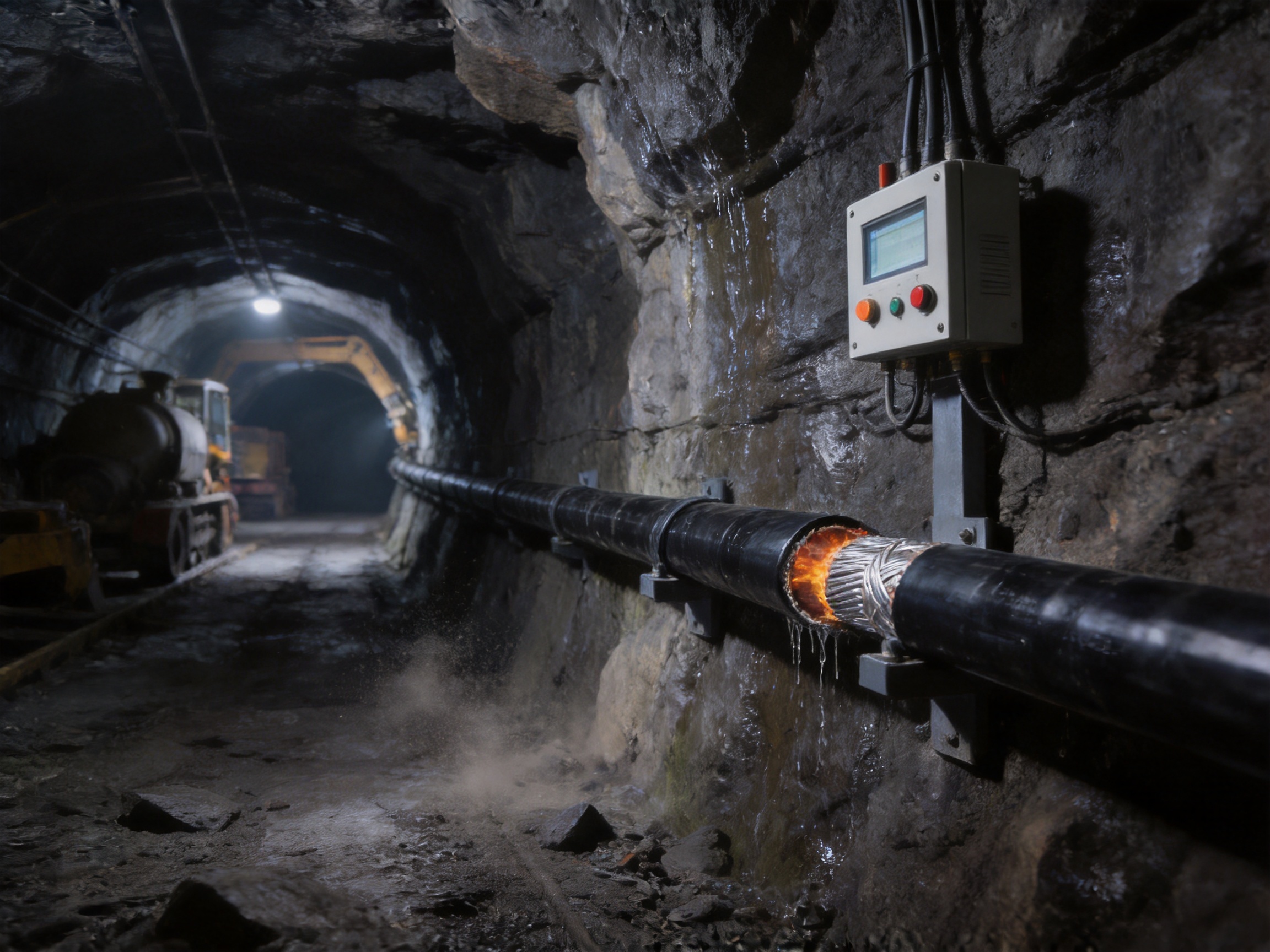
Underground mining communication systems depend on cable that can perform reliably where moisture, mechanical stress, vibration, dust, corrosive gases, and accidental impact are constant risks. A communication cable used in a mine is not simply a signal carrier. It is also part of the site’s safety infrastructure, monitoring network, control system, and emergency communication capability. For this reason, cable construction must combine dependable electrical transmission with strong mechanical protection, flame retardancy, environmental resistance, and installation stability.
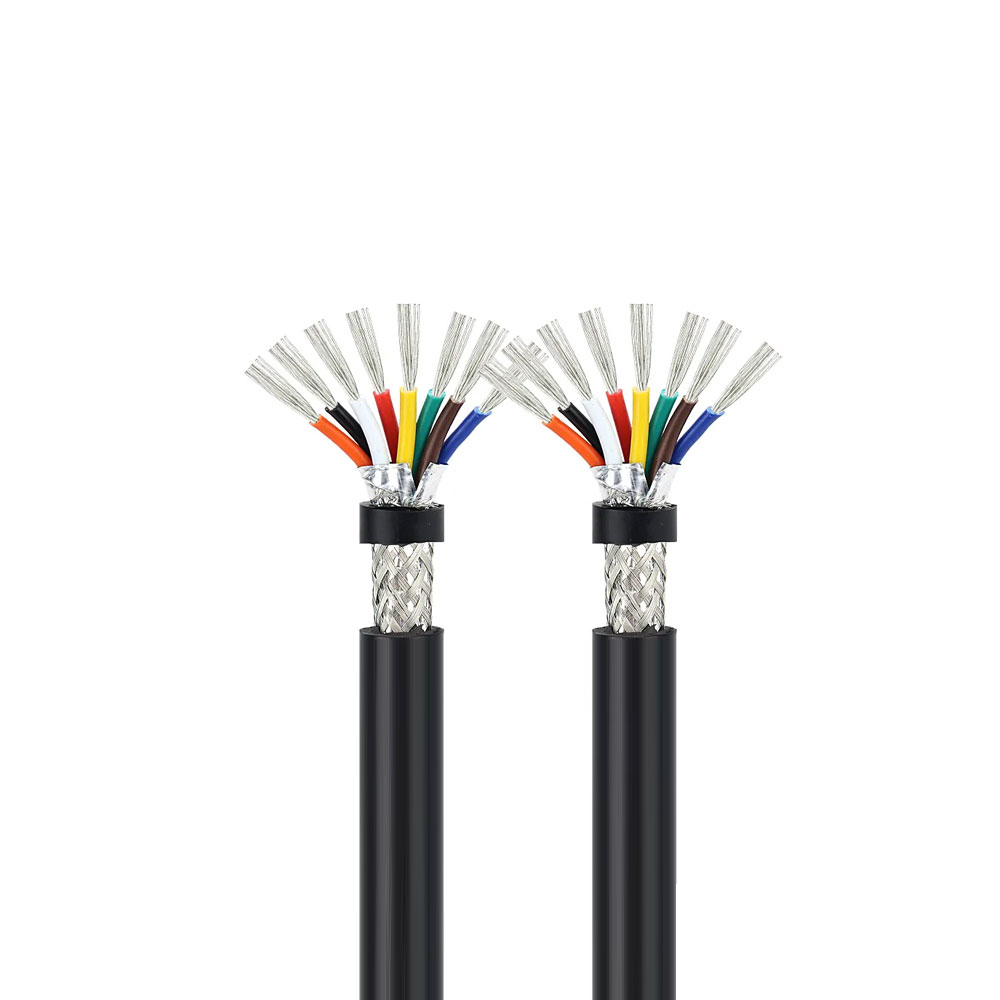
MHY32 is a mining armored communication cable designed for fixed installation in underground coal mines and other demanding industrial environments. It is based on the MHYV communication cable structure and adds a galvanized fine steel wire braided armor layer. This additional armor gives the cable substantially higher resistance to crushing, impact, pulling forces, abrasion, and rodent damage than an unarmored communication cable. At the same time, high-density polyethylene insulation supports stable signal transmission, while a flame-retardant polyvinyl chloride sheath provides protection against moisture, contamination, and harsh environmental exposure.
The cable is suitable for main tunnel communication, underground substation monitoring, fan room signal transmission, fixed control links, and other applications where communication lines may be exposed to external damage. It is manufactured by Anhui Zhishang Cable Technology Co., Ltd., a Chinese cable producer integrating research and development, manufacturing, inspection, customization, and technical service. Through automated production lines, process control, and project-based engineering support, the company can supply both standard specifications and customized cable solutions.
Mining communication networks operate under conditions that are fundamentally different from ordinary building, office, or light-industrial installations. Cables may be routed along tunnel walls, mounted near machinery, placed near transport routes, or installed in areas where maintenance access is limited. The cable must continue carrying signals even when exposed to vibration, pressure, moisture, and repeated environmental changes.
A communication failure underground can affect more than convenience. It may interrupt monitoring data, delay equipment warnings, interfere with coordination between work areas, and reduce the effectiveness of emergency response procedures. Therefore, the selection of communication cable should consider the complete operating environment rather than only the nominal electrical specifications.
Unarmored cables may be suitable for protected indoor routes, but they can be vulnerable when installed in locations exposed to compression, falling objects, sharp edges, or animal damage. A steel wire armored design creates a physical barrier around the inner cable structure. It distributes external force across the cable surface and helps prevent localized damage from reaching the insulation and conductors.
MHY32 addresses this need with a galvanized fine steel wire braid. The braid is specified with coverage of at least 80 percent, creating a high-protection layer while retaining a practical degree of flexibility for fixed routing. The armor also provides a conductive metallic layer that can support shielding and grounding arrangements when the installation design requires improved electromagnetic interference control.
The cable uses multi-stranded tin-plated copper conductors in a Class 6 construction. Multi-stranding improves flexibility during installation and reduces the risk of conductor breakage caused by normal handling, routing, and vibration. Although MHY32 is intended for fixed installation rather than mobile service, practical installation still involves pulling, bending, positioning, and termination. A stranded conductor is better suited to these operations than a solid conductor of comparable cross-sectional area.
Tin plating adds a protective surface to the copper. This helps reduce oxidation and improves the conductor’s suitability for humid or corrosive environments. It can also support more reliable termination when connectors, terminals, or junction components are used in conditions where bare copper may gradually develop surface contamination.
Available conductor cross-sections range from 0.5 square millimeters to 1.5 square millimeters. This range allows the cable to be specified according to the required core count, transmission arrangement, route length, installation space, and termination method. The conductors may be arranged in twisted-pair or star-quad structures, depending on the communication and monitoring requirements.
High-density polyethylene, commonly known as HDPE, is used as the primary insulation material. HDPE offers good dielectric properties, low moisture absorption, and stable insulation performance across the stated operating temperature range. These characteristics are important for underground communication because moisture ingress and environmental contamination can reduce insulation resistance and increase signal instability.
The specified insulation resistance is at least 1,000 megaohms per kilometer at 20 degrees Celsius. This value indicates a strong insulation barrier between conductors and between the cable core and the surrounding protective layers when tested under the specified conditions. Good insulation resistance helps reduce leakage, supports signal integrity, and improves long-term operational reliability.
The HDPE insulation also contributes to the cable’s transmission performance. MHY32 is specified with attenuation of no more than 1.8 decibels per 100 meters at 1 kilohertz. This makes the cable suitable for low-frequency analog or digital communication and monitoring signals within appropriate system design limits.
The armored layer is manufactured from galvanized fine steel wire. Galvanization helps improve resistance to surface corrosion and is particularly valuable in damp underground locations. The fine wire braid is designed to surround the cable core with high coverage while maintaining a construction that is more manageable during fixed installation than some heavier armor systems.
The armor coverage is specified at 80 percent or higher. This level of coverage helps protect against external impact, crushing, abrasion, and rodent bites. It also improves overall tensile strength. The specified overall cable tensile strength is at least 2,000 newtons, while the cable is designed to withstand pressure of at least 5,000 newtons per 100 millimeters.
The armor layer resistance is specified at no more than 5 ohms per kilometer. When correctly bonded, terminated, and grounded according to the installation design, the conductive armor can assist with electromagnetic interference control and equipotential bonding. For installations with especially strict interference requirements, an aluminum-plastic composite tape shield can be added as an optional feature.
The outer sheath is made from flame-retardant polyvinyl chloride. The sheath forms the first line of defense against moisture, dust, abrasion, corrosive gases, and routine handling damage. Its black color is standard for this product and is suitable for conventional underground cable identification practices.
The sheath is designed for harsh underground service and has a specified tear strength of at least 15 newtons per millimeter. Strong tear resistance is useful during installation because the cable may encounter brackets, clamps, support structures, tunnel surfaces, and other irregularities. A sheath that resists tearing is less likely to develop openings that could allow moisture or contaminants to reach the internal structure.
Flame retardancy is a critical safety property in coal mining applications. MHY32 is specified to pass the MT 818.1-1999 mining flame-retardant test. This helps reduce the risk of flame propagation along the cable in the event of an ignition source. Flame-retardant performance should always be evaluated together with the complete installation, including cable spacing, terminations, support systems, ventilation, and local mine safety rules.
MHY32 Moisture and environmental aging resistant Mining Cable
The following table summarizes the principal specifications of MHY32. Actual production parameters may be confirmed and adjusted according to the final design, core arrangement, customer drawings, applicable standards, and project requirements.
| Parameter | Specification |
|---|---|
| Product model | MHY32 |
| Product type | Armored mining communication cable |
| Number of cores | 1 to 30 cores |
| Core arrangement | Twisted pair or star quad |
| Conductor | Tin-plated stranded copper, Class 6 |
| Single-core cross-section | 0.5 square millimeters to 1.5 square millimeters |
| Rated voltage | 300/500 volts |
| Test voltage | 2,000 volts AC for one minute |
| Insulation material | High-density polyethylene |
| Armor structure | Galvanized fine steel wire braid, coverage of at least 80 percent |
| Sheath material | Flame-retardant polyvinyl chloride |
| Operating temperature | Minus 40 degrees Celsius to plus 65 degrees Celsius |
| Short-term overload temperature | Plus 85 degrees Celsius for two hours |
| Minimum bending radius | 12 times the cable outer diameter for fixed installation |
| Attenuation | No more than 1.8 decibels per 100 meters at 1 kilohertz |
| Insulation resistance | At least 1,000 megaohms per kilometer at 20 degrees Celsius |
| Capacitance unbalance | No more than 250 picofarads per kilometer |
| Crush resistance | At least 5,000 newtons per 100 millimeters |
| Overall cable tensile strength | At least 2,000 newtons |
| Armor layer resistance | No more than 5 ohms per kilometer |
| Sheath tear strength | At least 15 newtons per millimeter |
| Flame retardancy | Passes MT 818.1-1999 mining flame-retardant test |
| Standard sheath color | Black |
The most direct advantage of MHY32 over ordinary unarmored communication cable is its resistance to mechanical damage. In a mine, a cable may be pressed by equipment, struck by tools, affected by falling fragments, or damaged by contact with tunnel infrastructure. The steel wire braid absorbs and distributes these forces before they reach the insulation and conductor layers.
Compared with a lightweight cable that relies mainly on its polymer sheath, MHY32 provides an additional structural barrier. This can reduce the frequency of damage-related maintenance and help maintain service continuity in fixed routes. The armor is especially valuable in main tunnels, equipment rooms, monitoring routes, and other locations where the cable cannot be fully enclosed in rigid conduit.
Rodent bites and other animal damage can be a significant concern in underground infrastructure. A polymer sheath alone may not provide sufficient protection against persistent biting. The galvanized fine steel wire braid makes penetration much more difficult and protects the communication core from a common but often overlooked source of failure.
This feature is not intended to replace good cable routing and site housekeeping. However, it adds a valuable layer of protection where the environment makes animal interference possible. In comparison with non-armored alternatives, the cable offers a more complete defense against external damage.
The specified tensile strength of at least 2,000 newtons and crush resistance of at least 5,000 newtons per 100 millimeters reflect the cable’s focus on mechanical durability. These properties support safer handling during installation and improve the cable’s ability to withstand fixed-route service conditions.
A cable with higher mechanical strength is less likely to suffer internal conductor movement, insulation deformation, or sheath damage when exposed to routine installation stress. Proper support remains essential, but the armored design provides greater tolerance for demanding routes than a basic communication cable.
Mechanical protection alone is not enough for a communication cable. If the armor is heavy but the electrical design is poorly controlled, signal quality may still be unsatisfactory. MHY32 combines the armored structure with HDPE insulation, stranded tin-plated copper conductors, controlled core arrangements, and specified transmission values.
Attenuation of no more than 1.8 decibels per 100 meters at 1 kilohertz supports low-frequency communication and monitoring applications. Capacitance unbalance of no more than 250 picofarads per kilometer helps limit imbalance between circuits. These characteristics contribute to more consistent signal behavior over the cable route.
Underground locations often contain water vapor, condensation, drainage leakage, and chemically active gases. The HDPE insulation has low moisture absorption characteristics, while the PVC sheath protects the cable from routine contact with damp air and surface contaminants. Galvanized steel armor provides better corrosion resistance than untreated steel wire.
No cable should be treated as completely immune to water ingress or chemical attack. Correct termination, sealing, routing, and drainage are still necessary. Nevertheless, the material combination gives MHY32 a strong basis for operation in humid and corrosive underground environments.
Mining cables must be selected with fire safety in mind. The flame-retardant PVC sheath and compliance with the stated mining flame-retardant test distinguish MHY32 from general-purpose communication cables that may not be designed for underground coal mine requirements.
The cable’s flame-retardant design can help limit the spread of fire along the cable surface. This is particularly important when cables are installed in long tunnels or grouped near electrical and monitoring equipment. End users should verify that the final product, installation method, and local certification requirements match the specific mine and jurisdiction.
Long fixed routes in main tunnels require cable with reliable mechanical protection and stable transmission. MHY32 can be used for communication lines installed along tunnel walls, support structures, or designated cable racks. Its armored layer helps protect the cable from accidental impact and contact with surrounding infrastructure.
When used on a long route, the system designer should consider total attenuation, equipment interface requirements, grounding, cable support spacing, environmental temperature, and the need for intermediate junctions. The cable’s low-frequency transmission characteristics are suitable for applications that operate within its specified electrical performance range.
Underground substations may contain monitoring equipment for electrical parameters, equipment status, temperature, alarms, and operating conditions. Communication cables in these areas may be exposed to electromagnetic fields, vibration, maintenance activity, and restricted installation space.
MHY32 can provide a physically protected communication path between monitoring devices, control panels, and supervisory systems. Where electromagnetic interference is a major concern, the optional aluminum-plastic composite tape shield can be considered in addition to the steel wire armor. Shield continuity and grounding should be planned by qualified electrical engineers.
Ventilation fan rooms are essential to underground mine operation and may contain rotating machinery, switching equipment, vibration, and elevated noise levels. Communication and monitoring cables installed in these areas should withstand mechanical disturbance while maintaining dependable signal transmission.
The armored structure can help protect the cable from vibration-related movement and accidental contact during equipment inspection. The HDPE insulation and flame-retardant PVC sheath support operation in a demanding industrial environment, subject to the specified temperature and installation limitations.
Mining operations increasingly depend on fixed monitoring systems for environmental conditions, equipment status, access control, and production coordination. These systems require communication paths that remain stable over long periods and are not easily damaged by routine underground activity.
MHY32 is suitable for fixed monitoring and control links where the number of circuits, conductor size, and cable arrangement match the project requirements. With up to 30 cores available, one cable can support multiple communication or monitoring circuits, helping simplify route planning and reduce the number of separate cables.
Although designed for mining communication, the cable’s construction may also be considered for other fixed industrial environments requiring strong mechanical protection and flame-retardant performance. Potential examples include tunnels, underground utility corridors, heavy industrial facilities, processing plants, and infrastructure monitoring routes.
Suitability for any non-mining application should be confirmed through a review of voltage, temperature, fire performance, chemical exposure, bending conditions, installation method, and applicable local standards.
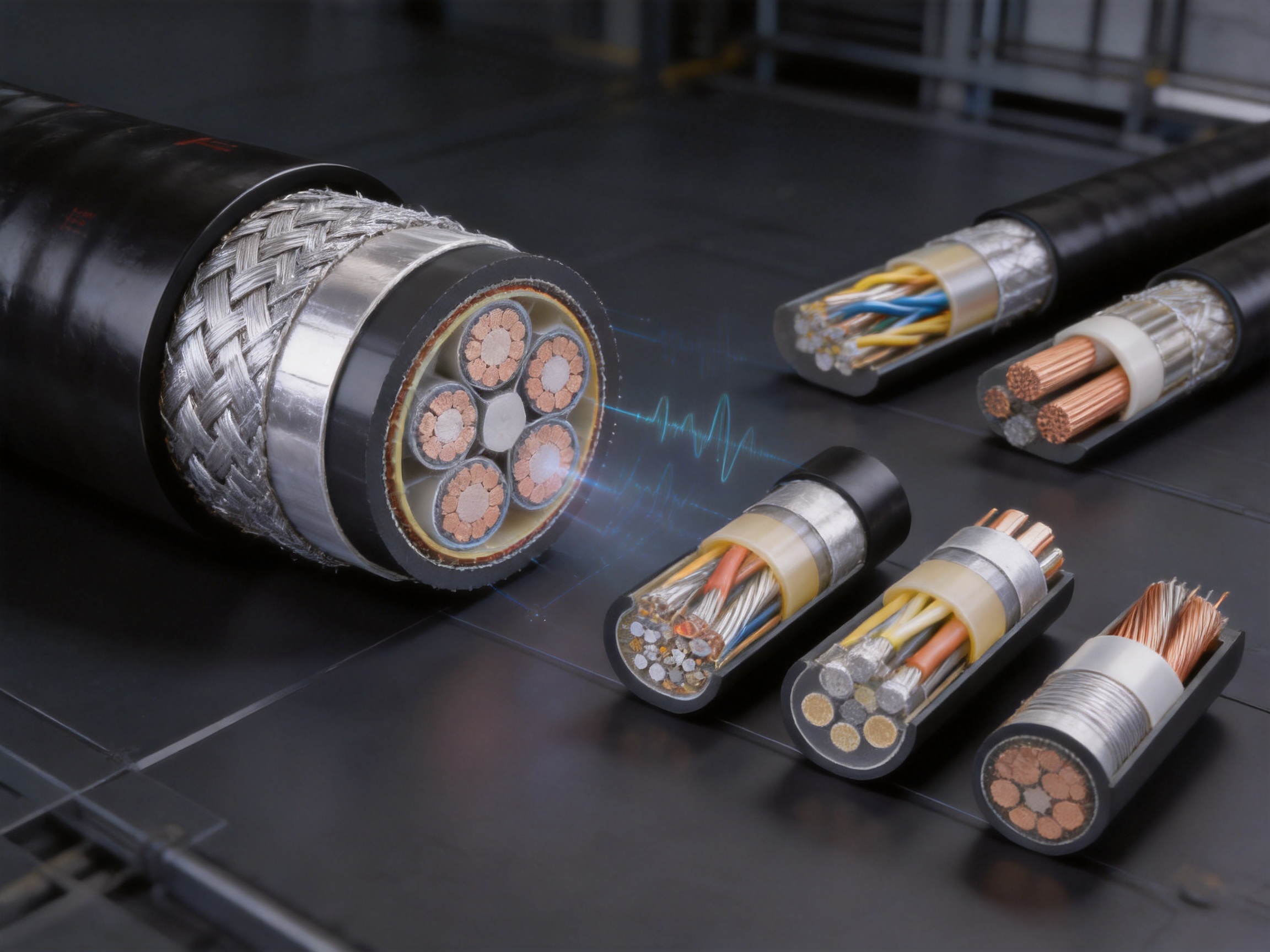
The performance of an armored cable depends on more than the nominal material list. Conductor quality, insulation concentricity, stranding accuracy, armor coverage, sheath uniformity, and final electrical testing all influence field reliability. Anhui Zhishang Cable Technology Co., Ltd. integrates these stages within a production system intended to support standard products and customized cable development.
Production begins with an engineering review of the required cable structure. The technical team evaluates the number of cores, conductor cross-section, pair or star-quad arrangement, insulation thickness, shielding requirements, armor density, sheath properties, overall diameter, bending radius, and termination requirements.
This review is important because cable design involves interactions between electrical, mechanical, and installation requirements. Increasing armor density may improve protection but also affect diameter, weight, flexibility, and installation force. Increasing the number of cores can improve circuit integration but may require careful control of internal geometry to maintain stable transmission. A structured specification review helps balance these factors before production begins.
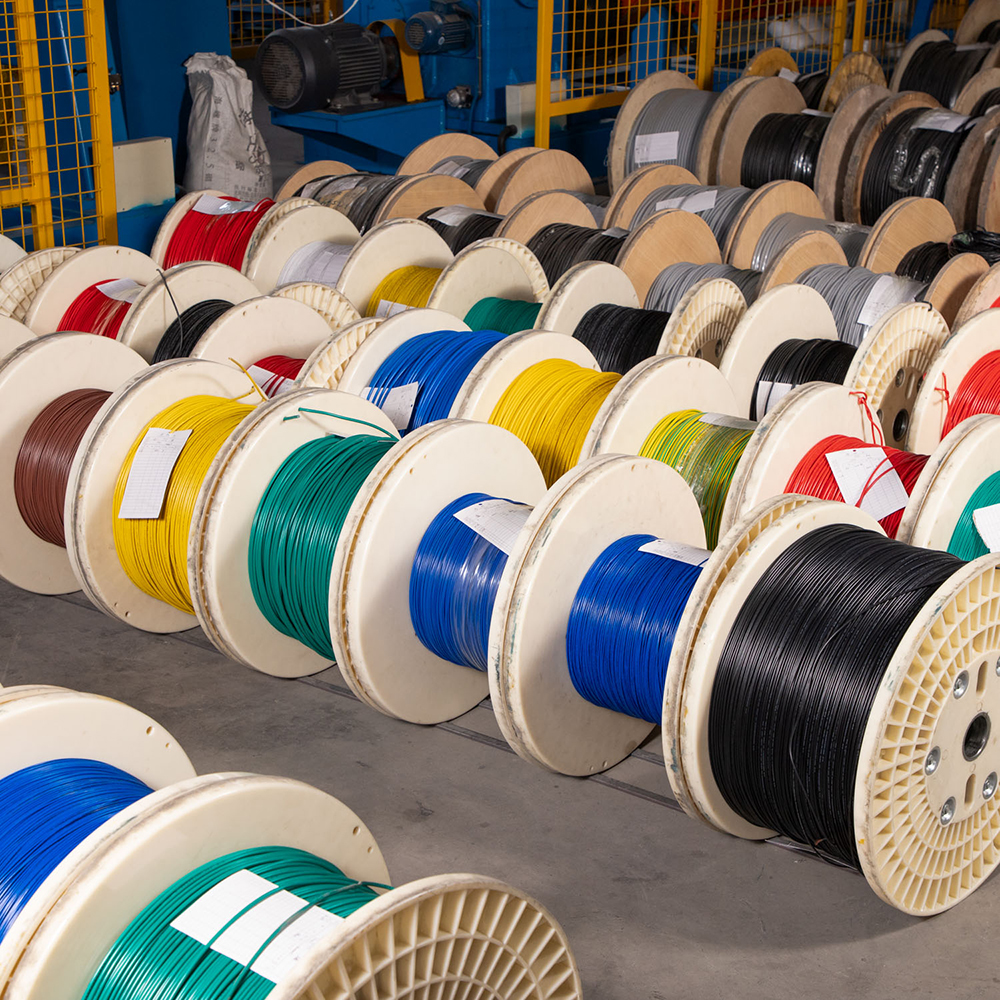
High-quality copper wire is selected and processed into multi-stranded conductors. Stranding equipment controls the lay length and uniformity of the conductor. The tin-plating process forms a protective layer around the copper surface, after which the conductor is inspected for continuity, surface quality, dimensional consistency, and mechanical condition.
Consistent conductor geometry helps the later insulation extrusion process remain stable. It also supports reliable electrical resistance and termination performance. The use of Class 6 stranded construction provides a practical combination of flexibility, handling performance, and mechanical integrity.
HDPE insulation is applied through controlled extrusion. During this process, temperature, pressure, line speed, material feeding, and cooling conditions are monitored to achieve a uniform insulation layer. Concentric insulation is particularly important because uneven thickness can affect electrical performance, mechanical protection, and the final cable diameter.
Online process monitoring can identify variations before a long production length is completed. After extrusion, the insulated conductors are checked for diameter, surface smoothness, spark faults, and insulation integrity. These controls help reduce the possibility of hidden defects progressing into the finished cable.
After insulation, the individual cores are assembled into the specified twisted-pair or star-quad configuration. Core arrangement influences capacitance, balance, signal coupling, and ease of termination. The assembly process therefore requires controlled tension and consistent lay geometry.
Core identification is also important for installation efficiency. Clear and durable identification reduces wiring errors during termination, testing, and future maintenance. For multi-core products, the manufacturing team can review customer requirements for numbering, color coding, marking, or other identification methods.
For projects with higher electromagnetic interference requirements, an aluminum-plastic composite tape shield may be incorporated. The shielding layer is applied with controlled overlap and continuity. The final design should specify whether the shield is to be grounded at one end, both ends, or through another approved configuration, depending on the communication system and grounding architecture.
Shielding should not be considered in isolation. The effectiveness of a shield depends on termination quality, grounding impedance, connector design, equipment compatibility, and route separation from high-power circuits. Zhishang’s engineering team can review these requirements during the customization stage.
The galvanized fine steel wire armor is applied using braiding equipment that controls wire tension, braid angle, coverage, and surface consistency. The target coverage of at least 80 percent provides broad protection over the cable circumference. Stable tension is essential because excessive or insufficient tension may affect armor compactness, cable diameter, flexibility, and mechanical performance.
After braiding, the armor layer is checked for continuity, coverage, resistance, surface defects, and conformity to the specified construction. Proper armor processing is one of the key factors distinguishing a reliable armored cable from a cable that merely includes a metallic layer.
Flame-retardant PVC is extruded over the armored core. The process is controlled to achieve a continuous, smooth, and appropriately thick outer sheath. The sheath must fully cover the armor while avoiding excessive voids, thin spots, surface cracks, or dimensional irregularities.
Online diameter measurement and visual inspection help maintain consistent production. Finished sheath samples may be evaluated for tensile behavior, elongation, tear strength, thermal aging, flame retardancy, and surface quality. The standard sheath color is black, while other marking or identification requirements may be discussed for project-specific orders.
Testing is used to verify that the completed cable meets the defined electrical, mechanical, and environmental requirements. Typical checks may include conductor continuity, conductor resistance, insulation resistance, voltage withstand, attenuation, capacitance unbalance, armor resistance, outer diameter, and visual appearance.
Mechanical evaluation may include crush resistance, tensile strength, sheath tear strength, bending behavior, and armor coverage. Flame-retardant performance is evaluated according to the applicable mining test method. Test reports can be supplied for standard products or arranged according to customer documentation requirements.
Anhui Zhishang Cable Technology Co., Ltd. operates a modern production base of approximately 5,000 square meters and has more than 50 employees, including quality engineers and research and development technicians with more than 10 years of industry experience. The company integrates product development, production, inspection, sales, and technical service, allowing project communication to continue from initial specification through delivery.
The company operates more than 10 automated production lines and reports a monthly production capacity of up to 10 million meters. This capacity supports both regular production planning and larger project requirements. Automation can improve repeatability in conductor processing, insulation extrusion, core assembly, braiding, sheath application, and online inspection.
Automated equipment does not eliminate the need for experienced technical personnel. Instead, the combination of process automation and engineering oversight allows production parameters to be adjusted for different cable structures. This is useful for products involving variations in core count, cross-section, shielding, armor density, outer diameter, and termination preparation.
The company follows national standards, relevant international standards, and industry benchmarks when defining cable products. It also provides OEM and ODM development based on customer drawings or samples. This is an advantage for mining contractors, equipment manufacturers, system integrators, and distributors that need a cable adapted to an existing system rather than a generic catalog product.
Quality assurance services may include full-core and full-length pure copper specifications, product test reports, and warranty support for standard cable models. Standard products may be stocked for faster shipment, while customized products generally require a lead time of approximately 7 to 20 days, depending on structure, quantity, testing, packaging, and production scheduling.
The company also emphasizes responsible manufacturing and green production practices. Its product range serves industrial automation, weak-current engineering, intelligent manufacturing, appliance equipment, power engineering, and related fields. Experience across these sectors can help support cross-disciplinary cable selection when a mining project includes communication, monitoring, control, and power-related cable requirements.
Mining sites differ in tunnel length, equipment layout, environmental exposure, communication architecture, and maintenance practices. A flexible cable supplier should therefore be able to modify the cable according to documented project needs.
MHY32 can be produced with 1 to 30 cores. The core count can be selected according to the number of communication circuits, monitoring devices, spare channels, and future expansion requirements. Twisted-pair construction may be suitable for balanced circuits, while star-quad construction may be selected for particular transmission arrangements.
Available single-core cross-sections range from 0.5 square millimeters to 1.5 square millimeters. The appropriate size should be selected according to electrical resistance, circuit length, equipment terminals, voltage drop where applicable, mechanical requirements, and installation limitations.
An aluminum-plastic composite tape shield can be added when the cable will run near motors, variable-frequency drives, switching equipment, power cables, or other sources of electromagnetic interference. The shield design should be coordinated with the grounding and termination plan so that the intended protection is achieved in the completed system.
The armor density can be reviewed for projects requiring a different balance between mechanical protection, weight, flexibility, and cable diameter. The standard product uses galvanized fine steel wire braid with coverage of at least 80 percent. Customized armor requirements should be assessed against the expected crushing force, route conditions, support method, and handling equipment.
Underground cable failures frequently occur at terminations rather than in the cable’s central length. Moisture, incorrect gland selection, poor armor bonding, insufficient strain relief, and improper sealing can compromise an otherwise well-designed cable. Zhishang supports termination sealing treatment customization for projects that require enhanced protection at cable ends.
Customers should provide connector type, entry dimensions, gland requirements, sealing material preference, grounding arrangement, and any relevant equipment drawings. This information allows the cable and termination treatment to be reviewed as one complete assembly.
MHY32 is intended primarily for fixed installation. Its minimum bending radius is specified as 12 times the cable outer diameter for fixed installation, and mobile installation is not applicable. The cable should not be forced into a tighter bend, sharply folded, twisted, or pulled around a corner with an excessively small radius.
Before installation, the cable drum should be inspected for shipping damage, moisture exposure, sheath cuts, deformation, and correct product identification. The cable should be unwound in the direction recommended by the drum markings. Dragging the cable over sharp ground surfaces should be avoided, and suitable rollers or guides should be used for long routes.
Supports, clamps, and brackets should be selected to hold the cable without crushing the sheath. Excessively tight clamps can deform the cable and reduce the protective value of the armor. Support spacing should be designed according to cable weight, route orientation, vibration, and local mine installation practice.
The cable should be separated from high-voltage and high-current power cables where practical. If separation is not possible, the route design should consider shielding, crossing angles, grounding, and communication equipment susceptibility. The armor and optional shield must be terminated in accordance with the approved electrical design.
At cable ends, the sheath should be carefully removed without cutting or nicking the insulation, conductors, or armor wires. Glands and sealing components should match the cable diameter and installation environment. Exposed armor should be protected from corrosion and connected correctly when it forms part of the grounding or shielding system.
After installation, the cable should be tested before being placed into service. Recommended checks include continuity, insulation resistance, conductor identification, shield or armor continuity, termination integrity, and communication performance. Test results should be recorded for future maintenance and troubleshooting.
Armored construction reduces the likelihood of damage, but it does not eliminate the need for inspection. A maintenance program should include periodic visual checks of sheath condition, support points, terminations, joints, bends, and areas near machinery. Special attention should be paid to locations where water collects or where the cable may rub against metal structures.
Changes in communication quality, intermittent alarms, increased noise, or unexplained data loss may indicate a problem with the cable, termination, grounding system, or connected equipment. Insulation resistance and continuity testing can help identify developing faults before a complete failure occurs.
When extending or repairing a route, replacement cable should match the original electrical and mechanical specifications. Mixing cables with substantially different impedance, capacitance, shielding, or termination characteristics may affect system performance. Any joint or repair should use components suitable for the underground environment and should be sealed against moisture.
Service life depends on temperature, humidity, chemical exposure, mechanical loading, bending frequency, installation quality, and maintenance. The stated long-term operating temperature range is minus 40 degrees Celsius to plus 65 degrees Celsius. A short-term overload temperature of plus 85 degrees Celsius for two hours is specified, but repeated or prolonged exposure beyond normal conditions should be avoided.
When evaluating MHY32 for a mining communication project, buyers should first define the communication protocol, signal frequency, route length, required number of circuits, and equipment interface. These details determine whether the twisted-pair or star-quad arrangement is most appropriate and whether the specified attenuation and capacitance values meet the system design.
The mechanical environment should then be reviewed. Important questions include whether the cable will be exposed to vehicle traffic, falling material, vibration, crushing, rodent activity, water, corrosive gases, or frequent maintenance work. The answers help determine whether the standard armor coverage is sufficient or whether additional armor or route protection should be considered.
Electrical safety requirements should also be confirmed. The rated voltage is 300/500 volts, and the test voltage is 2,000 volts AC for one minute. The cable should be used within the defined voltage and environmental conditions. Local mine approval, certification, installation codes, and customer specifications should be checked before procurement.
Procurement teams should request confirmation of conductor material, core count, cross-section, insulation, armor, sheath, test documentation, packaging, delivery length, and marking. If the project involves a custom structure, drawings should identify all relevant dimensions and tolerances. Clear documentation reduces the risk of receiving a cable that is electrically acceptable but mechanically unsuitable for the intended route.
A supplier that only sells standard cable may not be able to resolve issues involving termination, shielding, core arrangement, or route-specific mechanical requirements. An integrated manufacturer can evaluate these factors together. This approach is particularly helpful for mining projects where cable failure may result from an interaction between product design and installation conditions.
Zhishang’s integration of research and development, production, quality control, and sales support enables customers to communicate technical requirements through one organization. Engineers can provide product selection guidance, review customer drawings or samples, and develop cable structures for defined applications.
The company’s experience in industrial automation, weak-current engineering, intelligent manufacturing, power engineering, and equipment cabling provides a broader technical foundation. Mining communication cable often connects with control systems, sensors, monitoring devices, and power-related infrastructure. Understanding these interfaces can make cable selection more practical and reduce coordination problems between suppliers.
Fast shipment is another consideration for maintenance teams and contractors. Stocked standard products can support urgent replacement requirements, while customized products can be scheduled according to the structure and quantity required. A typical customized lead time of 7 to 20 days provides a planning reference, although the final schedule should be confirmed for each order.
MHY32 is used mainly for fixed communication and monitoring lines in underground coal mines. Typical applications include main tunnel communication, underground substation monitoring, fan room signal transmission, and fixed routes exposed to mechanical damage or harsh environmental conditions.
No. The product is designed for fixed installation, and its mobile installation specification is listed as not applicable. The minimum bending radius for fixed installation is 12 times the cable outer diameter. Applications involving continuous flexing, repeated dragging, or moving machinery should use a cable specifically designed for dynamic service.
The cable uses galvanized fine steel wire braid with coverage of at least 80 percent. This layer helps resist crushing, impact, abrasion, tensile stress, and rodent bites. It also provides a conductive metallic layer that may support shielding and grounding when properly terminated.
Yes. An aluminum-plastic composite tape shield can be added as an option to improve electromagnetic interference protection. The shielding arrangement should be selected together with the grounding, termination, equipment, and route design.
The cable uses multi-stranded tin-plated copper conductors in a Class 6 construction. Tin plating helps protect the copper surface in humid or corrosive conditions, while stranding improves handling and installation flexibility.
MHY32 can be produced with 1 to 30 cores. The cores may be configured in a twisted-pair or star-quad structure according to the communication and monitoring requirements.
The insulation is high-density polyethylene, selected for good dielectric performance and low moisture absorption. The outer sheath is flame-retardant PVC, which provides protection against moisture, abrasion, contamination, and flame propagation.
The long-term operating temperature range is minus 40 degrees Celsius to plus 65 degrees Celsius. A short-term overload temperature of plus 85 degrees Celsius for two hours is specified. The installation should be evaluated if actual conditions approach or exceed these limits.
The product specification states that MHY32 passes the MT 818.1-1999 mining flame-retardant test. Buyers should confirm the required certification, test documentation, and local approval requirements for the intended mine and country.
Yes. Customization may include core count, conductor cross-section, core arrangement, armor density, shielding, sheath marking, and termination sealing treatment. Customer drawings, samples, equipment interfaces, and installation requirements can be reviewed before production.
Continuity, insulation resistance, voltage withstand, conductor identification, armor or shield continuity, outer sheath condition, and communication performance should be checked. Test results should be documented and retained as part of the project commissioning record.
The cable should be routed without sharp bends, twisting, or excessive pulling. The fixed-installation bending radius should be at least 12 times the cable outer diameter. Suitable rollers, guides, supports, and clamps should be used to avoid sheath damage and excessive mechanical stress.
Anhui Zhishang Cable Technology Co., Ltd. operates a production base of approximately 5,000 square meters, more than 10 automated production lines, and a team of over 50 employees that includes quality and research personnel. The company supports standard production, OEM and ODM development, inspection documentation, and customized cable design.
Customized products typically require approximately 7 to 20 days, depending on the cable structure, order quantity, testing, packaging, and production schedule. Standard products may be available from stock for faster shipment, subject to inventory confirmation.
MHY32 is designed for mining communication applications where signal reliability must be combined with substantial mechanical protection. Its construction brings together tin-plated stranded copper conductors, HDPE insulation, galvanized fine steel wire braid armor, and a flame-retardant PVC sheath. The result is a fixed-installation communication cable suited to underground routes exposed to crushing, impact, moisture, corrosion, vibration, and rodent activity.
The product’s main advantages over conventional unarmored communication cables are its stronger physical protection, higher tensile and crush resistance, improved resistance to animal damage, flame-retardant construction, and stable low-frequency transmission performance. Optional aluminum-plastic composite tape shielding, customized core arrangements, adjustable armor requirements, and termination sealing treatment allow the cable to be adapted to specific project conditions.
Its performance is supported by the manufacturing capabilities of Anhui Zhishang Cable Technology Co., Ltd. The company combines automated production, experienced engineering personnel, inspection procedures, OEM and ODM support, and integrated technical service. With modern production facilities, multiple automated lines, standard product inventory, and customized development capability, it can support contractors, mine operators, equipment manufacturers, distributors, and system integrators.
For the best result, product selection should be based on a complete review of the communication system, environmental conditions, mechanical hazards, installation route, grounding arrangement, fire-safety requirements, and local standards. When these factors are properly coordinated, MHY32 can provide a durable and dependable communication path for demanding underground infrastructure.
1. MT 818.1-1999, Coal Mine Flame-Retardant Cable Test and Technical Requirements.
2. IEC 60228, Conductors of Insulated Cables.
3. IEC 60332 Series, Tests on Electric and Optical Fiber Cables Under Fire Conditions.
4. IEC 60502 Series, Power Cables with Extruded Insulation and Their Accessories.
5. General engineering practices for underground mining communication, monitoring, cable routing, grounding, and maintenance.
6. Manufacturer-provided MHY32 product specifications and technical information.
7. Manufacturer quality-control, OEM, ODM, and cable customization information.
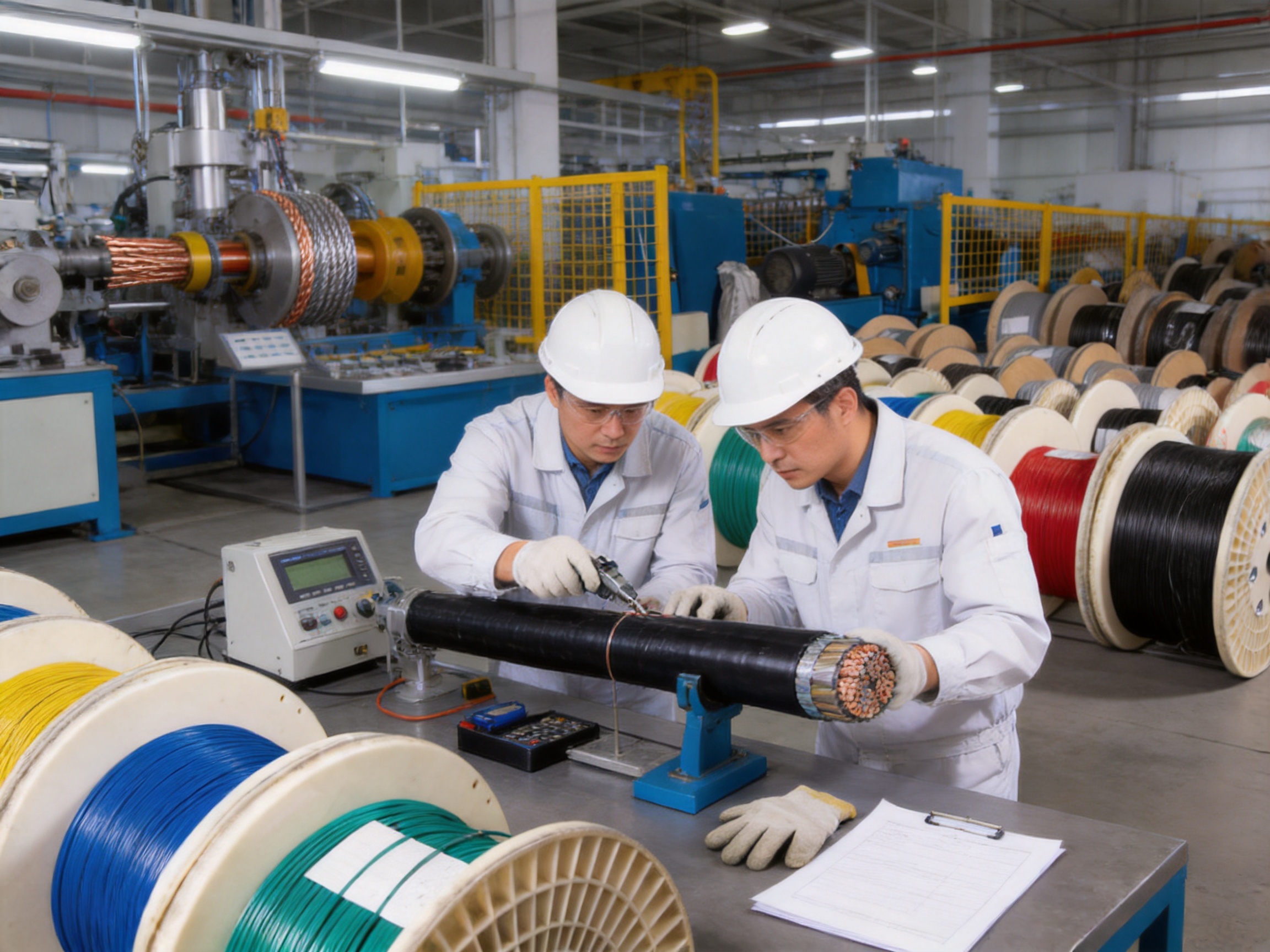

We firmly believe that good cables are not only a competition of materials, but also a reflection of craftsmanship, quality, and responsibility.

Links
Product
Send Inquiry
No. 29 Sankeshu Road, Xuanzhou District, Xuancheng City, Anhui Province, China
+86-18621104555/+86-563-2622999
 Electrical Cable Manufacturer
OEM/ODM Wire and Cable Solutions
Electrical Cable Manufacturer
OEM/ODM Wire and Cable Solutions
 English
 Español
 عربى
عربى
 русский