
Get more content that can help you
Content
Modern motion systems require cables that do far more than simply conduct electricity. In elevators, lifts, automated handling equipment, moving control cabinets, drag chains, and vertically reciprocating systems, cables are exposed to repeated bending, long-term mechanical tension, vibration, friction, and changing environmental conditions. A conventional stationary cable may perform well when installed in a fixed tray or conduit, but it can quickly fail when subjected to continuous motion. The TRVV Reliable Electrical Performance Drag Chain Cable is engineered for these demanding environments, combining ultra-flexible conductors, high-strength tensile components, stable insulation, and an abrasion-resistant flexible sheath into a single integrated cable solution.
This cable is designed to transmit power, control commands, signals, communication data, and video signals in dynamic installations. Its structure supports repeated bending cycles, stable electrical performance, and organized wiring in compact equipment spaces. In elevator and lift applications, it functions as a traveling cable between the elevator car and fixed points in the shaft. In automation and drag chain applications, it supports moving machine components where wiring must bend millions of times while maintaining signal integrity and mechanical safety.
Anhui Zhishang Cable Technology Co., Ltd. manufactures this cable with a focus on reliability, customization, and process control. The company integrates research and development, production, and sales, operating a modern manufacturing base of approximately 5,000 square meters with automated production lines and an experienced technical team. By combining material selection, conductor design, precise extrusion, tensile reinforcement, and full-process inspection, the company provides cable solutions for industrial automation, intelligent manufacturing, weak current engineering, power engineering, appliance equipment, and specialized project requirements.
TRVV Reliable electrical performance Drag Chain Cable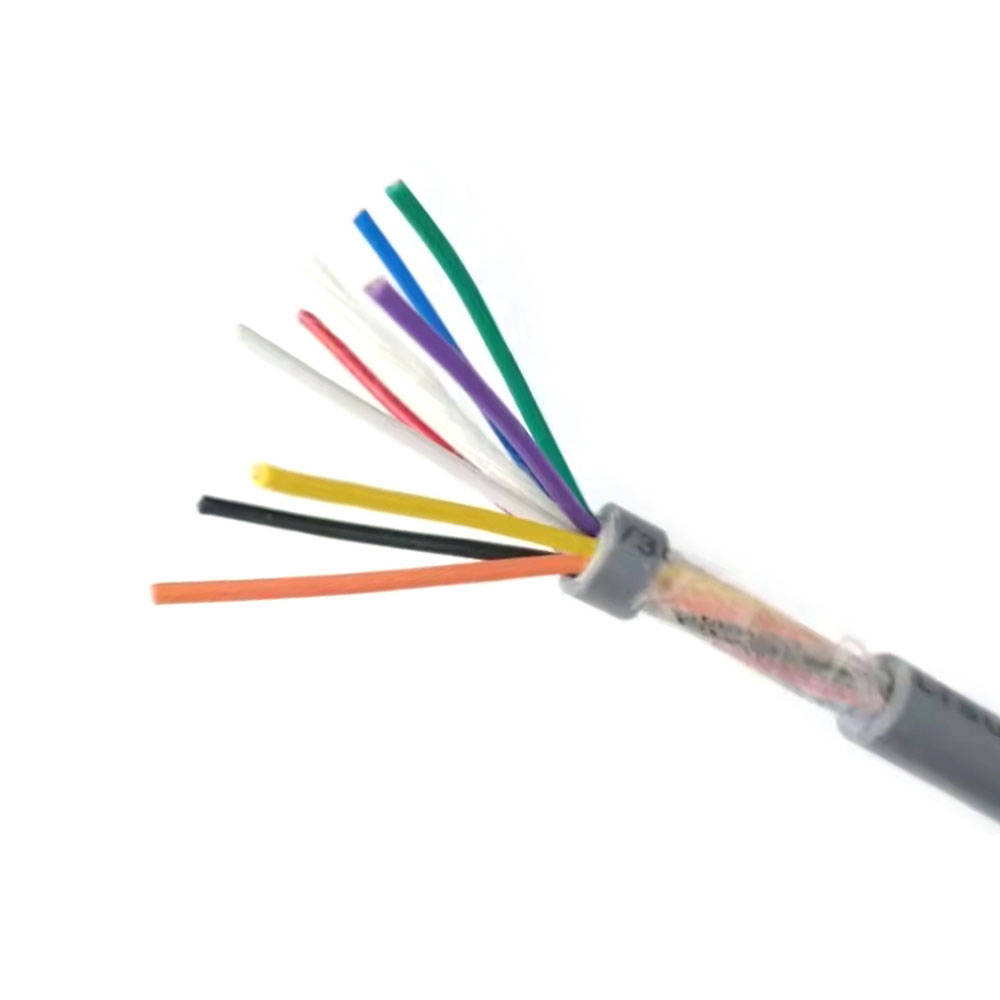
The TRVV Reliable Electrical Performance Drag Chain Cable is a flexible, multi-core cable designed for repeated movement. Its conductor is typically a Class 6 annealed copper conductor made from multi-strand ultra-fine copper wires. This conductor structure gives the cable the flexibility required for continuous bending while maintaining excellent conductivity. Compared with ordinary Class 2 or Class 5 conductors, the ultra-fine Class 6 conductor arrangement reduces stress concentration during movement and helps prevent conductor breakage over time.
The cable can be produced with signal and control core cross-sections from approximately 0.75 mm² to 2.5 mm², while power cores may range from approximately 4 mm² to 35 mm² depending on project requirements. This flexibility in design allows one cable to integrate power transmission, control circuits, signal lines, communication pairs, and video lines. Instead of installing several separate cables, users can adopt one organized cable assembly, reducing installation complexity and improving the reliability of the overall system.
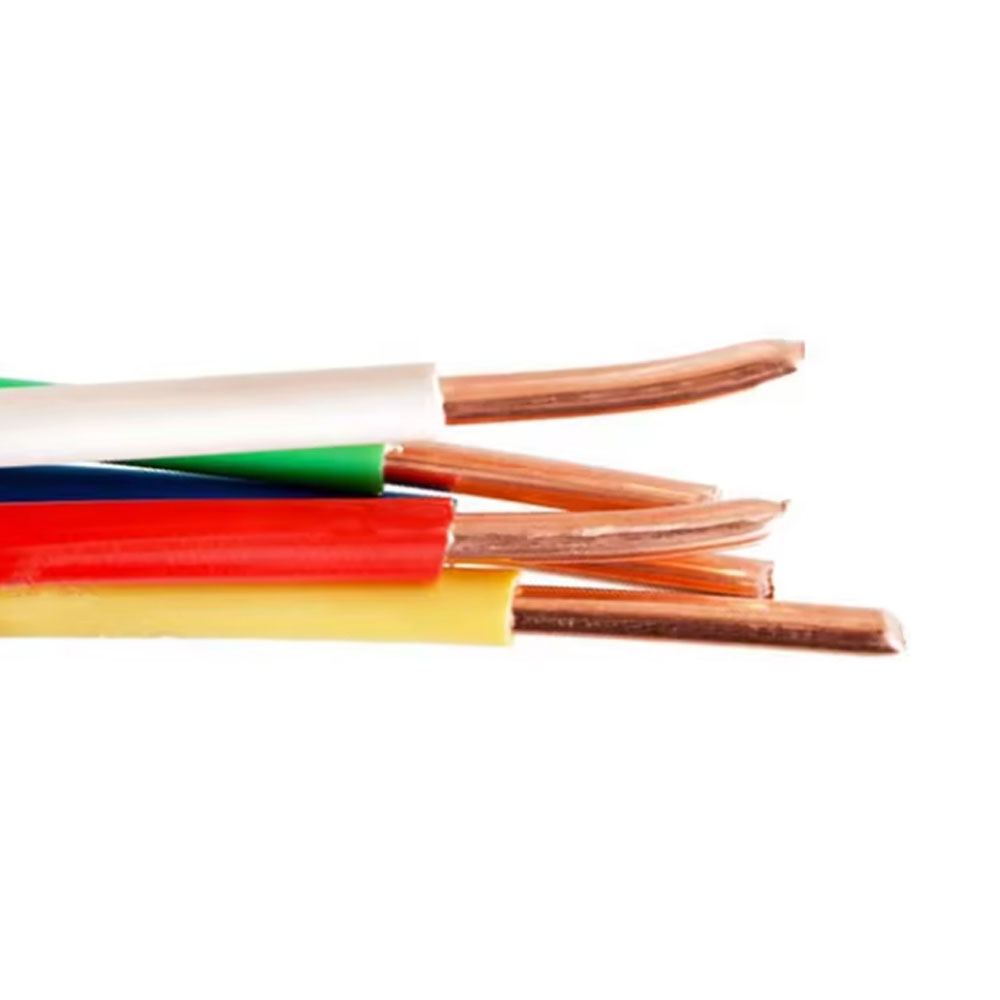
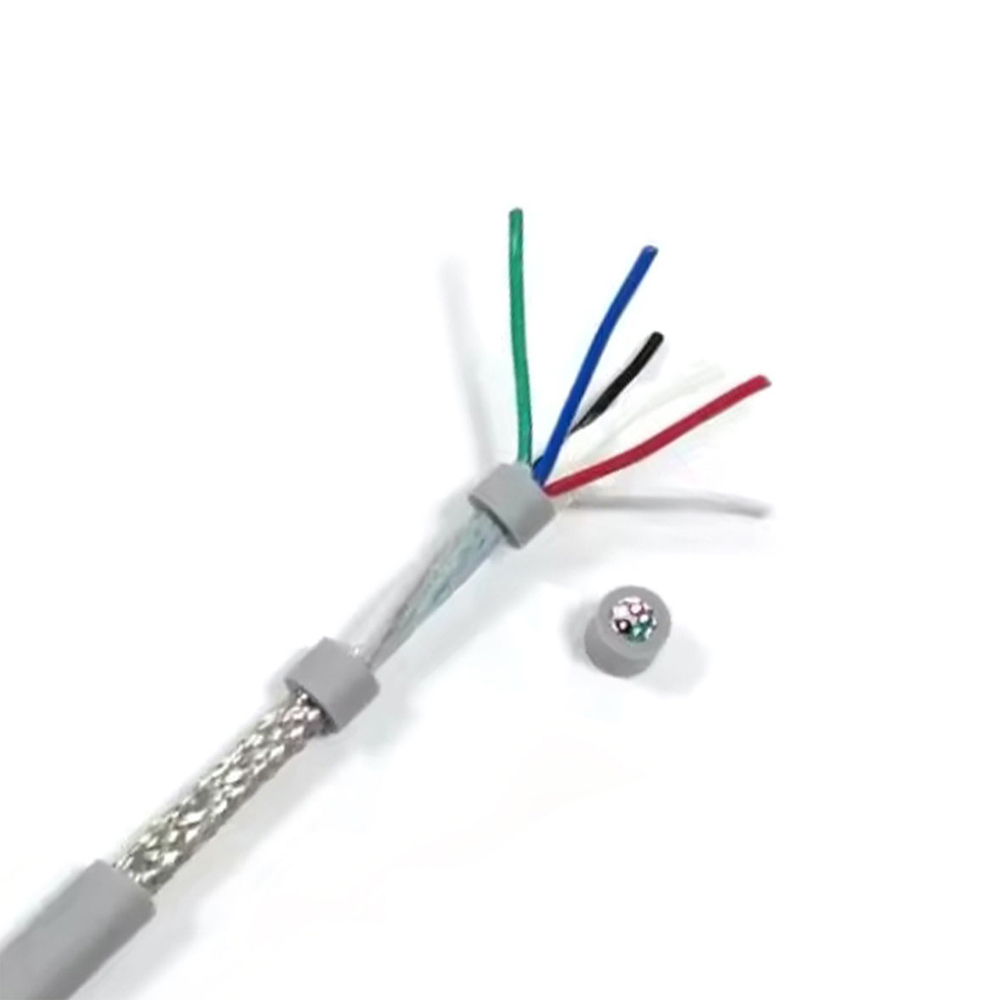
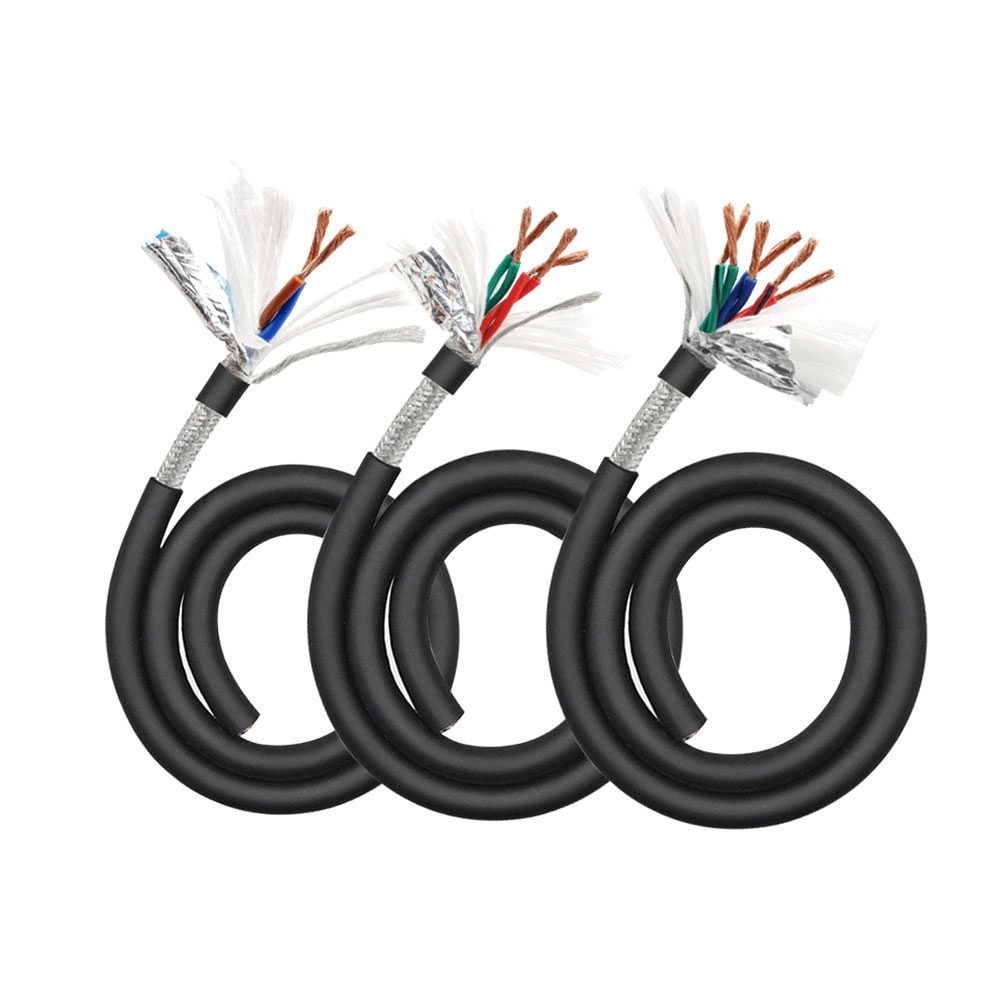
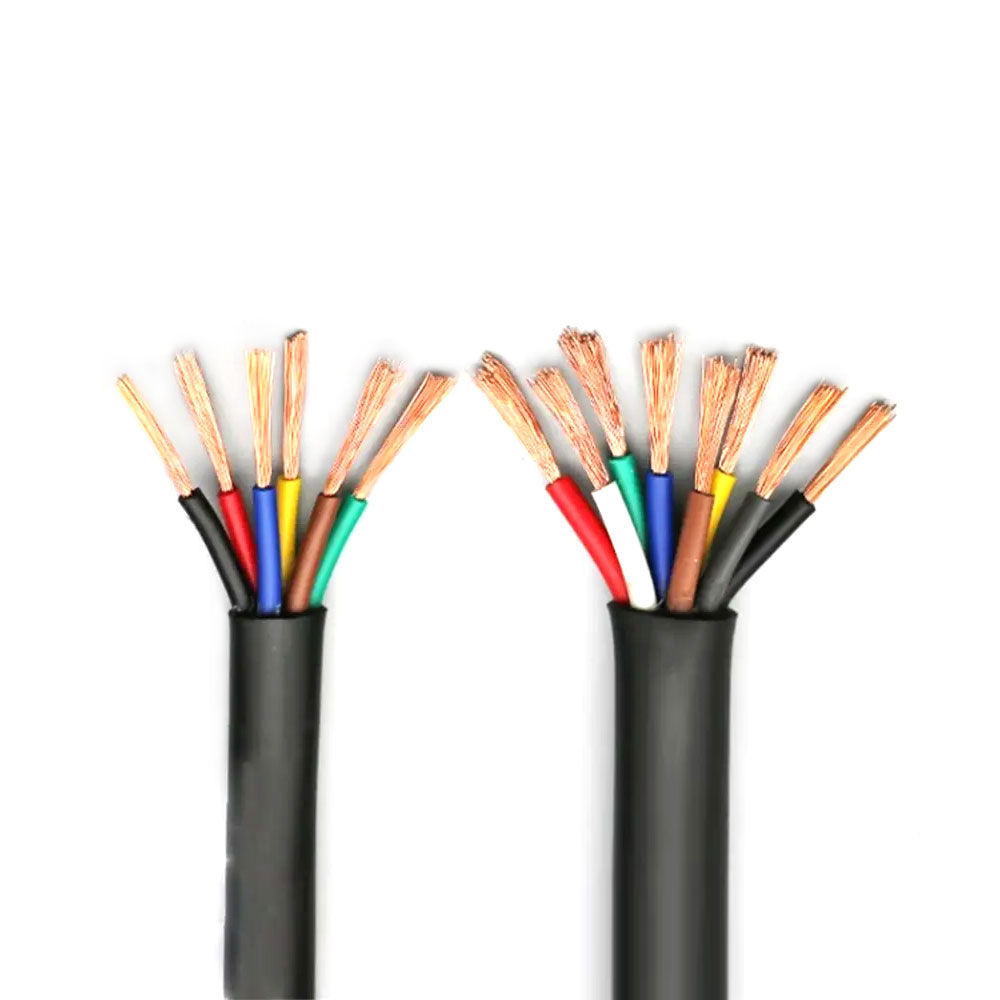
The insulation is made from special flexible PVC formulated to support electrical stability and bending performance. Color-coded cores simplify installation, maintenance, troubleshooting, and replacement. Depending on system requirements, the cable can include twisted pairs, shielded twisted pairs, coaxial cores, ground cores, and multiple control cores. This integrated structure is especially useful in elevator shafts and moving machinery where space is limited and cable routing must remain orderly.
A critical feature of this cable is the tensile element. It may be positioned centrally or integrated into the cable structure using aramid yarn, fiber rope, or galvanized steel wire rope. This reinforcement is essential in vertical travel applications because the cable must carry its own weight and resist mechanical pulling forces during operation. By allowing the tensile element to bear mechanical load, the electrical cores are protected from excessive stress, which improves long-term safety and service life.
The outer sheath is made from high-strength, abrasion-resistant, bend-resistant PVC. It is generally available in black or gray, and low-smoke zero-halogen sheath options may be provided depending on project specifications. The sheath is designed to resist moisture, oil, mildew, surface wear, and mechanical fatigue commonly found in elevator shafts, industrial workshops, and moving equipment environments. The cable is typically rated for 300/500V or 450/750V and can operate in mobile installation conditions from approximately -15°C to +70°C. For moving installation, the recommended minimum bending radius is generally 10 times the cable outer diameter.
A cable installed in a dynamic system experiences conditions very different from a fixed wiring installation. In a stationary application, the primary concerns are voltage rating, current capacity, insulation resistance, flame performance, and environmental resistance. In a moving application, mechanical fatigue becomes equally important. Every bending cycle creates stress in conductors, insulation, fillers, shielding layers, and the sheath. If the cable is not engineered for repeated motion, small cracks may develop, copper strands may fatigue, insulation may deform, shielding may loosen, and signal transmission may become unstable.
Drag chain and elevator traveling cable applications are particularly demanding because movement is repeated and predictable but continuous. In an elevator, the cable bends and straightens each time the car moves. In automated equipment, a drag chain may cycle thousands of times per day. Over months and years, these movements can accumulate into millions of bending cycles. A cable that appears strong during initial installation may fail prematurely if its internal structure is not optimized for fatigue resistance.
The TRVV Reliable Electrical Performance Drag Chain Cable addresses these challenges through a balanced structure. The conductor uses ultra-fine copper strands to distribute bending stress. The insulation remains flexible enough to follow movement without cracking. The core arrangement is designed to reduce internal friction and maintain a round structure. Fillers help preserve geometry and prevent cavities. Tensile reinforcement protects the electrical cores from pulling force. The sheath resists abrasion and provides an outer protective layer against the operating environment.
Competitor products often focus on one performance characteristic while neglecting others. A cable may be flexible but lack tensile strength. Another may be mechanically strong but too stiff for tight bending. Some cables may include multiple functions but suffer from poor internal organization, leading to interference or uneven stress distribution. The advantage of a well-designed TRVV drag chain cable is that it combines flexibility, strength, electrical stability, and integration in one engineered product.
The cable uses multi-strand ultra-fine annealed copper conductors. This conductor design is important because copper fatigue is one of the most common causes of failure in moving cables. When a solid or insufficiently flexible conductor bends repeatedly, stress concentrates along the bending area. Over time, individual conductors may crack or break, causing increased resistance, intermittent contact, overheating, or complete circuit failure. By using numerous fine strands, the conductor bends more smoothly and distributes mechanical stress over a larger number of copper elements.
Extreme flexibility also makes installation easier. In narrow elevator shafts, compact drag chains, machine arms, or moving cabinets, installers often need to route cables through limited spaces. A flexible cable reduces installation strain, lowers the risk of twisting damage, and helps maintain a stable bending radius. This is a significant advantage over stiffer competitor cables that may resist routing, spring back from cable guides, or place excessive stress on terminals and connectors.
In vertical applications, tensile strength is not optional. The cable must withstand its own weight as well as dynamic forces during acceleration, deceleration, and vibration. If the electrical cores carry this load directly, conductor fatigue and insulation damage may occur. The TRVV cable solves this issue by incorporating tensile elements such as aramid yarn, fiber rope, or galvanized steel wire rope. These components are designed to bear mechanical load, allowing the electrical cores to focus on power and signal transmission.
This is especially important for elevators and lifts. A traveling cable must move reliably between the car and the shaft connection point. If the cable stretches, twists, or places excessive force on the cores, it can compromise safety and operational stability. The integrated tensile element helps maintain structural integrity, reducing the probability of premature failure and improving long-term performance in vertical reciprocating movement.
Bending fatigue resistance is a core requirement for drag chain and traveling cable applications. This cable is designed to withstand millions of bending cycles when properly selected and installed. The performance comes not from a single material but from the combined cable structure: flexible copper, flexible PVC insulation, optimized core arrangement, suitable fillers, tensile reinforcement, and abrasion-resistant sheath.
Compared with standard flexible cables, a drag chain cable must resist repeated mechanical movement without internal displacement. If cores slide excessively against each other, the insulation can wear internally. If the cable becomes oval or twisted, bending stress becomes uneven. By maintaining cable roundness and using non-hygroscopic filling material, the TRVV cable helps preserve its designed geometry throughout service life. This contributes to consistent performance and easier installation in chains, guides, shafts, and moving equipment.
Motion should not compromise electrical stability. The cable is designed to transmit power, control, signal, communication, and video through integrated cores. Stable insulation performance, conductor quality, and optional shielding structures help minimize interference and maintain signal reliability. This is particularly valuable in modern systems where one moving cable may serve motor circuits, safety circuits, communication lines, sensors, cameras, and control devices simultaneously.
Competitor products may require multiple cables for different functions. This increases wiring complexity, installation time, and the possibility of cable entanglement. By integrating different functional cores into one cable, the TRVV design supports organized wiring and reduces clutter. In addition, twisted pairs and shielded pairs can be incorporated for communication and signal stability, while coaxial cores can support video transmission where required.
The flexible PVC sheath offers practical resistance to moisture, oil, mildew, abrasion, and general mechanical wear. Elevator shafts and industrial environments may contain dust, humidity, lubricants, cleaning residue, and temperature variation. A moving cable must withstand these influences while maintaining flexibility. The cable’s sheath is formulated for a balance of movement performance and environmental protection.
For projects requiring enhanced safety or specific building requirements, sheath options may include low-smoke zero-halogen properties. This can be valuable in public buildings, transport facilities, commercial towers, and safety-sensitive installations. Custom sheath materials, colors, marking styles, and performance levels can be discussed based on project needs.
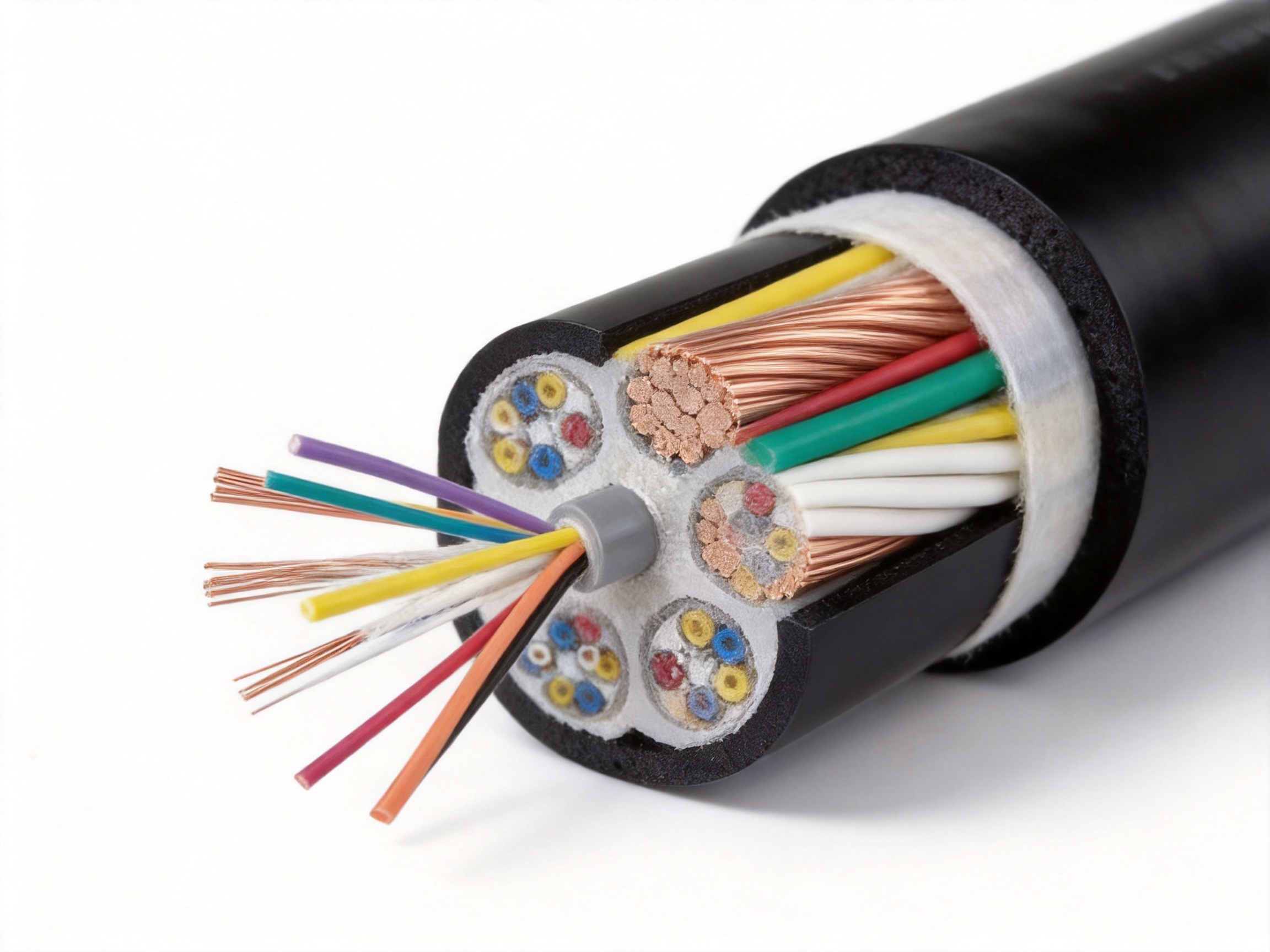
The most prominent application for this cable is elevator and lift traveling systems. In such installations, the cable connects the moving car to the fixed control and power systems in the shaft. It may transmit power for lighting, door operators, communication devices, control panels, sensors, emergency systems, and video equipment. Because the elevator car moves vertically, the cable must bend repeatedly while carrying mechanical load. The TRVV cable’s integrated tensile reinforcement and bending resistance are directly suited to this application.
The cable is also suitable for drag chain systems in automated machinery. Drag chains guide cables and hoses along controlled paths as machine components move. Examples include CNC equipment, robotic production lines, packaging machinery, automated storage and retrieval systems, printing equipment, textile machinery, and material handling systems. These environments demand cables that can move repeatedly without kinking, twisting, or breaking.
In industrial automation, cables often need to carry both power and data. A motor may require power cores, while sensors and encoders require signal pairs. Cameras may require coaxial video transmission, and control systems may require shielded communication lines. A custom multi-core TRVV drag chain cable can consolidate these requirements into one cable, simplifying the system layout.
The cable can also be used in vertical lifting equipment, moving platforms, hoists, stage equipment, warehouse lifts, inspection systems, and other machines that require mobile wiring. The ability to customize core structure makes it suitable for both standard and special-purpose equipment. Where ordinary fixed cables may fail due to repeated bending, this dynamic cable provides a more reliable option.
The performance of a dynamic cable begins with its conductor. The TRVV cable uses Class 6 annealed copper conductors, which are known for high flexibility. Annealed copper provides excellent conductivity and ductility, while the multi-strand ultra-fine structure enables repeated bending. The conductor design can be adjusted according to cross-sectional area, current requirement, bending radius, and installation environment.
The insulation is a special flexible PVC compound. It is selected for electrical performance, flexibility, and compatibility with the overall cable structure. Color coding improves circuit identification. For complex cables with many cores, correct color identification is essential during installation and maintenance. It reduces wiring errors and helps technicians diagnose circuits efficiently.
The core structure can be customized. A typical configuration may include power cores for three-phase supply and grounding, multiple control cores, twisted communication pairs, shielded signal pairs, and coaxial video elements. The arrangement is carefully designed to balance the cable and reduce interference. When power and signal cores are placed in the same cable, separation, twisting, shielding, and layout become important for stable operation.
The tensile element is one of the defining structural features. Aramid yarn offers high tensile strength with low weight and flexibility. Fiber rope can provide strong support while maintaining bending capability. Galvanized steel wire rope offers robust tensile capacity for heavier-duty vertical applications. The correct tensile element depends on cable length, weight, travel height, mechanical load, and installation method.
Filling materials are used to maintain cable roundness and reduce internal movement. Non-hygroscopic fillers help prevent moisture absorption and preserve the internal geometry of the cable. A round and stable cable structure improves bending performance, sheath extrusion quality, and movement behavior in drag chains or shaft loops.
The outer sheath provides the first line of defense against external mechanical and environmental conditions. High-strength flexible PVC offers abrasion resistance, bend resistance, and basic resistance to oil, moisture, and mildew. The sheath must be strong enough to protect the cable but flexible enough to move continuously. This balance is critical. A sheath that is too soft may wear quickly; a sheath that is too hard may crack or restrict bending.
| Item | Typical Specification | Performance Benefit |
|---|---|---|
| Product Type | TRVV flexible drag chain and traveling cable | Designed for dynamic motion, elevator travel, and automation systems |
| Conductor | Class 6 annealed copper, multi-strand ultra-fine wires | High flexibility and reduced conductor fatigue during repeated bending |
| Signal and Control Core Range | Approximately 0.75 mm² to 2.5 mm² | Suitable for control circuits, sensors, communication, and signal transmission |
| Power Core Range | Approximately 4 mm² to 35 mm² | Supports power transmission for moving equipment and elevator systems |
| Insulation | Special flexible PVC, color-coded | Stable electrical performance and easy circuit identification |
| Core Options | Power cores, control cores, twisted pairs, shielded pairs, coaxial video cores | Integrated wiring for power, control, communication, and video |
| Tensile Element | Aramid yarn, fiber rope, or galvanized steel wire rope | Protects electrical cores from tensile load and improves vertical motion safety |
| Filling | Non-hygroscopic filling material | Maintains cable roundness and reduces internal structural deformation |
| Sheath | High-strength abrasion-resistant flexible PVC | Resists wear, bending stress, moisture, oil, and mildew |
| Rated Voltage | 300/500V or 450/750V | Meets common requirements for control and power circuits |
| Operating Temperature | Approximately -15°C to +70°C for mobile installation | Suitable for building shafts and industrial motion environments |
| Minimum Bending Radius | Generally 10 × cable outer diameter for mobile installation | Supports reliable movement when installed according to recommended limits |
Not every flexible cable is suitable for drag chain or elevator travel applications. Ordinary flexible cables may be designed for occasional movement, not continuous repeated motion. They may bend during installation but are not intended to cycle millions of times. The TRVV cable is designed specifically for dynamic performance, which gives it several advantages over standard flexible products.
First, the conductor structure is optimized for movement. Ordinary cables may use fewer or thicker copper strands. Such conductors can resist occasional bending but may fatigue under continuous operation. The ultra-fine Class 6 conductor structure provides better flex life and lower bending stress.
Second, the tensile element provides mechanical support. Many ordinary flexible cables do not include a dedicated load-bearing component. In vertical applications, this can lead to conductor stretching, insulation deformation, and terminal stress. The TRVV cable separates mechanical load-bearing from electrical transmission, improving safety and durability.
Third, the integrated multi-core design reduces wiring complexity. Instead of installing separate power cables, signal cables, communication cables, and video cables, users can choose a customized integrated structure. This improves cable management and reduces the risk of tangling or uneven movement.
Fourth, the sheath is selected for repeated bending and abrasion resistance. Stationary cable sheaths may be strong but not sufficiently flexible, or flexible but not durable enough for continuous friction. The TRVV sheath is designed to support both protection and movement.
Fifth, the cable can be customized according to project requirements. Competitor products may be limited to standard catalog configurations. In contrast, Anhui Zhishang Cable Technology Co., Ltd. supports OEM and ODM development based on drawings, samples, or application conditions. This is especially valuable for equipment manufacturers, elevator integrators, and automation engineers who require non-standard core combinations, shielding designs, or tensile structures.
High-quality cable performance depends on manufacturing control as much as design. Anhui Zhishang Cable Technology Co., Ltd. is located in Xuanzhou District, Xuancheng City, Anhui Province, China, an important region within the Yangtze River Delta economic area. The company integrates research and development, production, and sales of wires and cables. Its modern production base covers approximately 5,000 square meters and is equipped with automated production lines that support stable output and consistent manufacturing quality.
The company has more than 50 employees, including quality engineers and R&D technicians with over 10 years of industry experience. This technical background allows the company to understand both standard cable requirements and special application needs. In dynamic cable production, experience is especially important because the final performance depends on many details: conductor stranding tension, insulation thickness, core lay length, shielding coverage, filler compatibility, tensile element position, sheath concentricity, and cooling control.
The company follows the business philosophy of quality orientation, integrity foundation, and stability priority. This philosophy is reflected in product development and manufacturing management. For dynamic cables, stability is not only a production target but also an application requirement. Customers need cables that perform consistently after installation, not only during factory inspection. Stable production processes help ensure that each batch meets defined electrical and mechanical expectations.
The company operates 10 automated production lines with monthly output capacity of up to 10 million meters. Automated equipment improves dimensional accuracy, production efficiency, and process repeatability. For customers, this means the manufacturer can support both standard stock products and customized batch production. Standard models can be shipped quickly, while customized products typically require a lead time of approximately 7 to 20 days depending on design complexity and order volume.
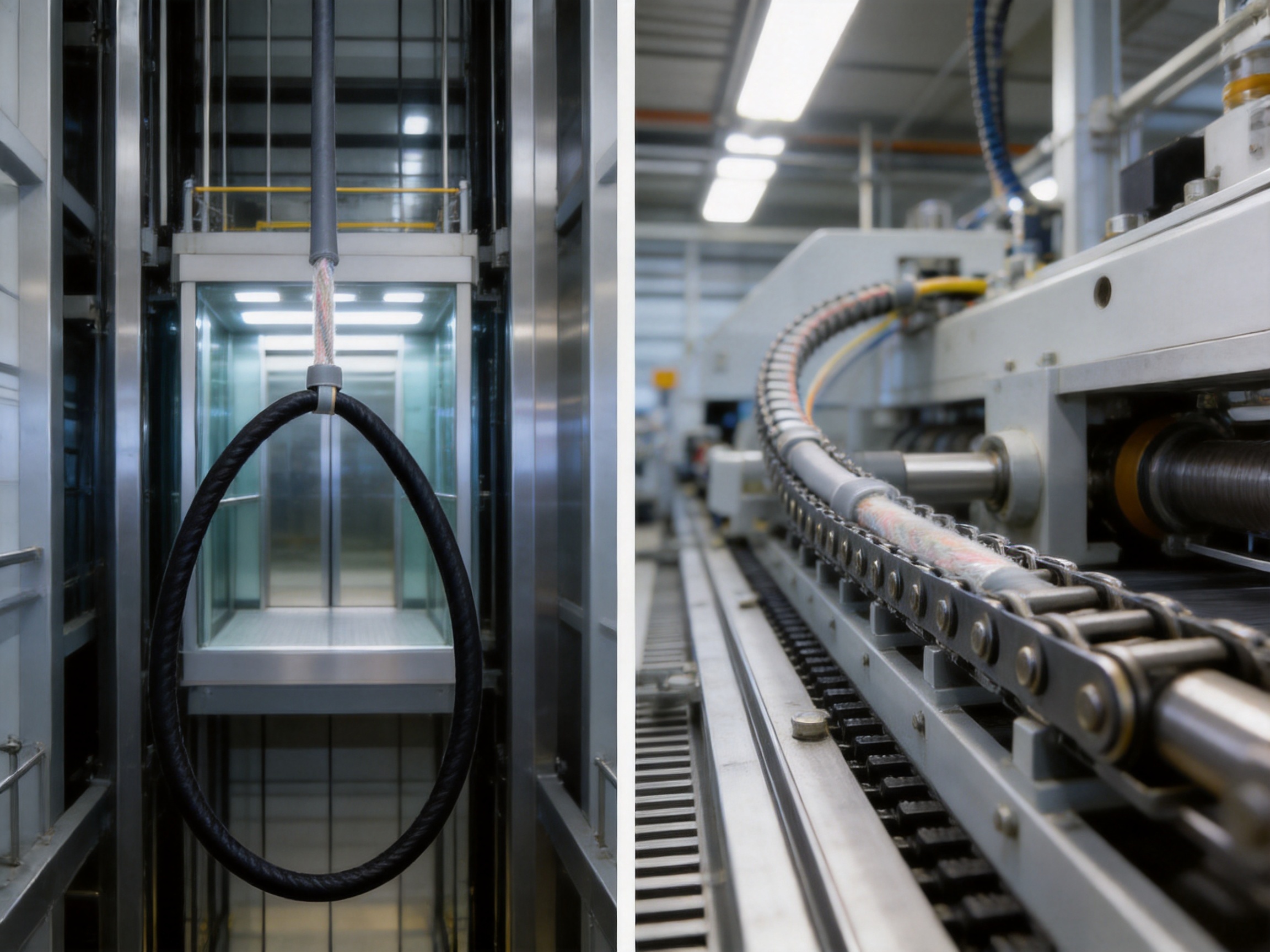
The process begins with copper selection and conductor preparation. Annealed copper is chosen for conductivity and flexibility. Fine copper wires are stranded in a controlled pattern to form Class 6 flexible conductors. Stranding parameters influence bending performance. If the strand pitch is not controlled properly, the conductor may become too stiff or unstable. Proper stranding allows the conductor to flex smoothly while maintaining electrical cross-section and mechanical integrity.
After stranding, each conductor is insulated with special flexible PVC. The extrusion process must control insulation thickness, concentricity, surface smoothness, and adhesion. If insulation is too thin, electrical performance may be compromised. If it is too thick or uneven, the cable may become stiff or unbalanced. Color coding is applied for identification, and extrusion quality is monitored to ensure stable dimensions.
Insulated cores are grouped according to cable design. Power cores, control cores, communication pairs, and video cores may require different arrangements. Twisted pairs are produced to improve signal stability. Shielding can be added for circuits requiring interference protection. The lay length and direction of twisting affect flexibility, bending behavior, and electrical performance. For multi-function cables, the internal layout must balance mechanical symmetry and electromagnetic considerations.
The tensile element is integrated into the cable structure during assembly. Depending on the design, it may be placed centrally or distributed with the cores. The goal is to ensure that mechanical load is carried by the reinforcement rather than the electrical conductors. Accurate positioning is important because an off-center tensile element can affect bending behavior or cause uneven stress. The integration process must preserve flexibility while delivering required tensile support.
Non-hygroscopic fillers are added to maintain cable roundness and support the internal structure. Filling reduces gaps, prevents core displacement, and improves sheath extrusion. The cabling process brings all elements together into a stable cable core. In dynamic cables, cabling tension and geometry are carefully managed. Excessive tension may reduce flexibility, while insufficient tension may lead to internal looseness and friction.
The final sheath is extruded over the cable core using high-strength flexible PVC. Sheath thickness, concentricity, surface finish, and cooling must be controlled. A smooth and uniform sheath reduces friction in drag chain movement and protects against abrasion. Marking can be printed on the sheath according to customer requirements, including cable type, size, voltage rating, production information, or other identification details.
Quality inspection is essential for dynamic cable reliability. The company can provide full-core, full-length, pure copper specifications, product test reports, and warranty support for standard cable models. Typical quality checks may include conductor resistance testing, voltage withstand testing, insulation resistance testing, dimensional inspection, sheath appearance inspection, core identification verification, tensile structure inspection, and bending performance evaluation according to project requirements. These tests help ensure that the cable delivered to customers is not only compliant on paper but also suitable for practical operation.
One of the strongest advantages of Anhui Zhishang Cable Technology Co., Ltd. is its ability to provide customized wire and cable solutions. Dynamic systems vary widely. One elevator model may require a specific combination of power, control, communication, and video cores. Another automation machine may need shielded servo signal pairs, flexible control cores, and special sheath printing. A standard catalog cable may not meet these exact needs. Custom cable development solves this problem.
The company’s R&D and technical engineers can provide product selection guidance and cable design support based on customer drawings, samples, operating conditions, or project specifications. This support is valuable for system designers who need to balance electrical capacity, bending radius, tensile strength, outer diameter, shielding, and installation space. By discussing the application environment early, the manufacturer can recommend conductor sizes, core arrangements, tensile elements, sheath materials, and production methods that improve cable performance.
Customization may include conductor cross-section, number of cores, twisted pair configuration, shielded pair structure, coaxial integration, sheath color, cable marking, voltage rating, tensile reinforcement type, and low-smoke zero-halogen requirements. For international customers, design can also consider applicable national standards, industry benchmarks, CE-related requirements, RoHS expectations, and project documentation needs.
In comparison, many competitors provide only standardized products and may lack the engineering flexibility to develop special cables. This can force customers to compromise by using multiple separate cables, oversizing cable chains, or accepting less efficient wiring. With OEM/ODM support, customers can obtain a cable that matches the equipment rather than redesigning equipment around the cable.
For moving cable applications, quality control must be preventive rather than reactive. A cable failure inside an elevator shaft or automated production line can cause downtime, repair costs, safety concerns, and customer dissatisfaction. Therefore, manufacturing quality must be managed at every stage, from raw material selection to final packaging.
Conductor quality affects resistance, flexibility, and service life. Insulation quality affects voltage withstand performance and core protection. Shielding quality affects signal stability. Tensile element quality affects mechanical load-bearing. Sheath quality affects abrasion resistance and environmental durability. If any one of these elements is weak, the entire cable may fail. The company’s quality engineers monitor these factors through production inspection and testing.
The company emphasizes full-core and full-length assurance. This means customers can expect the cable to meet defined specifications across all cores and throughout the complete supplied length. Pure copper construction is important because copper-clad aluminum or low-grade conductor materials may reduce conductivity and mechanical reliability. For demanding dynamic applications, pure copper conductors provide a better foundation for safety and performance.
Product test reports and warranty support for standard models further improve customer confidence. Documentation helps project engineers verify product suitability and maintain installation records. For OEM and export customers, clear quality documentation also supports procurement, acceptance inspection, and after-sales service.
Even the best dynamic cable must be installed correctly to achieve its intended service life. The recommended minimum bending radius for mobile installation is generally 10 times the cable outer diameter. Installers should avoid bending the cable below this radius, especially near fixed points, terminals, or sharp edges. Excessively tight bending can increase mechanical stress and shorten service life.
The cable should not be twisted during installation. Twisting is one of the most common causes of premature failure in drag chain cables. Before installation, the cable should be uncoiled properly rather than pulled from the side of a coil. In drag chains, the cable should be laid without forced rotation and should have enough clearance to move freely. It should not be clamped tightly inside the moving section of the chain.
For elevator traveling cable applications, suspension points, tensile clamps, and support hardware should be selected to match the cable structure. The tensile element should be properly secured so that it carries mechanical load. Electrical cores should not be used as the primary load-bearing components. The cable loop should be arranged to avoid rubbing against shaft walls, brackets, or other equipment.
Environmental conditions should also be considered. While the PVC sheath provides basic resistance to oil, moisture, and mildew, excessive chemical exposure, sharp mechanical abrasion, or temperature extremes beyond the rated range should be avoided unless a special design is selected. For environments requiring enhanced flame, smoke, or halogen performance, low-smoke zero-halogen options should be discussed during specification.
Elevator systems require reliable transmission of multiple functions. Power supply, door control, safety circuits, lighting, emergency communication, floor signals, monitoring cameras, and control commands may all depend on the traveling cable. A fault in the cable can cause service interruption or safety-related maintenance. Therefore, the traveling cable must combine electrical stability with mechanical durability.
The TRVV Reliable Electrical Performance Drag Chain Cable is suitable for elevator applications because it addresses the four main requirements of traveling cables: bending endurance, tensile strength, organized multi-function transmission, and environmental adaptability. The ultra-flexible conductor resists breakage during repeated car movement. The tensile element supports cable weight and motion load. The integrated core structure simplifies wiring and reduces interference. The flexible PVC sheath provides protection against the typical shaft environment.
In high-rise or frequently used buildings, elevator cables may experience high cycling frequency. Over time, small weaknesses in inferior cables can develop into major failures. A cable with poor tensile support may stretch. A cable with weak conductors may develop intermittent faults. A cable with poor sheath quality may crack or abrade. By selecting a cable designed for dynamic performance, building owners, elevator manufacturers, and maintenance contractors can reduce failure risk and improve operating stability.
Industrial automation is increasingly dependent on moving systems. Robotic arms, gantry systems, machine tools, production conveyors, testing equipment, packaging lines, and automated warehouses all require cables that can move with machinery. These applications may combine power, sensor signals, encoder feedback, communication buses, and safety circuits. Cable performance directly affects production uptime.
The integrated design of the TRVV cable helps reduce installation complexity in such systems. When multiple circuits are combined in one cable, the equipment can be cleaner, more compact, and easier to maintain. Shielded twisted pairs can be included where signal quality matters. Power cores can be sized according to load requirements. Control cores can be arranged for sensors and command circuits. The cable can be customized to match the equipment design, which improves efficiency for machine builders.
Compared with low-cost generic flexible cable, the TRVV drag chain cable offers stronger fatigue resistance and more suitable structure for continuous motion. Although the initial cost of a dynamic cable may be higher than a stationary cable, the total value is often greater because it reduces downtime, maintenance labor, replacement frequency, and risk of unexpected failure. In production environments, cable failure can stop equipment and affect entire manufacturing schedules. A reliable cable is therefore a productivity component, not merely a consumable part.
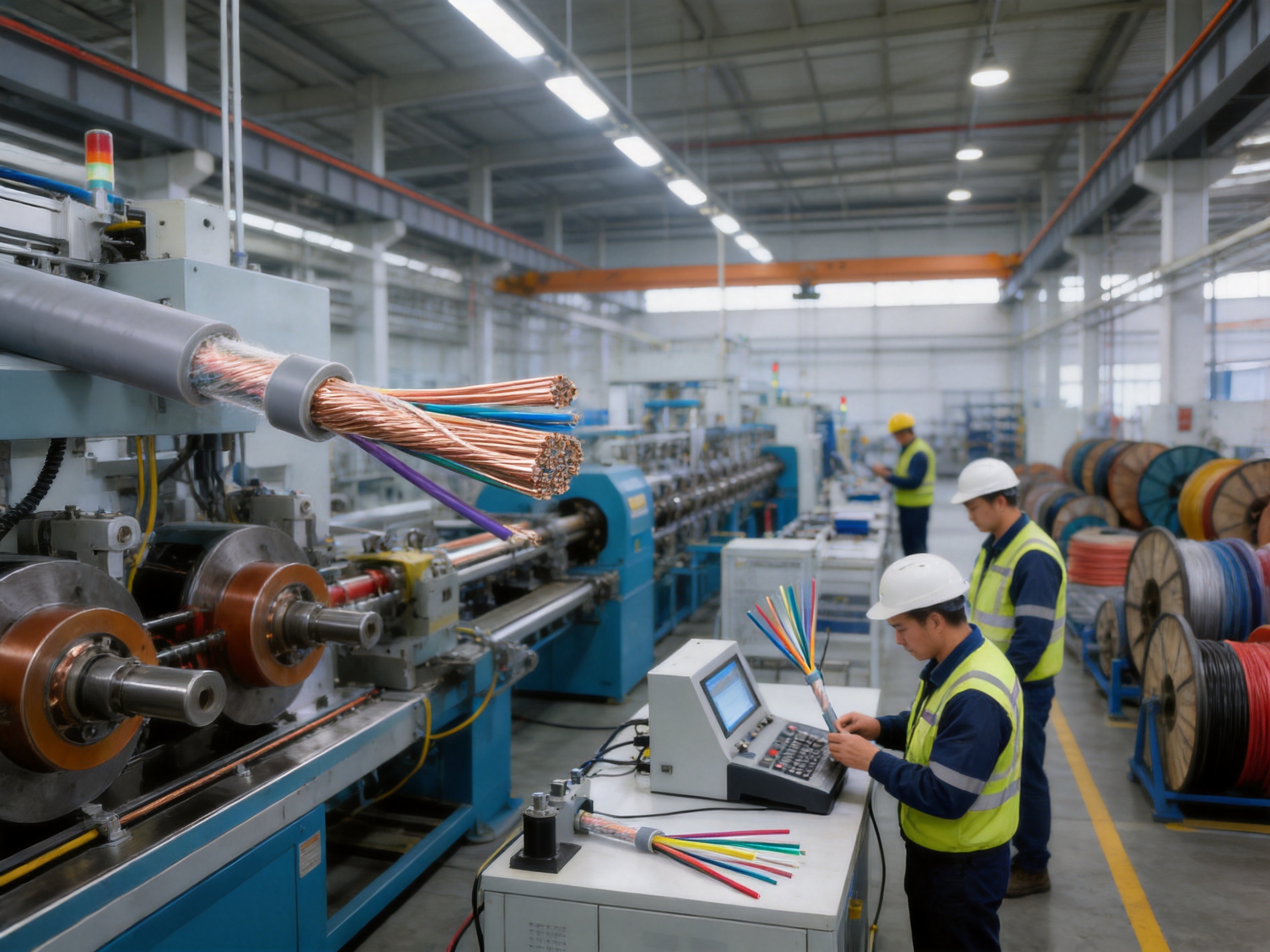
Anhui Zhishang Cable Technology Co., Ltd. has built its capabilities around practical cable solutions. The company serves industrial automation, weak current engineering, intelligent manufacturing, appliance equipment, power engineering, and other fields. This broad application experience allows the company to understand different customer requirements and provide balanced cable recommendations.
The company’s production base of approximately 5,000 square meters supports modern manufacturing. With 10 automated production lines and monthly output capacity of up to 10 million meters, it can support both high-volume production and customized orders. Standard products are stocked for fast shipment, while custom products can typically be completed within 7 to 20 days depending on specifications. This delivery flexibility is valuable for project contractors, equipment manufacturers, distributors, and maintenance companies.
The company also emphasizes green manufacturing and responsible production practices. In the global cable market, customers increasingly expect manufacturers to consider material compliance, process efficiency, and responsible production. Products are exported to the United States, Canada, Australia, Japan, and parts of Eurasia, reflecting the company’s growing international presence.
The company’s experienced R&D team is a major advantage. Cable selection is often more complex than choosing a nominal size and voltage rating. Engineers must consider moving speed, travel length, bending radius, installation orientation, electrical load, signal type, environmental exposure, and mechanical load. With technical support, customers can avoid under-specification and select a cable that fits the application more accurately.
In the market, competitor products may appear similar in appearance but differ significantly in internal structure. A cable’s outer diameter, color, and printed marking do not fully reveal its performance. The differences are inside: copper strand count, insulation formulation, core arrangement, filler quality, shielding method, tensile reinforcement, sheath compound, and manufacturing precision. These hidden factors determine service life.
Some competitors may use conductors that are not sufficiently fine for continuous bending. Others may use materials that reduce cost but compromise fatigue resistance. Some may offer flexible sheaths but lack tensile components, making them unsuitable for vertical travel. Others may provide limited customization, forcing customers to adapt to existing products. In contrast, the TRVV cable emphasizes an engineered structure that addresses real operating conditions.
Another common limitation is inconsistent production quality. Even a good design can fail if manufacturing is unstable. Uneven insulation thickness, poor stranding, inconsistent shielding, inadequate filling, or off-center sheath extrusion can affect performance. Automated production lines and experienced quality control help reduce these risks. Anhui Zhishang Cable Technology Co., Ltd. focuses on stable manufacturing, full-length assurance, and product testing to support reliable delivery.
Competitors may also lack rapid customization support. For machine builders and elevator suppliers, time is often critical. A cable that meets exact requirements and can be delivered within a reasonable lead time provides a significant commercial advantage. The company’s combination of stock products, custom capability, and production capacity helps customers manage both urgent replacement needs and planned OEM projects.
When selecting a TRVV drag chain or traveling cable, the first step is to define the application. Is the cable moving vertically in an elevator shaft, horizontally in a drag chain, or in a multi-axis machine? The motion direction and cycle frequency affect conductor design, tensile requirements, and sheath selection. Vertical systems usually require stronger tensile reinforcement, while drag chains require excellent bending and abrasion behavior.
The second step is to define electrical functions. Determine how many power cores, control cores, signal pairs, communication pairs, and video cores are required. Specify voltage rating, current load, signal type, shielding needs, and grounding requirements. If communication stability is critical, twisted pairs or shielded structures should be considered.
The third step is to confirm mechanical conditions. Identify travel distance, bending radius, moving speed, acceleration, cable weight, installation space, and any support hardware. The recommended bending radius of 10 × cable outer diameter should be considered during equipment design. If the available bending space is smaller, a special design discussion may be needed.
The fourth step is to define environmental conditions. Consider temperature, humidity, oil exposure, mildew risk, abrasion, flame requirements, smoke requirements, and building codes. Standard flexible PVC is suitable for many building shaft and industrial environments, but special sheath options may be recommended for more demanding conditions.
The fifth step is to communicate documentation and compliance needs. Some projects require test reports, specific markings, packaging requirements, warranty support, or compliance with relevant standards. Providing these requirements at the inquiry stage helps the manufacturer prepare an accurate solution.
A properly selected and installed dynamic cable should deliver long service life, but periodic inspection remains important. Maintenance teams should check for sheath abrasion, cracking, flattening, twisting, excessive stretching, abnormal noise during movement, loose clamps, and interference with surrounding structures. Early detection of mechanical issues can prevent electrical faults.
In elevator applications, inspection should include the cable loop and suspension points. The cable should hang naturally and move without rubbing against shaft structures. Tensile supports should remain secure. Any visible damage should be evaluated promptly. Because the cable may contain power, control, communication, and video circuits, maintenance should follow appropriate safety procedures.
In drag chain systems, the cable should move freely inside the chain. It should not be tied or clamped in the moving section. Cable separation should be maintained when multiple cables or hoses are installed together. The chain itself should be inspected for broken links, sharp edges, or debris that could damage the cable sheath.
When replacing a failed cable from another supplier, it is useful to analyze the failure mode. If the previous cable failed due to conductor breakage, a higher-flex conductor may be needed. If the sheath wore through, improved abrasion resistance or better chain guidance may be required. If the cable stretched, tensile reinforcement should be improved. Anhui Zhishang Cable Technology Co., Ltd. can support selection based on failure analysis and project conditions.
It is designed for dynamic motion applications where cables bend repeatedly while transmitting power, control commands, signals, communication data, or video. Typical uses include elevator traveling cables, lifts, drag chains, automated machinery, moving platforms, and vertical lifting equipment.
An ordinary flexible cable may tolerate occasional bending, but it is not necessarily designed for continuous movement. This TRVV cable uses ultra-fine Class 6 copper conductors, flexible insulation, optimized core arrangement, tensile reinforcement, non-hygroscopic fillers, and an abrasion-resistant flexible sheath. These features help it withstand repeated bending and mechanical load.
The tensile element bears mechanical load, especially in vertical applications such as elevators. It helps prevent the electrical cores from carrying the cable’s weight or dynamic pulling force. This improves safety, reduces conductor stress, and supports longer service life.
Yes. The cable can be customized with power cores, control cores, twisted pairs, shielded communication pairs, and coaxial video cores. This integrated design simplifies wiring, saves installation space, and improves cable organization in moving systems.
Typical rated voltage options include 300/500V and 450/750V, depending on the cable design and application requirements.
For mobile installation, the recommended minimum bending radius is generally 10 times the cable outer diameter. Maintaining this radius helps protect the cable from excessive bending stress.
For mobile installation, the typical long-term operating temperature range is approximately -15°C to +70°C. Special requirements should be discussed if the application involves more extreme conditions.
Yes. Anhui Zhishang Cable Technology Co., Ltd. supports customization based on drawings, samples, application requirements, or project specifications. Options may include conductor size, number of cores, shielding, tensile element, sheath material, sheath color, and marking.
Yes. The cable is suitable for elevator and lift traveling applications. Its bending fatigue resistance, tensile reinforcement, integrated core design, and PVC sheath make it appropriate for many elevator shaft environments.
Customers should provide the application type, number of cores, conductor sizes, voltage rating, signal or communication requirements, shielding needs, travel length, bending radius, tensile load, operating environment, sheath requirements, quantity, and any required standards or test documentation.
The TRVV Reliable Electrical Performance Drag Chain Cable is a purpose-built solution for modern dynamic wiring applications. It combines extreme flexibility, high tensile strength, bending fatigue resistance, stable electrical transmission, and environmental adaptability. Its multi-core integrated design supports power, control, signal, communication, and video functions in one organized cable, reducing installation complexity and improving system reliability.
Compared with ordinary flexible cables and many competitor products, this cable offers a more complete engineering approach. Ultra-fine annealed copper conductors resist fatigue. Flexible PVC insulation supports stable electrical performance. Tensile elements protect the electrical cores from mechanical load. Fillers maintain cable roundness. The abrasion-resistant flexible sheath protects against movement wear and typical shaft or industrial environments. These features make the cable especially valuable for elevators, lifts, drag chains, automated machinery, and vertical lifting equipment.
The manufacturing strength behind the product further increases its value. Anhui Zhishang Cable Technology Co., Ltd. provides modern production facilities, automated production lines, experienced R&D engineers, quality inspection, OEM/ODM customization, fast delivery for standard products, and practical project support. The company’s focus on quality, integrity, and stability helps customers obtain cable solutions that are not only technically suitable but also reliable in long-term operation.
For equipment manufacturers, elevator contractors, automation integrators, and maintenance teams, choosing the correct dynamic cable is a critical decision. A reliable cable reduces downtime, protects system safety, and supports efficient operation. The TRVV Reliable Electrical Performance Drag Chain Cable offers a balanced combination of mechanical durability, electrical performance, customization flexibility, and manufacturing quality, making it a strong choice for demanding motion applications.
1. International Electrotechnical Commission. IEC 60228: Conductors of Insulated Cables.
2. International Electrotechnical Commission. IEC 60227: Polyvinyl Chloride Insulated Cables of Rated Voltages up to and Including 450/750V.
3. International Electrotechnical Commission. IEC 60332: Tests on Electric and Optical Fibre Cables Under Fire Conditions.
4. National Electrical Manufacturers Association. Guidelines for Cable Selection in Moving and Flexible Applications.
5. Elevator and Escalator Engineering Practice Manuals. Traveling Cable Installation and Maintenance Guidance.
6. Industrial Automation Wiring Handbook. Cable Design Considerations for Drag Chain and Continuous Motion Systems.

We firmly believe that good cables are not only a competition of materials, but also a reflection of craftsmanship, quality, and responsibility.

Links
Product
Send Inquiry
No. 29 Sankeshu Road, Xuanzhou District, Xuancheng City, Anhui Province, China
+86-18621104555/+86-563-2622999
 Electrical Cable Manufacturer
OEM/ODM Wire and Cable Solutions
Electrical Cable Manufacturer
OEM/ODM Wire and Cable Solutions
 English
 Español
 عربى
عربى
 русский