
Get more content that can help you
Content
In modern buildings, signal circuits are expected to do more than simply connect one terminal to another. They must transmit information clearly, resist interference, remain easy to install in crowded conduits, and, in fire-related systems, continue supporting critical communication when safety depends on circuit integrity. RVS/NH-RVS anti-interference building wire is designed for these demanding low-voltage signal and control environments. With a 300/300V rated voltage, a fine-stranded flexible copper conductor, a twisted-pair structure, and PVC or fire-resistant PVC insulation, this wire provides a practical and reliable solution for fire broadcasting, alarm signaling, intercom, security, background music, and other building weak-current applications.
Unlike ordinary parallel low-voltage wires, the RVS/NH-RVS structure uses two insulated conductors twisted together. This construction helps reduce electromagnetic interference and improves signal stability in electrically complex buildings. For ordinary signal transmission, RVS provides flexibility, economy, and installation convenience. For fire-protection circuits, NH-RVS adds fire-resistant performance so that emergency communication and alarm lines can continue functioning for a defined period under flame conditions. This combination of anti-interference structure, flexible installation characteristics, and safety-oriented material design makes the product especially suitable for projects where performance, cost control, and compliance must be balanced.
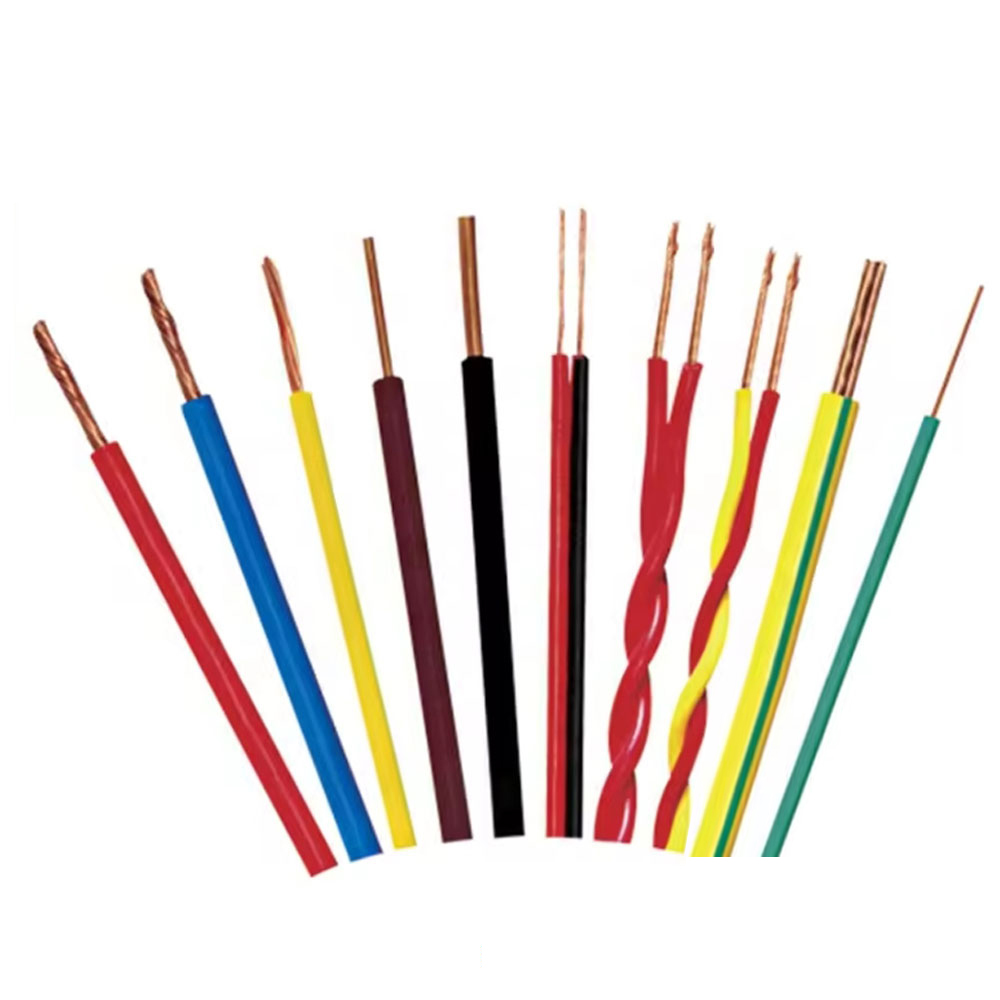
RVS/NH-RVS Anti-interference Building Wire
RVS/NH-RVS anti-interference building wire is a twisted-pair flexible building wire developed for low-voltage signal transmission and fire-safety system connections. The standard RVS version uses PVC insulation and is commonly applied in fire emergency broadcasting systems, background music lines, intercom systems, and security alarm signal lines. The NH-RVS version, often described as a fire-resistant twisted-pair flexible wire, combines the same flexible twisted-pair structure with enhanced fire-resistant construction. It is suitable for fire automatic alarm system signal circuits, fire telephone lines, fire-resistant emergency broadcasting circuits, and similar safety-related applications.
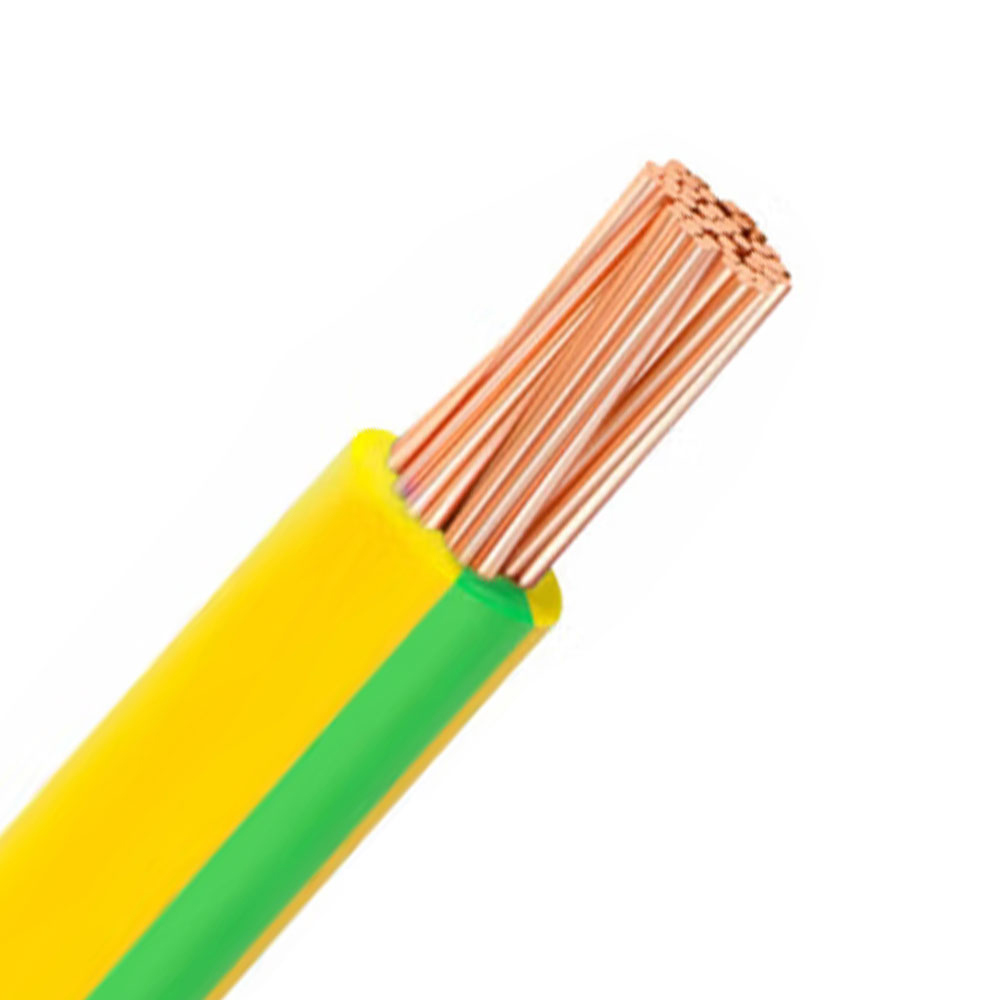
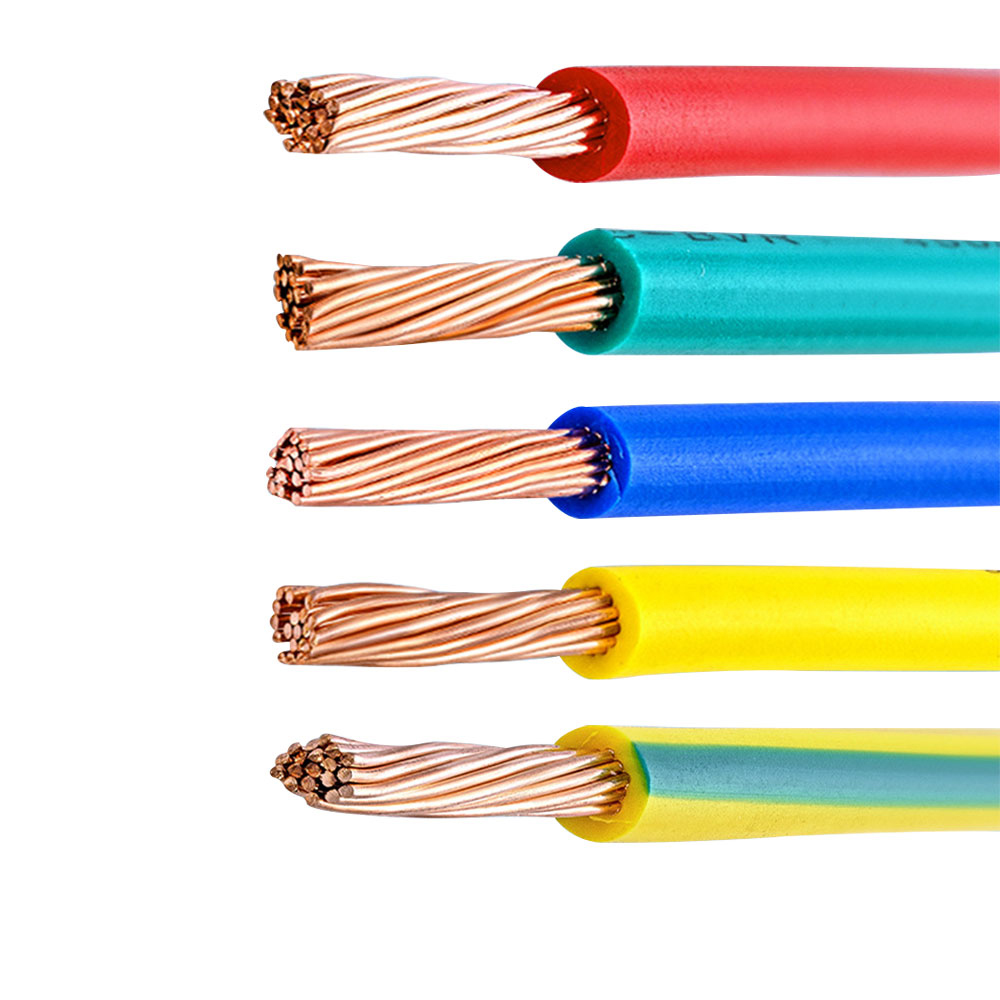
The conductor is a multi-strand fine-stranded flexible copper conductor. This conductor design provides better flexibility than solid-core alternatives and supports easier routing through conduits, junction boxes, distribution cabinets, and equipment terminals. In building engineering, installation conditions are rarely ideal. Cables often pass through narrow spaces, corners, cable trays, wall conduits, and terminal enclosures. A fine-stranded conductor reduces the risk of mechanical stress during bending and helps installers complete wiring work more efficiently.
The rated voltage of the product is 300/300V, which matches many weak-current and signal transmission applications in buildings. The wire is not intended to replace medium-voltage or high-current power cables; instead, its value lies in stable signal performance, neat construction, practical flexibility, and reliable circuit behavior in low-voltage building systems. Its 2000V test voltage demonstrates insulation quality under standard testing conditions, while the specified bending radius supports both fixed and flexible installation methods.
The twisted-pair structure is one of the most important features of the product. When two conductors are twisted together, the electromagnetic influence induced along one portion of the pair tends to be balanced by the next portion with reversed orientation. This helps suppress external electromagnetic interference and reduce the loop area between conductors. In practical building environments, where signal wires may pass near power cables, lighting circuits, elevators, pumps, control cabinets, or communication equipment, this structural advantage can improve signal consistency and reduce unwanted noise.
The RVS version uses polyvinyl chloride insulation and typically has a temperature rating of 70°C. This makes it suitable for common indoor building wiring environments where standard signal circuits require flexibility and economical performance. PVC insulation provides good electrical insulation, processability, and cost effectiveness, which is why it remains widely used in building wire products.
The NH-RVS version uses fire-resistant polyvinyl chloride insulation with a special fire-resistant layer. It is designed to pass a 750°C/90-minute fire-resistance test according to relevant fire-resistant cable requirements. This is crucial for fire alarm and emergency broadcasting circuits. In a fire, ordinary signal wiring may fail quickly if insulation burns, melts, or loses electrical integrity. NH-RVS is intended to help maintain circuit continuity for emergency functions during the critical response window.
The product is compliant with JB/T 8734 requirements, and the fire-resistant type is tested according to GB/T 19666. Flame retardancy performance has passed GB/T 18380 flame-retardancy testing. Compliance with CCC and RoHS requirements further supports use in projects that require recognized safety, environmental, and quality documentation.
Item |
Specification or Description |
Product Type |
RVS/NH-RVS anti-interference building wire |
Rated Voltage |
300/300V |
Test Voltage |
2000V |
Conductor |
Multi-strand fine-stranded flexible copper conductor |
Structure |
Dual-core twisted-pair structure |
RVS Insulation |
Polyvinyl chloride, commonly rated to 70°C |
NH-RVS Insulation |
Fire-resistant polyvinyl chloride with a special fire-resistant layer |
Fire Resistance |
NH-RVS meets 750°C/90-minute fire-resistance testing requirements |
Fixed Installation Bending Radius |
4 × cable outer diameter |
Flexible Installation Bending Radius |
6 × cable outer diameter |
Fixed Installation Temperature |
–10°C to +70°C |
Flexible Installation Temperature |
–5°C to +70°C |
Radiation Resistance |
8 × 10⁷ cJ/kg |
Flame Retardancy |
Passed GB/T 18380 flame-retardancy test |
Typical Applications |
Fire broadcasting, fire alarm signaling, intercom, security alarm, background music, hospital fire system signal transmission |
Certifications |
CCC and RoHS |
Signal wire performance is often affected by the surrounding electrical environment. In office buildings, hospitals, commercial complexes, factories, schools, hotels, transport facilities, and residential developments, weak-current wiring may run close to power distribution lines, lighting circuits, variable-frequency drives, lift systems, HVAC equipment, pumps, access-control systems, and network devices. These sources can generate electromagnetic noise that interferes with low-voltage signals.
A simple two-core cable may function in a quiet environment, but it can become less stable when exposed to strong electromagnetic fields. Interference can cause noise, false triggering, unstable audio, poor communication quality, or unreliable alarm signals. Shielded cables can reduce interference, but they may be more expensive, less flexible, and more complicated to terminate correctly. For many building signal circuits, a twisted-pair structure offers an efficient middle ground: strong practical anti-interference performance without the additional complexity of a shield.
RVS/NH-RVS wire uses a dual-core twisted-pair design to reduce the impact of induced electromagnetic disturbance. The regular twist helps balance interference along the circuit and reduce the effective loop area. This improves signal stability while retaining easy installation and economical pricing. For fire broadcasting systems, stable signal transmission is essential because emergency audio instructions must remain clear. For alarm systems, signal reliability directly affects the accuracy and timeliness of emergency response.
Compared with non-twisted flexible wires, RVS/NH-RVS provides better inherent resistance to electromagnetic disturbance. Compared with heavily shielded specialty cables, it is usually easier to handle, more economical, and faster to install for standard building weak-current applications. This advantage is especially meaningful in large projects where thousands or even millions of meters of wire may be required.
Fire-protection wiring is different from ordinary signal wiring because it must support life-safety functions. During a fire, alarm detection, manual call point communication, emergency broadcasting, fire telephone communication, and control-system signaling may all be needed to guide evacuation and emergency response. If a circuit fails too early, building occupants and fire-control personnel may lose important communication capability.
NH-RVS addresses this requirement by using fire-resistant PVC insulation and a special fire-resistant layer. It is designed to maintain circuit integrity during fire exposure and meets a 750°C/90-minute fire-resistance test. This does not mean the wire is indestructible under all possible fire conditions, but it does demonstrate that the product is engineered for a defined level of fire endurance. For fire alarm system signal lines, fire telephone lines, emergency broadcasting lines, and hospital fire-protection signal transmission, this fire-resistant behavior can be a decisive advantage.
Some projects may use ordinary signal wire for general audio or communication circuits but require fire-resistant wire for emergency circuits. Offering both RVS and NH-RVS allows project designers, contractors, and procurement teams to select the appropriate version according to system function, fire-code requirements, and budget. The availability of both standard and fire-resistant twisted-pair wire from the same manufacturing source improves specification consistency and simplifies supply management.
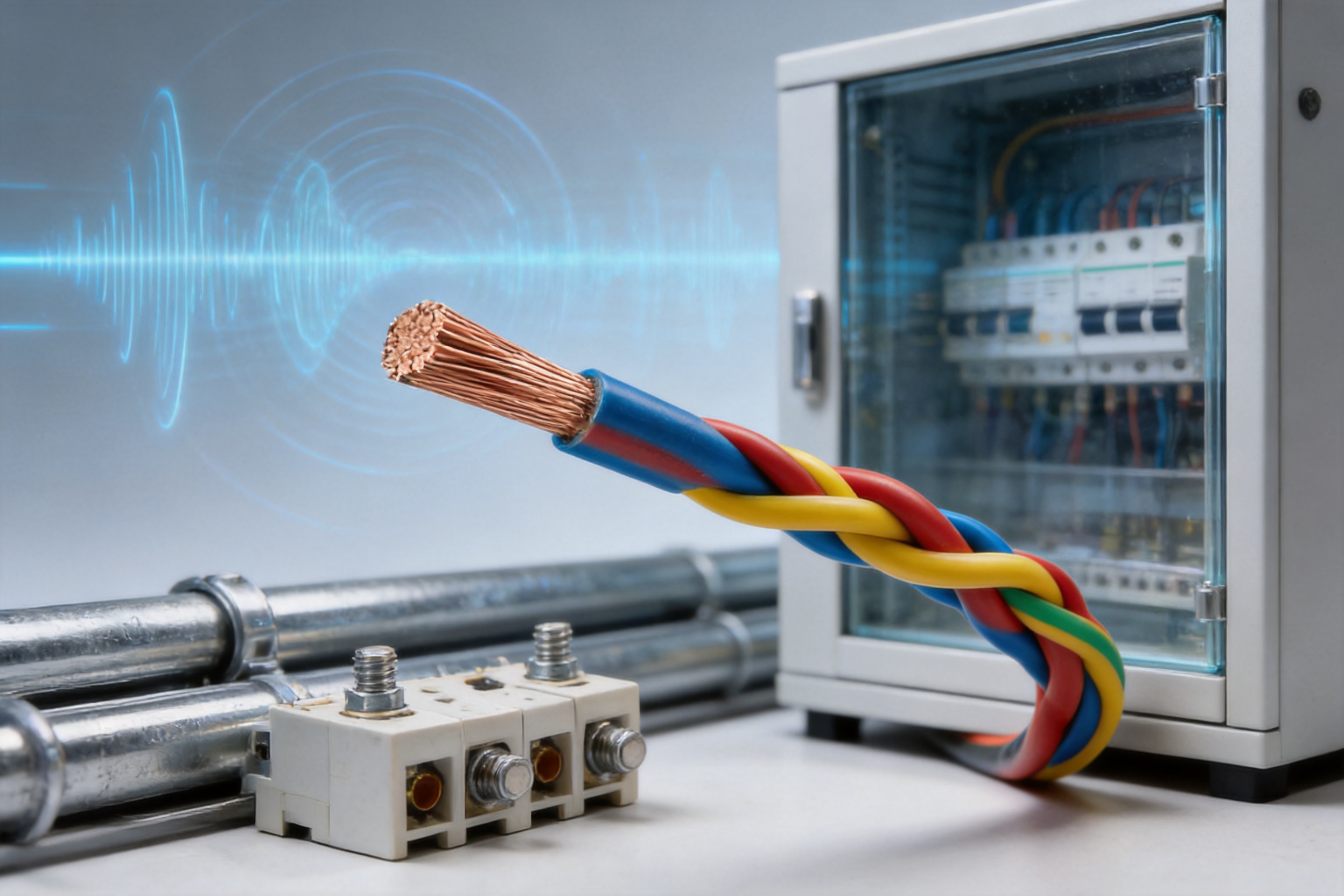
One of the most important advantages of RVS/NH-RVS wire is its balance of performance and practicality. Many competing solutions focus on only one attribute. A basic parallel flexible wire may be inexpensive but offers weaker anti-interference characteristics. A shielded communication cable may offer strong noise protection but can be more expensive and require careful grounding. A solid-core building wire may provide shape stability but is harder to bend and terminate in compact weak-current panels. RVS/NH-RVS is positioned between these extremes, providing flexible handling, effective interference suppression, reliable connection performance, and economical project cost.
The twisted-pair structure provides a clear technical advantage over untwisted two-core wires. By continuously changing the relative orientation of the two conductors, the pair reduces electromagnetic pickup and improves signal consistency. This is especially useful for circuits such as fire broadcasting, alarm signaling, intercom communication, and security systems, where the transmitted signal should remain stable and recognizable.
Shielded cables can perform well, but correct shielding practices require attention to termination, grounding, continuity, and site conditions. Incorrect shield connection may reduce performance or even introduce noise. RVS/NH-RVS provides anti-interference benefits through its twist, without requiring additional shield termination. This simplifies field installation and reduces the probability of construction errors.
The fine-stranded copper conductor improves flexibility. In building projects, installers frequently need to pull wires through conduits, route them around corners, connect them to terminal blocks, and manage extra length inside junction boxes. Fine-stranded conductors are easier to bend and can reduce strain on terminations. This improves installation speed and contributes to long-term connection reliability.
The NH-RVS version provides a fire-resistant option for circuits that must remain functional during fire conditions. This gives the product family a wider application range than standard twisted-pair wire alone. Engineers can specify RVS for ordinary low-voltage signal lines and NH-RVS for fire-rated lines, maintaining structural consistency while meeting different safety levels.
Large buildings require extensive low-voltage wiring. A product that balances material cost, installation efficiency, and signal performance can significantly affect total project cost. RVS/NH-RVS is economical and practical because it provides strong value among twisted-pair flexible building wires. It avoids unnecessary complexity for ordinary weak-current circuits while still offering key performance benefits.
RVS wire is widely used in fire emergency broadcasting systems. In these systems, signals must be transmitted to speakers or broadcasting terminals reliably, especially in public buildings where clear evacuation instructions may be required. The twisted-pair structure helps reduce interference that could otherwise affect audio quality or signal stability.
Background music systems also benefit from flexible twisted-pair wiring. Hotels, shopping malls, office buildings, restaurants, and public facilities often require distributed audio wiring across multiple zones. RVS provides a practical combination of flexibility, manageable cost, and signal stability for such applications.
Intercom systems are another typical application. Residential buildings, hospitals, offices, security booths, and industrial facilities often rely on intercom connections for voice communication and access coordination. Interference resistance and connection reliability are important because unstable wiring can result in poor communication, noise, or intermittent faults.
Security alarm systems use signal lines to connect detectors, control panels, alarm devices, and related components. RVS wire can be used in general alarm signal circuits where twisted-pair flexible wiring is suitable. Its flexible structure supports efficient installation in building spaces where alarm devices may be distributed across many rooms and corridors.
NH-RVS is suitable for fire automatic alarm system signal lines, including detector circuits and manual call point connections. Because these circuits support emergency detection and response, fire-resistant performance is often required by engineering specifications. The fire-resistant construction of NH-RVS helps maintain circuit operation during fire exposure.
Fire telephone circuits are another important NH-RVS application. Firefighters and building safety personnel may rely on emergency telephone communication during fire incidents. Wiring for these circuits should support continued function under harsh conditions. NH-RVS provides fire-resistant twisted-pair construction for these safety-critical lines.
Hospitals are especially demanding environments for fire-protection signal transmission. Patient evacuation can be difficult, medical equipment must remain coordinated, and emergency communication must be dependable. NH-RVS can be used in hospital fire-protection system signal circuits where fire resistance and stable transmission are required.
A cable product is only as reliable as the manufacturing system behind it. Anhui Zhishang Cable Technology Co., Ltd. integrates research, production, and sales of wire and cable products. Located in Xuanzhou District, Xuancheng City, Anhui Province, China, the company operates in a key node city of the Yangtze River Delta region. This location provides access to industrial resources, logistics networks, and skilled manufacturing support.
The company operates a modern production base of approximately 5,000 square meters and has more than 50 employees, including quality engineers and research and development technicians with over 10 years of industry experience. This technical foundation supports product design, process improvement, quality control, and customer-specific engineering solutions. For products such as RVS/NH-RVS building wire, consistent conductor quality, insulation performance, twisting stability, and finished-wire testing are essential. Experienced engineering personnel help ensure these factors are controlled throughout production.
The company’s business philosophy emphasizes quality orientation, integrity foundation, and stability priority. This philosophy is especially relevant in the cable industry because customers need reliable performance over long service periods. A wire hidden inside a conduit, wall, ceiling, or fire-control cabinet is not easy to replace after installation. Therefore, stable material quality and careful production control are not optional; they are the basis of responsible manufacturing.
With 10 automated production lines and monthly output of up to 10 million meters, the company can support both standard product demand and project-scale supply. Automated equipment helps improve dimensional consistency, production efficiency, insulation uniformity, conductor processing accuracy, and repeatability. For building wire used in large projects, batch consistency is important because installers and inspectors expect uniform outer diameter, color, flexibility, and electrical performance across all delivered reels.
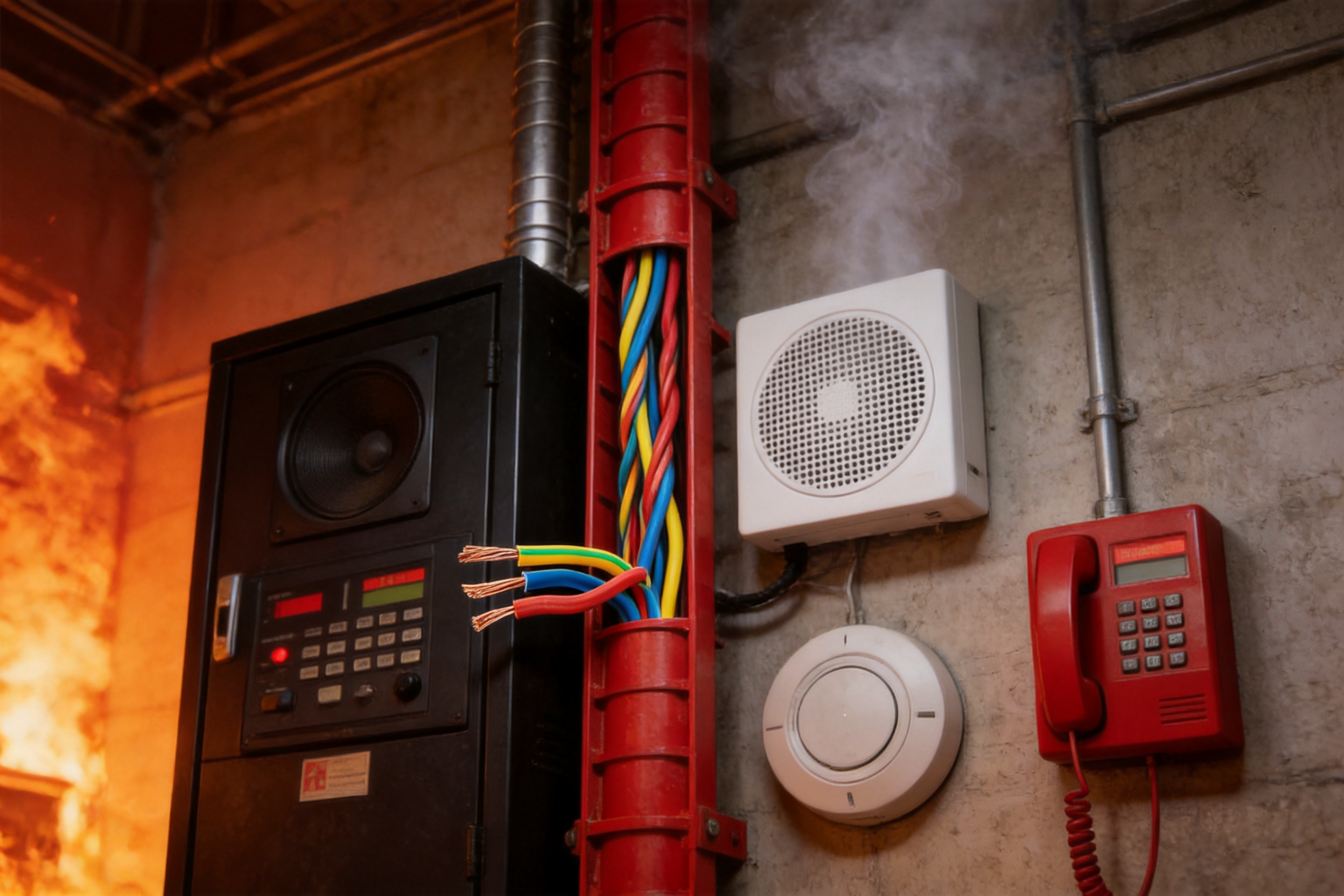
The production of RVS/NH-RVS anti-interference building wire involves multiple key processes, each influencing final performance. The first critical stage is conductor preparation. Fine-stranded copper conductors must be processed to achieve stable cross-sectional quality, good flexibility, and reliable conductivity. High-quality copper conductor material helps reduce resistance, improve signal transmission, and support secure terminal connection.
The second stage is insulation extrusion. PVC or fire-resistant PVC insulation must be applied uniformly around each conductor. Uniform insulation thickness supports stable dielectric performance, mechanical protection, and safe operation under rated voltage conditions. Poor insulation control may lead to weak points, inconsistent outer diameter, or reduced service life. Automated extrusion control helps maintain product stability.
The third stage is twisting. The two insulated conductors are twisted into a pair according to controlled production parameters. The consistency of the twist affects anti-interference behavior, appearance, and handling. A stable twisted structure also helps installers identify paired conductors and manage wiring more conveniently. For NH-RVS, the fire-resistant construction must be integrated without compromising flexibility or twist quality.
The fourth stage is inspection and testing. Finished wire must be checked for electrical performance, appearance, dimensions, insulation integrity, and compliance with applicable standards. The product information states a 2000V test voltage, flame-retardancy performance according to GB/T 18380, and fire-resistant testing for NH-RVS according to GB/T 19666. These tests help verify that the wire can meet project requirements and safety expectations.
The company provides quality assurance through full-core, full-length, pure copper specifications, product test reports, and warranty support for standard cable models. These commitments are valuable for contractors and distributors because they reduce uncertainty in procurement. In cable purchasing, low-cost products can sometimes create hidden risks, such as undersized conductors, inconsistent insulation, or poor material quality. A manufacturer that emphasizes full-core and full-length specifications helps customers protect project quality and avoid later failures.
Standards compliance is not merely a marketing claim; it is a project requirement in many building and fire-protection applications. RVS/NH-RVS wire is designed to comply with JB/T 8734. The fire-resistant version passes GB/T 19666 testing, and flame-retardancy performance is tested according to GB/T 18380. CCC and RoHS certifications support both domestic and international project requirements.
CCC certification is important in China and in projects where Chinese electrical product compliance is required. RoHS compliance indicates attention to restricted hazardous substances, which is increasingly important in global supply chains, green building projects, and responsible procurement policies. For buyers serving international markets, these compliance points help simplify product evaluation.
Quality control also extends to material selection. Copper conductor quality affects electrical resistance, flexibility, heating behavior, and terminal reliability. Insulation material quality affects flame behavior, dielectric strength, aging resistance, and mechanical durability. In NH-RVS, the fire-resistant layer must be carefully selected and processed so that it provides fire endurance without making the wire unnecessarily rigid or difficult to install.
The company’s experienced research and development team supports OEM and ODM development based on customer drawings or samples. This capability is valuable for customers who need customized conductor sizes, colors, packaging, marking, structural adjustments, or project-specific specifications. Technical engineers can provide product selection guidance and tailor-made cable design solutions according to project needs. This turns the manufacturer from a simple supplier into a solution partner.
Contractors value wire that is easy to pull, easy to identify, easy to terminate, and consistent from reel to reel. RVS/NH-RVS wire is designed with these practical requirements in mind. The fine-stranded flexible conductor supports bending and routing in complex spaces. The minimum bending radius is 4 × cable outer diameter for fixed installation and 6 × cable outer diameter for flexible installation. These parameters help installers handle the wire without excessive mechanical stress.
The twisted-pair structure can also assist identification. Because the two conductors are paired together, installers can manage signal loops more easily. This reduces confusion in control cabinets, junction boxes, and terminal panels. In large projects with many circuits, neat and recognizable wiring reduces installation time and maintenance difficulty.
The product’s operating temperature range is –10°C to +70°C for fixed installation and –5°C to +70°C for flexible installation. These ratings are suitable for many indoor and protected building environments. Correct application within rated conditions supports service reliability and reduces the risk of premature insulation aging.
Connection reliability is another advantage. Fine-stranded copper conductors can make good contact when properly terminated with compatible terminals, ferrules, or clamping methods. Secure terminal connections are essential in alarm and communication systems because loose connections can cause intermittent faults that are difficult to diagnose. A stable conductor structure supports long-term dependable use.
RVS/NH-RVS wire delivers value not only through technical performance but also through total project economics. The product is economical and practical among twisted-pair flexible building wires. It provides anti-interference performance without requiring a full shielding system in many common applications. It is flexible enough to reduce installation difficulty and available in both standard and fire-resistant versions, simplifying procurement.
For distributors, a product family covering RVS and NH-RVS can serve multiple project needs. Standard RVS can address ordinary weak-current applications, while NH-RVS can serve fire-protection and emergency circuits. This reduces inventory complexity compared with managing many unrelated products from different suppliers.
For contractors, easier installation can reduce labor time. In construction projects, labor cost and schedule pressure are often as important as material cost. A flexible twisted-pair wire that pulls and terminates efficiently can help maintain construction progress. Reliable quality also reduces rework, troubleshooting, and warranty risk.
For building owners and system operators, stable signal transmission and fire-resistant circuit options contribute to long-term operational safety. A well-selected wire can reduce maintenance problems and support dependable system performance throughout the building’s service life.
Anhui Zhishang Cable Technology Co., Ltd. provides more than standard cable supply. The company supports OEM and ODM wire and cable solutions based on customer drawings, samples, and project requirements. This capability is important because different markets and projects may require different labeling, colors, lengths, packaging, conductor configurations, standards, or performance characteristics.
Technical engineers can assist with product selection and design optimization. For example, a customer may need to decide whether RVS or NH-RVS is more appropriate for a specific circuit. The decision may depend on whether the line is part of a fire alarm system, an emergency broadcasting system, a background music system, or a standard intercom circuit. Engineering support helps customers choose correctly and avoid over-specification or under-specification.
The company has standard products in stock for fast shipment, while customized products typically require 7 to 20 days of lead time. This combination of inventory readiness and customization capability helps serve both urgent maintenance needs and project-specific procurement schedules. Monthly output of up to 10 million meters further supports large orders and continuous supply.
The company also emphasizes green manufacturing and responsible production practices. In the global cable market, environmental responsibility is increasingly important. RoHS compliance and responsible material practices help customers meet sustainability requirements and supply-chain expectations. Products have been sold in the United States, Canada, Australia, Japan, and parts of Eurasia, indicating the company’s ability to support international customers and varied market requirements.
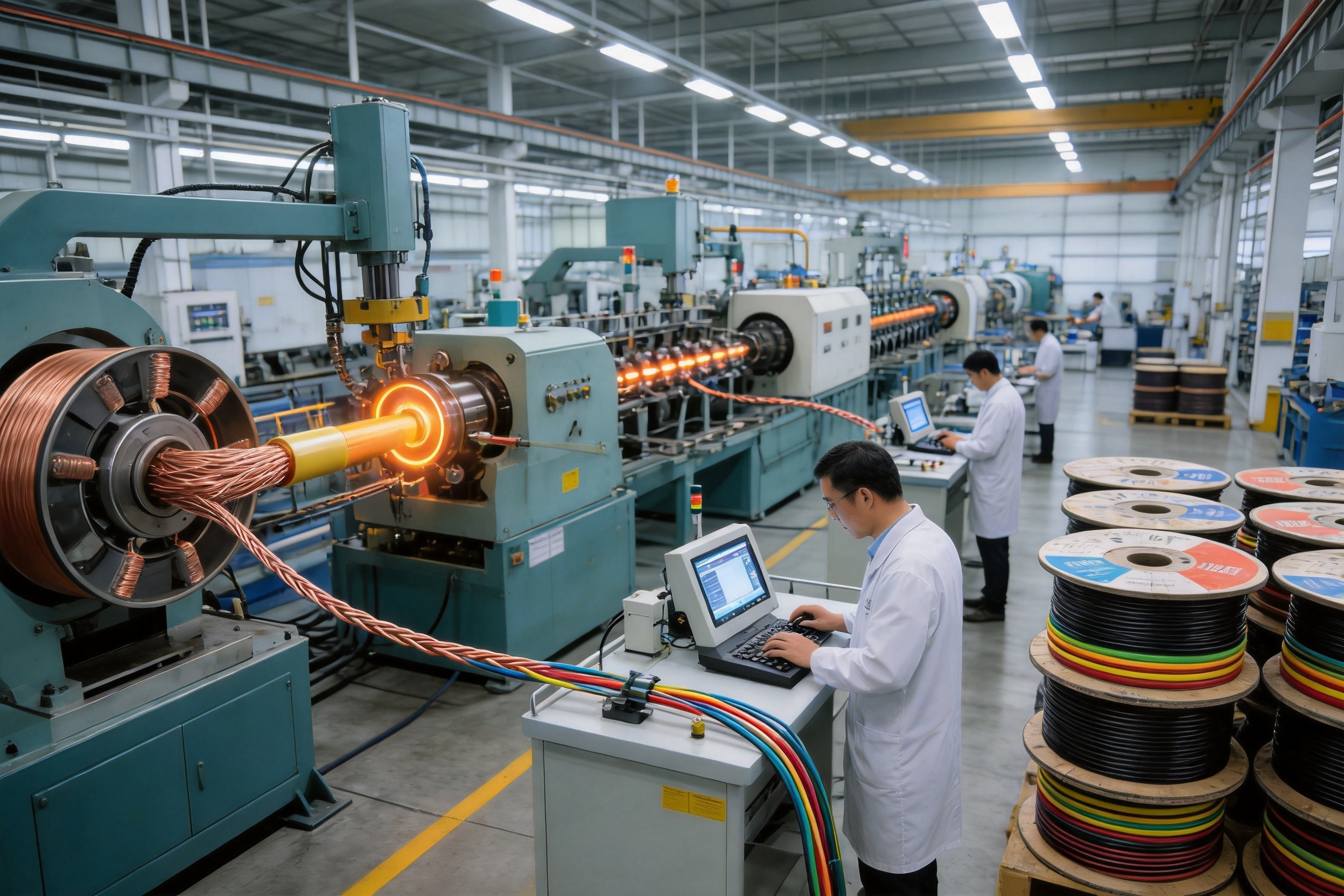
Fire emergency broadcasting systems are among the most important use cases for RVS/NH-RVS wire. In many buildings, emergency broadcasting is used to guide occupants during evacuation. The signal path must be stable enough to transmit instructions clearly and robust enough to remain available when needed. RVS can be used for standard broadcasting circuits where fire-resistance requirements are not specified, while NH-RVS is appropriate for fire-resistant emergency broadcasting lines.
The twisted-pair design helps reduce noise and interference that might affect audio signals. In a large building, broadcasting lines may pass through technical rooms, risers, ceilings, corridors, and distribution panels. They may be installed near lighting circuits, power lines, or control equipment. The anti-interference structure of RVS/NH-RVS supports clearer and more stable transmission.
For fire telephones, NH-RVS provides fire-resistant twisted-pair wiring for emergency communication. Fire telephone systems are often installed in fire-control rooms, stairwells, elevator machine rooms, equipment rooms, and other key locations. During an emergency, communication lines should not fail prematurely. The fire-resistant structure of NH-RVS makes it suitable for these critical communication paths.
Fire automatic alarm systems depend on reliable signaling between detectors, manual call points, modules, control panels, and alarm devices. False signals, interrupted circuits, or unstable connections can compromise system performance. NH-RVS is suitable for fire alarm system signal lines because it combines interference resistance, flexibility, and fire-resistant performance.
Manual call points and detectors may be distributed across large floor areas. Wiring must be easy to route through conduits and ceiling spaces while remaining reliable after installation. The fine-stranded flexible copper conductor supports installation in complex paths, and the twisted-pair design helps maintain signal stability. The fire-resistant construction of NH-RVS adds safety for circuits that must remain operational during fire exposure.
Hospitals, schools, shopping malls, hotels, industrial plants, and public buildings can all benefit from this wiring approach. In facilities where evacuation or emergency response is complex, the reliability of detection and alarm signaling is especially important. NH-RVS supports these needs with a structure designed for both signal quality and fire safety.
Beyond fire-protection systems, RVS is widely used in intercom and security alarm circuits. Intercom systems require stable low-voltage signal transmission so users can communicate clearly. Security systems require dependable signal lines to connect sensors, panels, sirens, and control devices. Background music systems require practical wiring that can support distributed audio in commercial and public spaces.
For these applications, RVS offers an efficient combination of flexibility and anti-interference performance. It avoids unnecessary fire-resistant material cost where not required, while still providing a better signal structure than untwisted ordinary wire. Contractors can use it for general weak-current circuits and reserve NH-RVS for fire-related circuits, achieving an economical and technically appropriate wiring plan.
The choice between RVS and NH-RVS should be based on the circuit function, safety requirements, project specification, and local standards. RVS is suitable for standard signal circuits where fire-resistance performance is not required. It is commonly used for fire broadcasting systems, background music, intercoms, and security alarm signal lines, depending on the specific design requirement.
NH-RVS should be selected when the circuit must maintain integrity under fire conditions or when the project specification requires fire-resistant wiring. Typical applications include fire automatic alarm signal lines, fire telephone lines, fire-resistant emergency broadcasting lines, and hospital fire-protection signal transmission. If a circuit directly supports life-safety functions during a fire, NH-RVS is often the more appropriate choice.
Engineers should also consider installation environment, bending requirements, operating temperature, terminal compatibility, and compliance documentation. The wire should be installed within its rated temperature range and bending radius. Terminations should be made using suitable methods for fine-stranded copper conductors. Proper installation is essential to achieving the product’s designed performance.
Reliable product supply is essential for construction schedules. The company’s production capacity, automated lines, and standard product inventory help support timely delivery. Standard models are stocked for fast shipment, and customized products generally require 7 to 20 days of lead time. This is useful for distributors and project contractors who must coordinate material arrival with installation phases.
Project support may include product selection, technical consultation, OEM or ODM customization, sample evaluation, and documentation assistance. Product test reports and warranty support for standard cable models provide additional confidence for procurement teams. For international customers, export experience in North America, Australia, Japan, and Eurasian markets indicates practical familiarity with overseas requirements.
Cable reliability depends on the correct combination of design, materials, manufacturing, installation, and operating conditions. RVS/NH-RVS wire is designed to provide stable service in low-voltage building systems. Its copper conductor supports conductivity and connection quality. Its insulation protects the conductor and supports electrical performance. Its twisted-pair structure improves signal stability. Its fire-resistant version supports circuit integrity during defined fire exposure.
However, proper engineering practice remains important. The wire should not be overloaded beyond its intended application. It should not be installed in environments exceeding its temperature rating. It should be protected from mechanical damage, chemical exposure beyond verified resistance, and improper termination. When installed according to design requirements, RVS/NH-RVS can deliver reliable long-term performance in building weak-current and fire-safety systems.
It is used for low-voltage signal circuits in buildings, including fire broadcasting, fire alarm signaling, intercom systems, security alarm lines, background music systems, fire telephone lines, and hospital fire-protection signal transmission.
RVS is the standard twisted-pair flexible wire with PVC insulation. NH-RVS is the fire-resistant version with fire-resistant PVC insulation and a special fire-resistant layer. NH-RVS is suitable for fire-safety circuits that require circuit integrity during fire exposure.
The twisted-pair structure continuously changes the relative position of the two conductors, helping balance induced electromagnetic noise and reduce the loop area of the circuit. This improves signal stability in electrically complex environments.
It is primarily a low-voltage building signal wire rated at 300/300V. It is intended for weak-current and signal transmission applications rather than high-current power distribution.
NH-RVS is designed to meet a 750°C/90-minute fire-resistance test and is tested according to relevant fire-resistant cable requirements. It helps maintain circuit integrity for fire alarm, fire telephone, and emergency broadcasting applications.
The product is compliant with JB/T 8734. The fire-resistant type passes GB/T 19666 testing, flame retardancy is tested according to GB/T 18380, and the product supports CCC and RoHS compliance requirements.
A fine-stranded copper conductor improves flexibility, supports easier bending and routing, and helps create reliable terminal connections when installed with proper termination methods.
Yes. The manufacturer supports OEM and ODM development based on customer drawings, samples, or project specifications. Customization may include structure, markings, packaging, colors, and other project-related requirements.
It combines anti-interference performance, installation flexibility, fire-resistant options, standards compliance, economical pricing, and stable manufacturing capacity. These advantages help control total project cost while supporting reliable system performance.
Contractors should use RVS for standard low-voltage signal circuits where fire resistance is not required. They should select NH-RVS for fire alarm, fire telephone, emergency broadcasting, and other circuits that must maintain operation during fire conditions or meet fire-resistant specifications.
RVS/NH-RVS anti-interference building wire is a practical and reliable solution for modern low-voltage building signal systems. Its twisted-pair structure provides effective interference suppression without the complexity of shielded cable termination. Its fine-stranded copper conductor improves flexibility and installation convenience. Its standard RVS version offers economical performance for ordinary weak-current systems, while its NH-RVS version adds fire-resistant capability for alarm, emergency broadcasting, fire telephone, and hospital fire-protection circuits.
Behind the product is a manufacturer with modern production facilities, automated production lines, experienced technical personnel, strong OEM and ODM capability, quality assurance practices, and international supply experience. For contractors, distributors, engineers, and building owners, this combination of product design and manufacturing strength provides dependable value. In applications where signal clarity, installation efficiency, fire safety, and compliance all matter, RVS/NH-RVS anti-interference building wire is a strong choice for professional building wiring projects.
JB/T 8734, Wires and Cables of Rated Voltages up to and Including 450/750V.
GB/T 19666, General Rules for Flame Retardant and Fire Resistant Electric Wires and Cables.
GB/T 18380, Tests on Electric and Optical Fiber Cables under Fire Conditions.
China Compulsory Certification Requirements for Electrical Wire and Cable Products.
Restriction of Hazardous Substances Directive, RoHS Compliance Guidance for Electrical and Electronic Products.
Engineering Practice Guide for Low-Voltage Building Signal Wiring and Fire Alarm Circuit Installation.

We firmly believe that good cables are not only a competition of materials, but also a reflection of craftsmanship, quality, and responsibility.

Links
Product
Send Inquiry
No. 29 Sankeshu Road, Xuanzhou District, Xuancheng City, Anhui Province, China
+86-18621104555/+86-563-2622999
 Electrical Cable Manufacturer
OEM/ODM Wire and Cable Solutions
Electrical Cable Manufacturer
OEM/ODM Wire and Cable Solutions
 English
 Español
 عربى
عربى
 русский