
Get more content that can help you
Content
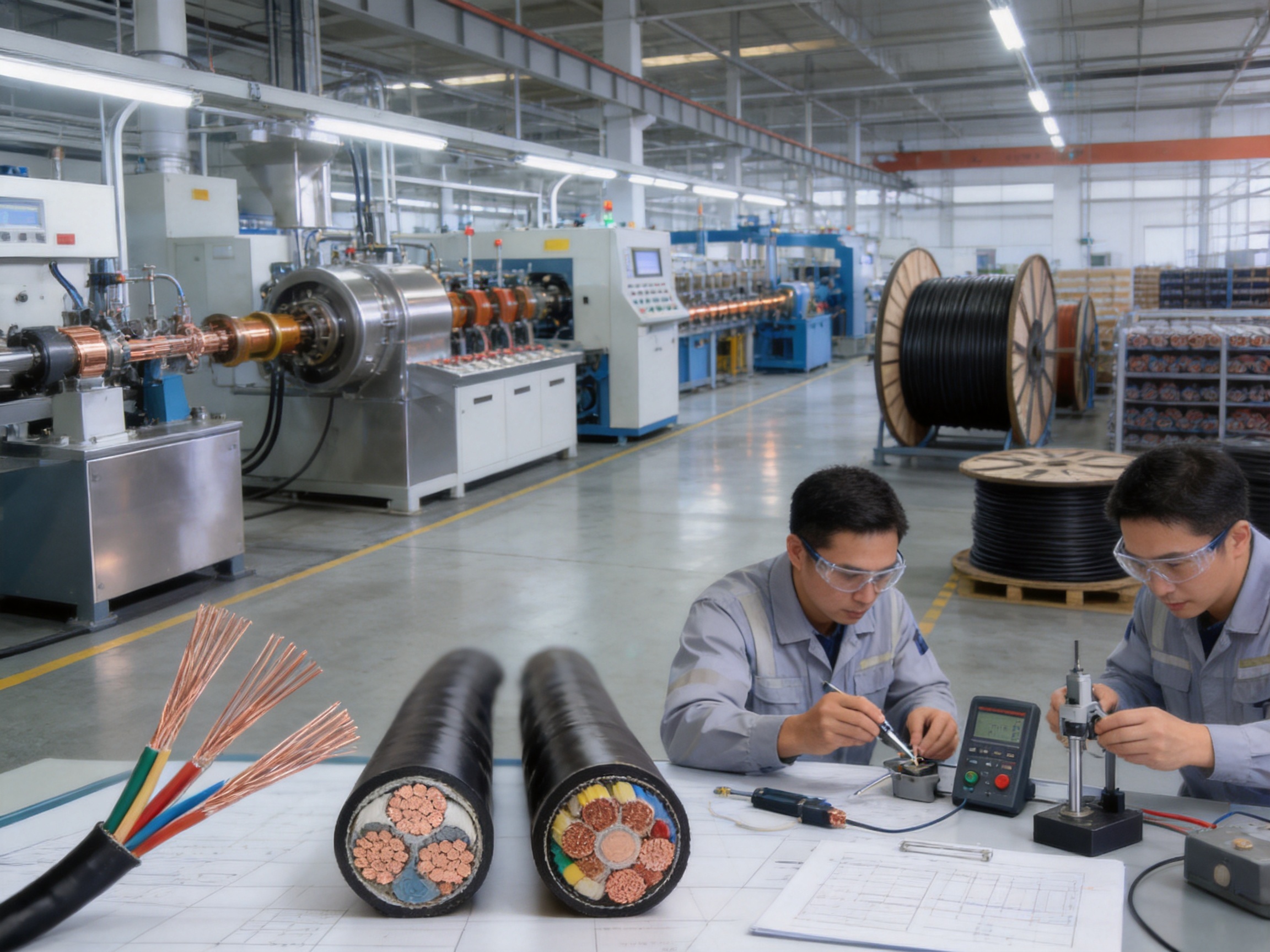
Modern buildings depend on extensive low-voltage wiring networks. Security cameras, access control panels, intercom systems, fire alarms, emergency broadcasting equipment, control devices, and electrical equipment all require dependable conductors that can be routed through conduits, cabinets, walls, ceilings, and equipment enclosures. In these applications, cable flexibility, clear core identification, mechanical protection, electrical reliability, and installation efficiency are equally important.
RVV and NH-RVV soft multi-core building wires are designed to address these requirements. Their fine-stranded copper conductors provide useful flexibility, while the insulated and sheathed construction offers practical protection for indoor wiring. RVV is commonly selected for standard low-voltage control, signal, and power connections. NH-RVV adds a fire-resistant option for circuits that must continue operating during a fire-related emergency, including fire alarm and emergency broadcasting systems.
Compared with rigid single-core wiring or basic unsheathed conductors, these cables simplify multi-point connections and reduce the amount of additional protective material required during installation. Compared with ordinary low-cost flexible cable, a properly manufactured RVV or NH-RVV cable can provide more consistent conductor resistance, insulation thickness, sheath quality, core identification, dimensional accuracy, and production traceability.
This article explains the structure, performance, applications, installation considerations, manufacturing strengths, and selection principles of RVV and NH-RVV soft multi-core building wire. It also examines how a modern cable manufacturer can improve product consistency through material control, automated production, inspection procedures, and flexible OEM/ODM support.
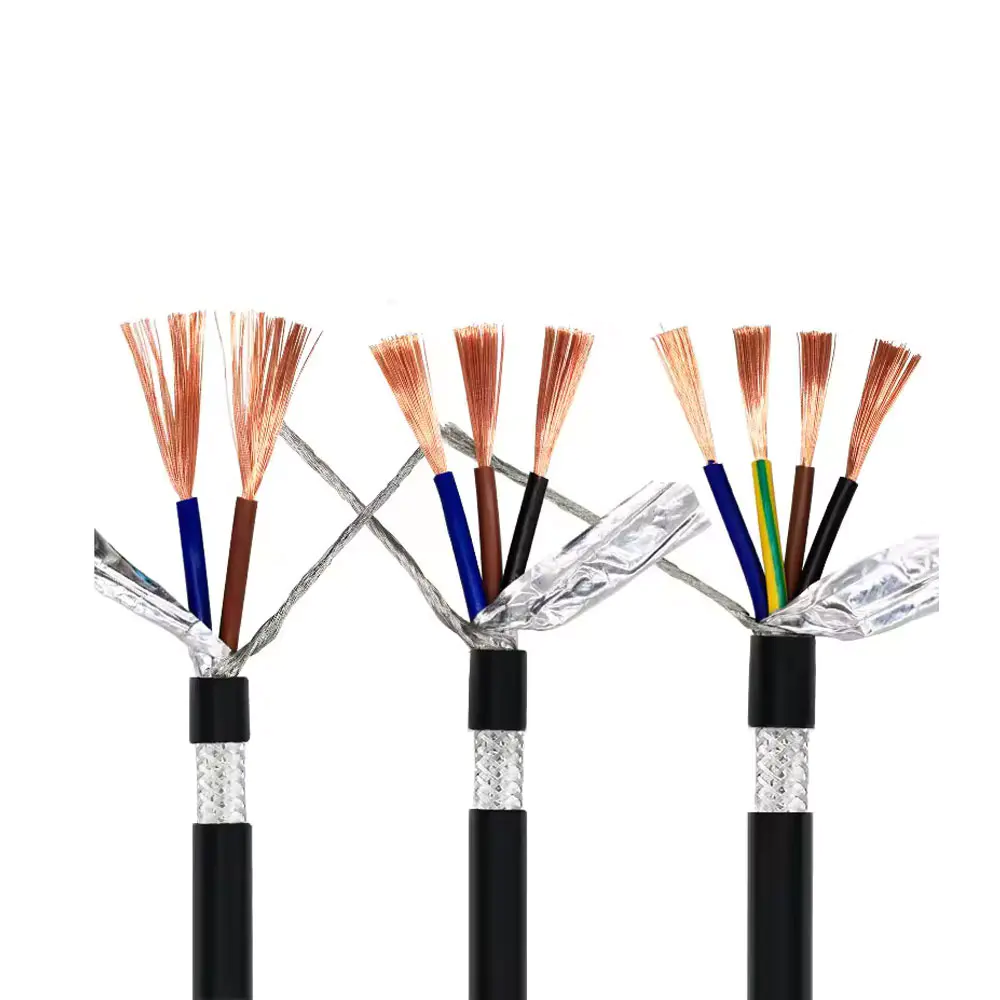
RVV is a flexible, multi-core cable generally used for low-voltage electrical equipment, control circuits, signal transmission, security systems, and indoor connection applications. The cable normally contains multiple fine-stranded copper conductors, individual PVC insulation around each conductor, and an external PVC sheath around the assembled cores.
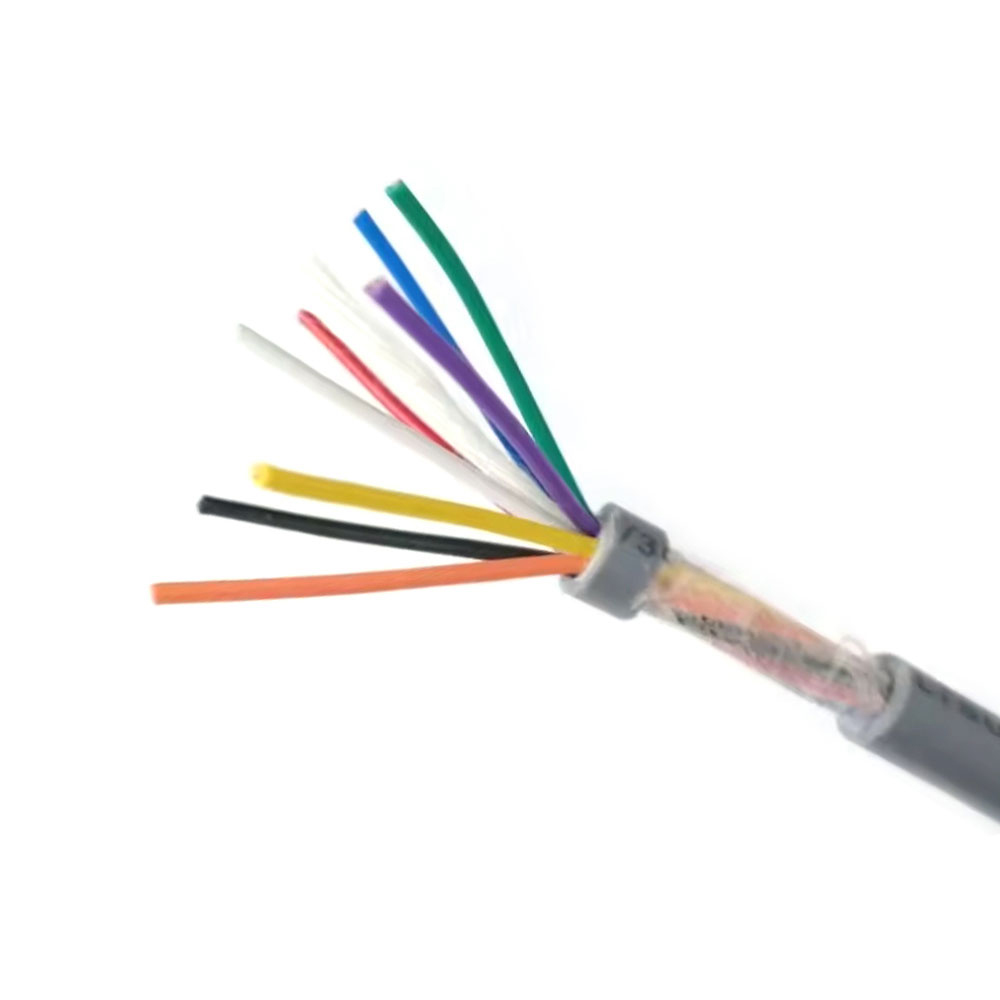
The “multi-core” design means that two or more insulated conductors are combined within one outer cable. Depending on the project, the cable may be manufactured with two to thirty cores and conductor cross-sectional areas from approximately 0.5 mm² to 10 mm². This range allows one cable family to serve small signal connections as well as higher-current low-voltage wiring tasks.
NH-RVV follows a similar soft multi-core construction but is intended for applications that require enhanced fire performance. Its protective structure uses fire-resistant PVC materials and is designed to help maintain circuit integrity under specified fire conditions. This makes NH-RVV especially suitable for selected fire protection, emergency communication, and life-safety circuits.
The exact designation, voltage rating, fire-resistance classification, and construction should always be confirmed against the applicable project specification. In the supplied product range, standard ratings may be described as 300/300 V or 300/500 V depending on the construction and ordering specification. Buyers should confirm the required rating before placing an order, particularly when a project specification references a specific national standard or installation code.
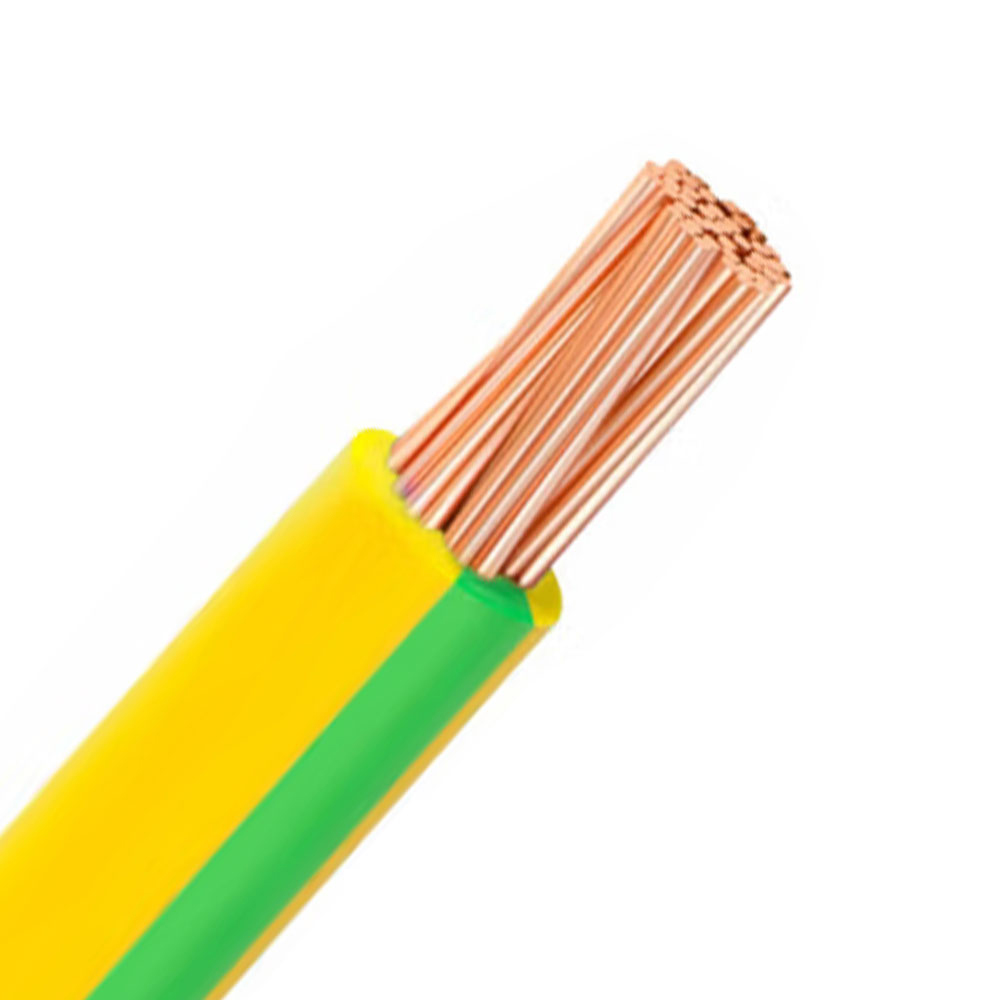
The conductor is made from multi-strand fine-stranded soft copper. Compared with a solid conductor, fine-stranded copper can bend more easily and is better suited to cable routing through corners, conduits, terminal cabinets, and equipment connection points.
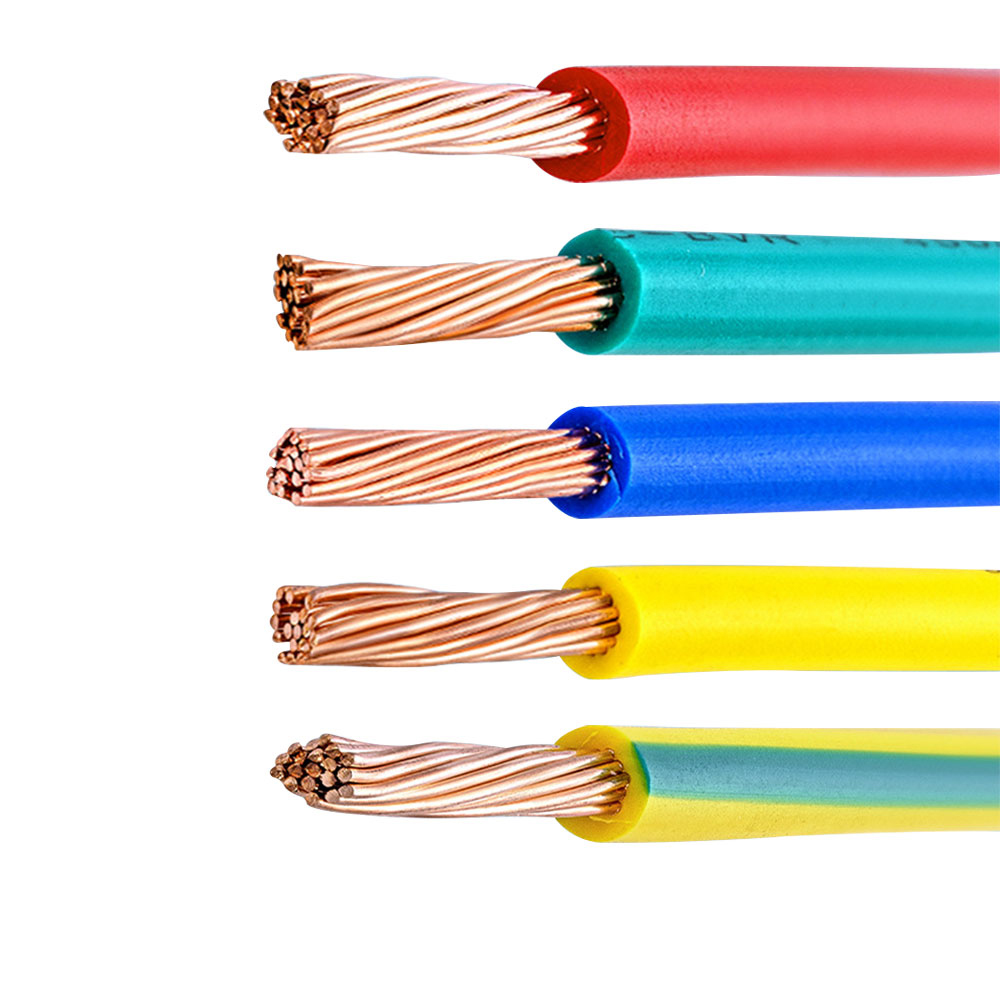
Each conductor is covered by an insulating layer. The insulation separates adjacent conductors and prevents unintended current paths. The core insulation may be color-coded or otherwise identified to assist installation and maintenance.
The insulated cores are assembled into a multi-core group and protected by an outer sheath. The sheath helps protect the internal conductors against light abrasion, limited compression, moisture encountered in normal indoor environments, and general handling during installation.
For NH-RVV, the insulation and sheath use a fire-resistant double-layer PVC structure. The purpose is not simply to make the cable difficult to ignite. Proper fire-resistant cable design also considers flame propagation, insulation integrity, sheath behavior, smoke-related requirements where applicable, and the ability of a circuit to remain functional under a defined fire test.
| Item | Typical Specification |
| Product types | RVV standard flexible multi-core cable; NH-RVV fire-resistant flexible multi-core cable |
| Number of conductors | 2–30 cores |
| Conductor cross-sectional area | Approximately 0.5 mm²–10 mm² |
| Conductor material | Multi-strand fine-stranded soft copper |
| Insulation and sheath | PVC structure for RVV; fire-resistant double-layer PVC structure for NH-RVV |
| Rated voltage | Common project configurations include 300/300 V and 300/500 V; confirm the required construction before order |
| Typical RVV temperature rating | Up to approximately 70°C under the stated product conditions |
| Fire performance | NH-RVV designed for specified fire-resistance applications; supplied information references a 750°C/90-minute fire-resistance test |
| Flame-retardant reference | GB/T 18380 flame-retardancy test |
| Product standards | GB/T 5023 and applicable fire-resistant cable requirements including GB/T 19666 |
| Compliance options | CCC and RoHS, subject to product model and order documentation |
Technical values can vary according to conductor size, insulation thickness, sheath thickness, rated voltage, number of cores, and the specific standard requested by the buyer. A complete technical datasheet should therefore be reviewed before final approval.
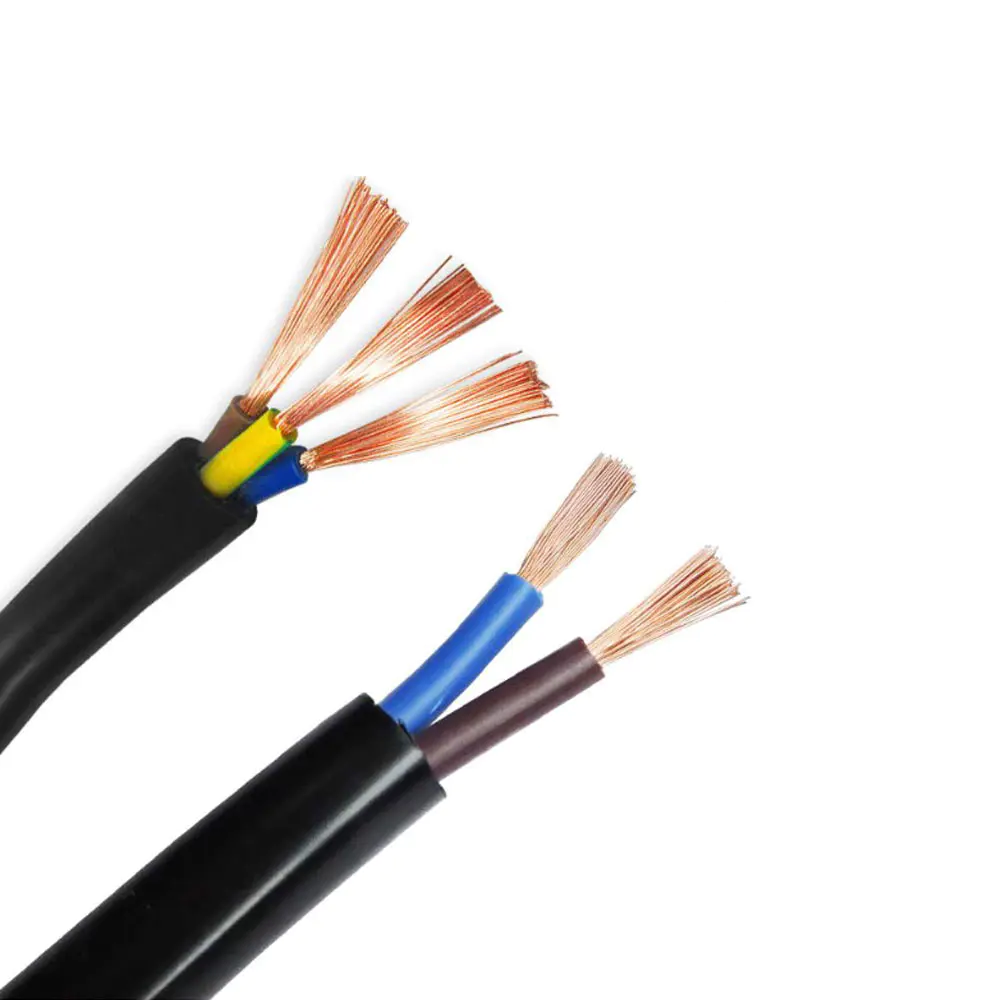
RVV/NH-RVV Soft Multi-Core Easy Wiring Building Wire
Cable installation is rarely a straight-line operation. Conductors may need to pass through narrow conduits, distribution boxes, control cabinets, raised floors, ceiling spaces, equipment frames, and irregular architectural routes. A rigid conductor can be difficult to position and may require more space, more accessories, and more time to terminate.
Fine-stranded copper improves bending performance because the conductor is formed from many smaller wires rather than one solid metal piece. The individual strands distribute bending movement across the conductor and reduce the effort required to route the cable. When the cable is correctly selected and installed within its recommended bending radius, this flexibility can make installation more efficient and reduce stress at terminals.
The multi-core format also reduces cable congestion. Instead of routing several independent single-core wires between the same equipment points, the installer can use one jacketed cable containing the required number of cores. This can improve cable organization and make the completed installation easier to inspect.
RVV is suitable for wiring paths that include moderate bends, conduit entry points, junction boxes, and equipment connection areas. The supplied installation guidance identifies a minimum bending radius of approximately six times the cable outer diameter for fixed installation and eight times the cable outer diameter for flexible installation.
These values should be treated as installation guidance rather than a replacement for the manufacturer’s latest datasheet. Excessive bending, twisting, flattening, pulling force, or repeated movement can damage the insulation and conductor assembly even when the cable is nominally flexible.
Multi-core cables are convenient for connection to plugs, terminal blocks, control panels, relays, low-voltage devices, and equipment wiring harnesses. Core identification allows the installer to allocate individual conductors to power, signal, alarm, return, communication, or control functions.
In a security monitoring system, for example, a multi-core cable may carry several low-voltage control or auxiliary circuits between a control cabinet and a field device. In an access control installation, individual cores can be assigned to power, door contact, request-to-exit, lock control, and alarm-related functions, subject to the system designer’s requirements.
A well-sheathed multi-core cable creates a cleaner cable route than a bundle of unprotected loose wires. This is valuable in cabinets and equipment rooms where space is limited and maintenance personnel must quickly identify the correct circuit.
Improved organization can also reduce the possibility of accidental disconnection. A stable outer sheath holds the cores together and provides a single cable body for fastening, labeling, and routing. The result is a more orderly installation that can be easier to document and service.
RVV is a practical choice for conventional indoor low-voltage wiring where flexibility and multi-core convenience are important. It is commonly used in security monitoring lines, access control and intercom systems, electrical equipment control lines, low-voltage signal transmission, and internal equipment connections.
The cable is particularly useful when the installation requires more than one conductor but does not require a specialized armored, screened, high-temperature, oil-resistant, or outdoor-rated construction. Its PVC insulation and sheath provide a balanced combination of electrical insulation, handling flexibility, and basic mechanical protection.
Security installations often include control panels, cameras, auxiliary devices, access points, alarms, power supplies, and monitoring equipment. These devices may be distributed across rooms, corridors, entrances, gates, and equipment closets. RVV can support suitable low-voltage control or auxiliary connections within the system design.
When selecting a cable for a security system, the installer should distinguish between power conductors, control conductors, and data or video transmission cables. RVV may be suitable for certain power and control functions, but it should not automatically replace a purpose-designed data, coaxial, or twisted-pair communication cable where signal performance requirements demand a different construction.
Access control equipment commonly includes door controllers, electric locks, card readers, exit buttons, magnetic contacts, alarms, and intercom stations. A multi-core flexible cable can simplify connections between these devices and the control cabinet.
The correct conductor size depends on the current, circuit length, voltage drop, installation method, and equipment manufacturer’s requirements. Small cross-sectional areas may be appropriate for signal or control functions, while lock power or longer-distance circuits may require larger conductors.
Electrical equipment frequently requires several low-voltage control connections in a compact space. RVV can be routed between control panels, switches, relays, terminal strips, sensors, and auxiliary equipment. The soft structure is helpful when cabinet doors, removable panels, or service loops require moderate movement.
The cable must still be selected according to the environment. Where continuous flexing, drag-chain motion, vibration, severe oil exposure, outdoor ultraviolet exposure, or high temperatures are present, a specialized cable may be more appropriate.
NH-RVV is intended for applications in which the cable must provide enhanced protection during fire conditions. Typical uses include fire alarm system multi-core connections, emergency broadcasting systems, hospital low-voltage fire-resistant lines, and other circuits identified by the project’s fire and life-safety design.
Fire-resistant cable should not be selected merely because a building project uses the word “fire.” The designer must determine whether the circuit needs flame retardancy, fire resistance, low smoke, low halogen performance, circuit integrity, or a combination of these characteristics. These are related but different requirements.
Flame retardancy generally concerns the cable’s ability to resist flame propagation or limit the spread of fire along the cable. Fire resistance is more demanding in applications where the circuit must continue operating during exposure to fire for a specified time and under specified test conditions.
NH-RVV is presented as a fire-resistant option with a double-layer protective structure and a referenced 750°C/90-minute fire-resistance test. The exact meaning of the test result depends on the applicable standard, test arrangement, conductor configuration, voltage conditions, and certification documentation. Buyers should request the relevant test report or certificate for the exact product model.
Fire alarm systems depend on reliable communication between detectors, manual call points, control panels, sounders, strobes, and other devices. A cable failure during an emergency can prevent a signal from reaching the control equipment or stop an alarm device from operating.
Where the project specification requires fire-resistant multi-core wiring, NH-RVV can provide a suitable cable format for certain low-voltage connections. The cable size, number of cores, installation method, circuit segmentation, and fire compartment requirements must be determined by the fire system designer.
Emergency broadcasting systems must be capable of delivering instructions or warning messages when building occupants need them most. Multi-core fire-resistant cable can be used for specified connections between control equipment, amplifiers, distribution points, and field devices, provided the cable characteristics match the system design.
Audio systems may have specific impedance, power, shielding, and voltage-distribution requirements. NH-RVV should therefore be selected as part of the complete system design rather than as a universal substitute for every emergency audio cable.
Hospitals, care facilities, transportation buildings, industrial plants, and public venues may require improved circuit survivability for selected low-voltage systems. NH-RVV can be considered for designated fire-resistant circuits where the project standard, authority requirements, and test documentation support its use.
Critical-facility projects generally require detailed documentation, including cable certificates, fire-test reports, batch information, conductor resistance data, and quality records. A manufacturer with organized production and inspection processes can help simplify this documentation process.
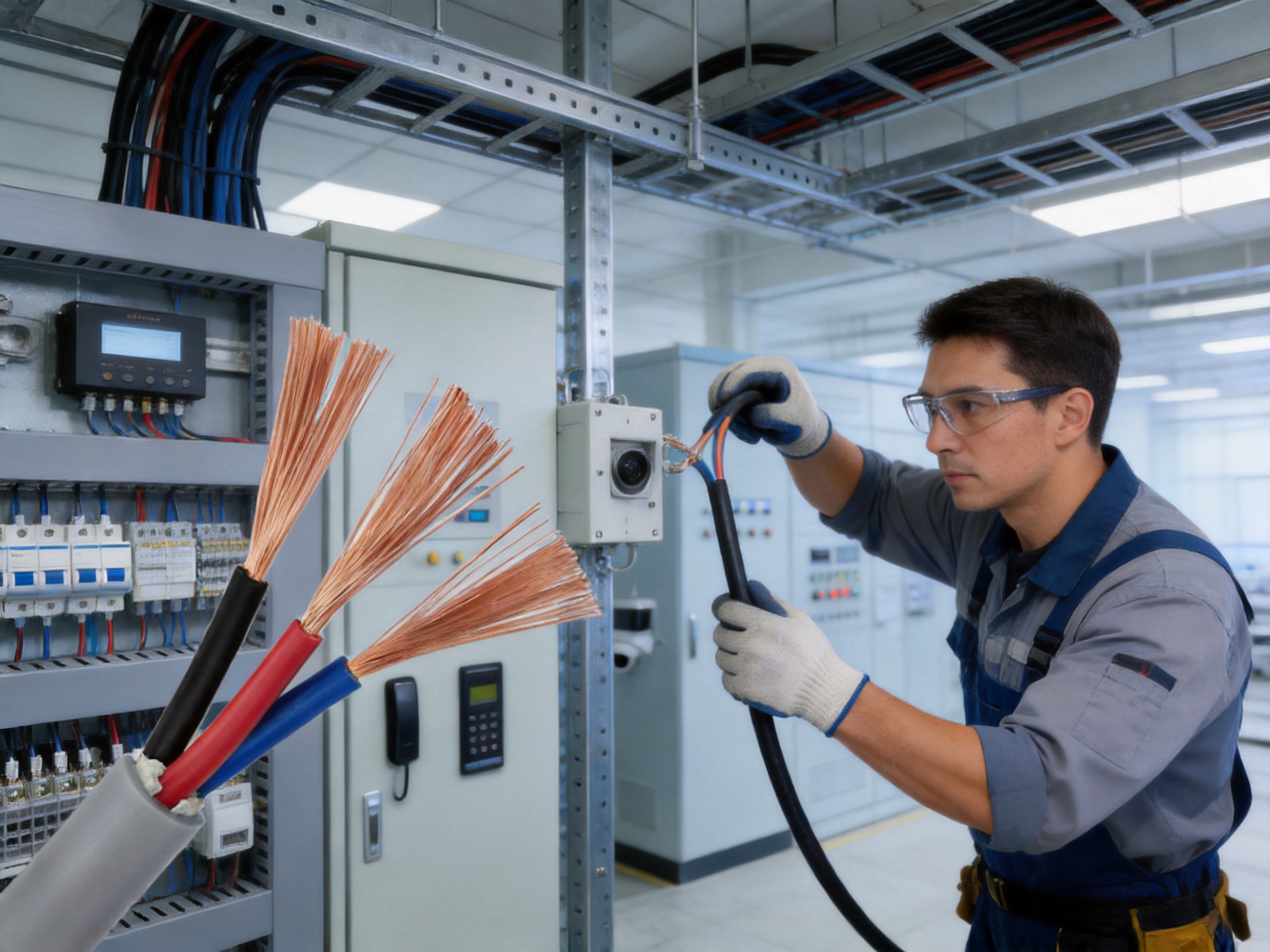
The value of RVV and NH-RVV is best understood by comparing their characteristics with common alternatives. Each cable type has a suitable application, but flexible multi-core sheathed cable offers several practical advantages in its intended field.
Solid single-core wire may be economical and easy to place in certain fixed installations, but it is less convenient when several circuits must follow the same route. Bundling many individual wires can increase installation time and create a less organized cable path.
RVV combines multiple insulated cores in a single sheath. Its flexible copper conductors are easier to route around moderate bends and connect to equipment. The outer sheath also provides a degree of protection against handling damage and light abrasion.
A bundle of separate insulated wires may require additional binding, labeling, and protective conduit. It can also be more difficult to maintain because individual wires may separate or become tangled during installation.
With RVV, the cores remain assembled, improving handling and route organization. The cable can be labeled as one unit while individual cores remain available at the termination point.
Not every flexible cable offers the same level of performance. Differences may exist in copper purity, strand diameter, conductor resistance, insulation concentricity, sheath thickness, core identification, voltage rating, and production consistency.
A professionally manufactured RVV cable should provide controlled dimensions and stable electrical performance. The benefit is especially important when large quantities are installed across a building or when cables must fit standardized terminals and conduits.
Standard RVV is suitable for many conventional low-voltage applications but is not automatically appropriate for a circuit requiring fire resistance. NH-RVV provides a dedicated option where enhanced fire performance and circuit integrity are specified.
Using NH-RVV only where required can help the project balance safety and cost. It avoids applying a specialized fire-resistant construction to every low-voltage circuit while ensuring that designated life-safety systems receive the appropriate cable type.
Cable performance is strongly influenced by manufacturing discipline. The stated conductor size alone does not guarantee consistent quality. A reliable production process must control raw materials, stranding, insulation extrusion, core assembly, sheath extrusion, testing, packaging, and traceability.
The conductor is the electrical heart of the cable. Fine-stranded soft copper must offer suitable conductivity, flexibility, tensile performance, and dimensional consistency. Incoming copper material should be checked against purchasing requirements before it enters production.
Conductor resistance is a critical quality indicator. Excessive resistance can increase voltage drop, heat generation, and energy loss. Stable copper quality and accurate stranding help the finished cable meet the required electrical specifications.
Full-core and full-length quality requirements are particularly valuable for project cables. They indicate that the manufacturer is not relying only on limited sampling while allowing large sections of cable to remain unverified.
Stranding machines combine individual copper wires into a flexible conductor. The process must control strand count, lay length, tension, surface condition, and conductor diameter. Poor control may create loose strands, uneven surfaces, excessive ovality, or weak areas that complicate insulation extrusion and termination.
Automated production lines can improve repeatability by maintaining stable machine settings and reducing manual variation. Experienced operators and quality engineers remain important because production parameters must be adjusted for different conductor sizes and cable constructions.
During insulation extrusion, PVC compound is applied around each conductor. The insulation must be continuous, concentric, and free from pinholes, inclusions, blisters, and other defects.
Extrusion temperature, line speed, material drying or conditioning, die selection, cooling, and diameter control all influence the final result. Online spark testing can help detect insulation defects during production, while dimensional checks help verify wall thickness and concentricity.
After insulation, the individual cores are assembled into the required multi-core configuration. The assembly process controls lay, roundness, tension, and the position of each core. Correct core arrangement helps prevent deformation and supports consistent sheath application.
Core identification is essential for installation efficiency. Clear and durable identification reduces wiring errors and assists future maintenance. Depending on the specification, cores may be identified by colors, numbers, printed markings, or a combination of methods.
The outer sheath protects the completed core assembly. Its thickness, surface quality, flexibility, color, and adhesion must be controlled. A sheath that is too thin may provide inadequate mechanical protection, while excessive thickness may reduce flexibility and increase material use.
Stable sheath extrusion also improves the cable’s outer diameter. This is important because installers select conduits, glands, clamps, and terminal accessories according to cable dimensions.
Fire-resistant cable requires additional control of compound formulation, material identity, extrusion conditions, and test documentation. The insulation and sheath must maintain the specified characteristics without compromising flexibility, dimensional stability, or electrical insulation.
Fire-resistant claims should be supported by tests conducted on the relevant construction. A test on one cable design cannot automatically be applied to every conductor size, core count, or material combination. Responsible manufacturers maintain clear product-model records and provide the appropriate documentation for the ordered specification.
Quality inspection should occur at several stages rather than only at the end of production. Incoming material inspection, process inspection, and finished cable testing work together to reduce the risk of nonconforming product.
| Inspection Area | Typical Purpose |
| Conductor diameter and strand condition | Confirm conductor construction and support flexibility |
| Conductor resistance | Verify electrical conductivity and limit excessive voltage drop |
| Insulation thickness | Confirm electrical separation and standard compliance |
| Insulation spark test | Detect possible insulation pinholes or breakdown points |
| Core identification | Support correct installation and maintenance |
| Sheath diameter and thickness | Confirm mechanical protection and compatibility with accessories |
| Insulation voltage test | Verify dielectric performance under the specified test voltage |
| Sheath voltage test | Check the integrity of the outer protective layer |
| Flame-retardancy test | Evaluate resistance to flame propagation according to the referenced standard |
| Fire-resistance test for NH-RVV | Verify performance under the specified fire-test conditions |
The supplied technical information identifies an insulation test voltage of 1,500 V for insulation thickness of 0.6 mm or less and 2,000 V for insulation thickness greater than 0.6 mm. It also identifies a sheath test voltage of 2,000 V. The exact test method, duration, and acceptance criteria should be confirmed in the official product specification.
Quality records are especially important for export orders, infrastructure projects, and fire-safety applications. Test reports, certificates of conformity, production batch numbers, inspection records, and packing lists help buyers confirm that the supplied cable matches the approved design.
Anhui Zhishang Cable Technology Co., Ltd. integrates research and development, production, and sales of wires and cables. Its production base covers approximately 5,000 square meters and includes more than 50 employees, including quality engineers and research and development technicians with more than ten years of industry experience.
The company operates ten automated production lines and reports monthly output of up to ten million meters. This capacity is useful for projects that require substantial quantities of standard cable, repeated deliveries, or coordinated supply across several cable specifications.
Automated production supports stable manufacturing parameters and efficient throughput. However, machinery alone does not determine cable quality. The company’s technical personnel, process management, inspection system, and product documentation are equally important in turning production capacity into dependable supply.
Different markets and projects may require different conductor sizes, core counts, sheath colors, markings, packaging methods, voltage ratings, or fire-performance requirements. OEM and ODM capability allows a manufacturer to develop products based on customer drawings, samples, or technical specifications.
For a building-wire project, customization may involve core arrangement, color sequence, printing, cable length, drum size, labeling, test documentation, or packaging. Engineering support can also help the buyer determine whether RVV, NH-RVV, or another cable family is more appropriate for the application.
Standard cable models may be stocked for faster shipment, which is beneficial when a project schedule is tight or when replacement material is needed quickly. Customized cable generally requires additional production planning and is stated to have a typical lead time of approximately seven to twenty days, depending on the design and order quantity.
Buyers should confirm available stock, production capacity, shipping schedule, minimum order quantity, and inspection requirements before issuing a purchase order. Early technical confirmation reduces the risk of delay caused by late changes to core count, conductor area, or certification requirements.
The company reports sales to the United States, Canada, Australia, Japan, and parts of Eurasia. Experience with international customers can help support export packaging, technical communication, product documentation, and coordination of different project requirements.
International buyers should still verify the specific standards and approvals required in their destination country. A product that complies with a Chinese national standard may require additional testing, marking, or certification for use in another jurisdiction.
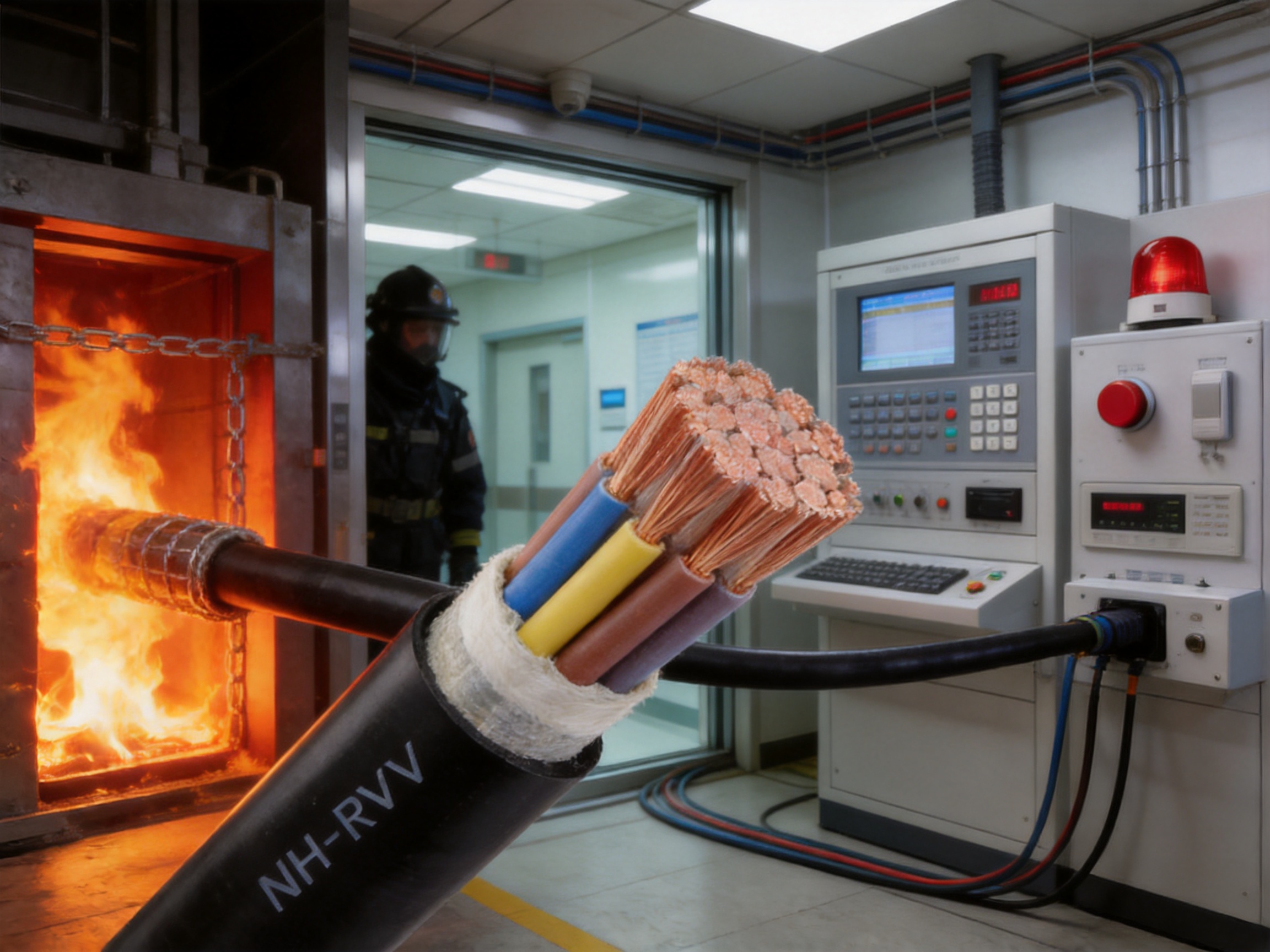
Correct cable selection is only the first step. Installation quality affects long-term performance, especially in systems that operate continuously or are difficult to access after construction.
The conductor cross-sectional area should be selected according to operating current, allowable voltage drop, circuit length, installation method, ambient temperature, grouping, and terminal capacity. A 0.5 mm² cable may be suitable for a low-current signal circuit but unsuitable for a high-current lock, actuator, or equipment supply.
Project designers should confirm the rated voltage before ordering. The supplied product information includes both 300/300 V and 300/500 V references, so the exact rating should be matched to the approved product model and applicable standard.
Do not force the cable into a bend smaller than the recommended radius. Tight bends can stress the conductor strands, flatten the insulation, deform the sheath, and reduce the cable’s service life.
For fixed installation, the supplied guidance indicates approximately six times the cable outer diameter. For flexible installation, approximately eight times the outer diameter is indicated. The project engineer should use the latest manufacturer datasheet when the cable is subject to repeated movement or difficult routing.
Flexible does not mean indestructible. Pulling cables around sharp edges, through blocked conduits, or with excessive force can stretch the conductors or damage the sheath. Use appropriate pulling equipment and avoid pulling by the individual internal cores.
When the cable exits a conduit or gland, protect it against sharp edges and provide suitable strain relief. The cable should not be allowed to carry mechanical loads that belong to the terminal or equipment housing.
RVV and NH-RVV are primarily suited to indoor environments under the stated temperature and chemical conditions. The supplied operating-temperature guidance identifies approximately –10°C to +70°C for fixed installation and –5°C to +70°C for flexible installation.
Where cables are exposed to direct sunlight, standing water, outdoor weather, severe oil, aggressive chemicals, continuous vibration, high temperature, or underground pressure, the project team should evaluate whether a different cable construction is required.
Terminals, ferrules, glands, plugs, and connectors must match the conductor size and cable construction. Fine-stranded conductors should be terminated in a way that prevents loose strands and provides reliable contact pressure.
After termination, check the circuit for continuity, insulation resistance, polarity, core allocation, and correct connection to the equipment. Clear labeling at both ends can reduce maintenance time and prevent accidental cross-connection.
The PVC sheath provides resistance to light wear and compression and can resist moisture and general chemical exposure encountered in normal indoor applications. This is an important practical advantage over bare or lightly protected conductors.
Nevertheless, chemical resistance is not unlimited. The supplied information refers users to a chemical-resistance table, meaning that compatibility should be checked for specific substances. Cleaning agents, oils, solvents, acids, alkalis, and industrial chemicals can affect PVC differently depending on concentration, temperature, exposure time, and mechanical stress.
Mechanical protection should also be evaluated realistically. The sheath can protect against ordinary handling and light abrasion, but it is not equivalent to steel armor or a heavy-duty industrial jacket. If the cable is installed where it may be crushed, impacted, buried, or exposed to rodents, additional protection or another cable type may be necessary.
A systematic selection process helps buyers choose the correct product and avoid unnecessary substitutions.
| Selection Question | Why It Matters |
| Is the circuit standard or fire-resistant? | Determines whether RVV or NH-RVV is appropriate |
| How many cores are required? | Determines cable configuration and installation space |
| What conductor area is needed? | Influences current capacity, voltage drop, and terminal compatibility |
| What voltage rating is specified? | Ensures the cable construction matches the project requirement |
| Will the cable be fixed or flexed? | Influences bending radius and cable selection |
| What is the ambient temperature? | Confirms whether the stated operating range is suitable |
| Is the cable exposed to chemicals or moisture? | Determines whether PVC protection is adequate |
| Are certification documents required? | Supports project approval, inspection, and regulatory compliance |
| Is customized printing or packaging needed? | Allows the manufacturer to plan OEM or ODM production |
Buyers should provide the manufacturer with the intended application, cable length, core count, cross-sectional area, voltage, temperature, installation method, fire-performance requirement, packaging preference, and destination-market certification requirements.
Responsible cable manufacturing includes efficient material use, controlled production, reduced waste, and compliance with environmental requirements. RoHS-related compliance helps address restrictions on certain hazardous substances, subject to the exact product documentation and market requirement.
Accurate extrusion and dimensional control can reduce scrap because fewer cable lengths are rejected for inconsistent insulation or sheath dimensions. Automated production may also support more stable material consumption and repeatable process control.
For purchasers, sustainability is not limited to the manufacturing stage. A cable with reliable insulation, stable conductor quality, and suitable mechanical protection can reduce premature replacement and maintenance. Longer service life lowers material consumption over the complete project lifecycle.
Choose RVV when the project requires a flexible multi-core cable for ordinary indoor low-voltage connections, equipment control, access control, security monitoring, intercom systems, or signal-related wiring and no special fire-resistance classification is required.
Choose NH-RVV when the project documentation specifies fire-resistant multi-core cable, circuit integrity during a defined fire test, or enhanced protection for fire alarms, emergency broadcasting, hospital fire-related circuits, or other life-safety systems.
Do not select NH-RVV solely because it appears to be a stronger version of RVV. The correct decision depends on the applicable standard, test evidence, system design, installation method, and authority requirements. Similarly, do not substitute ordinary RVV for NH-RVV when the approved design requires a fire-resistant circuit.
RVV is a standard flexible multi-core PVC-insulated and PVC-sheathed cable for conventional low-voltage applications. NH-RVV uses a fire-resistant double-layer PVC structure and is intended for specified fire-resistant circuits such as fire alarm and emergency broadcasting systems.
The supplied product range covers approximately two to thirty conductors. The exact availability depends on the conductor cross-sectional area, voltage rating, cable construction, production schedule, and customer specification.
The stated range is approximately 0.5 mm² to 10 mm². The correct size must be selected according to current, voltage drop, circuit length, installation conditions, and terminal requirements.
RVV is primarily intended for indoor environments under its specified conditions. Outdoor exposure may involve ultraviolet radiation, rain, temperature variation, and mechanical hazards that require a different cable construction. Confirm suitability with the manufacturer before outdoor installation.
RVV may be used for certain low-voltage signal or control connections, but it is not a universal data cable. High-speed communication systems may require twisted-pair geometry, shielding, controlled impedance, or other special characteristics. The communication equipment specification should determine the cable type.
The bending radius is the minimum radius of the cable path during installation. The supplied guidance indicates approximately six times the outer diameter for fixed installation and eight times the outer diameter for flexible installation. Smaller bends may damage the cable or reduce service life.
No cable should be described without reference to its test conditions. NH-RVV is designed for specified fire-resistance performance, and the supplied information references a 750°C/90-minute test. Actual performance depends on installation, circuit design, mounting method, mechanical damage, temperature, and the applicable test standard.
The supplied product information references CCC and RoHS compliance, GB/T 5023, GB/T 18380 flame-retardancy testing, and GB/T 19666-related fire-resistant cable requirements. Buyers should request current certificates and test reports for the exact model and construction being purchased.
Yes. The manufacturer supports OEM and ODM development based on customer drawings or samples. Possible customization may include core count, conductor area, color, printing, packaging, length, voltage rating, and other defined technical requirements.
The stated typical lead time for customized products is approximately seven to twenty days. Actual timing depends on the design, raw-material availability, order quantity, production schedule, testing, packaging, and shipping requirements.
A quotation request should include cable type, number of cores, cross-sectional area, rated voltage, required length, application, fire-performance requirement, temperature range, installation method, color, marking, packaging, destination country, certifications, and desired delivery date.
RVV and NH-RVV soft multi-core building wires provide practical solutions for organized, flexible, and dependable low-voltage installation. Their fine-stranded copper conductors support easier routing and termination, while the PVC insulation and outer sheath provide electrical separation and basic mechanical protection.
RVV is a versatile choice for security monitoring, access control, intercom systems, equipment control, and other conventional indoor low-voltage applications. NH-RVV extends the product family into specified fire-resistant applications, including fire alarms, emergency broadcasting, and selected critical-facility circuits.
The strongest product advantages come from the combination of design and manufacturing discipline. Controlled copper materials, fine-stranding technology, accurate insulation extrusion, stable core assembly, consistent sheath application, automated production lines, and structured testing all contribute to dependable cable performance.
Anhui Zhishang Cable Technology Co., Ltd. combines research and development, production, sales, OEM/ODM support, and technical service. Its approximately 5,000-square-meter manufacturing base, ten automated production lines, experienced engineering personnel, and reported monthly capacity of up to ten million meters provide a foundation for both standard supply and customized project support.
For the best result, buyers should select the cable according to the complete electrical and environmental design rather than choosing only by price or nominal conductor size. Confirm the voltage rating, core count, conductor area, bending requirement, fire classification, certification, and installation environment before approval. With the correct specification and proper installation, RVV and NH-RVV can offer an economical and reliable solution for modern building low-voltage systems.
GB/T 5023, Polyvinyl Chloride Insulated Cables of Rated Voltages up to and Including 450/750 V.
GB/T 18380, Tests on Electric and Optical Fibre Cables under Fire Conditions.
GB/T 19666, General Rules for Flame-Retardant and Fire-Resistant Cables.
RoHS, Restriction of Hazardous Substances requirements for electrical and electronic products.
National and project-specific electrical installation requirements for low-voltage building wiring.
Manufacturer technical information for RVV and NH-RVV soft multi-core building wire.
Manufacturer quality-control and product-testing information for flexible copper conductor cables.

We firmly believe that good cables are not only a competition of materials, but also a reflection of craftsmanship, quality, and responsibility.

Links
Product
Send Inquiry
No. 29 Sankeshu Road, Xuanzhou District, Xuancheng City, Anhui Province, China
+86-18621104555/+86-563-2622999
 Electrical Cable Manufacturer
OEM/ODM Wire and Cable Solutions
 English
 Español
 عربى
 русский