
Get more content that can help you
Content
Modern elevator systems are no longer simple lifting machines. They are integrated electromechanical platforms that combine drive control, passenger communication, safety monitoring, lighting, sensors, door control, emergency circuits, and increasingly sophisticated data transmission. Inside the elevator shaft, cables must move repeatedly with the car, withstand dynamic bending, resist abrasion and oil, suppress electromagnetic interference, and maintain stable electrical performance over millions of operating cycles. The TVVB mechanical protection reinforcement elevator traveling flat cable is engineered for this exact environment.
This shielded elevator traveling flat cable adopts a flat parallel conductor structure, fine-stranded annealed copper conductors, PVC insulation and sheath, and copper braid shielding. It is designed for applications where mechanical reliability and signal stability are equally important. Compared with conventional round traveling cables or unshielded flat cables, this product provides improved space utilization, easier suspension in elevator shafts, enhanced resistance to electromagnetic interference, and long bending life under continuous movement.
The product is particularly suitable for elevator shafts with electromagnetic interference, escalators, precision lifting equipment, medical elevators, high-speed elevators in high-rise buildings, and other vertical transportation systems that require protected signal transmission and dependable power or control circuits. With a rated voltage of 300/500V, available cross-sections from 0.5 mm² to 2.5 mm², and 4 to 60 cores in a flat arrangement, it can support a wide range of control, communication, lighting, and auxiliary functions.
Anhui Zhishang Cable Technology Co., Ltd. manufactures this cable with a practical understanding of industrial cable requirements. The company integrates research and development, production, and sales, supported by automated production lines, experienced engineers, and customizable OEM/ODM capability. Its production approach emphasizes full-core copper conductors, stable insulation quality, precise structural control, and testing practices intended to deliver reliable cable solutions for demanding applications.
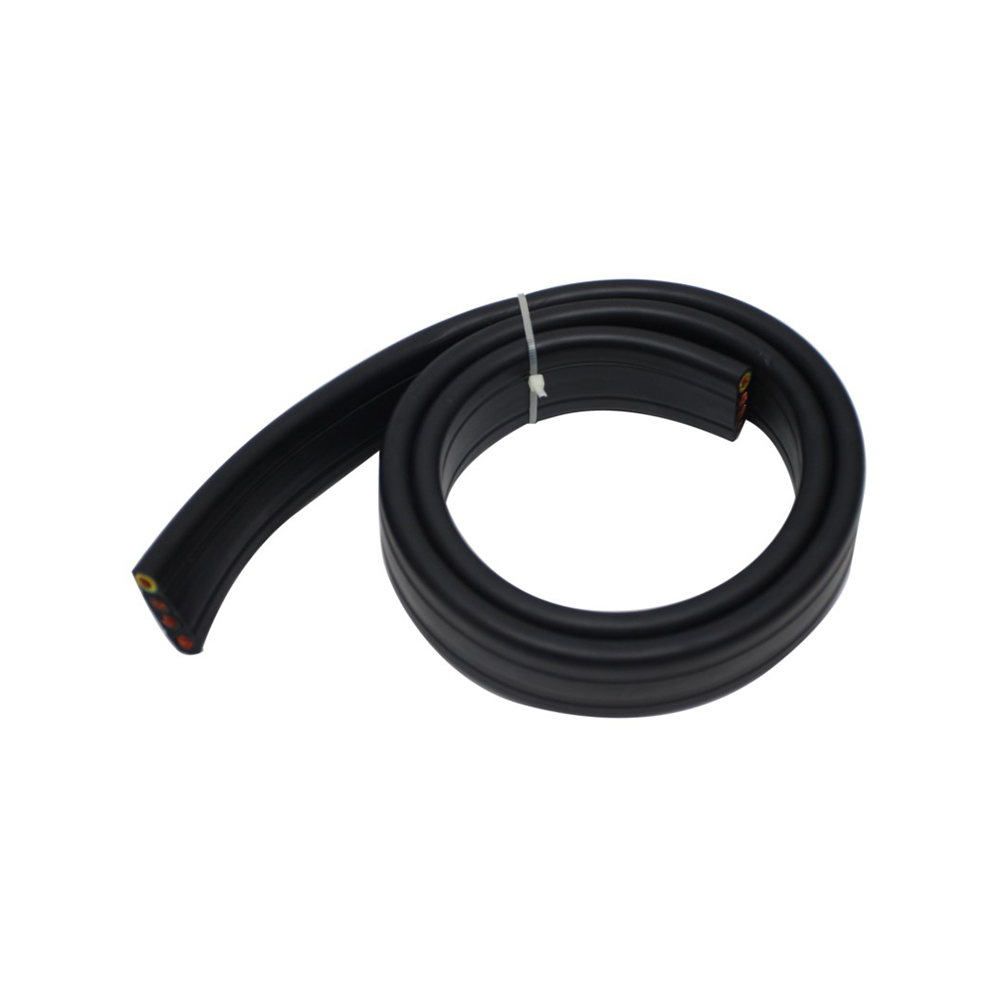
TVVB Mechanical protection reinforcement Elevator Traveling Flat Cable
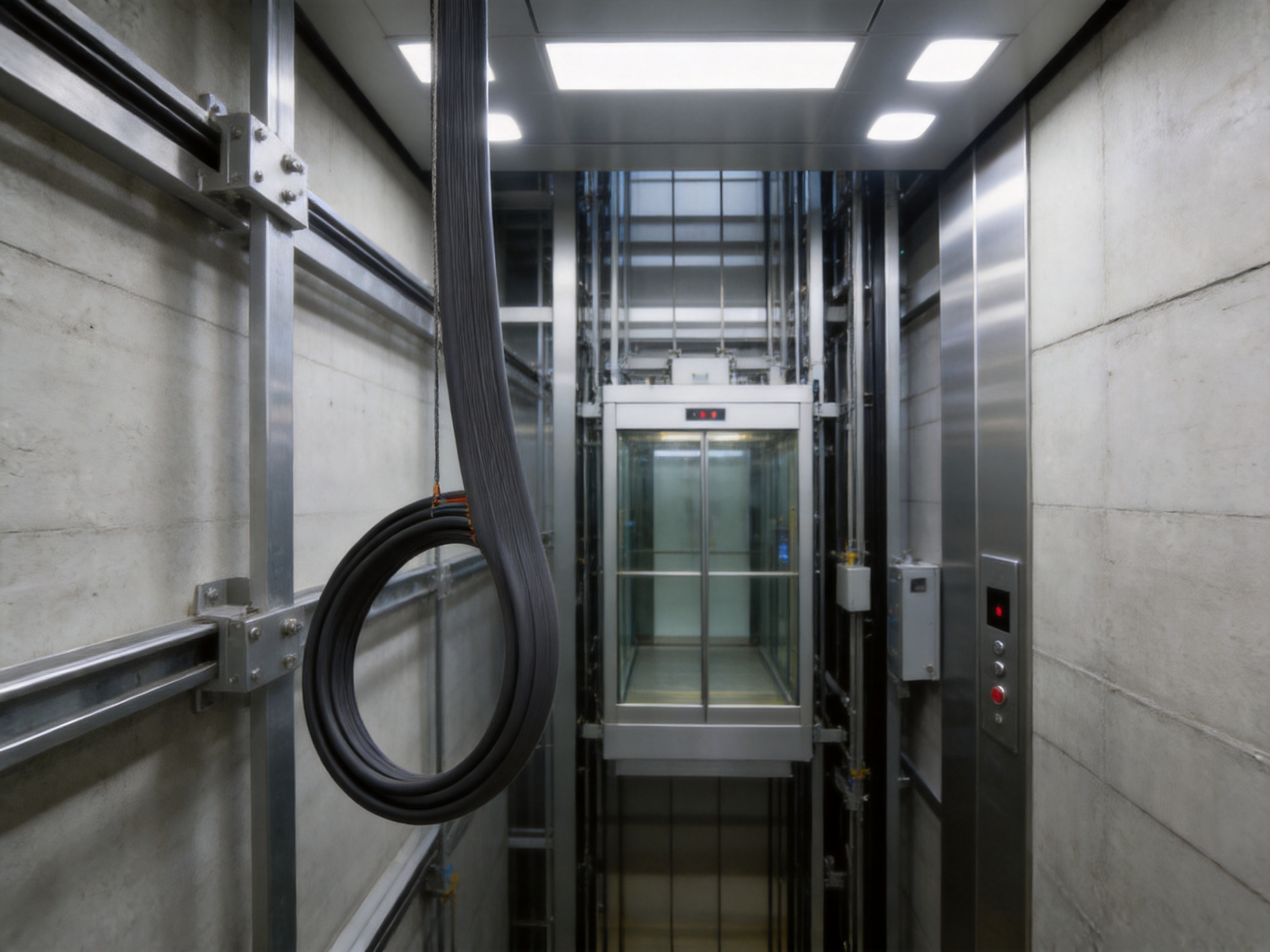
Elevator traveling cables are among the most mechanically demanding low-voltage cable products. Unlike fixed installation cables, they move whenever the elevator car moves. They hang vertically, bend continuously, and may experience torsion, vibration, compression, and friction against brackets or shaft components. At the same time, they must keep circuits stable for control commands, safety interlocks, communication signals, lighting supply, and other critical functions.
The elevator shaft is also a difficult electromagnetic environment. Motor drives, control cabinets, variable frequency drives, braking systems, relays, lighting circuits, and building electrical infrastructure can all generate interference. If a traveling cable does not provide appropriate shielding, signal circuits may be affected by noise, leading to unstable communication, inaccurate sensor data, audio or video distortion, or intermittent control errors.
Another challenge is installation space. Shafts are often compact, especially in retrofits, high-rise buildings, commercial projects, and equipment rooms where multiple service lines are routed together. A flat traveling cable helps organize multiple conductors in a defined plane, reducing twisting and allowing a cleaner vertical hanging profile. Its geometry helps optimize shaft space and makes the moving cable easier to guide, clamp, and inspect.
The TVVB mechanical protection reinforcement elevator traveling flat cable addresses these requirements through a balanced structure. It combines conductor flexibility, flat geometry, PVC insulation, a durable PVC sheath, and copper braid shielding. The result is a product that supports stable electrical performance while providing the mechanical resilience required for repeated elevator movement.
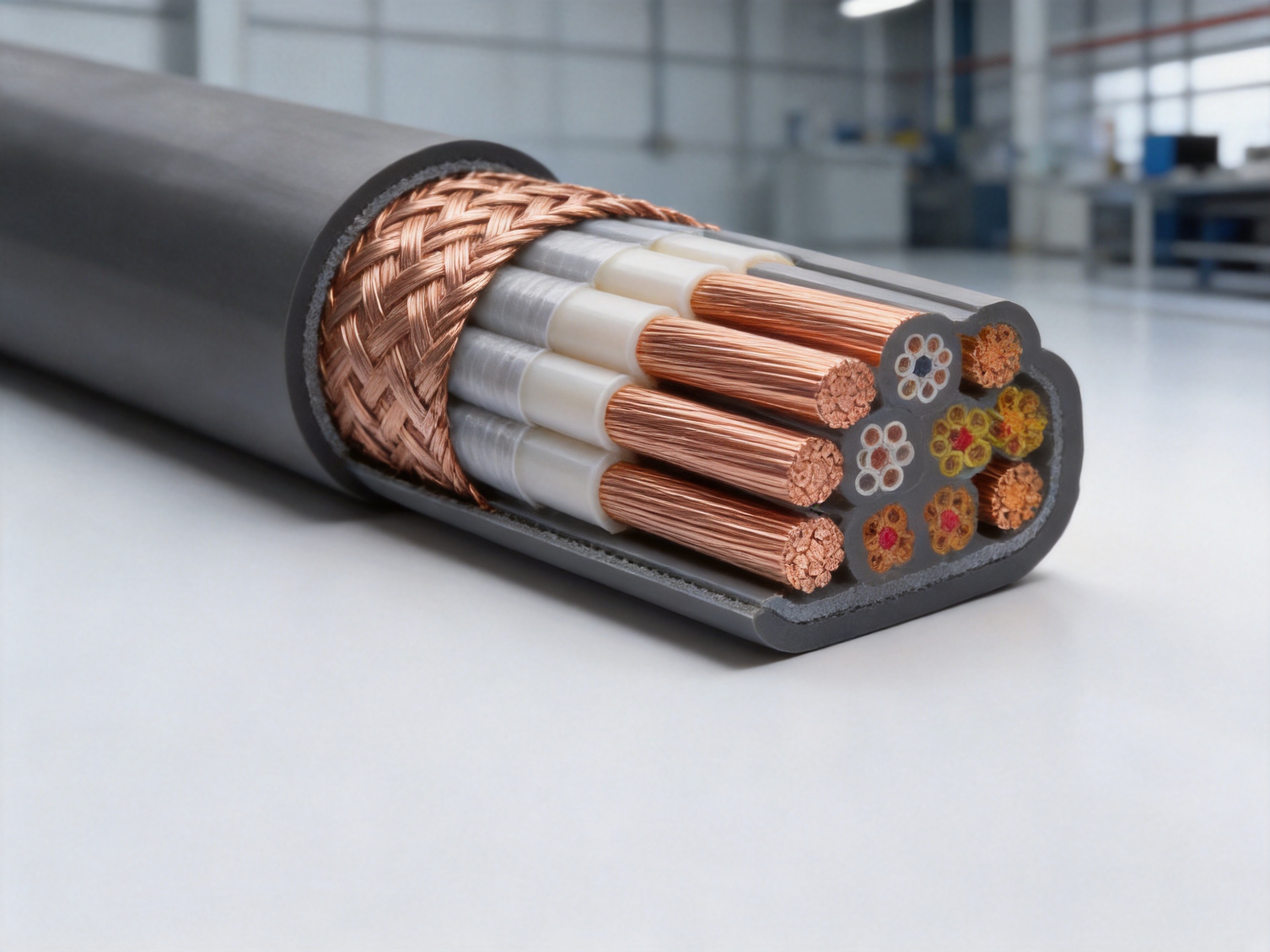
The cable is a shielded elevator trailing flat cable. Its conductors are arranged in parallel within a flat configuration. This structure allows the cable to bend consistently along the intended bending direction, which is beneficial for traveling applications. Fine-stranded annealed copper conductors improve flexibility and conductivity, while PVC insulation separates and protects each core. The outer PVC sheath provides mechanical protection against wear, oil exposure, and environmental stress inside elevator shafts.
The copper braid shield is one of the most important features of this cable. In elevator applications, shielding is not merely an optional enhancement; it can be essential for maintaining signal stability. The braid shield surrounds the conductors and helps suppress external electromagnetic interference. It also reduces the risk of cable-generated signals affecting adjacent circuits. With coverage of at least 70%, the shielding structure offers a practical combination of flexibility, protection, and manufacturability.
The product is suitable for 300/500V systems and supports a test voltage of 2kV AC for one minute. It is available with 4 to 60 cores and conductor cross-sections from 0.5 mm² to 2.5 mm², making it adaptable for different elevator designs. The cable thickness may range from 2.8 mm to 12 mm, while the width may range from 12 mm to 85 mm depending on the number of cores and conductor size.
Its operating temperature range is -10℃ to +70℃, which suits typical indoor elevator shaft conditions and many controlled industrial environments. The minimum bending radius is at least six times the cable thickness for mobile installation and at least four times the cable thickness for fixed installation. These values help installers select proper routing and bending conditions to protect long-term cable performance.
One of the key advantages of this cable is its copper braid shielding. Many ordinary elevator traveling cables are designed primarily for power or control transmission and may not provide sufficient shielding for mixed signal environments. In contrast, the TVVB shielded structure is intended for applications where interference may affect signal quality. The copper braid shield helps isolate sensitive conductors from electromagnetic noise generated by motor systems, inverters, relays, and nearby power cables.
For elevators using communication modules, video monitoring, access control, digital displays, emergency intercom systems, or precision sensors, stable signal transmission is critical. Interference can create operational uncertainty and increase maintenance costs. By using a shielding structure with coverage of at least 70%, the cable provides a stronger foundation for clear and stable transmission in electrically noisy shafts.
The flat design is a practical advantage in elevator shafts. Round multi-core cables may twist, rotate, or occupy more unpredictable space during movement. A flat traveling cable hangs with a more controlled profile and can be arranged neatly along the elevator travel path. This helps reduce installation complexity and supports better long-term cable management.
Flat geometry also helps distribute mechanical stress across the width of the cable. In properly designed installations, the cable bends along a consistent axis, which can reduce concentrated fatigue. This is especially useful in high-cycle elevator applications, where millions of repeated movements can gradually damage poorly structured cables.
Elevator shafts may expose cables to abrasion, oil, dust, vibration, and contact with guiding elements. The cable uses a PVC sheath designed to provide mechanical protection while retaining flexibility. Its tensile strength is specified at not less than 15 N/mm², and the cable is designed for a bending life of at least 5 million cycles under elevator operating conditions. It also passes a 5000 reciprocating abrasion test and an IRM 902 oil immersion test.
These characteristics distinguish the product from general low-voltage wiring cables that are not intended for moving installations. A fixed cable may perform adequately in a stationary environment but fail prematurely when suspended and repeatedly flexed. The reinforced elevator traveling flat cable is designed around movement, making it better suited for long service life in vertical transportation equipment.
The cable uses stranded annealed copper conductors with fine stranding. Copper provides excellent conductivity, and annealing improves flexibility. Fine stranding helps the conductor endure repeated bending more effectively than a rigid solid conductor. This conductor design is important because every elevator trip subjects the cable to mechanical movement. A conductor that cannot tolerate bending may develop fatigue, broken strands, increased resistance, or intermittent circuit failure.
High-quality conductor construction also contributes to stable signal and power transmission. In control systems, consistent conductor resistance and reliable termination performance help maintain predictable operation. In mixed-function elevator cables, conductor quality directly affects the reliability of multiple connected systems.
Item |
Specification |
Product Type |
Shielded elevator traveling flat cable |
Conductor |
Stranded annealed copper conductor, fine stranding |
Cross-Section Range |
0.5 mm² to 2.5 mm² |
Number of Cores |
4 cores to 60 cores, flat arrangement structure |
Rated Voltage |
300/500V |
Test Voltage |
2kV AC for 1 minute |
Insulation Material |
Polyvinyl chloride, PVC |
Sheath Material |
Polyvinyl chloride, PVC |
Shielding Structure |
Copper braid shield, coverage not less than 70% |
Temperature Range |
-10℃ to +70℃ |
Minimum Bending Radius |
Mobile installation not less than 6 times cable thickness; fixed installation not less than 4 times cable thickness |
Insulation Resistance |
Not less than 20 MΩ·km at 20℃ |
Bending Life |
Not less than 5 million cycles under elevator operating conditions |
Oil Resistance |
Passes IRM 902 oil immersion test |
Abrasion Resistance |
Passes 5000 reciprocating abrasion test |
Cable Thickness |
2.8 mm to 12 mm, depending on cores and cross-section |
Cable Width |
12 mm to 85 mm, depending on cores and cross-section |
The conductor is the electrical foundation of any cable. In an elevator traveling cable, conductor design must satisfy both conductivity and fatigue resistance. Fine-stranded annealed copper is selected because it provides a combination of low electrical resistance and flexibility. Each conductor is composed of multiple copper strands, allowing the conductor to bend more easily than a solid wire of the same cross-section.
Annealing softens the copper and reduces brittleness. This matters because elevator cables are constantly moving. Over time, repeated bending can create stress points in metallic conductors. Fine stranding distributes the bending stress across many smaller wires, helping extend service life. This is one of the reasons why flexible elevator cables should not be replaced by ordinary building wires or rigid conductors.
The use of copper also supports efficient power delivery and reliable signal transmission. In control circuits, stable resistance helps maintain predictable voltage levels. For signal circuits, conductor consistency helps reduce transmission losses and performance variation. In applications where multiple systems are integrated into one cable, conductor quality has a direct relationship with equipment reliability.
The cable uses PVC insulation, with insulation thickness ranging from 0.4 mm to 0.8 mm depending on design. PVC remains widely used in low-voltage and control cable applications because it offers good electrical insulation, mechanical toughness, processing stability, and cost efficiency. In elevator traveling cables, insulation must resist cracking, deformation, and electrical breakdown under continuous use.
Proper insulation extrusion is essential. If insulation thickness is inconsistent, thinner areas may create weak points, while excessive eccentricity can reduce cable flexibility. Advanced extrusion control helps maintain uniform insulation around each conductor. This supports voltage endurance and long-term safety.
For multi-core flat cables, insulation also contributes to the mechanical shape of the cable. Consistent core dimensions help maintain a stable flat arrangement, which improves the cable’s bending behavior and makes installation more predictable.
The copper braid shield is a decisive component for elevator systems that require signal protection. A braid shield consists of interwoven copper wires around the cable core. This structure offers good flexibility compared with rigid shielding layers, making it appropriate for moving cables. The specified coverage of at least 70% provides meaningful electromagnetic protection while allowing the cable to remain bendable.
Electromagnetic interference may appear as noise in communication lines, distortion in audio or video signals, or instability in control data. In severe cases, interference can contribute to system faults or nuisance maintenance calls. The copper braid shield reduces the coupling of external electromagnetic fields into the conductors. It also provides a path for interference currents when properly grounded according to system design.
Compared with unshielded elevator traveling cables, this shielded version provides a clear advantage in modern elevator systems, especially those equipped with digital control, monitoring, and communication functions. Compared with some foil-only shielded constructions, copper braid can offer better mechanical endurance in repeated bending applications, because the woven structure tolerates movement well.
The outer sheath is the first protective layer against the elevator shaft environment. It must resist abrasion, contact pressure, oil exposure, dust, and repeated flexing. The product uses PVC sheath material with thickness from 0.8 mm to 1.5 mm depending on cable design. This sheath helps protect the internal insulated cores and shielding from mechanical damage.
Oil resistance is particularly important in elevator systems because lubricants and maintenance fluids may be present in the shaft. The cable passes the IRM 902 oil immersion test, indicating that its sheath is designed to maintain performance after exposure to oil conditions. Abrasion resistance is also verified through a 5000 reciprocating abrasion test, supporting durability in practical installations.
A good sheath must be strong but not overly rigid. If the sheath is too soft, it may wear quickly. If it is too hard, it may reduce flexibility and increase stress during bending. The cable balances these needs to support moving installation requirements.
Reliable elevator cables require more than good materials. Manufacturing precision determines whether the finished product will deliver consistent performance in the field. Anhui Zhishang Cable Technology Co., Ltd. operates a modern production base of approximately 5,000 square meters and is equipped with 10 automated production lines. Monthly production capacity can reach up to 10 million meters, supporting both standard product supply and customized cable projects.
The company’s manufacturing process begins with material selection. Copper conductor quality, PVC compound consistency, shielding wire specification, and sheath material performance are all important factors. By emphasizing full-core, full-length, pure copper specifications, the company supports stable conductivity and trustworthy product performance. This is especially important for elevator applications, where cable failure can affect passenger experience, maintenance schedules, and operational safety.
Conductor stranding is another critical stage. Fine stranding must be controlled so that conductor diameter, flexibility, and resistance meet design requirements. Irregular stranding can lead to unstable dimensions or reduced fatigue life. Automated stranding equipment helps maintain uniform conductor structure across production batches.
During insulation extrusion, process control is essential. Temperature, pressure, line speed, die alignment, and cooling conditions all affect insulation thickness and surface quality. Modern extrusion equipment enables more consistent insulation geometry, reducing the risk of weak spots or eccentricity. After insulation, cores are arranged in a flat parallel structure. This step requires precision to ensure that the final cable has the intended width, thickness, and bending behavior.
Shielding is performed with copper braid coverage designed to meet the product specification. Proper braiding density and tension affect both electromagnetic performance and mechanical flexibility. If braid coverage is too low, shielding performance may be reduced. If the braid is too tight or improperly applied, cable flexibility may suffer. Balanced manufacturing control ensures that shielding supports both electrical and mechanical requirements.
The sheath extrusion process gives the cable its final external protection. The sheath must bond appropriately to the structure, maintain uniform thickness, and provide a smooth, durable surface. Quality control during this stage helps ensure abrasion resistance, oil resistance, and long-term mechanical stability.
The company also supports product test reports and warranty support for standard cable models. Testing may include voltage tests, dimensional inspection, conductor resistance verification, insulation resistance testing, appearance checks, and performance evaluations relevant to the product design. For customized cables, engineering support can help align conductor size, core count, shielding type, sheath material, and structural dimensions with the customer’s installation conditions.
Elevator projects often require customized cable solutions. Different elevator brands, control systems, building heights, car speeds, shaft layouts, and accessory functions may demand different conductor counts, cross-sections, shielding arrangements, or cable dimensions. A standard cable may not always satisfy project requirements. This is why OEM/ODM capability is valuable.
Anhui Zhishang Cable Technology Co., Ltd. supports development based on customer drawings, samples, or technical requirements. Its R&D and engineering team can provide product selection guidance and cable design recommendations according to project needs. This enables customers to select a cable that is not only electrically suitable but also mechanically appropriate for the elevator system.
Customization may include conductor cross-section selection, number of cores, cable width, cable thickness, sheath thickness, insulation color, marking, packaging, and shielding configuration. For elevator applications with significant interference, shielding design can be prioritized. For applications with challenging movement conditions, flexibility and bending life can be emphasized. For harsh shaft environments, oil resistance and abrasion resistance can be considered in material selection.
Standard products are available for fast shipment, while customized products typically require a lead time of 7 to 20 days depending on complexity and production scheduling. This balance between inventory support and flexible customization allows the company to serve both urgent replacement needs and project-based manufacturing requirements.
High-rise buildings demand reliable elevator systems because downtime affects many occupants and building operations. In tall shafts, cable length increases, and signal stability becomes more important. A shielded traveling flat cable helps reduce interference risks while maintaining organized installation. The flat profile is useful where multiple cables or guiding systems share limited shaft space.
High-speed elevators create more demanding movement conditions. The traveling cable may experience more frequent dynamic stress, vibration, and bending cycles. A cable with fine-stranded copper conductors, flat structure, reinforced sheath, and verified bending life is better suited for these conditions than a general-purpose cable.
Medical elevators require smooth operation, dependable communication, and stable control. Hospitals may rely on elevators for patient transport, emergency response, equipment movement, and clean operational workflows. A shielded cable helps maintain reliable signal transmission in environments where electrical equipment is widely used. Mechanical durability also supports reduced maintenance disruption.
Although the product is designed primarily as an elevator traveling flat cable, similar mechanical and electrical requirements may appear in escalators and moving walkways. Control circuits, sensors, lighting, and safety devices require dependable cable connections. Where movement, vibration, or electromagnetic interference is present, a reinforced shielded cable can provide practical advantages.
Precision lifting equipment in industrial, commercial, or laboratory environments may require accurate signal feedback and stable control. Interference can affect sensor accuracy or communication integrity. The copper braid shield and flexible flat structure make the cable suitable for lifting systems where both electrical stability and mechanical endurance are needed.
Even a well-designed cable must be installed correctly to achieve its intended performance. Installers should respect the specified minimum bending radius. For mobile installation, the bending radius should be no less than six times the cable thickness. For fixed installation, it should be no less than four times the cable thickness. Excessive bending can create conductor fatigue, insulation stress, or sheath deformation.
The cable should be suspended and guided according to elevator manufacturer recommendations. It should not be twisted during installation. The flat side should be oriented so the cable bends naturally along the intended plane. Clamps and suspension points should avoid sharp edges and excessive compression. When multiple cables are installed together, they should be arranged to prevent friction, tangling, or uneven loading.
Shield grounding should be planned carefully. A shield can only perform effectively when integrated properly into the electrical system. Grounding practices may depend on the elevator control design, local electrical standards, and equipment manufacturer requirements. Improper shield termination may reduce interference protection or create unwanted grounding issues.
During maintenance, technicians should inspect the cable for sheath damage, abnormal wear, kinks, compression marks, oil swelling, or signs of conductor failure. Regular inspection is especially important in high-traffic elevators and harsh shaft environments. Early detection of mechanical damage can prevent larger system failures.
Compared with ordinary low-voltage wiring cable, the TVVB elevator traveling flat cable is far better suited for moving vertical installations. Ordinary wiring cable is generally designed for fixed routing inside buildings or equipment. It may not have the conductor flexibility, bending life, sheath durability, or flat hanging structure required for elevator shafts.
Compared with an unshielded elevator traveling cable, this shielded product offers stronger protection for signal circuits. In older elevator systems with limited electronics, unshielded cables may have been acceptable. However, modern systems often include communication, monitoring, and digital control. Shielding is increasingly important for system stability.
Compared with a round shielded flexible cable, the flat traveling cable can provide better shaft space organization and more predictable bending behavior. Round cables can be excellent in many industrial applications, but elevator traveling systems often benefit from flat cable geometry. The flat design helps prevent twisting and supports neat vertical suspension.
Compared with low-cost alternatives that use inferior conductors or inconsistent insulation, this cable emphasizes pure copper conductor specifications, precise stranding, controlled extrusion, and performance testing. While cheaper products may reduce initial purchasing cost, premature failure can lead to expensive downtime, labor, replacement, and safety concerns. A reliable elevator cable offers better long-term value by reducing risk throughout the service life of the equipment.
The manufacturer’s business philosophy emphasizes quality orientation, integrity foundation, and stability priority. These principles are relevant to cable production because cable quality is not only a matter of appearance. It involves material authenticity, conductor resistance, insulation integrity, dimensional accuracy, mechanical endurance, and traceable manufacturing control.
The company’s team includes quality engineers and R&D technicians with more than 10 years of industry experience. Experienced engineers are important when designing specialized products such as elevator traveling cables. They understand that a cable must satisfy electrical, mechanical, environmental, and installation requirements at the same time. A cable that performs well in a static electrical test may still fail in repeated movement if its structure is not properly designed.
The company follows national standards, relevant international standards, and industry benchmarks when developing cable products. It serves industrial automation, weak current engineering, intelligent manufacturing, appliance equipment, power engineering, and other fields. This broad application background supports the development of products that combine practical durability with stable electrical performance.
Green manufacturing and responsible production practices are also emphasized. In modern cable manufacturing, responsible production involves material control, process efficiency, waste reduction, and consistent quality. Stable production processes reduce defects and improve resource utilization. For international customers, consistent manufacturing practices also support reliable supply and repeat orders.
Electrical reliability in an elevator cable depends on several interacting factors. Conductor resistance affects voltage drop and heating. Insulation resistance affects leakage current and circuit isolation. Voltage endurance affects safety under working voltage and transient conditions. Shielding affects signal cleanliness. Mechanical stability affects all of these factors over time.
This cable provides insulation resistance of not less than 20 MΩ·km at 20℃. It is tested at 2kV AC for one minute and rated for 300/500V operation. These parameters support low-voltage elevator control and auxiliary circuits. The shielding attenuation factor is specified as not more than 0.9 at 1MHz, reflecting its anti-interference function.
For long-distance signal transmission within elevator shafts, attenuation and noise pickup must be controlled. Although the product is not described as a specialized high-frequency data cable, its copper conductor quality and braid shielding provide a strong basis for stable control and communication circuits. For systems involving audio, video, monitoring, or communication, shielding helps maintain clarity and reliability.
A traveling cable failure can be costly. It may require elevator shutdown, diagnostic labor, cable removal, reinstallation, rewiring, and system testing. In commercial buildings, hotels, hospitals, residential towers, and industrial facilities, elevator downtime can affect operations and user satisfaction. Therefore, mechanical life is not just a technical detail; it is an economic factor.
The cable is designed for at least 5 million bending cycles under elevator operating conditions. This supports long service life when the cable is correctly selected and installed. Its abrasion resistance and oil resistance further improve durability in real shaft environments. Mechanical protection reinforcement helps reduce the risk of sheath wear, conductor fatigue, and signal interruption.
For facility managers and elevator maintenance providers, choosing a durable traveling cable can reduce the frequency of replacements. It can also help reduce intermittent faults, which are often difficult to diagnose. A stable cable contributes to predictable elevator operation and lower lifecycle maintenance cost.
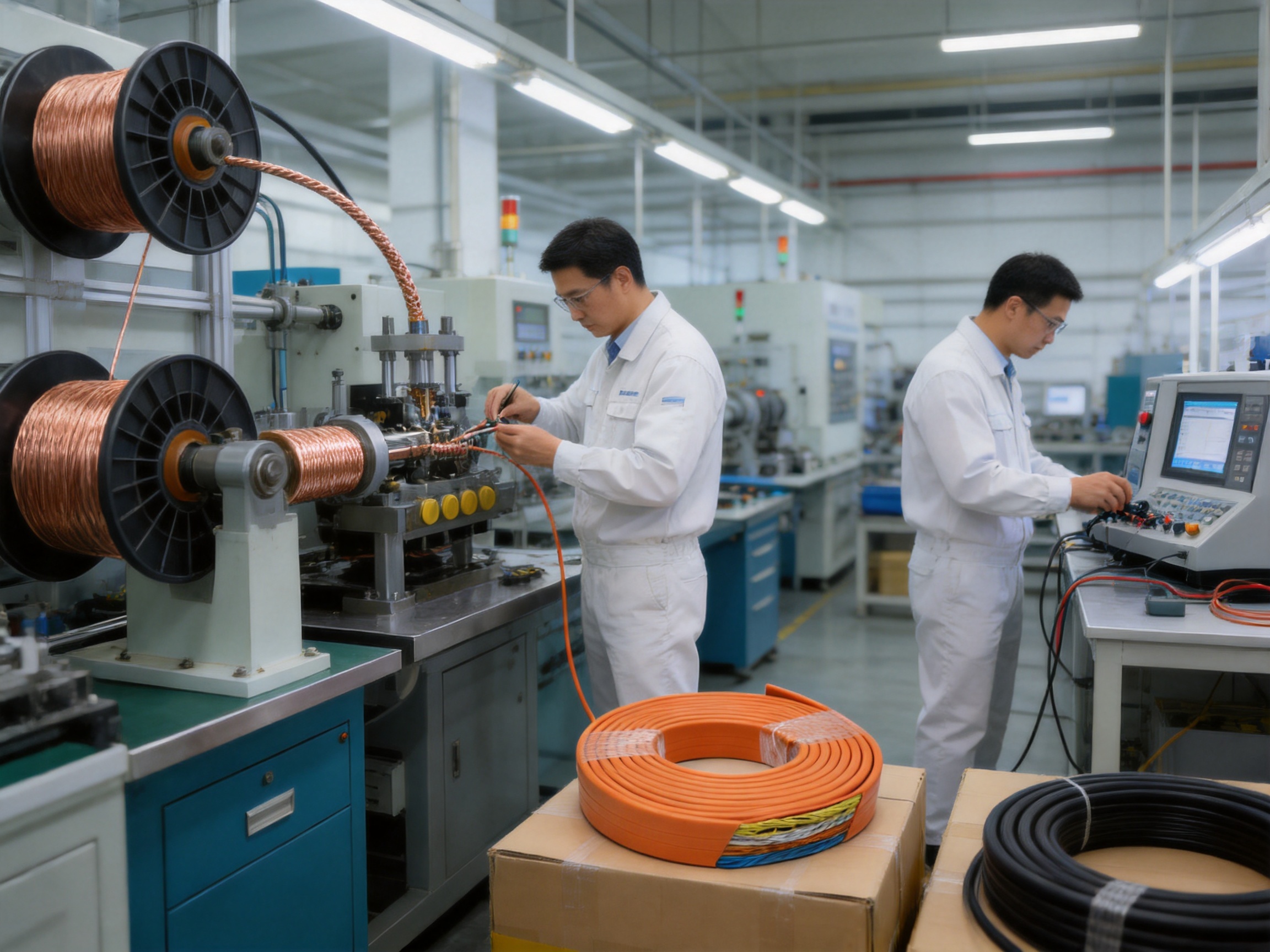
It is a shielded flat cable designed for elevator traveling applications. It uses fine-stranded annealed copper conductors, PVC insulation, PVC sheath, a flat parallel core arrangement, and copper braid shielding. It is intended to move with the elevator car while providing stable power, control, or signal transmission.
A flat structure helps the cable hang neatly and bend in a controlled direction. It improves shaft space utilization, reduces twisting, and supports predictable movement during elevator operation. This makes it easier to install and maintain than many round cable alternatives in vertical traveling applications.
Elevator shafts may contain electromagnetic noise from motors, variable frequency drives, relays, control cabinets, and other electrical equipment. Copper braid shielding helps reduce interference, protect signal quality, and support stable communication and control performance.
The cable is rated at 300/500V and is tested at 2kV AC for one minute. This makes it suitable for many low-voltage elevator control, power, and auxiliary circuits.
The cable can be produced with 4 to 60 cores in a flat arrangement. The appropriate number of cores depends on the elevator system design, including control circuits, communication lines, lighting, safety circuits, and other functions.
The available cross-section range is 0.5 mm² to 2.5 mm². Smaller conductors are commonly used for signal or control circuits, while larger conductors may be selected for higher current auxiliary functions, depending on system requirements.
Yes, it is suitable for high-rise building high-speed elevators and other applications requiring reliable movement performance. Its fine-stranded copper conductors, flat structure, reinforced sheath, and bending life of at least 5 million cycles support dynamic elevator operation.
Yes. The manufacturer supports OEM/ODM customization based on customer drawings, samples, or project requirements. Customization may include core count, conductor size, dimensions, sheath design, marking, and other structural requirements.
Installers should avoid twisting, sharp bends, excessive compression, and contact with sharp edges. The minimum bending radius should be respected: at least six times the cable thickness for mobile installation and at least four times for fixed installation. Shield grounding should follow system design and applicable standards.
Cheaper alternatives may reduce initial cost but can increase the risk of conductor fatigue, signal interference, sheath wear, and early replacement. This cable provides long bending life, copper braid shielding, oil resistance, abrasion resistance, and controlled manufacturing quality, helping reduce lifecycle cost and maintenance risk.
The TVVB mechanical protection reinforcement elevator traveling flat cable brings together the features that modern elevator systems require: stable electrical performance, electromagnetic interference resistance, mechanical durability, compact flat structure, and adaptable product configuration. It is not simply a bundle of conductors. It is a purpose-built moving cable for vertical transportation environments.
Its copper braid shielding provides an advantage in signal-sensitive applications. Its fine-stranded annealed copper conductors support flexibility and conductivity. Its PVC insulation and sheath offer practical electrical and mechanical protection. Its flat structure supports clean shaft routing and repeated bending. Its oil and abrasion resistance help it endure real-world shaft conditions.
From a manufacturing perspective, the product benefits from automated production lines, experienced technical personnel, customized engineering support, and quality assurance practices. The manufacturer’s ability to provide standard products quickly and customized products within practical lead times makes the cable suitable for both project construction and maintenance replacement.
For elevator manufacturers, installation contractors, building engineers, and maintenance providers, selecting the correct traveling cable is a decision that affects safety, reliability, service life, and user experience. A shielded reinforced flat cable offers advantages that become increasingly important as elevator systems become more intelligent, faster, and more signal-dependent.
International Electrotechnical Commission. IEC 60227: Polyvinyl Chloride Insulated Cables of Rated Voltages up to and Including 450/750V.
International Electrotechnical Commission. IEC 60332: Tests on Electric and Optical Fibre Cables under Fire Conditions.
International Organization for Standardization. ISO 4344: Steel Wire Ropes for Lifts, General Reference for Elevator System Safety Context.
National Standard of the People’s Republic of China. GB/T 19666: General Rules for Flame Retardant and Fire Resistant Electric Wires and Cables.
Elevator World Technical Publications. Traveling Cable Design and Maintenance Considerations for Modern Elevator Systems.
Wire and Cable Engineering Handbook. Materials, Stranding, Shielding, and Flexible Cable Construction Principles.

We firmly believe that good cables are not only a competition of materials, but also a reflection of craftsmanship, quality, and responsibility.

Links
Product
Send Inquiry
No. 29 Sankeshu Road, Xuanzhou District, Xuancheng City, Anhui Province, China
+86-18621104555/+86-563-2622999
 Electrical Cable Manufacturer
OEM/ODM Wire and Cable Solutions
Electrical Cable Manufacturer
OEM/ODM Wire and Cable Solutions
 English
 Español
 عربى
عربى
 русский