

Get more content that can help you
Content
WDZB1N--YJY23 Environmental Protection and Safety XLPE Insulated and Sheathed Power Cable is engineered for projects where ordinary power transmission is not enough. It is designed for the most demanding low-voltage power distribution environments, especially those involving fire protection systems, underground passages, tunnels, direct-burial routes, public infrastructure, industrial facilities, and other locations where fire resistance, low smoke emission, halogen-free safety, flame retardancy, and mechanical protection must work together.
This cable belongs to the XLPE insulated and sheathed power cable category and is built around a quadruple protection concept: fire resistance, B1-grade flame retardancy, low-smoke halogen-free environmental safety, and steel tape armored mechanical defense. In practical terms, it is not merely a cable that conducts electricity. It is a safety component designed to maintain power supply to critical circuits during emergency conditions and to reduce secondary hazards caused by smoke, toxic gases, flame spread, impact, soil pressure, rodents, and harsh installation environments.
In modern buildings and infrastructure, the continuity of emergency power can directly affect evacuation, firefighting, smoke extraction, emergency lighting, fire alarm systems, water pumps, communication systems, and emergency command functions. A cable serving these systems must withstand severe thermal and mechanical stress while maintaining circuit integrity for a defined time. WDZB1N--YJY23 is developed for exactly this mission: to act as a reliable electrical lifeline when both fire and physical damage risks may occur simultaneously.
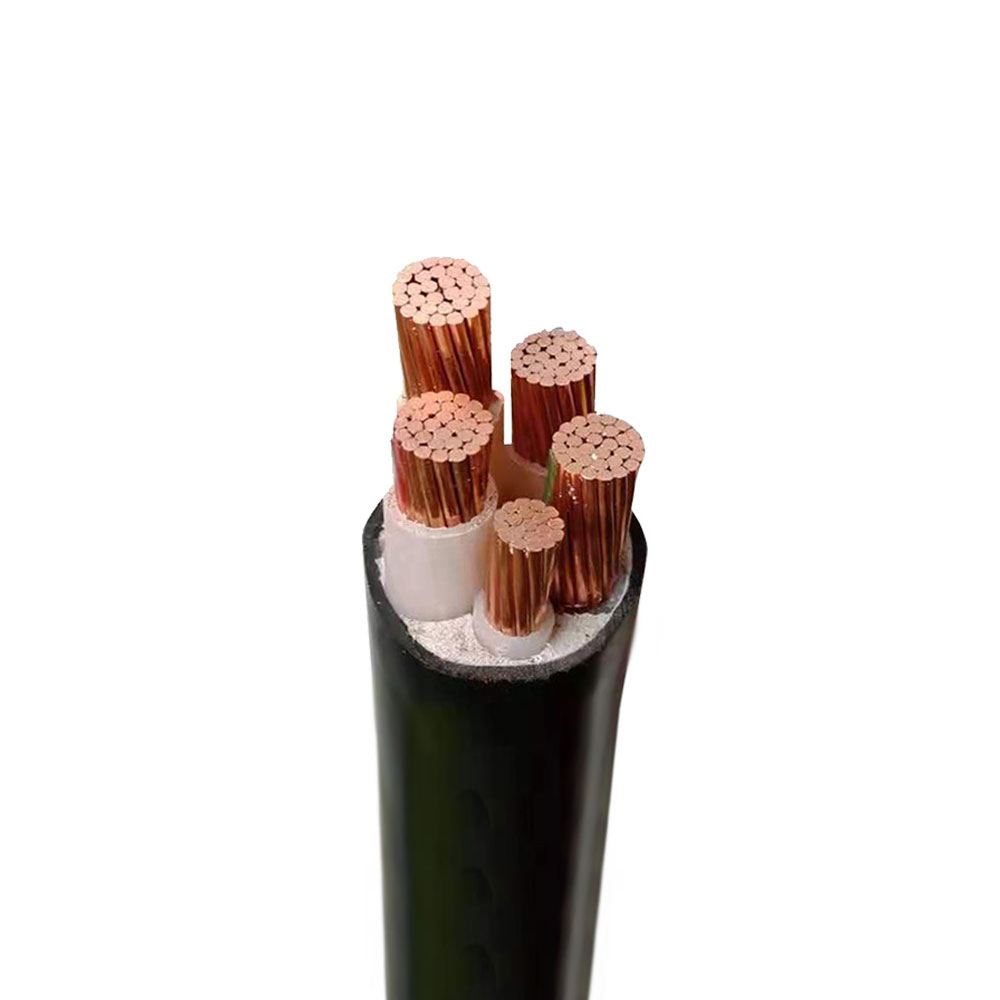
WDZB1N--YJY23 Environmental protection and safety XLPE Insulated and Sheathed Power Cable
The defining value of WDZB1N--YJY23 lies in its ability to combine multiple high-level protection properties in one cable structure. Many competing products provide only one or two forms of protection. For example, a standard XLPE power cable may offer good electrical performance and thermal resistance but may not provide fire survival capability. A basic flame-retardant cable may slow flame spread but may not continue energizing emergency circuits under fire exposure. A conventional armored cable may resist mechanical damage but may release dense smoke or corrosive gases when burned. WDZB1N--YJY23 addresses these gaps by integrating fire-resistant insulation reinforcement, B1 combustion performance, low-smoke halogen-free materials, and double-layer galvanized steel tape armor.
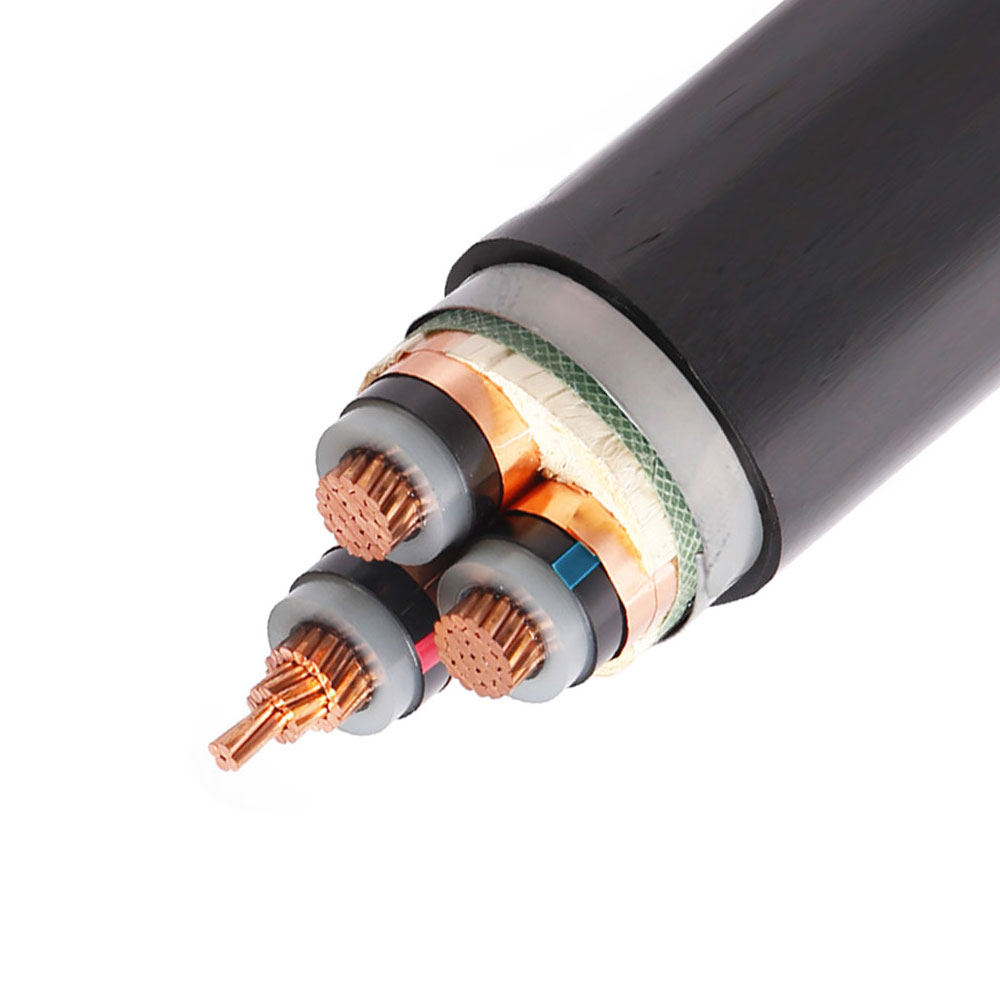
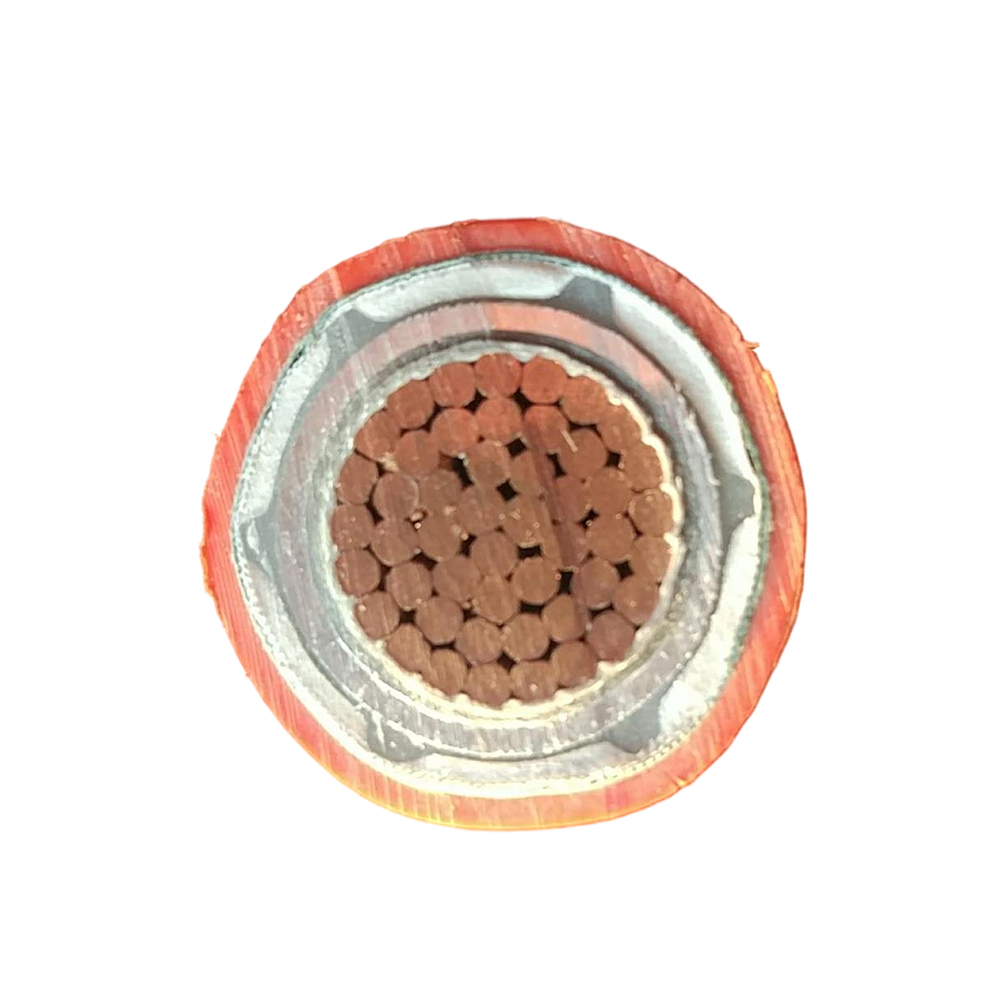
The cable is mainly rated at 0.6/1 kV, making it suitable for mainstream low-voltage power distribution systems. It uses a copper conductor with special stranding and a fire-resistant layer such as double-layer mica tape or an equivalent mineral-insulated barrier. The insulation is cross-linked polyethylene, commonly known as XLPE, with a long-term operating temperature of 90°C. The inner sheath uses halogen-free polyolefin, while the armor layer consists of double-layer galvanized steel tape. The outer sheath may be polyethylene or halogen-free polyolefin depending on project requirements.
The product is especially suitable for “lifeline” circuits that power critical fire protection facilities and other essential emergency loads. These are circuits that must not fail during the early stages of a fire. In underground tunnels, rail transit passages, basements, utility corridors, petrochemical facilities, commercial complexes, hospitals, data centers, and municipal infrastructure, cable failure can lead to cascading risks. WDZB1N--YJY23 helps reduce these risks by preserving electrical continuity and limiting the spread and toxicity of fire byproducts.
The model name reflects the cable’s functional characteristics. “WD” refers to low-smoke halogen-free performance, emphasizing environmental and evacuation safety during combustion. “ZB1” indicates B1-grade flame retardancy, a higher and stricter combustion performance class requiring control of heat release, smoke generation, toxicity, and flame propagation. “N” represents fire resistance, meaning the cable is designed to maintain circuit integrity under specified flame conditions. “YJY” indicates XLPE insulation and polyethylene or polyolefin sheathing in the power cable structure. “23” indicates steel tape armored construction with protective sheathing, enabling direct burial and resistance to external mechanical pressure.
This naming is more than a technical label. It summarizes the product’s identity as a fire-resistant, flame-retardant, environmentally safer, mechanically protected power cable. For engineers, contractors, and project owners, the model provides a compact way to identify a cable suitable for high-risk, high-safety applications.
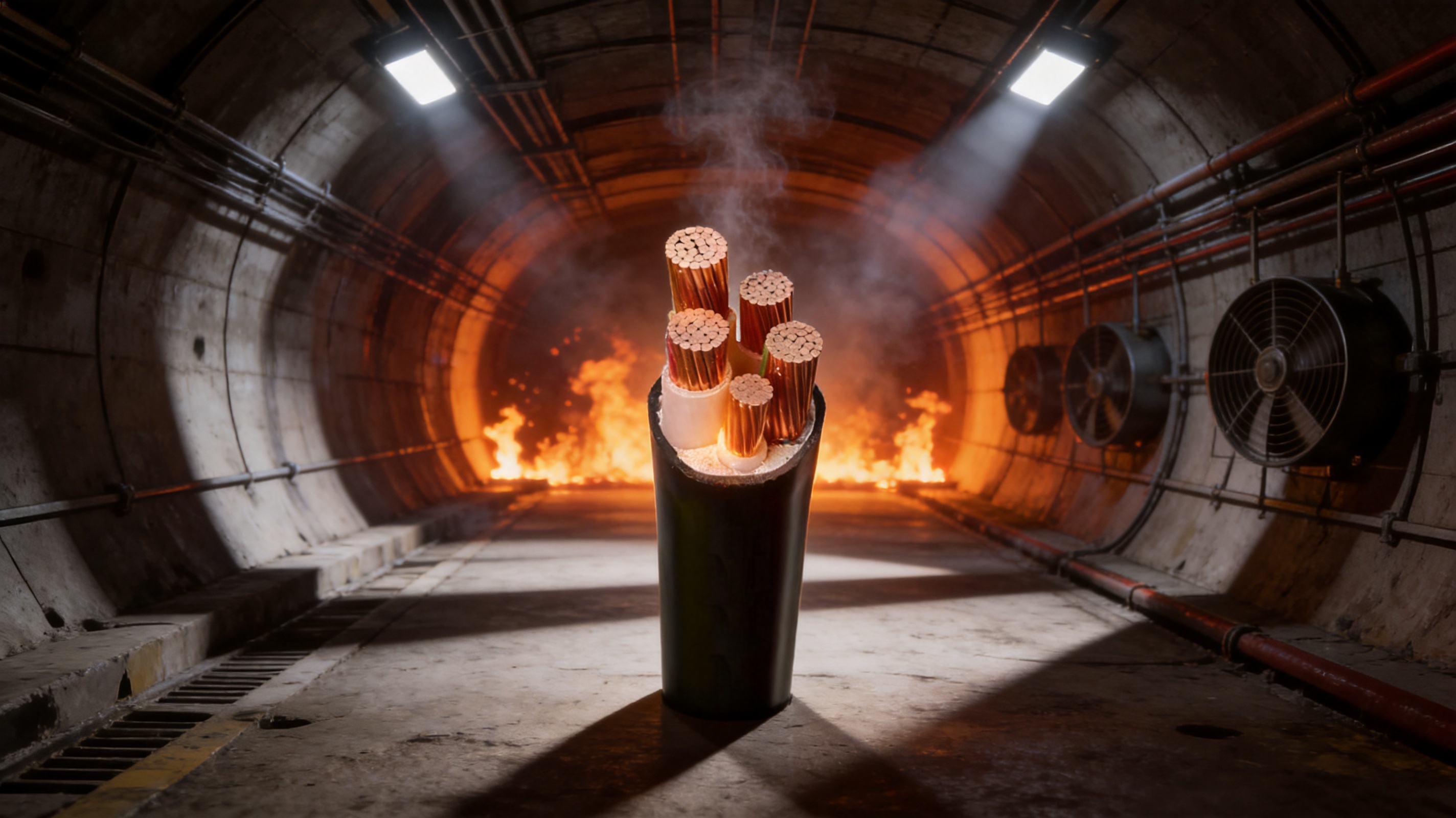
The fire-resistant function is one of the most important features of WDZB1N--YJY23. Fire resistance means that the cable can continue supplying power for a specified period when exposed to flame. This is different from ordinary flame retardancy. Flame retardancy focuses on preventing or slowing the spread of fire along the cable. Fire resistance focuses on circuit survival.
WDZB1N--YJY23 is designed to comply with fire resistance testing such as GB/T 19216.21 and IEC 60331-1. A common fire resistance rating may involve continuous power supply for 90 or 180 minutes under a flame temperature around 950°C, depending on specification and project requirements. This level of performance is crucial for fire pumps, sprinkler control systems, emergency lighting, smoke extraction fans, pressurization systems, emergency elevators, command communication, and alarm circuits.
In a fire emergency, the first minutes are often the most critical. If emergency power circuits fail too early, evacuation routes may go dark, smoke control may stop, firefighting water supply may weaken, and communication systems may lose function. By incorporating a mica tape or equivalent mineral fire-resistant layer around the conductor, this cable provides an insulating barrier that remains stable at high temperature, helping prevent short circuit and maintaining conductor separation.
The B1-grade flame-retardant property provides another layer of protection. Cables are often installed in concentrated routes such as trays, shafts, corridors, tunnels, and risers. In such environments, cables can become pathways for flame propagation if their sheath and insulation materials are not properly controlled. B1-grade combustion performance under GB 31247 is a demanding classification. It requires the cable to meet strict criteria related to heat release rate, combustion calorific value, smoke density, smoke toxicity, and flame spread behavior.
Compared with ordinary flame-retardant cables, B1-grade products provide a higher safety margin in crowded public environments and underground facilities. Reduced heat release helps lower the intensity of fire development. Reduced smoke improves visibility for evacuation and rescue. Reduced toxicity helps protect people and emergency personnel. For owners of hospitals, transport systems, commercial buildings, education facilities, and industrial plants, B1 performance can be a decisive advantage.
During cable combustion, traditional halogen-containing materials may release acidic and corrosive gases. These gases can harm occupants, damage electronic equipment, corrode metal structures, and complicate post-fire recovery. WDZB1N--YJY23 uses halogen-free polyolefin materials for the inner sheath and can use halogen-free materials for the outer sheath. Its low-smoke halogen-free performance includes requirements such as pH not less than 4.3 and conductivity not greater than 10 μS/mm, along with smoke density and light transmittance performance consistent with B1-grade requirements.
In real emergency conditions, smoke can be more dangerous than flame. Dense smoke reduces visibility, causes panic, delays evacuation, and interferes with firefighting. Toxic gases can incapacitate people before they reach safety. The low-smoke halogen-free design of this cable is therefore not only an environmental feature but also a life safety feature.
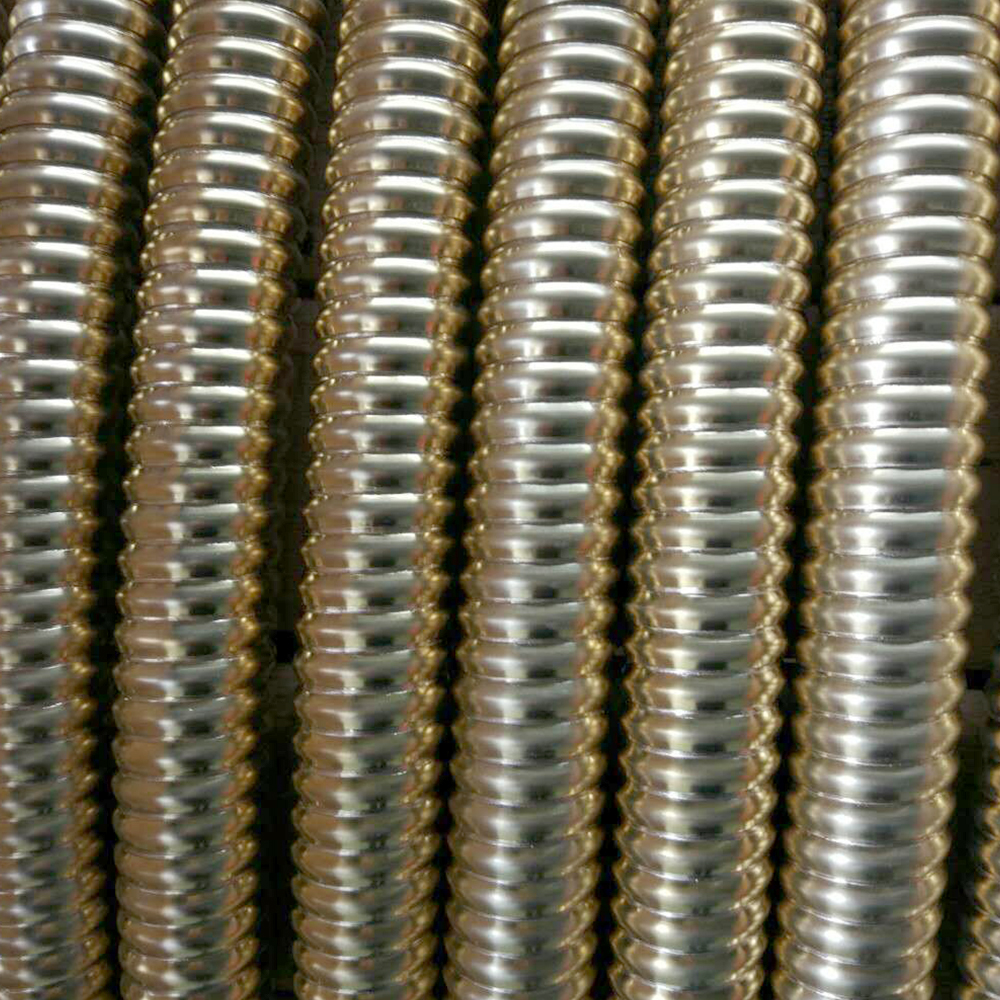
The “23” structure provides double-layer galvanized steel tape armor. This armor improves compressive strength and helps resist soil pressure, external impact, and damage from rodents or pests. It is especially valuable in direct-burial installations, underground corridors, tunnels, and environments where cables may be exposed to mechanical risk.
Many fire-resistant or flame-retardant cables are intended mainly for protected indoor installation. However, WDZB1N--YJY23 is engineered for harsher routes where physical damage and fire risks can overlap. The armor layer gives the cable a practical advantage in construction sites, municipal infrastructure, underground passages, and industrial zones where cable trays or ducts may not fully eliminate mechanical stress.
Item |
Specification or Description |
Practical Benefit |
Conductor |
Copper conductor, specially stranded, covered with double-layer mica tape or equivalent mineral fire-resistant layer. |
High conductivity, improved flexibility compared with solid conductors, and circuit integrity under fire exposure. |
Insulation |
Cross-linked polyethylene, rated for long-term operation at 90°C. |
Excellent electrical insulation, thermal resistance, and stable long-term service performance. |
Inner Sheath |
Halogen-free polyolefin. |
Reduces toxic and corrosive gas generation during combustion. |
Armor Layer |
Double-layer galvanized steel tape. |
Provides high compressive strength, impact resistance, and rodent protection. |
Outer Sheath |
Polyethylene or halogen-free polyolefin. |
Offers environmental resistance and optional enhanced low-smoke halogen-free safety. |
Rated Voltage |
0.6/1 kV mainstream rating. |
Suitable for common low-voltage power distribution systems. |
Long-Term Operating Temperature |
90°C, with current-carrying correction due to fire-resistant layer and armor. |
Supports stable thermal operation when properly selected and installed. |
Short-Circuit Temperature |
250°C for 5 seconds. |
Provides short-duration thermal withstand capability during fault conditions. |
Fire Resistance |
Designed according to GB/T 19216.21 and IEC 60331-1 type requirements. |
Maintains power supply for critical circuits under flame exposure. |
Combustion Performance |
B1 grade according to GB 31247. |
Controls heat release, flame spread, smoke density, and smoke toxicity. |
Minimum Bending Radius |
Typically large, such as 12D to 15D for multi-core structures depending on design. |
Requires professional routing planning to protect cable structure during installation. |
Compared with standard PVC insulated or sheathed low-voltage cables, WDZB1N--YJY23 offers a far higher safety profile. Ordinary PVC cables may perform acceptably in basic electrical distribution but can release heavy smoke and acidic gases when burned. They may also lack circuit integrity under direct flame. In contrast, WDZB1N--YJY23 is designed to remain operational under fire test conditions while producing lower smoke and reducing halogen-related hazards.
Compared with common XLPE power cables without fire-resistant layers, this product provides superior emergency performance. XLPE insulation itself has strong electrical and thermal characteristics, but standard XLPE cable may fail during high-temperature fire exposure. The additional mica or mineral fire-resistant layer in WDZB1N--YJY23 creates a thermal barrier that helps preserve insulation function during fire conditions.
Compared with ordinary flame-retardant cables, WDZB1N--YJY23 is more comprehensive. Flame retardant cables can slow flame propagation but do not necessarily maintain circuit operation. WDZB1N--YJY23 combines flame retardancy with fire resistance. This distinction matters because an emergency circuit must do more than avoid spreading flames; it must keep working.
Compared with unarmored fire-resistant cables, this product provides stronger mechanical protection. Many fire-resistant cables are vulnerable to crushing, impact, or rodent damage if installed underground. The steel tape armor makes WDZB1N--YJY23 more suitable for direct burial or pressure-risk environments, reducing the likelihood of premature mechanical failure.
Compared with some imported or premium safety cables, this product offers a balanced combination of advanced structure, customization capability, and manufacturing flexibility. With copper conductor quality control, automated production lines, material selection discipline, and OEM/ODM support, the manufacturer can adapt specifications to project needs while maintaining consistent quality standards.
In large buildings and infrastructure, cable routes can contain hundreds or thousands of meters of installed cable. If these cables burn intensely or release heavy smoke, the cable network can amplify the danger of the original fire. B1-grade cable is intended for situations where fire load, smoke toxicity, and flame spread must be strictly controlled.
Underground environments such as tunnels, basements, metro passages, and utility corridors are especially sensitive. Ventilation may be limited, escape routes may be long, and smoke can accumulate rapidly. In such spaces, low-smoke and low-toxicity performance can improve the probability of safe evacuation and rescue. WDZB1N--YJY23 is therefore well suited to underground fire protection power lines, emergency lighting feeders, ventilation control circuits, and other essential systems.
Public buildings also benefit from this level of cable performance. Hospitals need emergency power for operating rooms, intensive care units, evacuation lifts, fire pumps, alarms, and life support infrastructure. Schools, hotels, shopping centers, airports, exhibition centers, and transport hubs must protect large numbers of occupants. Industrial facilities need stable power to maintain safety controls, shutdown systems, pumps, and monitoring equipment. In all these applications, cable safety is an investment in operational resilience.
One important engineering point is the need for current-carrying capacity correction. Because WDZB1N--YJY23 includes a fire-resistant layer and armor, heat dissipation is affected. The product may have significantly lower current-carrying capacity than a non-fire-resistant cable of the same conductor cross-section. A typical correction factor may be approximately 0.7 to 0.85, depending on cable size, installation method, ambient temperature, grouping, soil thermal resistivity, and other project variables.
This does not represent a weakness in product safety. Rather, it is a necessary consequence of adding protective layers that enable fire resistance and mechanical defense. Proper cable selection should be carried out by qualified engineers who calculate load current, voltage drop, short-circuit withstand, installation conditions, derating factors, and future expansion requirements.
For critical circuits, conservative selection is recommended. Oversizing may be necessary to achieve both electrical capacity and emergency reliability. The cable’s larger diameter, heavier weight, and greater rigidity also require planning during design. Cable tray size, duct diameter, trench dimensions, pulling tension, bend radius, termination space, and support spacing should all be reviewed before installation.
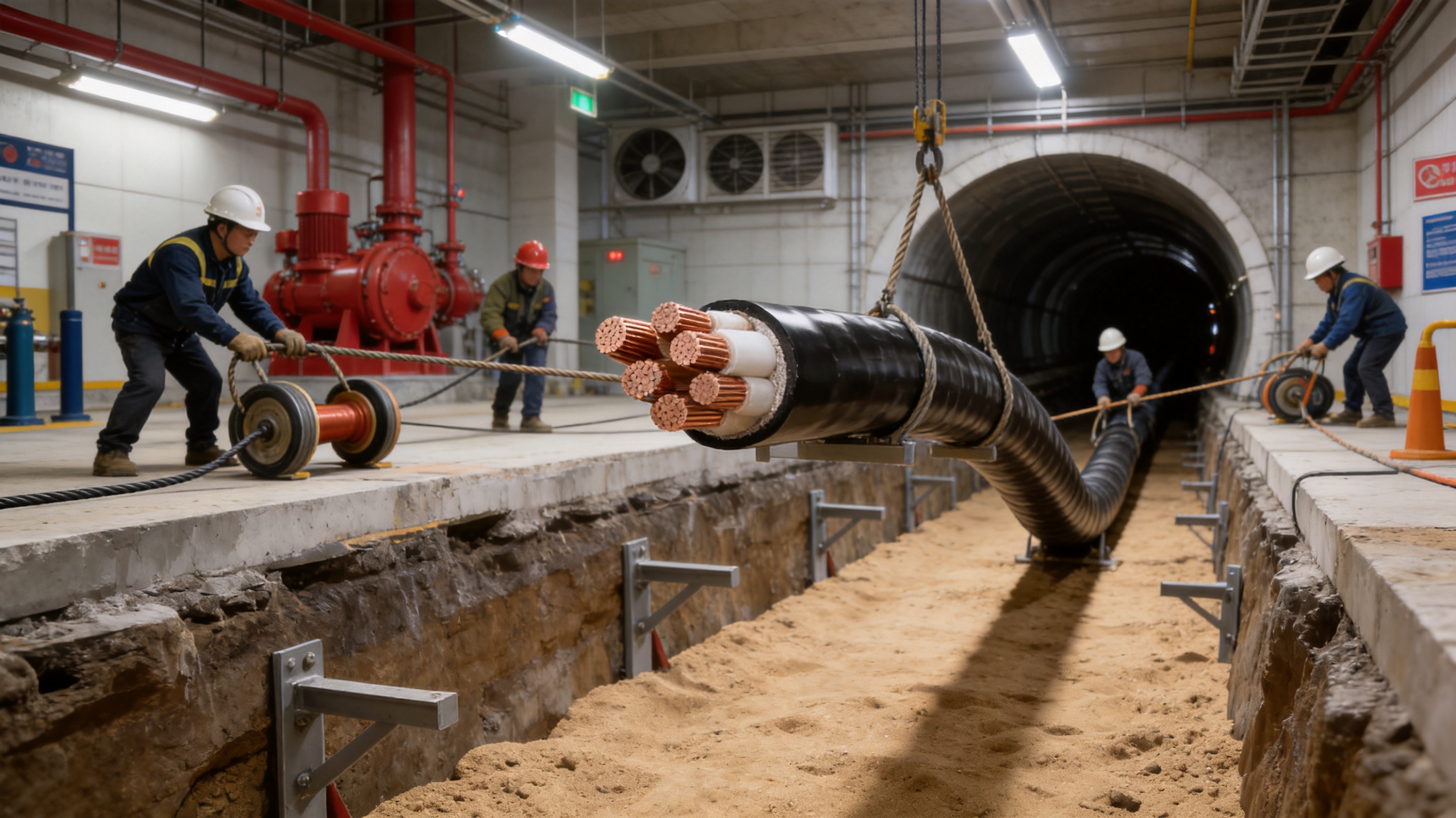
WDZB1N--YJY23 is a high-performance cable, but its rugged construction also makes installation more demanding. The steel tape armor, fire-resistant wrapping, and thick protective sheathing increase the outer diameter and weight. The minimum bending radius is large, often in the range of 12D to 15D for multi-core cable depending on structure. Excessive bending may damage the fire-resistant layer, deform the armor, or compromise long-term reliability.
Professional installation teams should use appropriate cable drums, pulling equipment, rollers, cable socks, and bending control tools. During direct burial, trench preparation should prevent sharp stones or construction debris from damaging the sheath. Sand bedding, warning tape, protective slabs, and route marking may be used according to project standards. In tunnels and underground passages, cable supports should be designed to carry the cable weight and prevent excessive sagging.
Terminations and joints require special attention. A fire-resistant cable is only as reliable as its weakest connection point. If joints are poorly made, water enters the cable, or the fire-resistant layer is not properly treated, the system may fail even if the cable body is high quality. Therefore, compatible accessories, trained technicians, and documented procedures are important for critical installations.
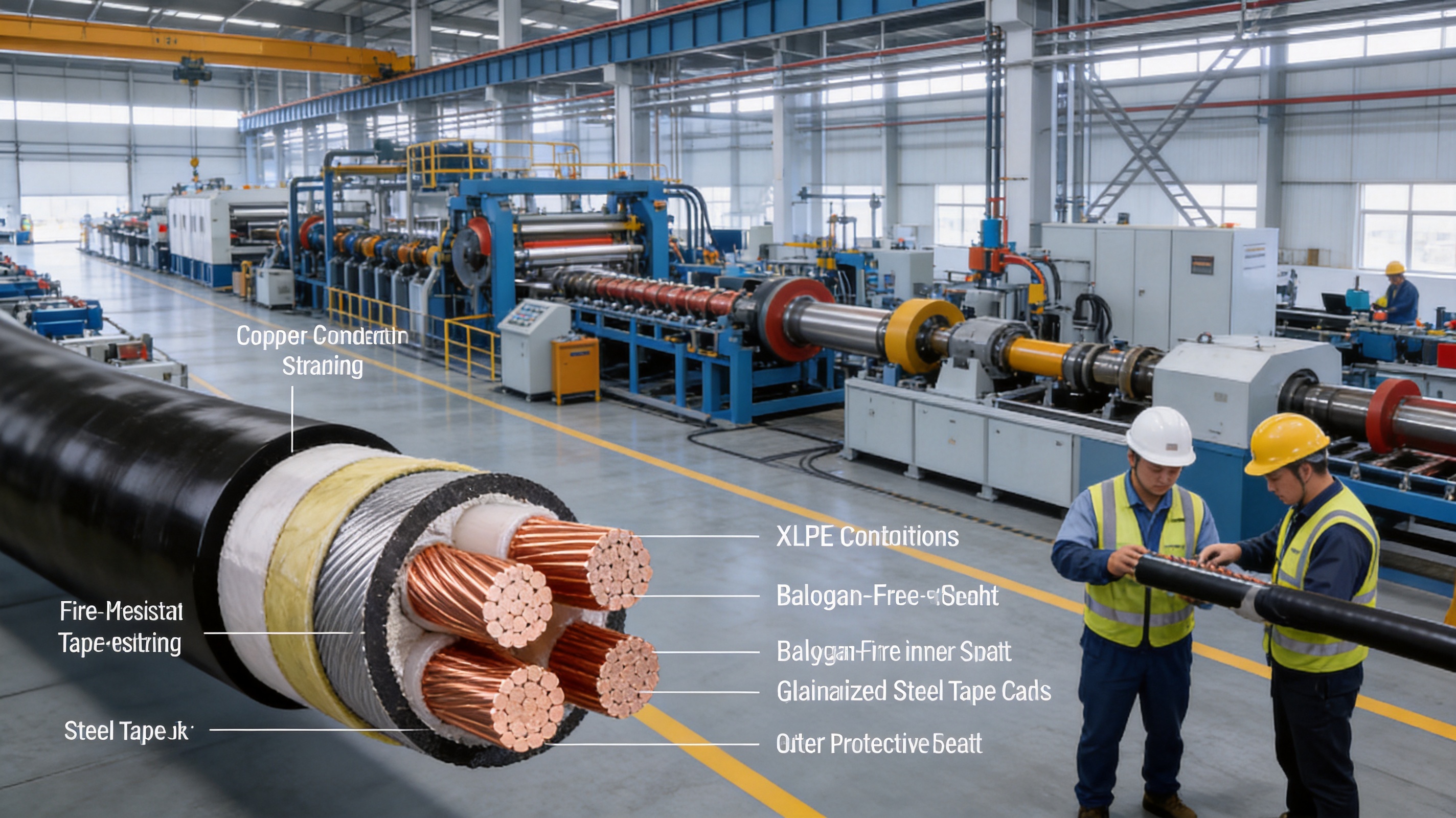
The manufacturer operates as an integrated wire and cable enterprise combining research and development, production, and sales. Located in Xuancheng City, Anhui Province, China, in the Yangtze River Delta region, the company benefits from a strong manufacturing ecosystem and convenient supply chain access. Its modern production base covers approximately 5,000 square meters and includes automated production lines capable of supporting stable output for standard and customized cable products.
The company’s production capability is supported by more than 50 employees, including quality engineers and R&D technicians with over 10 years of industry experience. This experience matters because high-performance safety cables require precise coordination between material selection, conductor processing, insulation extrusion, fire-resistant wrapping, armor forming, sheath extrusion, testing, and packaging. A small defect in one process can reduce the cable’s service reliability, so quality discipline is essential.
The production base includes 10 automated production lines and can reach monthly output of up to 10 million meters across product categories. Automated production improves consistency by reducing manual variability in conductor stranding, insulation thickness, extrusion concentricity, sheath quality, and marking accuracy. For demanding products such as WDZB1N--YJY23, consistent process control is especially important because the cable includes multiple functional layers.
Manufacturing WDZB1N--YJY23 begins with conductor preparation. High-purity copper conductors are selected to support excellent conductivity and stable electrical performance. Special stranding helps improve flexibility and current distribution while meeting mechanical and electrical requirements. The conductor surface must be clean and uniform before the fire-resistant layer is applied.
The fire-resistant layer, commonly double-layer mica tape or equivalent mineral-insulated wrapping, requires controlled overlap, tension, and coverage. If the tape is loose, uneven, or damaged, fire resistance may be compromised. Skilled process control ensures that the barrier remains continuous and stable around the conductor. This layer is one of the most important differences between an ordinary power cable and a true fire-resistant lifeline cable.
XLPE insulation extrusion follows. Cross-linked polyethylene provides high dielectric strength, thermal resistance, and long service life. The extrusion process must maintain uniform wall thickness, smooth surface quality, and proper bonding characteristics. Cross-linking quality affects heat resistance and mechanical stability, so the process must be monitored carefully.
After insulated cores are formed, cable assembly and inner sheath extrusion are carried out. For multi-core cables, core twisting pitch, filling, roundness, and stability affect final cable shape and installation performance. The halogen-free inner sheath provides environmental safety and prepares the structure for armor application.
The double-layer galvanized steel tape armor must be applied with precise wrapping angle and overlap. The armor needs to provide mechanical protection while avoiding excessive stress on the inner cable body. Galvanizing improves corrosion resistance, supporting long-term durability in underground or humid environments. Finally, the outer sheath is extruded using PE or halogen-free polyolefin according to project requirements. The sheath protects against moisture, abrasion, and environmental exposure.
High-performance cable manufacturing requires more than good materials. It requires a quality system that checks each stage of production. The company emphasizes full-core, full-length, pure copper specifications, product test reports, and warranty support for standard cable models. Testing may include conductor resistance, insulation thickness, voltage withstand, insulation resistance, sheath integrity, dimensional inspection, flame retardancy, fire resistance, smoke density, halogen acid gas evaluation, and mechanical checks depending on specification and order requirements.
For WDZB1N--YJY23, testing is particularly important because the cable must satisfy multiple safety functions. Electrical testing verifies that the cable can carry power safely under normal conditions. Fire resistance testing verifies circuit integrity during flame exposure. Combustion performance testing verifies B1-related properties such as heat release and smoke behavior. Mechanical inspection verifies armor quality and sheath protection. These checks help ensure that the product delivered to a project is consistent with its intended role.
Quality engineers and experienced technicians contribute to process stability by monitoring raw materials, production parameters, finished product inspection, and documentation. The manufacturer’s philosophy of quality orientation, integrity foundation, and stability priority is reflected in the emphasis on reliable integrated cable solutions rather than simply low-cost supply.
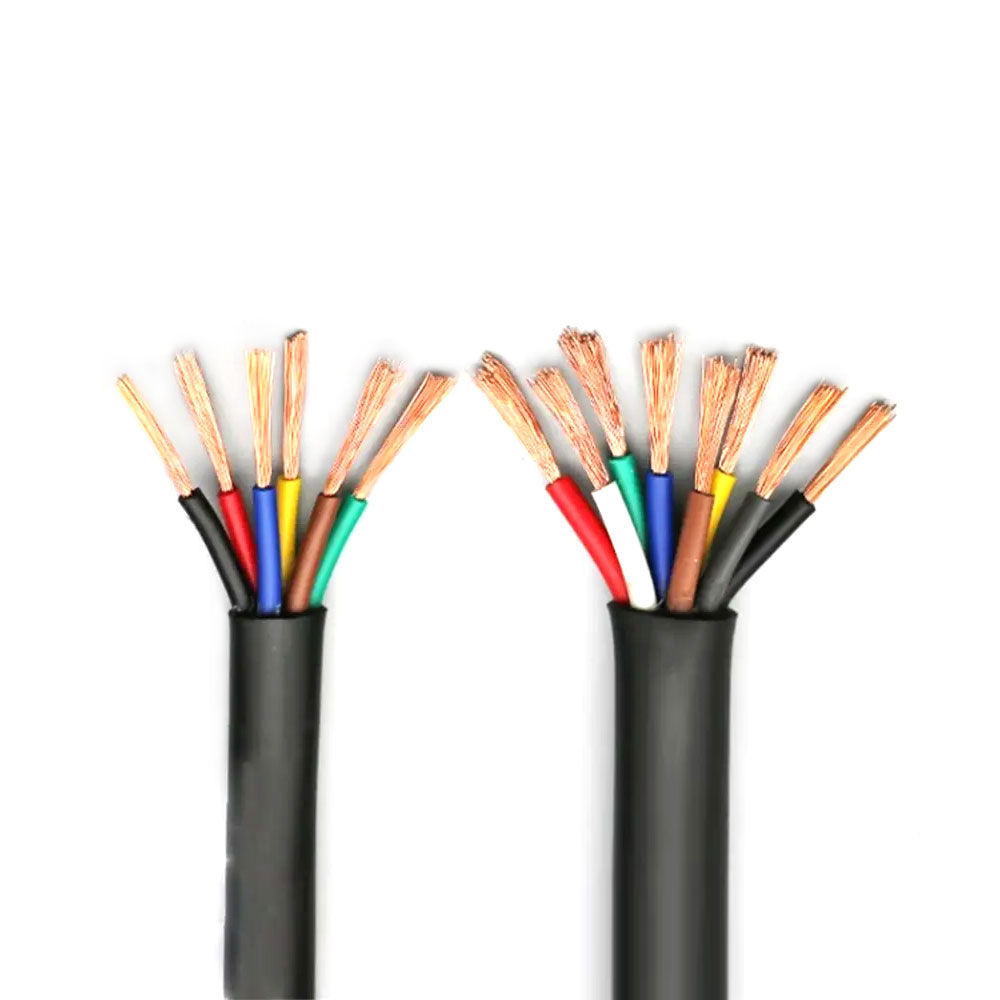
Projects often require more than a catalog item. Cable cross-section, core count, sheath material, flame rating, packaging length, marking, color, certification documentation, and installation environment may vary. The manufacturer supports OEM and ODM development based on customer drawings or samples. Technical engineers can provide product selection guidance and tailor-made cable design solutions according to project requirements.
For WDZB1N--YJY23, customization may involve selecting conductor size, number of cores, sheath material, fire resistance rating, drum length, or documentation package. Engineers can help evaluate whether the cable should use PE outer sheath for burial performance or halogen-free polyolefin outer sheath for enhanced indoor fire safety. They can also help customers understand derating, bending radius, and installation planning.
This engineering support is a competitive advantage over suppliers that only sell standard products without technical consultation. In critical infrastructure, cable selection errors can create safety risks, cost overruns, and inspection delays. A manufacturer with R&D capability and application knowledge can help prevent these problems before production and installation begin.
WDZB1N--YJY23 is suitable for critical power circuits in environments that require fire survival, low-smoke halogen-free safety, flame-retardant control, and mechanical protection. One major application is fire protection power supply, including fire pumps, smoke exhaust fans, emergency lighting distribution, fire control centers, sprinkler systems, fire elevators, and emergency communication power feeders.
Another important application is underground infrastructure. Utility tunnels, underground passages, metro systems, road tunnels, basement distribution rooms, and municipal corridors often combine limited ventilation with high mechanical risk. Direct burial or pressure-prone routes benefit from steel tape armor, while evacuation safety benefits from B1 and low-smoke halogen-free performance.
Industrial environments also require robust cable solutions. Petrochemical plants, mining support infrastructure, manufacturing facilities, logistics centers, and energy projects may have heavy equipment, vibration, impact risk, and strict fire safety requirements. In these situations, cable failure can interrupt production or compromise safety systems. WDZB1N--YJY23 offers a resilient choice for critical feeders.
Large commercial and public buildings can use the cable for high-priority emergency distribution. Shopping centers, hospitals, airports, exhibition halls, data centers, schools, hotels, and government buildings often require high fire safety standards. The cable’s combination of circuit integrity and smoke reduction helps support compliance and occupant protection.
WDZB1N--YJY23 is a high-performance cable and naturally has a higher cost than ordinary power cables. The reasons are clear: copper conductor quality, mica or mineral fire-resistant layers, special low-smoke halogen-free materials, B1-grade combustion performance requirements, galvanized steel tape armor, complex production processes, heavier structure, and more demanding testing. It is one of the more expensive cable types in the low-voltage power cable market.
However, evaluating this cable only by purchase price would be misleading. Its value should be measured against the cost of failure. In a fire, emergency system failure can lead to life safety consequences, property loss, regulatory penalties, project shutdown, reputational damage, and expensive reconstruction. In direct-burial or underground applications, mechanical damage to an ordinary cable can cause outages, excavation costs, and safety hazards. WDZB1N--YJY23 reduces these risks through layered protection.
For non-critical loads in low-risk environments, a simpler cable may be sufficient. But for lifeline circuits and pressure-risk routes, selecting a lower-grade cable may create unacceptable exposure. The proper comparison is not between a premium cable and a basic cable, but between a protected emergency power system and a vulnerable one.
The first competitive advantage is integrated safety. Many cables provide either fire resistance, flame retardancy, low-smoke halogen-free performance, or armor, but not all four in one structure. WDZB1N--YJY23 provides a unified safety solution for critical installations.
The second advantage is suitability for direct burial and underground applications. Steel tape armor allows the cable to resist soil pressure and mechanical damage better than unarmored alternatives. This is especially useful where cable replacement would be difficult or costly.
The third advantage is B1-grade combustion performance. Compared with ordinary flame-retardant grades, B1 requirements are more comprehensive and stricter, supporting higher fire safety design goals.
The fourth advantage is manufacturing flexibility. With automated production lines, experienced technicians, and OEM/ODM support, the manufacturer can supply standard models quickly while also developing customized solutions within typical lead times of 7 to 20 days for custom products.
The fifth advantage is quality-focused manufacturing. Full-core, full-length, pure copper specifications and test report support help customers verify that the delivered product meets project expectations.
The sixth advantage is application expertise. The company serves industrial automation, weak current engineering, intelligent manufacturing, appliance equipment, power engineering, and related fields. This broad experience supports better cable selection and more practical project recommendations.
Environmental protection is built into the product through low-smoke halogen-free material design. By reducing toxic and corrosive gas release during combustion, the cable supports safer evacuation and reduces secondary environmental and equipment damage. The use of halogen-free polyolefin materials reflects a responsible approach to fire safety and environmental impact.
The manufacturer also emphasizes green manufacturing and responsible production practices. In cable production, sustainability is not limited to material selection. It also includes stable process control, reduced waste, efficient production planning, reliable quality that avoids premature replacement, and product designs that match real project needs. A durable cable that performs safely over its service life contributes to resource efficiency by reducing failures and replacements.
When specifying WDZB1N--YJY23, buyers should provide detailed project information. This includes rated voltage, conductor material, conductor cross-section, number of cores, fire resistance duration, combustion performance grade, sheath material preference, installation method, ambient temperature, cable route length, direct burial conditions, bending constraints, required standards, test documentation, and packaging requirements.
Engineers should verify load current and apply correction factors for thermal conditions. They should consider the reduced current-carrying capacity caused by the fire-resistant layer and armor. They should also ensure that short-circuit capacity, voltage drop, and protective device coordination are suitable. For underground installation, soil thermal resistivity and depth of burial may affect current rating.
Contractors should plan installation equipment in advance because the cable is heavy and rigid. Pulling tension should be controlled, bending radius maintained, and cable ends sealed against moisture. For critical circuits, joints should be minimized where possible. If joints are unavoidable, they should use appropriate fire-resistant accessories and trained personnel.
Its main purpose is to supply power to critical circuits that must continue operating during fire conditions while also resisting flame spread, reducing smoke and toxic gas hazards, and withstanding mechanical pressure in direct-burial or underground environments.
Fire resistance means the cable can maintain circuit integrity and continue supplying power for a specified time under flame exposure. Flame retardancy means the cable can reduce or delay the spread of fire along its length. WDZB1N--YJY23 provides both functions.
The mica or mineral layer forms a high-temperature insulating barrier around the conductor. During a fire, this barrier helps prevent short circuits and supports continuous power supply to emergency systems.
B1 grade refers to a high flame-retardant and combustion safety classification that evaluates heat release, flame spread, smoke density, smoke toxicity, and related fire behavior. It is suitable for projects with strict safety requirements.
Low-smoke halogen-free materials reduce dense smoke and corrosive halogen acid gases during combustion. This improves visibility for evacuation and rescue, lowers toxicity risk, and reduces damage to equipment and structures.
Yes. The double-layer galvanized steel tape armor provides compressive strength and mechanical protection, making the cable suitable for direct-burial and underground environments when installed according to proper engineering practices.
The fire-resistant layer and armor reduce heat dissipation. Therefore, designers must apply correction factors, often around 0.7 to 0.85 depending on installation conditions, cable size, and environmental factors.
It is more difficult to install than standard power cables because it has a larger diameter, heavier weight, and greater rigidity. Professional installation teams should control bending radius, pulling tension, support spacing, and termination quality.
It is suitable for fire pumps, emergency lighting, smoke exhaust systems, fire control centers, emergency communication feeders, underground tunnels, utility corridors, basements, public buildings, hospitals, data centers, transport facilities, and industrial safety circuits.
Cheaper alternatives may lack fire survival capability, B1 combustion performance, low-smoke halogen-free materials, or mechanical armor. WDZB1N--YJY23 is intended for high-risk circuits where failure costs can be far greater than the initial cable price.
WDZB1N--YJY23 Environmental Protection and Safety XLPE Insulated and Sheathed Power Cable is a premium solution for critical low-voltage power circuits. It combines fire resistance, B1-grade flame retardancy, low-smoke halogen-free environmental safety, and steel tape armored mechanical protection. This combination makes it highly suitable for lifeline circuits in fire protection systems, underground tunnels, direct-burial routes, public infrastructure, industrial facilities, and other demanding environments.
Its design reflects a clear engineering priority: power must remain available when emergency systems need it most. The copper conductor, mica or mineral fire-resistant layer, XLPE insulation, halogen-free inner sheath, galvanized steel tape armor, and protective outer sheath work together to create a cable that is stronger, safer, and more reliable than conventional low-voltage power cables.
The product requires careful design and professional installation. Its cost is high, its weight and rigidity are significant, and current-carrying capacity must be corrected due to thermal resistance. However, these considerations are part of its advanced protective structure. For projects where fire survival, smoke safety, and mechanical protection are mandatory, WDZB1N--YJY23 delivers long-term value that ordinary cables cannot match.
Supported by advanced automated production, experienced R&D and quality teams, OEM/ODM capability, quality assurance practices, and strong manufacturing capacity, the cable represents a dependable choice for engineers, contractors, and project owners seeking high-performance electrical safety solutions.
GB/T 19216.21, Tests for Electric or Optical Fiber Cables Under Fire Conditions, Circuit Integrity Test Methods.
IEC 60331-1, Tests for Electric Cables Under Fire Conditions, Circuit Integrity.
GB 31247, Classification for Burning Behavior of Electric Wires and Cables.
IEC 60754, Test on Gases Evolved During Combustion of Materials from Cables.
IEC 61034, Measurement of Smoke Density of Cables Burning Under Defined Conditions.
IEC 60502-1, Power Cables with Extruded Insulation and Their Accessories for Rated Voltages from 1 kV to 3 kV.
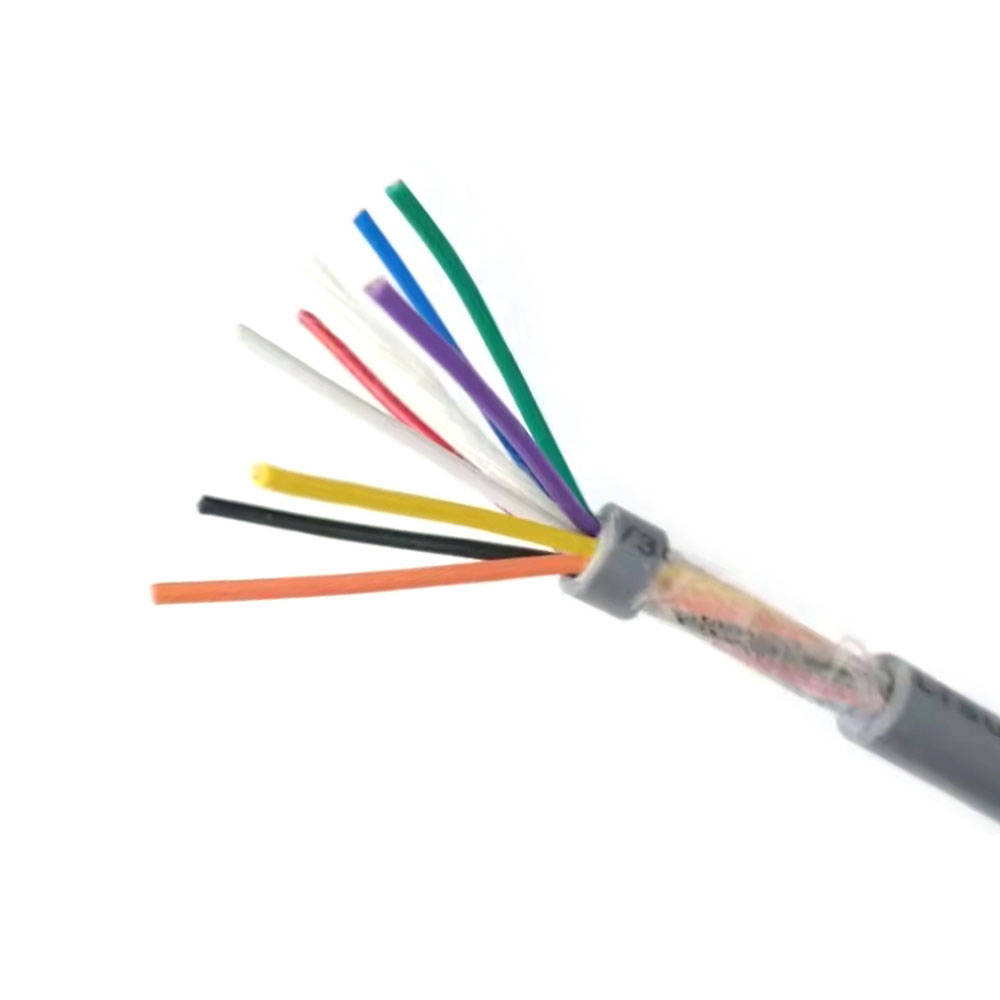

We firmly believe that good cables are not only a competition of materials, but also a reflection of craftsmanship, quality, and responsibility.

Links
Product
Send Inquiry
No. 29 Sankeshu Road, Xuanzhou District, Xuancheng City, Anhui Province, China
+86-18621104555/+86-563-2622999
 Electrical Cable Manufacturer
OEM/ODM Wire and Cable Solutions
Electrical Cable Manufacturer
OEM/ODM Wire and Cable Solutions
 English
 Español
 عربى
عربى
 русский