

Get more content that can help you
Content
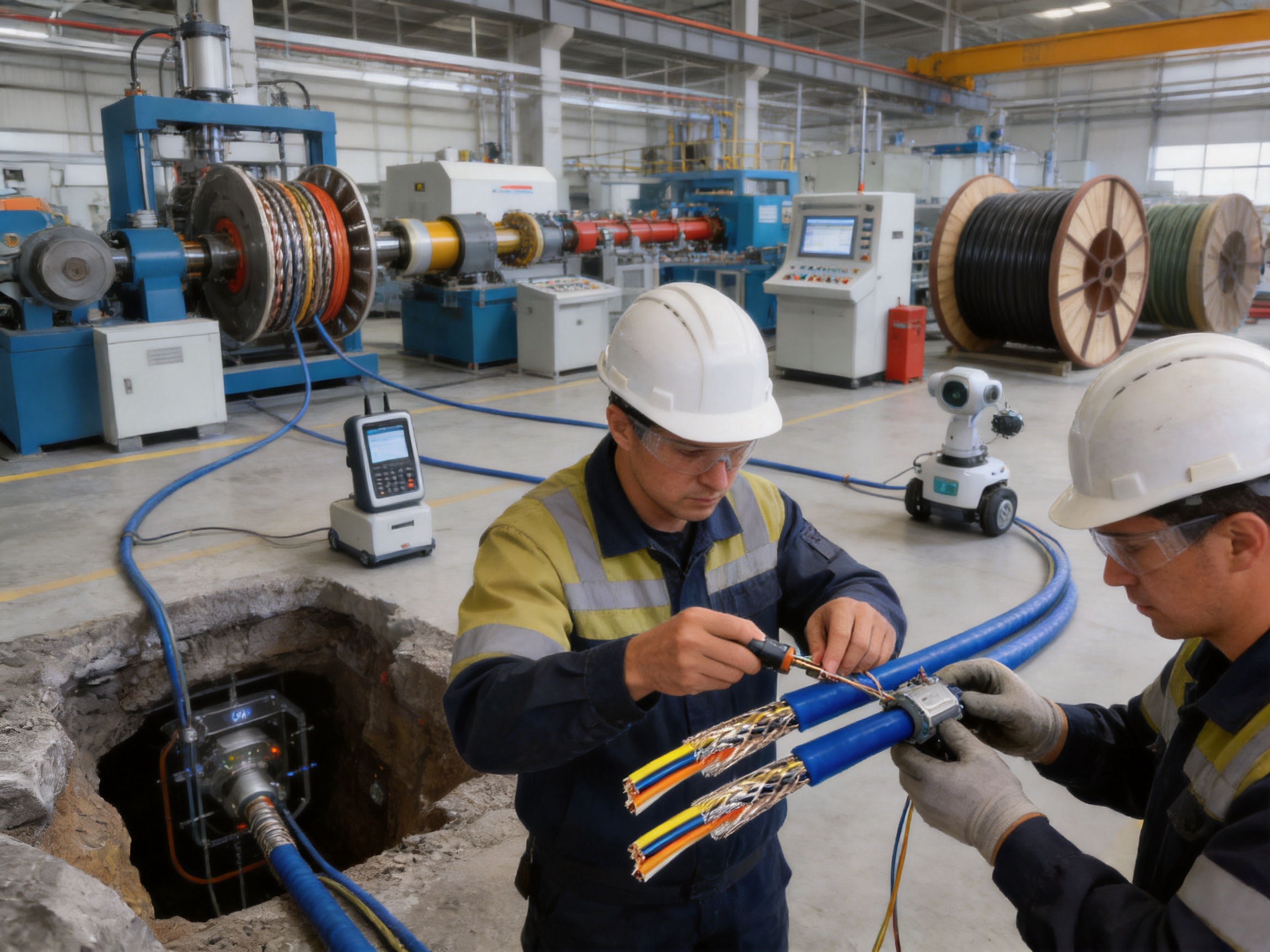
Modern mining operations depend on communication systems that remain dependable under vibration, movement, moisture, dust, electromagnetic interference, and repeated mechanical stress. Monitoring equipment, portable communication devices, inspection robots, movable sensors, and automation systems all require cables that can transmit signals consistently while tolerating frequent bending and relocation. A cable designed only for fixed indoor installation may suffer premature conductor fatigue, signal instability, insulation damage, or sheath cracking when it is used in a dynamic mining environment.
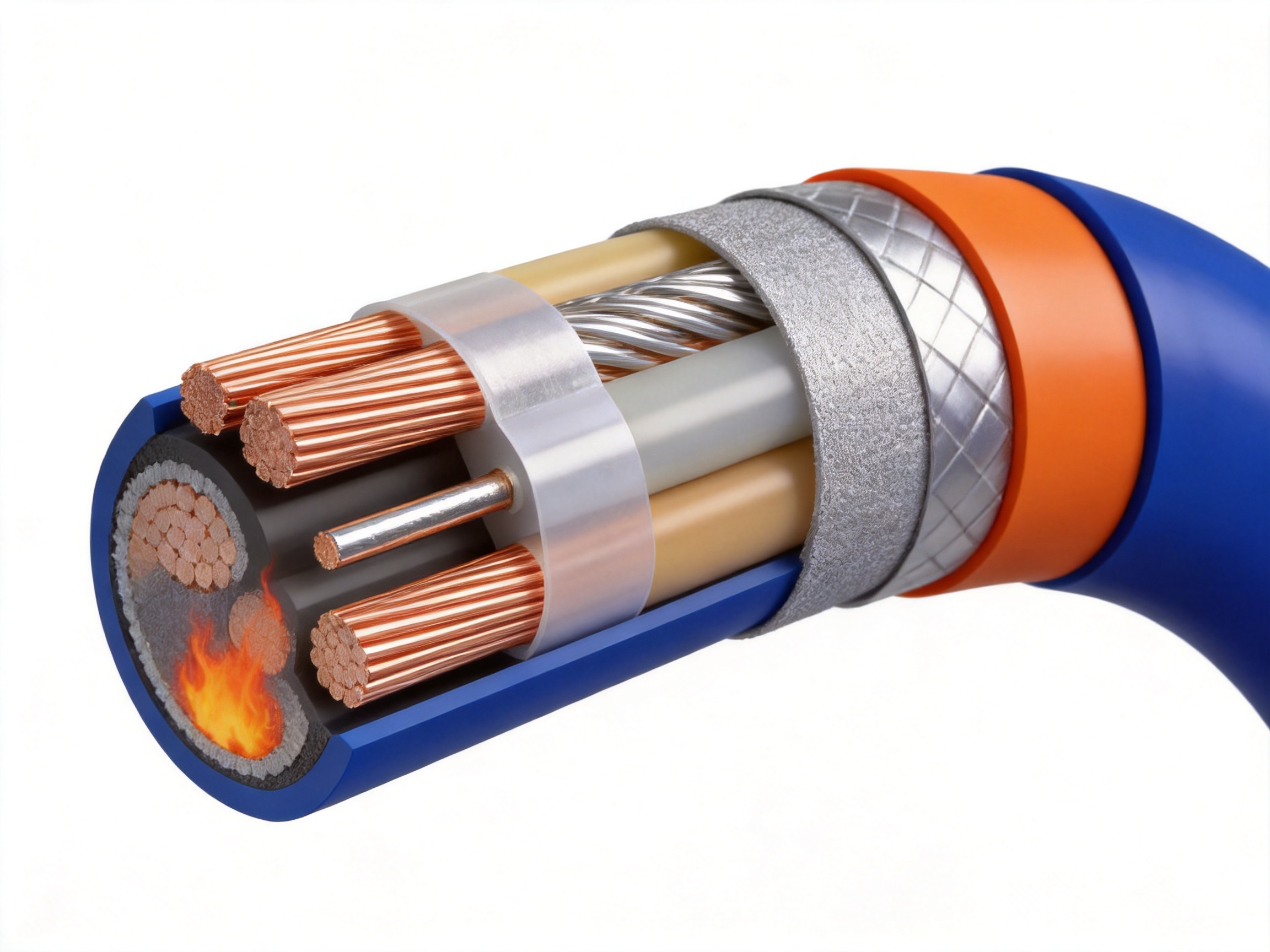
MHYVRP is a flexible shielded mining communication cable developed for these demanding conditions. It combines the flexible construction associated with MHYVR-type mining communication cables with the interference-control capabilities of shielded cable designs. Its fine-stranded tin-plated copper conductors, high-density polyethylene insulation, aluminum-plastic composite tape shield, tin-plated copper drain wire, and flame-retardant flexible PVC sheath work together as an integrated system.
The result is a cable intended to provide stable low-voltage communication in mobile and semi-mobile mining applications. It is particularly suitable where signal quality, repeated bending, flame retardancy, environmental resistance, and ease of handling must be considered at the same time. With configurable core counts, shielding structures, and termination treatments, MHYVRP can also be adapted to different equipment and project requirements.
Mining environments create a combination of electrical, mechanical, and environmental stresses rarely encountered in ordinary commercial installations. A cable may be routed beside motors, pumps, converters, power cables, lighting systems, and heavy machinery. These sources can produce electromagnetic fields that interfere with communication signals, especially when the communication cable is long, mobile, or installed near high-current equipment.
Mechanical conditions are equally demanding. Cables used near mining faces, conveyors, inspection routes, and mobile equipment may be dragged, twisted, coiled, uncoiled, and bent repeatedly. A conventional solid conductor or relatively stiff cable construction can experience concentrated stress at the same points during every movement cycle. Over time, the conductor may fatigue, insulation may separate, and the outer sheath may develop cracks.
Moisture and contamination also affect underground reliability. Water, mud, oil, mineral dust, and corrosive substances can reach cable surfaces and installation points. If the sheath material does not resist these conditions, the cable may lose mechanical strength or become more difficult to handle. Temperature changes between storage, transport, and underground operation can further increase stress on insulation and sheath materials.
Safety is a fundamental consideration. Communication cables used in coal mining applications should not contribute unnecessarily to the spread of flame. The cable must also be identifiable and manageable during installation and maintenance. For this reason, flame-retardant sheath materials and visible sheath colors are important features rather than cosmetic choices.
MHYVRP addresses these combined challenges through a construction that prioritizes flexibility, shielding, flame retardancy, signal stability, and resistance to harsh operating conditions. Instead of treating each performance requirement separately, the design integrates conductor selection, insulation, shielding, drainage, and sheath technology into one cable structure.
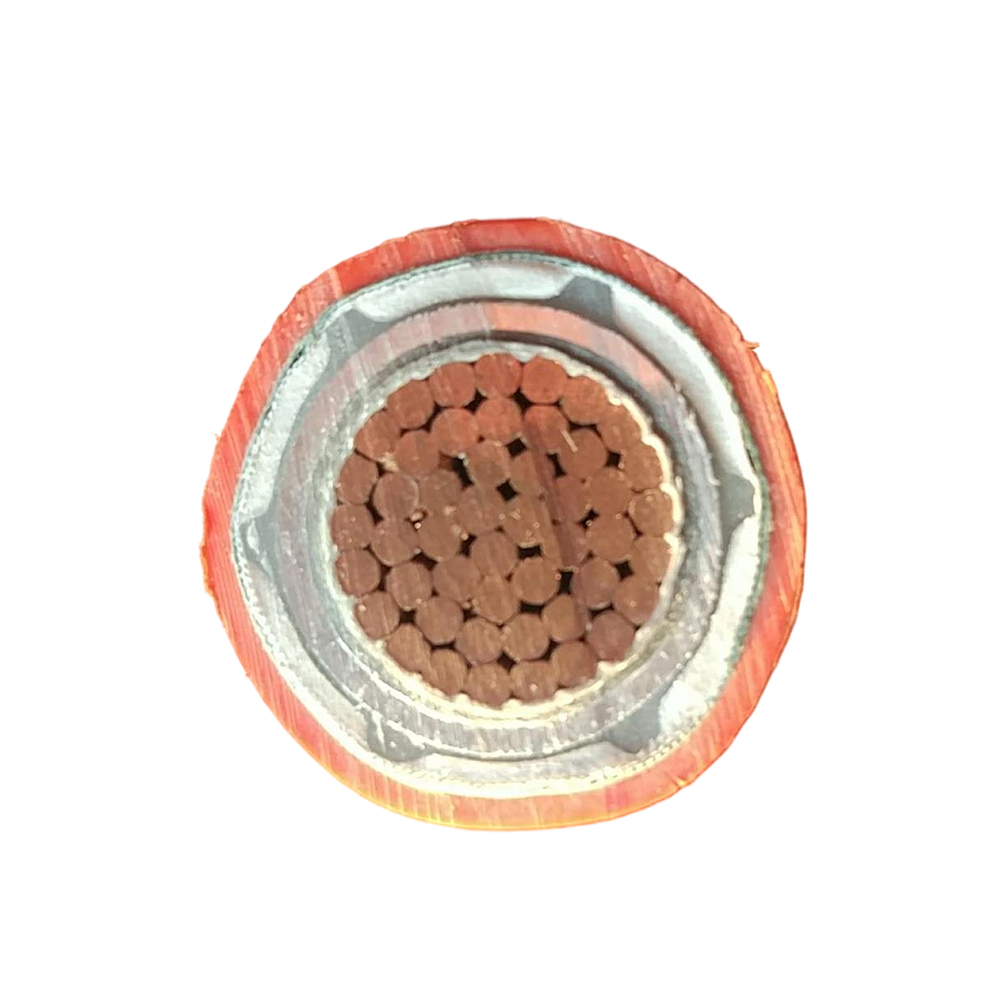
MHYVRP uses ultra-fine multi-stranded tin-plated copper conductors classified as Class 7 conductors. The fine-stranded structure distributes bending stress across many small strands instead of concentrating it in one solid conductor or a limited number of larger strands. This helps the cable remain flexible during repeated movement and makes it easier to route around equipment, cable trays, reels, and temporary installation areas.
Tin plating provides an additional protective layer over the copper strands. This is valuable in environments where humidity, condensation, and contamination may affect exposed metal surfaces. The plated surface helps improve resistance to oxidation and supports more consistent termination performance when suitable connectors, terminals, or grounding arrangements are used.
The conductors are insulated with high-density polyethylene, commonly referred to as HDPE. HDPE offers favorable dielectric properties and helps limit signal loss. Stable insulation geometry is important for communication cables because changes in conductor spacing, insulation thickness, or dielectric characteristics can influence capacitance, attenuation, and signal balance.
The shielding system consists of an aluminum-plastic composite tape shield together with a tin-plated copper drain wire. The composite tape provides broad coverage around the insulated cores, while the drain wire creates a practical path for connecting the shield to ground. The supplied design specifies shielding coverage of at least 90 percent and a grounding resistance of no more than 0.1 ohm per meter for the drain wire.
The outer sheath is manufactured from flame-retardant flexible PVC. This material supports the cable’s mobile characteristics while providing protection against abrasion, moisture, oil, and corrosion-related conditions. It is also intended to meet the stated mining flame-retardant requirement under MT 818.1-1999 testing.
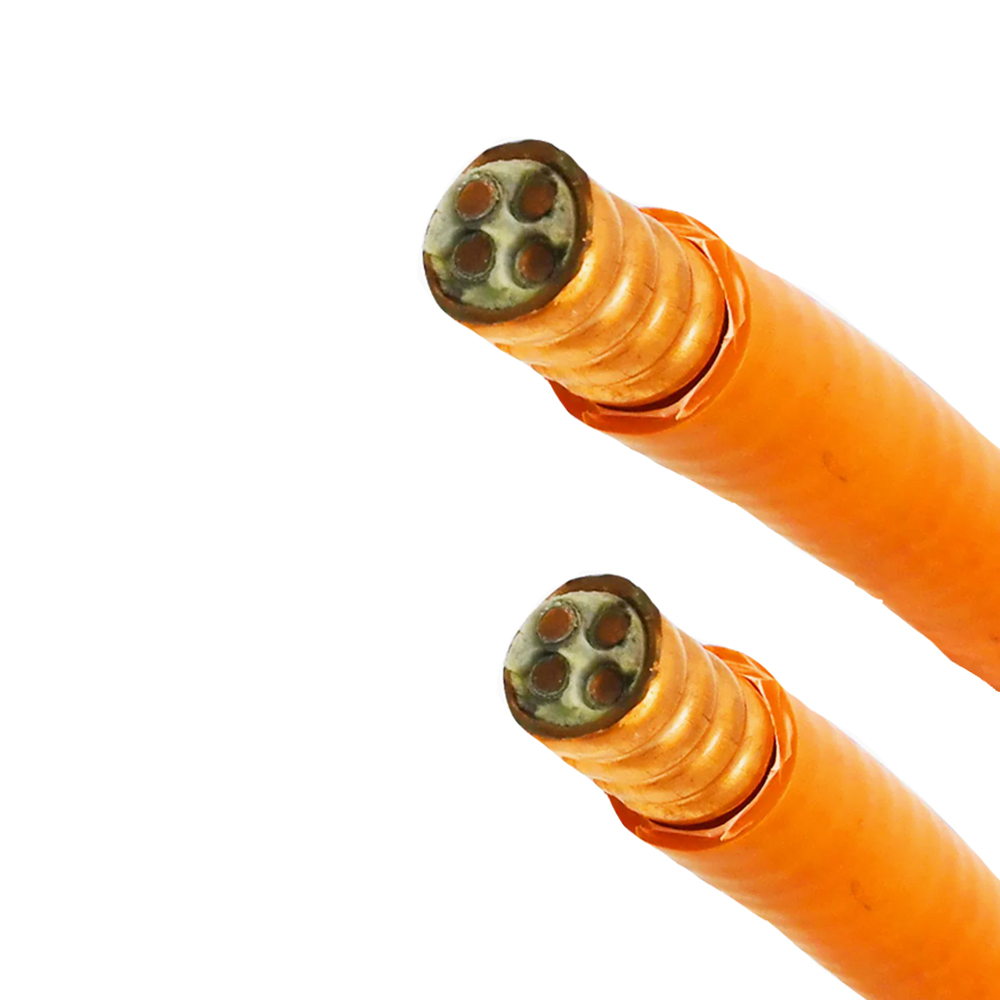
The sheath is typically orange or blue. These colors make the cable easier to identify in crowded underground installations and can support maintenance procedures, route recognition, and safety management. Color selection may be confirmed according to project requirements and local installation practices.
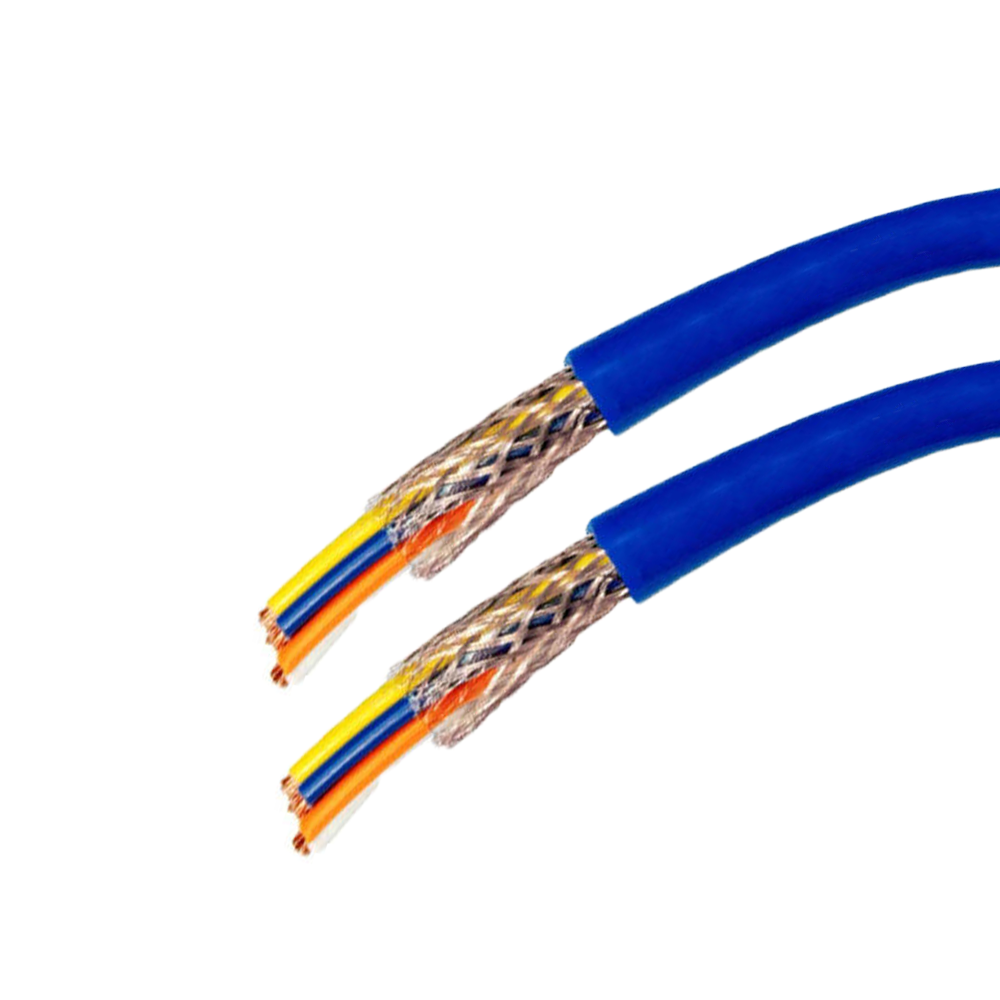
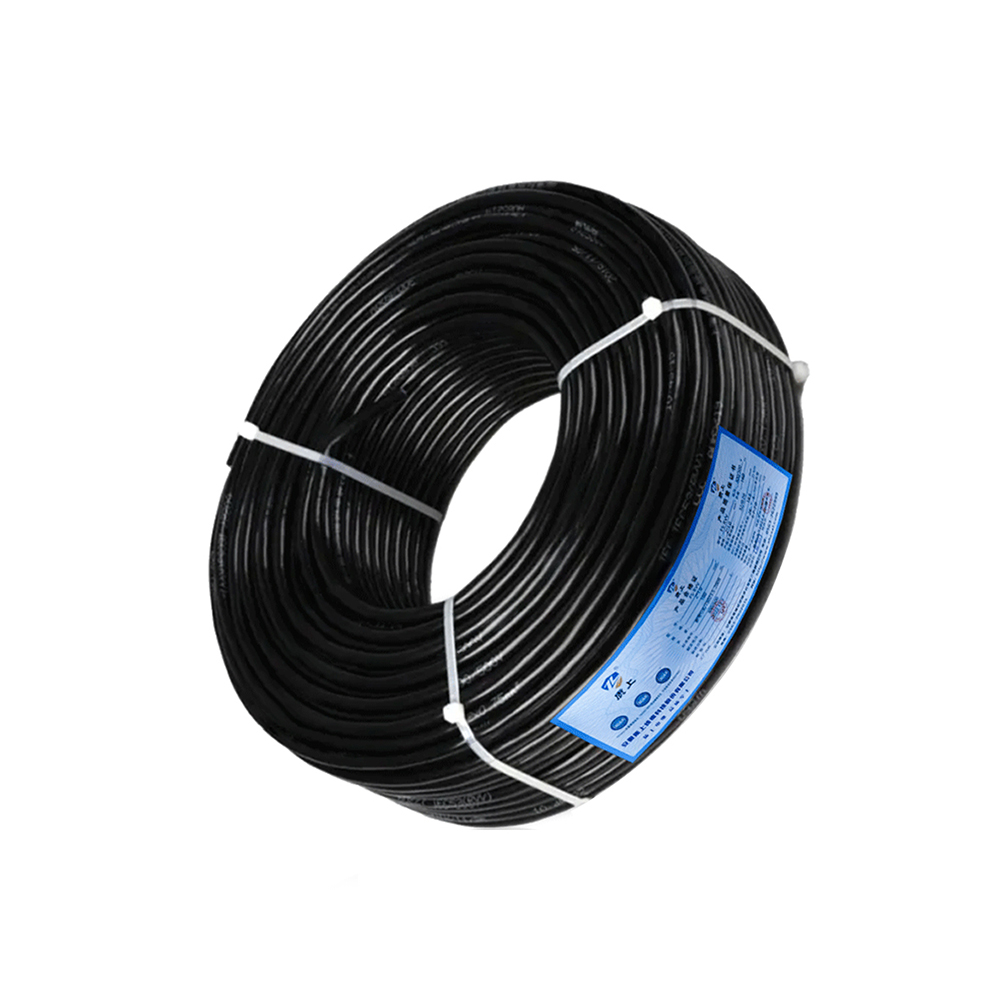
MHYVRP Strong anti-interference ability Mining Cable
One of the most important differences between a mobile communication cable and an ordinary fixed-installation cable is conductor flexibility. A fixed cable can remain in one position for many years, while a mobile cable may experience thousands of movement cycles in a short period. The conductor must therefore tolerate not only bending but also twisting, tension changes, and localized movement near equipment connections.
MHYVRP uses ultra-fine multi-stranded copper conductors to improve this behavior. Each conductor is formed from numerous small strands, creating a flexible electrical path. When the cable bends, the individual strands can move slightly within the conductor structure. This reduces the severity of repeated stress compared with a rigid conductor design.
The Class 7 construction is particularly suitable for equipment dragging, temporary wiring, portable communication units, inspection robots, and movable sensors. It helps installers route the cable without excessive force and reduces the risk of sharp kinks during field work. Improved flexibility can also shorten installation time because the cable is easier to position in confined areas.
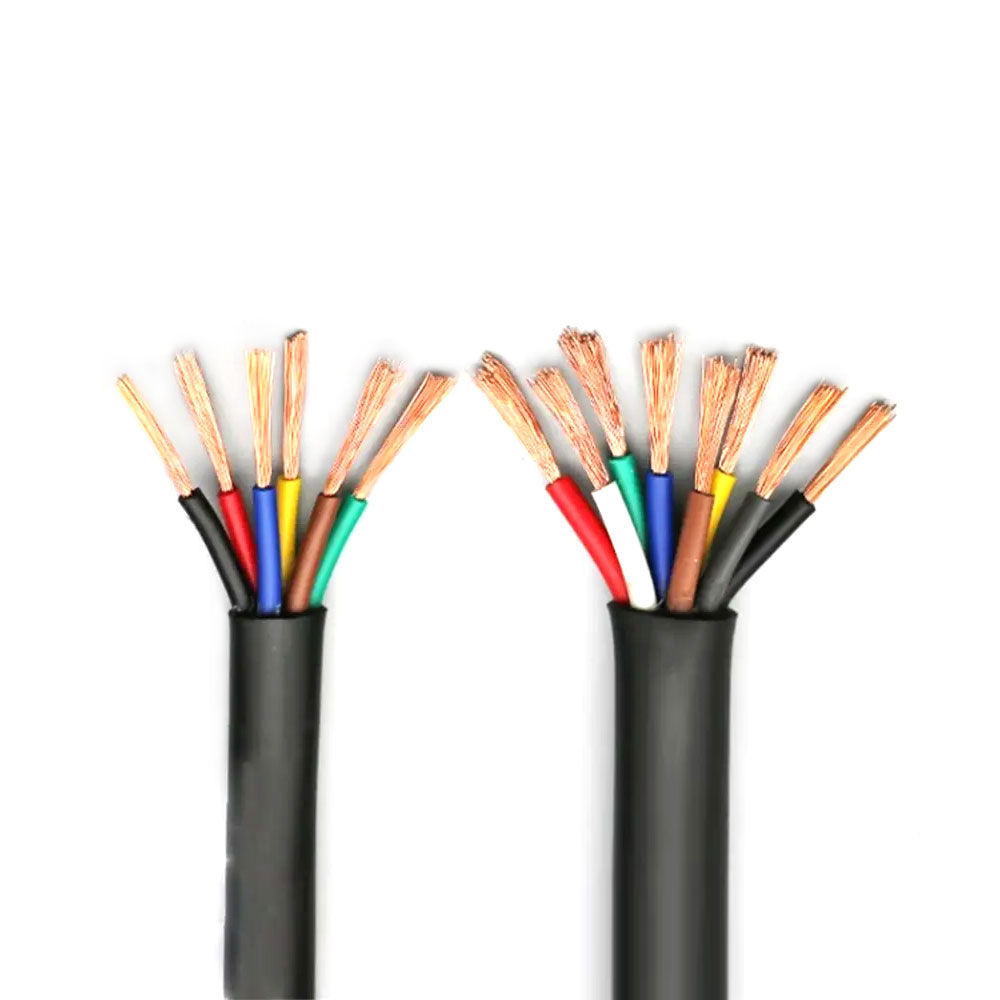
The conductor cross-section is available from 0.5 square millimeters to 1.0 square millimeters, depending on the selected configuration. Core counts range from one to 24 cores, with twisted-pair or star-quad structures available for different communication requirements. These options allow the cable to support compact sensor connections as well as multi-circuit communication assemblies.
Compared with ordinary shielded cables that use fewer and larger conductor strands, MHYVRP offers a stronger focus on movement tolerance. The supplied product information indicates a flexural fatigue resistance of at least 800,000 bending cycles at a curvature radius of 100 millimeters. Actual service life will depend on routing, tension, bending speed, temperature, installation workmanship, and contact with abrasive surfaces, but the stated performance demonstrates the design’s emphasis on dynamic service.
Electromagnetic interference can reduce communication reliability even when the cable has no visible mechanical damage. Interference may appear as noise, unstable data, communication interruptions, false sensor readings, or reduced transmission distance. Mining sites are especially vulnerable because communication lines may run close to motors, variable-frequency drives, pumps, switchgear, power feeders, and mobile machinery.
MHYVRP uses an aluminum-plastic composite tape shield to surround the insulated cores. The shield creates a conductive barrier that helps reduce the coupling of external electromagnetic energy into the communication circuit. The stated shielding effectiveness is at least 70 decibels across the 30 MHz to 100 MHz range, while shield coverage is specified at 90 percent or higher.
The tin-plated copper drain wire is an important part of the shielding system. A shield is most effective when it is correctly bonded and grounded according to the installation design. The drain wire provides a dedicated connection path for the shield and simplifies termination compared with attempting to handle the composite tape alone. Its specified grounding resistance of no more than 0.1 ohm per meter supports low-resistance shield connections when the cable is installed correctly.
In practical terms, this construction can help maintain cleaner communication signals in areas where unshielded or lightly shielded cables may be more susceptible to interference. It is especially beneficial for mobile monitoring systems and sensors operating near electrical machinery. Shielding cannot compensate for poor grounding, incorrect routing, damaged connectors, or severe interference beyond the cable’s design range, so the complete installation must still follow sound cable-management principles.
Compared with ordinary flexible cables without a dedicated shielding layer, MHYVRP provides a clear advantage where electromagnetic compatibility is a priority. Compared with some conventional shielded cables, it also combines the shield with a highly flexible conductor structure and flexible sheath. This balance is important because a cable that resists interference but cannot tolerate movement may still be unsuitable for a mobile mining application.
Communication performance depends heavily on insulation quality. The insulation separates conductors electrically while also establishing the dielectric environment through which high-frequency signals travel. Variations in material properties, wall thickness, or conductor geometry can influence attenuation, capacitance, impedance consistency, and signal balance.
MHYVRP uses high-density polyethylene insulation to provide a stable dielectric layer. The stated insulation resistance is at least 1,500 megohm-kilometers at 20 degrees Celsius. This value indicates a high level of electrical separation under the specified test condition. The cable also specifies attenuation of no more than 1.0 decibel per 100 meters at 1 kilohertz and capacitance unbalance of no more than 120 picofarads per kilometer.
These characteristics support dependable low-voltage communication over the cable’s intended application range. Stable insulation is particularly valuable in monitoring systems where a weak or distorted signal can result in incorrect operational decisions. For portable communication devices and inspection robots, consistent transmission helps reduce the need for repeated communication attempts and improves the usefulness of real-time data.
The rated voltage is 300/300 volts, and the test voltage is 1,500 volts AC for one minute. These values define the cable’s electrical design and routine verification requirements. They should not be interpreted as permission to use the cable for applications outside its intended communication and low-voltage service conditions.
The outer sheath is the first line of defense against mechanical and environmental exposure. MHYVRP uses flame-retardant flexible PVC to combine protection with flexibility. The material is designed to resist common underground influences such as moisture, oil, dust, abrasion, and handling stress.
Flame retardancy is particularly important in coal mine environments. The product information states that the cable passes the MT 818.1-1999 mining flame-retardant test. This indicates that the stated cable construction has been evaluated against the referenced mining requirement. Project engineers should still verify the exact certification, approval, and regulatory requirements applicable to the intended mine, country, and installation category before purchase and deployment.
Flexibility in the sheath helps prevent the cable from becoming excessively stiff during routing. A stiff sheath can increase pulling forces, make the cable difficult to coil, and concentrate stress at connection points. A flexible PVC sheath works with the fine-stranded conductor to create a cable that can follow changing routes and accommodate equipment movement more effectively.
The stated sheath tear strength is at least 12 newtons per millimeter. This property helps indicate resistance to the propagation of cuts or tears once the sheath has been damaged. Nevertheless, the cable should be protected from sharp edges, excessive crushing, unsupported vertical loads, and dragging over highly abrasive surfaces whenever possible.
MHYVRP is specified for long-term operation from minus 40 degrees Celsius to plus 65 degrees Celsius. This broad range supports use in cold storage, transport, exposed installation areas, and warm underground equipment zones, provided that the actual environment remains within the cable’s rated conditions.
The stated short-term overload temperature is plus 85 degrees Celsius for two hours. This condition should be treated as a limited operating allowance rather than a normal continuous temperature. Repeated or prolonged exposure above the long-term rating can reduce the service life of insulation and sheath materials.
For minimum bending radius, the product specification gives eight times the cable outer diameter for fixed installation and ten times the cable outer diameter for mobile installation. The larger mobile-installation radius reflects the additional mechanical demand created by movement. Installers should avoid sharp bends, twisting during pulling, and sudden changes in direction near connectors or cable glands.
During installation, the cable should be paid out carefully rather than pulled from a tangled coil. Excessive tension can damage the internal structure even if the sheath appears intact. Where the cable is repeatedly moved, a suitable drag chain, roller, guide, reel, or support system may improve service life. The stated bending-cycle performance is most meaningful when the cable is used within its specified radius and installation conditions.
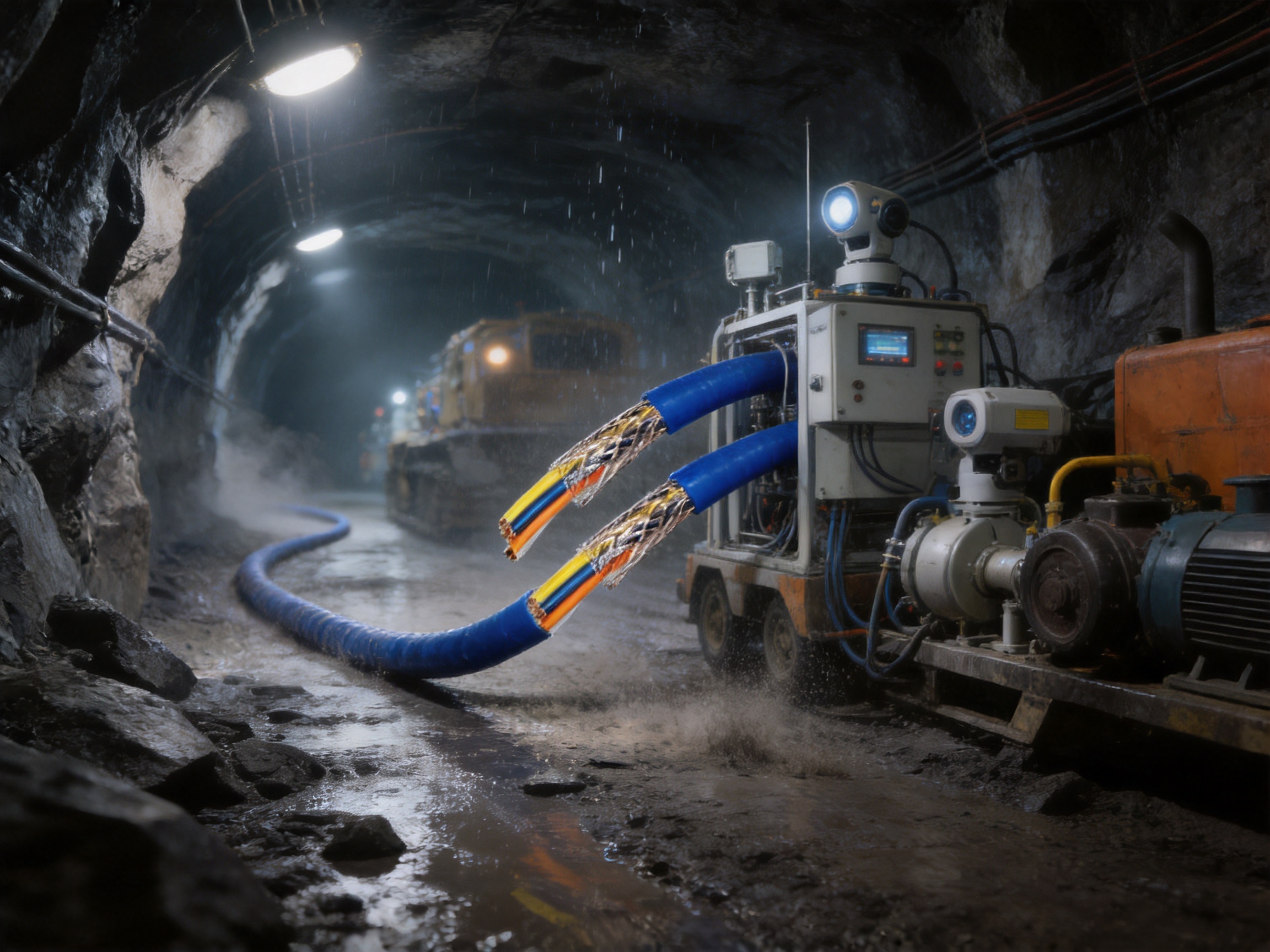
Mining monitoring systems often use distributed sensors and communication units that must be relocated as extraction areas change. MHYVRP can be used to connect mobile monitoring devices where flexibility and resistance to electromagnetic interference are both required. Shielding helps protect signal integrity, while the fine-stranded construction supports repeated repositioning.
Portable communication units may be carried, moved between work areas, or temporarily installed during maintenance and production activities. A lightweight flexible cable is easier to handle than a rigid industrial communication cable. The orange or blue sheath also supports quick visual identification in complex working areas.
Inspection robots may travel through confined or irregular spaces and can expose their cables to repeated bending and vibration. MHYVRP’s flexible conductor structure and flexible sheath are suitable for cable assemblies that must follow a robot’s movement. The shielding system can help preserve communication quality near motors and control electronics.
Movable sensors used for temperature, pressure, gas, vibration, position, or equipment-condition monitoring need dependable communication connections. Signal instability can create unnecessary alarms or hide important changes. The combination of HDPE insulation and shielding helps support consistent transmission in electrically noisy environments.
Mining faces are dynamic environments where equipment, work areas, and cable routes may change frequently. MHYVRP is intended for applications requiring both anti-interference capability and high flexibility. It can support temporary or semi-permanent links, subject to the project’s system voltage, connector, mechanical protection, and regulatory requirements.
Many shielded cables can reduce electromagnetic interference, but not all shielded cables are designed for frequent movement. Some use relatively rigid conductors or thick constructions intended primarily for fixed installation. When repeatedly bent, such cables may be difficult to handle and may experience conductor fatigue sooner than a purpose-built flexible cable.
MHYVRP differentiates itself through the combination of several features:
First, its Class 7 ultra-fine multi-stranded tin-plated copper conductors are designed for high flexibility. This makes the cable more suitable for dragging, temporary wiring, and repeated repositioning than a standard fixed-installation shielded communication cable.
Second, the cable combines aluminum-plastic composite tape shielding with a tin-plated copper drain wire. The shield provides broad coverage, while the drain wire supports practical grounding and termination. The design is intended to suppress external interference without sacrificing the cable’s mobile characteristics.
Third, the HDPE insulation focuses on low signal loss and stable electrical performance. A cable that is flexible but electrically inconsistent cannot provide reliable communication. MHYVRP addresses both mechanical and transmission requirements.
Fourth, the flame-retardant flexible PVC sheath is designed for underground conditions. It offers a balance between handling flexibility, environmental resistance, and flame-retardant performance.
Fifth, the cable supports multiple core configurations, cross-sections, shielding arrangements, and waterproof termination treatments. This makes it easier to adapt the cable to different monitoring systems and equipment interfaces instead of forcing every application to use one standard construction.
According to the supplied product information, its bending lifespan is approximately 40 percent higher than that of ordinary shielded cables. The precise improvement depends on the comparison cable and test conditions, but the statement reflects the product’s focus on long-term dynamic operation.
| Performance Area | MHYVRP Design Feature | Practical Benefit |
| Flexibility | Class 7 ultra-fine multi-stranded copper conductors | Improved handling and resistance to repeated bending |
| Signal protection | Aluminum-plastic composite tape shield | Reduced influence from external electromagnetic interference |
| Shield termination | Tin-plated copper drain wire | Convenient low-resistance shield grounding |
| Insulation | High-density polyethylene | Stable dielectric performance and low transmission loss |
| Outer protection | Flame-retardant flexible PVC sheath | Protection against movement, moisture, oil, and flame propagation |
| Configuration | One to 24 cores, twisted pair or star quad | Adaptability to different communication systems |
| Identification | Orange or blue sheath | Improved visibility and route management |
| Dynamic service | Specified flexural fatigue resistance of at least 800,000 cycles | Support for demanding mobile applications |
The performance of a cable depends not only on its material specification but also on manufacturing consistency. Fine-stranded conductors, shielding layers, insulation, and flexible sheaths must be produced with controlled dimensions and stable processing conditions. Small variations in conductor lay, insulation thickness, shield overlap, or sheath concentricity can influence electrical and mechanical performance.
Anhui Zhishang Cable Technology Co., Ltd. integrates research and development, manufacturing, and sales at its production base in Xuancheng, Anhui Province, China. The company operates modern facilities of approximately 5,000 square meters and has more than 50 employees, including quality engineers and research and development technicians with more than ten years of industry experience.
The company reports the use of ten automated production lines and a monthly output capacity of up to ten million meters. This production capability supports both standard product supply and customized cable development. Automation can improve process repeatability in operations such as conductor stranding, insulation extrusion, shielding application, sheath extrusion, printing, and take-up.
For a product such as MHYVRP, controlled conductor stranding is essential. The strands must be evenly distributed and compacted without excessive deformation. The insulation extrusion process must maintain consistent wall thickness and concentricity. Shielding materials must be applied with reliable coverage, and the drain wire must remain positioned for effective termination. Finally, the PVC sheath must protect the cable without making it unnecessarily stiff.
Quality engineers can verify these stages through dimensional checks, electrical testing, visual inspection, and mechanical evaluation. The stated product specifications include conductor size, rated voltage, test voltage, insulation resistance, attenuation, capacitance unbalance, shielding effectiveness, bending performance, sheath tear strength, and flame retardancy. These parameters provide a framework for evaluating the finished cable against defined requirements.
The company also provides full-core, full-length, pure-copper specifications, product test reports, and warranty support for standard cable models according to its company information. These practices are valuable for industrial buyers that require traceability, documentation, and consistent supply across multiple orders.
Mining communication systems are not always built around one universal cable structure. Equipment manufacturers may require a particular number of cores, conductor cross-section, pair arrangement, shield design, sheath color, marking method, connector, or waterproof termination. A cable manufacturer that can support customization can help reduce the need for adapters and improve compatibility with the final equipment.
MHYVRP supports customization of core count, shielding structure, and waterproof termination treatment. The available range of one to 24 cores, together with twisted-pair and star-quad structures, provides a starting point for many low-voltage communication applications. Buyers can discuss conductor size between 0.5 and 1.0 square millimeters according to current, distance, equipment interface, and mechanical requirements.
Zhishang’s research and development team supports OEM and ODM development based on customer drawings or samples. Technical engineers can assist with product selection and tailor-made cable design according to project requirements. This is particularly useful for equipment manufacturers, system integrators, and mining contractors that need a cable assembly designed around a specific machine or monitoring platform.
Customization should be based on a clear technical specification. Important items include operating temperature, minimum bend radius, movement pattern, installation method, environmental exposure, communication protocol, required transmission distance, grounding method, connector type, flame-retardant requirement, and applicable certification. Defining these parameters early helps ensure that the customized cable is appropriate for the actual service environment.
Standard products are reported to be available for fast shipment, while customized products typically require seven to 20 days of lead time. Actual delivery depends on the configuration, order quantity, testing requirements, and production schedule.
Correct installation is essential to achieving the performance of any flexible shielded cable. Before installation, inspect the cable drum or coil for visible damage, confirm the model and core configuration, and verify that the cable has not been exposed to conditions outside its storage limits.
During routing, observe the minimum bending radius. The stated values are eight times the cable outer diameter for fixed installation and ten times the cable outer diameter for mobile installation. If the cable will move continuously or rapidly, a larger radius may provide additional service-life protection.
Avoid pulling the cable across sharp metal edges, rough concrete, hot surfaces, or areas where heavy equipment can crush it. Use rollers, guides, clamps, or flexible conduits as needed. Clamps should support the cable without cutting into the sheath or creating a concentrated pressure point.
For shielded systems, grounding must be planned rather than improvised. The drain wire should be terminated according to the system’s grounding architecture. Improperly connected shields may reduce interference performance or create unwanted ground-current paths. The installation team should confirm whether the shield is grounded at one end, both ends, or through a designated equipment interface based on the system design.
Connectors and termination points deserve special attention because they are often the most vulnerable parts of a mobile cable assembly. Waterproof termination treatment can be customized for applications exposed to moisture or washdown conditions. Terminations should provide strain relief so that movement does not transfer directly to the conductor or shield connection.
After installation, test continuity, insulation resistance, shielding continuity, and grounding resistance as appropriate. For communication systems, functional testing under operating conditions can help identify interference, excessive attenuation, or intermittent faults before the cable is placed into full service.
Routine inspection can identify problems before they cause communication failure. Maintenance personnel should look for sheath cuts, abrasion, flattening, exposed shielding, loose supports, damaged connectors, excessive twisting, and areas where the cable is being bent below the recommended radius.
In mobile installations, inspect the sections nearest moving equipment and connection points first. These areas experience the greatest combination of bending, vibration, tension, and mechanical interaction. If a cable is repeatedly dragged over the same route, check for abrasion and consider improving the route protection or support system.
Electrical tests should be performed according to the maintenance plan and applicable safety procedures. Insulation resistance, continuity, shield continuity, and communication performance can be compared with initial commissioning records. A gradual change in measured values may indicate moisture ingress, conductor fatigue, termination deterioration, or sheath damage.
Cleaning should be carried out with methods compatible with flexible PVC and the surrounding equipment. Aggressive solvents, excessive heat, and sharp cleaning tools may damage the sheath. Oil and chemical exposure should be evaluated because resistance to common contaminants does not mean unlimited resistance to every chemical.
Service life depends on many variables. The stated flexural fatigue value of at least 800,000 cycles provides a product-performance reference under specified test conditions. Field performance will also depend on speed of movement, load, curvature, torsion, temperature, support spacing, surface contact, and installation quality. Good cable management is therefore an important part of maximizing the value of the MHYVRP design.
Industrial cable buyers often need more than a product datasheet. They need stable quality, technical communication, predictable delivery, documentation, and after-sales support. A supplier with integrated research, production, and sales functions can simplify coordination between engineering and purchasing teams.
Zhishang’s stated business approach emphasizes quality orientation, integrity, and stability. Its product range covers low-voltage wiring cable, flexible cable, power cable, automotive cable, communication cable, flat cable, control cable, computer cable, specialty cable, bus cable, aerial insulated cable, mining cable, and fluoroplastic cable. This broader product capability can help customers source related cable types from one technical partner.
The company serves industrial automation, weak-current engineering, intelligent manufacturing, appliance equipment, power engineering, and other sectors. Experience across these fields can support cross-application problem solving, particularly when a mining communication cable must connect with control equipment, sensors, automation systems, or custom assemblies.
The reported production capacity of up to ten million meters per month provides a foundation for volume orders and repeat supply. Automated production lines may also support consistent output across standard models. For customized products, the company’s engineering team can review drawings, samples, and performance requirements before production begins.
The company reports that its products have been sold in the United States, Canada, Australia, Japan, and parts of Eurasia. International supply experience can be useful for buyers who require export packaging, technical documentation, communication across time zones, and coordination with overseas project schedules.
Choosing the correct configuration begins with identifying the communication system. The number of signals, whether circuits are paired, whether a star-quad structure is needed, and how the cable will interface with equipment all influence the core arrangement. One to 24 cores are available within the stated product range.
Next, determine the required conductor cross-section. The available range is 0.5 to 1.0 square millimeters. The selection should consider conductor length, signal type, current requirements, voltage drop, connector capacity, mechanical flexibility, and installation distance. A larger conductor is not automatically better if the application prioritizes very small bend radii and low weight.
Environmental conditions should also be documented. Confirm the long-term temperature range, short-term heat exposure, oil and moisture contact, expected dust, possible chemical exposure, and the level of mechanical protection. If the cable will be exposed to water ingress at the termination, specify a suitable waterproof treatment.
Movement is another key factor. Describe whether the cable will be stationary, occasionally repositioned, continuously dragged, coiled on a reel, installed in a drag chain, or attached to a moving robot. Provide the expected bend radius, movement speed, travel distance, cycle frequency, and support method whenever possible.
Finally, verify compliance requirements. The product information references the MT 818.1-1999 mining flame-retardant test. Buyers should confirm whether additional mine approvals, local standards, communication specifications, fire classifications, or customer-specific testing are required for the project.
| Item | Specification |
| Product model | MHYVRP |
| Product type | Flexible shielded mining communication cable |
| Number of cores | One to 24 cores |
| Core arrangement | Twisted pair or star quad |
| Conductor | Class 7 ultra-fine multi-stranded tin-plated copper |
| Single-core cross-section | 0.5 to 1.0 square millimeters |
| Rated voltage | 300/300 volts |
| Test voltage | 1,500 volts AC for one minute |
| Insulation material | High-density polyethylene |
| Shielding structure | Aluminum-plastic composite tape shield with tin-plated copper drain wire |
| Shield coverage | At least 90 percent |
| Shielding effectiveness | At least 70 decibels from 30 MHz to 100 MHz |
| Sheath material | Flame-retardant flexible PVC |
| Sheath color | Orange or blue |
| Long-term operating temperature | Minus 40 degrees Celsius to plus 65 degrees Celsius |
| Short-term overload temperature | Plus 85 degrees Celsius for two hours |
| Minimum bend radius, fixed installation | Eight times cable outer diameter |
| Minimum bend radius, mobile installation | Ten times cable outer diameter |
| Attenuation | No more than 1.0 decibel per 100 meters at 1 kilohertz |
| Insulation resistance | At least 1,500 megohm-kilometers at 20 degrees Celsius |
| Capacitance unbalance | No more than 120 picofarads per kilometer |
| Flexural fatigue resistance | At least 800,000 bending cycles at a 100-millimeter curvature radius |
| Drain wire grounding resistance | No more than 0.1 ohm per meter |
| Sheath tear strength | At least 12 newtons per millimeter |
| Flame-retardant reference | Passes MT 818.1-1999 mining flame-retardant test |
MHYVRP is used for low-voltage communication in demanding mining environments, particularly where the cable must tolerate movement and resist electromagnetic interference. Typical applications include underground mobile monitoring equipment, portable communication devices, inspection robots, movable sensors, and communication links near mining faces.
Its design combines high flexibility with shielding. The cable uses Class 7 ultra-fine multi-stranded conductors for repeated bending, an aluminum-plastic composite tape shield and drain wire for interference control, HDPE insulation for stable signal transmission, and a flame-retardant flexible PVC sheath for underground protection.
The stated range is one to 24 cores. Depending on the application, the cable can use a twisted-pair or star-quad structure. Core count and arrangement should be selected according to the communication system and equipment interface.
Yes. The supplied product information indicates support for customization of core count, shielding structure, and waterproof termination treatment. Conductor cross-section, sheath color, marking, and other construction details should be confirmed through a technical review.
It is designed for frequent movement, bending, and twisting conditions. The product information specifies at least 800,000 bending cycles under a defined test condition. For continuous-motion installations, the actual route, bend radius, speed, tension, torsion, and support system should be reviewed before final selection.
The shield should be connected through the tin-plated copper drain wire according to the electrical and grounding design of the complete system. Grounding practice can vary depending on equipment architecture and interference conditions. Installation should be performed by qualified personnel, and shield continuity should be tested after termination.
The stated long-term operating range is minus 40 degrees Celsius to plus 65 degrees Celsius. A short-term overload temperature of plus 85 degrees Celsius is specified for two hours. Continuous operation above the long-term range is not recommended.
The stated minimum bending radius is eight times the cable outer diameter for fixed installation and ten times the cable outer diameter for mobile installation. The mobile value should be used when the cable is dragged, repeatedly repositioned, or connected to moving equipment.
The product information states that the cable passes the MT 818.1-1999 mining flame-retardant test. Project buyers should verify the required certification and approval documents for the specific mine and jurisdiction before installation.
The typical sheath colors are orange and blue. These colors can improve visibility and identification in underground environments. Other colors or marking requirements may be discussed for customized orders.
For standard cable models, the company information refers to product test reports, quality assurance, full-core and full-length specifications, pure-copper construction, and warranty support. The exact documentation package should be confirmed for each order, especially when the cable is part of a regulated mining project.
The stated typical lead time for customized products is seven to 20 days. Actual timing depends on the selected construction, order quantity, testing requirements, raw-material availability, and production schedule.
MHYVRP is designed for a specific and increasingly important requirement in modern mining: reliable communication through a cable that can move, bend, and operate near sources of electromagnetic interference. Its Class 7 ultra-fine multi-stranded tin-plated copper conductors support flexibility, while HDPE insulation helps maintain stable transmission characteristics. The aluminum-plastic composite tape shield and tin-plated copper drain wire provide a practical interference-control system, and the flame-retardant flexible PVC sheath supports underground safety and environmental resistance.
Compared with ordinary fixed-installation or lightly shielded cables, MHYVRP offers a more balanced solution for dynamic mining applications. Its stated shielding coverage, shielding effectiveness, bending-cycle resistance, temperature range, insulation resistance, and flame-retardant performance provide clear technical reference points for equipment designers and project engineers.
The manufacturing capabilities of Anhui Zhishang Cable Technology Co., Ltd. further support the product. With integrated research and development, automated production lines, experienced technical personnel, customization services, quality testing, and international supply experience, the company is positioned to provide both standard cable products and application-specific cable solutions.
For mining operators, system integrators, and equipment manufacturers, the best results will come from selecting the cable configuration together with a complete installation plan. Core arrangement, conductor size, bend radius, grounding method, termination treatment, environmental exposure, and applicable approvals should all be evaluated before ordering. When these factors are correctly matched, MHYVRP can provide a flexible, shielded, and dependable communication connection for challenging underground environments.
1. Product technical information for MHYVRP flexible shielded mining communication cable, including construction, electrical data, mechanical properties, and application guidance.
2. MT 818.1-1999, mining cable flame-retardant test reference cited in the product specification.
3. General principles of shielded communication cable installation, grounding, electromagnetic compatibility, and cable management.
4. General practices for flexible cable routing, minimum bending radius control, conductor fatigue prevention, and industrial cable maintenance.
5. Manufacturer-provided company information concerning research and development, production facilities, quality assurance, OEM and ODM services, and international supply capabilities.

We firmly believe that good cables are not only a competition of materials, but also a reflection of craftsmanship, quality, and responsibility.

Links
Product
Send Inquiry
No. 29 Sankeshu Road, Xuanzhou District, Xuancheng City, Anhui Province, China
+86-18621104555/+86-563-2622999
 Electrical Cable Manufacturer
OEM/ODM Wire and Cable Solutions
Electrical Cable Manufacturer
OEM/ODM Wire and Cable Solutions
 English
 Español
 عربى
عربى
 русский