Get more content that can help you
Content
Elevator systems are no longer simple vertical transportation devices. In modern buildings, elevator cars often carry video monitoring equipment, intercom systems, access control circuits, emergency communication lines, data transmission modules, lighting control, and other low-voltage signal functions. These functions must continue operating while the elevator car moves thousands of times each day. The cable installed between the elevator car and the control system therefore faces a demanding combination of mechanical motion, electromagnetic interference, limited shaft space, oil exposure, abrasion, and long-term bending stress.
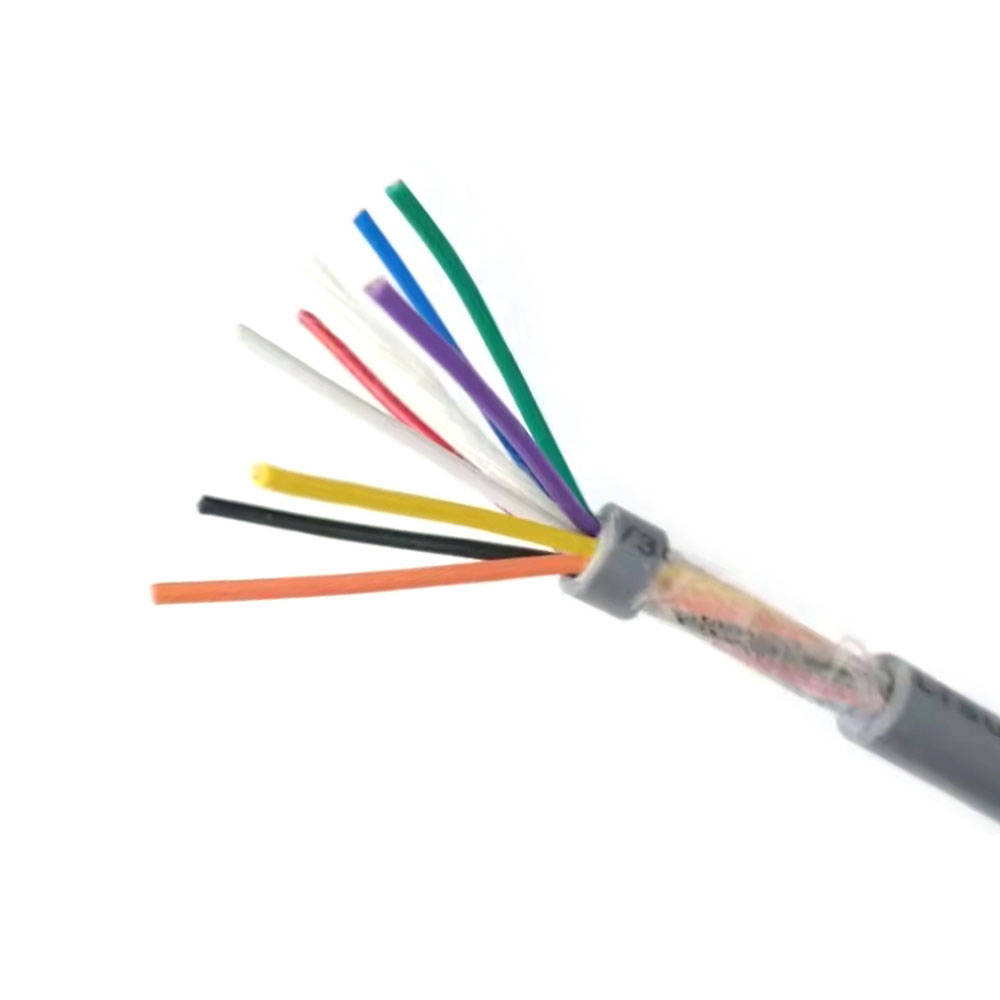
TVVBS flexible elevator traveling flat cable is designed specifically for these operating conditions. It uses a flat structure, finely stranded annealed copper conductors, PVC insulation and sheath, and a double-shielding system made from tinned copper braid plus aluminum-polyester composite tape. This construction is especially suitable for elevator video monitoring, CCTV signal transmission, elevator intercom systems, and lifting equipment requiring stable signal quality with strong anti-interference performance.
Unlike general-purpose flexible cables, this product is engineered around the real working environment of elevator shafts. The flat profile supports orderly suspension and installation, the copper conductor structure improves bending endurance, and the dual shielding suppresses high-frequency electromagnetic interference. For projects where signal clarity, safety, service life, and installation efficiency are equally important, TVVBS provides a practical and cost-effective solution.
TVVBS Flexible and durable structure Elevator Traveling Flat Cable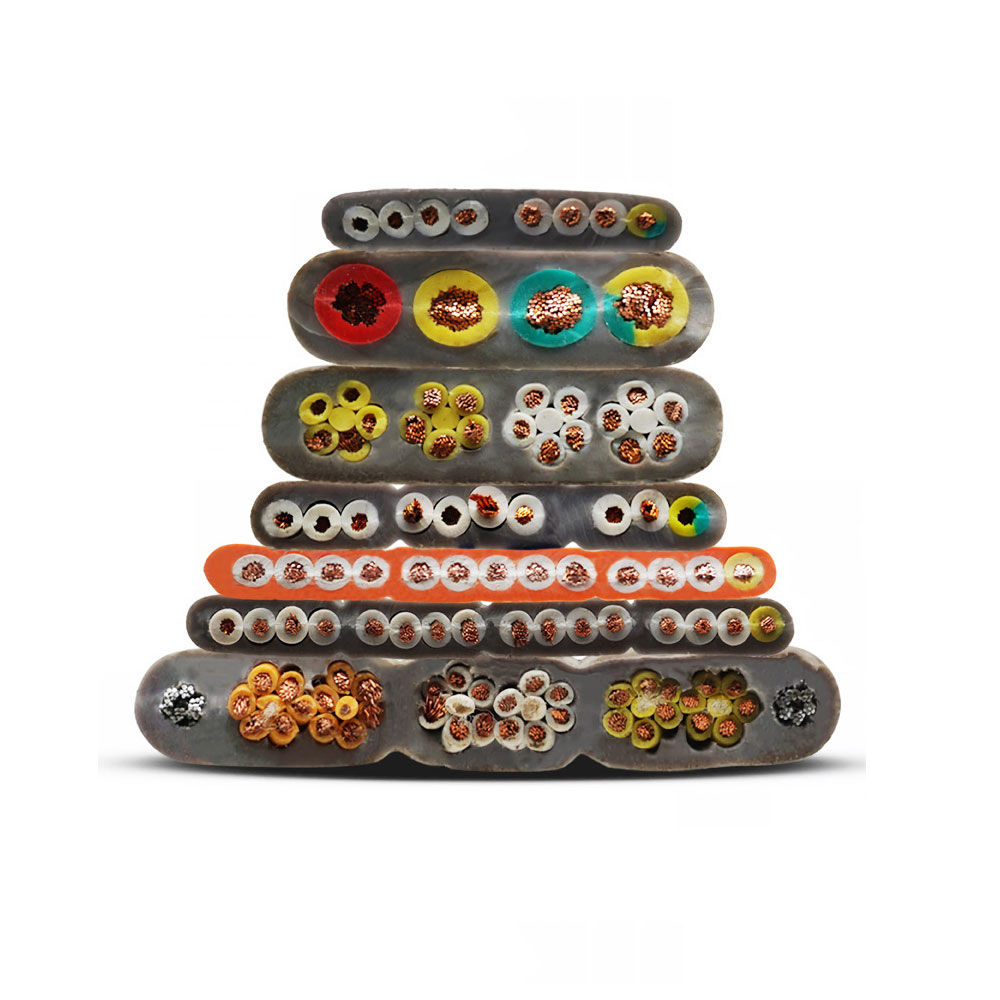
Elevator traveling cables operate in a dynamic state. During every elevator trip, the cable bends, hangs, follows the motion of the car, and experiences alternating stress. A cable that works well in a fixed conduit may fail prematurely when used in an elevator shaft. This is why traveling cables must be evaluated not only by electrical specifications, but also by bending life, tensile strength, abrasion resistance, shielding continuity, and structural stability.
In a modern elevator, video surveillance is often required for passenger safety, building management, emergency response, and remote monitoring. Video signals are sensitive to interference. If the cable shielding is insufficient, the signal may suffer from snow noise, ghosting, frame instability, color distortion, or intermittent transmission. In high-rise buildings, interference may come from motors, variable-frequency drives, power cables, control relays, wireless equipment, lighting systems, and other electrical installations nearby.
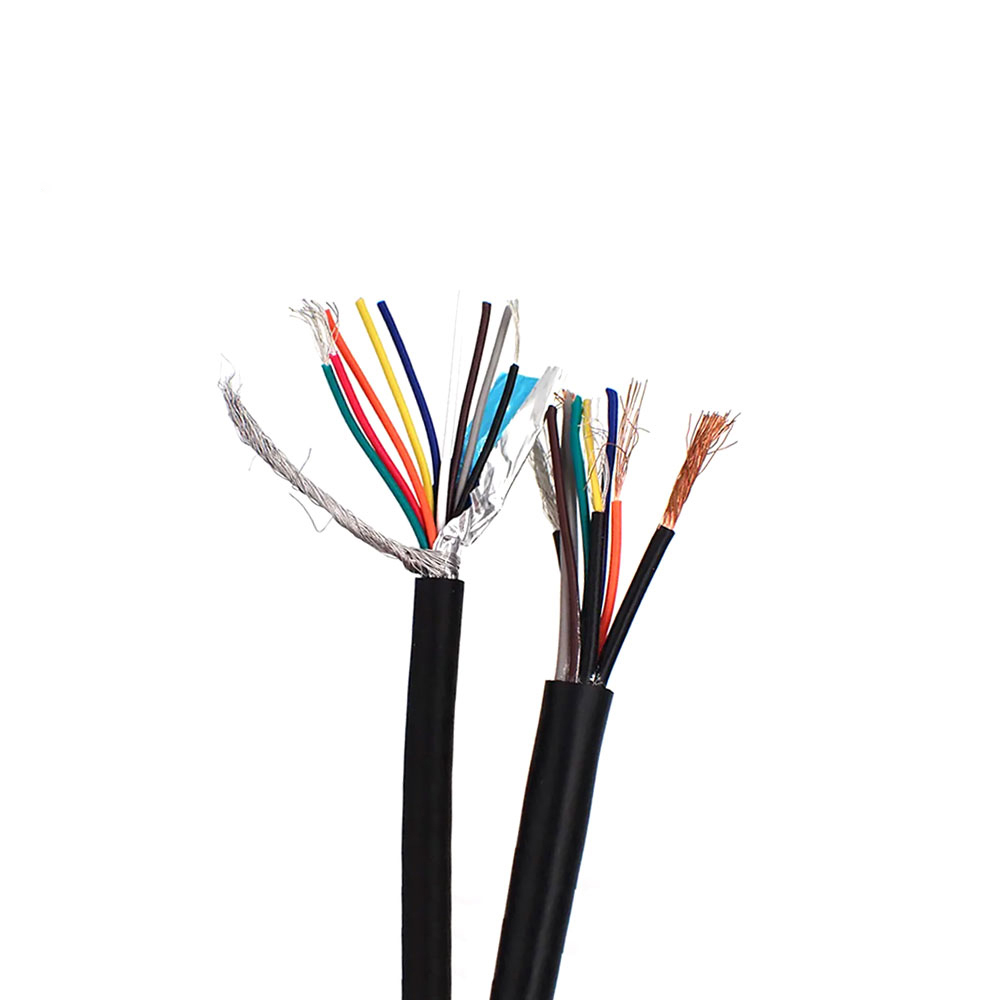
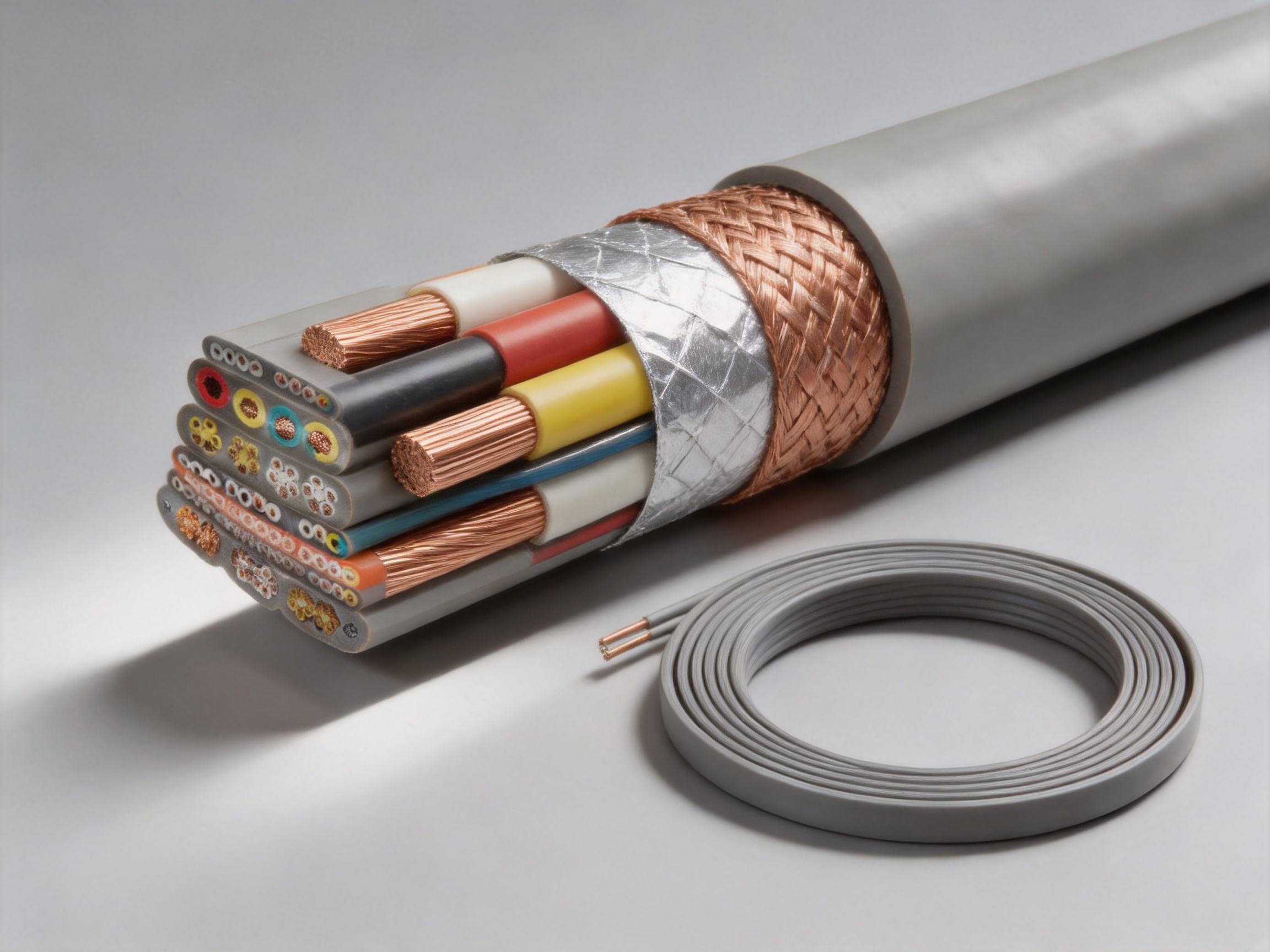
TVVBS addresses these challenges through a combination of electrical and mechanical design. The cable includes a tinned copper braided shield and an aluminum-polyester composite tape shield. The tape layer helps block high-frequency interference, while the braid provides durable shielding continuity, grounding reliability, and mechanical reinforcement. Together, they form a more complete barrier against external noise than many single-shielded cables.
The flat arrangement also offers practical advantages. In elevator shafts, space is valuable and cable movement must remain predictable. A flat cable is easier to guide, hang, and arrange than a round cable with comparable core count. It reduces twisting tendencies and supports stable bending along the intended axis. For installers, this means faster layout, cleaner cable management, and reduced risk of misalignment during long-term operation.
TVVBS is a flexible and durable elevator traveling flat cable intended for audio, video, communication, control, and precision signal transmission applications inside elevator systems. Its structure is especially suitable for elevator car CCTV transmission, elevator intercom wiring, monitoring equipment, and lifting devices where anti-interference capability is critical.
The cable uses stranded annealed copper conductors with fine stranding. This conductor design improves flexibility and helps distribute mechanical stress during repeated movement. The available cross-section range is typically from 0.5 mm² to 4.0 mm², with 6 to 48 cores arranged in a flat structure. The rated voltage is 300/500V, and the cable is tested at 2kV AC for one minute, supporting dependable low-voltage elevator wiring performance.
PVC insulation and PVC sheath materials provide electrical protection, mechanical coverage, oil resistance, abrasion resistance, and practical cost efficiency. Depending on construction requirements, the cable thickness may range from 3.0 mm to 12 mm, and the width may range from 15 mm to 75 mm. The minimum bending radius is designed for elevator movement: mobile installation is recommended at no less than six times the cable thickness, while fixed installation is recommended at no less than four times the cable thickness.
For signal transmission, the cable provides a characteristic impedance of 75 Ω ±10 Ω for video signal applications and capacitance unbalance of no more than 80 pF/100m at 1 kHz. These electrical characteristics make it suitable for CCTV signal transmission and other applications where stable mid-to-long-distance signal integrity is required.
Item |
Specification |
Practical Value |
Conductor |
Stranded annealed copper conductor with fine stranding |
Improves flexibility, conductivity, and bending endurance |
Cross-Section Range |
0.5 mm² to 4.0 mm² |
Supports different signal, control, and low-voltage power needs |
Number of Cores |
6 cores to 48 cores |
Allows integrated wiring in one flat traveling cable |
Rated Voltage |
300/500V |
Suitable for low-voltage elevator signal and control circuits |
Test Voltage |
2kV AC for 1 minute |
Verifies insulation reliability before delivery |
Insulation Material |
PVC |
Provides stable electrical insulation and processing consistency |
Shielding Structure |
Tinned copper braid plus aluminum-polyester composite tape |
Improves resistance to electromagnetic interference |
Sheath Material |
PVC |
Offers durability, abrasion resistance, and cost-effective protection |
Temperature Range |
-15℃ to +70℃ for standard configuration |
Matches common elevator shaft operating conditions |
Minimum Bending Radius |
Mobile installation ≥6× cable thickness; fixed installation ≥4× cable thickness |
Supports safe installation and long service life |
Bending Life |
≥7 million cycles under elevator operating conditions |
Demonstrates suitability for frequent elevator movement |
Characteristic Impedance |
75 Ω ±10 Ω for video signal |
Supports CCTV and video monitoring transmission |
Oil Resistance |
Passes IRM 902 oil immersion test |
Improves durability in elevator maintenance environments |
Abrasion Resistance |
Passes 7,000 reciprocating abrasion test |
Reduces sheath damage risk during long-term movement |
One of the most important strengths of TVVBS is its double-shielded construction. In many elevator projects, ordinary unshielded or single-shielded cables may appear acceptable during initial installation, but signal problems can emerge after the elevator begins daily operation. Motor startup, inverter switching, and power cable proximity can introduce electromagnetic interference that affects video and data quality.
The aluminum-polyester composite tape shield offers broad coverage and is especially effective against high-frequency interference. Because the tape wraps around the insulated cores, it creates a continuous barrier that reduces external electromagnetic coupling. This is highly valuable for CCTV transmission, where high-frequency signal components determine image clarity and stability.
The tinned copper braided shield adds a second layer of protection. The braid provides mechanical strength and maintains shielding performance during repeated bending. It also offers a reliable path for grounding when used together with the drain wire. Tinning helps improve corrosion resistance and solderability, contributing to stable long-term electrical performance.
Compared with single foil shielding, the combination of foil and braid is more durable in mobile environments. Foil alone may be vulnerable to repeated flexing if not properly supported, while braid alone may not provide the same high-coverage barrier at certain frequencies. The TVVBS dual-layer system balances both strengths: high coverage from the composite tape and flexible conductivity from the braided mesh.
This advantage is particularly important in elevator applications because the cable is not static. The shielding must continue working even while the cable bends again and again. A high-quality shield is not only about initial attenuation; it is also about maintaining continuity after millions of movement cycles. TVVBS is built with this long-term operating principle in mind.
Elevator CCTV systems are installed to improve passenger safety, security monitoring, accident investigation, and building management efficiency. However, elevator video transmission is challenging because the camera is located in a moving car while the recording or monitoring equipment is usually connected through the building system. The signal path must remain stable throughout motion.
TVVBS is optimized for video signal transmission with a characteristic impedance of 75 Ω ±10 Ω. This impedance range is suitable for CCTV applications and helps reduce signal reflection, image distortion, and transmission instability. In practical elevator monitoring systems, impedance control is a key factor for maintaining video quality over longer cable lengths.
The product supports stable mid-to-long-distance transmission and is suitable for applications where clear image quality is required over extended wiring paths. When installed correctly, the cable can help maintain reliable audio/video and data signal transmission in elevator systems, intelligent buildings, medium-sized venues, and industrial lifting environments.
Another important factor is capacitance balance. Excessive capacitance unbalance can affect signal quality, especially in systems requiring clean waveform transmission. TVVBS is designed with capacitance unbalance of no more than 80 pF/100m at 1 kHz, helping maintain stable electrical behavior across the cable length.
For building owners and system integrators, the result is reduced maintenance risk. Poor video cables may require troubleshooting, rewiring, signal boosters, filters, or repeated adjustments. A cable designed from the beginning for elevator video monitoring can reduce those hidden costs and improve long-term system dependability.
Elevator traveling cables are repeatedly bent during operation. A cable that lacks flexibility may develop conductor fatigue, insulation stress, sheath cracking, or shielding damage. TVVBS uses fine-stranded annealed copper conductors to improve bending performance. Fine stranding allows the conductor to flex more smoothly than a solid or coarse-stranded conductor, reducing stress concentration during repeated movement.
The cable’s flat structure supports predictable bending. In an elevator shaft, uncontrolled twisting can shorten cable life and create installation hazards. A flat cable naturally bends in a defined direction and can be suspended in a stable loop. This helps prevent unnecessary torsion, improves safety, and simplifies installation.
TVVBS is designed for a bending life of at least 7 million cycles under elevator operating conditions. This specification reflects its suitability for repeated dynamic operation. In a busy commercial building, an elevator may run many times per day. Over years of service, the traveling cable must withstand a large number of cycles without electrical failure.
The product also has tensile strength of at least 20 N/mm². Tensile strength matters because the cable hangs vertically and may experience pull forces caused by its own weight, movement, installation handling, and vibration. A properly designed traveling cable must remain mechanically stable while protecting the conductor and insulation system.
Compared with ordinary flexible control cable, TVVBS is more closely aligned with elevator-specific movement patterns. It is not only flexible; it is structured to remain stable in a hanging and moving application. That distinction is essential for installers who want reliable performance rather than merely soft cable handling.
Elevator shafts are not laboratory environments. Cables may be exposed to dust, lubricants, maintenance oil, mechanical contact, humidity variation, and occasional surface friction. The outer sheath must therefore resist more than simple electrical insulation demands. It must protect the internal structure from environmental and mechanical stress.
TVVBS uses a PVC sheath designed for elevator application requirements. The cable passes the IRM 902 oil immersion test, demonstrating oil resistance suitable for elevator maintenance surroundings. Oil resistance helps prevent sheath swelling, softening, cracking, or loss of mechanical performance when the cable is exposed to lubricants and similar substances.
The cable also passes a 7,000 reciprocating abrasion test. Abrasion resistance is important when the cable may contact guides, surfaces, or other components during movement. A weak sheath may wear through over time, exposing shielding or insulation and creating safety hazards. A more robust sheath reduces the likelihood of premature damage.
The combination of oil resistance and abrasion resistance gives the cable an advantage over low-cost general-purpose alternatives. Competitor products may focus only on basic conductor size and voltage rating, but elevator traveling cables need environmental endurance. TVVBS provides a balanced design that protects signal transmission and mechanical service life at the same time.
The flat structure is one of the defining characteristics of this product. In elevator systems, the cable often hangs between the car and the fixed connection point. The shape of the cable affects bending behavior, cable management, installation convenience, and long-term movement stability.
Flat traveling cable offers several installation advantages. It can be arranged neatly, suspended in a predictable loop, and routed through shaft spaces with limited clearance. The flat profile reduces random twisting and helps maintain proper orientation during operation. For installers, this means less time spent correcting cable alignment and fewer risks of installation-related failure.
The product is available with cable thickness from 3.0 mm to 12 mm and width from 15 mm to 75 mm, depending on the number of cores and cross-section. This range allows project engineers to select a configuration that fits the electrical load, signal type, shaft space, and movement requirements of the elevator system.
The minimum bending radius guidance is also practical. For mobile installation, the bending radius should be at least six times the cable thickness. For fixed installation, it should be at least four times the cable thickness. Following these installation rules helps preserve the internal conductor, insulation, and shielding structure, thereby extending service life.
Compared with round multi-core cables, flat elevator traveling cables can provide better suspension balance and easier visual inspection. Maintenance personnel can more easily observe cable condition, alignment, and wear. This is valuable because elevator reliability depends not only on product quality but also on correct installation and routine inspection.
Electrical safety remains a core requirement for any elevator cable. TVVBS is rated at 300/500V and tested at 2kV AC for one minute. The test voltage verifies that the insulation system can withstand stress above normal operating voltage without breakdown during factory inspection.
The insulation resistance is at least 20 MΩ·km at 20℃. High insulation resistance indicates that the insulation material and extrusion process provide effective separation between conductors. This reduces leakage current risk and supports stable signal operation.
The cable is designed to operate without breakdown under long-term working voltage. In real applications, this means the insulation and sheath structure must be consistent, free from harmful defects, and properly matched to the rated application. The manufacturing process must therefore control conductor surface quality, insulation thickness, concentricity, material purity, and sheath integrity.
For video and signal circuits, safety and signal quality are connected. Insulation defects or inconsistent geometry can produce electrical instability, noise coupling, or intermittent faults. A robust manufacturing process helps ensure that each delivered cable performs reliably after installation.
Anhui Zhishang Cable Technology Co., Ltd. manufactures wire and cable products from a modern production base in Xuancheng City, Anhui Province, China. The company integrates research and development, production, and sales, and serves industrial automation, weak current engineering, intelligent manufacturing, appliance equipment, power engineering, elevator systems, and other fields.
The company operates approximately 5,000 square meters of modern production facilities and is equipped with 10 automated production lines. Monthly output can reach up to 10 million meters, supporting both standard product supply and customized project orders. This production capacity is important for contractors, distributors, and OEM customers who need stable delivery schedules.
The team includes quality engineers and R&D technicians with more than 10 years of industry experience. Their experience supports cable design, material selection, process control, and product testing. For a specialized product such as TVVBS elevator traveling flat cable, technical experience is particularly important because the design must balance flexibility, shielding, mechanical endurance, electrical properties, and installation requirements.
The company follows national standards, relevant international standards, and industry benchmarks. It also supports OEM and ODM development based on customer drawings, samples, or technical requirements. For elevator manufacturers and system integrators, this customization capability allows cable structures to be adapted to different core combinations, conductor sizes, shielding requirements, sheath colors, marking needs, and packaging preferences.
The business philosophy of quality orientation, integrity foundation, and stability priority is reflected in the company’s approach to cable manufacturing. A good cable is not defined only by raw materials. It also depends on process discipline, inspection consistency, technical responsibility, and long-term service support.
The manufacturing process for TVVBS begins with conductor preparation. Refined copper conductors are selected for conductivity and mechanical performance. The copper is annealed and finely stranded to achieve the required flexibility. Proper stranding is critical because conductor fatigue is one of the main failure modes in moving cable applications. If the stranding pitch, tension, or wire quality is poorly controlled, the conductor may break after repeated bending.
After conductor preparation, insulation extrusion is performed. PVC insulation must be applied with controlled thickness, smooth surface quality, and stable adhesion characteristics. The insulation thickness range is typically 0.4 mm to 1.0 mm, depending on the cable design. Online monitoring and process control help maintain consistency across long production lengths.
For shielded signal structures, the aluminum-polyester composite tape is applied to provide high-coverage shielding. The tape must be wrapped with appropriate overlap and tension. Too little overlap can create shielding gaps; too much tension can damage the material or reduce flexibility. The tinned copper braid is then applied to form a durable conductive shield. Braiding quality affects shielding effectiveness, flexibility, grounding performance, and long-term durability.
The drain wire is included to ensure reliable grounding. Grounding is often overlooked, but it is essential for shielded cable performance. A well-designed shield without proper grounding may not deliver its intended anti-interference effect. The tinned copper drain wire gives installers a dependable path for shield termination.
The flat arrangement stage requires accurate positioning of the cores and shielding structure. The cable must maintain its flat profile without internal displacement that could affect bending behavior or impedance. Filler or structural materials are selected to support flexibility and stability. Finally, the PVC sheath is extruded to protect the cable from abrasion, oil, environmental contact, and mechanical stress.
Throughout production, testing and inspection verify key properties such as conductor continuity, insulation resistance, voltage endurance, dimensions, surface quality, shielding structure, and finished cable appearance. For standard cable models, the company can provide quality assurance measures such as full-core, full-length, pure copper specifications, product test reports, and warranty support.
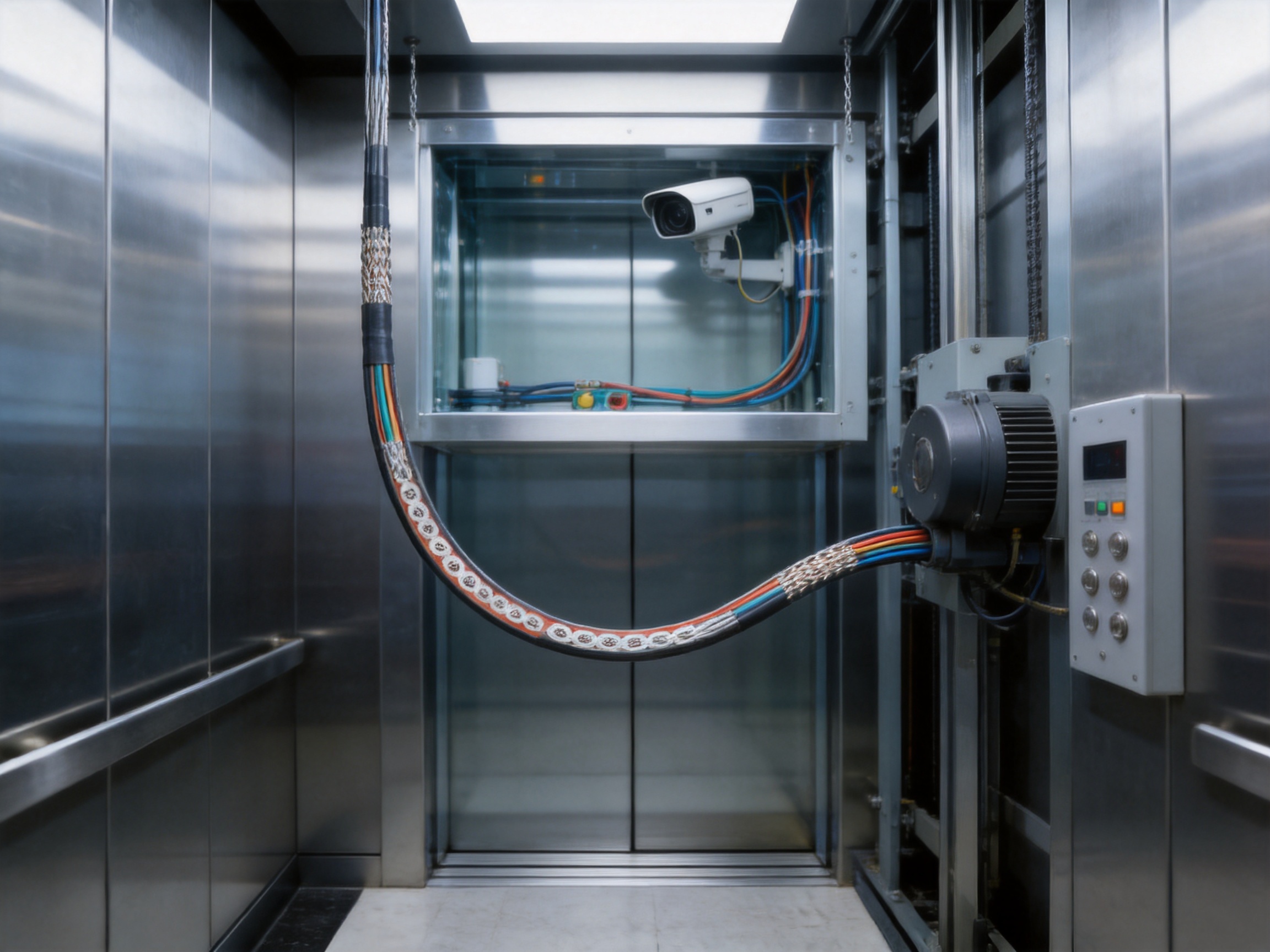
The cable market includes many products that may appear similar at first glance. However, elevator traveling cable performance depends on details that are not always visible from the outside. TVVBS offers several advantages compared with ordinary low-cost or general-purpose alternatives.
First, the double-shielding design provides superior anti-interference capability. A cable with only basic insulation or a single shield may not be sufficient for elevator CCTV systems exposed to inverter noise and motor interference. TVVBS combines foil shielding and tinned copper braiding to improve overall shielding performance.
Second, the product is optimized for video signal transmission. The 75 Ω ±10 Ω characteristic impedance is specifically relevant to CCTV applications. Many general control cables do not control impedance for video use, which can lead to image instability and signal loss over longer runs.
Third, the flat structure is designed for elevator shaft installation. A generic flexible cable may bend, twist, or hang unpredictably. TVVBS supports controlled movement, cleaner routing, and easier installation in vertical shafts.
Fourth, the cable has verified bending endurance of at least 7 million cycles under elevator operating conditions. This is a significant advantage because elevator cables fail primarily through long-term movement fatigue. A cable that looks flexible during handling may not necessarily survive years of repeated motion.
Fifth, the sheath is designed for abrasion and oil resistance. Passing IRM 902 oil immersion and 7,000 reciprocating abrasion tests indicates that the cable is prepared for real elevator maintenance environments. Cheaper alternatives may save initial cost but create higher replacement and downtime expenses.
Sixth, the product is supported by manufacturing customization and technical service. The company’s R&D and engineering team can assist with product selection and tailored design based on project needs. For OEM/ODM customers, this support is often more valuable than a catalog-only supply model.
TVVBS elevator traveling flat cable is suitable for elevator systems with video monitoring, elevator car CCTV transmission, elevator intercom systems, and lifting equipment requiring high anti-interference signal transmission. It may also be used in related mobile wiring systems where flat cable structure, signal shielding, and repeated bending performance are required.
In passenger elevators, the cable supports camera transmission, emergency intercoms, and control signal integration. In commercial buildings, it contributes to security monitoring and facility management. In hotels, hospitals, office towers, shopping centers, and residential complexes, reliable elevator communication is essential for both safety and service quality.
In industrial lifting equipment, the cable can help transmit signals in electrically noisy surroundings. Industrial environments may include motors, drives, welding equipment, production lines, and automation systems. A cable with strong shielding helps protect sensitive communication lines from noise.
The product can also be considered for outdoor security, vehicle-mounted systems, and factory automation scenarios when the cable design is matched to the project environment. For applications with extreme temperature, UV exposure, chemical exposure, or special flame-retardant requirements, customized sheath and structure options can be discussed according to engineering needs.
Selecting the correct elevator traveling cable requires careful review of electrical, mechanical, and installation factors. Engineers should begin by determining the required number of cores. TVVBS is available from 6 to 48 cores, allowing multiple circuits to be integrated into one flat cable. The chosen core count should account for current needs, spare circuits, future upgrades, and system separation requirements.
The conductor cross-section should be selected according to load current, voltage drop, signal type, and circuit function. Smaller cross-sections such as 0.5 mm² may be suitable for certain signal applications, while larger sizes up to 4.0 mm² may be required for higher current low-voltage circuits. Proper sizing improves safety and reduces unnecessary voltage loss.
For video circuits, impedance and shielding should be prioritized. The TVVBS structure is designed for 75 Ω video signal transmission, making it suitable for CCTV applications. Engineers should also consider connector compatibility, grounding method, and system layout to achieve best signal performance.
Installation length and shaft height should be reviewed. Long cable lengths increase the importance of conductor resistance, capacitance, impedance, and shielding quality. The system should be designed to avoid excessive mechanical stress at termination points, sharp bending, and contact with moving parts.
The bending radius must be respected. For mobile use, the cable should not be bent below six times the cable thickness. If the cable is forced into a smaller bend, internal conductors and shielding may experience stress beyond the intended design, reducing service life.
Finally, environmental factors should be assessed. Oil exposure, abrasion, temperature range, and shaft cleanliness all influence cable selection. TVVBS is designed with oil and abrasion resistance, but project-specific environmental extremes should be discussed before final specification.
Correct installation is essential to fully realize the performance of TVVBS. Even a high-quality elevator traveling cable can fail early if it is twisted, over-bent, poorly clamped, or installed near severe interference sources without proper grounding.
Before installation, the cable should be inspected for surface damage, correct marking, correct core count, and correct length. It should be uncoiled carefully to avoid introducing torsion. Installers should not drag the cable over sharp edges or rough surfaces.
The cable should be suspended according to elevator system requirements, with sufficient loop clearance for full car travel. The flat profile should remain properly oriented, and the cable should be guided to prevent rubbing against shaft structures. Clamps should secure the cable without crushing the sheath or deforming the internal structure.
Shield grounding should be performed according to the system design. The tinned copper drain wire provides a practical grounding path. Proper termination can greatly improve anti-interference performance. Poor grounding may reduce the benefit of the shielding system, even if the cable itself is well designed.
During installation, the cable should be kept away from high-power lines where possible. If proximity to power circuits cannot be avoided, separation distance and grounding practices become even more important. Signal cables should be routed to minimize electromagnetic coupling from motor drives and power equipment.
After installation, the elevator should be operated through its full travel range while observing cable movement. The cable should move smoothly without twisting, scraping, stretching, or colliding with other components. Any abnormal movement should be corrected before the system enters regular service.
Quality testing is a central part of cable reliability. For TVVBS, important tests include conductor inspection, insulation resistance testing, voltage withstand testing, shielding verification, dimensional measurement, bending performance assessment, oil resistance testing, abrasion resistance testing, and finished product inspection.
The 2kV AC one-minute test helps verify insulation endurance. Insulation resistance of at least 20 MΩ·km at 20℃ indicates proper insulation quality. Bending life testing demonstrates that the cable can withstand repeated motion under elevator operating conditions. Oil immersion and abrasion tests confirm that the sheath is suitable for real working environments.
These tests are not merely technical formalities. They directly affect field performance. A cable with inconsistent insulation may pass current initially but develop leakage or breakdown later. A cable with weak shielding may work in a quiet test room but fail in an elevator shaft. A cable with poor sheath durability may suffer wear long before the conductor reaches its expected life.
The manufacturer’s modern production lines and experienced engineering team help control these risks. Automated production improves dimensional consistency, while technical inspection helps identify problems before delivery. For project buyers, this reduces uncertainty and supports predictable installation outcomes.
Price is always a factor in cable procurement, but elevator traveling cable should be evaluated by lifecycle value rather than initial cost alone. A low-cost cable that fails early can create expensive downtime, service calls, replacement labor, passenger inconvenience, and safety concerns. In contrast, a well-designed cable reduces hidden maintenance costs.
TVVBS offers a cost-effective balance between professional-grade signal performance and practical manufacturing efficiency. It provides double shielding, flexible structure, flat elevator-specific design, oil resistance, abrasion resistance, and verified bending endurance. These features directly address the causes of elevator cable failure and signal instability.
For contractors, reliable cable reduces installation callbacks. For building owners, it improves elevator monitoring stability. For elevator manufacturers, it supports product reputation. For distributors, it provides a specialized product that meets real market demand for video-enabled elevator systems.
The company’s production capacity also contributes to cost-effectiveness. With automated production lines and high monthly output, standard products can be supplied efficiently, while customized products can be produced within practical lead times. Standard products may be available for fast shipment, while customized products typically require 7 to 20 days depending on complexity and order requirements.
Different elevator projects may require different cable designs. Some projects need more cores, some need specific conductor sizes, and some require special sheath properties, colors, markings, or packaging. The manufacturer supports OEM and ODM development based on customer drawings or samples, allowing TVVBS-related solutions to be adapted to project requirements.
Customization may include conductor cross-section selection, core arrangement, shielding optimization, sheath material adjustments, printing requirements, packaging length, and compatibility with specific elevator system designs. Technical engineers can provide product selection guidance and cable design suggestions according to project needs.
This capability is important for international buyers and system manufacturers. Instead of forcing a project to fit a standard cable, the cable can be engineered to match the project. That approach helps improve installation efficiency, electrical compatibility, and long-term reliability.
Customization also supports regional standards and customer-specific quality requirements. The company follows national standards, relevant international standards, and industry benchmarks, and can provide documentation such as product test reports for standard models. For buyers who require stable quality and repeat supply, this engineering support adds practical value.
Modern cable manufacturing must balance performance, cost, and responsible production. The company emphasizes green manufacturing and responsible production practices. This includes attention to material use, process efficiency, quality control, and long-term product durability.
A durable cable is also an environmentally sensible cable. Products that fail early create waste, require replacement materials, consume labor, and disrupt building systems. By improving bending life, sheath durability, and signal stability, TVVBS contributes to longer service intervals and reduced replacement frequency.
Automated production lines also support efficient manufacturing. Consistent extrusion, controlled stranding, and stable shielding processes reduce defect rates and material waste. Quality control at each stage helps ensure that delivered cable meets defined requirements rather than relying only on final inspection.
TVVBS is mainly used for elevator video monitoring, elevator car CCTV transmission, elevator intercom systems, and lifting equipment requiring stable signal transmission with strong anti-interference performance.
The double shielding combines aluminum-polyester composite tape and tinned copper braid. The tape helps block high-frequency interference, while the braid provides durable shielding continuity and reliable grounding. This is especially useful in elevator shafts where motors, drives, and power cables may create electromagnetic noise.
Yes. The cable is designed for CCTV signal transmission and provides characteristic impedance of 75 Ω ±10 Ω for video signal applications. This helps maintain stable video quality and reduce signal reflection.
The flat structure supports orderly suspension, predictable bending, reduced twisting, and easier shaft installation. It is more suitable for traveling elevator applications than many ordinary round cables.
The cable uses finely stranded annealed copper conductors and is designed for repeated movement. Its bending life is at least 7 million cycles under elevator operating conditions, provided it is installed correctly and the recommended bending radius is followed.
For mobile installation, the minimum bending radius should be at least six times the cable thickness. For fixed installation, it should be at least four times the cable thickness.
Yes. The cable passes the IRM 902 oil immersion test and 7,000 reciprocating abrasion test, making it suitable for elevator environments where oil exposure and mechanical contact may occur.
The standard cross-section range is 0.5 mm² to 4.0 mm², and the number of cores can range from 6 to 48 cores in a flat arrangement structure.
Yes. The manufacturer supports OEM and ODM customization based on customer drawings, samples, and project requirements. Customization may include conductor size, core count, shielding design, sheath characteristics, printing, and packaging.
General flexible cables may not provide elevator-specific bending life, flat suspension stability, video impedance control, double shielding, oil resistance, and abrasion resistance. TVVBS is engineered specifically for elevator traveling applications, making it more reliable for long-term use.
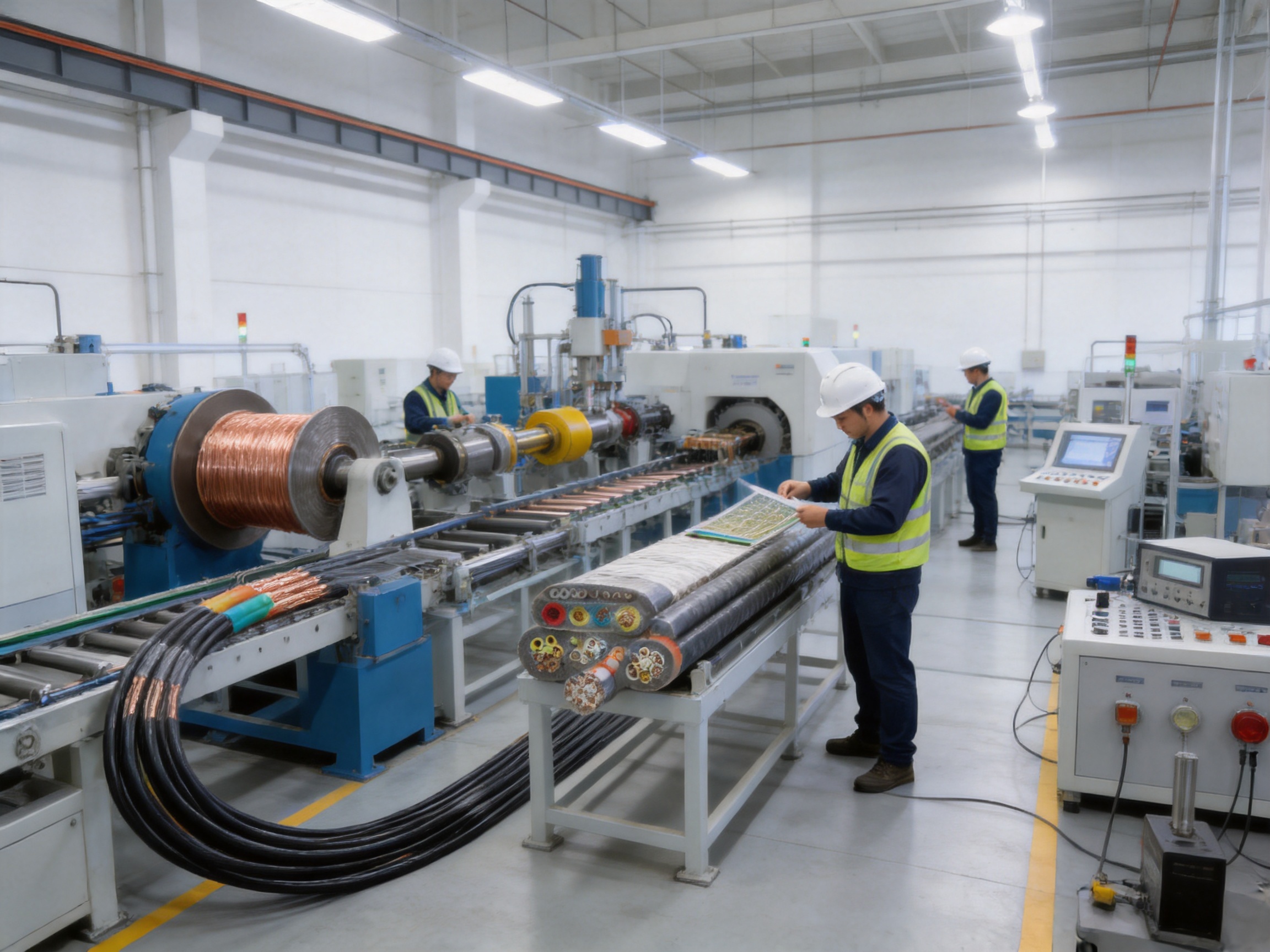
TVVBS flexible and durable elevator traveling flat cable is a specialized solution for modern elevator systems that require reliable video monitoring, intercom communication, and precision signal transmission. Its double-shielded construction, 75 Ω video signal design, flat elevator-suitable profile, fine-stranded copper conductors, oil-resistant sheath, abrasion-resistant performance, and long bending life give it clear advantages over ordinary flexible or single-shielded cables.
The product is supported by advanced manufacturing capabilities, including automated production lines, experienced R&D and quality engineers, controlled conductor stranding, precision insulation extrusion, reliable shielding processes, and comprehensive testing. Anhui Zhishang Cable Technology Co., Ltd. combines production capacity with customization support, helping customers obtain cable solutions that match real project requirements.
For elevator manufacturers, building contractors, security system integrators, and distributors, TVVBS provides more than basic wiring. It provides a dependable connection for moving elevator systems, helping maintain signal clarity, reduce interference, simplify installation, and improve lifecycle value. In applications where safety, monitoring stability, and long-term durability matter, this double-shielded elevator traveling flat cable is a strong and practical choice.
1. International Electrotechnical Commission. IEC 60227: Polyvinyl Chloride Insulated Cables of Rated Voltages up to and Including 450/750V.
2. International Electrotechnical Commission. IEC 60332: Tests on Electric and Optical Fibre Cables under Fire Conditions.
3. International Electrotechnical Commission. IEC 60502: Power Cables with Extruded Insulation and Their Accessories.
4. International Organization for Standardization. ISO 9001: Quality Management Systems Requirements.
5. National Electrical Manufacturers Association. Standards and technical guidance for wire and cable construction, testing, and performance evaluation.
6. Elevator industry engineering practice references for traveling cable installation, bending radius control, shielding grounding, and elevator shaft cable management.

We firmly believe that good cables are not only a competition of materials, but also a reflection of craftsmanship, quality, and responsibility.

Links
Product
Send Inquiry
No. 29 Sankeshu Road, Xuanzhou District, Xuancheng City, Anhui Province, China
+86-18621104555/+86-563-2622999
 Electrical Cable Manufacturer
OEM/ODM Wire and Cable Solutions
Electrical Cable Manufacturer
OEM/ODM Wire and Cable Solutions
 English
 Español
 عربى
عربى
 русский