
Get more content that can help you
Content
Modern power infrastructure requires cable systems that can deliver stable electrical performance while resisting moisture, corrosion, temperature stress, and long-term environmental exposure. In urban power grids, industrial plants, tunnels, direct-burial routes, wastewater facilities, and outdoor distribution networks, the cable sheath and insulation system often determine whether the installation remains reliable for years or becomes vulnerable to degradation. YJY environmental protection and safety high-voltage cable is designed for exactly these demanding conditions. Built with a copper conductor, cross-linked polyethylene insulation, and a polyethylene sheath, it provides a balanced solution for power transmission projects that need efficiency, durability, and improved environmental safety.
Unlike conventional PVC-sheathed power cables, YJY cable uses a PE outer sheath, giving it stronger moisture resistance, lower water absorption, and better chemical resistance. Its XLPE insulation supports excellent dielectric strength, stable long-term operation, and a rated continuous operating temperature of 90℃. These characteristics make it suitable for fixed power transmission systems where cables may face humidity, chemical exposure, outdoor weathering, or direct contact with soil. For projects requiring dependable electricity distribution and lower maintenance risk, YJY cable offers a practical advantage over many traditional cable options.
Anhui Zhishang Cable Technology Co., Ltd. manufactures this cable as part of its broader wire and cable solution portfolio. The company integrates research and development, production, and sales, serving industries such as power engineering, industrial automation, weak current engineering, intelligent manufacturing, and equipment wiring. With modern production lines, experienced quality engineers, and support for OEM and ODM customization, the company focuses not only on supplying cable products but also on delivering integrated cable solutions matched to project requirements.
YJY Environmental protection and safety High-Voltage Cable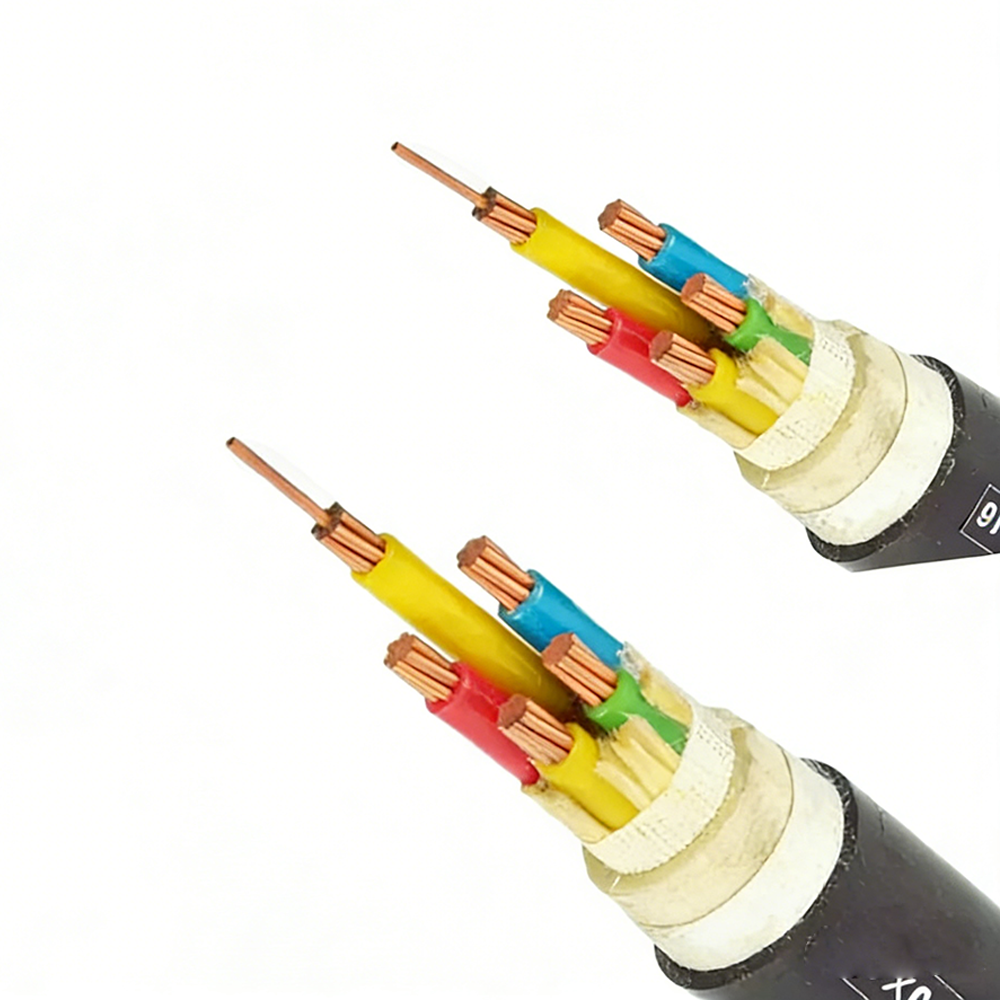
YJY is a copper conductor, cross-linked polyethylene insulated, polyethylene sheathed power cable. It is an important variant of the YJV series, sharing the high-quality XLPE insulation system while replacing the traditional PVC sheath with a PE sheath. This change may appear simple, but it significantly improves the cable’s performance in specific installation environments. PE has excellent resistance to water, ozone, ultraviolet radiation, acids, alkalis, and many chemical media. It also has low water absorption, making it especially valuable for humid soil, outdoor cable routes, tunnels, and industrial environments with corrosive substances.
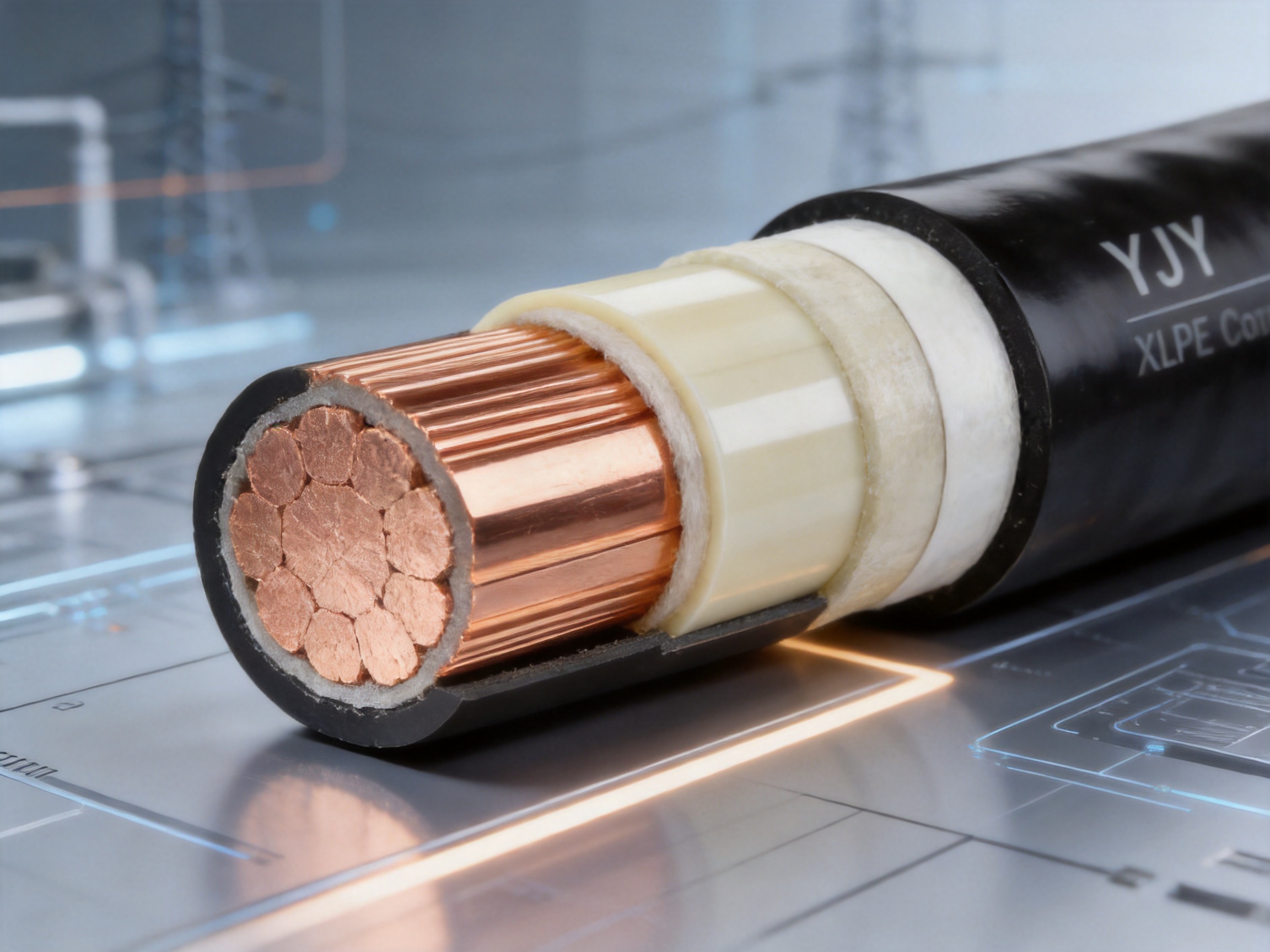
The insulation layer is made of cross-linked polyethylene, commonly known as XLPE. Through the cross-linking process, polyethylene molecules form a three-dimensional network structure that improves thermal stability, mechanical properties, and electrical performance. XLPE insulation enables the cable to operate continuously at 90℃ and withstand short-circuit conductor temperatures up to 250℃ for five seconds. Compared with thermoplastic insulation materials, XLPE has superior heat resistance and maintains stable insulation properties under higher electrical and thermal stress.
The copper conductor provides excellent conductivity, reducing electrical losses during transmission. Depending on the required size and design, the conductor may be compacted round or sector-shaped. Compact conductor construction helps reduce cable diameter, improve flexibility, and facilitate installation in limited spaces. For power distribution projects, this combination of pure copper conduction, XLPE insulation, and PE sheathing creates a cable structure that delivers high reliability over long service periods.
The YJY cable is available across a broad voltage range, including 0.6/1 kV, 1.8/3 kV, 3.6/6 kV, 6/10 kV, 8.7/15 kV, 12/20 kV, 18/30 kV, and 21/35 kV. This wide coverage allows it to serve different power transmission and distribution needs, from industrial low-voltage feeders to medium and high-voltage network applications. Cross-section options from 1.5 mm² to 1000 mm² further expand selection flexibility for engineers, contractors, and project owners.
The performance of a power cable depends on the quality and compatibility of its individual layers. YJY cable uses a structure optimized for stable electrical transmission and environmental durability. The conductor provides the conductive path, the insulation controls electrical stress, and the sheath protects the cable from external environmental hazards.
The copper conductor is selected for its high electrical conductivity, strong mechanical stability, and long service life. Copper has lower resistivity than aluminum, allowing better current carrying capacity for the same cross-sectional area. In systems where voltage drop, energy loss, and thermal performance matter, copper conductors are often the preferred choice. Compacted conductor options help improve current distribution and reduce the overall cable diameter, which can make cable laying easier and reduce route space requirements.
The XLPE insulation layer is one of the most important features of YJY cable. It provides high dielectric strength and strong resistance to partial discharge. For medium and high-voltage power networks, insulation reliability is critical because insulation breakdown can lead to outages, equipment damage, and safety risks. XLPE offers stable electrical characteristics over long operating periods, helping reduce failure probability in fixed power transmission systems.
The PE sheath is the defining advantage of YJY cable compared with PVC-sheathed alternatives. Polyethylene has superior water resistance and lower water absorption. This is especially important in direct-burial, underground, tunnel, and wet industrial environments. When a cable sheath absorbs moisture, the insulation system may eventually be affected, leading to electrical deterioration. A PE sheath helps protect the internal structure by forming a durable barrier against moisture penetration.
The cable may be supplied in unshielded YJY construction or in shielded and armored variants depending on project requirements. For applications involving higher mechanical stress, armored models such as YJY23 are recommended. Armoring improves resistance to compression, impact, and mechanical damage during installation and service. This is especially useful in direct-burial installations, heavy industrial environments, and areas where cables may experience pressure or external load.
Item |
Specification |
Conductor |
Copper conductor, compacted round or sector-shaped |
Cross-Section Range |
1.5 mm² to 1000 mm² |
Rated Voltage |
0.6/1 kV, 1.8/3 kV, 3.6/6 kV, 6/10 kV, 8.7/15 kV, 12/20 kV, 18/30 kV, 21/35 kV |
Test Voltage |
3.5U₀ AC for 5 minutes |
Insulation Material |
Cross-linked polyethylene, XLPE |
Sheath Material |
Polyethylene, PE, or flame-retardant polyethylene |
Long-Term Operating Temperature |
90℃ |
Short-Circuit Temperature |
Up to 250℃ for 5 seconds |
Insulation Resistance |
At least 1000 MΩ·km at 20℃ |
Minimum Bending Radius |
Single-core: 15 times cable outer diameter; multi-core: 12 times cable outer diameter |
Installation Temperature |
Recommended at -10℃ or above |
Water Resistance |
Excellent, suitable for humid environments |
Standard Sheath Color |
Black, customizable upon request |
Many power cable products on the market use PVC sheaths because PVC is common, economical, and easy to process. However, PVC is not always the ideal sheath material for outdoor, wet, or chemically aggressive environments. YJY cable improves upon this by adopting a PE sheath. Compared with PVC, PE has lower water absorption, stronger moisture resistance, and better resistance to many chemicals. This gives YJY cable a significant advantage in humid ground, utility tunnels, outdoor routes, chemical plants, and wastewater treatment facilities.
In direct-burial installations, the cable sheath may be exposed to soil moisture, salts, microorganisms, and variable temperature conditions. A cable with insufficient sheath resistance may age prematurely, crack, or allow moisture ingress. YJY cable’s PE sheath helps reduce those risks. Its weather resistance also makes it suitable for long-term outdoor exposure where ultraviolet radiation, ozone, rain, and temperature cycles are present. For infrastructure owners, this can mean fewer maintenance interventions and better lifecycle value.
Another advantage is environmental safety. The YJY cable design can be supplied as a low-smoke, halogen-free or flame-retardant PE option depending on project requirements. In the event of fire, low-smoke and halogen-free designs reduce smoke density and avoid corrosive halogen acid gas release. This matters in densely populated areas, transportation infrastructure, underground passages, and facilities where evacuation visibility and equipment protection are important. Traditional PVC materials may release corrosive gases during combustion, which can damage electronic equipment and increase hazards for personnel.
YJY cable also performs strongly in electrical stability. XLPE insulation has high dielectric strength and good resistance to partial discharge, making it suitable for higher voltage distribution systems. Some competitor cables may use insulation materials with lower heat resistance or weaker electrical aging performance. By using XLPE, YJY cable maintains reliable performance at elevated operating temperatures and supports stable transmission under long-term load conditions.
Lightweight and flexible construction is another practical benefit. Although power cables are never as flexible as small signal cables, compact conductor design and optimized layering allow YJY cable to be transported and installed more conveniently. Good bending performance helps installation teams route the cable through complex paths, cable trenches, tunnels, and equipment rooms. Reduced installation difficulty can shorten project schedules and lower labor costs.
Chemical corrosion resistance is a major differentiator in industrial applications. Facilities such as chemical plants, wastewater treatment plants, metallurgical plants, and coastal infrastructure may expose cables to acids, alkalis, salts, oils, or moisture-laden air. The PE sheath has strong resistance to many such media, helping preserve cable integrity where standard sheathed cables may deteriorate more quickly.
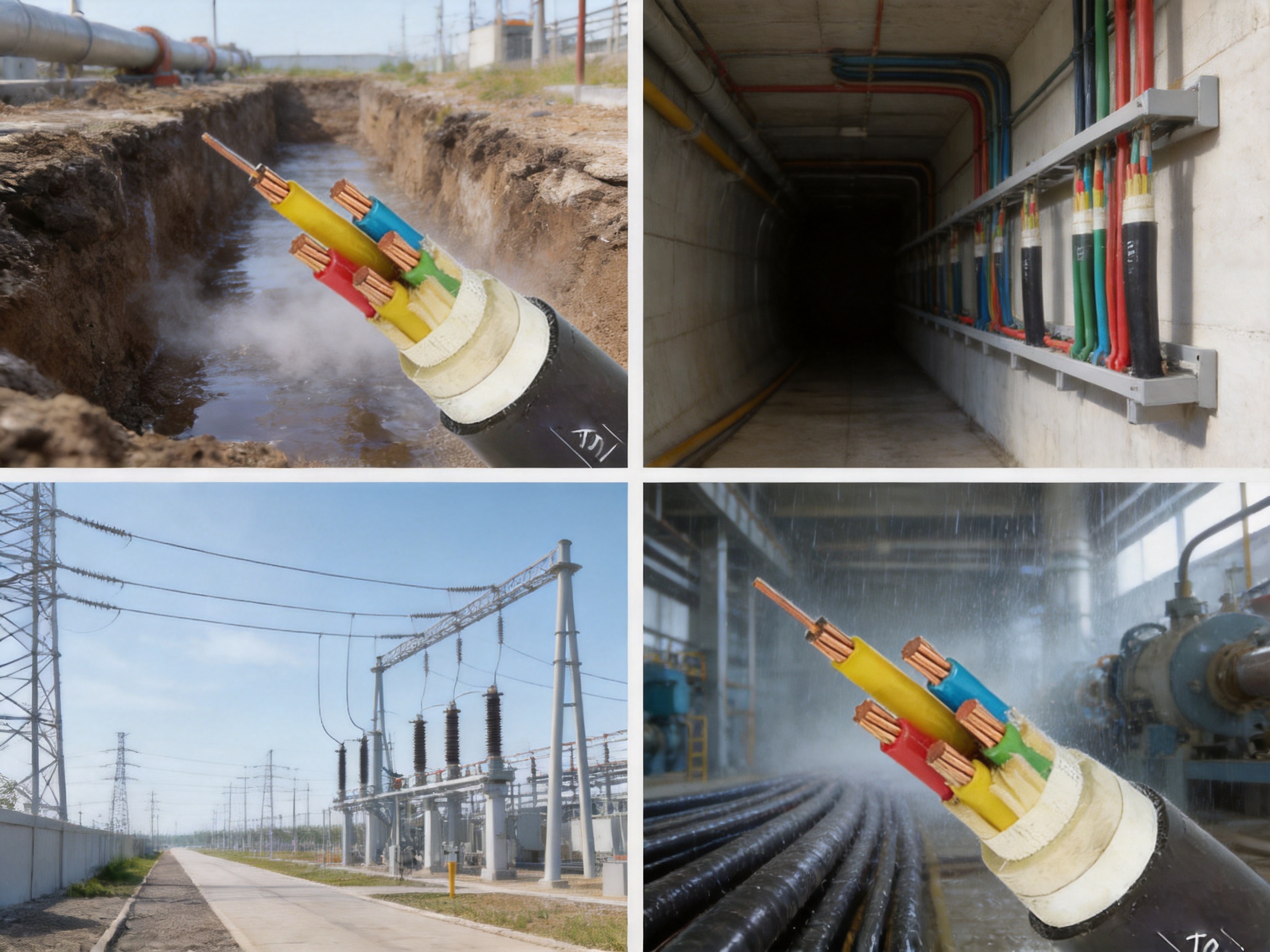
YJY environmental protection and safety high-voltage cable is mainly used in fixed power transmission systems. It is suitable for urban grids, outdoor distribution lines, direct-burial installations, tunnels, underwater installations, chemical plants, wastewater treatment plants, and other humid or corrosive locations. Its structure is especially appropriate where the cable route is difficult to access after installation and where long-term reliability is a core requirement.
Urban grid systems often require cables that can operate safely in underground ducts, power corridors, substations, and distribution networks. Moisture, heat accumulation, and limited maintenance access are common challenges. YJY cable addresses these requirements through its XLPE insulation and PE sheath. The insulation supports stable electrical performance, while the sheath protects the cable from moisture and environmental attack.
Outdoor distribution lines benefit from the cable’s weather resistance. PE sheathing offers resistance to ultraviolet radiation, ozone, and moisture, making it suitable for long-term exposure when installed under suitable conditions. For areas with seasonal rain, humidity, and temperature variation, this protection helps maintain service reliability.
Direct-burial applications are among the most important uses for YJY cable. Burial environments can be harsh because cable sheaths may be exposed to continuous moisture, soil pressure, insects, roots, and chemical elements in the ground. The PE sheath contributes strong water resistance and corrosion protection. Where mechanical stress is significant, an armored model should be selected to improve protection against external forces.
Tunnel installations require cables that can perform reliably in humid and enclosed spaces. Depending on tunnel type, additional flame-retardant or fire-resistant requirements may apply. YJY cable can be produced with flame-retardant PE options to meet relevant flame retardancy classes when specified. Project engineers should confirm the required fire performance level before selection.
Industrial facilities such as chemical plants and wastewater treatment plants often require cable systems resistant to aggressive media. Wastewater facilities may expose cables to moisture, gases, and corrosive substances. Chemical plants may involve acids, alkalis, solvents, or corrosive vapors. The PE sheath of YJY cable improves resistance to these environmental stresses, helping reduce premature sheath aging.
Underwater and highly humid installations need cables with excellent water resistance. While final suitability depends on detailed engineering conditions, YJY cable’s low water absorption sheath gives it an advantage over many PVC-sheathed alternatives. For underwater installation, additional structural protection, sealing, and project-specific cable design may be needed, and consultation with the manufacturer is recommended.
Power cable safety is not limited to normal electrical operation. Fire behavior, smoke generation, halogen content, and corrosive gas release are increasingly important in public infrastructure, industrial buildings, and urban projects. YJY cable supports environmental safety through its material system and optional flame-retardant or fire-resistant constructions.
Low-smoke and halogen-free design helps reduce hazards in fire conditions. When halogen-containing materials burn, they may release acidic and corrosive gases. These gases can harm people, reduce visibility, and damage sensitive equipment. A low-smoke, halogen-free cable design minimizes smoke and avoids corrosive halogen gas release, making it more suitable for densely populated or equipment-intensive environments.
PE also has environmental advantages in certain applications because of its chemical stability and resistance to moisture. A cable that lasts longer and resists degradation can reduce replacement frequency, material waste, and maintenance activity. Long service life is an important part of sustainable infrastructure. When cables fail prematurely, the resulting excavation, repair, replacement, and downtime can create significant environmental and economic burdens.
The cable may be supplied with flame-retardant performance meeting GB/T 19666 Class B or Class C when flame-retardant type is specified. Fire-resistant variants can be designed to meet GB/T 19666 Class N or Class J depending on requirements. Because fire performance requirements vary by project and region, customers should identify the applicable standard at the specification stage. The manufacturer can then recommend the appropriate structure and material formulation.
It is important to note that standard PE sheath has different fire behavior from PVC. PE has excellent water and corrosion resistance, but it is not automatically the best choice for indoor dense cable installations with strict flame-retardant requirements unless flame-retardant PE is specified. This is why professional cable selection is essential. The best cable is not simply the one with the highest single property; it is the one that best matches the full installation environment, safety requirements, voltage level, mechanical exposure, and regulatory standards.
Anhui Zhishang Cable Technology Co., Ltd. is located in Xuanzhou District, Xuancheng City, Anhui Province, China, a key node city in the Yangtze River Delta region. The company integrates research and development, production, and sales of wire and cable products. Its production base covers approximately 5,000 square meters and is equipped with 10 automated production lines. Monthly output can reach up to 10 million meters, supporting both standard product supply and customized project orders.
The company’s manufacturing approach emphasizes quality orientation, integrity, and stability. These values are especially important in cable production because small deviations in conductor quality, insulation thickness, extrusion temperature, shielding structure, or sheath uniformity can affect long-term performance. For YJY cable, consistent processing is essential to maintain insulation reliability, sheath integrity, and dimensional compliance.
The production process begins with conductor preparation. Copper conductor quality directly affects electrical conductivity, current carrying capacity, and cable heating performance. The company focuses on full-core, full-length, pure copper specifications for standard cable models, helping customers receive products that meet expected conductivity and performance requirements. Conductor stranding and compaction are controlled to achieve stable geometry and smooth surfaces, which are important for subsequent insulation extrusion.
Insulation extrusion is a critical stage. XLPE insulation must be applied uniformly around the conductor to ensure consistent dielectric strength. Variations in insulation thickness may create weak points where electrical stress becomes concentrated. Therefore, process control during extrusion, curing, and cooling is essential. Modern production equipment helps maintain dimensional accuracy and material consistency.
Sheath extrusion follows insulation and any required shielding or protective layers. For YJY cable, the PE sheath must be continuous, smooth, and properly bonded to the cable structure according to design requirements. Sheath thickness should comply with applicable standards such as GB/T 12706.1, depending on voltage and cross-section. Uniform sheath thickness helps provide reliable mechanical and environmental protection along the full cable length.
For shielded or armored cable variants, additional process stages are used. Copper tape shielding may be applied for certain models, while steel tape or other armor structures can be included when mechanical protection is required. These additional layers must be manufactured with controlled overlap, tension, and alignment to ensure electrical and mechanical function.
Quality control is integrated throughout production. Product testing may include conductor resistance checks, insulation resistance testing, voltage withstand testing, dimensional inspection, sheath integrity examination, and visual inspection. For the supplied technical parameters, test voltage is 3.5U₀ AC for five minutes, and insulation resistance is at least 1000 MΩ·km at 20℃. These tests help verify that the cable meets required electrical reliability before shipment.
One of the company’s important strengths is its ability to support OEM and ODM development. Many cable projects require more than a standard catalog product. A power project may need a specific voltage level, conductor size, sheath color, flame-retardant grade, armor structure, drum length, labeling method, or compliance documentation. The company’s technical engineers provide product selection guidance and tailor-made cable design solutions according to project needs.
The R&D and quality team includes engineers and technicians with over 10 years of industry experience. This experience allows the company to evaluate practical installation conditions, not only theoretical cable specifications. For example, when a customer asks for a direct-burial cable, the technical team may consider soil humidity, mechanical stress, expected service life, voltage level, route length, bending requirements, and whether armor is needed. When a customer asks for cable for a chemical plant, the team may focus on sheath chemical resistance, fire performance, and environmental exposure.
Customization based on customer drawings or samples is also supported. This is valuable for equipment manufacturers, engineering contractors, and distributors who need cable products aligned with existing systems or regional market requirements. By combining production capability with engineering support, the company helps customers reduce selection errors and obtain cable products that fit their actual application.
Standard products are stocked for fast shipment, while customized products typically require 7 to 20 days of lead time depending on complexity and order quantity. This balance between inventory and customization is important for project execution. Contractors often need fast delivery for standard cable sizes, while specialized infrastructure projects may require custom structures and documentation.
The company follows national standards, relevant international standards, and industry benchmarks. Its product offering is positioned for markets requiring CE and RoHS-related expectations, as well as cable solutions for international customers in the United States, Canada, Australia, Japan, and parts of Eurasia. For global projects, standard alignment, documentation, and consistent quality are essential to reduce procurement risk.
Contractors and engineers often compare cable products based on initial price, rated voltage, conductor material, installation difficulty, and expected service life. YJY cable offers a strong overall value proposition because it addresses multiple project concerns simultaneously. Its copper conductor supports efficient power transmission. Its XLPE insulation provides high temperature and electrical performance. Its PE sheath adds superior water and chemical resistance. Its available voltage and cross-section range gives flexibility for different network levels.
In projects where moisture is the main concern, YJY cable is often a better choice than PVC-sheathed cable. PE’s low water absorption helps protect the cable structure from long-term moisture exposure. This is especially relevant in underground, tunnel, outdoor, and wastewater environments. Moisture-related cable degradation can be costly because it may not be visible until electrical testing or failure occurs. Selecting a cable with improved water resistance from the beginning is a preventive strategy.
In projects where chemical exposure is expected, YJY cable again provides advantages. The sheath has strong resistance to acids, alkalis, and other chemical media. For industrial users, cable failure may interrupt production and create safety risks. A chemically resistant sheath helps protect power distribution continuity in aggressive environments.
In projects where environmental safety matters, YJY cable can be configured with low-smoke, halogen-free, flame-retardant, or fire-resistant properties. This allows project owners to balance outdoor durability with fire safety requirements. Instead of selecting a generic cable, engineers can specify the correct YJY variant for the installation environment.
In projects where installation complexity is high, compact structure and good bending performance can reduce difficulties. Cable installation in trenches, trays, ducts, and tunnels often requires routing around obstacles. A cable that is too stiff may increase pulling stress and installation time. YJY cable’s structure supports better handling compared with less optimized alternatives.
Finally, manufacturing reliability adds value beyond the cable design itself. A good specification is only useful if the product is manufactured consistently. Anhui Zhishang Cable Technology Co., Ltd. combines automated production lines, experienced engineers, quality control, and standard-based manufacturing. This gives customers confidence that the supplied cable can meet practical project demands.
Although YJY cable has strong environmental and electrical performance, correct selection and installation remain essential. Project engineers should confirm rated voltage, conductor cross-section, number of cores, armor requirement, shielding requirement, flame-retardant grade, installation route, ambient temperature, and mechanical stress before ordering. These factors determine the proper cable model and structure.
The minimum bending radius should be respected during installation. For single-core cables, the recommended minimum bending radius is 15 times the cable outer diameter. For multi-core cables, it is 12 times the cable outer diameter. Excessive bending may damage insulation, shielding, or sheath layers, reducing service life. Installation teams should plan cable routes with sufficient turning radius and avoid sharp edges.
The recommended installation temperature is -10℃ or above. Although PE has better low-temperature resistance than PVC, cable handling at very low temperatures still requires caution. If installation must occur in cold conditions, the cable may need preconditioning or special handling procedures to prevent mechanical stress damage.
For direct-burial applications, the PE sheath offers excellent water and corrosion resistance, but mechanical protection should be evaluated. If the cable may be exposed to stones, soil pressure, construction activity, vehicle loads, or other external forces, armored models such as YJY23 are recommended. Armor improves physical protection and reduces the risk of sheath damage.
For indoor dense installations with strict flame-retardant requirements, standard PE sheath may not be sufficient unless flame-retardant PE is specified. Engineers should identify the required fire rating and request the appropriate flame-retardant or fire-resistant construction. This is particularly important in buildings, tunnels, metro systems, data centers, and public facilities.
For underwater or highly humid applications, project-specific assessment is recommended. The cable’s water resistance is excellent, but sealing, joints, terminations, pulling tension, route protection, and long-term immersion conditions must be evaluated. Cable accessories should match the cable voltage and environmental requirements.
After installation, proper testing should be performed before energizing the system. Voltage withstand testing, insulation resistance testing, continuity checks, and visual inspection of terminations can help confirm installation quality. Proper storage before installation is also important. Cable drums should be protected from severe mechanical damage, improper stacking, and prolonged exposure to unsuitable conditions.
Quality assurance is central to reliable power cable supply. The company provides product test reports and warranty support for standard cable models. This helps customers verify that the supplied products meet agreed specifications. In cable procurement, documentation is especially important for engineering acceptance, project records, and long-term maintenance management.
Full-core, full-length, pure copper specifications help address common procurement concerns. In some markets, cable buyers worry about conductor undersizing, mixed materials, or inconsistent length. By emphasizing pure copper and full-length supply, the company aims to build trust and reduce customer risk. Accurate conductor size and cable length are essential for both electrical safety and project cost control.
The company’s modern production base and automated production lines support stable output and repeatability. Automation helps improve dimensional consistency and reduce process variation. For high-voltage and medium-voltage cables, consistency is critical because electrical stress may amplify small material or structural defects over time.
Experienced engineers support selection, customization, and technical communication. This is important because many customers are not simply buying a cable; they are solving a power transmission challenge. By understanding the installation environment and performance expectations, the technical team can recommend suitable structures, materials, and optional features.
The company’s international market experience also supports customers who need export-oriented cable supply. Different countries and regions may have different documentation, packaging, labeling, and standard expectations. A manufacturer with export experience can help reduce communication barriers and support smoother procurement.
YJY and YJV cables share the same basic XLPE insulation concept, but the sheath material is different. YJV generally uses PVC sheath, while YJY uses PE sheath. This difference determines many practical performance distinctions. YJV may be widely used in common indoor and general power distribution applications, while YJY is more suitable for humid, corrosive, outdoor, underwater, or direct-burial environments where sheath water resistance and chemical resistance are priorities.
Compared with PVC, PE has better water resistance and lower water absorption. Therefore, YJY is generally preferred where moisture exposure is significant. PE also offers strong weather resistance, including resistance to ultraviolet radiation and ozone. This makes YJY suitable for long-term outdoor environments when installed correctly. However, PVC may have better inherent flame-retardant behavior in some general forms, so flame-retardant PE should be selected for YJY when strict flame performance is required.
Compared with ordinary rubber or low-grade plastic sheathed cables, YJY cable is more suitable for fixed power transmission systems requiring higher voltage ratings and long-term insulation stability. The XLPE insulation provides stronger thermal and electrical properties than many basic thermoplastic insulation systems. This is why XLPE power cables are widely used in modern distribution networks.
Compared with aluminum conductor alternatives, copper conductor YJY cable offers better conductivity and often more compact current-carrying performance. Aluminum conductor cables may reduce material cost and weight in some applications, but copper remains a preferred option where conductivity, termination reliability, compactness, and long service performance are priorities.
Compared with non-armored cables, armored YJY variants provide added mechanical protection. The correct choice depends on the installation route. In protected ducts or trays, unarmored YJY may be sufficient. In direct burial or high mechanical stress locations, armored designs help protect the cable from impact and pressure. This flexibility allows customers to select an economical yet safe configuration.
The cost of a power cable should not be measured only by purchase price. A lower-cost cable may become expensive if it fails early, requires frequent maintenance, causes downtime, or requires replacement in a difficult installation route. YJY cable contributes lifecycle value through durability, moisture resistance, chemical resistance, and stable electrical performance.
In underground power networks, replacing a failed cable may require excavation, traffic control, labor, testing, and system shutdown. In industrial plants, cable failure may interrupt production and create safety concerns. In wastewater treatment facilities, cable replacement may involve difficult access and corrosive conditions. By selecting a cable designed for these environments, project owners can reduce long-term risk.
Stable electrical performance also improves system reliability. High dielectric strength and resistance to partial discharge help reduce insulation aging under electrical stress. The 90℃ long-term operating temperature provides thermal margin for demanding loads. The 250℃ short-circuit temperature limit for five seconds supports safety during fault conditions when protection systems operate correctly.
Weather resistance contributes to longer service life in outdoor environments. Exposure to sunlight, ozone, rain, and temperature variation can degrade some sheath materials. PE’s resistance to these conditions helps preserve sheath function. Chemical corrosion resistance further supports durability in industrial and coastal environments.
Because YJY cable is available in a wide range of cross-sections and voltage ratings, it can be integrated into various parts of a power distribution system. This makes procurement easier for projects that require multiple cable sizes under a consistent product family. The ability to customize sheath color, fire performance, armor structure, and other features adds additional project flexibility.
YJY cable is a copper conductor power cable with cross-linked polyethylene insulation and a polyethylene sheath. It is designed for fixed power transmission systems requiring stable electrical performance, strong water resistance, chemical corrosion resistance, and reliable long-term operation.
The main difference is the sheath material. YJV cable normally uses a PVC sheath, while YJY cable uses a PE sheath. The PE sheath gives YJY better water resistance, lower water absorption, stronger chemical resistance, and improved suitability for humid, corrosive, outdoor, or direct-burial environments.
Available rated voltages include 0.6/1 kV, 1.8/3 kV, 3.6/6 kV, 6/10 kV, 8.7/15 kV, 12/20 kV, 18/30 kV, and 21/35 kV. The correct voltage level should be selected according to the power system design and applicable standards.
It is commonly used in urban power grids, outdoor distribution lines, direct-burial installations, tunnels, underwater applications, chemical plants, wastewater treatment plants, and other humid or corrosive environments.
Yes, YJY cable is suitable for direct-burial applications because its PE sheath has excellent water and corrosion resistance. However, if the installation involves significant mechanical stress, armored variants such as YJY23 are recommended.
Yes, flame-retardant PE options can be specified. Flame-retardant versions can meet GB/T 19666 Class B or Class C depending on design. Fire-resistant variants can also be developed to meet Class N or Class J requirements.
The long-term operating temperature is 90℃. During short-circuit conditions, the conductor temperature can reach up to 250℃ for five seconds, provided that system protection operates correctly.
Copper provides excellent electrical conductivity, stable current carrying capacity, good termination performance, and long-term reliability. It helps reduce transmission losses and supports compact cable design compared with lower-conductivity alternatives.
Yes, Anhui Zhishang Cable Technology Co., Ltd. supports OEM and ODM customization based on project requirements, drawings, or samples. Custom options may include conductor size, voltage rating, sheath color, flame-retardant grade, armor structure, and packaging requirements.
Customers should confirm voltage level, conductor cross-section, number of cores, installation environment, bending radius, mechanical stress, flame-retardant requirements, shielding requirements, armor needs, and applicable standards. Technical consultation is recommended for demanding projects.
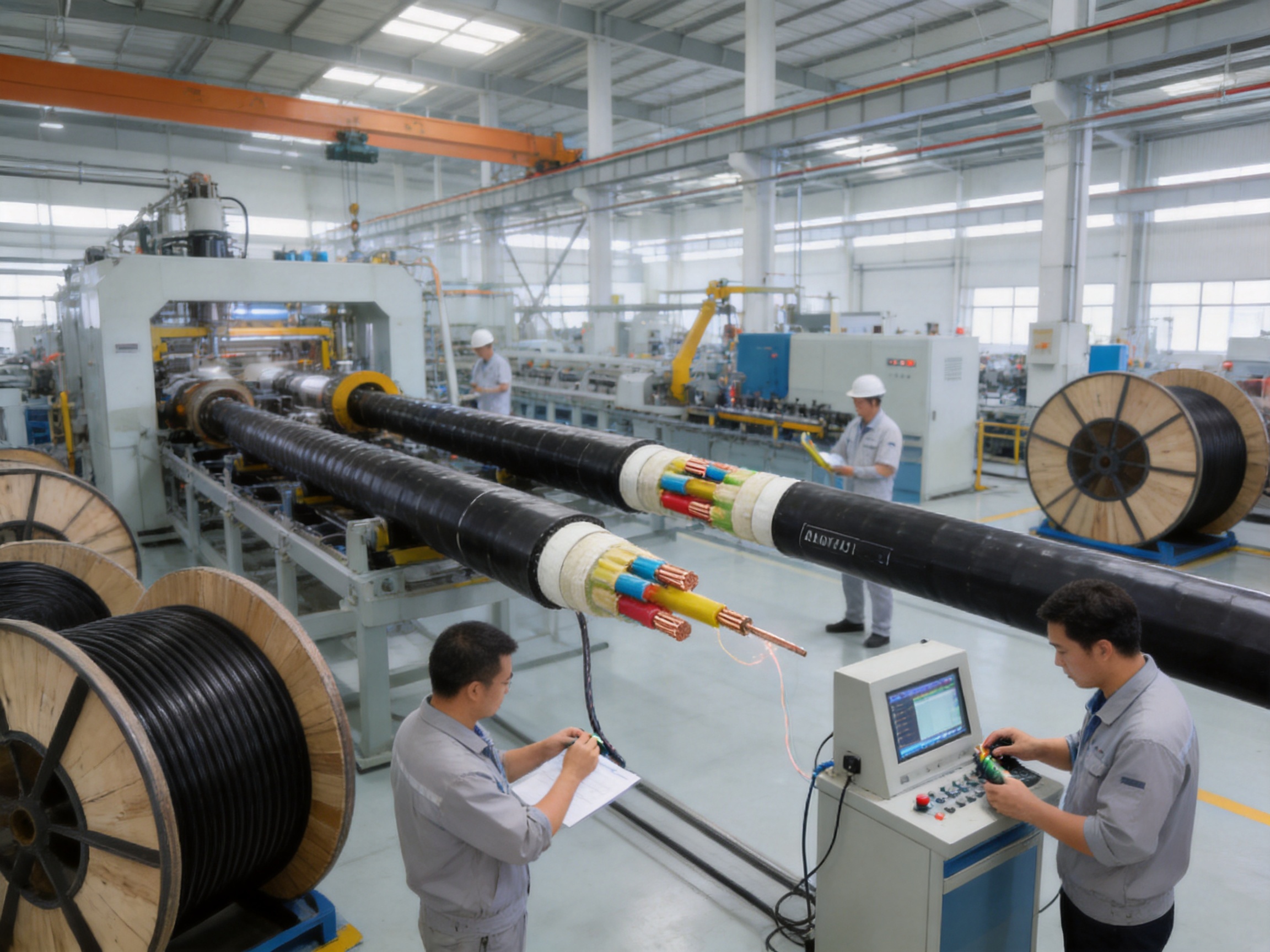
YJY environmental protection and safety high-voltage cable is a strong solution for power transmission projects where moisture resistance, chemical resistance, weatherability, electrical stability, and long-term reliability are essential. Its copper conductor supports efficient power transmission, its XLPE insulation provides high dielectric strength and thermal stability, and its PE sheath delivers superior protection against water and corrosive environments compared with conventional PVC-sheathed cables.
The cable is especially valuable for urban grids, outdoor distribution routes, direct burial, tunnels, underwater installations, chemical plants, wastewater treatment plants, and other demanding environments. With optional flame-retardant and fire-resistant designs, it can also be adapted to projects with higher safety requirements. Correct model selection remains important, especially where mechanical stress or strict flame performance is involved.
Anhui Zhishang Cable Technology Co., Ltd. strengthens the value of this product through modern manufacturing, automated production lines, experienced engineering teams, quality assurance, and OEM or ODM customization capability. With a production base of approximately 5,000 square meters, 10 automated production lines, monthly output up to 10 million meters, and a commitment to quality-oriented cable solutions, the company is positioned to support both standard supply and specialized power engineering projects.
For contractors, distributors, utilities, and industrial users, YJY cable offers more than a product specification. It provides a practical route to safer, cleaner, and more durable power transmission in harsh environments. When selected and installed correctly, it can reduce maintenance risk, improve lifecycle value, and support stable power infrastructure for years of service.
GB/T 12706.1, Power Cables with Extruded Insulation and Their Accessories for Rated Voltages from 1 kV up to 35 kV.
GB/T 19666, General Rules for Flame-Retardant and Fire-Resistant Wires and Cables.
IEC 60502, Power Cables with Extruded Insulation and Their Accessories for Rated Voltages from 1 kV up to 30 kV.
IEC 60228, Conductors of Insulated Cables.
IEC 60332, Tests on Electric and Optical Fibre Cables under Fire Conditions.
IEC 60754, Test on Gases Evolved during Combustion of Materials from Cables.
IEC 61034, Measurement of Smoke Density of Cables Burning under Defined Conditions.
Wire and Cable Engineering Handbook, Power Cable Materials and Design Principles.

We firmly believe that good cables are not only a competition of materials, but also a reflection of craftsmanship, quality, and responsibility.

Links
Product
Send Inquiry
No. 29 Sankeshu Road, Xuanzhou District, Xuancheng City, Anhui Province, China
+86-18621104555/+86-563-2622999
 Electrical Cable Manufacturer
OEM/ODM Wire and Cable Solutions
Electrical Cable Manufacturer
OEM/ODM Wire and Cable Solutions
 English
 Español
 عربى
عربى
 русский