
Get more content that can help you
Content
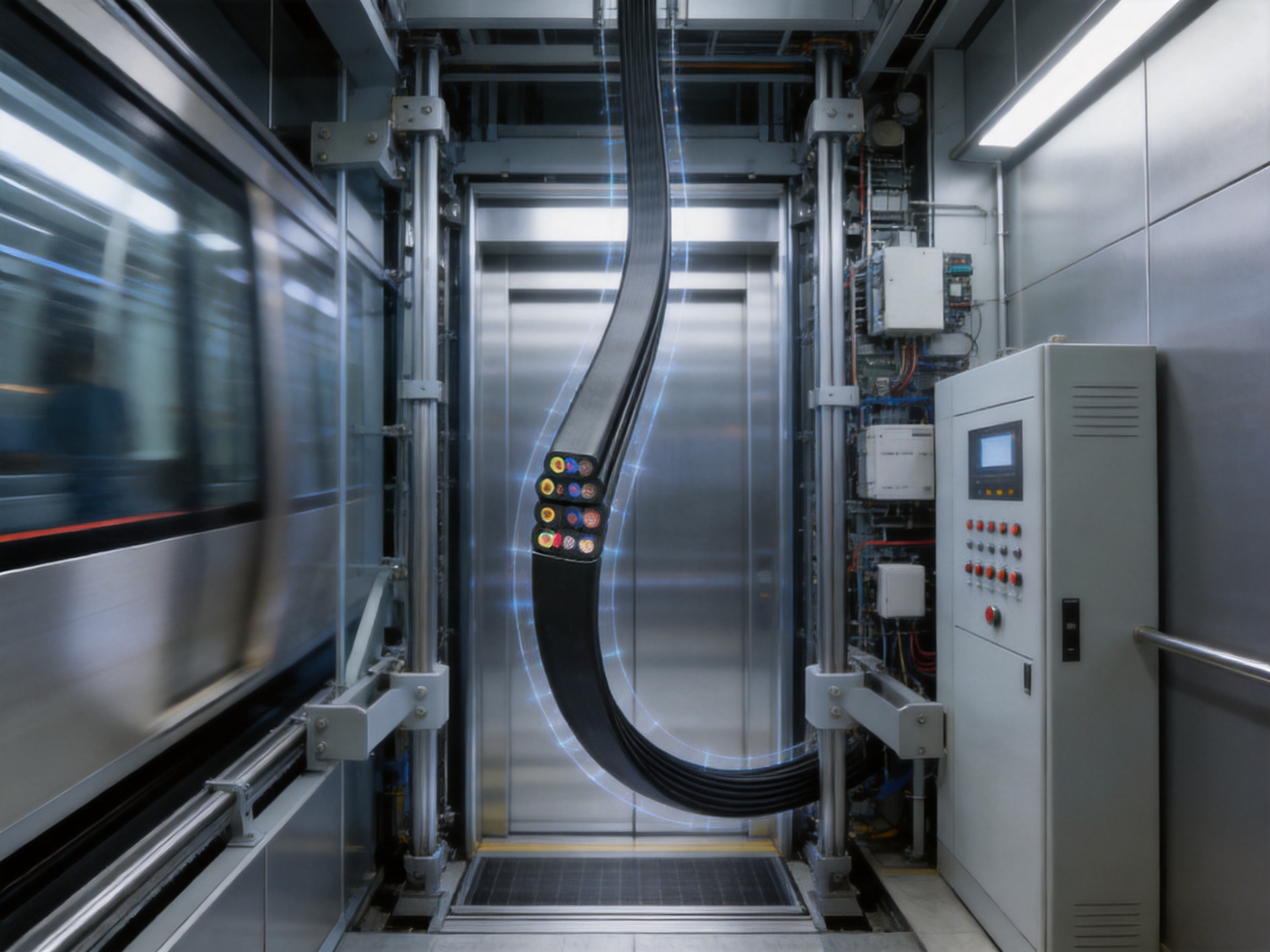
Modern elevator systems require more than ordinary electrical wiring. A traveling cable must continuously move, bend, twist, and withstand vibration while maintaining dependable power and signal transmission. It must also operate in a confined shaft environment where abrasion, oil, moisture, electromagnetic interference, and temperature changes can gradually damage ordinary cable constructions. For high-speed elevators, medical elevators, observation elevators, precision lifting equipment, and other demanding vertical transportation systems, cable selection directly affects safety, service continuity, maintenance cost, and overall equipment performance.
The TVVB-TV high-tolerance elevator traveling flat cable is designed for these conditions. It combines ultra-fine stranded copper conductors, a flat extra-flexible structure, PVC insulation, a tinned copper braid shield, and a durable PVC outer sheath. This construction is intended to support repeated movement while limiting electrical interference and protecting the cable from mechanical stress. With available configurations from 4 to 48 cores and conductor cross-sections from 0.3 mm² to 2.5 mm², the cable can be adapted to different elevator control, communication, monitoring, lighting, and auxiliary power requirements.
Unlike a standard fixed-installation cable, an elevator traveling cable is part of a moving mechanical system. Every journey of the elevator produces another bending cycle. Over months and years, these cycles can expose weaknesses in conductor stranding, insulation adhesion, filler design, shielding, and sheath flexibility. The TVVB-TV design addresses these issues by using fine-stranded annealed copper conductors and a flat arrangement that helps organize the cable during repeated travel. Its reinforced construction is intended to minimize fatigue, prevent premature conductor breakage, and maintain stable electrical characteristics throughout the service life.
This article examines the cable’s construction, electrical and mechanical properties, manufacturing advantages, competitive strengths, application range, installation considerations, and quality-control requirements. It also explains why a specialized elevator traveling cable can provide better long-term value than a general-purpose flexible cable selected only on the basis of price or nominal voltage.
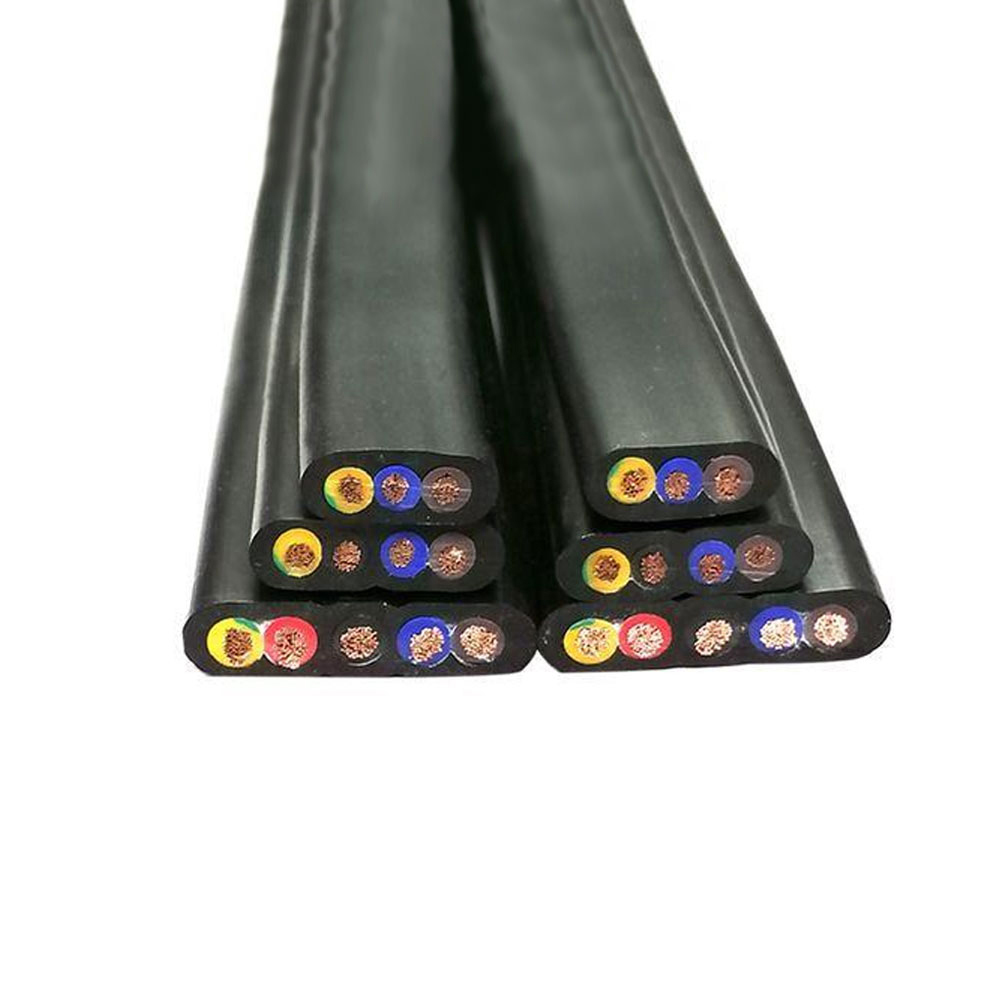
TVVB-TV High tolerance Elevator Traveling Flat Cable
An elevator traveling cable forms the moving connection between the fixed building installation and the elevator car. It commonly carries several types of circuits at the same time, including control signals, safety circuits, door control wiring, emergency communication, lighting, fan power, inspection functions, video surveillance, and data communication. Depending on the elevator design, the cable may be required to handle both low-voltage signals and higher-current auxiliary circuits within one organized flat assembly.
The cable moves as the elevator travels between floors. In a typical installation, it hangs in a loop beneath or beside the elevator car. The loop changes shape as the car moves, and the cable experiences repeated flexing, tension, torsion, vibration, and contact with nearby structures. The mechanical movement is not always perfectly uniform. Shaft tolerances, acceleration and deceleration, car vibration, temperature variation, and installation geometry can all influence the actual stress applied to the cable.
These operating conditions create several design challenges. A conductor that is suitable for fixed wiring may become work-hardened after repeated bending. A cable with a stiff sheath may resist the required loop movement and place excessive force on the conductors. A poorly supported shield may fracture or lose coverage. An inadequate filler system may allow cores to shift, resulting in uneven bending and localized stress. The TVVB-TV flat design is intended to manage these challenges as a complete cable system rather than treating flexibility as a single material characteristic.
Electrical performance is equally important. Elevator systems increasingly use electronic controllers, variable-frequency drives, digital monitoring, cameras, intercoms, access-control equipment, and networked diagnostic devices. These systems may be sensitive to electromagnetic interference generated by motors, switching devices, relays, and power circuits. A shielded traveling cable helps reduce the risk of interference entering sensitive signal circuits or radiating from the cable into nearby equipment.
For this reason, the cable must combine mechanical durability with electrical stability. A cable that bends well but has poor shielding may produce unreliable signals. Conversely, a cable with excellent shielding but insufficient flex life may fail mechanically. TVVB-TV is designed to balance these two requirements through fine copper stranding, a flat extra-flexible geometry, and a tinned copper braid shield with a stated coverage of at least 75 percent.
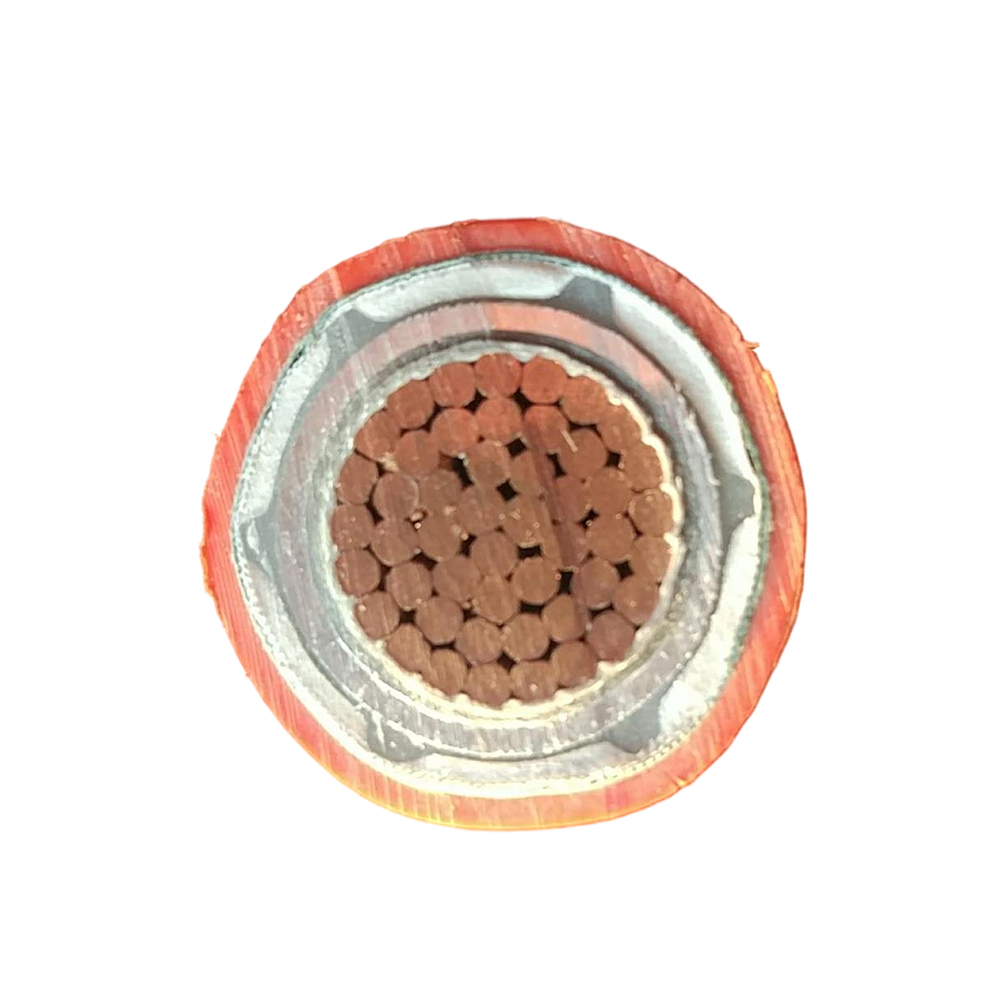
The conductors are made from stranded annealed copper. Annealing improves the softness and flexibility of copper, while ultra-fine stranding divides the conductor into many small wires. Compared with a solid conductor or a coarse-stranded conductor, an ultra-fine construction can distribute bending stress across numerous individual strands. This helps the conductor follow the changing radius of the elevator cable loop without concentrating stress at a small number of points.
High-purity copper also supports efficient current transmission and stable signal performance. The available cross-section range of 0.3 mm² to 2.5 mm² allows the cable to be configured for different circuit demands. Smaller conductors can be used for control, communication, and monitoring circuits, while larger conductors may be selected for lighting, auxiliary equipment, or other applications requiring greater current capacity. Final conductor sizing should always be based on the actual load, allowable voltage drop, installation method, ambient conditions, and applicable electrical codes.
The TVVB-TV cable uses a flat structure with 4 to 48 cores. A flat cable arrangement is particularly suitable for elevator traveling applications because it provides predictable orientation during movement. The cable can be installed and guided in a manner that supports consistent bending across its width. The flat profile also helps organize a large number of circuits in a relatively compact space, which is valuable in elevator shafts where clearance is limited.
The available cable width is approximately 10 mm to 70 mm, while cable thickness ranges from approximately 2.5 mm to 10 mm, depending on the number of cores and selected conductor cross-section. These dimensions allow system designers to select a configuration that balances circuit capacity, bend performance, available shaft space, and installation hardware.
Each conductor is insulated with polyvinyl chloride, with an insulation thickness range of approximately 0.3 mm to 0.7 mm. PVC is widely used in industrial cable construction because it provides electrical insulation, practical processing characteristics, mechanical protection, and cost efficiency. The outer sheath is also made from PVC, with a typical thickness of 0.8 mm to 1.5 mm.
The sheath protects the internal cores and shield from abrasion, moisture, oil, dust, and general environmental exposure. The product information identifies abrasion resistance and oil resistance as important performance features, including successful completion of an IRM 903 oil immersion test and a 10,000-cycle reciprocating abrasion test. These characteristics are valuable in elevator shafts and equipment spaces where lubricants, metal edges, guide components, and maintenance activity may expose the cable to harsh conditions.
PVC formulations can be adjusted for different performance objectives. Standard product specifications state an operating range of -20°C to +70°C. The supplied product information also references broader temperature adaptability for specialized configurations. Therefore, users requiring operation outside the standard -20°C to +70°C range should confirm the precise formulation, certification, and test report for the proposed cable before ordering.
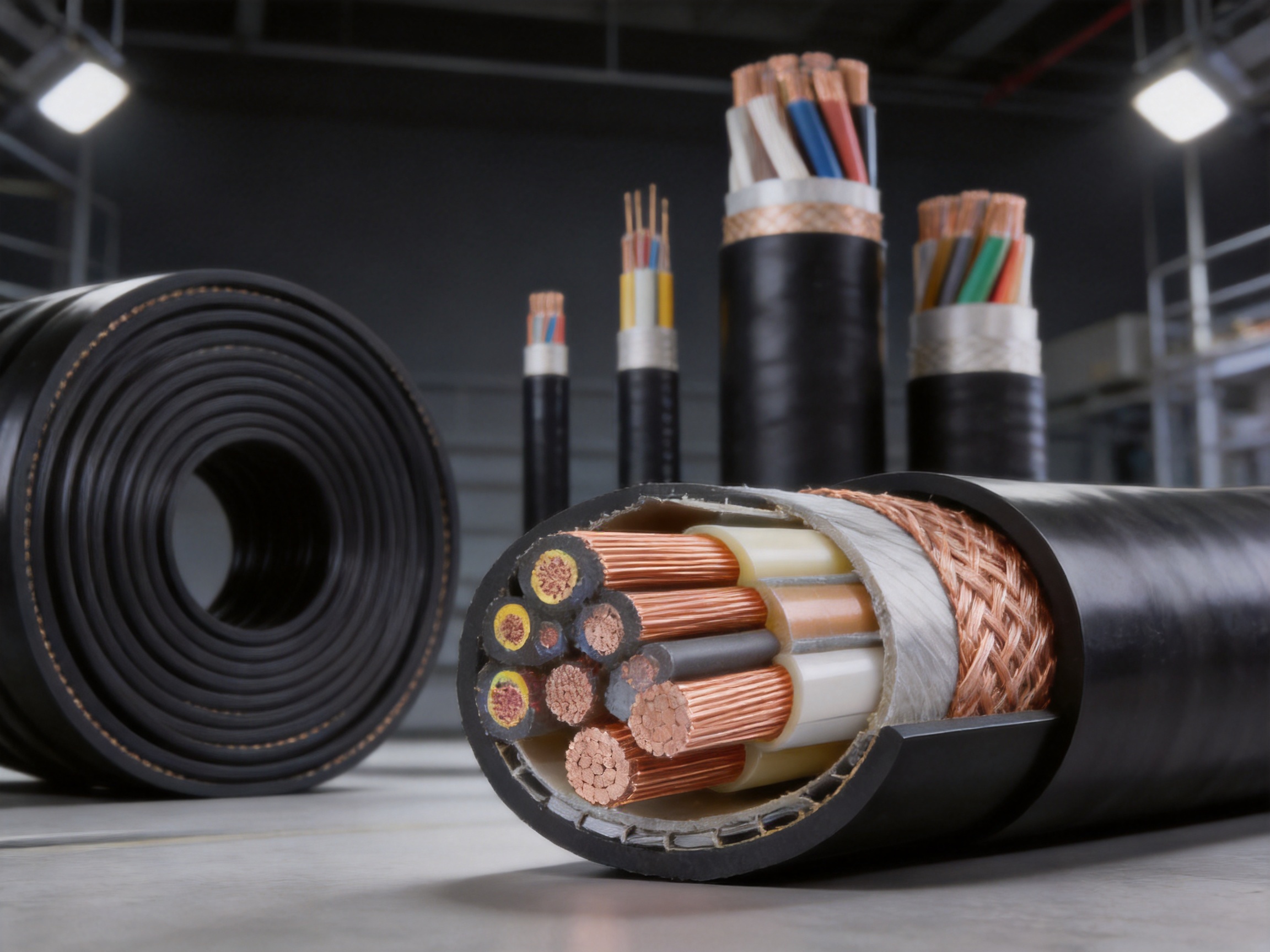
The shield uses tinned copper braid with coverage of at least 75 percent. The braid provides a conductive barrier around the insulated cores and helps reduce electromagnetic interference. Tinning improves the copper surface’s resistance to oxidation and supports reliable termination in environments where moisture or chemical exposure may be present.
A braided shield is also appropriate for moving applications because it can accommodate a degree of flexing without behaving like a rigid metallic tube. The stated shielding attenuation factor is no greater than 0.8 at 1 MHz, indicating a defined shielding performance target for the cable configuration. Actual system performance will depend on grounding practice, connector design, shield termination, circuit layout, and the frequency characteristics of the interfering source.
For applications with especially demanding signal-integrity requirements, a dual-layer shield combining foil and tinned copper braid may be considered as a customized construction. The standard technical table identifies the tinned copper braid as the shielding structure, so the precise shielding arrangement should be confirmed against the purchase specification. This distinction is important when the cable is intended for high-definition video, sensitive data, or industrial communication networks.
The cable includes a reinforced filler and structural design intended to support repeated movement. Internal organization is important because the cores must move together rather than rubbing unpredictably against each other. A well-balanced structure reduces localized pressure, helps maintain the cable’s flat profile, and improves resistance to fatigue during continuous operation.
The minimum bending radius is specified as at least four times the cable thickness for mobile installation and at least three times the cable thickness for fixed installation. The mobile-installation value should be treated as a minimum design reference rather than a target operating radius. Where space permits, a larger radius generally reduces mechanical stress and can support longer service life. The cable should not be folded sharply, twisted during installation, or forced into a radius smaller than the manufacturer’s specified limit.
| Item | Specification | Design Significance |
|---|---|---|
| Conductor | Stranded annealed copper, ultra-fine stranding | Supports repeated bending and stable conductivity |
| Cross-section | 0.3 mm² to 2.5 mm² | Allows selection for control, signal, lighting, and auxiliary circuits |
| Number of cores | 4 to 48 cores | Supports compact multi-circuit elevator wiring |
| Rated voltage | 300/500 V | Suitable for specified low-voltage elevator circuits |
| Test voltage | 2 kV AC for 1 minute | Verifies insulation withstand capability |
| Insulation | PVC, approximately 0.3 mm to 0.7 mm | Provides electrical separation and core protection |
| Shield | Tinned copper braid, coverage at least 75% | Reduces electromagnetic interference |
| Sheath | PVC, approximately 0.8 mm to 1.5 mm | Protects against abrasion and environmental exposure |
| Temperature range | -20°C to +70°C standard specification | Supports common indoor and industrial elevator environments |
| Minimum mobile bending radius | At least 4 times cable thickness | Provides a reference for moving installation design |
| Bending life | At least 10 million cycles under elevator operating conditions | Indicates suitability for repetitive movement |
| Cable thickness | Approximately 2.5 mm to 10 mm | Depends on core quantity and conductor size |
| Cable width | Approximately 10 mm to 70 mm | Depends on core quantity and conductor size |
The most important advantage of a specialized elevator cable is its ability to withstand repeated bending. The stated bending life of the TVVB-TV cable is at least 10 million cycles under elevator operating conditions. This performance target reflects the fact that elevator cables are not consumed by a single static load; they are exposed to a large number of relatively small movements over an extended period.
Ultra-fine stranding contributes to this result by allowing the copper conductor to flex more uniformly. The flat geometry helps the cable maintain a controlled bending direction, while the flexible insulation and sheath are intended to reduce resistance to movement. Together, these features can reduce the likelihood of conductor fatigue, insulation cracking, shield deterioration, and sheath splitting.
Elevator cables may experience more than simple forward-and-back bending. Differences in mounting position, car movement, guide alignment, and cable loop behavior can introduce twisting or torsional forces. The TVVB-TV structure is specified as being capable of withstanding complex torsional movements. This is particularly relevant in high-speed elevators and installations where the cable loop is influenced by acceleration, vibration, or limited shaft clearance.
Torsion resistance depends on the complete installation, not just the cable. The cable should be suspended and guided in accordance with the elevator manufacturer’s instructions. Excessive twisting during storage, pulling, or termination can create permanent stress before the cable is placed into service. Proper handling therefore complements the cable’s structural design.
Elevator shafts may include steel structures, guide components, brackets, counterweight equipment, and maintenance materials. If a cable rubs repeatedly against a hard edge, even a flexible cable can eventually suffer sheath damage. The TVVB-TV outer sheath is designed for abrasion resistance, with the supplied information indicating successful performance in a 10,000-cycle reciprocating abrasion test.
Oil resistance is also important. Lubricating oils, greases, and maintenance fluids may be present near elevator machinery. The stated passage of the IRM 903 oil immersion test indicates that the sheath has been evaluated against a recognized oil-resistance method. In practice, users should still prevent unnecessary contact with chemicals and should verify compatibility when the cable will be exposed to unusual solvents, cleaning agents, hydraulic fluids, or aggressive industrial substances.
Pure or high-purity copper conductors provide low electrical resistance and consistent conductivity. This supports reliable delivery of power to elevator lighting, fans, inspection devices, and auxiliary equipment. For control and communication circuits, stable conductor characteristics can help maintain signal quality and reduce unwanted voltage fluctuations.
Conductor resistance and allowable current depend on cross-section, conductor temperature, grouping, ambient conditions, and installation method. The cable should therefore be selected according to the specific circuit design rather than assuming that all cores can carry the same current simultaneously. A detailed product drawing and electrical datasheet should be requested for final engineering approval.
Elevator systems often contain sources of electrical noise. Variable-frequency drives, motor switching, relays, contactors, braking systems, and power converters can generate electromagnetic disturbances. These disturbances may couple into nearby communication or control circuits, causing unstable signals, false alarms, image interference, communication errors, or controller malfunctions.
The tinned copper braid shield provides a path for induced interference to be controlled and diverted when correctly terminated. At least 75 percent braid coverage offers a practical balance between shielding and flexibility. Because the cable is intended for moving service, the braid must remain sufficiently flexible to accommodate bending without rapid fatigue.
Shielding performance is not determined by the cable alone. The shield should be connected according to the system’s grounding design, and the termination should be mechanically secure. Poorly prepared shield ends, long unshielded pigtails, or inconsistent grounding can reduce the benefit of the braid. In systems carrying sensitive video or data signals, cable routing should also separate signal and high-power circuits where possible.
The multi-core format allows one traveling cable to serve several elevator functions in an organized assembly. A single cable can be configured for control circuits, communication, alarm systems, car lighting, inspection circuits, door signals, and monitoring devices. This reduces the need for numerous individual flexible wires and can simplify installation, identification, maintenance, and replacement.
For signal-intensive applications, such as high-definition surveillance and intelligent transportation systems, cable selection should consider impedance, bandwidth, attenuation, connector compatibility, and transmission distance. The product information identifies stable mid-to-long-distance transmission capability for high-definition signals, including a stated distance of up to 120 meters in suitable configurations. This should be confirmed through application-specific testing because actual performance depends on the signal protocol, frequency, connectors, grounding, installation environment, and the exact cable construction.
Many general-purpose flexible cables are designed for occasional movement, portable equipment, or drag-chain service. Although they may appear flexible when handled by hand, they are not necessarily engineered for the distinctive suspended-loop movement of an elevator. Elevator traveling cables must manage repeated vertical travel, changing loop geometry, tension, vibration, and possible torsion. The TVVB-TV product is specifically developed around these conditions.
Its flat profile, ultra-fine conductors, reinforced internal structure, and stated 10-million-cycle bending life distinguish it from ordinary flexible building cable. This purpose-built approach can reduce the risk of early failures that occur when a fixed cable or basic flexible cable is used in a dynamic elevator installation.
Elevator shafts are compact environments. A round multi-core cable may occupy more radial space or be more difficult to arrange in a controlled loop. The flat TVVB-TV construction can provide a compact profile and a predictable orientation. This may simplify mounting and reduce interference with nearby elevator components, particularly when many circuits are required.
The product is available in widths from approximately 10 mm to 70 mm, allowing designers to match the cable to available space. A suitable width-to-thickness ratio can also help control the bending direction and reduce uncontrolled twisting.
In some lower-cost alternatives, mechanical flexibility and shielding are treated separately. A cable may have a shield but lack adequate flex-life construction, or it may be flexible but provide limited protection against electromagnetic interference. TVVB-TV integrates a flexible multi-core structure with a tinned copper braid shield and an abrasion-resistant sheath.
This integration is valuable in modern elevators where signal reliability and mechanical durability are closely connected. The shield must survive the same repeated motion as the conductors, and the sheath must protect both during movement. A balanced structure can help prevent a situation in which electrical performance remains acceptable at installation but deteriorates after extended operation.
The range of core counts and conductor sizes supports a broad set of design requirements. Customers can specify the number of cores, cross-section, cable dimensions, marking, color arrangement, shielding requirements, and other construction details according to the elevator system. OEM and ODM development based on drawings or samples can be particularly useful for elevator manufacturers, control-panel builders, modernization contractors, and equipment integrators.
Customized development also allows the cable to be matched to unusual shaft dimensions, special communication requirements, higher circuit density, or a particular connector system. The final design should be documented through a technical specification that identifies all electrical, mechanical, environmental, and testing requirements.
The initial purchase price is only one part of cable cost. A cable failure can result in elevator downtime, service calls, troubleshooting labor, replacement material, access restrictions, and potential disruption to building occupants. In hospitals, commercial buildings, hotels, transportation facilities, and industrial sites, the indirect cost of an interruption can be significant.
A durable traveling cable can reduce the frequency of replacement and maintenance. Its shielded construction can also help prevent intermittent communication or control problems that are difficult to diagnose. By combining practical material selection, scalable configurations, and long bending life, the TVVB-TV cable is positioned as a cost-effective alternative to premium specialized cables with similar performance objectives.
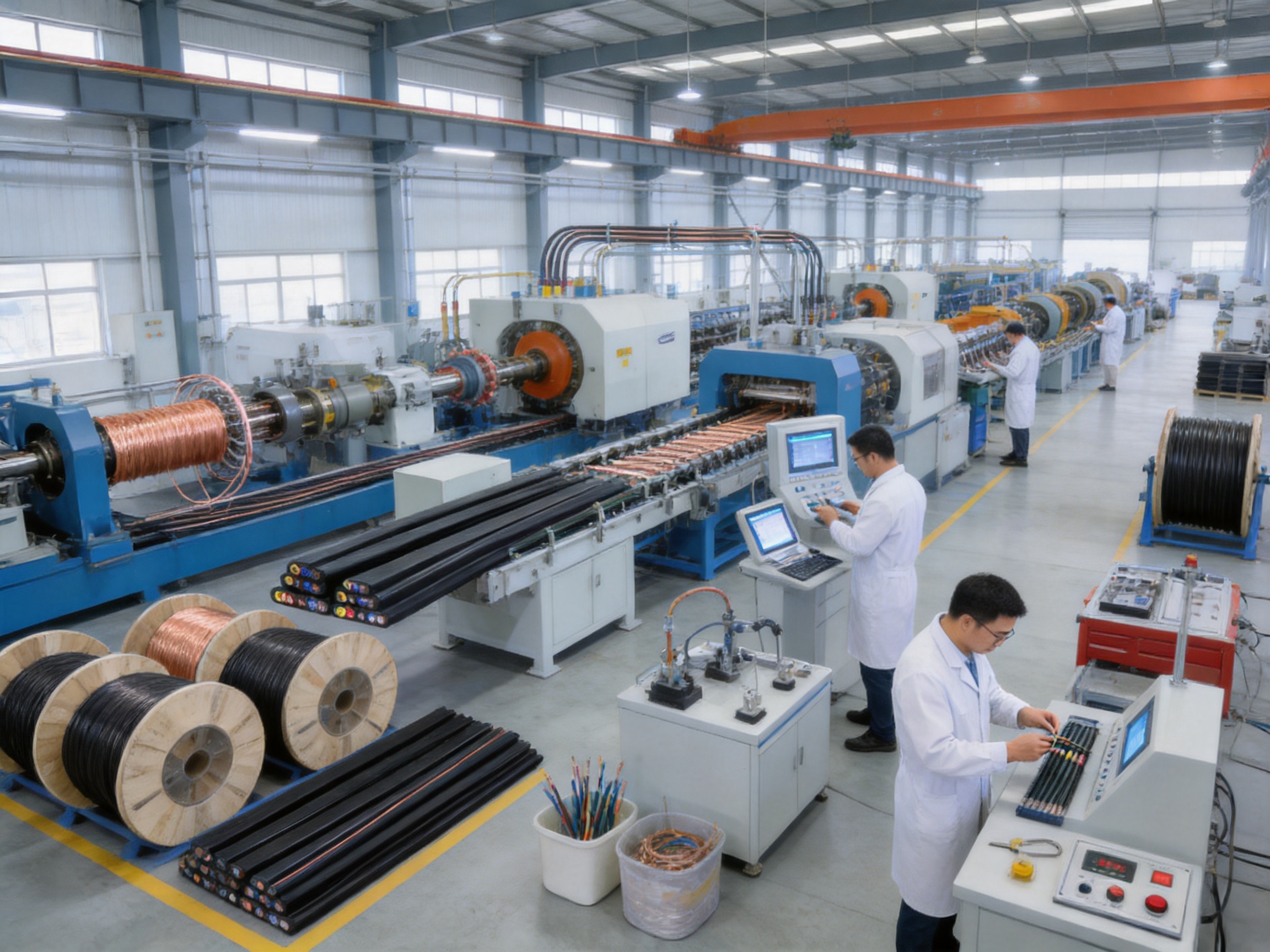
Anhui Zhishang Cable Technology Co., Ltd. integrates research and development, manufacturing, quality management, and sales. This integrated model allows product requirements to move directly between engineering and production teams. For specialized cables such as elevator traveling cables, close coordination is important because performance depends on the relationship between conductor stranding, insulation extrusion, filler placement, shielding, sheathing, and final dimensional control.
The company operates a modern production base of approximately 5,000 square meters and employs more than 50 people, including quality engineers and research and development technicians with more than 10 years of industry experience. This combination of production infrastructure and experienced technical personnel supports both standard manufacturing and customized cable development.
More than 10 automated production lines are used across the company’s manufacturing operations. Automation can improve repeatability in conductor drawing, fine stranding, insulation extrusion, cabling, shielding, sheath extrusion, printing, and take-up processes. For a flat traveling cable, dimensional consistency is especially important because variations in thickness, width, or internal balance can affect bending behavior.
Automated equipment also supports stable production speed and more consistent process control. This does not eliminate the need for human inspection. Instead, it allows skilled engineers and quality personnel to focus on process verification, material control, sampling, testing, and continuous improvement while automated systems perform repetitive operations with controlled parameters.
The company reports a monthly output capacity of up to 10 million meters across its product range. This capacity supports both project-scale orders and recurring supply programs. Standard cable models may be stocked for faster shipment, while customized products typically require a lead time of approximately 7 to 20 days, depending on design complexity, materials, quantity, testing, and production scheduling.
Reliable production capacity is important for elevator manufacturers and maintenance providers that need consistent cable supply across multiple projects. It can also support replacement programs in which the same construction must be delivered repeatedly over an extended period. Before ordering, customers should confirm current stock, minimum order quantity, production lead time, packaging requirements, and delivery schedule.
The company emphasizes full-core, full-length, pure copper specifications for standard cable models, together with product test reports and warranty support. Full-length quality control is important in traveling cable production because a defect at any point along a long cable can create installation waste or lead to a field failure after the cable is installed.
Typical quality-control activities may include incoming inspection of copper and polymer materials, conductor resistance checks, insulation thickness measurement, spark testing during extrusion, dimensional inspection, shield coverage verification, high-voltage testing, insulation resistance testing, tensile testing, abrasion evaluation, oil-resistance testing, and flex-life validation. The exact inspection plan should be confirmed in the product quality documentation supplied with the order.
Customers may request development based on drawings, samples, performance targets, or equipment requirements. Technical engineers can assist with product selection and cable design. This service is valuable when a standard configuration does not fully match a specific elevator controller, communication architecture, mounting system, or shaft environment.
During the engineering stage, customers should provide information such as the required core count, conductor cross-section, voltage, current, signal type, operating speed, travel length, minimum loop radius, temperature range, oil exposure, installation method, shielding requirements, and applicable standards. Clear technical input reduces the risk of selecting a cable that is electrically suitable but mechanically unsuitable for the elevator’s actual movement pattern.
High-speed elevators place greater demands on traveling cables because acceleration, deceleration, vibration, and loop movement occur more rapidly. The extra-flexible structure and torsion resistance of TVVB-TV are intended to support these conditions. Shielding is also beneficial where high-speed motor drives and electronic controllers operate near communication circuits.
Medical elevators often operate frequently and may be used continuously throughout the day. Reliability is essential because service interruptions can affect the movement of patients, staff, equipment, and supplies. The cable’s multi-core configuration can support control, alarm, communication, monitoring, and auxiliary functions within a compact assembly.
Observation elevators may require additional communication, lighting, camera, and display circuits. Their operating environment can also involve temperature variation and exposure to sunlight in portions of the shaft or enclosure. A shielded cable with a durable sheath can help support stable operation, while customized core arrangements can accommodate additional equipment.
Precision lifting systems used in manufacturing, logistics, laboratories, and automated facilities often require reliable signal transmission during movement. Intermittent faults can interrupt positioning, safety monitoring, or process coordination. The cable’s fine-stranded conductors and shielded construction make it suitable for applications requiring repeated bending and improved interference control.
Although the product is designed primarily for elevator traveling systems, its flexible flat structure can also be considered for selected mobile equipment, vertical lifting platforms, automated machinery, and industrial control installations. Suitability depends on the movement pattern. Applications involving continuous drag-chain travel, severe torsion, or special chemical exposure should be evaluated separately rather than assumed to be identical to elevator service.
Begin by listing every circuit that will be carried by the traveling cable. Identify control circuits, safety circuits, lighting, ventilation, emergency communication, video, data, access control, and any other auxiliary functions. Determine the voltage and current for each circuit, as well as whether signal pairs or individually shielded groups are required.
Select the conductor cross-section according to the actual current capacity and voltage-drop requirements. The available range is 0.3 mm² to 2.5 mm², but not every size is appropriate for every circuit. Higher-current loads may require larger conductors or separate power cables, while sensitive communication circuits may require special pair construction or characteristic impedance control.
Measure the travel length, cable suspension position, loop height, mounting points, guide arrangement, and available clearance. Confirm that the selected cable width and thickness are compatible with the brackets, clamps, guide devices, and shaft geometry. Calculate the minimum bending radius using the actual cable thickness and maintain at least four times the cable thickness for mobile installation unless a more conservative requirement is specified.
Do not allow the cable to rub against sharp edges, moving counterweight components, or unprotected brackets. The cable should be supported so that its weight does not create excessive tension at the termination. The loop should be allowed to form naturally without forced twisting or sharp flattening.
For shielded control and communication circuits, define the grounding method before installation. The braid should be terminated securely and continuously according to the elevator control system’s electromagnetic compatibility design. Avoid unnecessarily long exposed shield sections near connectors. If different circuits require separate shielding arrangements, confirm whether a standard overall braid is sufficient or whether a customized construction is necessary.
Store the cable on a suitable reel or drum in a clean, dry environment. Protect it from direct sunlight, water, chemicals, crushing loads, and sharp objects. Do not pull the cable from a coil in a way that creates kinks. During installation, use a controlled payout method and prevent the cable from twisting around itself.
Before energizing the elevator, inspect the complete cable route and check for sheath cuts, flattening, abnormal torsion, or contact with moving parts. Electrical tests should include conductor continuity, insulation resistance, and any applicable high-voltage or shield-continuity checks. The installed cable should also be observed through a complete travel cycle at low speed before normal operation begins.
For an elevator cable, technical documentation should be considered part of the product. Buyers should request a datasheet identifying the conductor material, core count, cross-section, insulation and sheath materials, rated voltage, test voltage, temperature range, bending radius, shield coverage, dimensions, and applicable tests.
The supplied specifications state a rated voltage of 300/500 V and a test voltage of 2 kV AC for one minute. They also state an insulation resistance of at least 20 MΩ·km at 20°C, a tensile strength of at least 15 N/mm², a bending life of at least 10 million cycles, and defined oil and abrasion resistance. These values provide a basis for engineering review, but the final product documentation should confirm the values for the exact ordered configuration.
Customers working on regulated elevator projects may also require evidence of compliance with national standards, international standards, or project-specific requirements. Depending on the destination market and application, documentation may include material declarations, test reports, quality certificates, flame-performance information, environmental declarations, and product warranty terms. CE and RoHS-related requirements may be relevant to certain export projects, but the applicable conformity route should be confirmed for the complete elevator system and destination country.
Quality consistency is especially important when the cable is supplied for multiple elevator models. A repeatable production process helps maintain similar dimensions, electrical characteristics, and bending behavior from one batch to another. Batch identification and traceability can also simplify future maintenance, replacement selection, and investigation of any field issue.
The performance of a flexible traveling cable is created through a sequence of controlled manufacturing operations. Copper must be drawn and stranded without damaging the individual wires. Insulation must be extruded with uniform thickness and secure adhesion. Core tension must be controlled during assembly so that the cable remains balanced. Shielding must achieve the required coverage without becoming excessively stiff. The outer sheath must be formed smoothly around the internal structure while maintaining the specified dimensions.
Small process variations can have a large effect on a moving cable. Excessive conductor tension may reduce flexibility. Uneven insulation can affect electrical safety or create a weak point during bending. Poor filler distribution may allow internal movement. Inadequate braid coverage can reduce shielding performance. A sheath that is too hard may increase bending force, while one that is too soft may provide insufficient abrasion resistance.
For this reason, advanced manufacturing is not limited to having modern machinery. It also includes process recipes, material control, equipment calibration, operator training, in-process testing, final inspection, and feedback from application results. The company’s combination of automated production lines, experienced technical personnel, and integrated quality management supports this type of controlled manufacturing approach.
Continuous improvement is particularly valuable for specialty cables. Feedback from elevator manufacturers, installers, and maintenance teams can identify issues related to loop behavior, termination, installation speed, environmental exposure, or long-term bending. Engineering teams can then evaluate changes to conductor stranding, filler construction, shielding, sheath formulation, or dimensional design.
Elevator cable selection also has an environmental dimension. A cable that lasts longer can reduce replacement frequency, material consumption, transportation, and maintenance waste. Durable PVC sheathing, abrasion resistance, oil resistance, and extended bending life can all contribute to a longer service interval when the cable is correctly selected and installed.
The company emphasizes green manufacturing and responsible production practices. Environmental performance should be evaluated through the complete product life cycle, including raw-material sourcing, energy use, production waste, packaging, service life, and end-of-life handling. Customers with specific environmental requirements should request the relevant material declarations and confirm restrictions on substances, halogens, flame performance, or recycling procedures.
Long-term durability is often one of the most practical forms of sustainability in industrial equipment. Preventing premature cable failure avoids emergency replacement and helps keep elevator systems operating efficiently. However, sustainability should not replace technical verification. The cable must still satisfy the electrical, mechanical, fire-safety, and regulatory requirements of the intended project.
When requesting a quotation, customers should provide a complete specification rather than only stating “elevator flat cable.” Important details include the number of cores, conductor cross-section, rated voltage, cable length, shield type, sheath color, marking, operating temperature, travel distance, elevator speed, minimum bending radius, installation orientation, and expected operating cycles.
It is also useful to identify whether the cable will carry power and sensitive signals together. If it will, the customer should describe the signal types and electromagnetic environment. High-definition video, network communication, encoder feedback, emergency communication, and industrial bus signals may require different electrical constructions. A standard overall braid may be suitable for some systems, while others may require individually shielded pairs, foil-plus-braid shielding, drain wires, impedance control, or separate cable assemblies.
Packaging and delivery should be planned around the installation length. Long continuous lengths can reduce the number of joints and simplify installation, but they require appropriate reels, transport protection, and handling equipment. Standard products may be available for quick shipment, while customized constructions generally require approximately 7 to 20 days of production lead time. The final schedule should be confirmed before project release.
Even a high-performance traveling cable benefits from periodic inspection. Maintenance personnel should look for sheath cuts, flattening, discoloration, exposed braid, unusual stiffness, excessive loop movement, and contact with nearby components. Any change in cable behavior should be investigated before it develops into an electrical fault.
Insulation resistance and continuity can be tested during planned maintenance. For shielded cables, shield continuity and termination condition should also be checked. If a cable shows repeated intermittent faults, the investigation should include grounding, connector integrity, control-system noise, mounting geometry, and mechanical movement rather than assuming that the cable alone is defective.
Replacement cable should match the original cable’s electrical and mechanical specification. Substituting a cable with the same number of cores but a different thickness, stiffness, shield arrangement, or bending radius can change the loop behavior and create new mechanical stress. The replacement should be evaluated as part of the complete elevator installation.
When a cable reaches the end of its service life, replacement should be performed by qualified personnel following elevator safety procedures. The system should be isolated, mechanically secured, and tested before returning to service. Cable ends should be protected during removal and installation to prevent moisture or contamination from entering connected equipment.
TVVB-TV is designed for elevator traveling applications in which the cable repeatedly bends and moves with the elevator car. It can carry control, communication, monitoring, lighting, and auxiliary circuits, depending on the selected core count and conductor cross-section.
The flat structure helps organize multiple cores in a compact profile and provides a more predictable bending orientation. This can support stable loop formation, improve space utilization, and reduce uncontrolled twisting in an elevator shaft.
The stated range is 4 to 48 cores. The final number should be selected according to the elevator’s control, safety, communication, lighting, monitoring, and auxiliary circuit requirements.
The stated cross-section range is 0.3 mm² to 2.5 mm². Selection depends on circuit current, voltage drop, temperature, grouping, signal requirements, and applicable electrical standards.
It is designed for applications requiring high flexibility, bending endurance, and resistance to complex movement, including high-speed elevators. The actual suitability depends on elevator speed, travel length, loop geometry, mounting system, and the cable configuration selected.
Yes. The standard technical specification identifies a tinned copper braid shield with coverage of at least 75 percent. For especially sensitive applications, a customized dual-layer foil-and-braid construction may be considered and should be confirmed in the order specification.
The detailed technical table states -20°C to +70°C. Other product information references broader temperature adaptability for specialized configurations. Customers requiring operation below -20°C or above +70°C should request confirmation of the exact formulation and test documentation.
The stated minimum is at least four times the cable thickness for mobile installation and at least three times the cable thickness for fixed installation. A larger radius is preferable where space allows, especially in high-cycle applications.
The product information states a bending life of at least 10 million cycles under elevator operating conditions. Actual service life depends on installation geometry, load, travel speed, temperature, abrasion, torsion, handling, and maintenance.
Yes. The stated performance includes passing an IRM 903 oil immersion test and a 10,000-cycle reciprocating abrasion test. Chemical compatibility should still be checked when exposure involves unusual oils, solvents, or industrial chemicals.
Yes. Customization can be considered for core count, conductor size, shielding, dimensions, markings, sheath characteristics, and other project requirements. OEM and ODM development based on customer drawings or samples is available subject to technical review.
They may share a multi-core traveling cable when the electrical design, insulation system, shielding, current capacity, and applicable standards permit it. Sensitive circuits should be evaluated carefully to prevent electromagnetic interference and signal degradation.
Provide the required core count, conductor cross-section, voltage, current, signal type, travel distance, elevator speed, cable loop dimensions, temperature range, oil exposure, shielding requirement, cable length, color, marking, delivery schedule, and applicable standards.
The manufacturer integrates research and development, production, sales, and quality management. It operates a production base of approximately 5,000 square meters, uses more than 10 automated production lines, has experienced technical personnel, supports customized development, and reports monthly output of up to 10 million meters across its cable range.
TVVB-TV high-tolerance elevator traveling flat cable is designed to address the combined mechanical and electrical demands of modern elevator systems. Its ultra-fine stranded annealed copper conductors support repeated bending, while the flat multi-core arrangement helps manage space and movement. PVC insulation and an abrasion-resistant PVC sheath provide practical protection, and the tinned copper braid shield helps control electromagnetic interference in electronically intensive installations.
The product’s stated advantages include a rated voltage of 300/500 V, a 2 kV AC test voltage, 4 to 48 available cores, conductor cross-sections from 0.3 mm² to 2.5 mm², a mobile-installation bending radius of at least four times cable thickness, and a bending life of at least 10 million cycles under elevator operating conditions. Oil resistance, abrasion resistance, torsion resistance, and flexible construction further support use in demanding shaft environments.
Its competitive value comes from being purpose-built for repetitive elevator movement rather than adapted from a static cable design. The combination of compact flat geometry, scalable core configurations, shielding, flexible stranding, and customization support can help reduce installation complexity and long-term maintenance risk. The manufacturer’s integrated research, automated production capacity, experienced engineering team, product testing, OEM/ODM capability, and international market experience add further strength to the supply proposition.
Final selection should always be based on the exact elevator design and project requirements. Customers should verify temperature range, shield construction, signal-transmission performance, dimensional drawings, certifications, test reports, and installation instructions for the ordered configuration. When correctly specified, installed, and maintained, TVVB-TV can provide a reliable connection between fixed building systems and moving elevator equipment over a long operating life.
1. Product technical information for TVVB-TV high-tolerance elevator traveling flat cable, including conductor, insulation, shielding, sheath, dimensional, electrical, and mechanical specifications.
2. Anhui Zhishang Cable Technology Co., Ltd. company information, manufacturing capabilities, research and development services, quality assurance practices, and OEM/ODM support profile.
3. General engineering principles for flexible cables used in repetitive-motion, elevator, mobile-equipment, and industrial automation applications.
4. Standard test practices for insulation resistance, dielectric withstand, oil resistance, abrasion resistance, conductor tensile performance, and repetitive bending endurance.
5. Technical guidance for electromagnetic compatibility, shield termination, cable routing, grounding, and signal integrity in industrial control systems.

We firmly believe that good cables are not only a competition of materials, but also a reflection of craftsmanship, quality, and responsibility.

Links
Product
Send Inquiry
No. 29 Sankeshu Road, Xuanzhou District, Xuancheng City, Anhui Province, China
+86-18621104555/+86-563-2622999
 Electrical Cable Manufacturer
OEM/ODM Wire and Cable Solutions
Electrical Cable Manufacturer
OEM/ODM Wire and Cable Solutions
 English
 Español
 عربى
عربى
 русский