
Get more content that can help you
Content
Modern building wiring is no longer judged only by whether it can transmit electricity from one point to another. In data centers, hospitals, intelligent buildings, transportation facilities, laboratories, commercial complexes, industrial automation systems, and public infrastructure, a cable must also resist flame spread, reduce smoke hazards, suppress electromagnetic interference, maintain long-term electrical stability, and support reliable installation in complex environments. WDZB1-RYJYP and WDZB1N-RYJYP building wire are designed for these demanding conditions, combining low-smoke halogen-free flame-retardant performance, irradiated cross-linked polymer technology, flexible fine-stranded copper conductors, and shielding protection in one cable structure.
The product belongs to the category of high-performance building wire and shielded power or control cable for critical circuits. The model identification is important. “WDZB1” indicates halogen-free, low-smoke, flame-retardant Class B1 performance. “RYJYP” indicates a flexible copper conductor cable using irradiated cross-linked polyethylene insulation, shielding, and sheath construction. “N” in WDZB1N-RYJYP identifies the fire-resistant version, which is intended for circuits that must continue functioning for a defined period during fire exposure. Together, these features make the cable suitable for applications where ordinary PVC insulated wire, general flame-retardant cable, or non-shielded power cable may not provide sufficient safety or operational security.
WDZB1-RYJYP WDZB1N-RYJYP Building Wire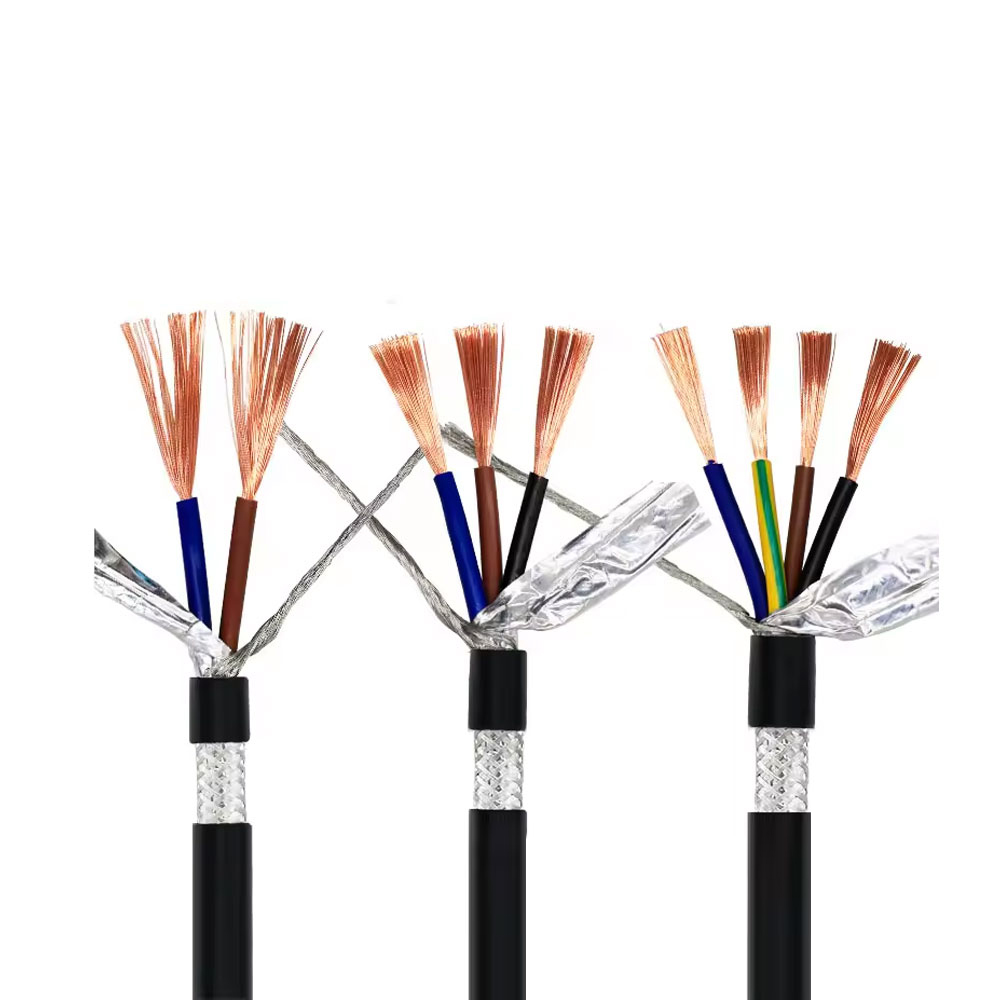
WDZB1-RYJYP and WDZB1N-RYJYP building wire are engineered for projects where electrical safety, fire performance, and electromagnetic compatibility are all priorities. In many buildings, the electrical system is hidden behind walls, ceilings, cable trays, shafts, raised floors, equipment rooms, and utility corridors. Once installed, the cable becomes part of the long-term safety infrastructure of the facility. If the wiring material produces dense smoke or acidic gases during a fire, it can endanger evacuation and damage sensitive equipment. If a circuit is exposed to electromagnetic interference, it can create unstable operation in automation systems, medical equipment, precision instruments, or intelligent building control platforms. If the cable jacket lacks durability, aging and environmental exposure can shorten service life.
This cable is designed to address those issues in a systematic way. It uses fine-stranded annealed copper conductors for conductivity and installation flexibility. It uses irradiated cross-linked polyethylene insulation to improve thermal stability, electrical insulation, and mechanical performance. It adopts a shielding layer, such as copper wire braiding, copper tape, aluminum-plastic composite tape with drain wire, or combined shielding, to reduce electromagnetic interference. It uses low-smoke halogen-free flame-retardant materials formulated to meet Class B1 requirements. For the WDZB1N-RYJYP version, additional fire-resistant performance allows the cable to pass a 750°C, 90-minute fire resistance test according to relevant standards.
The result is a cable family that is especially suitable for high-end buildings and industrial environments. Typical uses include server power supply circuits in data centers, emergency lighting and safety power circuits in public buildings, operating room equipment power circuits in hospitals, instrument and automation power supply in laboratories, frequency converter lines in factories, shielded power distribution in intelligent buildings, and harsh-environment wiring in tunnels, airports, underground utility corridors, offshore facilities, and other complex sites.
The performance of WDZB1-RYJYP and WDZB1N-RYJYP comes from the combination of multiple structural layers rather than from one isolated feature. A typical construction includes a Class 5 annealed copper conductor, irradiated cross-linked polyethylene insulation, shielding layer, and low-smoke halogen-free flame-retardant outer sheath. Depending on the design requirement, the cable may be supplied in cross-sectional areas commonly ranging from 0.5 mm² to 6 mm² for control, signal, and light power applications, while rated voltage options can be selected according to project needs, including 300/500V configurations and 0.6/1kV power distribution configurations.
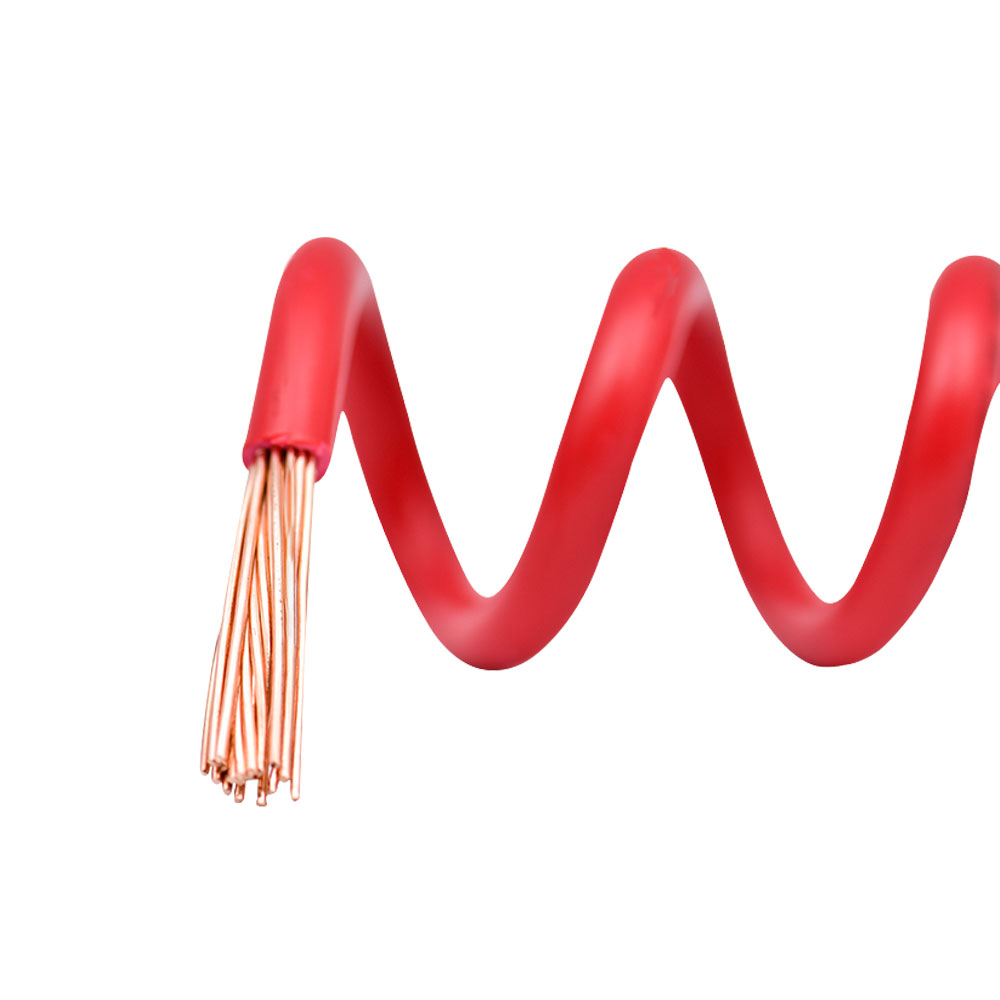
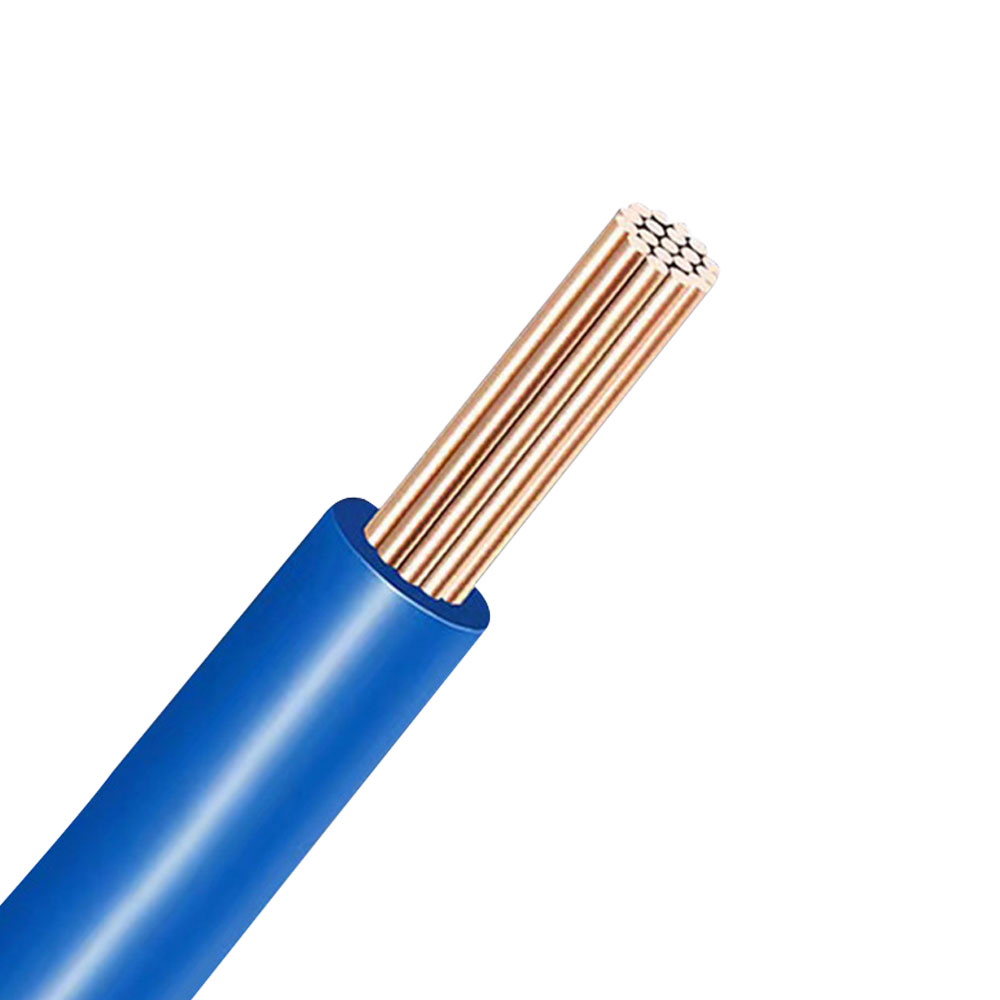
The multi-strand fine copper conductor provides excellent bending performance compared with rigid solid conductors. In complex building installations, cables are often pulled through conduits, routed around corners, placed in cable trays, and connected to compact terminal equipment. A flexible conductor helps reduce installation stress, improves termination convenience, and lowers the risk of conductor fatigue caused by repeated movement during wiring. Full-core, full-length, pure copper specifications also support stable conductivity and reliable ampacity.
The insulation layer is based on cross-linked polyethylene technology. Cross-linking changes the polymer structure and improves heat resistance, deformation resistance, and durability. Irradiated cross-linking is especially valuable because it can deliver consistent molecular cross-linking without relying only on chemical curing residues. Compared with ordinary thermoplastic insulation, irradiated XLPE offers better thermal endurance, improved mechanical strength, and stronger resistance to environmental stress cracking. The long-term allowable operating temperature can reach 90°C, which provides a safety margin for continuous operation under demanding load conditions.
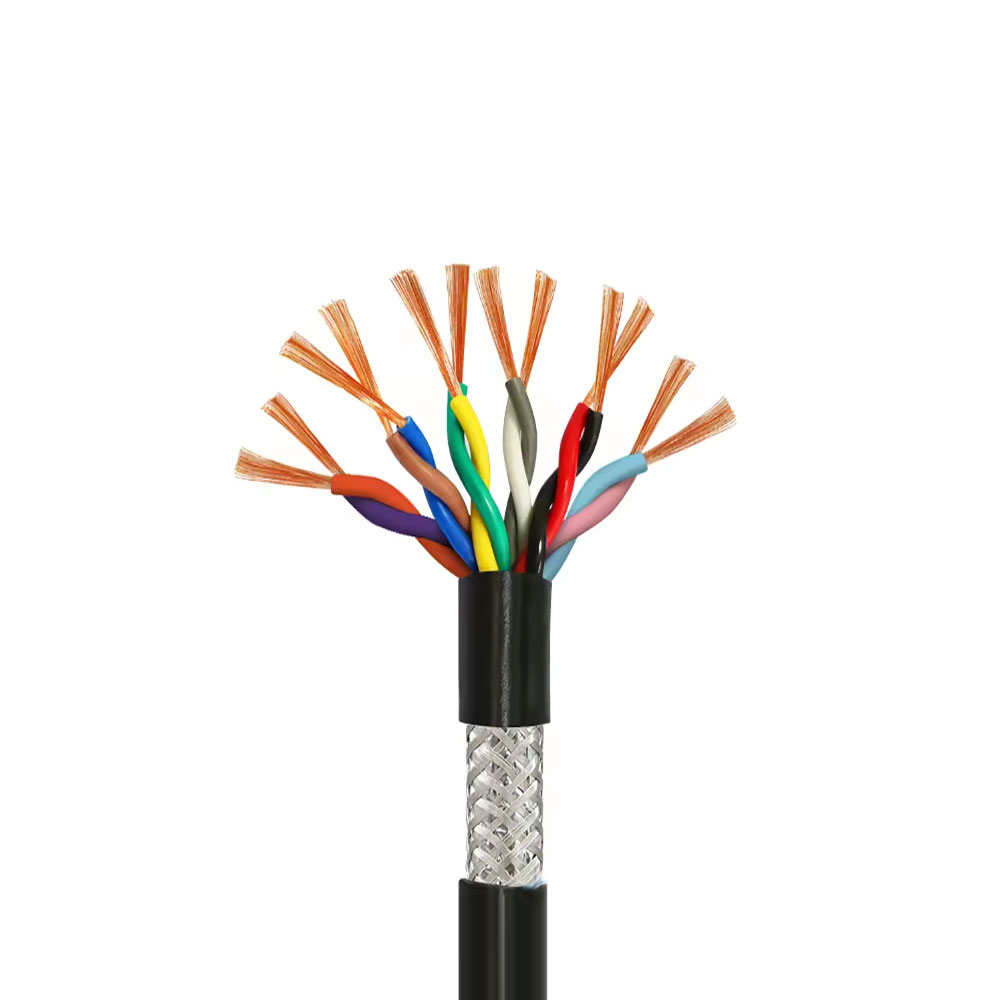
The shielding layer is one of the product’s most important advantages. In modern buildings, electrical noise sources are everywhere: variable frequency drives, UPS systems, switching power supplies, elevators, communication equipment, HVAC controls, automation cabinets, and digital control networks. A shielded cable helps reduce the coupling of external electromagnetic interference into the cable and also helps limit radiation from the cable to nearby sensitive circuits. This feature makes WDZB1-RYJYP and WDZB1N-RYJYP more suitable than unshielded building wire for precision equipment power, control circuits, industrial automation power supply, laboratory wiring, and intelligent building systems.
The outer sheath provides environmental and mechanical protection. It is designed with halogen-free, low-smoke, flame-retardant polyolefin or irradiated cross-linked material according to the selected construction. This type of sheath helps reduce corrosive gases and dense smoke during combustion. It also provides resistance to moisture, ultraviolet exposure, abrasion, and weather conditions when specified for indoor and outdoor harsh-environment applications. In installations such as tunnels, utility corridors, industrial plants, and transport facilities, this sheath contributes significantly to service life and safety.
Item |
Typical Description |
Practical Benefit |
Model |
WDZB1-RYJYP and WDZB1N-RYJYP |
Shielded low-smoke halogen-free Class B1 building wire, with fire-resistant option |
Conductor |
Class 5 annealed copper, multi-strand fine flexible structure |
High conductivity, easy bending, convenient installation, reliable termination |
Insulation |
Irradiated cross-linked polyethylene insulation |
Thermal stability, electrical insulation strength, aging resistance |
Shielding |
Copper wire braiding, copper tape, aluminum-plastic composite tape with drain wire, or combined shielding |
Suppresses electromagnetic interference and supports stable power or signal transmission |
Sheath |
Low-smoke halogen-free flame-retardant polyolefin or irradiated cross-linked sheath |
Reduces smoke and toxic gas hazards while improving mechanical protection |
Rated Voltage |
300/500V or 0.6/1kV according to cable design and project specification |
Suitable for control, light power, and building distribution applications |
Operating Temperature |
Long-term allowable temperature up to 90°C |
Stable operation under continuous load and elevated ambient temperature |
Flame Retardancy |
Class B1 according to GB 31247, comparable with high-level CPR Class B1ca expectations |
Reduced flame spread and heat release for high-safety buildings |
Fire Resistance |
WDZB1N-RYJYP can meet 750°C/90-minute fire resistance requirements |
Supports emergency circuits and critical safety systems |
Smoke and Halogen Performance |
Complies with low-smoke and halogen-free requirements such as GB/T 17650.2 and GB/T 17651.2 |
Improves evacuation visibility and reduces corrosive combustion by-products |
Bending Radius |
Typically not less than 10 times the cable diameter for shielded construction |
Ensures installation reliability and protects the shielding layer |
Compared with conventional PVC insulated building wire, WDZB1-RYJYP and WDZB1N-RYJYP offer a higher level of fire safety. PVC materials can release dense smoke and corrosive hydrogen chloride gas when burned. In a fire, smoke inhalation and low visibility are often more dangerous than direct flame exposure. Halogen-free, low-smoke cable materials reduce these hazards. They help protect people during evacuation and reduce secondary damage to electrical cabinets, communication systems, computers, medical devices, and precision instruments.
Compared with general flame-retardant cable, the Class B1 rating represents a stricter level of combustion performance. It is not only about whether a single cable sample can self-extinguish. Class B1 requirements consider flame spread, heat release, smoke production, droplet behavior, and toxicity level. This makes the product more suitable for international projects, green-certified buildings, high-rise buildings, transportation hubs, and places with dense populations. The cable is designed to meet demanding standards such as GB 31247 and related low-smoke and halogen-free testing requirements.
Compared with unshielded power cable, the shielded structure gives this product a decisive advantage in electrically noisy environments. Many modern facilities contain high-frequency switching devices and power electronics. Without shielding, interference can affect nearby signal lines or sensitive equipment. In automation systems, interference may cause false signals, instrument drift, communication instability, or equipment alarms. By using copper braiding, copper tape, or composite shielding structures, WDZB1-RYJYP and WDZB1N-RYJYP provide a more complete wiring solution for power distribution where electromagnetic compatibility matters.
Compared with cables using ordinary thermoplastic insulation and sheath, irradiated cross-linked construction enhances long-term reliability. Cross-linked materials resist softening under heat better than non-cross-linked plastics. They also maintain mechanical integrity more effectively after aging. This means the cable can deliver more stable performance during long-term operation, especially in electrical rooms, equipment cabinets, industrial workshops, tunnels, utility corridors, and outdoor installations where ambient temperature, moisture, mechanical stress, or sunlight exposure may be present.
Compared with rigid conductor cable, the flexible fine-stranded copper conductor is easier to install. This benefit is often underestimated during design but becomes obvious on site. Reduced bending difficulty can save installation time, minimize cable pulling damage, and simplify wiring inside control panels or compact distribution boxes. For contractors, this translates into improved efficiency. For building owners, it supports more reliable workmanship and reduces the likelihood of hidden installation defects.
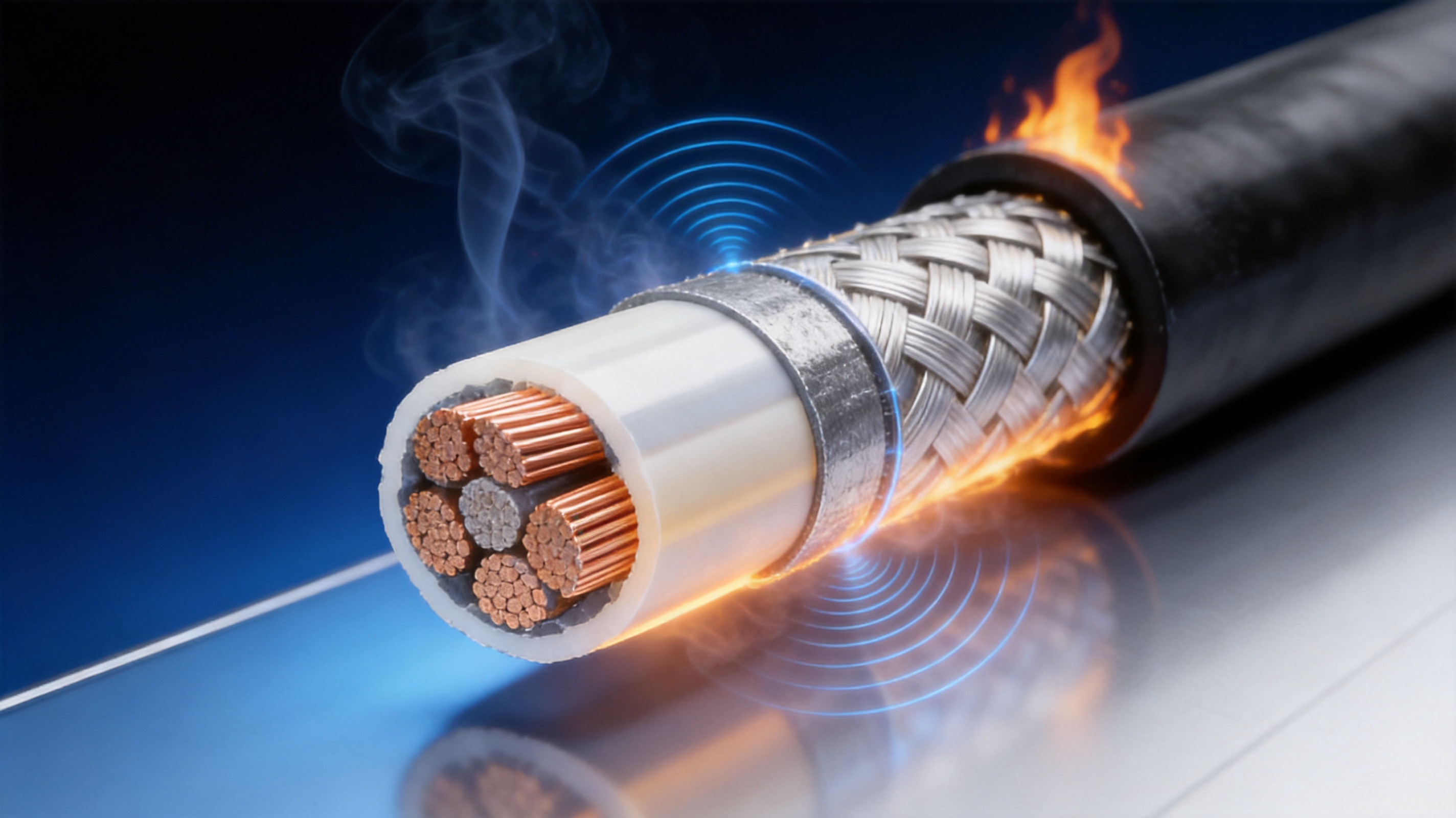
Fire safety is a central selling point of this cable. The WDZB1 designation means the product is designed for low-smoke, halogen-free, flame-retardant Class B1 performance. Class B1 flame retardancy according to GB 31247 is a demanding classification for construction cables. It evaluates not only ignition behavior but also heat release and smoke generation. These factors are directly related to fire development, evacuation conditions, and the protection of equipment.
In high-end international buildings, cable combustion performance is increasingly specified during the early design stage. Developers, consultants, electrical engineers, and fire safety authorities often require cables that support low fire load, reduced flame spread, and lower smoke toxicity. WDZB1-RYJYP and WDZB1N-RYJYP meet these expectations by combining flame-retardant materials with a carefully controlled cable structure. The entire cable, including the shielding layer, must be designed so that the finished product meets the required combustion performance. This is more difficult than making only the sheath flame-retardant, because metallic shields, wrapping tapes, insulation compounds, fillers, and outer sheath must work together under test conditions.
For facilities such as international hospitals, airports, data centers, schools, hotels, laboratories, and large commercial centers, this performance is especially valuable. A cable that produces less smoke helps maintain visibility in corridors, electrical rooms, and escape routes. A halogen-free cable reduces acidic and corrosive gas release, protecting both personnel and electronic systems. Reduced heat release can slow fire propagation and help the building’s passive and active fire protection systems perform more effectively.
WDZB1N-RYJYP adds fire-resistant capability to the low-smoke halogen-free Class B1 shielded cable design. The “N” type is intended for circuits that may need to keep operating during a fire event, such as emergency lighting, fire alarm power, smoke control equipment, emergency broadcasting systems, essential medical circuits, security systems, and evacuation guidance systems. According to the supplied material, the fire-resistant type can meet a 750°C/90-minute fire resistance test based on GB/T 19666 requirements.
In practical engineering, there is a difference between flame-retardant and fire-resistant performance. Flame-retardant cable is designed to reduce flame spread. Fire-resistant cable is designed to continue electrical operation under fire exposure for a defined time. For emergency circuits, both characteristics may be necessary. WDZB1N-RYJYP provides a more comprehensive approach because it combines Class B1 flame retardancy, low smoke, halogen-free safety, shielding, and fire-resistant operation in one cable family.
This makes it suitable for high-risk or high-responsibility applications. In a hospital, emergency power can support life-safety equipment and critical operating room functions. In a data center, stable emergency circuits can help controlled shutdown, fire response systems, and safety monitoring. In a tunnel or underground utility corridor, fire-resistant circuits can maintain lighting, ventilation control, communication, or alarm systems long enough to support evacuation and emergency response. In high-rise buildings, emergency lighting and smoke control wiring are vital for occupant safety.
One of the strongest competitive advantages of WDZB1-RYJYP and WDZB1N-RYJYP is the shielding design. Many basic building wires provide only insulation and mechanical protection. They do not provide electromagnetic protection. However, in intelligent and industrial buildings, power and signal systems often coexist in limited spaces. Cable trays may contain AC power circuits, communication cables, control lines, sensor wiring, motor cables, and security systems. Without proper shielding and grounding design, interference can degrade system stability.
The shielding layer can be constructed from braided copper mesh, copper tape, aluminum-plastic composite tape with drain wire, or combined shielding. Braided copper shielding provides good flexibility and mechanical durability, especially suitable for installations requiring bending. Copper tape or composite tape shielding can offer high coverage and effective electromagnetic attenuation. A drain wire can simplify grounding and improve installation consistency. Combined shielding may be selected when a project requires enhanced interference suppression.
In foreign-funded factories, frequency converter systems generate electromagnetic noise that can affect nearby instrumentation and control circuits. In international laboratories, precision instruments require stable power and low-noise environments. In intelligent buildings, automation controllers, sensors, communication devices, and power distribution systems must operate together without random disturbances. In data centers, power quality and interference control are essential for servers, UPS equipment, monitoring platforms, and cooling control systems. For these applications, a shielded Class B1 cable offers a more reliable solution than a standard non-shielded building wire.
Irradiated cross-linked polyethylene insulation and sheath technology are key reasons for the cable’s durability. During irradiation, high-energy processing changes the polymer’s molecular structure, creating cross-linking bonds that improve thermal and mechanical characteristics. The resulting material is less likely to deform under heat, more resistant to cracking, and more stable during long-term operation. This is important because building cables may remain in service for many years with limited access for inspection or replacement.
The long-term allowable operating temperature of 90°C gives the cable a strong performance margin. In crowded cable trays, electrical rooms, industrial cabinets, and outdoor conduits, cable temperatures can rise because of load current, ambient temperature, solar radiation, or poor ventilation. A cable with stronger thermal resistance can better maintain insulation integrity under such conditions. This reduces the risk of premature aging, insulation breakdown, or service interruption.
The sheath also benefits from cross-linked or high-performance low-smoke halogen-free material design. Weather resistance, moisture resistance, ultraviolet resistance, and abrasion resistance are important for outdoor or semi-outdoor environments. Cable routes in airports, tunnels, offshore platforms, utility corridors, industrial plants, and rooftop facilities can expose the sheath to demanding conditions. A stable sheath protects the insulation and conductor, helping maintain electrical safety and mechanical integrity throughout the service life.
Although high-performance cable is often evaluated by standards and test data, installation convenience is also a major practical advantage. WDZB1-RYJYP and WDZB1N-RYJYP use fine-stranded flexible copper conductors, making them easier to route than many rigid alternatives. Flexibility is especially useful for control cabinets, distribution panels, equipment connections, curved conduit paths, cable tray transitions, and compact building service spaces.
The recommended minimum bending radius is typically not less than 10 times the cable diameter because the shielding layer must be protected from excessive deformation. This requirement is normal for shielded cable and should be followed during installation. When installed correctly, the flexible conductor and engineered sheath allow efficient wiring while maintaining shield continuity, insulation integrity, and mechanical protection.
Contractors benefit from easier pulling, cleaner routing, and improved termination handling. Project owners benefit from more consistent installation quality. Engineers benefit from a cable that can satisfy multiple performance requirements in one specification: flame retardancy, low smoke, halogen-free materials, shielding, thermal endurance, and optional fire resistance. Procurement teams benefit because one cable family can cover several application scenarios with a coherent technical platform.
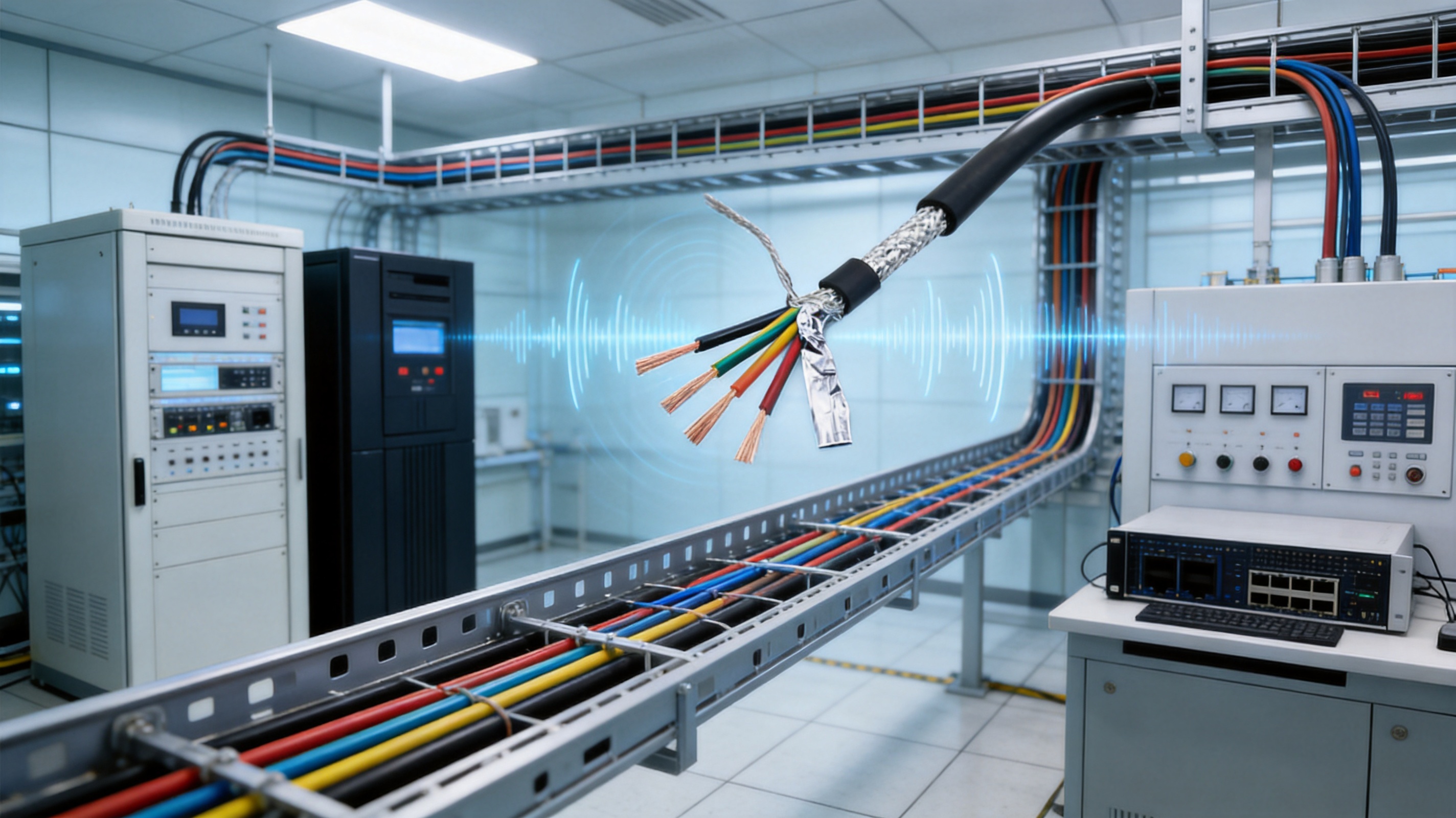
Data centers require stable power distribution, electromagnetic compatibility, and fire-safe materials. Server rooms, UPS areas, battery rooms, cooling systems, and monitoring platforms all depend on reliable wiring. WDZB1-RYJYP can be used for shielded power distribution where interference suppression is required. WDZB1N-RYJYP can be selected for emergency or critical circuits requiring continued operation during fire exposure. The low-smoke halogen-free design also helps protect expensive IT equipment from corrosive combustion by-products.
Hospitals contain sensitive electrical and electronic systems, including operating room equipment, diagnostic instruments, emergency lighting, life-safety systems, and building automation controls. Smoke toxicity and corrosive gases are unacceptable risks in medical facilities where evacuation can be difficult. This cable provides a safer wiring option for high-reliability medical power and control circuits. The shielded structure helps reduce interference that could affect precision medical equipment.
Laboratories often use precision measurement devices, analytical instruments, automated test systems, and sensitive control networks. Electromagnetic disturbance can reduce measurement accuracy or cause unstable instrument operation. WDZB1-RYJYP provides shielding for stable power and signal support, while its Class B1 low-smoke halogen-free construction helps meet safety expectations for high-end research facilities.
Airports, tunnels, railway facilities, underground passages, and utility corridors demand cables that can withstand harsh installation conditions and support public safety. Runway lighting systems, tunnel power distribution, emergency ventilation controls, safety lighting, monitoring systems, and communication equipment all require reliable wiring. The cable’s weather resistance, flame retardancy, low-smoke performance, and optional fire resistance make it suitable for these infrastructure projects.
Industrial automation environments contain motors, drives, inverters, control cabinets, sensors, PLC systems, and industrial communication networks. Frequency converters and switching devices can produce electromagnetic interference. Shielded cable reduces the risk of operational instability. The flexible conductor also improves wiring inside control panels and machinery. For factories with international safety or green certification requirements, Class B1 low-smoke halogen-free cable provides an additional compliance advantage.
Shopping malls, exhibition centers, hotels, schools, office towers, and public service buildings require safe evacuation conditions. When cable materials burn, smoke and toxic gases can quickly endanger occupants. WDZB1-RYJYP and WDZB1N-RYJYP support safer building design by reducing smoke, halogen acid gas, flame spread, and heat release. The fire-resistant version can be used for emergency circuits in critical evacuation systems.
Anhui Zhishang Cable Technology Co., Ltd. supports this product with integrated research, production, and sales capabilities. The company is located in Xuancheng City, Anhui Province, China, a key node city in the Yangtze River Delta region. Its production base covers approximately 5,000 square meters and is equipped with 10 automated production lines. Monthly output can reach up to 10 million meters, supporting both standard cable supply and customized project demand.
The company’s manufacturing philosophy emphasizes quality orientation, integrity, and stability. For high-performance cables such as WDZB1-RYJYP and WDZB1N-RYJYP, this philosophy is important because product performance depends on consistent raw materials, accurate extrusion control, proper shielding application, stable irradiation or cross-linking process management, and systematic testing. A Class B1 shielded cable is more technically demanding than ordinary wire because every material and process step affects final combustion performance, electrical reliability, and mechanical durability.
The company has a team of more than 50 employees, including quality engineers and R&D technicians with more than 10 years of industry experience. Experienced engineers can support product selection, material formulation, shielding structure design, rated voltage selection, conductor size confirmation, and OEM/ODM customization based on customer drawings or samples. This is valuable for projects where standard catalog cable may not fully satisfy installation constraints, certification requirements, electrical parameters, or environmental conditions.
Automated production lines improve dimensional consistency and production efficiency. In cable manufacturing, small deviations in conductor stranding, insulation thickness, concentricity, shielding coverage, or sheath extrusion can affect long-term performance. Automation helps stabilize these variables. It also supports large-scale production while maintaining repeatable quality, which is essential for projects requiring long continuous cable lengths, batch consistency, and predictable delivery.
The company provides quality assurance through full-core, full-length, pure copper specifications, product test reports, and warranty support for standard cable models. Standard products can be stocked for fast shipment, while customized products typically require 7 to 20 days of lead time depending on complexity. This combination of production scale and customization ability allows the company to serve both urgent procurement needs and engineered project solutions.
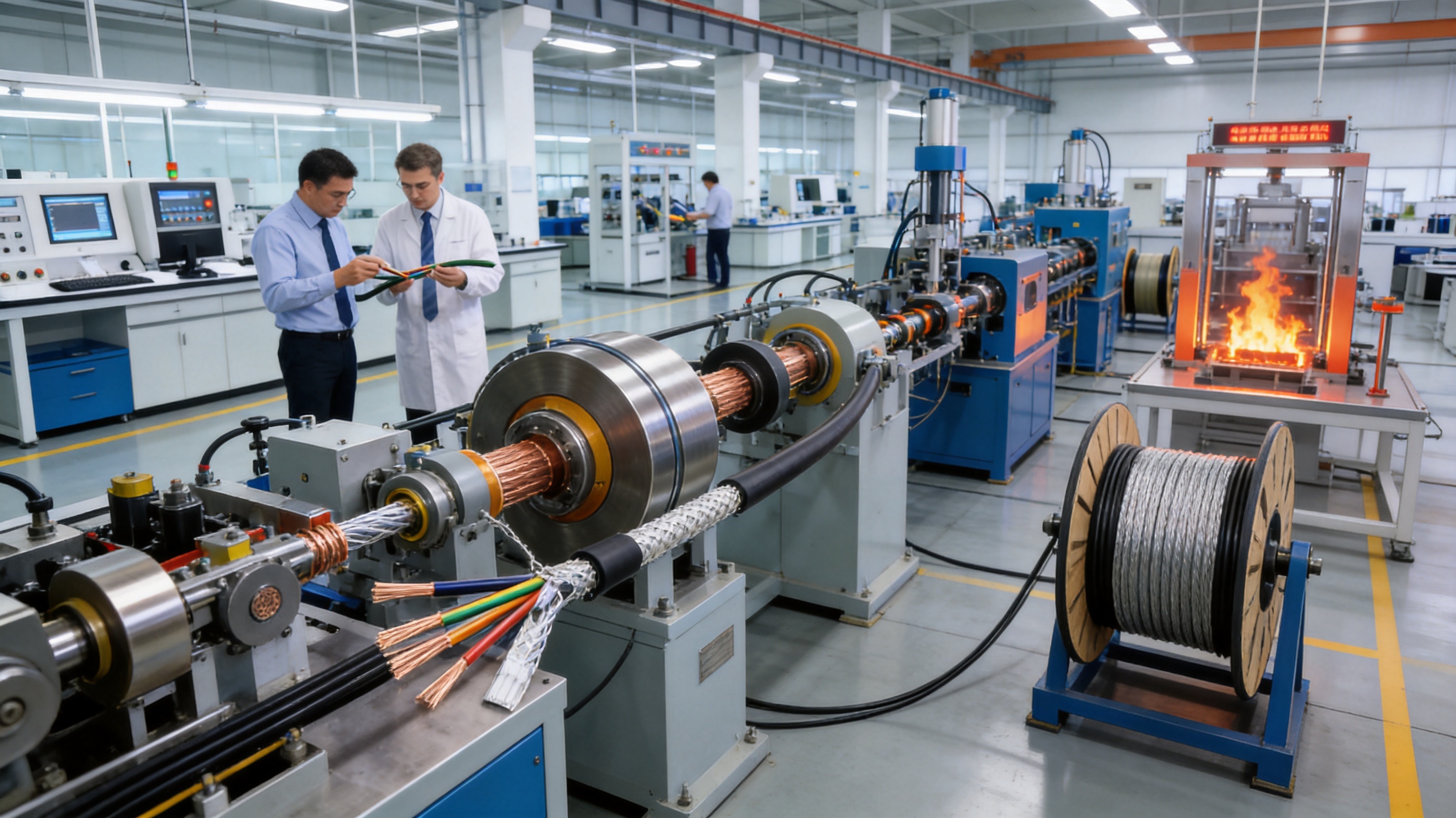
The manufacturing of WDZB1-RYJYP and WDZB1N-RYJYP begins with conductor preparation. High-quality annealed copper wires are drawn and stranded into a Class 5 flexible conductor. The stranding process must ensure uniform lay length, smooth surface, compact structure, and stable electrical resistance. A well-made conductor improves flexibility, current-carrying performance, and termination reliability.
Next, the insulation is extruded. Irradiated cross-linked polyethylene insulation must be applied with controlled thickness, concentricity, and surface quality. Insulation defects can become weak points under voltage stress or thermal aging, so extrusion parameters such as temperature, pressure, line speed, and cooling must be carefully managed. After insulation, irradiation cross-linking or appropriate cross-linking processing gives the material its enhanced thermal and mechanical properties.
The shielding stage follows according to the required design. Copper wire braiding requires control of braid angle, coverage ratio, wire tension, and surface smoothness. Copper tape or composite tape wrapping requires consistent overlap, tightness, and drain wire placement. Shielding must provide electromagnetic performance while maintaining flexibility and avoiding damage to the insulation. For Class B1 cable, the shielding structure must also be compatible with the cable’s combustion performance requirements.
The sheath extrusion stage provides the final protective layer. Low-smoke halogen-free flame-retardant materials must be processed carefully because they can be more sensitive than ordinary PVC compounds. Proper extrusion ensures a smooth, uniform sheath with adequate thickness and mechanical strength. For harsh-environment designs, the sheath formulation can be adjusted for moisture resistance, ultraviolet resistance, abrasion resistance, and weathering performance.
Quality testing is integrated into the process. Tests may include conductor resistance, insulation resistance, voltage withstand, dimensional inspection, sheath thickness measurement, surface inspection, flame-retardant performance verification, low-smoke and halogen-free property testing, shielding continuity, and fire resistance testing for the N type. Product test reports support engineering acceptance and quality traceability. This manufacturing discipline is one of the reasons the cable can compete effectively against ordinary products that may meet only basic electrical requirements.
WDZB1-RYJYP and WDZB1N-RYJYP are designed to comply with standards such as GB/T 19666 and GB 31247, and related testing requirements for halogen-free and low-smoke performance. The Class B1 flame-retardant grade is aligned with high combustion performance expectations and is described as comparable to EU CPR Class B1ca level requirements. The fire-resistant version can pass the 750°C/90-minute fire resistance test according to GB/T 19666. The product can also support CCC, RoHS, and related project compliance requirements according to specification and certification scope.
Low-smoke performance may be evaluated according to standards such as GB/T 17651.2, where light transmittance is a key indicator. Halogen-free performance may be evaluated according to standards such as GB/T 17650.2, including pH and conductivity of released gases. Flame spread may be associated with bundle flame testing such as IEC 60332-3. Smoke toxicity can be assessed according to relevant safety classifications, with the supplied material identifying safety level t1. These tests matter because they provide measurable evidence of safety performance rather than relying only on marketing claims.
Quality control also includes attention to the entire cable structure. For example, shielding materials, tapes, fillers, insulation, and sheath must be selected and processed so the complete cable meets Class B1 requirements. A cable is tested as a finished product, not as isolated material samples alone. This demands engineering capability in formulation, structure design, and process control.
Green-certified buildings and international engineering projects increasingly require safer materials, lower environmental impact, and documented compliance. Low-smoke halogen-free cables are preferred because they reduce toxic and corrosive emissions during fire. RoHS-related requirements restrict hazardous substances. High flame-retardant performance supports fire safety engineering. Shielding supports electromagnetic compatibility and stable operation in intelligent buildings.
WDZB1-RYJYP and WDZB1N-RYJYP are well positioned for LEED-oriented projects, international laboratories, foreign-related hospitals, multinational enterprise facilities, five-star hotels, embassy district buildings, international exhibition centers, and smart commercial complexes. The cable’s combination of Class B1 flame retardancy, low-smoke halogen-free materials, shielding, flexible installation, and optional fire resistance gives designers one cable platform for multiple project objectives.
The company’s OEM/ODM capability further supports international projects. Customers may require specific conductor sizes, shielding structures, sheath colors, printing content, packaging, test reports, or drawings. Engineers can develop solutions based on samples, drawings, or defined project conditions. This capability allows the cable to be adapted to different electrical standards, installation practices, and procurement requirements.
When selecting between WDZB1-RYJYP and WDZB1N-RYJYP, engineers should first determine whether the circuit requires fire-resistant operation. For general high-safety shielded power or control wiring, WDZB1-RYJYP may be suitable. For emergency circuits, fire alarm power, evacuation systems, emergency lighting, smoke control equipment, or critical life-safety applications, WDZB1N-RYJYP should be considered because it adds fire-resistant performance.
The next selection factor is rated voltage. Some applications may use 300/500V configurations for control and signal-related power circuits, while others may require 0.6/1kV configurations for building power distribution. The project specification, circuit voltage, installation environment, and applicable standards should determine the final selection.
Conductor cross-sectional area should be selected according to load current, voltage drop, circuit length, installation method, ambient temperature, grouping conditions, and safety factor. Common sizes may range from 0.5 mm² to 6 mm² for control and signal power applications, but the final size should follow engineering calculation and project standards.
The shielding structure should be selected according to interference conditions. Copper braid may be preferred where flexibility and mechanical endurance are important. Tape shielding may be selected for high coverage. Combined shielding may be used where enhanced electromagnetic protection is required. Grounding design is also essential; a shield is effective only when installed and grounded correctly according to the system design.
Installation conditions should also be reviewed. For outdoor, tunnel, underground corridor, or damp environments, sheath weather resistance and moisture resistance should be confirmed. The bending radius should be respected, particularly because shielded cable can be damaged by excessive bending. Cable trays, conduits, glands, terminals, and grounding accessories should be compatible with the cable diameter and structure.
WDZB1-RYJYP and WDZB1N-RYJYP stand out because they combine multiple high-value features that are often purchased separately or compromised in ordinary cable designs. They are flame-retardant to Class B1 level, low-smoke, halogen-free, shielded, flexible, thermally stable, and available with fire-resistant performance. This integrated design reduces specification complexity and improves the reliability of the overall wiring system.
For project owners, the cable supports safety, durability, and lower risk. For designers, it provides a technical solution aligned with high-end building requirements. For contractors, it offers flexibility and installation adaptability. For facility managers, it helps reduce long-term maintenance concerns. For international projects, it supports compliance, green building objectives, and documentation needs.
Compared with competitors offering only standard flame-retardant or non-shielded building wire, this product provides higher safety and better electromagnetic compatibility. Compared with imported high-performance cable, it can offer strong customization, responsive production, and competitive supply support from an experienced Chinese manufacturer. Compared with ordinary low-smoke halogen-free cable, the irradiated cross-linked structure and shielding design add durability and functional stability.
WDZB1 indicates halogen-free, low-smoke, Class B1 flame-retardant performance. RYJYP indicates a flexible copper conductor cable using irradiated cross-linked polyethylene insulation and sheath with shielding. The structure is designed for safer building wiring and anti-interference performance.
WDZB1-RYJYP is the standard Class B1 low-smoke halogen-free shielded building wire. WDZB1N-RYJYP is the fire-resistant version. The “N” type is suitable for emergency and critical circuits that must maintain operation during fire exposure, and it can meet a 750°C/90-minute fire resistance test according to relevant requirements.
Class B1 flame retardancy represents a high level of cable combustion performance. It helps reduce flame spread, heat release, smoke production, burning droplets, and toxicity risks. This is important in hospitals, data centers, airports, tunnels, high-rise buildings, commercial centers, and other locations where fire safety is critical.
Halogen-free low-smoke cable produces less dense smoke and fewer corrosive acidic gases during combustion. This improves evacuation visibility, reduces inhalation hazards, and helps protect sensitive equipment from corrosion. Ordinary PVC cable may release dense smoke and hydrogen chloride gas when burned.
The shielding layer helps suppress electromagnetic interference. It protects circuits from external electrical noise and reduces interference impact on nearby systems. This is valuable in automation systems, laboratories, data centers, intelligent buildings, hospitals, and factories with variable frequency drives or switching equipment.
The cable uses Class 5 annealed copper conductors with multi-strand fine flexible construction. This provides high conductivity, better bending performance, easier installation, and reliable termination.
The long-term allowable operating temperature is up to 90°C. Irradiated cross-linked polyethylene insulation helps maintain stable electrical and mechanical performance under elevated temperature conditions.
It can be specified for harsh indoor and outdoor environments when the sheath design is selected accordingly. The irradiated cross-linked or high-performance low-smoke halogen-free sheath can provide resistance to moisture, ultraviolet exposure, and weathering. Project conditions should always be confirmed before final selection.
The cable may be supplied in 300/500V configurations for control and signal-related power applications or 0.6/1kV configurations for building power distribution, depending on the design and project specification.
Common applications include data centers, hospitals, laboratories, airports, tunnels, underground utility corridors, intelligent buildings, commercial complexes, industrial automation systems, foreign-funded factories, emergency power systems, and green-certified building projects.
WDZB1-RYJYP and WDZB1N-RYJYP building wire provide a high-performance solution for modern electrical systems that require more than basic power transmission. Their value lies in the integration of Class B1 flame retardancy, low-smoke halogen-free safety, irradiated cross-linked insulation and sheath technology, flexible copper conductors, electromagnetic shielding, and optional fire-resistant performance. This combination makes the cable suitable for demanding building, industrial, public infrastructure, and international engineering applications.
The product’s advantages are clear when compared with ordinary PVC wire, general flame-retardant cable, or unshielded building cable. It offers better fire safety, lower smoke and toxicity hazards, stronger electromagnetic protection, improved thermal stability, easier installation, and more reliable long-term performance. Supported by advanced automated production lines, experienced R&D engineers, quality control procedures, OEM/ODM capability, and scalable manufacturing capacity, the cable delivers both technical performance and practical project value.
For engineers, contractors, owners, and procurement teams seeking a reliable shielded low-smoke halogen-free building wire, WDZB1-RYJYP and WDZB1N-RYJYP represent a strong choice. They are especially suited for environments where safety, stability, compliance, and operational continuity are essential.
GB 31247, Classification for Burning Behavior of Electric Wires and Cables.
GB/T 19666, General Rules for Flame-Retardant and Fire-Resistant Wires and Cables.
GB/T 17650.2, Test on Gases Evolved During Combustion of Materials from Cables: Determination of Acidity and Conductivity.
GB/T 17651.2, Measurement of Smoke Density of Cables Burning Under Defined Conditions.
IEC 60332-3, Tests on Electric and Optical Fibre Cables Under Fire Conditions: Vertical Flame Spread of Vertically Mounted Bunched Wires or Cables.
EN 50399, Common Test Methods for Cables Under Fire Conditions: Heat Release and Smoke Production Measurement.
RoHS Directive, Restriction of Hazardous Substances in Electrical and Electronic Equipment.

We firmly believe that good cables are not only a competition of materials, but also a reflection of craftsmanship, quality, and responsibility.

Links
Product
Send Inquiry
No. 29 Sankeshu Road, Xuanzhou District, Xuancheng City, Anhui Province, China
+86-18621104555/+86-563-2622999
 Electrical Cable Manufacturer
OEM/ODM Wire and Cable Solutions
Electrical Cable Manufacturer
OEM/ODM Wire and Cable Solutions
 English
 Español
 عربى
عربى
 русский